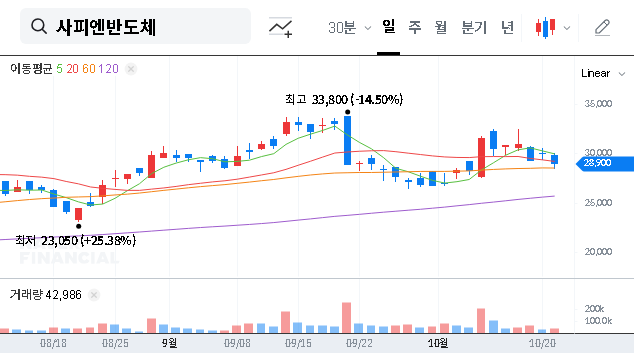
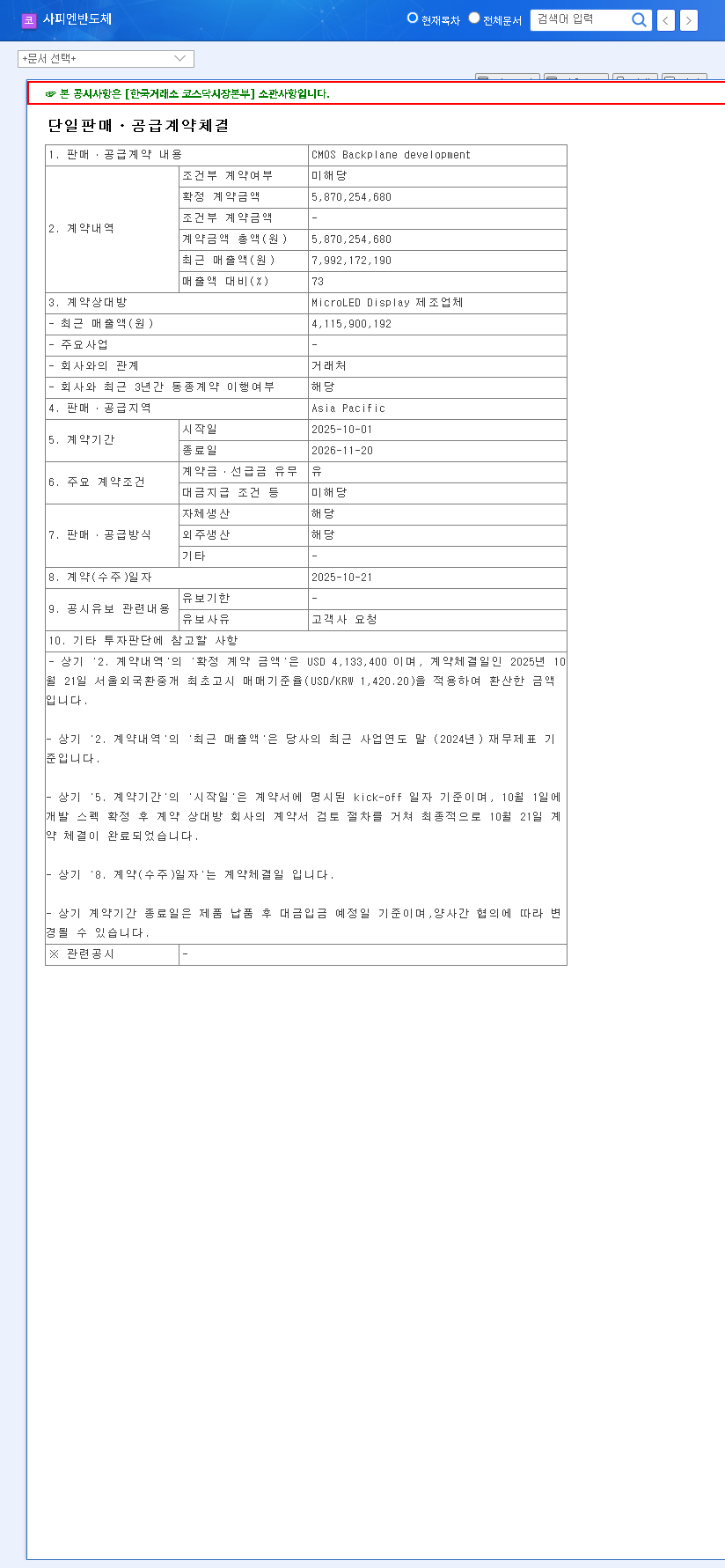
In a move that has captured significant market attention, Sapien Semiconductors has announced a transformative contract to develop a cutting-edge MicroLED CMOS backplane. This KRW 5.9 billion deal, representing an incredible 73% of the company’s recent revenue, positions Sapien at the forefront of the next-generation display revolution. This analysis will dissect the contract’s details, explore the profound implications for Sapien Semiconductors’ stock, and outline the strategic landscape for investors navigating this high-growth sector.
This contract is more than just a financial windfall; it’s a powerful validation of Sapien Semiconductors’ technological leadership in the highly competitive field of MicroLED display technology and a potential catalyst for significant long-term growth.
Deconstructing the Landmark Deal
The ‘Single Sales and Supply Contract’ is a pivotal event. As detailed in the Official Disclosure filed with DART, the agreement is with a major MicroLED Display Manufacturer in the Asia Pacific region. Spanning from October 2025 to November 2026, the contract focuses explicitly on the development and supply of the CMOS backplane, a critical component for high-performance displays.
Why is the MicroLED CMOS Backplane So Important?
To understand the significance of this deal, one must first grasp the technology. MicroLED display technology is poised to supersede current standards like OLED and LCD by offering superior brightness, infinite contrast, longer lifespan, and greater energy efficiency. However, realizing this potential depends entirely on the underlying electronics that control each individual microscopic LED. This is where the CMOS backplane comes in. It acts as the sophisticated nervous system of the display, precisely driving millions of pixels to create a flawless image. Sapien’s contract to develop this core technology places them at the heart of the industry’s next big leap. For a deeper technical overview, you can explore resources from leading display analysts like Display Supply Chain Consultants (DSCC).
Analyzing the Financial & Market Impact
A contract of this magnitude is expected to send powerful ripples through both the company’s financials and the market’s perception of its value.
- •Massive Revenue Injection: The KRW 5.9 billion figure, equivalent to 73% of past revenue, provides a dramatic and immediate boost to the company’s top line, ensuring a stable and predictable cash flow over the contract period.
- •Enhanced Profitability: Developing a high-value, proprietary technology like a MicroLED CMOS backplane typically carries higher profit margins than standard component supply, suggesting a positive impact on the company’s bottom line.
- •Positive Investor Sentiment: This deal serves as a strong signal to the market, validating Sapien’s technological prowess and growth strategy. It’s likely to attract new institutional and retail investors, potentially driving the stock price upward.
Risks & Strategic Considerations for Investors
While the outlook is overwhelmingly positive, a thorough semiconductor stock analysis requires acknowledging potential risks. Prudent investors should keep the following factors in mind:
- •Technology Development Hurdles: The contract is for development, not just supply. Unforeseen technical challenges or delays in the R&D process could impact timelines and costs.
- •Contract Execution Risk: As with any large-scale agreement, there are external risks related to the contracting partner’s business conditions or shifts in the broader market demand for MicroLED displays.
- •Market Competition: The semiconductor industry is fiercely competitive. Investors should monitor the landscape for competing technologies or other players in the MicroLED CMOS backplane space.
Investors should continuously monitor company announcements for progress updates and review how this contract impacts the fundamentals. For a broader view, consider reading about key trends shaping the semiconductor industry.
Frequently Asked Questions (FAQ)
Q1: What exactly did Sapien Semiconductors agree to?
Sapien Semiconductors signed a KRW 5.9 billion contract to develop and supply a custom CMOS backplane, a core component for a new MicroLED display, for a major manufacturer in Asia.
Q2: How significant is this KRW 5.9 billion contract for the company?
It is extremely significant, representing 73% of the company’s recent annual revenue. This provides a substantial and secure revenue stream for the duration of the project.
Q3: What makes the MicroLED CMOS backplane so vital?
The CMOS backplane functions as the electronic brain of a MicroLED display, controlling the brightness and color of each individual pixel. A high-quality backplane is essential for achieving the superior performance that makes MicroLED technology the future of displays.
Q4: How might this deal affect Sapien Semiconductors’ stock?
The market generally views such large, future-focused technology contracts very positively. The deal is likely to boost investor confidence, create positive stock price momentum, and affirm the company’s long-term growth trajectory.
Leave a Reply