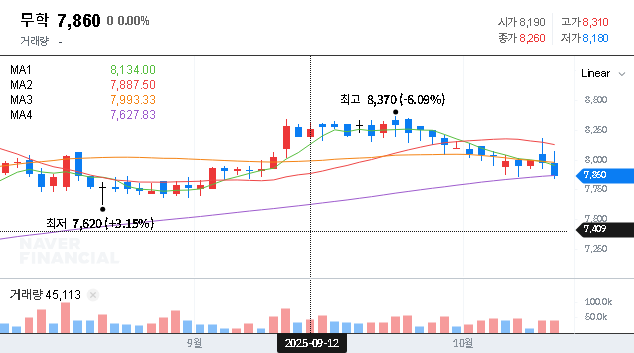
In a significant move capturing market attention, prominent liquor company Muhak has announced a major financial restructuring. The core of this news is the Muhak treasury stock disposal, a strategic decision to raise ₩10 billion through the issuance of Exchangeable Bonds (EBs). This action presents a classic dilemma for investors: is it a precursor to shareholder value dilution, or a savvy maneuver to fuel future growth? This comprehensive analysis will break down the mechanics of the deal, explore the potential impacts, and provide a clear framework for making an informed investment decision.
The Announcement: Unpacking the ₩10 Billion Deal
On October 27, 2023, Muhak officially disclosed its plan to dispose of 1,073,076 of its own common shares, which represents approximately 3.77% of its total outstanding shares. The total value of this disposal is estimated at ₩10 billion. The stated purpose is not a simple market sell-off, but rather to use these shares as the underlying asset for a new issuance of Exchangeable Bonds (EBs). For complete transparency, you can view the Official Disclosure on the DART system.
What Are Exchangeable Bonds (EBs)?
Before diving into the impact, it’s crucial to understand the financial instrument at play. Exchangeable Bonds are a form of hybrid debt security. Investors who purchase these bonds receive regular interest payments, much like a traditional bond. However, they also hold the option to exchange their bonds for a predetermined number of the company’s shares (in this case, the treasury stock being set aside) at a specified price. This offers investors the safety of a bond with the potential upside of stock appreciation. To learn more about complex financial instruments, you can consult authoritative sources like Investopedia for detailed explanations.
Analyzing the Investment Impact: A Two-Sided Coin
The Muhak treasury stock disposal carries both potential risks and significant rewards. A prudent investor must weigh both sides carefully.
The Bear Case: Understanding the Risk of Share Dilution
The primary concern for existing shareholders is the potential for dilution. This can occur in two stages:
- •Immediate Supply Increase: The disposal of nearly 4% of treasury stock effectively increases the number of shares available for trading, which can put short-term downward pressure on the stock price.
- •Future Conversion Overhang: If the company’s stock price rises above the EB conversion price, bondholders will be incentivized to convert their bonds into shares. This future influx of new shares would further dilute the ownership stake and earnings per share (EPS) for existing investors.
The Bull Case: Fueling Strategic Long-Term Growth
Conversely, this capital injection could be precisely what Muhak needs to accelerate its growth. The ₩10 billion secured can be a powerful catalyst if used effectively:
- •Financial Fortification: The funds can be used to pay down existing debt, improving the company’s balance sheet and reducing interest expenses.
- •Investment in Innovation: The capital could fund R&D for new products, helping Muhak compete in the dynamic and competitive liquor industry.
- •Market Expansion: These funds could be allocated to marketing campaigns or expansion into new geographic markets, driving top-line revenue growth.
The success of this strategy hinges entirely on execution. If the ₩10 billion generates a return greater than the cost of dilution, long-term shareholders will be handsomely rewarded. If not, it will have been a costly fundraising exercise.
Investor Checklist: What to Monitor Moving Forward
To make an informed decision regarding your Muhak investment, it is critical to move beyond the initial announcement and monitor key subsequent details. Keep a close watch on the following:
- •Detailed EB Terms: Once published, scrutinize the final terms of the Exchangeable Bonds. The interest rate, maturity date, and especially the conversion price will determine the company’s financial burden and the likelihood of future dilution.
- •Clarity on Fund Usage: Look for specific company communications detailing how the ₩10 billion will be allocated. A clear, strategic plan for growth is a much stronger signal than a vague statement about ‘general corporate purposes’.
- •Market and Industry Trends: Context is key. Monitor Muhak’s performance relative to its competitors and overall trends in the liquor market. For more on this, you might read our guide on How to Analyze a Company’s Financial Health.
Frequently Asked Questions (FAQ)
What is the core of Muhak’s treasury stock disposal decision?
Muhak is selling 1,073,076 of its own shares, worth about ₩10 billion, to serve as the underlying asset for an issuance of Exchangeable Bonds (EBs). This is a method of raising capital.
How will this affect Muhak’s stock price?
In the short-term, the risk of share dilution could create downward pressure on the stock. In the long-term, if the raised capital is invested successfully to grow the business, it could have a very positive impact on the company’s value and stock price.
Is this a good or bad sign for investors?
It is neither inherently good nor bad; it is a strategic trade-off. The outcome depends entirely on how effectively Muhak’s management team utilizes the newly acquired ₩10 billion to create future value that outweighs the cost of shareholder dilution.

Leave a Reply