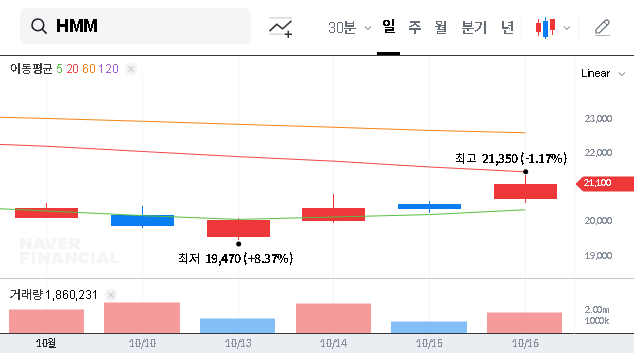
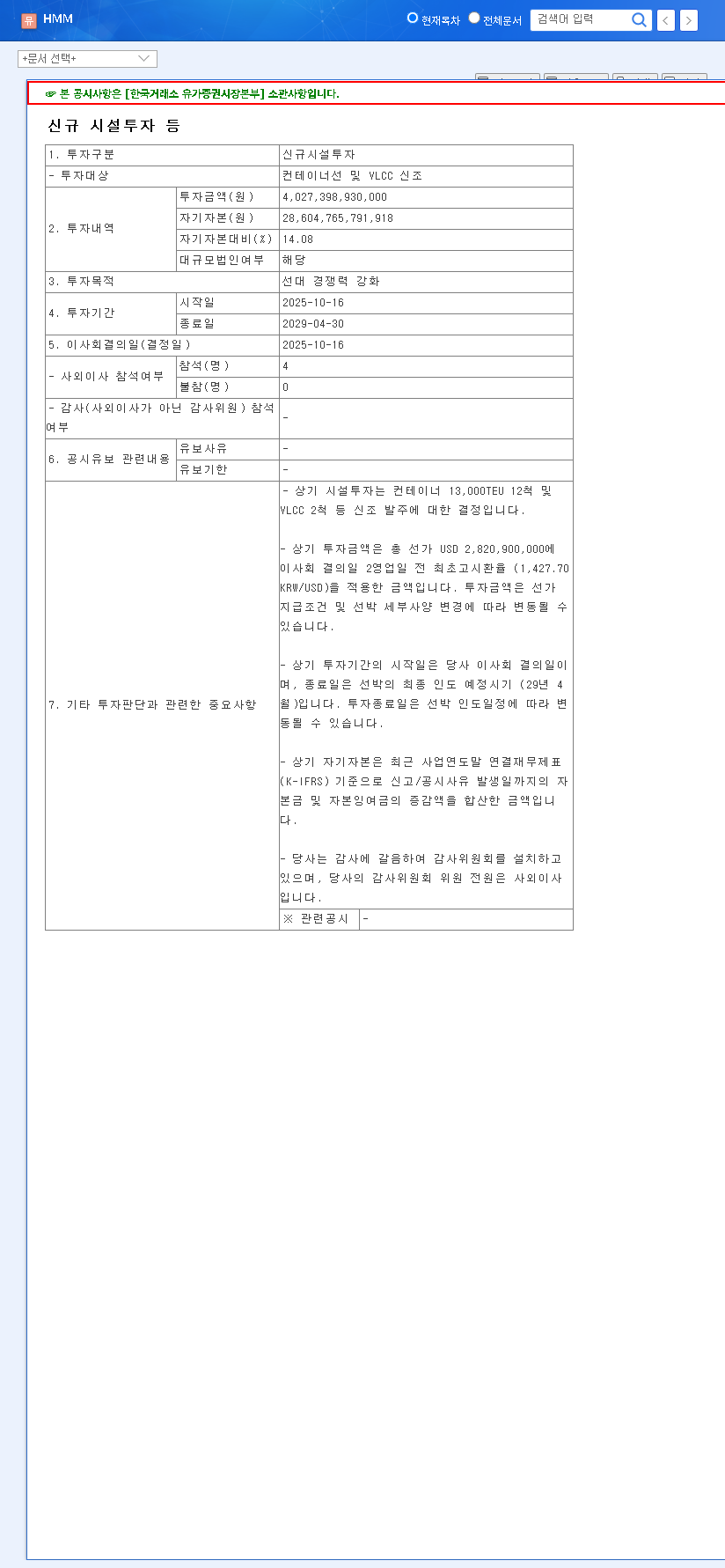
In a bold declaration of intent amidst the volatile currents of the global shipping market, South Korean shipping giant HMM CO.,LTD has announced a landmark HMM investment of KRW 4.027 trillion (approximately $3 billion USD). This strategic capital injection is aimed squarely at revolutionizing its fleet and cementing its position as a global maritime leader. The official announcement can be reviewed in the company’s public disclosure (Source: DART).
This comprehensive analysis will dissect the multifaceted implications of this decision, exploring the blueprint for replacing aging vessels with advanced eco-friendly ships, the potential financial pressures, and the overarching vision for the future. For stakeholders and investors, understanding both the immense opportunities and the inherent risks is paramount.
Deconstructing the KRW 4 Trillion HMM Investment
Scheduled to unfold over a 3.5-year period from October 2025 to April 2029, this investment represents 14.08% of HMM’s total capital. The core objective is to procure new, state-of-the-art container ships and Very Large Crude Carriers (VLCCs). This is not merely a fleet expansion; it’s a strategic overhaul designed to significantly boost HMM fleet competitiveness and build a foundation for long-term, sustainable growth in a rapidly evolving global shipping market.
This monumental investment is a clear signal of HMM’s ambition to lead, not just participate, in the next era of global shipping—an era defined by efficiency, sustainability, and scale.
The Upside: Strategic Advantages and Opportunities
Driving Fleet Competitiveness and Efficiency
The primary benefit lies in the modernization of the fleet. Replacing older vessels with new-builds offers a cascade of advantages. These next-generation ships are engineered for superior fuel efficiency, drastically cutting operational costs—a critical factor with fluctuating bunker fuel prices. Furthermore, their design incorporates the latest environmental technologies, ensuring compliance with stringent international regulations like those from the International Maritime Organization (IMO). This proactive stance on sustainability not only reduces carbon footprint but also future-proofs the fleet against upcoming regulatory changes.
Expanding Market Share and Boosting Profitability
With a larger, more efficient fleet, HMM is positioned to expand its global market share. The new container ships will likely feature higher TEU (twenty-foot equivalent unit) capacities, allowing for greater economies of scale on major trade lanes. The VLCC investment diversifies HMM’s revenue streams, providing a strategic hedge against the cyclical nature of the container shipping market by tapping into the global crude oil transportation sector.
The Downside: Navigating Risks and Financial Headwinds
An investment of this magnitude is not without significant risks that require careful management and investor consideration.
- •Increased Financial Burden: The most immediate concern is the strain on HMM’s balance sheet. This large-scale capital expenditure will likely increase the company’s debt-to-equity ratio and interest expenses in the short to medium term. The cost of borrowing could also rise depending on global interest rate trends.
- •Market Volatility and ROI Uncertainty: The profitability of these new assets is heavily dependent on the health of the global shipping market. An economic downturn, geopolitical instability, or a slump in freight rates could delay the return on investment.
- •Execution and Operational Risks: The shipbuilding process itself carries risks, including potential construction delays, cost overruns, or issues with new technologies. Integrating these massive vessels into existing service loops requires flawless logistical planning.
Investor Outlook and Strategic Recommendations
This HMM investment is a calculated, long-term play. While short-term stock price volatility is possible due to financial concerns, the strategic rationale is sound. For investors, a nuanced approach is critical. The focus should be on HMM’s potential to emerge as a more dominant, efficient, and sustainable player in the years to come. For more insights on market trends, you can explore our 2024 Shipping Industry Outlook.
Key areas to monitor include HMM’s quarterly financial reports for debt management, global freight indices (like the SCFI), shipbuilding progress reports, and shifts in international environmental policy. A disciplined, long-term perspective, coupled with a keen awareness of market dynamics, will be essential for navigating this transformative period for HMM.
Leave a Reply