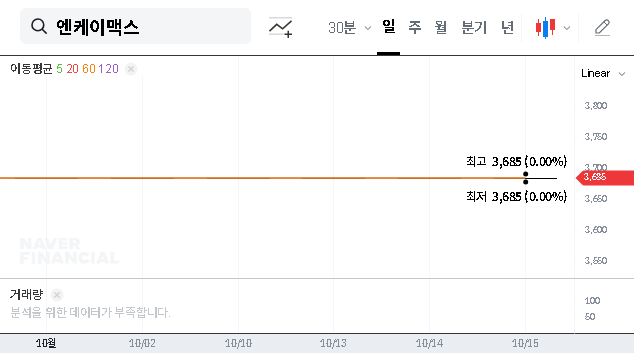
The recent announcement of the NKMAX capital reduction has sent ripples through the investor community. A staggering 80% reduction without compensation is a significant event that can cause uncertainty. For shareholders, this news raises critical questions: What does this mean for the value of my investment? Is this a sign of distress or a strategic move towards recovery? This comprehensive guide provides an in-depth capital reduction analysis to help you understand the core details, potential impacts, and strategic considerations for your NKMAX stock holdings.
A capital reduction, especially a gratuitous one, is a corporate restructuring tool used to wipe out accumulated deficits from a company’s balance sheet, aiming to restore financial health.
The Official Announcement: Decoding the 80% NKMAX Capital Reduction
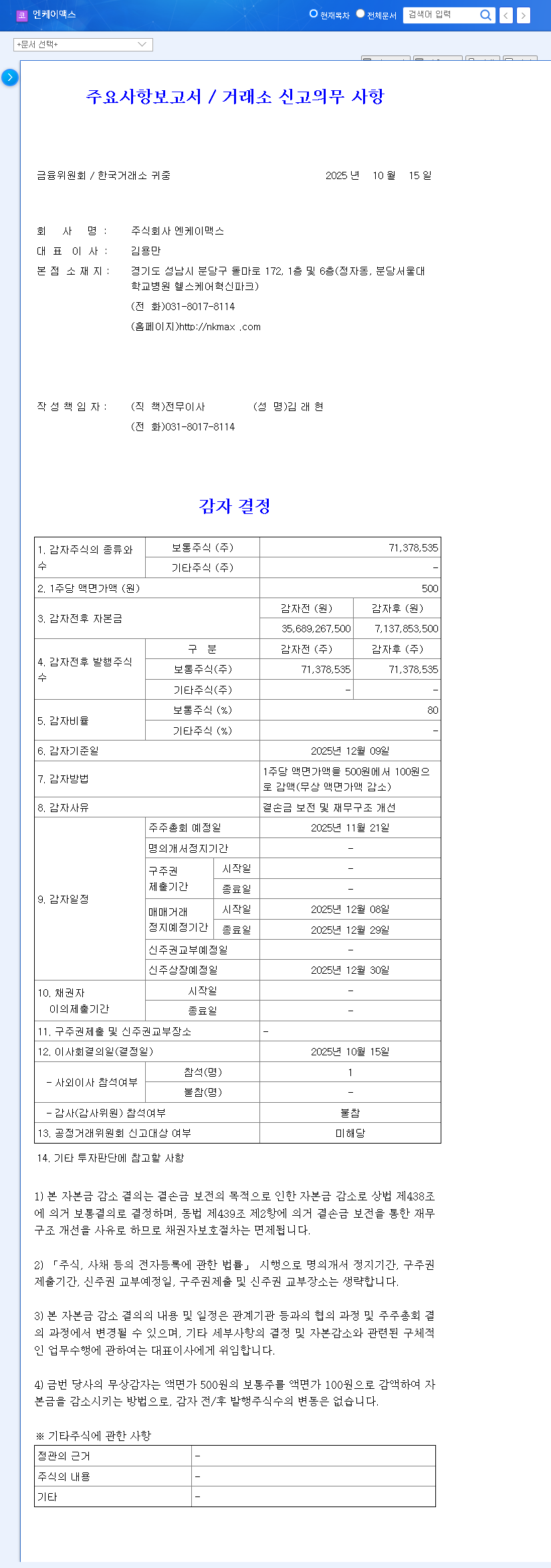
On October 15, 2025, NKMAX Co., Ltd. filed a major disclosure confirming its decision for a gratuitous capital reduction. This is not a simple accounting adjustment; it’s a fundamental change to the company’s capital structure. According to the Official Disclosure (Source: DART), the key details are as follows:
- •Reduction Ratio: A significant 80% reduction of common shares.
- •Method: Retirement of 71,378,535 shares by reducing the par value from 500 KRW to 100 KRW per share. This is a ‘gratuitous’ reduction, meaning shareholders receive no compensation for the retired shares.
- •Shareholders’ Meeting: November 21, 2025
- •Trading Suspension: From December 8, 2025, to December 29, 2025.
- •Trading Resumption: December 30, 2025.
Why Is NKMAX Taking This Drastic Step?
The company’s stated purpose for this move is to ‘cover accumulated deficits and improve the financial structure.’ In essence, NKMAX has been operating at a loss for a period, and these losses have eroded its capital base. When a company’s accumulated deficit exceeds a certain portion of its capital, it enters a state known as ‘capital impairment.’ This is a serious financial condition that can lead to administrative designation by the stock exchange or, in worst-case scenarios, delisting. This NKMAX capital reduction is a preemptive and aggressive measure to wipe the slate clean, eliminate the deficit on paper, and present a healthier balance sheet to the market, regulators, and potential future investors.
The Impact on You: An In-Depth Shareholder Analysis
For an existing shareholder, the consequences are direct and multifaceted. It’s crucial to understand both the immediate effects and the potential long-term implications.
Understanding Shareholder Value Dilution
The most immediate impact is on your share count. With an 80% reduction, if you hold 100 shares of NKMAX stock, you will only have 20 shares after the process is complete. While the theoretical price per share should increase fivefold upon trading resumption to maintain the same market capitalization, the market rarely behaves so perfectly. The perception of financial trouble often leads to a post-reduction stock price that doesn’t fully compensate for the reduced share count, resulting in a net loss for shareholders.
Brace for Increased Stock Price Volatility
Expect significant price swings. From the announcement to the trading suspension period and especially upon resumption, the stock will be highly volatile. The market will be trying to price in both the negative signal of the company’s past struggles and the potential positive of a cleaner financial slate. Investor sentiment, news flow, and institutional reactions will heavily influence trading activity.
The Long-Term Goal: A Healthier Financial Future?
The bull case for this move is that it’s a necessary evil. By resolving capital impairment, NKMAX improves its financial soundness. This can make it easier and cheaper to raise new funds (e.g., through new share issuances or debt) in the future, which may be vital for funding operations and growth initiatives. A stronger balance sheet is a prerequisite for long-term survival and success.
Your Strategic Action Plan: An Investor Guide
Based on this capital reduction analysis, investors must proceed with caution and diligence. Here are the recommended steps:
- •Conduct Deep Fundamental Research: Go beyond the announcement. Scrutinize NKMAX’s recent financial statements. Is revenue growing? What are the cash flow trends? Does the company have a viable plan to return to profitability post-restructuring? You can learn more about financial statement analysis to aid your research.
- •Monitor Market Reactions and News: Pay close attention to analyst reports and financial news from authoritative sources. Outlets like Bloomberg or Reuters often provide expert commentary that can offer additional perspective on market sentiment.
- •Re-evaluate Your Thesis: Does this event change your original reason for investing in NKMAX? If you invested for growth, assess whether the path to growth is now clearer or more obstructed. If it was a value play, re-calculate the value based on the new capital structure.
Frequently Asked Questions (FAQ)
Q1: What is NKMAX’s capital reduction and why is it happening?
A1: It’s an 80% gratuitous capital reduction where four out of every five shares will be cancelled. NKMAX is doing this to cover its accumulated financial losses and repair its balance sheet, a process known as improving the financial structure.
Q2: What happens to my shares after the NKMAX capital reduction?
A2: Your number of shares will decrease by 80%. For example, 100 shares will become 20 shares. This directly reduces your holdings and can lead to a dilution of your investment’s total value.
Q3: How will this decision affect the NKMAX stock price?
A3: In the short term, such news is typically viewed negatively and can cause the stock price to fall. Long-term performance will depend entirely on whether the company can successfully leverage its improved financial structure to achieve profitability and growth.
Leave a Reply