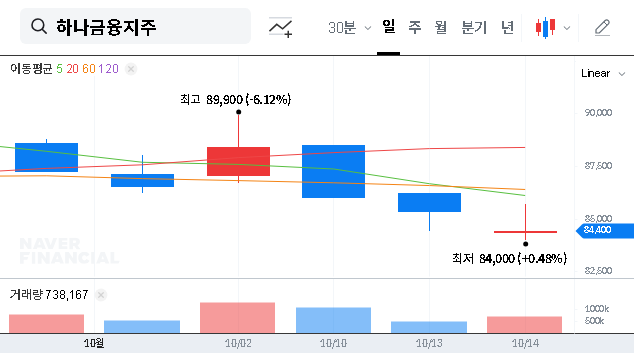
In a significant strategic maneuver, Hana Financial Group has announced its intention to fully acquire Hana Non-Life Insurance. This pivotal Hana Financial Group acquisition is not merely a financial transaction; it’s a calculated move to reshape its profit structure, bolster its non-banking portfolio, and secure powerful new engines for future growth. This in-depth analysis will dissect the details of this ₩200 billion deal, evaluate its potential impact on the company’s fundamentals, and offer strategic insights for investors navigating the evolving financial landscape.
The complete integration of Hana Non-Life Insurance represents a firm commitment to diversifying revenue streams and creating a more resilient, synergy-driven financial ecosystem within the Hana Financial Group.
The Anatomy of the Deal: What’s Changing?
On October 17, 2025, the board of Hana Financial Group Inc. approved a ₩200 billion investment to acquire the remaining shares of Hana Non-Life Insurance, transitioning it into a wholly-owned subsidiary. As the existing majority shareholder, this move solidifies complete control, paving the way for seamless integration and strategic alignment. The official details of this decision were made public via the Financial Supervisory Service’s Data Analysis, Retrieval and Transfer System (DART). You can view the Official Disclosure here.
- •Acquired Company: Hana Non-Life Insurance
- •Acquisition Amount: KRW 200 billion (approx. 0.5% of capital)
- •Post-Acquisition Shareholding: 100%
- •Primary Objective: Optimize profit structure and secure a long-term growth foundation.
Analyzing the Impact of the Hana Financial Group Acquisition
This full subsidiary integration is poised to send significant ripples through Hana Financial Group’s business portfolio, profitability metrics, and overall market position. Let’s examine the potential upsides and necessary considerations.
Positive Catalysts: Strengthening the Non-Banking Core
- •Profit Structure Optimization: By fortifying its non-banking arm, the group mitigates its reliance on traditional banking income, creating a more balanced and diversified revenue portfolio that is resilient to sector-specific downturns.
- •Synergy and Efficiency: 100% ownership eliminates minority interest complexities, accelerating decision-making. This enables deep integration of IT systems, marketing campaigns, and product development, unlocking powerful cross-selling opportunities (e.g., bundling insurance with mortgages) and significant cost savings. Understanding these synergies in financial services M&A is key to evaluating the deal’s potential.
- •Agile Capital Allocation: As a full subsidiary, capital can be allocated more flexibly to support Hana Non-Life Insurance’s growth initiatives, allowing for nimble responses to market opportunities without external shareholder friction.
Potential Headwinds and Integration Risks
- •Financial Soundness: While the ₩200 billion cash outlay is minor relative to the group’s total capital (0.5%), it still represents a deployment of resources. Prudent management of capital adequacy ratios will be essential to maintain market confidence.
- •Valuation Scrutiny: The market will closely analyze the acquisition price. If it is perceived as overvalued relative to Hana Non-Life Insurance’s growth prospects, it could trigger a negative reaction from investors. For context, see how markets react to similar deals on platforms like Bloomberg.
- •Regulatory and Integration Hurdles: The insurance sector is heavily regulated. The post-acquisition integration process must be meticulously planned to navigate regulatory requirements and avoid operational disruptions that could delay synergy realization.
Conclusion and Investment Outlook
The Hana Financial Group acquisition of Hana Non-Life Insurance is a strategically sound, forward-looking decision. It signals a clear intent to build a more robust and diversified financial institution. The investment size poses a limited risk to the group’s overall financial health, while the potential for long-term value creation through synergy and enhanced Hana Financial Group growth in the non-banking sector is substantial.
For investors, the key is to monitor the execution. Success will hinge on a smooth integration process, the demonstration of tangible cost savings, and a clear uptick in cross-selling revenue. While short-term market volatility is possible, the long-term outlook appears positive, provided management delivers on its strategic promises. Maintaining a position based on fundamental analysis and a close watch on post-merger performance indicators is the recommended approach.

Leave a Reply