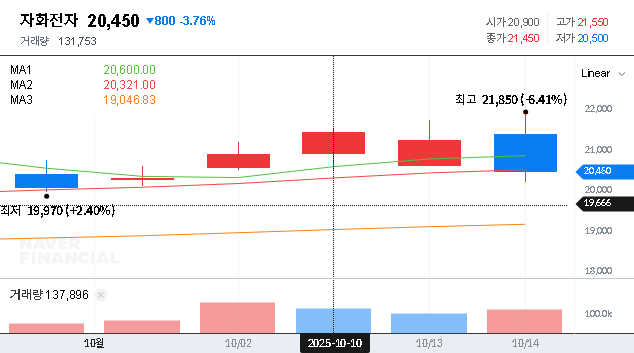
The recent JAHWA ELECTRONICS Vietnam investment has sent ripples through the electronic components market. The company’s decision to acquire a 100% stake in its Vietnamese subsidiary, JAHWA VINA CO., LTD., is a significant strategic pivot. This move, representing a massive capital injection, is designed to fortify its global competitiveness and secure future growth engines. But for investors, this decision presents a crucial question: is this a masterstroke for long-term dominance or a short-term financial gamble? This in-depth analysis will dissect the investment’s details, evaluate the company’s financial health, and weigh the potential rewards against the inherent risks to provide a clear outlook for stakeholders.
The Landmark Deal: 100% Acquisition of JAHWA VINA
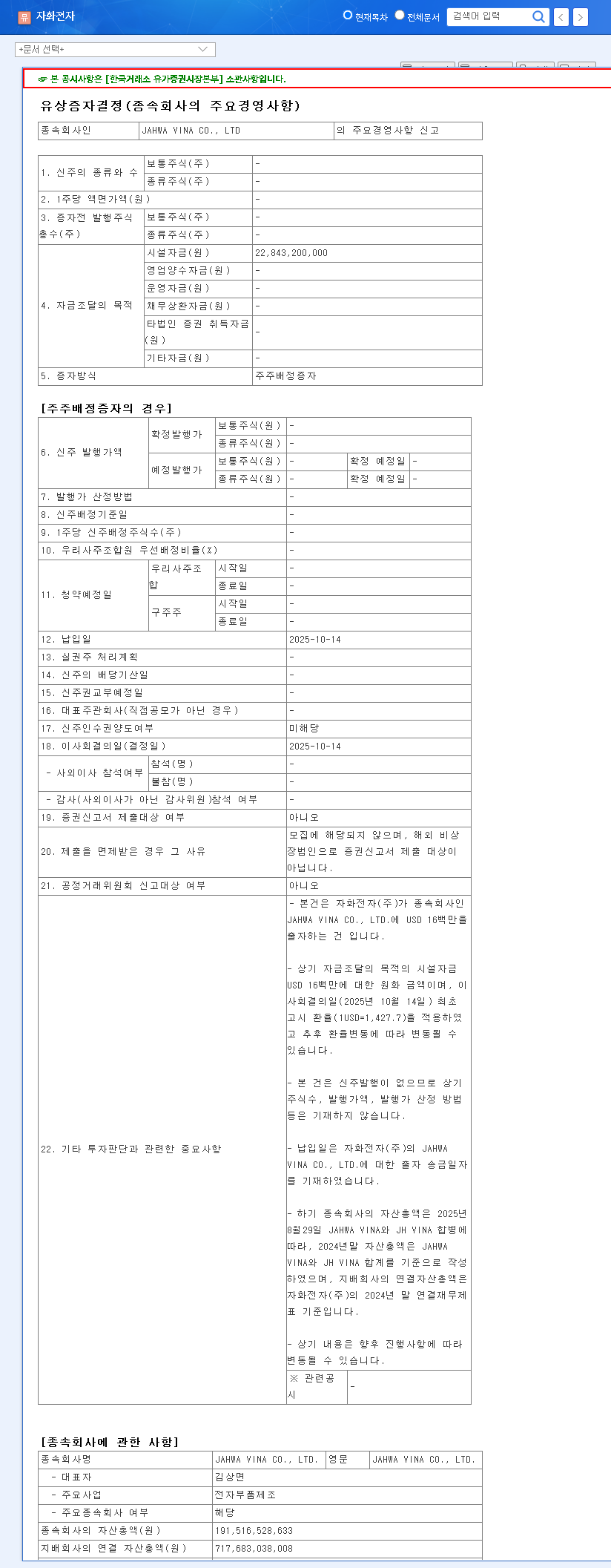
On October 14, 2025, JAHWA ELECTRONICS formally announced its resolution to acquire all remaining shares of JAHWA VINA CO., LTD. The transaction, valued at a substantial 22.8 billion Korean Won (approximately $17.5 million USD), will elevate its ownership to a full 100%. According to the Official Disclosure, these funds are explicitly earmarked for facility expansion, including the purchase of a new factory site in Vietnam. This cash acquisition underscores a definitive strategy to consolidate control and scale up operations in one of Southeast Asia’s most vital manufacturing hubs.
Strategic Rationale: Why Go All-In on Vietnam?
This full acquisition is far more than a simple line item on a balance sheet; it’s a calculated move to reinforce JAHWA’s long-term strategic pillars. Vietnam has long been a critical overseas production base, and this investment solidifies its importance.
Enhancing Global Competitiveness & Supply Chain Resilience
Full ownership grants JAHWA ELECTRONICS unparalleled control over its Vietnam operations. This allows for streamlined decision-making, rapid expansion of production capacity, and aggressive pursuit of cost competitiveness. In an era of geopolitical tensions, this move also enhances supply chain diversification, reducing reliance on single-country manufacturing and providing a more stable production network for its global clients.
Fueling Future Growth Engines
JAHWA ELECTRONICS is renowned for its R&D prowess, consistently investing over 6-15% of sales into next-generation technologies. This investment provides the physical infrastructure to mass-produce its cutting-edge products.
- •Advanced Smartphone Components: Core technologies like Folded Zoom and OIS (Optical Image Stabilization) are critical in the premium smartphone segment. The expanded Vietnamese facility will be crucial for meeting the high-volume demands of top-tier smartphone manufacturers. You can learn more about our OIS technology analysis here.
- •Automotive and ADAS: The company is strategically venturing into high-growth sectors like ADAS (Advanced Driver-Assistance Systems) camera systems. As the automotive industry shifts towards autonomous driving, the demand for sophisticated camera modules is set to explode. This Vietnam base will serve as a foundational manufacturing hub for these new ventures.
Current Financial & Business Landscape (H1 2025)
Before this major capital outlay, JAHWA ELECTRONICS’ financial situation was a mixed bag. Analysis of its H1 2025 report reveals a company with a rock-solid balance sheet facing near-term profitability headwinds.
Despite a recent dip in profitability, JAHWA’s exceptionally low debt-to-equity ratio provides a powerful financial cushion, enabling this bold, forward-looking investment in its Vietnam operations.
Key Financial Indicators
- •Profitability Under Pressure: Operating and net profits saw a significant year-on-year decline, slipping into a deficit due to falling sales and rising costs.
- •Robust Financial Health: The company maintains an extremely stable financial structure, evidenced by a debt-to-equity ratio of just 0.35x and a current ratio of 1,149.35%. This indicates very low bankruptcy risk and strong liquidity.
- •Market Headwinds: The core smartphone market faces intense competition and technological shifts, according to recent market analysis from industry experts. Additionally, macroeconomic volatility, including fluctuating exchange rates and interest rates, poses an ongoing risk to profitability.
Event Impact Analysis: Positives vs. Potential Risks
The JAHWA ELECTRONICS Vietnam investment is a double-edged sword, presenting immense long-term opportunities alongside notable short-term challenges.
The Bull Case (Positive Impacts)
- •Long-Term Growth Secured: Solidifying the Vietnam production base is a crucial step to expanding capacity, improving efficiency, and securing a competitive edge for the next decade.
- •Future-Proofing: This provides the manufacturing backbone needed to capitalize on R&D in high-growth areas like ADAS, positioning the company beyond the mature smartphone market.
- •Shareholder Confidence: This decisive, long-term strategic action, coupled with a history of share buybacks, signals a management team committed to creating sustainable shareholder value.
The Bear Case (Potential Risks)
- •Short-Term Financial Strain: The ₩22.8 billion cash outlay could temporarily tighten liquidity, and any need for additional financing would increase interest expenses in a high-rate environment.
- •Execution Risk: Large-scale factory expansions carry inherent risks. Delays, cost overruns, or a failure to achieve projected efficiencies could hamper the return on this significant investment.
- •Profitability Turnaround Needed: The investment’s success ultimately depends on a recovery in profitability. The company must prove it can improve margins and management efficiency alongside its expansion efforts.
Investor Outlook & Key Monitoring Points
The 100% acquisition of JAHWA VINA is unequivocally a positive catalyst for JAHWA ELECTRONICS’ long-term growth trajectory. However, the combination of recent earnings weakness and the large cash expenditure could create short-term volatility for the stock. Prudent investors should carefully monitor the following factors:
- •Vietnam Execution: Track quarterly reports for updates on the factory expansion timeline, capital expenditure, and initial production yields.
- •Profitability Metrics: Watch for improvements in operating margin, cost of goods sold, and net profit in subsequent earnings releases.
- •Macroeconomic Impact: Keep an eye on KRW/USD exchange rate trends and central bank interest rate policies, as these directly affect financial costs and overseas revenue.
Disclaimer: This analysis is for informational purposes only and does not constitute investment advice. All investment decisions should be made at your own discretion.
Leave a Reply