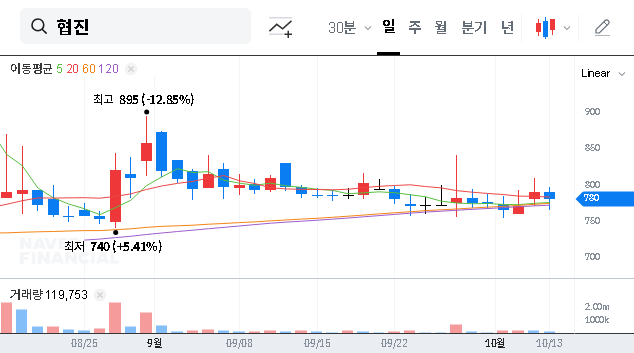
Hyupjin Co., Ltd. has entered the spotlight with a major financial move: the decision to issue 4 billion KRW in private placement convertible bonds. This strategic capital raise, representing nearly 10% of its market cap, presents a critical juncture for the company and its investors. Will this infusion of capital catalyze a new era of growth, or does the risk of shareholder dilution loom too large? This comprehensive analysis explores the specifics of the Hyupjin convertible bond, scrutinizes the company’s financial standing, and provides a clear investment framework for navigating what comes next.
This capital infusion presents a classic investor dilemma: a potential catalyst for future growth weighed against the immediate risk of shareholder dilution. Understanding the details is paramount.
Deconstructing the Hyupjin CB Issuance
On October 14, 2024, Hyupjin officially announced its plan to raise 4 billion KRW through convertible bonds (CBs). These are complex financial instruments that act as debt but can be converted into company stock. For a detailed explanation, high-authority resources like Investopedia offer excellent primers on how they work. The key terms of this specific issuance, as detailed in the Official Disclosure (Source: DART), are crucial for any Hyupjin stock analysis:
- •Issue Amount: 4 billion KRW (approx. 9.76% of market cap)
- •Conversion Price: 789 KRW per share
- •Coupon Rate: 0% (Investors are betting on stock appreciation, not interest payments)
- •Maturity Yield: 3%
- •Conversion Period: November 14, 2026, to October 14, 2028
- •Primary Investors: Hans Luce, Han Jong-hee, Min Kyung-sun, Min Sung-jin
The conversion price is set just above the recent stock price, a mildly optimistic signal. However, the 0% coupon rate unequivocally shows that the investors’ primary goal is to profit from converting these bonds into equity if and when Hyupjin’s stock price rises above 789 KRW.
Financial Health & Strategic Context
To understand this Hyupjin CB issuance, we must look at the company’s current state. Since pivoting to food processing machinery in 2021, Hyupjin has been actively seeking new avenues for growth. Financially, the picture is mixed.
A Balance Sheet in Transition
On the positive side, the company has drastically improved its balance sheet. The debt-to-equity ratio plummeted from 70.22% to a very healthy 26.83% in the year prior, while the current ratio soared, indicating strong short-term liquidity. However, this stability is contrasted by struggles on the income statement. Despite rising sales, Hyupjin posted operating and net losses, with forecasts suggesting continued pressure on profitability. For a deeper dive, review our internal guide on Analyzing Key Financial Ratios.
Navigating a Tough Market
The company’s stock has been in a downtrend amid weak investor sentiment and profitability concerns. This issuance comes at a time of macroeconomic headwinds, including high interest rates and currency fluctuations. This environment makes traditional financing difficult, often pushing companies toward alternative methods like a convertible bond investment to secure necessary operational funds.
Impact Analysis: Growth Engine vs. Shareholder Dilution
The issuance of a large-scale convertible bond is a double-edged sword. It creates both significant opportunities and tangible risks.
The Bull Case: Fueling the Future
The 4 billion KRW in capital provides vital resources. These funds, earmarked for operational expenses, can stabilize the company, fund R&D, or finance strategic expansion into new markets. If management deploys this capital effectively to generate profits that outpace the potential dilution, the long-term effect on shareholder value will be overwhelmingly positive.
The Bear Case: The Dilution Overhang
The primary risk is shareholder dilution. If the bonds are converted, the total number of outstanding shares will increase, reducing the ownership percentage of existing shareholders. This can put downward pressure on the stock price, as the company’s earnings are spread across more shares. The news of a CB issuance alone often causes a short-term negative stock reaction due to this very concern.
Investor Strategy Checklist for the Hyupjin Convertible Bond
For current and prospective investors, a cautious and well-researched approach is vital. Consider the following key points:
- •Monitor Fund Utilization: Demand transparency from Hyupjin on how the 4 billion KRW is being used. Are they making smart, value-accretive investments or simply plugging operational holes?
- •Track Profitability Metrics: The ultimate test is whether this capital translates to improved operating and net income. Watch quarterly earnings reports closely for a turnaround.
- •Watch the Stock Price vs. Conversion Price: As the stock price approaches the 789 KRW conversion price, the likelihood of conversion (and dilution) increases. This can create an overhang or ceiling on the stock price.
- •Assess Management’s Strategy: Listen to company announcements and investor calls. Is there a clear, compelling vision for growth that justifies this financing decision?
In conclusion, the Hyupjin convertible bond is a pivotal event. While it secures much-needed capital to navigate a challenging period, it introduces significant risks for equity holders. Diligent monitoring and a critical analysis of the company’s subsequent performance are essential for any sound investment decision.

Leave a Reply