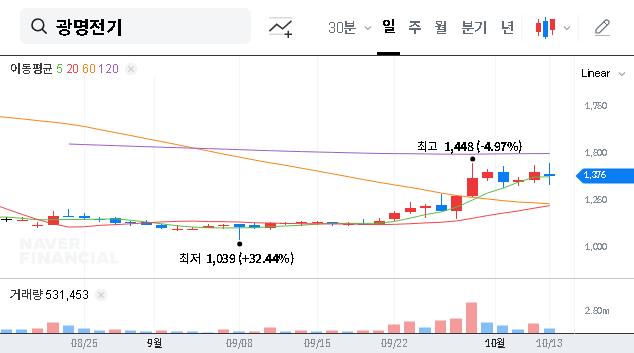
The recent announcement from KWANG MYUNG ELECTRIC CO.,LTD (017040) regarding the cancellation of its planned KRW 30 billion convertible bond (CB) issuance has sent ripples through the investment community. This isn’t just a minor adjustment to a funding schedule; it’s a significant strategic decision that offers a window into the company’s current priorities, balancing robust financial stability against its ambitious growth strategy. For investors, understanding the nuances behind this convertible bond cancellation is key to anticipating the company’s next moves.
Initially reported in mid-2024, the CB issuance was seen as a way to fuel expansion, especially after a change in ownership signaled a new era for the company. However, the final decision to halt the plan, confirmed in a later disclosure, paints a different picture—one of prudence and confidence in its existing financial health. This analysis will explore the multifaceted implications of this decision for KWANG MYUNG ELECTRIC CO.,LTD and its stakeholders.
Dissecting the Convertible Bond Cancellation
A convertible bond is a hybrid financial instrument that starts as a loan but gives the holder the option to convert it into a set number of company shares. Companies use CBs to raise capital at a lower interest rate than traditional loans. The cancellation of such an issuance by KWANG MYUNG ELECTRIC CO.,LTD suggests a pivotal reassessment of its capital needs and market outlook. The company officially confirmed this move in its public filing. (Source: Official Disclosure on DART).
By forgoing the ₩30 billion CB issuance, KWANG MYUNG ELECTRIC CO.,LTD is signaling a strong preference for maintaining a pristine balance sheet and protecting existing shareholder value over leveraging debt for immediate expansion.
The Positive Impact: A Fortress of Financial Stability
The most immediate benefit of the convertible bond cancellation is the reinforcement of the company’s already impressive financial health. This decision directly addresses and mitigates several potential risks.
- •Preservation of Shareholder Value: The primary risk of a CB is dilution. Had the bonds been converted, it would have increased the number of outstanding shares, reducing the ownership percentage and potentially the earnings per share for existing investors. This cancellation completely removes that threat.
- •Strengthened Balance Sheet: The company’s financial metrics have been on a strong upward trend. Between 2022 and 2023, its debt-to-equity ratio plummeted from 70.22% to a very healthy 26.83%, while its current ratio (a measure of liquidity) soared from 185.40% to 389.86%. Avoiding ₩30 billion in new potential debt solidifies this robust financial position.
- •Resolution of Market Uncertainty: The pending CB issuance created a degree of uncertainty in the market. Its definitive cancellation provides clarity to investors and boosts corporate credibility, demonstrating financial self-sufficiency.
Navigating the Growth Path Forward
Alternative Funding for a New Business Venture
While financial health is paramount, the cancellation raises questions about the funding for future growth initiatives. The capital was likely earmarked for strategic investments, particularly the company’s planned entry into transformer manufacturing and sales, a new business purpose set to be added in March 2025. This move into a potentially high-growth sector requires significant capital. Investors should now watch for announcements regarding alternative funding strategies, which could include using existing cash reserves, securing traditional bank loans, or forming strategic partnerships. For more on evaluating industrial sector investments, you can explore our guide to analyzing industrial stocks.
The Macroeconomic Backdrop
The decision was likely influenced by the broader economic climate. With global interest rates stabilizing at higher levels than in previous years, the cost of debt has risen. Opting out of the CB issuance could be a prudent move to avoid locking in unfavorable terms. As explained by sources like Investopedia, higher interest rates can make equity financing or internal funding more attractive than debt. This cautious approach may serve KWANG MYUNG ELECTRIC CO.,LTD well in a volatile market.
Frequently Asked Questions (FAQ)
Is the CB issuance cancellation good news for KWANG MYUNG ELECTRIC?
In the short term, yes. It is a positive signal of financial discipline that prevents new debt and protects shareholders from dilution, thereby solidifying the company’s strong financial standing and reducing market uncertainty.
How does this affect the company’s future growth plans?
It may delay or alter the execution of its growth strategy. If the CB was intended to fund the new transformer manufacturing business, the company must now secure alternative financing. The key will be how quickly and efficiently it can deploy a new funding plan.
What should investors monitor now?
Investors should focus on upcoming disclosures related to the company’s capital expenditure plans and funding strategies for the new transformer business. Monitoring quarterly reports for cash flow trends and any new debt arrangements will be crucial to understanding the long-term impact of this decision.

Leave a Reply