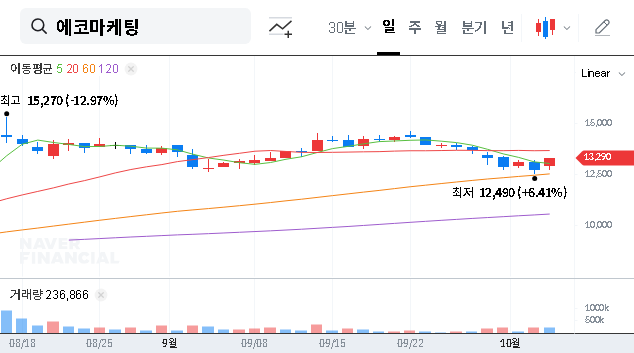
The recent Ecomarketing stake change, involving major shareholder Kim Cheol-woong and related parties, has sent ripples through the investment community. This development raises critical questions: What does this mean for Ecomarketing’s future? How will it impact the stock price, and what is the smartest way for investors to navigate this event? This comprehensive analysis unpacks the official disclosure, examines Ecomarketing’s fundamentals, and outlines a clear investment strategy for 2025 and beyond.
We will delve deep into the specifics of the shareholding report, the company’s robust financial performance, and the macroeconomic landscape to provide a holistic view for both short-term traders and long-term investors focused on Ecomarketing’s fundamentals.
Decoding the Ecomarketing Stake Change: A Detailed Breakdown
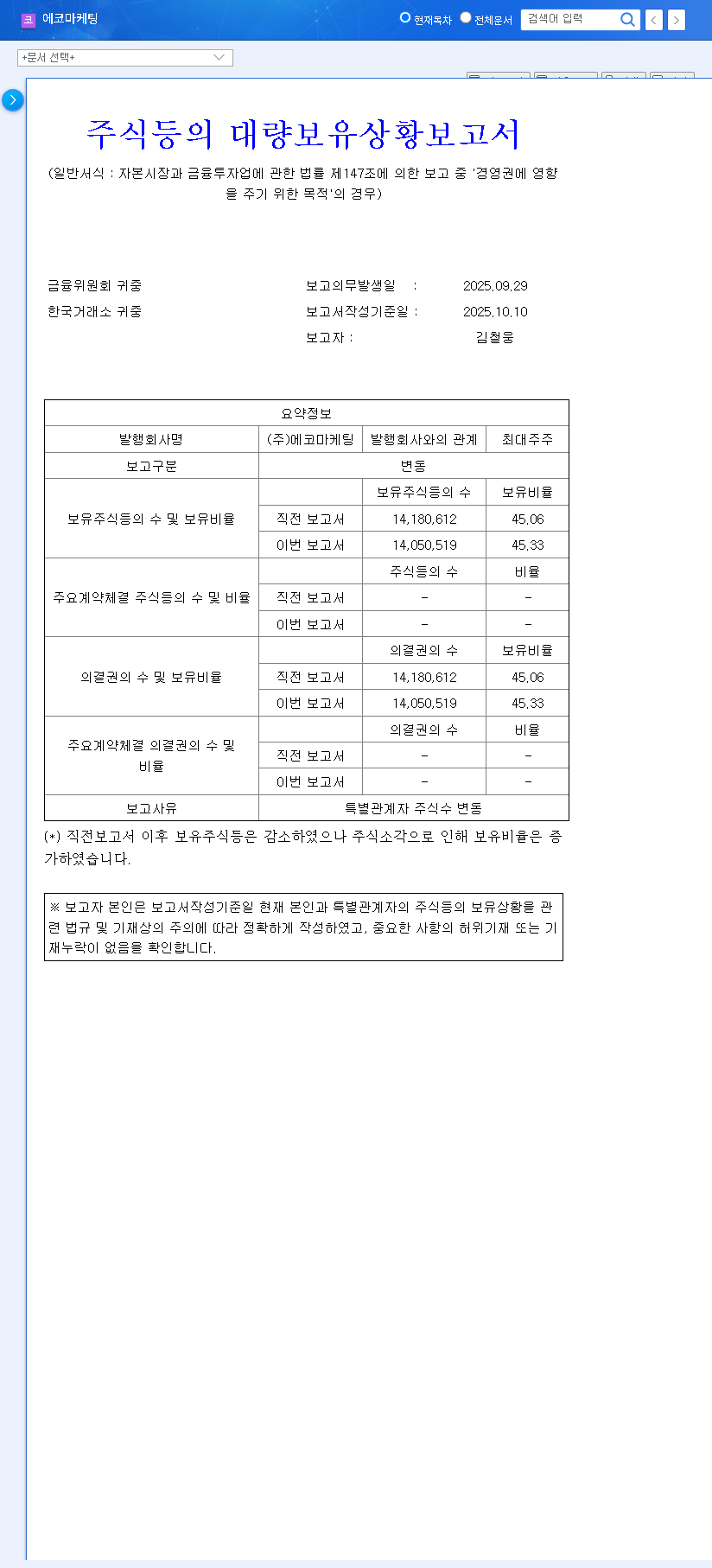
On October 10, 2025, a mandatory disclosure revealed a shift in the shareholding structure of Ecomarketing’s principal shareholder, Kim Cheol-woong, and his associates. Understanding the nuances of this report is the first step in a thorough Ecomarketing stock analysis.
Key Details from the Official Disclosure
- •Report Date: October 10, 2025
- •Primary Filer: Kim Cheol-woong
- •Holding Purpose: Influence on Management Rights
- •Holding Before Change: 45.06%
- •Holding After Change: 45.33% (+0.27%)
- •Reason for Change: A related party, Ms. Gong Seong-ah, conducted an open market sale of 130,193 shares.
The core of this event is the market sale by a related party. While this action decreased her personal holdings, the overall stake of the controlling group saw a minor increase. Crucially, Kim Cheol-woong’s personal stake did not change. This suggests the change is not a signal of weakened control but rather a managed adjustment within the shareholder group. For full transparency, you can view the Official Disclosure (DART Report) directly.
Ecomarketing’s Fundamentals: The ‘Why’ Behind the Stake Change
To properly contextualize the Ecomarketing stake change, we must assess the company’s current financial health and market position. Ecomarketing is not just a single entity; its strength lies in its diverse and growing subsidiaries.
Stellar Growth and Solid Financials (Q1 2025)
- •Impressive Revenue: Consolidated revenue surged to KRW 203.24 billion, a 26.77% increase year-over-year, largely thanks to the phenomenal performance of subsidiaries Andar and Daily&co.
- •Profitability Note: Operating profit margin saw a slight dip to 10.73%, a calculated move resulting from aggressive investments in subsidiary expansion.
- •Financial Stability: The debt-to-equity ratio remains at a healthy 51.13%, and operating cash flow has shown significant year-over-year improvement.
Thriving in High-Growth Industries
Ecomarketing operates at the intersection of several booming markets. Its core advertising agency leverages AI-driven solutions, a key competitive advantage. The Direct-to-Consumer (D2C) e-commerce segment, a core part of its strategy, allows for rich customer data acquisition and powerful personalized marketing. Furthermore, the global athleisure market, propelled by wellness trends, provides a massive runway for growth for its apparel brands. This trend is well-documented by major market analysis firms like Forrester Research.
Stock Price Impact and Future Outlook
The market often reacts with uncertainty to insider sales. In the short term, the market sale by Ms. Gong Seong-ah could introduce selling pressure and increase stock volatility. However, long-term investors should focus on the bigger picture. The motive for the sale is likely personal portfolio management rather than a negative outlook on the company, especially given that management control remains firmly in place with a 45.33% stake. This stability is a crucial factor in any long-term Ecomarketing investment thesis.
When combined with the company’s strong fundamentals and the continued growth momentum of its key subsidiaries, the long-term outlook remains positive. Investors should consider reading our in-depth analysis of Andar’s growth strategy to understand this key revenue driver better.
A Smart Ecomarketing Investment Strategy
Overall Opinion: Maintain a ‘Neutral’ stance and monitor key developments. The fundamentals are strong, but the stake sale introduces short-term uncertainty. The minor nature of the change and stable management control limit the long-term negative impact.
Action Plan for Investors
- •For Short-Term Traders: Exercise caution. The increased selling volume could create price volatility. A wait-and-see approach is prudent until the market fully absorbs this news.
- •For Long-Term Investors: Focus on the fundamentals. Monitor quarterly earnings for sustained growth in the advertising and apparel segments. Pay close attention to the company’s management of its debt and cash flow as it continues to invest in expansion. Any dips caused by short-term sentiment could present a buying opportunity for those with a long-term horizon.
Disclaimer: This article is for informational purposes only and does not constitute financial advice. Investors are responsible for their own investment decisions.
Frequently Asked Questions (FAQ)
Q1: What exactly was the Ecomarketing stake change?
On October 10, 2025, it was disclosed that a related party of major shareholder Kim Cheol-woong sold 130,193 shares on the open market. This was a minor adjustment, and the total controlling stake actually increased slightly to 45.33%.
Q2: Should investors be worried about Ecomarketing’s management stability?
No. The controlling stake held by Kim Cheol-woong and related parties remains very high at 45.33%. This minor change does not pose any threat to management stability or control.
Q3: How are Ecomarketing’s fundamentals and financial health?
As of Q1 2025, Ecomarketing’s fundamentals are strong. The company posted a significant 26.77% year-over-year revenue increase, driven by its subsidiaries. Its financial health is stable, with a manageable debt-to-equity ratio and greatly improved operating cash flow.
Q4: What is the recommended investment action for Ecomarketing stock now?
The recommended stance is ‘Neutral’. While the company’s growth is promising, the stake sale could create short-term market noise. Long-term investors should monitor the company’s performance and financial management, viewing potential dips as possible entry points, while short-term traders should wait for volatility to subside.
Leave a Reply