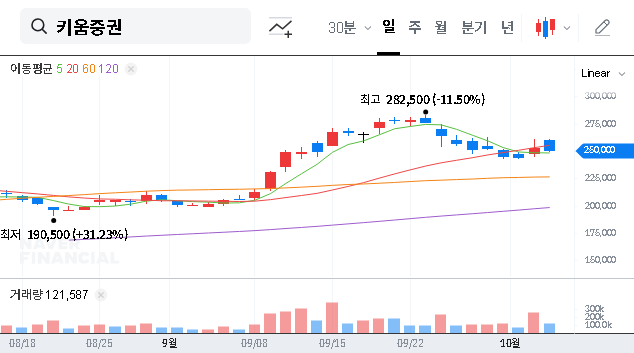
The financial markets are buzzing after news broke of a significant divestment in Kiwoom Securities stock (039490) by a major institutional investor. Orbis Investment Management’s large-scale sell-off on October 10, 2025, has sent ripples through the investment community, leaving many to wonder: Is this a warning sign of underlying trouble or a golden opportunity to buy into a market leader at a discount? This comprehensive 2025 analysis will dissect the event, evaluate Kiwoom Securities’ fundamentals, and provide actionable strategies for investors navigating this pivotal moment.
When a major fund like Orbis adjusts its portfolio, the market listens. The key isn’t to panic, but to understand the ‘why’ behind the sale and weigh it against the company’s intrinsic value. Often, these events create short-term noise that can obscure long-term strength.
The Orbis Sell-Off Explained: What Really Happened?
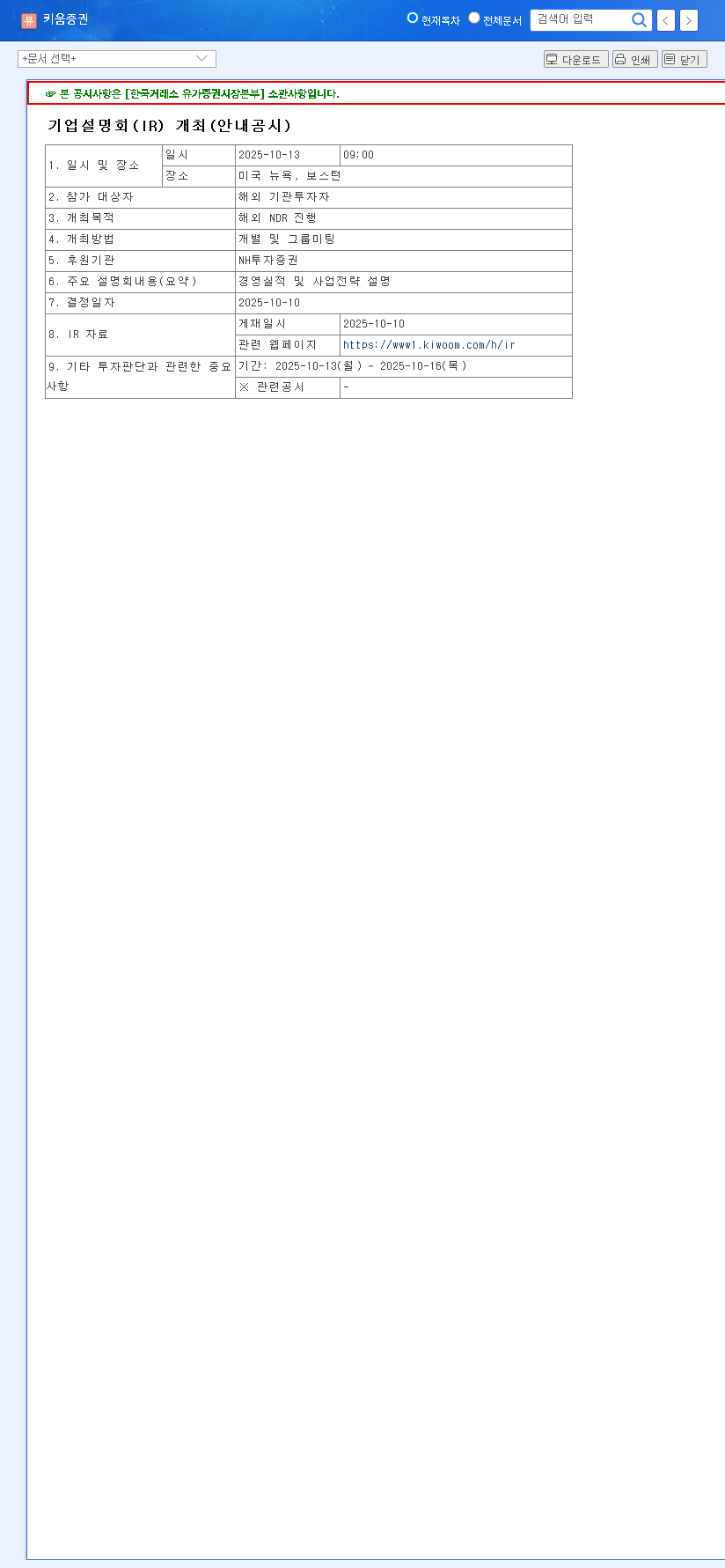
On October 10, 2025, Kiwoom Securities formally reported a significant change in its shareholding structure. Orbis Investment Management Limited/Bermuda, a respected global investment firm, executed a substantial sale of its holdings. The move was officially documented in an ‘Abbreviated Report on Large-Scale Stock Holdings’.
According to the filing, the details are clear:
- •Change in Stake: Orbis’s ownership in Kiwoom Securities dropped from 8.81% to 7.27%, a reduction of 1.54 percentage points.
- •Stated Reason: The primary motivation cited for the sale was ‘investment fund recovery,’ not a negative outlook on Kiwoom’s future. This is a crucial distinction for investors.
- •Official Source: The complete details of the transaction are publicly available in the Official Disclosure filed with DART.
This action by a major institutional holder inevitably creates short-term supply pressure on the market. However, a deeper look reveals that the Kiwoom Securities fundamentals remain exceptionally strong, suggesting the sell-off may be disconnected from the company’s operational health.
Beyond the Headlines: A Deep Dive into Kiwoom Securities’ Fundamentals
Despite the market jitters, Kiwoom Securities’ 2025 semi-annual report paints a picture of a company firing on all cylinders. The underlying business is not just stable; it’s thriving.
Dominant Market Position & Profit Growth
Kiwoom’s performance in the first half of 2025 was stellar. Operating profit surged to KRW 733.8 billion (a 12.9% year-over-year increase), while net profit climbed to KRW 545.7 billion (a 14.4% increase). This growth is anchored by its undisputed leadership in the online brokerage space, where it commands a retail market share of nearly 30%. This dominance allows it to capitalize on market trends, such as the continued high engagement from retail investors.
Diversified Revenue and Financial Fortitude
A key strength of the Kiwoom Securities stock thesis is its diversified business model. The company isn’t solely reliant on brokerage fees. It has shown balanced growth across its S&T (Sales & Trading), investment banking (IB), and investment operations. Furthermore, its financial health is top-tier, with a net capital ratio of 1,344.47%—far exceeding regulatory requirements and providing a massive cushion against market volatility. For a more detailed look at financial stability metrics, investors can consult resources from major outlets like Reuters.
Stock Price Impact: Short-Term Volatility vs. Long-Term Value
The Orbis sell-off will undoubtedly have an impact on Kiwoom’s stock price, which can be broken down into two distinct phases.
- •Short-Term Pressure: In the immediate term, the sale of a 1.54% stake introduces a significant supply of shares into the market. This can lead to downward price pressure and a dip in investor sentiment as the market absorbs this new volume.
- •Long-Term Outlook: Because the sale is not tied to a flaw in Kiwoom’s business, its long-term impact on the company’s intrinsic value is expected to be minimal. In fact, removing this potential ‘overhang’ of a large seller could improve the supply-demand dynamic in the future, creating a more stable foundation for price appreciation.
Smart Investment Strategies for Kiwoom Securities Stock
Given this context, how should an investor approach Kiwoom Securities stock? The right strategy depends on your time horizon and risk tolerance.
For the Long-Term, Value-Oriented Investor
Investors who believe in the robust Kiwoom Securities fundamentals may view any price dip caused by the Orbis sale as a strategic entry point. A dollar-cost averaging approach, or accumulating shares in staggered purchases during periods of weakness, could be a prudent way to build a long-term position in a market leader. This strategy aligns with the company’s strong performance and shareholder return policies.
For the Short-Term, Cautious Trader
Those with a shorter time frame should proceed with caution. It is wise to monitor trading volumes and price action to see how quickly the market absorbs Orbis’s divested shares. Waiting for the price to stabilize before entering a position could help mitigate the risk of further downward volatility. Understanding market sentiment is key, and our guide to technical analysis can provide further insights.
Conclusion: While the Orbis sell-off has created short-term uncertainty around Kiwoom Securities stock, a thorough analysis reveals that the company’s core business remains exceptionally strong. Its market dominance, financial stability, and commitment to shareholder value present a compelling long-term case. For discerning investors, the current market noise could be the very opportunity they have been waiting for.
Disclaimer: This article is for informational purposes only and does not constitute financial advice. All investment decisions are the sole responsibility of the investor.
Leave a Reply