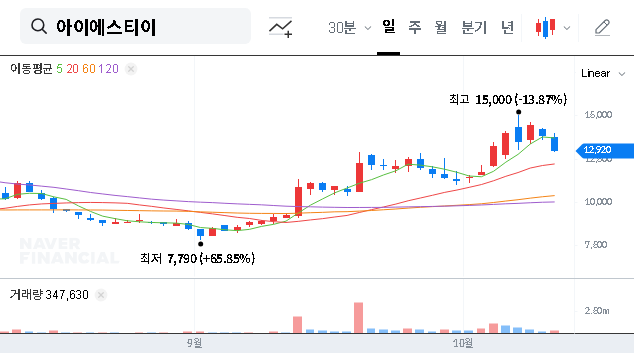
The recent news of the ISTE Co.,Ltd. stock option exercise has generated significant buzz in the investment community. With 120,000 new shares poised for listing, such an event is often viewed as a bullish signal—an insider vote of confidence in the company’s future. However, for ISTE Co.,Ltd., this news lands against a backdrop of severe financial distress. Is this a genuine sign of a turnaround, or a short-term distraction from deepening fundamental risks?
This comprehensive analysis cuts through the noise. We will dissect the specifics of the stock option plan, conduct a rigorous ISTE financial analysis, and evaluate the company’s struggling business segments. Rather than reacting to market sentiment, this guide provides the critical data you need to assess ISTE’s intrinsic value and make a well-informed investment decision.
Understanding the ISTE Co.,Ltd. Stock Option Exercise
On October 24, 2025, ISTE Co.,Ltd. announced a plan for its executives and employees to exercise their stock options, with a new share listing scheduled for November 14, 2025. According to the Official Disclosure filed with DART, the key details involve 120,000 shares, which account for 1.35% of the total outstanding shares. In theory, this move aligns the interests of key personnel with those of shareholders, motivating them to drive company growth. However, for a company in ISTE’s position, the context is everything.
Fundamental Analysis: A Company in Crisis
An investor’s enthusiasm for the stock option news should be tempered by a stark look at the company’s financial health. The underlying fundamentals paint a concerning picture that cannot be ignored.
Severe Financial Deterioration
ISTE’s recent performance reveals a company struggling with core profitability and revenue generation. The first half of 2025 was particularly alarming:
In H1 2025, revenue collapsed to 13.69 billion KRW, a staggering 74.8% decrease year-over-year. The company swung from a 63.77 billion KRW operating profit in the prior year to a massive 59.52 billion KRW operating loss.
This isn’t a one-off event. The trend of persistent losses has been evident for years, with significant negative net income and deeply negative profitability metrics like ROE. While total liabilities have decreased, this was primarily funded by financing activities (raising capital) rather than operational cash flow, indicating a reliance on external funding to stay afloat.
Struggling Business Segments
The financial strain is a direct result of underperformance in its key business units:
- •Semiconductor Equipment: The FOUP Cleaner business saw a revenue decline of 73.1%. While its PECVD equipment has potential due to the growth in the HBM market, its success is entirely contingent on a successful mass-production partnership with SK hynix—a milestone that has not yet been achieved.
- •Energy (Hydrogen) Business: This segment is in its nascent stages and is bleeding cash, recording a significant operating loss of 35.23 billion KRW on minimal revenue. As a latecomer in a capital-intensive industry, it faces immense competition and a challenging path to profitability, even with government support. For more on this sector, see this analysis of the renewable energy market.
The Two Sides of the Coin: Expectations vs. Reality
The ISTE Co.,Ltd. stock option exercise presents a classic conflict for investors. It’s crucial to weigh the potential short-term positives against the overwhelming long-term risks.
The Bull Case (Potential Positives)
- •Insider Confidence: The exercise can be interpreted as management’s belief in a future turnaround, potentially creating short-term positive momentum.
- •Increased Motivation: Employee stock ownership can foster a stronger commitment to the company’s success and long-term value creation.
The Bear Case (Significant Risks)
- •Shareholder Dilution: The introduction of 120,000 new shares will dilute the ownership stake and earnings per share (EPS) for existing investors.
- •Selling Pressure (Overhang): Once the shares are listed, there is a high risk that employees will sell them to lock in profits, creating significant downward pressure on the stock price.
- •Fundamental Disconnect: No matter the positive sentiment, a stock option event does not fix a broken business model or a disastrous income statement. The underlying ISTE fundamental risks remain.
- •Market Volatility: The success of the listing will also depend on broader market conditions, which can be unpredictable. An external source like Bloomberg can offer insights into prevailing market sentiment.
Investor Action Plan & Conclusion
Given the severe ISTE fundamental risks, a highly cautious and analytical approach is imperative. Chasing short-term momentum here could be a costly mistake.
Key Indicators to Monitor:
- •Profitability Turnaround: Do not invest until there are consecutive quarters of positive operating income and revenue growth.
- •Business Milestones: Watch for concrete news of a successful mass-production rollout of PECVD equipment or a clear, profitable path for the hydrogen business.
- •Cash Flow Health: Look for a shift from negative to positive cash flow from operations.
In conclusion, the ISTE Co.,Ltd. stock option exercise is a minor event overshadowed by major operational and financial challenges. It is not a catalyst for investment on its own. Prudent investors should remain on the sidelines, focusing on tangible improvements in the company’s core business and financial structure before considering an entry point. The risks, at present, far outweigh the speculative rewards.
Leave a Reply