Tag: Youngpoong

  • (010130) KOREA ZINC INC Stock Analysis: Youngpoong’s Stake Increase & Merger Impact

    (010130) KOREA ZINC INC Stock Analysis: Youngpoong’s Stake Increase & Merger Impact

    The corporate landscape for KOREA ZINC INC has experienced a significant shift, capturing the attention of investors and market analysts alike. A recent move by Youngpoong to substantially increase its ownership stake signals a potential new era for the company, raising critical questions about management control, strategic direction, and the possibility of a large-scale merger. This detailed analysis unpacks the event, examines the fundamental health of Korea Zinc, and provides a strategic outlook for stakeholders navigating this evolving situation.

    A Major Power Shift: Youngpoong Solidifies Control

    Dissecting the Official Disclosure

    On November 12, 2025, a pivotal filing revealed a major change in the ownership structure of KOREA ZINC INC. The reporting entity, Youngpoong, confirmed it had increased its stake from 41.25% to a commanding 44.24%. This increase resulted from a combination of a merger agreement conclusion by a special related party, open market purchases, and the inclusion of new related parties. The company left no room for ambiguity regarding its intentions.

    The explicitly stated purpose for this substantial increase in shareholding is to exert ‘management influence,’ signaling a clear intent to steer the future of KOREA ZINC INC. Full details can be reviewed in the Official Disclosure (DART).

    This move is more than just a numbers game; it represents a consolidation of power that could dramatically reshape Korea Zinc’s governance and long-term business strategy. The mention of a ‘merger agreement’ in the filing has particularly fueled speculation about a deeper integration between the two entities.

    A Deep Dive into KOREA ZINC INC’s Fundamentals

    Pioneering New Growth Frontiers

    KOREA ZINC INC has been proactively diversifying beyond its core non-ferrous metal smelting business to build a sustainable future. These initiatives are crucial for its long-term valuation.

    • Renewable Energy & Hydrogen: Investments in green energy projects, particularly in Australia, align with global ESG trends and open up new, sustainable revenue streams.
    • Secondary Battery Materials: The company is capitalizing on the EV boom by expanding its nickel sulfate and electrolytic copper foil businesses, securing long-term supply contracts to ensure stability.
    • Resource Recycling: With growing environmental regulations, its steel dust and e-waste recycling operations are becoming increasingly vital and profitable.

    Navigating the Volatile Non-Ferrous Metals Market

    The company’s core business remains tied to the global commodities cycle. Performance in the first half of 2025 was a mixed bag, with zinc and lead prices facing headwinds from a global economic slowdown. Conversely, precious metals like gold and silver saw price increases due to safe-haven demand. Investors can track these trends on high-authority platforms like the London Metal Exchange for real-time data. Korea Zinc’s reliance on long-term contracts helps mitigate some of this volatility, ensuring more predictable revenue streams.

    Financial Health Check: A Mixed But Improving Picture

    As of mid-2025, Korea Zinc’s financials showed impressive top-line growth, with sales revenue hitting KRW 7.6582 trillion (a 41.3% increase), driven by strong metal prices and its burgeoning battery materials segment. However, operating profit declined by 27.2% to KRW 530 billion, pressured by lower nickel prices and the high costs of new business investments. On a positive note, the company’s balance sheet is strengthening, with equity rising and liabilities decreasing, indicating an improving overall financial structure.

    What Youngpoong’s Move Means for Investors

    Balancing Opportunity and Risk

    Youngpoong’s strengthened control presents both potential upsides and downsides for investors in KOREA ZINC INC.

    • Positive Aspects: The end of management disputes could lead to greater stability and faster, more decisive strategic execution. If a merger proceeds, it could unlock significant synergies, enhancing competitiveness and efficiency in the non-ferrous metals market.
    • Potential Risks: A dominant controlling shareholder could potentially weaken the representation of minority shareholders. Furthermore, the path to a merger is fraught with regulatory hurdles and requires shareholder approval, introducing significant uncertainty and potential stock price volatility.

    Formulating an Investment Strategy for Korea Zinc Stock

    For those invested in or considering a position in KOREA ZINC INC, a nuanced approach is required. In the short term, the news is likely to be perceived positively, but volatility is expected as more details about the merger emerge. A prudent strategy may be to observe market reactions rather than engaging in speculative short-term trades.

    From a long-term perspective, the focus should be on the fundamental value created by Korea Zinc’s diversification efforts and the potential synergies of a merger. It is crucial to monitor key external risks, including foreign exchange fluctuations (especially USD and AUD), interest rate changes, and ongoing management-related legal matters. For more on this topic, consider reading our guide on analyzing corporate governance in emerging markets. Continuous monitoring of Youngpoong’s disclosures and Korea Zinc’s segmental performance will be paramount for making informed investment decisions.

    (010130) KOREA ZINC INC Stock Analysis: Youngpoong's Stake Increase & Merger Impact 관련 이미지
  • (010130) KOREA ZINC INC Stock Analysis: Q3 2025 Earnings Miss & Future Growth Outlook

    (010130) KOREA ZINC INC Stock Analysis: Q3 2025 Earnings Miss & Future Growth Outlook

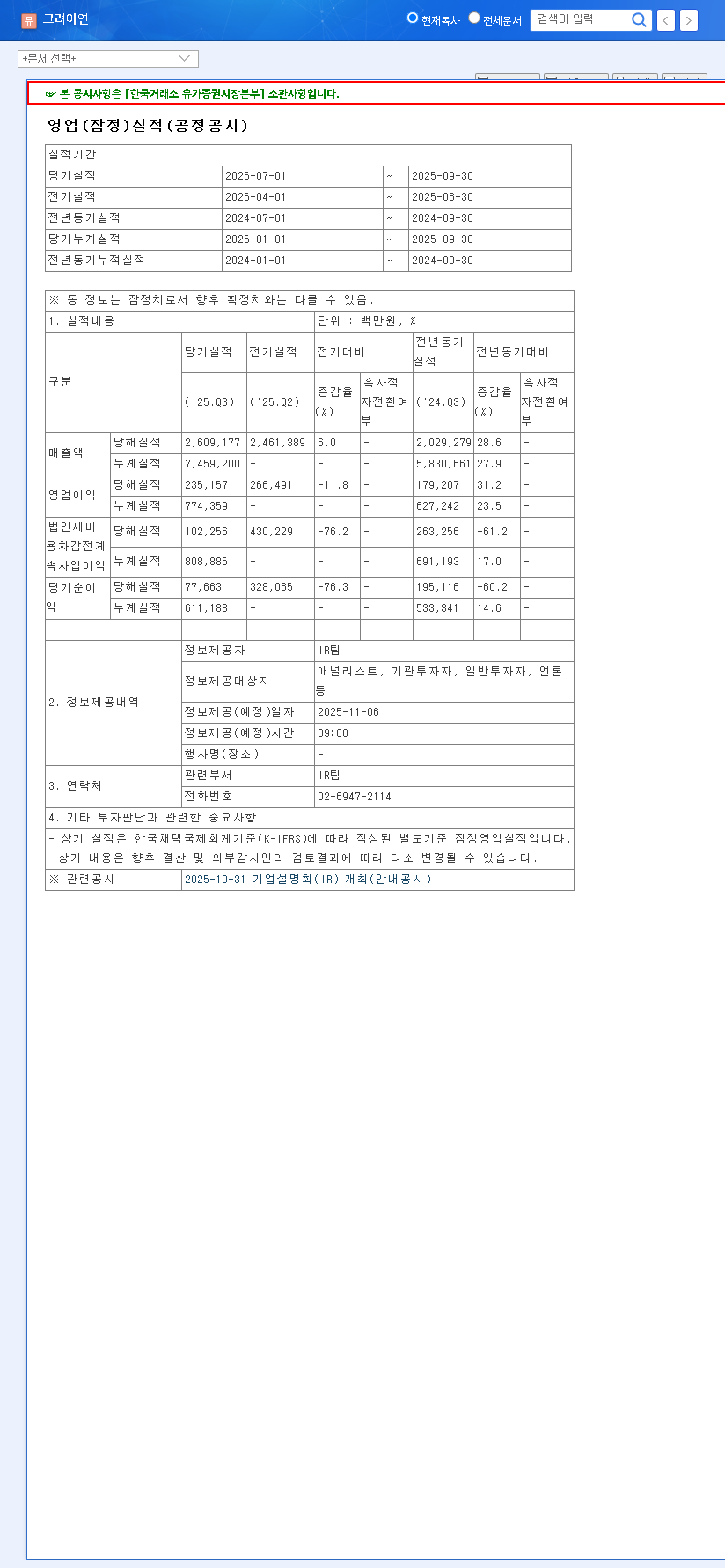
    An in-depth KOREA ZINC INC stock analysis is crucial following the company’s surprising Q3 2025 preliminary earnings report. As a global leader in the non-ferrous metals market, the company delivered results that fell significantly short of market expectations, raising red flags for investors. This deep dive will dissect the factors behind this underperformance, evaluate the long-term viability of its ambitious new ventures into secondary battery materials and renewable energy, and provide a clear outlook on what investors can expect next.

    We will meticulously analyze KOREA ZINC INC’s latest financial data, the fundamentals of its core operations, and the potential of its future growth engines to offer a comprehensive perspective on its current valuation and future trajectory.

    The Shocking Q3 2025 Earnings Report

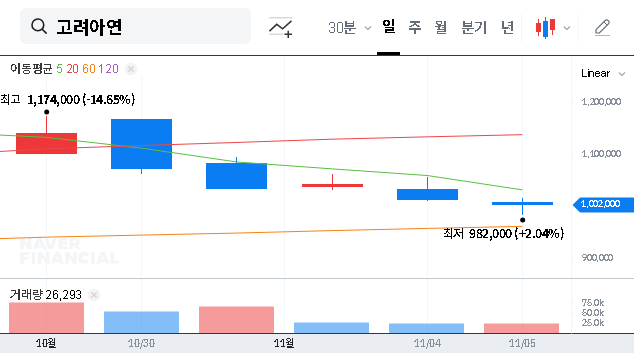
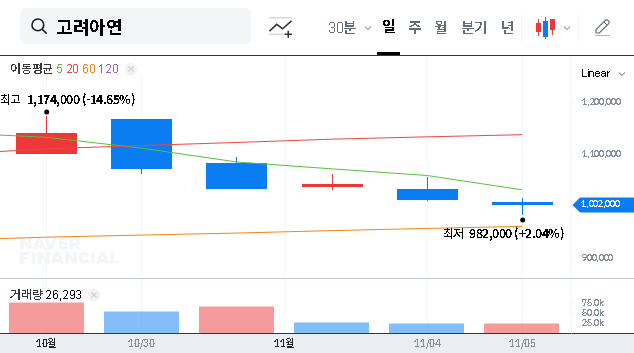
    On November 5, 2025, KOREA ZINC INC released its preliminary Q3 operating results, which sent ripples of concern through the market. The numbers revealed a significant miss against consensus estimates, particularly in revenue and net profit. The full details can be found in the Official Disclosure (DART).

    • Revenue: KRW 2.6092 trillion (a 34% miss vs. estimate of KRW 3.9732 trillion)
    • Operating Profit: KRW 235.2 billion (a 9% miss vs. estimate of KRW 259.5 billion)
    • Net Profit: KRW 77.7 billion (a staggering 53% miss vs. estimate of KRW 165.9 billion)

    These figures represent not just a failure to meet expectations, but a substantial decline compared to the previous year, highlighting growing concerns about the company’s core profitability and operational efficiency in the current economic climate.

    Unpacking the Underperformance: A Two-Sided Story

    The reasons for this significant earnings miss are multifaceted, stemming from both headwinds in the traditional non-ferrous metals market and the early-stage costs associated with its new ventures.

    1. Headwinds in the Core Non-ferrous Metals Business

    The company’s foundational business faced a challenging environment. A widespread global economic slowdown, particularly the sluggish growth in China, suppressed demand for key industrial metals.

    • Zinc & Lead: Despite some price support, weak global demand and persistent oversupply trends for both zinc and lead capped profitability and created downward pressure on prices.
    • Gold & Silver: A bright spot in the report. Heightened geopolitical risks and economic uncertainty fueled safe-haven demand, significantly boosting gold and silver prices and providing a partial buffer to overall earnings.

    2. Investing in the Future: New Growth Engines

    KOREA ZINC INC is strategically diversifying its portfolio. This forward-looking strategy is essential for long-term growth but comes with short-term costs and volatility.

    • Secondary Battery Materials: The push into nickel sulfate is a direct play on the EV revolution. While falling international nickel prices have recently hurt selling prices, the long-term demand curve for battery materials remains exceptionally strong. Investments like Kemco Co., Ltd.’s new nickel smelter are crucial for capturing this future market share.
    • Renewable Energy: Through its subsidiary Ark Energy, the company is building a portfolio of stable, long-term revenue streams via Power Purchase Agreements (PPAs). This aligns with global ESG trends and can offer a predictable counterbalance to the cyclical nature of the metals market. For more on this sector, see our guide to investing in renewable energy.

    While short-term performance has been disappointing, the strategic pivot towards high-growth sectors like secondary battery materials and renewables is a critical, albeit costly, investment in the company’s long-term relevance and profitability.

    Financial Health and Market Outlook

    The recent KOREA ZINC INC earnings analysis reveals a worrying trend in key financial indicators. The projected decline in revenue and operating profit for 2024 and 2025 signals a potential operating deficit. Furthermore, a rising debt-to-equity ratio, coupled with declining profitability, raises valid concerns about the company’s financial leverage and stability.

    Short-Term & Long-Term Market Impact

    Short-Term (3-6 Months): Expect significant downward pressure on the stock price. The earnings miss will likely lead to analyst downgrades and dampen investor sentiment. Increased volatility is also probable due to the company’s high sensitivity to foreign exchange fluctuations.

    Long-Term (1-3 Years): The stock’s trajectory will hinge on the execution of its new business strategy. The market will be looking for tangible results—specifically, improving margins in the secondary battery materials segment and consistent revenue generation from renewable energy projects. Additionally, the resolution of the ongoing management dispute with Youngpoong Corp. is a major catalyst that could unlock value or introduce further risk.

    Investment Recommendation: A Cautious ‘Neutral’

    Given the current landscape, a cautious approach to KOREA ZINC INC stock is warranted. The severe earnings miss and deteriorating financial metrics present clear short-term risks that cannot be ignored.

    • Positive Factors: Strong precious metals pricing, undeniable long-term potential in new energy and materials sectors, strong ESG alignment.
    • Negative Factors: Severe earnings miss, macroeconomic headwinds, raw material price volatility, management dispute uncertainty, and deteriorating profitability metrics.

    Our official recommendation is Neutral. While the long-term growth narrative is compelling, the short-term uncertainties are too significant to ignore. Investors should closely monitor progress reports on new ventures, any signs of a turnaround in the core business, and the resolution of the management dispute before considering a more bullish stance. A re-evaluation is recommended once these key factors show clear, positive momentum.

    (010130) KOREA ZINC INC Stock Analysis: Q3 2025 Earnings Miss & Future Growth Outlook 관련 이미지
  • (010130) KOREA ZINC Management Dispute: 2025 Stock Analysis After Supreme Court Appeal

    (010130) KOREA ZINC Management Dispute: 2025 Stock Analysis After Supreme Court Appeal

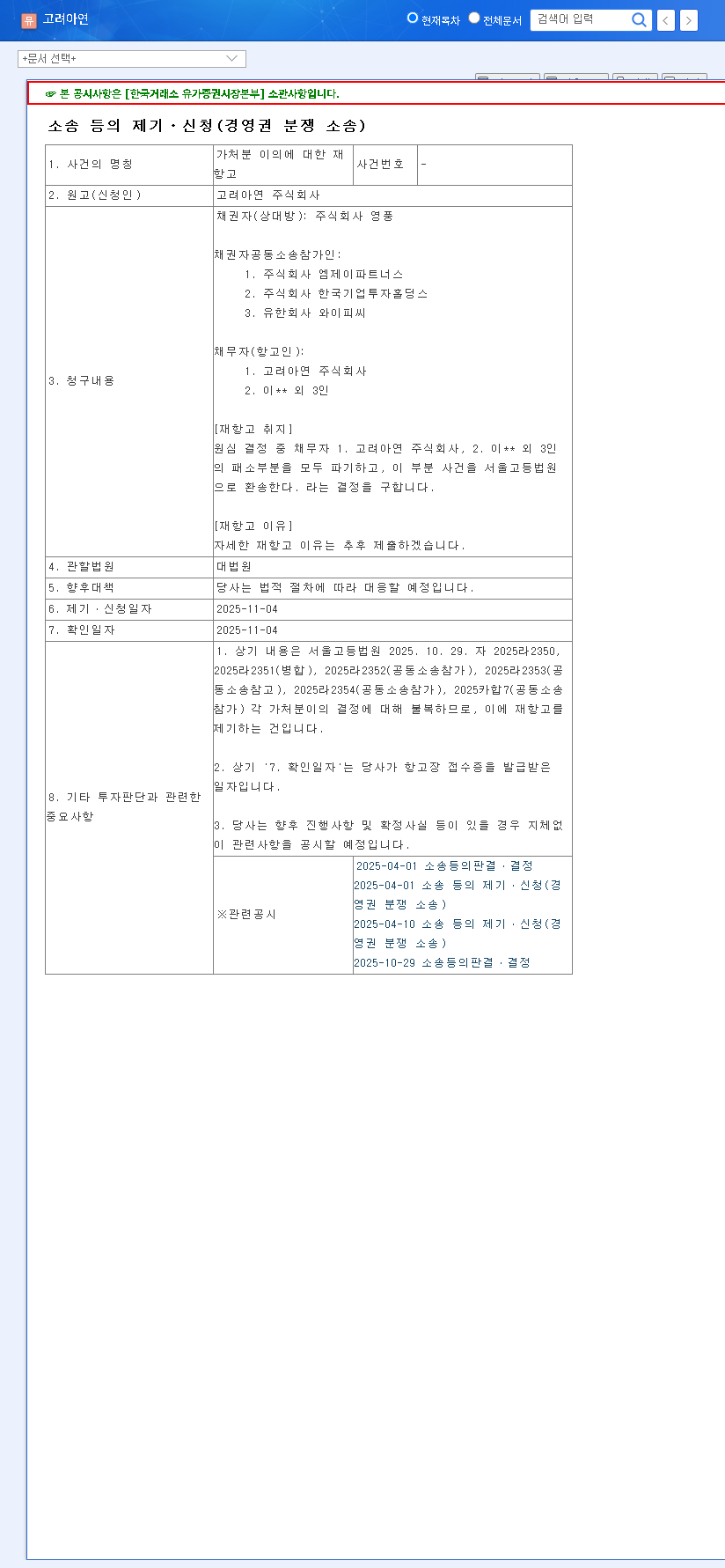
    The ongoing KOREA ZINC management dispute has officially escalated to the highest judicial level in South Korea, casting a significant shadow of uncertainty over the company’s stock. As a leading global non-ferrous metal smelter, KOREA ZINC INC. finds itself at a critical juncture where a boardroom battle threatens to overshadow its strong operational performance. For investors, this situation presents a complex mix of risk and potential opportunity. This comprehensive analysis will dissect the core issues of the shareholder dispute, evaluate the company’s robust fundamentals against growing risks, and outline a prudent KOREA ZINC investment strategy for navigating the current volatility.

    The Supreme Court Showdown: Unpacking the Management Dispute

    The conflict stems from a long-standing, delicate power balance between two founding families. Recently, KOREA ZINC filed a re-appeal with the Supreme Court against an appellate court’s decision involving a provisional injunction filed against Youngpoong Co., Ltd. This move signals a point of no return in the escalating shareholder dispute. The specifics were outlined in their Official Disclosure, confirming the legal battle’s gravity.

    Key Details of the Litigation:

    • Case: Re-appeal against the dismissal of an objection to a provisional injunction.
    • Plaintiff: KOREA ZINC INC.
    • Court: The Supreme Court of Korea.
    • Implication: This legal escalation prolongs the dispute, amplifies management uncertainty, and heightens risks associated with corporate governance.

    Investors are now weighing a company with stellar growth potential against the paralyzing uncertainty of a protracted legal battle for its control. The outcome will significantly influence the future KOREA ZINC stock price.

    Fundamental Analysis: A Tale of Two Forces

    Despite the boardroom drama, KOREA ZINC’s underlying business fundamentals remain impressively strong. However, external economic factors and the dispute itself pose considerable risks that cannot be ignored.

    Positive Catalysts Fueling Growth

    • Robust Core Business: The company’s primary non-ferrous metal smelting operations continue to deliver stable and predictable growth.
    • Precious Metal Tailwinds: Surging gold and silver prices have provided a significant boost to profitability and are expected to continue contributing positively.
    • Future-Facing New Ventures: Strategic investments into its “Troika Drive” initiative—encompassing secondary battery materials, renewable energy, and resource recycling—are positioning the company for long-term, sustainable growth.
    • Solid Financials: The company boasts year-on-year increases in sales and profit, maintaining a stable and healthy financial structure.

    Key Risk Factors on the Horizon

    • Commodity Price Volatility: A potential decline in lead prices, a key byproduct of zinc smelting, could pressure profit margins directly.
    • Global Economic Headwinds: A broader economic slowdown, as forecasted by institutions like the World Bank, could reduce demand for industrial metals and increase price instability.
    • Governance and ESG Concerns: The KOREA ZINC management dispute itself is a major ESG risk, potentially deterring institutional investors who prioritize stable governance. For more on this, see our guide to evaluating corporate governance risks.

    Investment Strategy for KOREA ZINC Stock

    Given the high uncertainty, a one-size-fits-all approach is ill-advised. Your KOREA ZINC investment strategy should align with your risk tolerance and investment horizon.

    For the Cautious, Long-Term Investor:

    If you believe in the company’s long-term fundamental strengths, the current price suppression may represent a buying opportunity. However, it is crucial to adopt a strategy of dollar-cost averaging to mitigate volatility. Acknowledge the governance risk and consider sizing your position accordingly within a diversified portfolio. Patience will be key, as the legal proceedings could take a long time to resolve.

    For the Active, Short-Term Trader:

    The high volatility makes KOREA ZINC stock a high-risk, high-reward play. An event-driven strategy is most appropriate. This means closely monitoring news related to the Supreme Court’s decisions and other legal disclosures. Trading on these news events requires discipline, including the use of strict stop-loss orders to manage downside risk effectively.

    Frequently Asked Questions (FAQ)

    Q1: What is the core issue of the KOREA ZINC management dispute?

    A1: It is a legal and corporate battle for management control between KOREA ZINC’s current leadership and Youngpoong Co., Ltd., a major shareholder. The filing of a re-appeal at the Supreme Court represents the most significant escalation to date.

    Q2: How will the Supreme Court case impact KOREA ZINC’s stock price?

    A2: In the short term, the heightened uncertainty is likely to suppress the stock price and increase volatility. The long-term direction will depend heavily on the final court ruling and the strategic vision of the victorious leadership.

    Q3: Should I invest in KOREA ZINC now?

    A3: Investing now carries significant risk due to the legal overhang. Long-term investors who believe in the company’s fundamentals might see value, while short-term traders should be prepared for high volatility. All investors must monitor developments in the shareholder dispute closely.

    Disclaimer: This analysis is for informational purposes only and is based on publicly available information. It does not constitute financial advice. All investment decisions are the sole responsibility of the investor.

    (010130) KOREA ZINC Management Dispute: 2025 Stock Analysis After Supreme Court Appeal 관련 이미지
  • (000670) Youngpoong Seokpo Smelter: ₩1.5T Revenue Crisis After Suspension – Investor Analysis

    (000670) Youngpoong Seokpo Smelter: ₩1.5T Revenue Crisis After Suspension – Investor Analysis

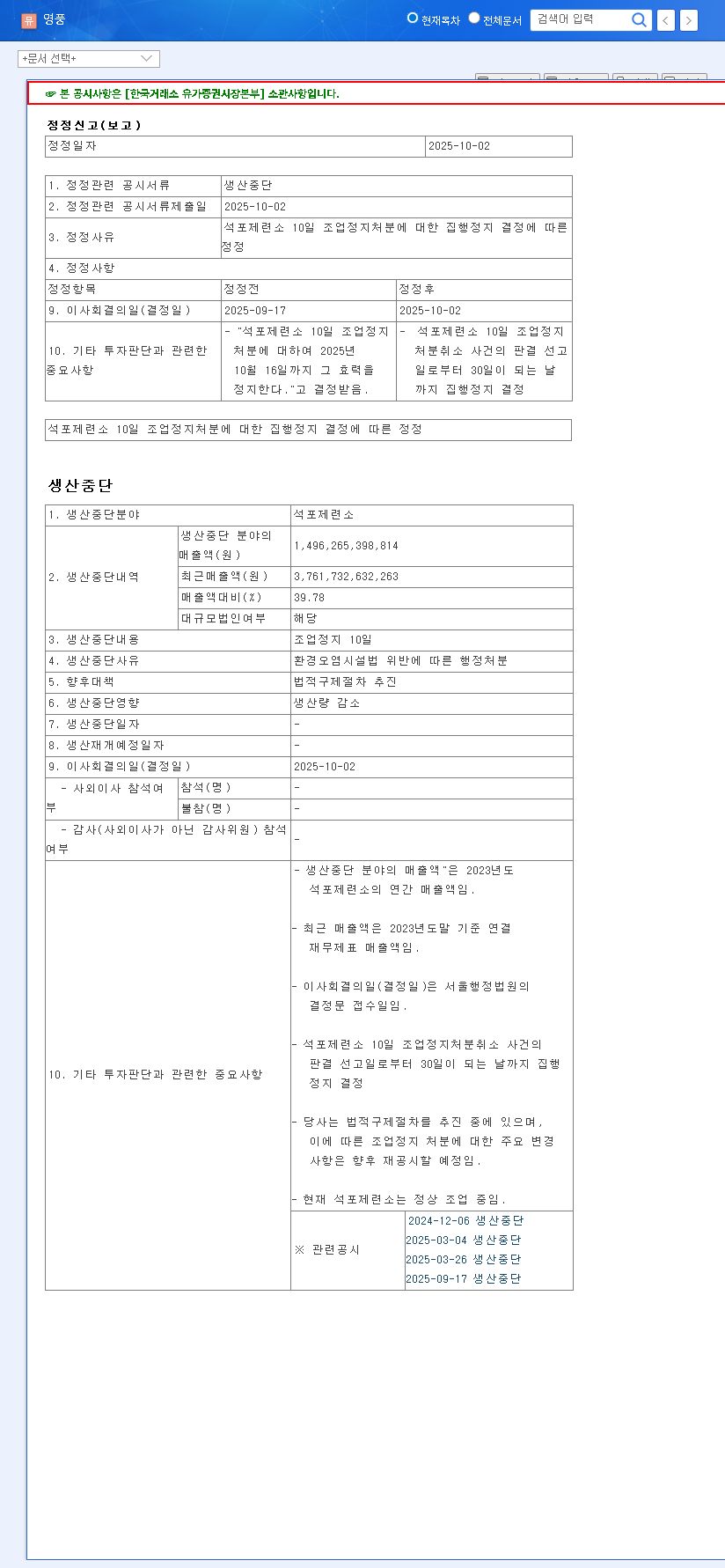
    The Youngpoong Seokpo Smelter, the cornerstone of Youngpoong Co., Ltd.’s business, has been hit with a critical 10-day business suspension order due to repeated environmental law violations. This isn’t just a minor setback; it’s a seismic event projected to erase approximately ₩1.5 trillion from the company’s revenue stream, representing nearly 40% of its annual total. For investors and market watchers, this development raises urgent questions about the company’s operational integrity, financial stability, and long-term viability. This comprehensive analysis will explore the deep-seated issues behind the suspension and what it means for the future of Youngpoong.

    The Suspension Order: A Critical Blow

    On October 2, 2025, Youngpoong Co., Ltd. formally announced the suspension order for its key facility. The reasons cited were numerous violations of critical environmental regulations, including the Water Environment Conservation Act and the Soil Environment Conservation Act. According to the Official Disclosure filed with the Financial Supervisory Service, this is the second such order in 2025, highlighting a deeply concerning pattern of non-compliance.

    The financial ramifications are staggering. A revenue suspension of ₩1,496.3 billion is not just a line item; it’s a direct threat to the company’s profitability, liquidity, and market standing for the entire fiscal year.

    Analyzing the Widespread Financial Fallout

    The impact of the Youngpoong business suspension extends far beyond the immediate 10-day period. It triggers a cascade of negative financial events that could cripple the company’s fundamentals.

    1. Severe Damage to Core Operations

    The smelting division is Youngpoong’s primary revenue engine. Halting production, even for a short period, has long-term consequences:

    • Profitability Collapse: The massive revenue loss combined with ongoing fixed costs (labor, maintenance) will likely push the company back into a deficit, erasing the profits made in the first half of 2025.
    • Supply Chain Disruption: A halt at a major smelter can disrupt the global supply chain for zinc and other metals, potentially leading to loss of contracts and market share to more reliable competitors.
    • Increased Financial Burdens: Beyond the lost revenue, the company faces escalating costs for environmental remediation, potential government fines, and litigation expenses.

    2. Weakening Financial Health and Investor Trust

    The suspension sends a powerful negative signal to the market. A sharp decline in operating cash flow will strain liquidity and could impact debt repayment capabilities. This operational instability, driven by Youngpoong environmental violations, could lead to a credit rating downgrade, which would increase future borrowing costs and further erode investor confidence. The damage to the company’s reputation and its ESG (Environmental, Social, and Governance) profile could deter institutional investors who prioritize sustainable and responsible business practices.

    A Pattern of Risk: Beyond a One-Time Incident

    This incident at the Youngpoong Seokpo Smelter is not an isolated event. The recurrence of suspension orders points to a systemic, structural problem within the company’s operational and compliance frameworks. Instead of being viewed as a temporary issue, the market is likely to perceive this as a fundamental flaw in management’s ability to mitigate known environmental risks. For a heavy industry like smelting, a strong environmental compliance record is not optional; it is a license to operate. Further analysis from sources like the Environmental Protection Agency (EPA) shows that regulatory scrutiny on smelters globally is only increasing.

    Investor Outlook and Strategic Considerations

    For current and potential investors, this situation demands a cautious and critical approach. The short-term impact on Youngpoong’s stock price is expected to be severely negative. The planned treasury stock buyback will likely be insufficient to counteract the immense downward pressure from this news. A comprehensive Youngpoong stock analysis must now heavily weigh these recurring operational and legal risks.

    Investors should closely monitor the following:

    • Management’s Response: Look for a transparent and decisive action plan from Youngpoong’s leadership that goes beyond superficial promises and addresses the root causes of the environmental failures.
    • Capital Investment in Compliance: Will the company allocate significant capital to upgrade the Youngpoong Seokpo Smelter facilities and implement robust, verifiable environmental control systems?
    • Portfolio Diversification: Assess the performance and growth potential of Youngpoong’s other divisions, such as electronic components, to see if they can offset the volatility of the smelting business. You can learn more by reading our guide on evaluating corporate risk portfolios.

    Disclaimer: This analysis is based on publicly available information and is for informational purposes only. It does not constitute financial or investment advice. All investment decisions should be made with the consultation of a qualified financial professional.

    (000670) Youngpoong Seokpo Smelter: ₩1.5T Revenue Crisis After Suspension – Investor Analysis 관련 이미지
  • Youngpoong Smelter Shutdown: 10-Day Impact Analysis & Investment Outlook

    Youngpoong Smelter Shutdown: 10-Day Impact Analysis & Investment Outlook 대표 차트 이미지

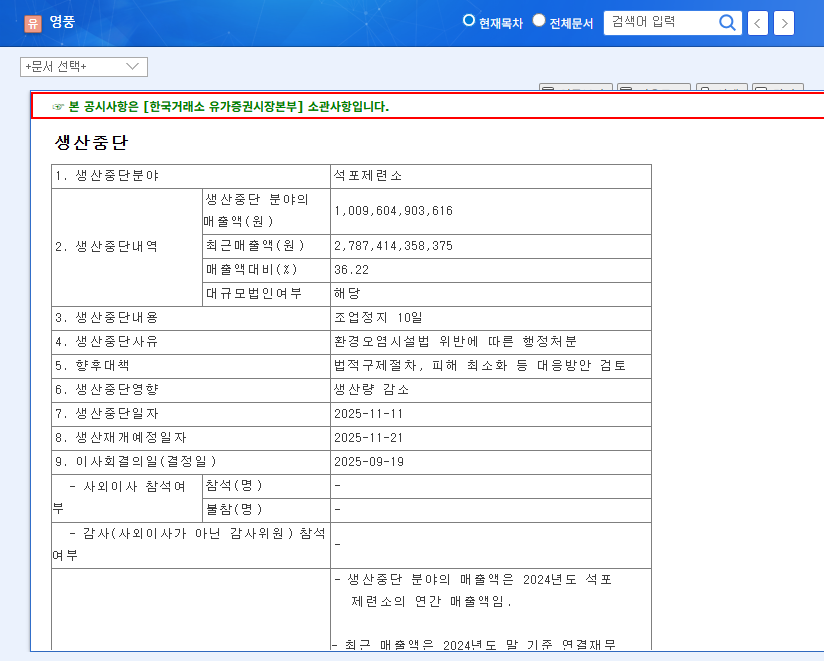
    1. The Smelter Shutdown: What Happened?

    Youngpoong’s smelter has halted operations for 10 days. This translates to a production disruption of ₩1.096 trillion, representing 36.22% of total sales. This shutdown could impact not only short-term financial performance but also long-term business operations and investor sentiment.

    2. Why the Shutdown?

    The report doesn’t specify the exact reason for the shutdown. However, considering past instances and industry trends, possibilities include environmental regulations, safety concerns, or scheduled maintenance. Understanding the precise reason is crucial for investment decisions.

    3. Impact of the Shutdown

    • 3.1 Financial Impact

      A direct revenue loss of approximately ₩28.47 billion is anticipated. Considering fixed costs and lost sales opportunities, the decrease in operating profit could be even more substantial. Disruptions to production and inventory management are also expected.

    • 3.2 Impact by Business Segment

      Smelting Division: A direct hit to this core business segment is inevitable. The division will likely become vulnerable to external factors like international zinc price volatility, China’s economic slowdown, and potential tightening of environmental regulations.
      Electronic Components Division: The decline in the smelting division’s performance could affect the consolidated financial statements and create challenges in securing investment and operating funds.

    • 3.3 Stock Price Impact

      The shutdown announcement will likely put downward pressure on the stock price in the short term. The long-term outlook will depend on the reason for the shutdown, the recovery period, and future regulatory and legal issues.

    4. What Should Investors Do?

    Investors should carefully consider the following:

    • The exact reason for the shutdown and the recovery plan
    • Youngpoong’s dependence on the smelting division and its potential for recovery
    • The influence of macroeconomic variables (interest rates, exchange rates, commodity prices)
    • Risks related to ongoing lawsuits and environmental regulations
    • The growth potential of the electronic components division

    Making informed investment decisions based on a comprehensive analysis is crucial.

    Frequently Asked Questions

    What caused the Youngpoong smelter shutdown?

    While the report doesn’t specify the exact cause, several possibilities should be considered, including environmental regulations, safety concerns, and scheduled maintenance.

    How will the shutdown affect Youngpoong’s stock price?

    Downward pressure on the stock price is expected in the short term. The long-term impact will depend on the reason for the shutdown and the company’s response.

    What should investors keep in mind?

    Investors should consider the cause and recovery plan, the company’s reliance on the smelting division, macroeconomic factors, and risks related to lawsuits and environmental regulations before making investment decisions.

    Youngpoong Smelter Shutdown: 10-Day Impact Analysis & Investment Outlook 관련 이미지
    Youngpoong Smelter Shutdown: 10-Day Impact Analysis & Investment Outlook 관련 이미지
  • Youngpoong’s Appeal Dismissal: What it Means for Investors


    Youngpoong's Appeal Dismissal: What it Means for Investors 대표 차트 이미지


    What Happened?

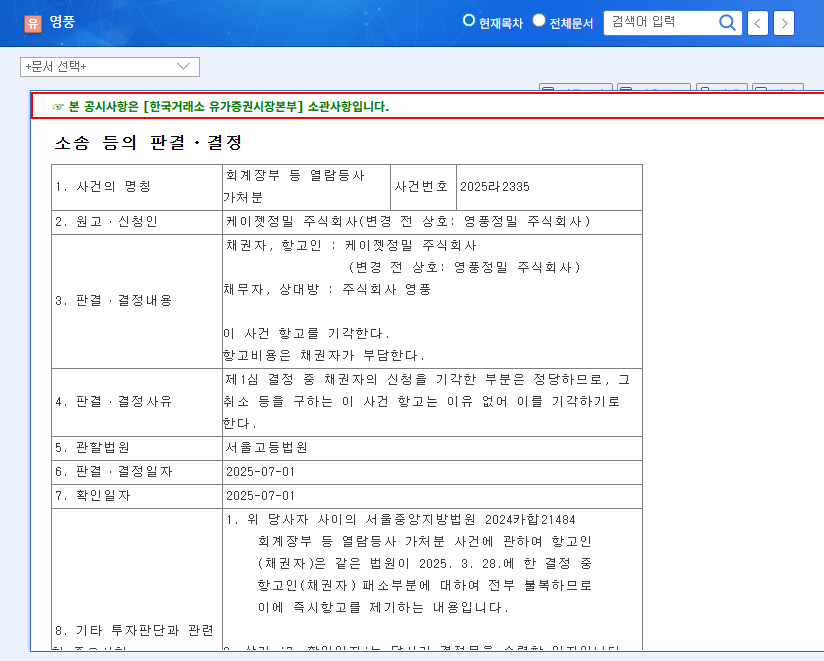
    On September 2, 2025, the Seoul High Court dismissed Youngpoong’s appeal against the injunction filed by KZ Precision (formerly Youngpoong Precision) regarding the inspection of its accounting books. This upholds the original court’s decision.

    Why Does It Matter?

    This ruling is significant due to the ongoing dispute between Youngpoong and KZ Precision regarding stake ownership or management control. The dismissal provides short-term certainty for Youngpoong’s operations and can be seen as a positive sign for investors. However, the possibility of further legal action by KZ Precision remains.

    What’s Next?

    • Stock Impact: A positive short-term impact is possible, but Youngpoong’s financial performance (declining sales and operating loss) will be key to its stock price trajectory.
    • Company Operations: Direct restrictions on accounting practices and management are unlikely. However, further actions by KZ Precision could change this.
    • Long-Term Outlook: Strengthening core businesses (non-ferrous metal smelting, electronic components) and addressing environmental concerns related to the Seokpo smelter will determine Youngpoong’s long-term growth.

    What Should Investors Do?

    Instead of reacting to short-term fluctuations, investors should consider Youngpoong’s financial recovery, potential responses from KZ Precision, and strategies to strengthen its core businesses when formulating a long-term investment strategy.


    FAQ

    Will this ruling positively impact Youngpoong’s stock price?

    A positive short-term impact is anticipated, but Youngpoong’s earnings improvement is crucial.

    How is KZ Precision expected to respond?

    Further legal action is possible, and the situation warrants close monitoring.

    What is the long-term investment outlook for Youngpoong?

    It depends on strengthening core businesses and addressing environmental concerns.


    Youngpoong's Appeal Dismissal: What it Means for Investors 관련 이미지
    Youngpoong's Appeal Dismissal: What it Means for Investors 관련 이미지


  • Youngpoong’s 2025 Semi-Annual Report: Declining Sales, Hidden Profits, and Investment Strategies

    1. What Happened at Youngpoong?

    Youngpoong recorded consolidated revenue of KRW 1.17 trillion in the first half of 2025, a sharp 58.1% decline year-on-year. The sluggish performance of the smelting and electronic components divisions is cited as the main cause. While operating losses continued, net income turned to a profit of KRW 264.3 billion on a consolidated basis. However, this is attributed to non-operating factors such as investment asset valuation gains, making it difficult to view this as a substantial business improvement.

    2. Why These Results?

    The global economic slowdown, weakening Chinese demand, and geopolitical risks are putting downward pressure on zinc demand. Strengthening environmental regulations and litigation risks also continue to burden Youngpoong’s profitability. Despite positive factors such as IT industry growth and increasing demand from advanced industries, the electronic components division is struggling due to intensifying competition and low-price offensives from China.

    3. What’s Next for Youngpoong?

    In the short term, negative factors such as continued sluggish sales, operating losses, environmental and legal risks, and high financing costs are likely to put downward pressure on the stock price. However, investments in new businesses such as battery recycling and hydrogen could act as long-term growth drivers, and the treasury stock cancellation plan is a positive sign for shareholder value enhancement.

    4. What Should Investors Do?

    Short-term investors need to be cautious due to the low visibility of earnings improvement and persistent risk factors. Long-term investors should comprehensively consider the success potential of new businesses, the company’s ability to respond to environmental regulations, and changes in the macroeconomic environment.

    Q: How much did Youngpoong’s sales decline in the first half of 2025?

    A: Sales decreased by 58.1% year-on-year to KRW 1.17 trillion.

    Q: What does Youngpoong’s return to profitability signify?

    A: It’s attributed to non-operating factors and is not necessarily indicative of a real business turnaround.

    Q: What are Youngpoong’s future growth drivers?

    A: Investments in new businesses like battery recycling and hydrogen are expected to be key drivers.

  • Korea Zinc Stock Forecast: Impact of Legal Dispute with Youngpoong

    1. The Youngpoong-Korea Zinc Legal Dispute: What Happened?

    On October 2, 2024, Youngpoong filed a criminal complaint against Korea Zinc’s board of directors. The case is currently under investigation by the prosecution, and Korea Zinc plans to disclose further details upon confirmation of specific facts or within six months.

    2. Why is this Legal Dispute Significant?

    This legal battle could considerably affect Korea Zinc’s financial stability and future growth strategy. Negative impacts such as increased legal costs, business disruptions, and weakened investor sentiment are anticipated. The additional financial burden could be particularly detrimental to Korea Zinc, which already has a high debt-to-equity ratio. The diversion of management’s focus and increased uncertainty could also negatively impact business operations.

    3. Korea Zinc Stock Forecast: What’s the Potential Impact?

    Increased stock price volatility is expected in the short term. The long-term impact will depend on various factors, including the outcome of the legal dispute, fluctuations in raw material prices and exchange rates, the global economic climate, and the performance of new business ventures. Rising gold and silver prices are positive factors, while a global economic downturn and slowing Chinese economic growth could pose negative challenges. The success of new ventures, such as Pedalpoint’s acquisition of Kataman Metals and Kemco’s investment in an all-in-one nickel refinery, will also be key variables.

    4. Investor Action Plan

    • • Closely monitor the progress and outcome of the legal dispute.
    • • Regularly review Korea Zinc’s financial statements and disclosures.
    • • Keep an eye on macroeconomic variables such as raw material prices, exchange rates, and global economic indicators.
    • • Minimize investment losses through portfolio diversification and risk management.
    What is the cause of the legal dispute between Youngpoong and Korea Zinc?

    The exact cause is yet to be revealed, and the case is currently under investigation by the prosecution.

    How will this legal dispute affect Korea Zinc’s stock price?

    It may cause increased stock price volatility in the short term and affect the stock price in the long term depending on the outcome of the legal dispute and the macroeconomic climate.

    How should investors respond?

    Investors should closely monitor the progress of the legal dispute, financial information, and macroeconomic indicators, and minimize investment losses through portfolio diversification and risk management.