Tag: Techwing

  • (089030) Techwing Q3 2025 Earnings Miss: Deep Dive Analysis & Stock Strategy

    (089030) Techwing Q3 2025 Earnings Miss: Deep Dive Analysis & Stock Strategy

    The latest financial report from Techwing, Inc., a key player in the semiconductor inspection equipment sector, has sent ripples of concern through the market. The highly anticipated Techwing Q3 2025 earnings report revealed a significant shortfall against market expectations, raising critical questions about the company’s current trajectory and future prospects. Is this a temporary dip in a volatile market, or does it signal deeper challenges ahead? This comprehensive analysis will dissect the official figures, explore the potential impact on Techwing’s stock, and outline strategic considerations for investors.

    Decoding the Techwing Q3 2025 Earnings Report

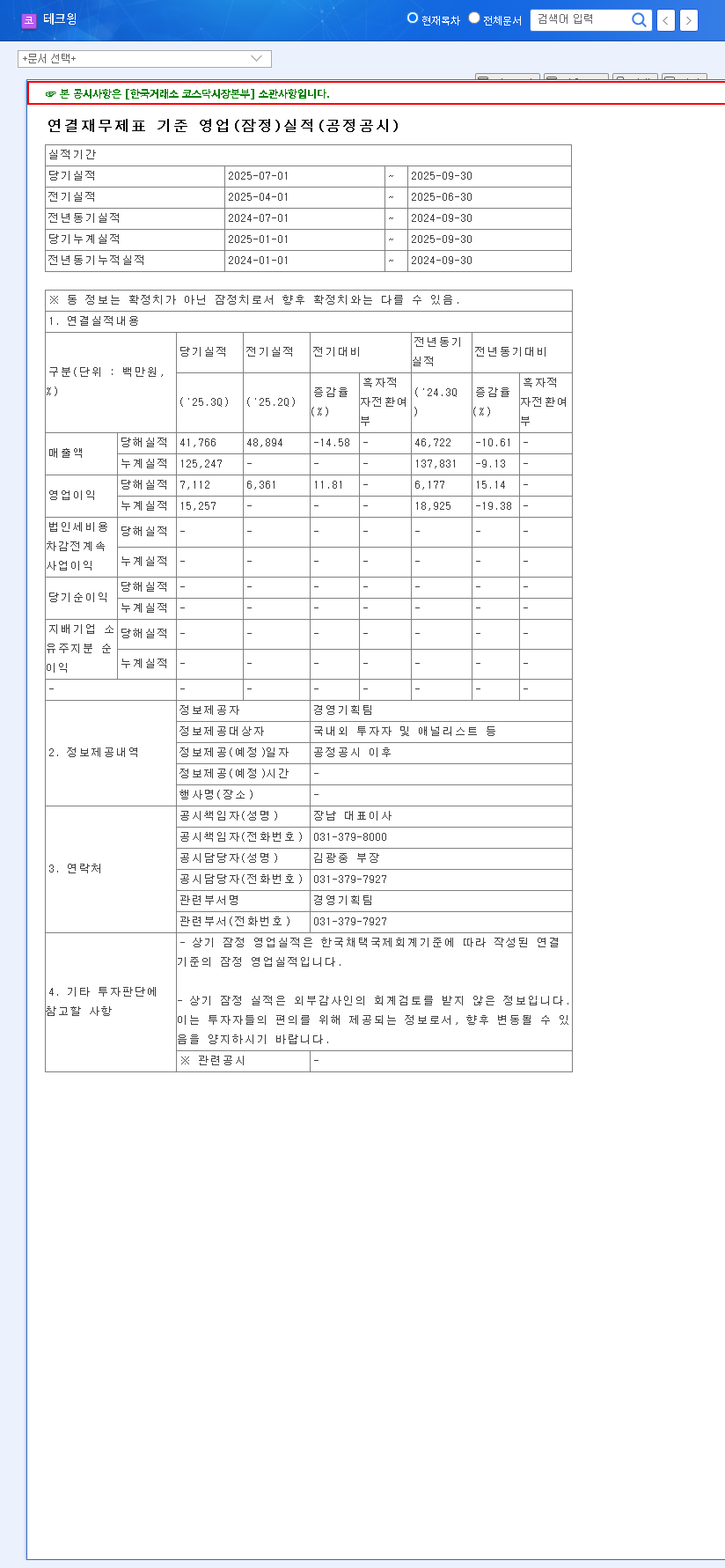
    On October 21, 2025, Techwing released its provisional consolidated operating results, which immediately caught the attention of analysts and investors. The numbers, detailed in the company’s Official Disclosure (Source: DART), paint a picture of underperformance that cannot be ignored. Let’s break down the key metrics that fell short.

    A Stark Miss on Key Financials

    The provisional Q3 results were substantially below the consensus estimates, signaling issues with both top-line growth and operational efficiency. The deviation from projections was significant:

    • Revenue: Reported at KRW 41.8 billion, a 31.0% miss compared to the KRW 60.7 billion estimate.
    • Operating Profit: Came in at KRW 7.1 billion, a staggering 36.0% below the KRW 11.1 billion forecast.

    This dual miss suggests that the company is facing not only challenges in securing sales but also mounting pressure on its profitability. Such a performance often triggers a re-evaluation of a company’s standing within the competitive semiconductor equipment market.

    Historical Context: A Pattern of Volatility

    A single quarter’s performance rarely tells the whole story. However, examining Techwing’s results over the past year reveals a concerning pattern of instability. After a weak start in Q1 2025, the company showed signs of a rebound in Q2, only to see revenue and profit decline again in Q3. This yo-yo effect points to a business model that is highly sensitive to external market dynamics, such as fluctuating memory chip prices and global macroeconomic headwinds. This lack of consistent, predictable growth is a major red flag for long-term investors seeking stability. A thorough Techwing stock analysis must account for this inherent volatility.

    The core challenge for Techwing is to demonstrate whether this Q3 slump is an anomaly or the new normal. The market is now looking for a clear path back to sustainable growth and profitability.

    Implications for Techwing Stock and Investment Strategy

    The disappointing Techwing Q3 2025 earnings are almost certain to have tangible consequences for its stock price and overall market perception. Investors must prepare for potential short-term turbulence while critically assessing the company’s long-term value proposition.

    Short-Term: Expect Increased Volatility

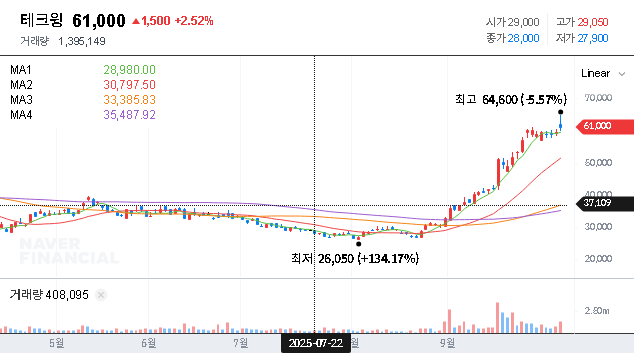
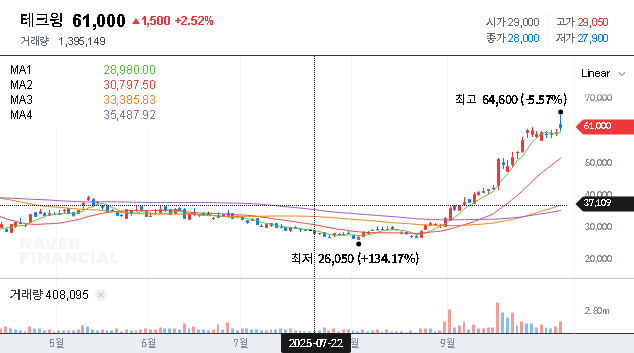
    In the immediate aftermath, expect downward pressure on Techwing’s stock. The significant miss will likely trigger sell-offs from institutional and retail investors alike. Increased stock price volatility is a given as the market digests this negative news. Short-term traders may exploit this volatility, but long-term investors should resist making knee-jerk decisions.

    Long-Term: Structural Concerns Emerge

    The most critical question is whether this underperformance stems from structural problems. Are competitors gaining market share? Is there a fundamental slowdown in demand for Techwing’s specific product lines? According to market reports from sources like Reuters, the entire semiconductor sector is facing cyclical challenges, but a miss of this magnitude could suggest company-specific issues. A sound Techwing investment strategy requires separating industry-wide trends from internal weaknesses.

    Strategic Actions for Stakeholders

    In light of these results, both investors and the company’s management must adopt a prudent and strategic approach to navigate the path forward.

    Recommendations for Investors

    • Exercise Caution: Avoid hasty buying or selling. A ‘wait-and-see’ approach is advisable until management provides a clear explanation and recovery plan.
    • Conduct Deeper Research: Look beyond the headline numbers. Analyze competitor performance, industry forecasts, and upcoming product cycles for Techwing.
    • Monitor Communications: Pay close attention to the company’s upcoming earnings call and any subsequent press releases for insights into the root causes of the miss.

    Imperatives for Techwing’s Management

    • Transparent Communication: The company must proactively and transparently communicate the reasons for the shortfall to rebuild investor confidence.
    • Present a Clear Recovery Plan: Articulating a concrete, actionable plan to address the performance issues is crucial for stabilizing the stock and reassuring the market.

    In conclusion, the Techwing Q3 2025 earnings serve as a critical wake-up call. While the results are undoubtedly disappointing, they also present an opportunity for a strategic reset. The company’s next moves will be pivotal in determining whether this quarter was a stumble or the beginning of a fall.
    (089030) Techwing Q3 2025 Earnings Miss: Deep Dive Analysis & Stock Strategy 관련 이미지
  • (089030) Techwing Treasury Stock Sale: Fueling HBM Ambitions or Sparking Dilution Fears?

    (089030) Techwing Treasury Stock Sale: Fueling HBM Ambitions or Sparking Dilution Fears?

    Techwing Co., Ltd., a key player in the semiconductor inspection equipment sector, has made a decisive financial move that has the market buzzing. The company’s recent announcement of a significant Techwing treasury stock disposition to fund its expansion into High Bandwidth Memory (HBM) equipment is a classic high-stakes gambit. On one hand, it promises to unlock immense growth in the AI-driven HBM market; on the other, it raises valid stock dilution concerns for existing shareholders. This analysis will dissect the decision, its strategic rationale, and the potential outcomes for investors.

    The Announcement Deconstructed: ₩93.3 Billion at Play

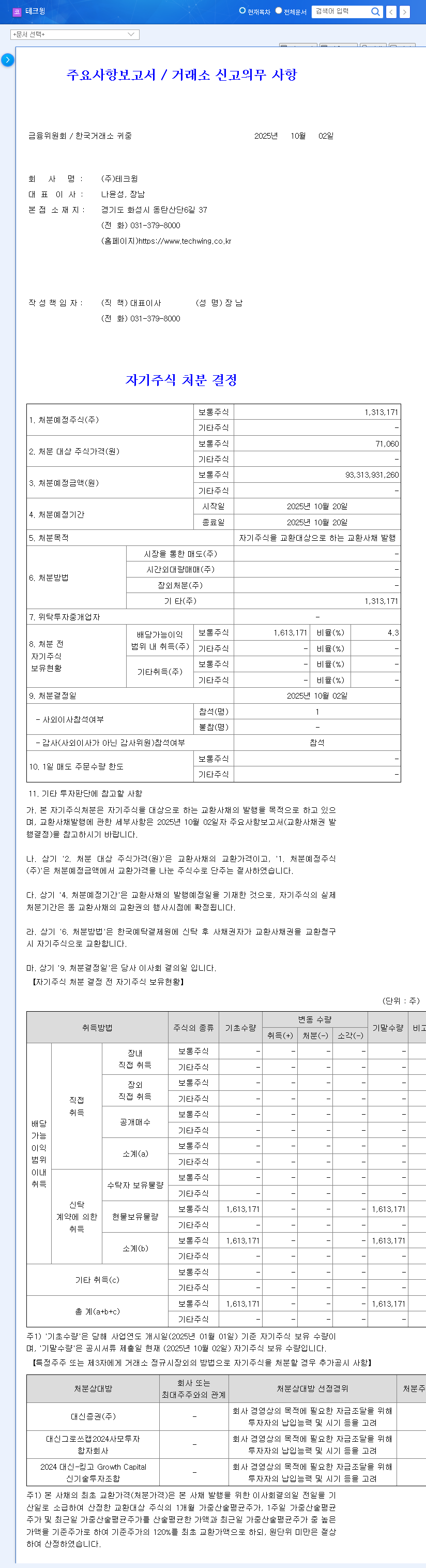
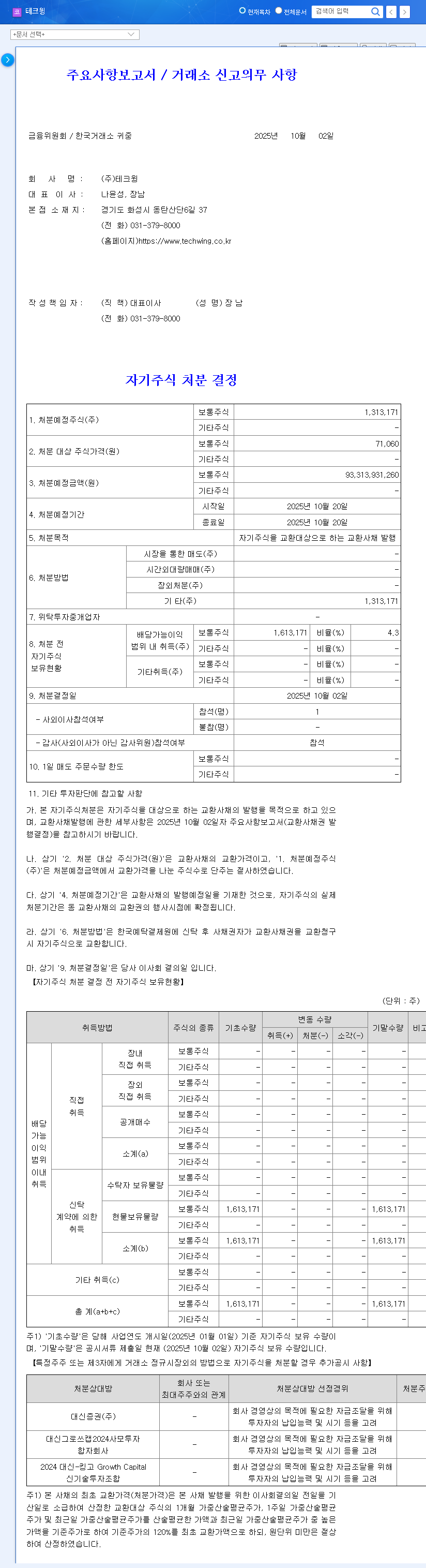
    On October 2, 2025, Techwing’s board of directors greenlit the disposition of 1,313,171 shares of its treasury stock, valued at approximately 93.3 billion KRW. The mechanism for this capital raise is the issuance of exchangeable bonds (EB). This isn’t just a routine financial adjustment; it’s a clear signal of the company’s aggressive strategy to secure a leadership position in a next-generation technology segment. The full details of this strategic move were filed and are available for public review in the Official Disclosure (DART report).

    Why Now? The Strategy Behind the Exchangeable Bonds

    Choosing to issue exchangeable bonds is a calculated move. EBs are a hybrid financial instrument that acts like a bond, paying interest, but also gives the holder the right to exchange it for a set number of the company’s treasury shares at a later date. This allows Techwing to raise a substantial amount of capital at a potentially lower interest rate than a traditional loan, making it an attractive option for funding ambitious projects.

    Fueling the Future: Techwing HBM Investment

    The primary motivation for this capital injection is clear: to dominate the emerging market for HBM inspection equipment. HBM is a critical component in the AI and high-performance computing revolution, stacking memory chips vertically to deliver unprecedented speed and efficiency. Techwing’s new ‘Cube Prober’ is designed specifically for this market, and the funds will be essential for R&D, scaling up mass production, and solidifying its market entry. As a technology, HBM is foundational to modern AI infrastructure, a fact detailed by industry leaders like NVIDIA on their tech blog.

    A Look at Financial Health

    While the growth story is compelling, a look at Techwing’s financials reveals a more nuanced picture. The first half of 2025 showed a welcome return to profitability. However, the balance sheet also indicates rising liabilities and a high total debt ratio, suggesting that careful financial management is paramount. The issuance of EBs will add to this debt burden, making the successful and timely launch of the HBM equipment line even more critical to justify the added financial risk.

    Techwing is at a crossroads, balancing the immediate financial pressure of increased debt and potential share dilution against the transformative potential of becoming a leader in the HBM semiconductor equipment market.

    The Investor’s Dilemma: Weighing Growth vs. Risk

    For current and prospective investors, the Techwing treasury stock sale creates a complex scenario with clear potential upsides and significant risks that must be carefully considered.

    Potential Positives: The Growth Engine

    • Capital for Innovation: The ₩93.3B provides the necessary firepower to accelerate the development and deployment of new, high-margin HBM products.
    • Market Leadership: A successful HBM equipment launch could significantly increase corporate value and establish Techwing as a critical supplier in the AI hardware chain.
    • Cost-Effective Funding: Using EBs allows the company to secure these funds at a lower cost than other financing methods, preserving more capital for operations.

    Potential Negatives & Considerations

    • Shareholder Dilution: This is the primary concern. If and when bondholders convert their EBs into stock, the total number of shares outstanding increases, potentially diluting the ownership stake and reducing the earnings per share (EPS) for existing shareholders.
    • Increased Debt Load: The bonds add to the company’s liabilities, increasing its financial risk profile until the investment in HBM equipment begins to generate significant returns.
    • Execution Risk: The entire strategy hinges on the successful market adoption of the ‘Cube Prober’. Any delays or technical setbacks could strain the company’s finances without the expected revenue to offset the new debt.

    Investment Outlook and Strategic Monitoring

    Given the balance of factors, the investment outlook remains neutral but cautiously optimistic, pending execution. Investors should adopt a strategy of diligent monitoring. For those interested in this sector, understanding the broader landscape is key, and you may find value in Our Guide to Semiconductor Stock Analysis. Focus on tracking the progress of the Techwing HBM investment, any announcements regarding the ‘Cube Prober’s’ adoption by major clients, and the company’s quarterly reports for signs of debt reduction and improving cash flow.

    Ultimately, Techwing’s decision to leverage its treasury stock is a bold bet on its own technological future. Success could redefine its market position and deliver substantial long-term value, but the path is laden with financial risks that demand respect and close observation.

    (089030) Techwing Treasury Stock Sale: Fueling HBM Ambitions or Sparking Dilution Fears? 관련 이미지
  • (089030) Techwing Convertible Bond (089030): An Expert Analysis for Investors

    (089030) Techwing Convertible Bond (089030): An Expert Analysis for Investors

    The recent announcement of the Techwing convertible bond issuance, a significant ₩93.3 billion fundraising event, has sent ripples through the investment community. As a key player in the semiconductor test equipment sector, Techwing (089030) is positioning itself to capitalize on the explosive growth of the High Bandwidth Memory (HBM) market. However, this financial maneuver is a double-edged sword, presenting both a powerful catalyst for growth and a potential risk of share dilution. This in-depth analysis will dissect the terms of the issuance, its strategic purpose, and the multifaceted impact on the company’s future, providing investors with a clear and actionable strategy.

    Deconstructing the Techwing Convertible Bond Issuance

    On October 2, 2025, Techwing publicly disclosed its decision to issue privately placed convertible bonds. A convertible bond (CB) is a hybrid security that starts as debt but can be converted into a predetermined number of the company’s common stock shares. Here are the crucial details of this specific issuance:

    • Total Issuance Size: ₩93.3 billion
    • Issuance Type: Private Placement to specific institutional investors
    • Conversion Price: ₩71,060 per share
    • Conversion Period: January 20, 2026, to September 20, 2030
    • Payment Date: October 20, 2025

    The full specifics of this financial event were filed and are publicly accessible. (Source: DART Official Disclosure). By opting for a private placement, Techwing is not only raising capital but also forging strategic alliances with key financial partners like Daishin Securities, which could yield future collaborative benefits.

    The Strategic ‘Why’: Fueling HBM Market Dominance

    The primary driver behind this significant fundraising is clear: to aggressively capture a larger share of the burgeoning HBM market. The capital injection is earmarked for critical areas that will fortify Techwing’s competitive edge.

    Strengthening the ‘Cube Prober’ Advantage

    Techwing’s flagship ‘Cube Prober’ is a critical piece of semiconductor test equipment essential for verifying the performance of HBM stacks. As AI and high-performance computing demand ever-more powerful memory, the projected growth of the HBM market is exponential. This funding will directly fuel R&D to enhance the Cube Prober’s capabilities and expand production facilities to meet surging demand, cementing Techwing’s position as a leader in this high-growth niche.

    Investor Impact Analysis: Opportunities and Risks

    For current and prospective shareholders, the Techwing convertible bond issuance presents a complex scenario with significant upside potential and notable risks that require careful consideration.

    Positive Catalysts: Growth and Strategic Alliances

    The most apparent benefit is the securing of ₩93.3 billion dedicated to high-return initiatives. This investment is a strong signal of the management’s confidence in its HBM growth strategy. If successfully deployed, this capital could lead to substantial revenue growth and improved profitability, ultimately driving the stock price higher. Furthermore, the partnership with sophisticated investors through a private placement can be seen as a vote of confidence in the company’s long-term vision.

    The Concern: Shareholder Dilution Explained

    The primary drawback is the potential for shareholder value dilution. If Techwing’s stock price rises above the conversion price of ₩71,060, bondholders will likely convert their bonds into new shares. This increases the total number of shares outstanding, diluting the ownership stake of existing shareholders. While the high conversion price (relative to current levels) suggests this is a long-term concern, it’s a critical factor to monitor as the company executes its growth plans. A deeper understanding of this risk can be found in our guide to analyzing semiconductor stocks.

    For investors, the key is to weigh the long-term growth potential fueled by this ₩93.3 billion investment against the future possibility of share dilution. Success in the HBM market could far outweigh the dilutive effect.

    A Prudent Investment Strategy for Techwing (089030)

    Navigating this event requires a balanced and informed approach. The issuance of the Techwing convertible bond is a pivotal moment, and investors should adjust their strategy accordingly.

    • Adopt a Long-Term Horizon: This is not a short-term catalyst. The true impact will be realized as the HBM market evolves and Techwing’s investments bear fruit. Monitor key performance indicators like market share in HBM testing and revenue growth over several quarters.
    • Monitor Financial Health: While the capital is for growth, the CB initially adds to the company’s debt. Keep a close watch on financial statements to ensure the company effectively manages its liabilities and uses the new capital to generate a strong return on investment.
    • Analyze Macro and Industry Trends: The semiconductor industry is cyclical and sensitive to global economic shifts, interest rates, and currency fluctuations. Stay informed about the overall health of the AI and HBM sectors, as these will be the primary tailwinds for Techwing’s success.

    In conclusion, Techwing’s convertible bond issuance is a bold, strategic move to solidify its future in the high-stakes HBM market. For the discerning investor, it represents a calculated risk—an opportunity to participate in a significant growth story, provided one remains vigilant of the associated financial complexities and long-term dilution potential. Prudent analysis and continuous monitoring will be the keys to a successful investment analysis of Techwing (089030).

    (089030) Techwing Convertible Bond (089030): An Expert Analysis for Investors 관련 이미지
  • (089030) Techwing Share Cancellation: In-Depth Analysis & Investment Strategy for this HBM Stock

    (089030) Techwing Share Cancellation: In-Depth Analysis & Investment Strategy for this HBM Stock

    The recent announcement of the Techwing share cancellation has sent ripples through the investment community, particularly for those tracking key players in the semiconductor space. As a prominent HBM beneficiary stock, Techwing (089030) is at the center of the AI revolution. This strategic move to enhance shareholder value begs a critical question: Is this the catalyst for long-term growth, or a minor event in a much larger story? This comprehensive analysis will dissect the decision, evaluate the company’s fundamentals, and outline a clear Techwing investment strategy for 2025 and beyond.

    Deconstructing the Techwing Share Cancellation

    At its core, a share cancellation, or buyback and retirement, is a corporate action where a company repurchases its own shares from the marketplace and cancels them. This reduces the total number of shares outstanding, which can increase key per-share metrics like Earnings Per Share (EPS).

    The Specifics of Techwing’s Plan

    Techwing announced its plan to cancel 300,000 of its common treasury shares, a transaction valued at approximately KRW 2.7 billion. According to the Official Disclosure, the cancellation is scheduled for October 20, 2025. A critical detail is that Techwing is using already acquired treasury shares. This means the company is not spending new cash for a buyback, signaling a move to boost shareholder value without adding to its financial burden—a fiscally prudent approach that is often well-received by the market.

    Techwing’s Position as a Premier HBM Beneficiary Stock

    To understand Techwing’s potential, one must understand its deep connection to High Bandwidth Memory (HBM). HBM is a crucial component in the AI hardware ecosystem, providing the ultra-fast memory needed for training large language models and other data-intensive tasks. As demand for AI accelerators from NVIDIA, AMD, and others skyrockets, so does the demand for HBM and the equipment used to test it.

    This is where Techwing shines. The company’s core products, particularly its advanced HBM Test equipment like the Cube Prober, are essential for ensuring the quality and reliability of these next-generation memory chips. This direct link to the AI supply chain is the primary reason Techwing is considered a top-tier HBM beneficiary stock. The growth of this market is a powerful, long-term tailwind for the company. For more on this technology, you can read an in-depth overview on high-authority sites like AnandTech’s HBM explainer.

    While the share cancellation is a positive signal of shareholder-friendly governance, Techwing’s true long-term value is intrinsically tied to its execution within the rapidly expanding AI and HBM testing landscape.

    Financial Health and Market Realities

    Despite the promising long-term outlook, Techwing’s recent financial performance presents a more nuanced picture. The first half of 2025 saw a year-on-year decrease in both revenue and operating profit. This short-term adjustment, coupled with a notable increase in borrowings, highlights potential financial pressures that investors must monitor.

    Key Financial Points to Consider:

    • Positive Signal: A growing proportion of sales from components suggests successful revenue diversification efforts.
    • Short-Term Headwinds: A temporary slowdown in the core semiconductor test equipment division has impacted top-line growth.
    • Financial Leverage: Increased debt levels require careful management, especially in a fluctuating interest rate environment.
    • Macro Risks: Fluctuations in the KRW/USD exchange rate and global logistics costs can impact profitability.

    A Smart Techwing Investment Strategy

    Given these factors, a prudent Techwing investment strategy involves balancing the immense long-term growth potential against the current financial and macroeconomic risks. The share cancellation, while positive, is too small (0.12% of market cap) to be a primary investment thesis. Instead, it should be viewed as a confirmation of management’s confidence and commitment to shareholder returns.

    The Bull Case (Reasons to be Optimistic)

    The primary driver is the unabated growth in AI, which directly fuels the demand for Techwing HBM testing solutions. As semiconductor technology advances, the importance of post-processing and testing grows, placing Techwing in a critical, high-value segment of the market. The shareholder-friendly policy reinforces a positive corporate image.

    The Bear Case (Points of Caution)

    Investors must not overlook the short-term financial performance and the increased debt load. A sustained downturn in the broader semiconductor cycle or failure to manage debt effectively could hinder growth. For more on this, see our guide to analyzing semiconductor company financials.

    Conclusion: A Long-Term Perspective is Key

    The Techwing share cancellation is a positive, albeit small, step that reinforces the company’s commitment to its investors. The real story remains its strategic position within the essential HBM and AI markets. While navigating short-term financial headwinds is crucial, Techwing’s long-term growth trajectory appears solid. Investors should focus on future performance indicators, such as HBM-related order growth and debt management, as the true measures of the company’s success.

    (089030) Techwing Share Cancellation: In-Depth Analysis & Investment Strategy for this HBM Stock 관련 이미지
  • (089030) NPS Reduces TECHWING Stake: Deep Dive Analysis for Investors

    (089030) NPS Reduces TECHWING Stake: Deep Dive Analysis for Investors

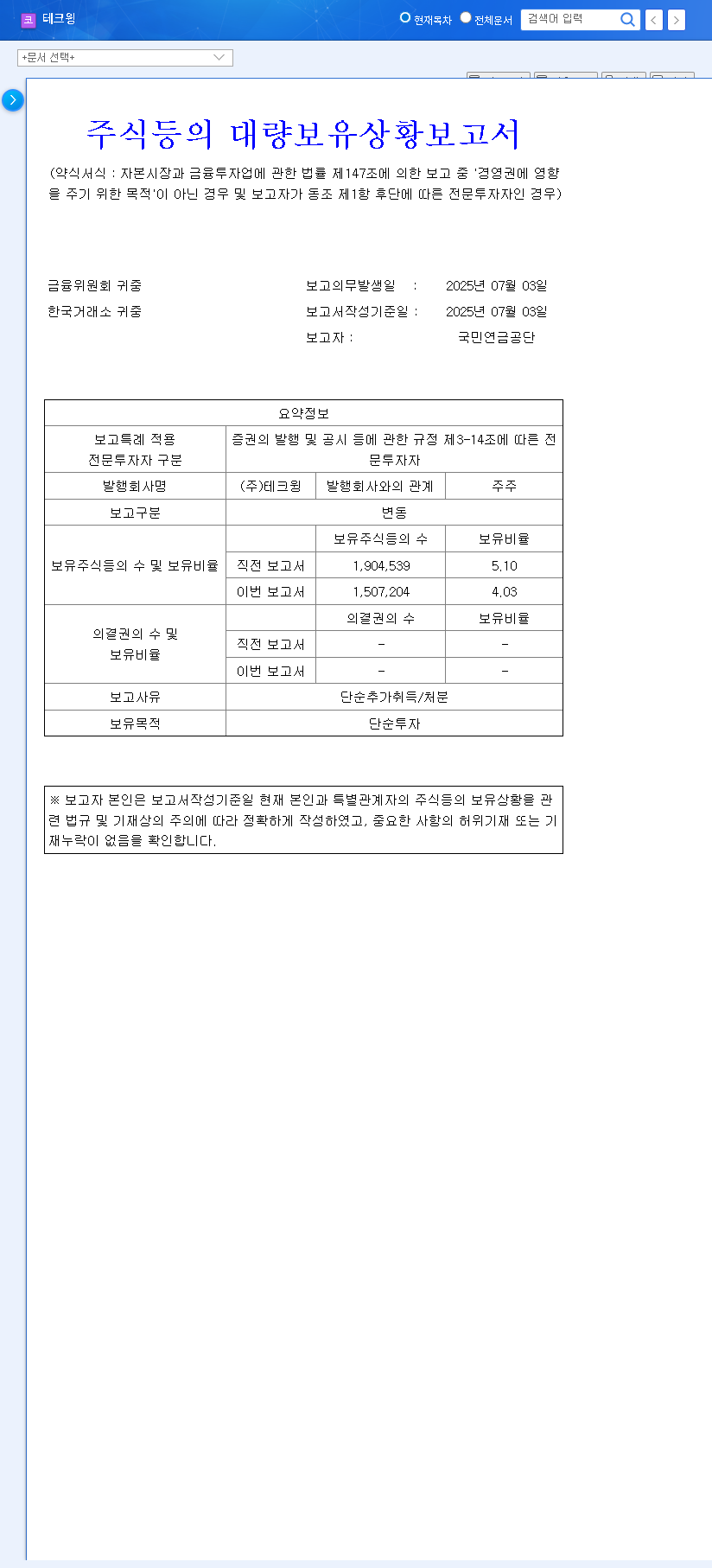
    On October 1, 2025, a significant disclosure regarding the NPS TECHWING stake caught the market’s attention. The National Pension Service (NPS) of South Korea, a major institutional investor, filed a ‘Report on the Status of Large-Scale Stock Holdings’ revealing a reduction in its ownership of TECHWING Co., Ltd. The filing, available via the official DART system (Source), showed the NPS decreased its stake from 5.10% to 4.03%.

    This move by such a prominent entity naturally raises questions for investors: Is this a simple portfolio rebalancing act, or does it signal a deeper concern about TECHWING’s future prospects? This comprehensive analysis will dissect the disclosure, evaluate TECHWING’s current financial health, explore its position in the booming HBM market, and provide a strategic outlook for investors.

    Deconstructing the NPS Stake Reduction

    The disclosure specified the purpose of holding as ‘simple investment’ and the reason for the change as ‘simple additional acquisition/disposal.’ This language is crucial. It suggests the transaction was not intended to influence company management but was part of the NPS’s broader investment strategy. However, the market often reads between the lines when a heavyweight investor like the NPS makes a move.

    Two Sides of the Coin: Potential Interpretations

    Investors should consider two primary viewpoints when analyzing this NPS TECHWING stake adjustment:

    • The Bullish View: Profit Realization & Rebalancing. Institutional funds like the NPS regularly adjust their portfolios. After a period of stock price appreciation, it’s standard practice to sell a portion of a holding to realize profits and reallocate capital to other assets. This is a disciplined, routine financial maneuver, not necessarily a vote of no-confidence in TECHWING.
    • The Bearish View: A Potential Warning Signal. Conversely, the market may interpret this sale as a sign that the NPS sees limited short-term upside or potential headwinds for TECHWING. A large sell-off can also create downward pressure on the stock price as the newly available shares are absorbed by the market.

    While the ‘simple investment’ clause points towards a routine adjustment, the market’s perception often matters more in the short term. The key is to look past the immediate noise and focus on the company’s underlying fundamentals.

    TECHWING Stock Analysis: A Financial Health Check (H1 2025)

    To understand the context of the NPS’s decision, a thorough review of TECHWING’s financials is essential. The first half of 2025 presented a mixed but revealing picture.

    Performance & Profitability

    The company experienced a downturn in its core operations:

    • Revenue: Declined by 8.37% year-over-year to KRW 83.481 billion, driven by reduced sales in semiconductor and display inspection equipment.
    • Operating Profit: Dropped significantly by 36.12% to KRW 8.144 billion, squeezed by lower revenue and rising operational costs.

    However, the bottom line told a different story. Net profit turned positive to KRW 20.135 billion. This was largely due to non-operating factors, specifically valuation gains on financial derivatives, rather than core business strength.

    Balance Sheet Concerns

    Several metrics point to areas requiring investor attention:

    • High Leverage: The debt-to-equity ratio stands at a high 166.76%, indicating significant reliance on debt financing.
    • Negative Operating Cash Flow: This is a critical red flag. At a negative KRW 21.470 billion, it shows that the company’s core operations are spending more cash than they are generating, signaling a need for improved working capital management.

    Growth Engine: The AI and HBM Market Opportunity

    Despite the financial concerns, TECHWING’s future is intrinsically linked to the explosive growth of AI semiconductors and High Bandwidth Memory (HBM). This is where the company’s primary growth story lies. The demand for HBM, which is essential for training and running large AI models, is skyrocketing.

    TECHWING is strategically positioned to capitalize on this trend. Its Cube Prober technology is a key differentiator in the HBM inspection equipment sector. This technology allows for more efficient and accurate testing of HBM chips, giving TECHWING a competitive advantage. The company’s expansion from Final Test equipment into Burn-in, Sorters, and Probe stations further solidifies its role as a critical partner for major global semiconductor firms. The growth in the TECHWING HBM business segment is a key factor that long-term investors are watching closely.

    Investment Strategy: Navigating the Uncertainty

    Given the conflicting signals—an institutional sale versus a strong market position—a prudent investment approach is necessary. For more information on evaluating institutional ownership changes, you can read this guide from a leading financial education website.

    • Monitor Key Financial Metrics: The most crucial task for investors is to track whether TECHWING can improve its negative operating cash flow and manage its high debt-to-equity ratio. Future earnings reports will be vital. For a deeper understanding of these metrics, review our internal guide on how to analyze tech stock fundamentals.
    • Track HBM Market Penetration: Keep a close watch on industry news regarding AI and HBM market growth. Pay attention to announcements from TECHWING about new contracts, product launches, and sales performance related to its HBM equipment.
    • Adopt a Long-Term Perspective: The NPS stake sale is primarily a short-term supply/demand event. Long-term value will be driven by TECHWING’s ability to execute its strategy and capitalize on the durable AI trend, not by one institutional trade.

    In conclusion, while the reduction of the NPS TECHWING stake warrants careful consideration, it should not be the sole basis for an investment decision. It serves as a catalyst to conduct a deeper analysis. The company faces clear financial hurdles but also possesses a powerful growth driver in the HBM market. The prudent investor will weigh these factors carefully, focusing on fundamental improvements as the ultimate indicator of long-term success.

    (089030) NPS Reduces TECHWING Stake: Deep Dive Analysis for Investors 관련 이미지
  • Techwing’s After-Hours Block Trade: A Sign of Soaring Growth with HBM?

    What Happened?

    A significant after-hours block trade of 123,947 Techwing shares, totaling approximately 4.1 billion KRW, took place on August 29, 2025. This considerable transaction, relative to the company’s market capitalization, suggests concentrated buying activity from specific investors.

    Why Does This Matter?

    The timing of this block trade, coinciding with net buying by foreign investors, is particularly noteworthy. This foreign investment influx raises the likelihood of further institutional buying, potentially creating upward momentum for the stock price.

    • HBM Testing Equipment Leadership: Techwing is poised to benefit significantly from the growth of the AI market, holding a strong competitive position in the HBM testing equipment sector.
    • Solid Fundamentals: Despite a decrease in revenue, Techwing’s 2025 half-year results demonstrate improved operating and net profits, indicating a strengthening financial position.

    What Should Investors Do?

    In the short term, close monitoring of market trends and trading volume following the block trade is crucial. A long-term perspective requires ongoing observation of HBM market growth, Techwing’s technological competitiveness, and new business expansion plans.
    What are the Risks?
    Investors should consider potential risks such as global economic uncertainties, semiconductor industry fluctuations, and changes in exchange rates and interest rates. Continued underperformance in the display evaluation equipment segment also warrants attention.

    What is Techwing’s main business?

    Techwing manufactures semiconductor back-end test handlers, HBM testing equipment, and display inspection equipment. They are particularly recognized as a beneficiary of the increasing demand for HBM testing equipment driven by AI market growth.

    What does an after-hours block trade signify?

    An after-hours block trade refers to a large-volume transaction of shares outside of regular trading hours. It can indicate deliberate buying or selling activity by specific investors and may significantly impact stock prices.

    What should investors consider when investing in Techwing?

    Investors should consider macroeconomic factors like global economic uncertainties, fluctuations in the semiconductor industry, and exchange rate/interest rate changes. The potential for continued underperformance in the display evaluation equipment sector should also be monitored.

  • Techwing’s H1 2025 Earnings: A Mixed Bag for Investors

    1. What Happened? Techwing’s H1 2025 Earnings Release

    Techwing announced its Q2 2025 preliminary earnings on August 14, 2025. While net profit turned positive, both revenue and operating profit fell short of market expectations.

    • Revenue: KRW 48.8B (YoY -8.17%, -34.3% below estimates)
    • Operating Profit: KRW 6.3B (YoY -50.55%, -42.7% below estimates)
    • Net Profit: KRW 21.7B (Turned to profit, +334.0% above estimates)

    2. Why These Results? : Earnings Analysis

    The decline in revenue and operating profit is primarily attributed to the weak semiconductor market, impacting sales of semiconductor test equipment. Conversely, the return to profitability stems from non-operating factors like increased financial income and gains from derivative financial instruments. While the HBM test equipment ‘Cube Prober’ is expected to see increased demand due to AI market growth, it hasn’t significantly impacted earnings yet.

    3. What’s Next? : Future Outlook and Investment Implications

    Techwing’s future stock price will depend heavily on HBM market growth, new business performance, and improvements in financial soundness.

    • Positive Factors: Increasing demand for HBM test equipment, diversification into renewable energy, continuous R&D investment
    • Negative Factors: Dependence on the semiconductor market, reliance on non-operating income, financial health

    4. What Should Investors Do? : Investment Strategy

    Short-term price volatility is expected. Investors should closely monitor the HBM market and new business developments, considering a dollar-cost averaging strategy. In the long term, it’s crucial to track the growth of HBM test equipment, new business performance, and improvements in financial soundness.

    Frequently Asked Questions

    What are Techwing’s main businesses?

    Techwing’s core business is manufacturing semiconductor test equipment (Test Handler, Cube Prober) and display evaluation equipment. They are also expanding into the renewable energy business.

    How were Techwing’s H1 2025 earnings?

    While revenue and operating profit were below market expectations, net profit turned positive. Please refer to the main article for details.

    What is the outlook for Techwing?

    There are both positive factors, such as growth in the HBM and AI markets and new business development, and negative factors, like dependence on the semiconductor market and financial health. HBM equipment orders, new business performance, and financial improvements will be key factors determining future stock prices.