Tag: Subsidiaries

  • (036810) FINE SEMITECH (FST) Analysis: Is EUV Pellicle Technology the Ultimate Growth Catalyst?

    (036810) FINE SEMITECH (FST) Analysis: Is EUV Pellicle Technology the Ultimate Growth Catalyst?

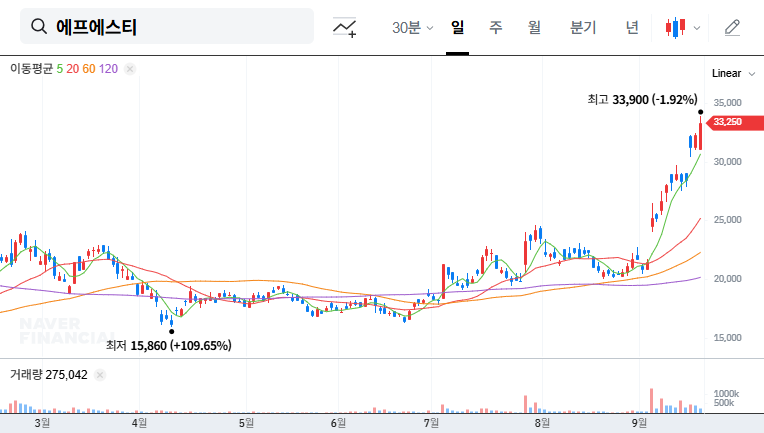
    Investors are closely watching FINE SEMITECH Corp. (FST), a key innovator in the semiconductor space, particularly for its advancements in EUV pellicle technology. With a major Investor Relations (IR) event on the horizon, the market is buzzing with a critical question: is FST standing at a major growth inflection point? This event is more than a standard corporate update; it’s a crucial opportunity to assess the company’s trajectory and the real-world impact of its core technologies.

    This comprehensive analysis explores FST’s fundamentals, the immense potential of its EUV pellicle business, the surrounding market environment, and the strategic considerations for investors. If you’re seeking a deep dive into FINE SEMITECH Corp. to inform your investment decisions, this breakdown provides the clarity you need.

    The Critical Role of EUV Pellicle Technology

    Before diving into FST’s financials, it’s essential to understand why the EUV pellicle is so significant. Extreme Ultraviolet (EUV) lithography is the cutting-edge process used to manufacture the world’s most advanced microchips. During this process, a photomask (the blueprint for the chip) is exposed to intense light. An EUV pellicle is an ultra-thin membrane that acts as a protective dust cover for this photomask. Without it, even a single microscopic particle could create a defect, rendering a multi-million dollar mask and countless chips useless. As chipmakers like TSMC and Samsung push the boundaries of physics, the demand for high-quality, durable pellicles is skyrocketing, placing companies like FST at the center of the next generation of computing.

    “Mastery of EUV pellicle technology is not just an incremental improvement; it is a fundamental enabler for the future of the entire semiconductor industry. Companies that lead in this niche hold a powerful key to the next wave of technological innovation.”

    Dissecting the Upcoming FST Investor Relations Event

    FINE SEMITECH Corp. is set to host its IR event on November 17, 2025, at 9:00 AM. The primary goal is to enhance investor understanding and provide a clear view of the company’s business status. You can view the Official Disclosure for more details. Key agenda items include:

    • Q3 2025 Performance Review: A detailed analysis of recent financial results and operational milestones.
    • Core Business & Management Strategy: Updates on the current state and future vision for key divisions, with a special focus on the EUV pellicle business.
    • Investor Q&A Session: A direct line for investors to address concerns and clarify the company’s direction.

    Analyzing FST’s Fundamentals: The Bull vs. Bear Case

    The Bull Case: Core Strengths & Growth Engines

    FST presents several compelling factors for a positive outlook within the dynamic semiconductor market.

    • Dominance in EUV Pellicle: With a commanding 80% domestic market share and expanding overseas presence, FST’s leadership in this high-growth segment is its primary catalyst.
    • Diversified Growth: Strong performance from subsidiaries like SP Tech and Hwaseon Ceratech provides a stable foundation and diversifies the company’s revenue streams.
    • Commitment to Innovation: A high R&D investment ratio (10.52% of sales) and a focus on ESG through products like eco-friendly chillers signal a forward-looking strategy for sustainable growth.
    • Impressive Financials: In H1 2025, FST reported sales of KRW 144.49 billion (a 43.2% YoY increase) and a return to operating profitability, showcasing strong momentum.

    The Bear Case: Navigating Potential Headwinds

    Prudent investors must also weigh the potential risks facing FINE SEMITECH Corp.

    • Currency Exposure: A high volume of foreign currency transactions makes FST’s profitability vulnerable to exchange rate volatility.
    • Debt Load: With total borrowings at KRW 219.10 billion, rising interest rates could significantly increase the company’s financial burden.
    • Macroeconomic Sensitivity: The semiconductor industry is cyclical. A global economic slowdown, inflation, or interest rate hikes could dampen demand. For more on this, read this Gartner analysis on market trends.

    Post-IR Investment Strategy & Outlook

    The IR event’s outcome will likely dictate short-term stock volatility. Positive news on EUV pellicle commercialization, new customer acquisitions, or better-than-expected Q3 results could trigger a significant upward re-rating of the stock. Conversely, an emphasis on risks or a lack of clear progress could lead to a pullback.

    Actionable Steps for Investors

    Following the announcement, investors should:

    • Analyze the Details: Scrutinize the specifics of the EUV pellicle business progress, future guidance, and the company’s risk mitigation plans.
    • Watch for Positive Triggers: Confirmation of customer evaluation success or clear visibility into mass production schedules would be strong bullish signals.
    • Re-evaluate Valuation: Based on the new information, reassess FST’s fair value to determine if the current stock price offers an attractive entry point for a long-term semiconductor investment.

    Frequently Asked Questions (FAQs)

    What is FST’s most important growth driver?

    FST’s core growth driver is its EUV pellicle business. The technology’s critical role in advanced chipmaking, combined with FST’s high domestic market share and international expansion, positions it as the central pillar of the company’s future performance.

    What are the main risks for FST investors?

    The key risks for anyone considering a FST stock analysis include currency exchange rate volatility, the financial strain from its significant debt load in a rising-rate environment, and the semiconductor industry’s inherent sensitivity to global economic cycles.

    How might the IR event impact FST’s stock price?

    A positive IR, detailing strong progress in the EUV pellicle segment and solid financials, could significantly boost investor confidence and drive the stock price higher. Conversely, if the presentation lacks substance or highlights major unresolved risks, it could lead to a short-term sell-off.
    (036810) FINE SEMITECH (FST) Analysis: Is EUV Pellicle Technology the Ultimate Growth Catalyst? 관련 이미지
    (036810) FINE SEMITECH (FST) Analysis: Is EUV Pellicle Technology the Ultimate Growth Catalyst? 관련 이미지
  • HL Holdings H1 2025 Earnings Analysis: Below Expectations, What’s the Investment Strategy?

    1. HL Holdings H1 2025 Earnings Analysis: What Happened?

    HL Holdings reported consolidated revenue of KRW 334.9 billion, operating income of KRW 16.3 billion, and net income of KRW 0.2 billion for H1 2025. While revenue slightly beat market expectations, operating income and net income fell short by 6% and a staggering 97%, respectively, raising concerns in the market.

    2. Reasons for Underperformance: Why These Results?

    The decline in HL Holdings’ performance is attributed to a combination of factors, including decreased product sales, increased selling, general and administrative expenses, and external factors like macroeconomic uncertainties, and fluctuations in exchange rates and interest rates. The rising debt ratio and negative operating cash flow further amplify concerns about the company’s financial health.

    3. The Future of HL Holdings: What’s Next?

    HL Holdings is pursuing new business ventures, such as entering the used car market and investing in robotics technology, while leveraging the competitiveness of its key subsidiaries to secure future growth engines. However, the company faces the challenge of overcoming short-term profit decline and increasing financial burden. A thorough analysis of the company’s foreign exchange transactions, debt structure, hedging strategies, and debt management is crucial.

    4. Action Plan for Investors: What Should You Do?

    • In-depth Analysis: Conduct a thorough analysis of the factors contributing to the decline in sales, operating profit margin, and net income.
    • Risk Management: Evaluate the company’s strategies for managing exchange rate and interest rate fluctuations and carefully examine its financial health.
    • Growth Assessment: Review the specific growth plans and investment recovery strategies for new businesses and assess their impact on the company’s long-term value.
    • Competitor Analysis: Compare HL Holdings with its competitors to understand its relative competitiveness and market position.
    What was HL Holdings’ revenue for H1 2025?

    HL Holdings reported revenue of KRW 334.9 billion for H1 2025, slightly exceeding market expectations.

    What are the reasons for HL Holdings’ underperformance?

    The underperformance is attributed to decreased product sales, increased SG&A expenses, macroeconomic uncertainties, and fluctuations in exchange rates and interest rates.

    What is HL Holdings’ future investment strategy?

    HL Holdings is expected to focus on new business ventures like the used car market and robotics technology, along with strengthening the competitiveness of its key subsidiaries.

  • Busan Industry Co., Ltd. H1 2025 Earnings: A Red Flag for Investors?

    1. What’s Happening with Busan Industry?

    Busan Industry Co., Ltd. reported Q2 2025 revenue of KRW 25.5 billion, a decrease compared to the same period last year. The company also swung to an operating loss of KRW 1.3 billion, with a net loss of KRW 1.9 billion, painting a bleak picture of its current financial performance.

    2. What’s Driving the Decline?

    A confluence of factors, including a slowdown in the construction industry, rising raw material prices, and a high-interest rate environment, have contributed to the deterioration in profitability. The poor performance of subsidiaries, Tae Myung Industrial Co., Ltd. and TM Track System Co., Ltd., has significantly impacted the consolidated results.

    3. What Should Investors Do?

    Experts advise extreme caution when considering investments in Busan Industry Co., Ltd. Downward pressure on the stock price is likely to persist in the short term. Before making any investment decisions, it’s crucial to carefully analyze the company’s restructuring plans, strategies for improving subsidiary performance, and the potential for recovery in the construction market. While the company’s regional competitive advantage in the ready-mixed concrete sector is a positive factor, it’s unlikely to offset the current challenging business environment.

    4. Key Investment Considerations

    • ▶ Potential for a prolonged downturn in the construction market and continued PF issues
    • ▶ Further deterioration in subsidiary performance
    • ▶ Debt management and plans for ensuring financial soundness
    • ▶ Litigation risks related to Tae Myung Industrial Co., Ltd.

    Frequently Asked Questions

    Q. What is Busan Industry’s main business?

    A. Busan Industry Co., Ltd. primarily manufactures and sells ready-mixed concrete. It also owns subsidiaries operating in the construction PC business and other related fields.

    Q. What are the main reasons for the decline in H1 2025 earnings?

    A. The decline is attributed to a combination of factors, including a slowdown in the construction industry, increasing raw material prices, a high-interest rate environment, and the poor performance of subsidiaries.

    Q. Should I invest in Busan Industry?

    A. Extreme caution is advised at this time. Investors should carefully analyze the company’s restructuring plans, strategies for improving subsidiary performance, and the potential for a recovery in the construction market before making any investment decisions.

  • LX Holdings Q1 2025 Earnings: Revenue Shock but Profitability Holds. What Investors Need to Know.

    1. What Happened? LX Holdings Q1 2025 Performance Overview

    LX Holdings reported Q1 2025 revenue of KRW 10.1 billion (vs. KRW 53.6 billion estimated, -81%), operating profit of KRW 42.5 billion (vs. KRW 42.3 billion estimated, +0%), and net profit of KRW 43.6 billion (vs. KRW 42.2 billion estimated, +3%). Despite the substantial revenue decline, both operating and net profits met or exceeded market expectations.

    2. Why Did This Happen? Analyzing the Drivers of Performance

    The sharp drop in revenue is attributed to factors such as underperformance of subsidiaries, increased market competition, and volatility in raw material prices. Conversely, the relatively stable profit figures are likely due to cost-cutting measures and solid equity method income from affiliates. Improved performance from key affiliates, including LX Hausys, LX Semicon, LX International, and LX MMA, positively contributed to the results.

    3. What’s Next? Outlook and Investment Strategy

    While the revenue decline may put downward pressure on the stock price in the short term, long-term growth potential remains, driven by strong affiliate performance and new business investments. Investors should closely monitor the reasons behind the revenue shortfall and the company’s plans for improvement, along with the performance of its affiliates and the progress of new ventures. Careful consideration should also be given to the company’s ability to manage risks related to global economic fluctuations, currency exchange rates, and raw material price volatility.

    4. Action Plan for Investors

    • Be mindful of short-term stock price volatility and develop a long-term investment strategy.
    • Monitor the reasons for the revenue decline and the company’s improvement plans.
    • Track the performance of key affiliates and the progress of new business ventures.
    • Analyze the impact of macroeconomic factors, including currency exchange rates and raw material prices.

    Why did LX Holdings’ revenue decline in Q1 2025?

    The decline is likely due to a combination of factors, including underperforming subsidiaries, increased market competition, and fluctuating raw material prices. Certain subsidiaries are particularly sensitive to changes in freight rates and international commodity prices.

    What is the outlook for investing in LX Holdings?

    While the revenue decline is a concern in the short term, the company’s long-term growth potential remains, supported by the strong performance of its affiliates and investments in new business ventures. Investors should closely monitor the reasons for the revenue decline and the company’s improvement plans, as well as the performance of its affiliates and the success of its new ventures.

    What are the key risks to consider when investing in LX Holdings?

    Investors should be aware of external risks, including a potential global economic slowdown, fluctuations in currency exchange rates, and volatility in raw material prices. It is also crucial to consider LX Holdings’ core business and the competitiveness of its subsidiaries, as well as its long-term growth strategy.

  • HDC Investor Relations (IR) Analysis: 5 Key Factors Influencing Stock Price

    1. The HDC IR: What’s Happening?

    HDC will hold an Investor Relations (IR) meeting on August 6th at 2 PM KST. The meeting will include presentations on key management updates and a Q&A session, focused on increasing investor understanding of HDC, a company with a market capitalization of KRW 1.38 trillion.

    2. Why is it Important?

    This IR is the first major presentation since HDC’s Q1 2025 earnings release, and it’s expected to provide explanations and outlooks on factors that significantly impact HDC’s fundamentals. It’s a crucial opportunity to gain insights into HDC’s strategies for addressing key issues such as legal risks associated with HDC Hyundai Development Company, subsidiary performance, and interest rate and exchange rate fluctuations.

    3. Key IR Analysis: 5 Factors that Will Influence Stock Price

    • 3.1. HDC Hyundai Development Company Legal Risks: Explanations and strategies regarding the 3rd trial results of the Gwangju accident and the possibility of additional administrative sanctions will significantly impact the stock price.
    • 3.2. Subsidiary Performance Outlook: Explanations regarding the business strategies and growth potential of key subsidiaries like HDC Hyundai EP, HDC Labs, HDC IPARK Mall, and Tongyeong EcoPower are crucial.
    • 3.3. Interest Rate Hikes and Raw Material Price Fluctuations: Focus on HDC’s risk management strategies for rising interest rates and raw material prices, especially regarding HDC Hyundai Development Company’s Project Financing (PF) business.
    • 3.4. Exchange Rate Fluctuations: The impact of KRW/USD and KRW/EUR exchange rate fluctuations on HDC Hyundai EP and Tongyeong EcoPower’s performance, and HDC’s risk management strategies are vital. The recent upward trend in the KRW/EUR exchange rate could be a negative factor.
    • 3.5. Corporate Actions: Explanations regarding the merger with Budongsan Ilbo Sa and treasury stock acquisitions, along with their potential synergy effects, are expected.

    4. Investor Action Plan

    Investors should carefully analyze the information presented during the IR and continuously monitor market conditions to develop their investment strategies. It’s crucial to thoroughly review the company’s explanations and outlook on the five key points highlighted above and prepare for potential stock price volatility.

    Will the Gwangju accident be addressed in the HDC IR?

    Yes, HDC’s explanation and response strategy regarding the 3rd trial results of the Gwangju accident and the possibility of additional administrative measures are expected to be a significant part of the IR.

    What is the outlook for HDC’s subsidiaries?

    The IR will include discussions on the business strategies and future growth potential of key subsidiaries like HDC Hyundai EP, HDC Labs, HDC IPARK Mall, and Tongyeong EcoPower. This information can help investors gauge their performance outlook.

    How is HDC responding to interest rate and exchange rate fluctuations?

    The IR will address HDC’s risk management strategies for external environmental changes such as interest rate hikes, raw material price fluctuations, and exchange rate volatility. Pay close attention to HDC Hyundai Development Company’s PF business risk management strategy and the company’s approach to KRW/USD and KRW/EUR exchange rate fluctuations.