Tag: StockOutlook

  • (069410) nTels Treasury Stock Disposal: A Deep-Dive Financial Analysis of Q3 Performance & Investor Impact

    (069410) nTels Treasury Stock Disposal: A Deep-Dive Financial Analysis of Q3 Performance & Investor Impact

    The recent announcement of an nTels treasury stock disposal has captured the attention of the market. On November 14, 2023, nTelsCo.,Ltd. (엔텔스) disclosed its plan to dispose of treasury shares specifically for employee bonuses. This move, while a common corporate action, arrives at a pivotal moment, following a quarter of significant financial improvement. For investors, the key question is whether this is a routine financial maneuver or a strategic signal of confidence in the company’s future growth trajectory. This comprehensive financial analysis will unpack the implications of this decision, examine the robust Q3 2023 performance, and outline what investors need to know to make informed decisions.

    Is the nTels treasury stock disposal a simple compensation plan or a bullish indicator? By combining this event with a detailed look at the company’s fundamentals, we can uncover the true narrative for nTels stock.

    Disposal Details and Company Context

    nTelsCo.,Ltd., a key player in providing telecommunications software and solutions like Business/Operations Support Systems (B/OSS), is navigating the dynamic landscape of 5G and IoT integration. The company’s decision, as per the Official Disclosure (DART Report), involves the disposal of 140,000 common shares. This represents approximately 1.37% of the total outstanding shares, valued at around KRW 700 million.

    The stated purpose is explicit: to grant bonuses to executives and employees. This is a crucial detail. Unlike disposals aimed at raising capital, which can lead to share dilution, this action is designed to incentivize and retain key talent—a move often interpreted by the market as a sign of management’s confidence in sustained future performance.

    Deep Dive: nTels Financial Analysis for Q3 2023

    The treasury stock disposal does not happen in a vacuum. It is framed by an exceptionally strong third quarter in 2023, which suggests a fundamental turnaround. Let’s examine the key performance indicators:

    • Surging Revenue & Profitability: Revenue skyrocketed by 59.2% year-over-year to KRW 46.647 billion. Even more impressively, operating profit shifted from a loss to a surplus of KRW 1.44 billion, signaling a significant operational turnaround fueled by its core B/OSS solution business.
    • Explosive Global Growth: International sales were a standout performer, surging 119.8% to KRW 8.088 billion. This indicates that nTels is successfully expanding its footprint beyond domestic markets, a critical driver for long-term growth.
    • Robust Order Backlog: The total order backlog swelled by 93.5% from the end of the previous year to KRW 72.254 billion. This provides strong revenue visibility and a stable foundation for the upcoming quarters.

    Areas for Continued Scrutiny

    Despite the stellar top-line growth, a complete nTels financial analysis requires a balanced view. Key profitability metrics like Return on Equity (ROE) at 0.13% and Earnings Per Share (EPS) at 4 KRW remain low. Furthermore, operating cash flow is still negative. This suggests that while the company is growing rapidly, it must now focus on converting that growth into efficient, sustainable profit and positive cash flow.

    Impact of the nTels Treasury Stock Disposal

    Short-Term Market Implications

    In the short term, the impact on the nTels stock price is expected to be minimal. The volume (1.37%) is too small to create significant selling pressure. More importantly, the market often views disposals for employee compensation positively, as it aligns employee interests with shareholder value and signals a commitment to retaining talent. When combined with the strong Q3 results, the immediate market reaction is likely to be neutral to positive.

    Mid-to-Long-Term Strategic Value

    The long-term effect is more strategic than financial. By rewarding performance, nTels aims to boost morale and productivity, which can serve as an indirect catalyst for innovation and operational excellence. This internal strengthening aligns perfectly with the company’s external growth story, driven by its expanding order backlog and international success. It’s a move to ensure the internal engine is just as robust as the external opportunities.

    Actionable Investor Checklist

    For those considering an investment in nTels, the focus should be on the underlying fundamentals rather than the disposal event itself. Here are key points to monitor:

    • Sustainability of Growth: Is the Q3 performance a one-time event or the start of a new, sustainable growth phase? Look for continued strength in international sales and new contracts in the 5G and IoT sectors in subsequent earnings reports.
    • Path to Profitability: Keep a close eye on ROE, EPS, and operating cash flow. The next step in nTels’ evolution is to translate its impressive revenue growth into bottom-line profit and positive cash generation.
    • Competitive Landscape: How is nTels positioned against its competitors in the B/OSS and telecom software space? Understanding their competitive advantage is key to assessing long-term viability. Consider reading our broader report on Investing in the Korean Tech Sector for more context.

    Conclusion: A Bullish Signal Backed by Fundamentals

    The nTels treasury stock disposal should be viewed not as an isolated event, but as a confident internal maneuver that complements a powerful external growth story. The action itself is a healthy sign of a company investing in its people. However, the true investment thesis rests on the impressive fundamental improvements seen in Q3 2023. Investors should focus on the company’s ability to maintain its growth momentum, particularly in international markets, and its strategic efforts to enhance profitability. If nTels can continue this trajectory, this period may be remembered as a significant inflection point for the company.
    (069410) nTels Treasury Stock Disposal: A Deep-Dive Financial Analysis of Q3 Performance & Investor Impact 관련 이미지
  • (009450) Kyung Dong Navien’s ₩119.7B Asset Disposition: A Deep Dive into its Investment Strategy & Future Growth

    (009450) Kyung Dong Navien’s ₩119.7B Asset Disposition: A Deep Dive into its Investment Strategy & Future Growth

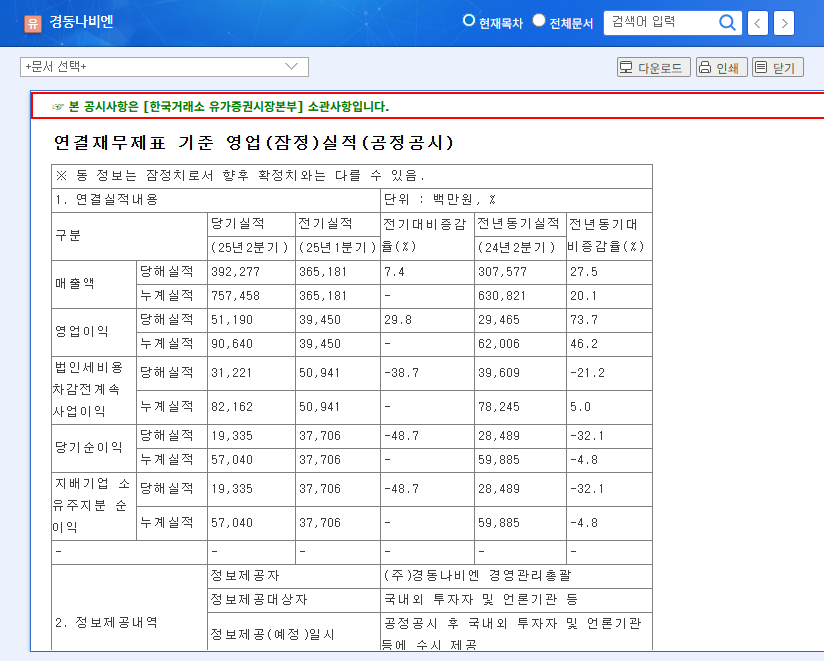
    The recent Kyung Dong Navien asset disposition has sent ripples through the market, signaling a pivotal moment for the global HVAC giant. On November 12, 2025, KYUNG DONG NAVIEN CO.,LTD (KDN) announced a significant sale of tangible assets valued at ₩119.7 billion. This isn’t merely a transaction; it’s a calculated maneuver designed to streamline operations, bolster financial health, and position the company for its next phase of growth. For investors and industry observers, understanding the nuances of this decision is critical to forecasting KDN’s future trajectory.

    This comprehensive financial analysis will dissect the deal’s structure, explore the long-term strategic goals like production base integration, and evaluate the potential impacts on KDN’s fundamentals amidst a complex global economic landscape.

    Unpacking the ₩119.7 Billion Deal

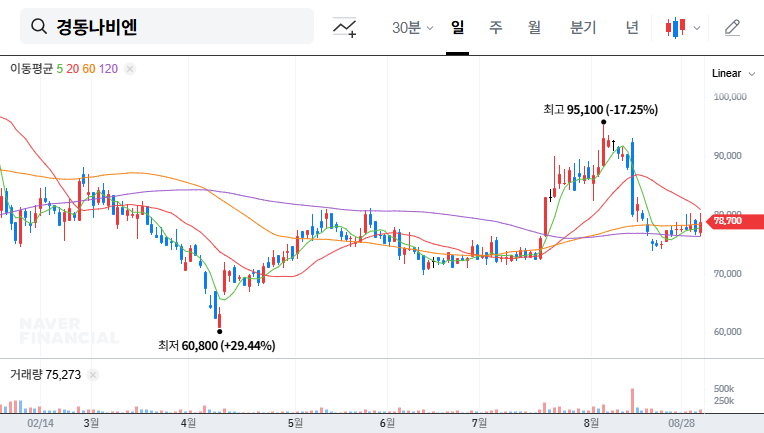
    The core of the transaction involves the sale of the A7-1B land and all facilities currently under construction within the Seotan General Industrial Complex in Pyeongtaek-si, Gyeonggi-do. The buyer is Kyung Dong Polium Co., Ltd., an affiliate company within the same corporate family. This sale, representing 8.81% of KDN’s total assets, is slated for completion by February 10, 2026. This intra-group transfer is a key detail, indicating a strategic reshuffling of assets rather than an exit from a business line. For full transparency, the company released an Official Disclosure which provides granular detail on the transaction, reinforcing the company’s commitment to corporate governance.

    This move is fundamentally about optimization. By reallocating assets within the group, Kyung Dong Navien is paving the way for a more integrated and efficient production network, unlocking long-term value.

    The Strategic Blueprint: Efficiency and Growth

    The primary driver behind this Kyung Dong Navien asset disposition is a dual-pronged strategy focused on enhancing operational efficiency and fortifying the company’s financial structure for future investments.

    Achieving Synergy Through Production Base Integration

    Consolidating production facilities is a classic strategy for achieving economies of scale. For KDN, this means creating a more streamlined manufacturing ecosystem. In the long run, this integration is expected to reduce redundant overhead, simplify supply chain logistics, and enhance quality control. A centralized production system allows for better resource allocation, faster innovation cycles, and a more agile response to shifts in global demand for their core products like gas boilers and water heaters. This is a critical component of any effective modern HVAC manufacturing strategy.

    Fueling Future Growth with Enhanced Liquidity

    The infusion of ₩119.7 billion in cash provides significant strategic flexibility. This newfound liquidity can be deployed in several high-impact areas:

    • Accelerating New Ventures: It provides capital to fully integrate and scale the recently acquired SK Magic business, unlocking synergies in the home appliance market.
    • Boosting R&D Investment: Sustained investment in research and development is crucial for maintaining a competitive edge in the rapidly evolving HVAC industry, particularly in eco-friendly and smart-home technologies.
    • Strengthening the Balance Sheet: The cash can be used to pay down debt, improve key financial ratios, and increase resilience against economic downturns, reinforcing its strong credit rating.

    Navigating Macroeconomic Headwinds

    KDN’s performance is intrinsically linked to the global economic climate. Investors conducting a thorough Kyung Dong Navien financial analysis must consider several external variables that could influence its operations and profitability:

    • Currency Fluctuations: As a major exporter, a weaker Korean Won against the US Dollar and Euro can make KDN’s products more competitive abroad. However, it also increases the cost of imported raw materials.
    • Interest Rate Environment: Global interest rate policies affect borrowing costs for capital expenditures and can influence investment sentiment. Potential rate cuts could be a positive catalyst.
    • Commodity Prices & Logistics: The price of crude oil, steel, and copper, along with global shipping costs (like the BDI and CCFI indices), directly impacts the company’s cost of goods sold.

    Investor Takeaway: A Long-Term Perspective

    The Kyung Dong Navien asset disposition should be viewed as a strategic realignment for long-term health, not a short-term catalyst. While the immediate cash injection is a clear positive, the true measure of success will be in the execution. Investors should look beyond immediate stock price movements and focus on monitoring key performance indicators in upcoming quarterly and annual reports. For more on market trends, see the latest global manufacturing outlook from Reuters.

    Moving forward, the critical factors will be the tangible cost savings and efficiency gains from the production base integration, the successful synergy realized from the SK Magic acquisition, and the company’s agility in navigating the macroeconomic environment. This strategic pivot demonstrates a forward-thinking management team focused on building a more resilient and competitive enterprise for the future.

    Frequently Asked Questions (FAQ)

    Why did Kyung Dong Navien sell these assets?

    The asset disposition is part of a larger strategy to integrate production bases, which aims to improve long-term operational efficiency, reduce costs, and optimize the company’s asset portfolio among its affiliates.

    How does this ₩119.7 billion sale affect KDN’s finances?

    It provides a significant cash infusion that immediately improves liquidity and strengthens the company’s financial structure. This shifts the balance sheet from fixed tangible assets to more flexible cash equivalents, enhancing overall financial health.

    What should investors monitor following this decision?

    Investors should focus on long-term indicators rather than short-term price fluctuations. Key areas to watch in future financial reports include improvements in operating margins, the progress of the SK Magic business integration, and the company’s management of macroeconomic risks.

    (009450) Kyung Dong Navien's ₩119.7B Asset Disposition: A Deep Dive into its Investment Strategy & Future Growth 관련 이미지
    (009450) Kyung Dong Navien's ₩119.7B Asset Disposition: A Deep Dive into its Investment Strategy & Future Growth 관련 이미지
  • (011150) CJ SEAFOOD CORPORATION Earnings (Q3 2025): Deep Dive & Stock Analysis

    (011150) CJ SEAFOOD CORPORATION Earnings (Q3 2025): Deep Dive & Stock Analysis

    CJ SEAFOOD CORPORATION Q3 Earnings: A Mixed Signal for Investors

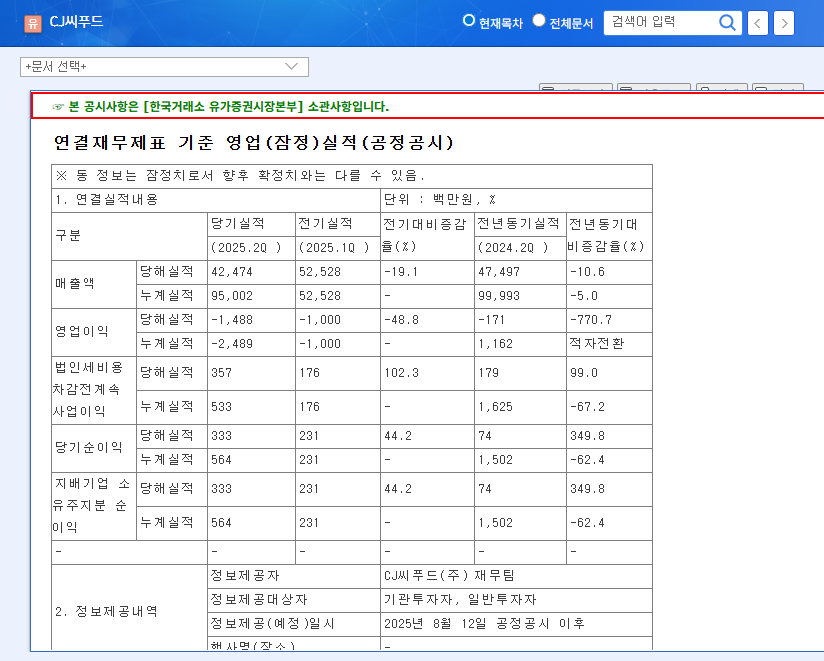
    The latest CJ SEAFOOD CORPORATION earnings report for Q3 2025 presents a complex picture for current and potential investors. While the company posted a notable quarter-over-quarter revenue increase, the persistent operating loss and stagnant net profit have cast a shadow over its performance, leaving many to question the future of CJ Seafood stock. This article provides a comprehensive fundamental analysis of the results, explores the underlying challenges, and outlines a potential investor action plan based on the available data.

    According to the Official Disclosure filed on November 11, 2025, the preliminary consolidated financials reveal a company at a critical crossroads. Let’s break down the key figures.

    Q3 2025 Financial Highlights

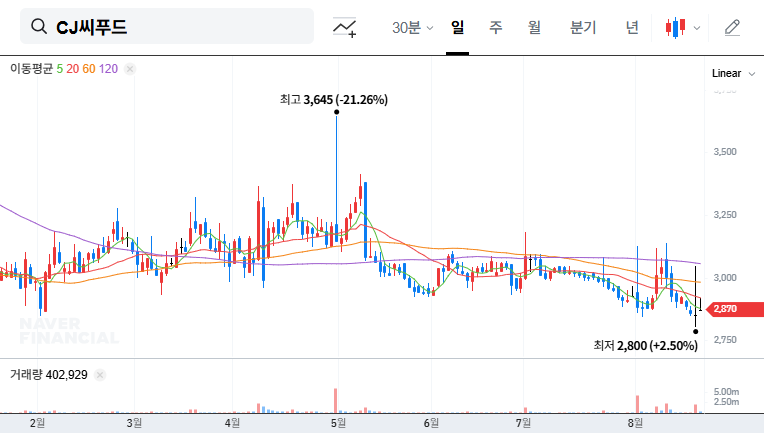
    • Revenue: KRW 49.4 billion, a promising 16.2% increase from the previous quarter, but still down 7.8% year-over-year.
    • Operating Profit: A loss of KRW 0.6 billion. While this is an improvement from the previous quarter’s loss, it marks a worrying shift to a deficit compared to the same period last year.
    • Net Profit: KRW 0 billion. This break-even result represents a significant decline both quarter-over-quarter and year-over-year, indicating a complete stall in bottom-line profitability.

    Fundamental Analysis: Unpacking the Underperformance

    To understand the trajectory of CJ Seafood stock, we must look beyond the headline numbers. Several internal and external factors are contributing to this challenging period, forming the basis of our fundamental analysis.

    Core Business and Financial Weaknesses

    The company’s core operations, particularly in the seaweed and fishery product divisions, have seen a significant slump. This isn’t just about revenue; it’s about profitability. Despite the quarterly revenue bump, a higher cost of goods sold and rising selling & administrative expenses have effectively erased any gains, preventing a return to operating profit. Furthermore, the company’s financial health is a major concern. A high debt-to-equity ratio, coupled with diminishing operating cash flow, creates a precarious situation, making the company vulnerable to market shocks.

    While investments in affiliated companies signal an effort to find future growth, these initiatives have yet to deliver tangible results, adding to investor uncertainty surrounding the latest CJ SEAFOOD CORPORATION earnings.

    Navigating Macroeconomic Headwinds

    CJ SEAFOOD CORPORATION is also battling a difficult macroeconomic environment. Persistently high interest rates, driven by the US benchmark, directly increase the cost of servicing its significant debt. As reported by major financial news outlets, global economic conditions remain challenging. The high KRW/USD exchange rate exacerbates this by inflating the cost of imported raw materials, putting constant pressure on profit margins. On a brighter note, key logistics cost indicators like the Baltic Dry Index (BDI) have stabilized, offering some relief on the expense side, but this has not been enough to offset the other financial pressures.

    Investor Action Plan & Stock Outlook

    Given the disappointing Q3 results, the market’s reaction is likely to be negative. The continued operating loss is a major red flag that could lead to downward pressure on the stock in the short term as investor sentiment wanes. Many of these fundamental weaknesses may already be priced in, but this report could accelerate a decline if confidence erodes further.

    Investment Thesis: A Cautious ‘Hold’

    At this juncture, a proactive investment is difficult to recommend. The lack of positive momentum and clear profitability pathways suggests a cautious approach is warranted. For a more detailed look at industry trends, see our analysis of the broader consumer staples sector.

    • For Current Shareholders: Consider holding your position but monitor the Q4 report and 2026 business plan closely. Look for concrete strategies on margin improvement, debt reduction, and a tangible return from affiliated company investments.
    • For Potential Investors: It is prudent to remain on the sidelines. The risk currently outweighs the potential reward. A potential entry point would only emerge after the company demonstrates a sustained turnaround with at least one to two quarters of positive operating profit and a clear, credible growth strategy.

    In conclusion, while the quarterly revenue uptick provides a sliver of hope, the overall financial picture from the CJ SEAFOOD CORPORATION earnings report is concerning. Until the company can prove it has a viable plan to restore profitability and manage its financial burdens, exercising caution is the most sensible investor action plan.

    (011150) CJ SEAFOOD CORPORATION Earnings (Q3 2025): Deep Dive & Stock Analysis 관련 이미지
    (011150) CJ SEAFOOD CORPORATION Earnings (Q3 2025): Deep Dive & Stock Analysis 관련 이미지
  • (009160) SIMPACInc Lawsuit: Merger in Jeopardy & In-Depth Financial Analysis for Investors

    (009160) SIMPACInc Lawsuit: Merger in Jeopardy & In-Depth Financial Analysis for Investors

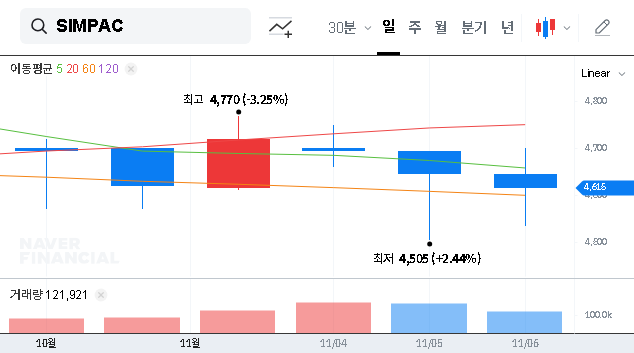
    A critical legal battle is unfolding for SIMPACInc, as a significant shareholder lawsuit threatens to derail its planned merger with parent company SIMPAC Holdings. This SIMPACInc lawsuit arrives at a time when the company is already navigating severe financial turbulence, creating a perfect storm of uncertainty for investors. This comprehensive analysis will explore the core issues of the litigation, provide a deep dive into SIMPACInc’s financial health, and outline the potential consequences for stakeholders.

    Understanding the intersection of this legal challenge and the company’s underlying performance is crucial for making informed investment decisions. We will unpack the details to provide clarity on SIMPACInc’s current standing and its precarious future.

    Dissecting the SIMPACInc Lawsuit: What’s at Stake?

    The legal action was initiated on October 2, 2025, by shareholder ‘MJ Partners Co., Ltd.’, which filed a ‘Lawsuit for Confirmation of Nullity of Board Resolution Regarding Merger’. At its heart, the lawsuit contests the validity of the board’s decision to merge with SIMPAC Holdings. The two primary points of contention are the procedural legality of the merger resolution and, critically, the fairness of the proposed merger ratio of 1:34.2122440. Such disputes often arise when minority shareholders believe the valuation used to determine the share swap ratio unfairly benefits the acquiring company at their expense. The official details of the filing provide the primary account of this challenge. (Official Disclosure)

    The confluence of a contentious merger lawsuit and deteriorating financial health creates a perfect storm of uncertainty for SIMPACInc, demanding careful scrutiny from all stakeholders.

    Financial Red Flags: A Deep Dive into SIMPACInc’s Performance

    The SIMPACInc merger plan doesn’t exist in a vacuum. It’s set against a backdrop of sharply declining financial health, which is likely the key motivator for the consolidation. A thorough SIMPACInc financial analysis reveals several worrying trends between December 2022 and December 2024:

    Revenue has collapsed, falling from KRW 1,147.7 billion to just KRW 627.2 billion—a staggering 45% drop in two years. This indicates a severe contraction in its core business. More alarmingly, Operating Profit plummeted from KRW 175.8 billion to a mere KRW 19.1 billion, showcasing an inability to maintain profitability amidst falling sales. While Net Income improved from a loss of KRW 196.1 billion to a loss of KRW 128.1 billion, the company remains deeply in the red. Furthermore, the Debt-to-Equity Ratio has swelled from 92.27% to 114.65%, signaling increased financial risk and leverage. This precarious financial state makes the strategic direction of the company, including the now-contested merger, all the more critical.

    Macroeconomic Headwinds and Market Pressures

    SIMPACInc’s internal struggles are compounded by a challenging global economic environment. Persistently high interest rates in key markets (US, Europe, and Korea) increase borrowing costs, putting further strain on the company’s balance sheet and making it more expensive to fund operations or invest in growth. For a detailed overview of global economic indicators, investors can consult authoritative sources like Bloomberg’s Market Data. While commodity prices and freight indices show some stability, the high-cost capital environment remains a significant hurdle for industrial companies like SIMPACInc.

    Potential Fallout: Ripple Effects of the Merger Dispute

    The ongoing SIMPACInc lawsuit introduces several layers of risk that could have far-reaching effects:

    • Heightened Merger Uncertainty: The most direct impact is the potential delay or complete nullification of the merger with SIMPAC Holdings. This ambiguity clouds the company’s strategic roadmap for financial recovery.
    • Downward Pressure on Stock Price: Legal uncertainty is toxic for investor sentiment. The perceived risk will likely lead to a sell-off, depressing the stock’s value until a clear resolution is reached.
    • Management Distraction: Protracted litigation diverts significant time, attention, and resources away from core business operations and turnaround efforts, potentially causing further performance degradation.
    • Erosion of Corporate Value: An unfavorable ruling or a drawn-out legal fight can damage the company’s reputation and credibility, impacting its long-term value and relationships with stakeholders.

    Strategic Guidance for SIMPACInc Investors

    Given the high stakes, investors should adopt a cautious and diligent approach. The primary focus should be on monitoring lawsuit developments, as the outcome will be a major catalyst for the company’s future. Beyond the courtroom, it is imperative to scrutinize management’s efforts to improve the company’s dire fundamentals. Without a tangible turnaround in revenue and profitability, even a successful merger may not be enough to create sustainable value. If you’re new to this type of situation, it may be helpful to read up on how to analyze corporate legal risks before making any decisions. Ultimately, any investment thesis must weigh the potential for a strategic turnaround against the considerable legal and financial risks currently at play.

    In conclusion, while the lawsuit does not alter SIMPACInc’s existing financial data, it introduces a significant variable that could profoundly shape its path forward. Prudence and close monitoring are strongly advised.

    (009160) SIMPACInc Lawsuit: Merger in Jeopardy & In-Depth Financial Analysis for Investors 관련 이미지
  • (136480) HARIM Co., Ltd. Earnings (Q3 2025): A Deep Dive Stock Analysis & Investment Outlook

    (136480) HARIM Co., Ltd. Earnings (Q3 2025): A Deep Dive Stock Analysis & Investment Outlook

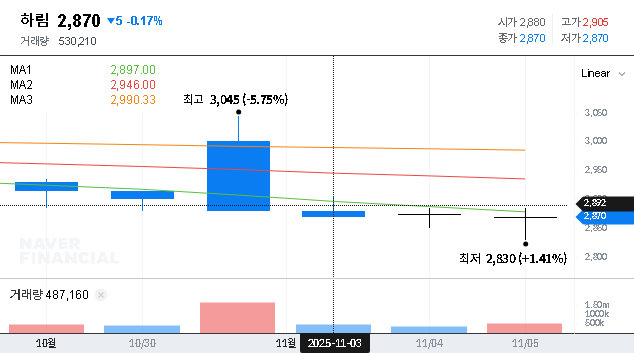
    The latest HARIM Co., Ltd. earnings release for Q3 2025 has captured significant market attention. After a challenging end to 2024, the poultry giant has demonstrated a strong recovery, but with macroeconomic headwinds swirling, investors are right to ask: What comes next? This article provides a deep-dive analysis into the HARIM Q3 2025 report, exploring the fundamental drivers behind the numbers and offering a forward-looking investment outlook.

    We’ll move beyond the surface-level figures to provide a comprehensive HARIM stock analysis, equipping you with the insights needed to make informed decisions about the company’s future value.

    HARIM Q3 2025 Earnings: At a Glance

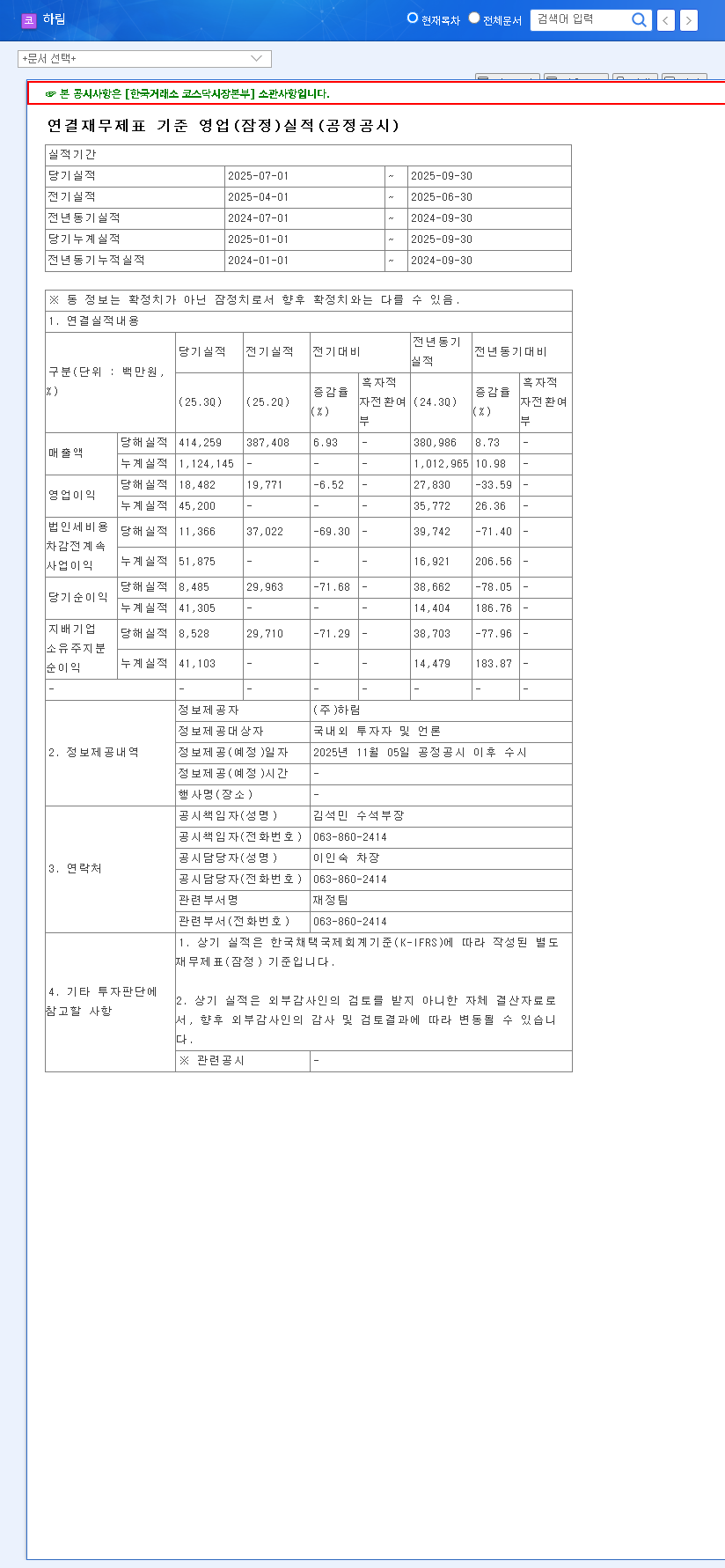
    On November 5, 2025, HARIM Co., Ltd. (하림) released its unaudited consolidated financial results, confirming a sustained profitability trend. The key performance indicators from the report signal a company that has successfully navigated recent turbulence. You can view the complete filing in the Official Disclosure on DART.

    • Revenue: KRW 414.3 billion
    • Operating Profit: KRW 18.5 billion
    • Net Income: KRW 8.5 billion

    While operating profit saw a minor dip compared to a strong Q2, the results are overwhelmingly positive. They cement HARIM’s successful turnaround from the Q4 2024 loss and indicate a stable operational footing. The consistent profitability since the start of 2025 is a testament to the company’s resilience.

    HARIM’s Q3 results confirm a robust recovery, but the investment thesis now hinges on its ability to navigate external pressures like currency fluctuations and raw material costs.

    Fundamental Deep Dive: A Comprehensive HARIM Stock Analysis

    To truly understand the HARIM investment outlook, we must look beyond a single quarter. The company’s performance is built on a foundation of distinct strengths, though it is not without significant risks.

    Core Strengths & Growth Drivers

    • Market Leadership: HARIM’s dominant position in the South Korean chicken market provides a stable revenue base and powerful brand recognition that is difficult for competitors to challenge.
    • Vertical Integration: By controlling the entire supply chain—from feed production to processing and distribution—HARIM can optimize costs, ensure quality control, and react swiftly to market changes. For more on this, see our guide on Understanding Vertical Integration in Agribusiness.
    • Operational Efficiency: The strategic adoption of smart factory technologies and modernization of facilities are actively driving down production costs and improving margins, contributing directly to the bottom line.
    • Product Innovation: HARIM is adept at adapting to consumer trends, expanding its portfolio of high-demand products like primal cuts and ready-to-eat meals while strengthening its lucrative online sales channels.

    Key Risks & Headwinds

    • Commodity Price Volatility: As a major importer of feed ingredients like corn and soybeans, HARIM’s profitability is directly exposed to global commodity markets. While prices have recently been favorable, a sudden spike could squeeze margins.
    • External Shocks: The business is vulnerable to unpredictable events such as outbreaks of Avian Influenza (AI), which can disrupt supply chains and depress consumer demand, and broader economic downturns that reduce spending.
    • Financial Leverage: With a consolidated adjusted debt ratio around 101.66%, the company’s balance sheet carries notable leverage. While this trend is improving, high debt levels can be a drag on financial flexibility and increase risk during economic tightening.
    • Currency Exposure: A significant portion of its debt is in foreign currency. A strong US dollar against the Korean Won (KRW) increases the cost of servicing this debt and paying for imported raw materials, directly impacting net income.

    Future Outlook & Investment Strategy

    The HARIM Co., Ltd. earnings report paints a picture of a company with solid fundamentals facing a complex external environment. The investment strategy should therefore be one of cautious optimism.

    In the short-term, market sentiment may be muted. While the Q3 results are strong, they were largely anticipated. The focus will now shift to Q4 guidance and the company’s strategy for mitigating macroeconomic risks like the high KRW/USD exchange rate. For context on global economic trends, investors often consult sources like Bloomberg’s market analysis.

    For a mid-to-long-term HARIM investment outlook, success will be determined by its ability to manage key variables: stabilizing raw material costs, effectively hedging against currency risk, and continuing to reduce its debt ratio. Any successful expansion into new high-value product lines or markets would serve as a powerful catalyst for growth.

    Recommendation: Observe and Approach Cautiously

    Given the balance of positive internal performance and negative external pressures, a ‘wait-and-see’ approach is prudent. Rushing into a position now may be premature. Instead, investors should closely monitor the stock’s reaction to the HARIM Q3 2025 report and look for entry points based on developments in the following areas:

    • Forward Guidance: Any updates to Q4 and 2026 earnings forecasts.
    • Macro Trends: Shifts in the KRW/USD exchange rate and international grain prices.
    • Industry Health: Monitoring the risk of AI outbreaks during the winter season.
    • Financial Discipline: Continued progress in improving the debt ratio and overall balance sheet health.

    In conclusion, HARIM is a fundamentally strong company proving its operational excellence. However, prudent investment requires a comprehensive consideration of the external risks that are currently clouding the short-term outlook.

    Disclaimer: This report is based on publicly available information and is for informational purposes only. It is not intended as investment advice. The ultimate responsibility for investment decisions rests with the individual investor.

    (136480) HARIM Co., Ltd. Earnings (Q3 2025): A Deep Dive Stock Analysis & Investment Outlook 관련 이미지
  • (073240) KUMHO TIRE Q3 2025 Earnings Analysis: A Strong BUY Signal After Massive Surprise

    (073240) KUMHO TIRE Q3 2025 Earnings Analysis: A Strong BUY Signal After Massive Surprise

    The Kumho Tire Q3 2025 earnings report, announced on November 4, 2025, has sent a powerful shockwave through the financial markets. In a climate of economic uncertainty, KUMHO TIRE CO., INC. delivered a significant ‘earnings surprise’, decisively outperforming all market expectations. This comprehensive analysis will break down the key financial figures, explore the strategic initiatives driving this success, and evaluate the future outlook for Kumho Tire stock. For investors wondering if the company has successfully converted recent challenges into catalysts for growth, the data provides a compelling affirmative answer.

    A Deep Dive into Kumho Tire Q3 2025 Earnings Results

    The term ‘earnings surprise’ is often used, but Kumho Tire’s performance gives it new meaning. The provisional results were not just slightly above consensus; they were overwhelmingly positive, signaling robust operational health and effective management. As detailed in the Official Disclosure filed with DART, the numbers speak for themselves:

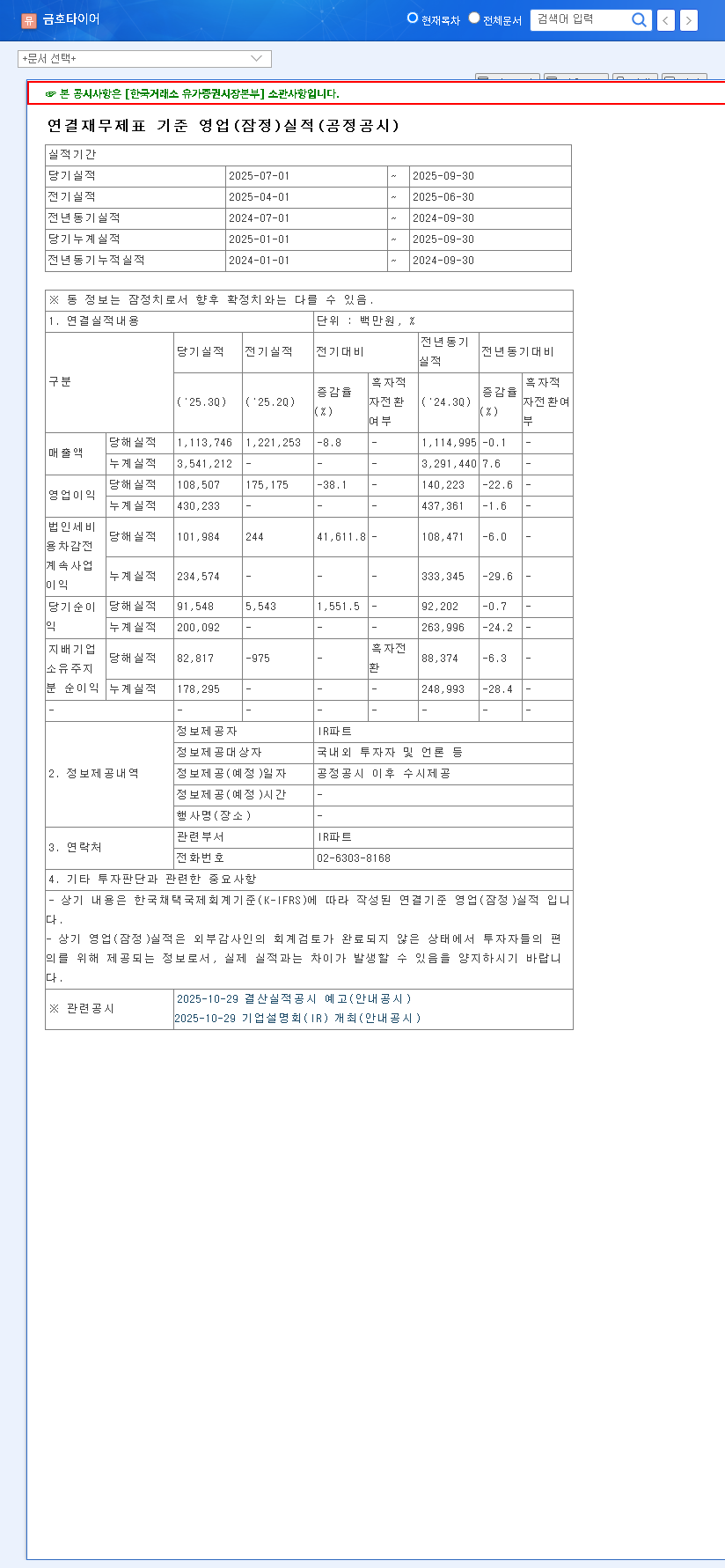
    • Revenue: KRW 1,113.7 billion, a solid 0.4% above market expectations, indicating stable top-line growth.
    • Operating Profit: KRW 108.5 billion, an incredible 19% above forecasts, demonstrating remarkable profitability and cost control.
    • Net Profit: KRW 82.8 billion, a staggering 193% above expectations, showcasing exceptional bottom-line performance and financial efficiency.

    This trifecta of positive results confirms that Kumho Tire is not just surviving but thriving. The substantial beat on operating and net profit suggests that the company’s core business is fundamentally stronger than analysts had predicted, setting the stage for a potential re-evaluation by the market.

    The sheer scale of the net profit surprise—beating estimates by 193%—is a clear testament to Kumho Tire’s operational leverage and strategic execution, proving its ability to generate significant value even in a challenging environment.

    The Strategic Pillars of a Resilient Growth Story

    This outstanding performance is not accidental. It is the direct result of a multi-pronged strategy focused on global expansion, technological innovation, and disciplined financial management.

    Dominance in Key Global Markets

    A critical driver of success has been the impressive sales growth in the high-value European and North American markets. This achievement validates Kumho’s investment in strengthening its global sales network and implementing efficient production strategies that cater to regional demands. This performance aligns with broader trends in the tire industry performance, which has seen a rebound in demand for premium and replacement tires.

    Investing in the Future of Mobility

    Kumho Tire is firmly focused on the future. The company’s continued investment in Research & Development is paying dividends. The launch of ‘EnnoV’, a specialized tire lineup for electric vehicles (EVs), positions the company perfectly to capitalize on the global transition to electric mobility. Furthermore, its development of smart tire systems and other future-oriented technologies ensures it remains a competitive force, securing long-term growth engines that extend beyond traditional markets.

    Investment Thesis and Outlook: Why We Rate Kumho Tire Stock a ‘BUY’

    Based on the definitive Kumho Tire Q3 2025 earnings, our investment analysis leads to a confident ‘BUY’ recommendation. The results showcase fundamental strength that transcends short-term market noise.

    Key Reasons to Invest:

    • Overwhelming Financial Beat: The Q3 results are a powerful catalyst that should drive significant stock price appreciation as the market digests the full extent of this outperformance.
    • Proven Crisis Management: The company achieved these results despite headwinds like rising raw material costs (natural rubber up 25.6%) and the financial impact of the Gwangju plant fire, proving its resilience and operational excellence.
    • Future-Proof Growth Strategy: Proactive investments in high-growth sectors like EV tires are already yielding results, promising a sustainable long-term revenue stream. Explore our full outlook on the global automotive sector for more context.

    Potential Risk Factors:

    While the outlook is overwhelmingly positive, prudent investors should remain aware of potential risks. These include continued volatility in raw material prices, macroeconomic slowdowns affecting global tire demand, and any unforeseen lingering impacts from the plant fire.

    In conclusion, the Kumho Tire Q3 2025 earnings report is a watershed moment. It signals a company with enhanced competitiveness, robust fundamentals, and a clear vision for the future. For investors with a medium to long-term horizon, this presents a compelling entry point and solidifies our strong ‘BUY’ rating on Kumho Tire stock.

    Frequently Asked Questions (FAQ)

    What were the standout figures in KUMHO TIRE’s Q3 2025 results?

    The company reported a massive ‘earnings surprise’ with revenue of KRW 1,113.7B, operating profit of KRW 108.5B (19% above forecast), and a net profit of KRW 82.8B (193% above forecast).

    What are the key drivers behind this strong performance?

    Key drivers include robust sales growth in European and North American markets, efficient cost management, and successful R&D investments in future technologies like EV-specific tires.

    What is the current investment opinion for KUMHO TIRE stock?

    Given the exceptional earnings surprise, proven resilience, and strong future growth prospects, a strong ‘BUY’ recommendation is issued for investors with a long-term perspective.

    (073240) KUMHO TIRE Q3 2025 Earnings Analysis: A Strong BUY Signal After Massive Surprise 관련 이미지
  • (090460) BHCo.,Ltd. (BH) Q3 2025 Earnings Analysis: Deep Dive into Profit Miss & Future Outlook

    (090460) BHCo.,Ltd. (BH) Q3 2025 Earnings Analysis: Deep Dive into Profit Miss & Future Outlook

    The latest BHCo.,Ltd. Q3 2025 earnings report has sent a complex and concerning message to the market. While the top-line revenue figure surpassed analyst expectations, a sharp decline in operating profit and a surprising net deficit have raised red flags about the company’s underlying health. This comprehensive BH stock analysis will dissect the preliminary results, explore the core reasons behind the profitability issues, and provide a strategic outlook for current and potential investors.

    BHCo.,Ltd. Q3 2025 Earnings: The Official Numbers

    On November 4, 2025, BHCo.,Ltd. (BH, 090460) released its preliminary consolidated financial results, revealing a significant divergence between sales and profitability. Here’s a breakdown of the key performance indicators:

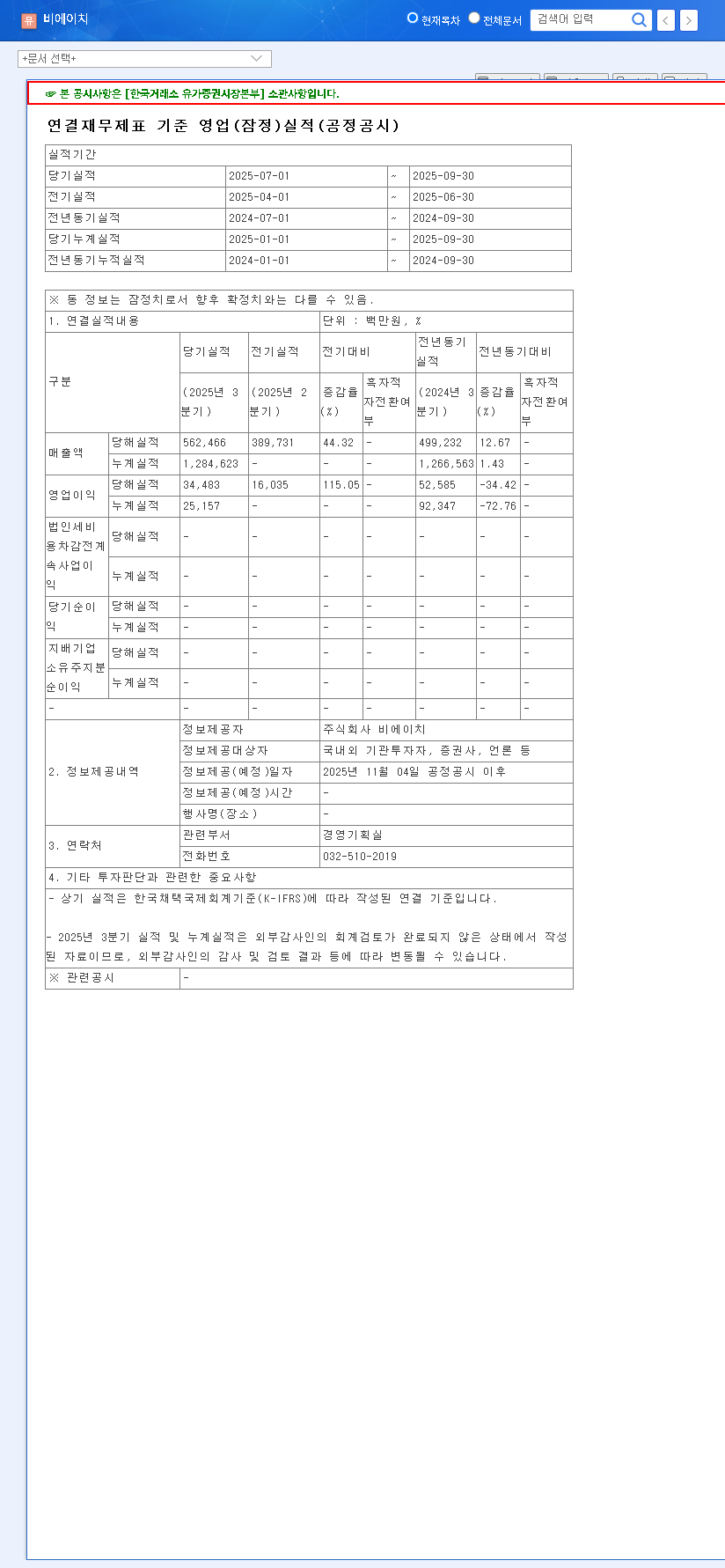
    • Revenue: KRW 562.5 billion, which is a 3% beat over the consensus estimate of KRW 547.3 billion.
    • Operating Profit: KRW 34.5 billion, a significant 32% miss compared to the estimated KRW 51.1 billion.
    • Net Profit: Shockingly turned to an estimated deficit, a stark contrast to the market’s expectation of a KRW 40.8 billion surplus.

    While the revenue growth signals sustained demand, the collapse in profitability metrics points to severe underlying issues with cost management, operational efficiency, or market pressures. This disconnect is the primary concern for investors trying to gauge the true BH financial performance.

    The core issue for BHCo.,Ltd. is clear: sales are not translating into profits. The market is now rightly focused on the ‘why’ behind this alarming trend and what management plans to do to reverse it.

    Root Cause Analysis: Fundamental and Macroeconomic Factors

    The Ailing FPCB Business and Financial Strain

    The primary culprit behind the poor Q3 results is the significant underperformance of BH’s core FPCB (Flexible Printed Circuit Board) business. A sharp drop in sales for RF (Radio Frequency) and BU (Build-Up) components, crucial for modern smartphones, directly led to the operating profit deficit. This exposes the company’s vulnerability to fierce competition and fluctuating demand from major smartphone manufacturers. The profitability decline is not a new trend, as seen in key financial health metrics:

    • Worsening Profitability: Return on Equity (ROE) plummeted to a mere 1.23% in the first half of 2025, signaling inefficiency in generating profit from shareholder equity. The operating profit margin also contracted further, highlighting cost pressures.
    • High Leverage: The consolidated debt-to-equity ratio stands at a high 230.13%, a figure that raises concerns about financial risk and the company’s ability to handle economic downturns. This is much higher than the industry average, which you can read about in our detailed guide to balance sheet analysis.
    • Cash Flow Concerns: A turn to a deficit in cash flow from operating activities is a critical warning sign, potentially increasing the company’s reliance on debt financing.

    Complex Macroeconomic Environment

    External economic factors have also created a challenging backdrop. The appreciation of the USD/KRW exchange rate through much of 2025 increased the cost of imported raw materials and led to foreign exchange losses. While recent stabilization in the exchange rate and global freight costs may provide some relief, the impact on Q3 was tangible. Broader macroeconomic trends, such as shifting consumer sentiment for high-end electronics, continue to pose a risk, as noted by high-authority financial news outlets.

    Outlook and Investor Action Plan

    Short-Term Stock Price Impact

    The substantial miss on profit estimates is expected to create significant downward pressure on BH’s stock price in the short term. The positive revenue figure is unlikely to offset the deep-seated concerns about profitability, and investor sentiment will likely remain negative until a clear turnaround strategy is presented.

    A Cautious Path Forward for Investors

    Given the current volatility and fundamental weaknesses, a prudent and cautious investment approach is warranted. Investors should prioritize monitoring and information gathering:

    • Monitor Key Developments: Closely watch for the company’s official Q4 guidance and any strategic announcements. Focus on plans to improve the FPCB business, concrete growth targets for the automotive components division, and measures to de-leverage the balance sheet.
    • Reassess Valuation: The market will likely re-rate the stock based on these lower profitability numbers. It is crucial to reassess BH’s fair value to avoid investing in a falling asset.
    • Verify Official Data: For complete transparency and to conduct your own due diligence, investors should review the Official Disclosure on DART for the complete financial statements.

    In conclusion, the BHCo.,Ltd. Q3 2025 earnings report serves as a critical wake-up call. The future trajectory of the company’s stock will depend heavily on management’s ability to articulate and execute a credible plan to fix the profitability issues in its core FPCB business while successfully scaling its promising automotive segment.

    (090460) BHCo.,Ltd. (BH) Q3 2025 Earnings Analysis: Deep Dive into Profit Miss & Future Outlook 관련 이미지
  • (083930) AVACOCO.,LTD. (083930) Q3 2025 Earnings Surprise: A Deep-Dive Stock Analysis

    (083930) AVACOCO.,LTD. (083930) Q3 2025 Earnings Surprise: A Deep-Dive Stock Analysis

    In the dynamic world of stock market investing, few events generate as much excitement as a significant ‘earnings surprise.’ This occurs when a company’s financial results dramatically outperform analyst expectations, often signaling robust health and future potential. For Q3 2025, AVACOCO.,LTD. (083930), a key player in display and secondary battery equipment, has done just that, capturing the market’s attention with preliminary results that shattered consensus forecasts. This comprehensive AVACOCO stock analysis will dissect the factors behind this stellar performance, evaluate the company’s fundamentals, and outline a forward-looking investment strategy.

    This isn’t just a minor beat; it’s a fundamental shift from projected losses to significant profitability, demanding a closer look from every serious investor.

    Q3 2025 Earnings: A Surprise Beyond All Expectations

    On November 3, 2025, AVACOCO.,LTD. (083930) released its preliminary Q3 earnings, triggering a wave of optimism. The numbers didn’t just exceed estimates—they represented a complete turnaround, painting a picture of a company hitting its stride. All data is sourced directly from the company’s official report filed with the DART system. You can view the full details here: Official Disclosure.

    The key figures that defined this earnings surprise are:

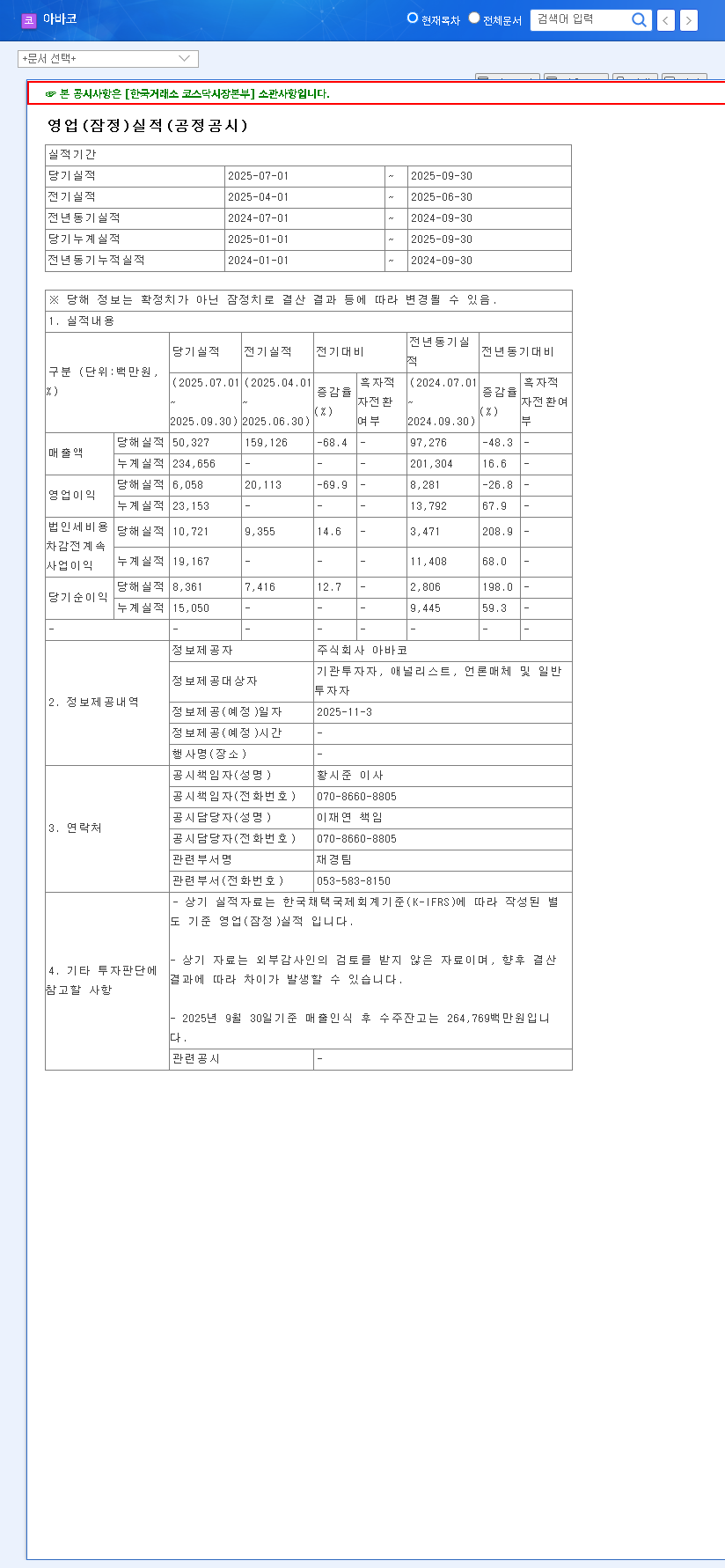
    • Revenue: 50.3 billion KRW, a staggering 32% increase over the 38.1 billion KRW estimate.
    • Operating Profit: 6.1 billion KRW, representing a monumental 252% beat compared to the projected loss of -4.0 billion KRW.
    • Net Profit: 8.4 billion KRW, an incredible 327% surprise versus the estimated loss of -3.7 billion KRW.

    The turnaround to profitability in both operating and net income is the most significant takeaway. It indicates powerful operational leverage and effective cost management, signaling a new chapter for AVACOCO.,LTD. (083930).

    Deep Dive into AVACOCO.,LTD. (083930) Fundamentals

    What forces propelled this outstanding performance? A detailed look at the company’s fundamentals reveals a combination of strategic positioning and powerful market tailwinds.

    Positive Factors: The Engines of Growth

    • Dominance in Display Technology: With LCD and OLED equipment sales forming nearly 80% of revenue, this segment is the company’s powerhouse. Major investments in 8.6-generation display technology by giants like China’s BOE are creating a surge in demand that AVACOCO is perfectly positioned to capture.
    • Surging Secondary Battery Demand: The global shift to electric vehicles (EVs) has ignited the secondary battery market. AVACOCO’s manufacturing equipment segment has grown its revenue share to over 13% and is poised for further expansion, especially with the completion of its new TANDEM ROLL PRESS MACHINE technology and a new factory coming online. This is a critical growth vector for the future. You can learn more about trends in the secondary battery market here.
    • Strategic Diversification: Beyond its core markets, AVACOCO is wisely expanding into other high-tech fields like semiconductors, MLCCs, and 3D printers. This foresight ensures the company is not overly reliant on a single industry and is building multiple future revenue streams.

    Challenges and Risks to Monitor

    • Inventory Management: While a sign of anticipating future orders, high inventory levels tie up capital and require efficient management to avoid obsolescence and improve turnover.
    • Currency & Macroeconomic Headwinds: With significant international business, the company is exposed to foreign exchange volatility. Furthermore, global factors like fluctuating interest rates can impact capital costs and overall investor sentiment.
    • R&D Investment: A recent trend shows a decreasing ratio of R&D spending to revenue. To maintain its technological edge, the company must recommit to robust R&D investment.

    Investment Outlook: ‘Buy’ with Vigilance

    The Q3 earnings surprise from AVACOCO.,LTD. (083930) is a powerful bullish signal. The results confirm the strength of its core business segments and showcase impressive operational efficiency. This is expected to provide significant positive momentum for the stock price and dramatically improve investor confidence.

    Based on this comprehensive AVACOCO stock analysis, our overall investment opinion is a ‘Buy.’

    • Short-Term Outlook: Expect a favorable market reaction and positive stock price movement as the market digests the scale of this earnings beat. The improved profitability metrics make the current valuation highly attractive.
    • Long-Term Outlook: The growth trajectory remains strong, fueled by sustained demand in the display and EV battery markets. However, a successful long-term investment strategy requires diligent monitoring of the risks outlined above, particularly inventory levels and R&D spending.

    Investors should view these results as a strong validation of AVACOCO’s business model while remaining mindful of external risks when making final investment decisions.

    (083930) AVACOCO.,LTD. (083930) Q3 2025 Earnings Surprise: A Deep-Dive Stock Analysis 관련 이미지
  • (204270) JNTC Treasury Stock Disposal: A Deep-Dive Stock Analysis for Investors

    (204270) JNTC Treasury Stock Disposal: A Deep-Dive Stock Analysis for Investors

    JNTC CO.,LTD. (KOSDAQ: 204270) has captured significant market attention with its recent announcement of a major JNTC treasury stock disposal. The company plans to raise approximately 12.4 billion KRW, a move that comes at a critical juncture, given its struggling first-half 2025 performance. For investors, this raises a crucial question: is this a desperate measure to shore up failing finances, or a strategic masterstroke to fund next-generation growth? This comprehensive JNTC investor guide will dissect the company’s fundamentals, analyze the implications of the disposal, and provide a clear roadmap for your investment decisions.

    The Catalyst: A 12.4 Billion KRW Treasury Stock Disposal

    On November 3, 2025, JNTC officially announced its decision to dispose of 381,000 of its own treasury shares. According to the Official Disclosure on DART, the purpose is not a simple market sale but to raise capital by issuing JNTC exchangeable bonds (EB) with these shares as the underlying asset. This method was chosen to secure vital liquidity for company operations and to finance future investment initiatives.

    Why Now? An Urgent Need Fueled by Challenging Fundamentals

    The timing of this JNTC treasury stock disposal is directly linked to the company’s deteriorating financial health and a tough market environment. A closer look at the JNTC fundamentals reveals a company under pressure:

    • Severe Sales Decline: First-half 2025 sales plummeted to 104.1 billion KRW, a staggering 45.9% drop year-over-year. The core reinforced glass business was hit hard by reduced orders from the Greater China region amid a global smartphone market slowdown.
    • Plummeting Profitability: The company fell deep into the red, posting an operating loss of 38 billion KRW and a net loss of 57.6 billion KRW, a significant expansion of its deficit.
    • Rising Financial Burden: The debt-to-equity ratio climbed to 103.90%, signaling increased financial risk and pressure on the balance sheet.

    This isn’t just about plugging a hole. Management’s use of exchangeable bonds signals a calculated move to secure capital while attempting to manage shareholder dilution, betting that future growth will outweigh the immediate risks.

    JNTC’s Strategic Pivot: The Growth Engines of Tomorrow

    Despite the grim financials, JNTC is not standing still. The capital raised is earmarked for ventures that could redefine the company’s future. This is a critical part of any JNTC stock analysis.

    1. The TGV Glass Substrate Business

    JNTC is making a significant push into the high-tech semiconductor space with its TGV (Through-Glass Via) glass substrate business. As demand for advanced semiconductor packaging soars, driven by AI and high-performance computing, glass substrates offer superior performance over traditional materials. Success in this area could transform JNTC into a key player in the semiconductor supply chain.

    2. The Automotive Display Cover Glass Market

    The automotive industry’s shift towards electric vehicles (EVs) and sophisticated in-car infotainment systems has created a booming market for large, durable, and complex cover glass. JNTC is aggressively pursuing this segment, aiming to leverage its glass processing expertise to secure long-term contracts with major automakers. Increased orders here could provide a stable, high-growth revenue stream to offset the volatile smartphone market.

    Investor Outlook: Risks and Opportunities

    The JNTC treasury stock disposal creates a clear split between short-term risks and long-term potential.

    Short-Term Risk: Market Overhang and Dilution

    The market generally views treasury stock sales as a negative short-term signal. The issuance of JNTC exchangeable bonds introduces a potential ‘overhang’—a large block of shares that could enter the market when the bonds are converted. This potential for future selling pressure and share dilution can weigh on the stock price in the near term.

    Long-Term Opportunity: A Successful Transformation

    The long-term bull case rests entirely on execution. If the 12.4 billion KRW is successfully deployed to scale the TGV substrate and automotive glass businesses, leading to visible revenue and profit growth, the company’s valuation could be completely re-rated. Investors with a longer time horizon may see the current price weakness as a compelling entry point for a potential turnaround story.

    Key Monitoring Points for Investors

    For those considering an investment in JNTC, close monitoring of the following is essential:

    • New Business Traction: Watch for announcements of mass production, new client acquisitions, and revenue contribution from the TGV and automotive segments.
    • Core Business Recovery: Any signs of stabilization or recovery in the legacy reinforced glass business would be a significant positive.
    • Financial Health: Track quarterly reports for improvements in profitability, debt levels, and cash flow.
    • Bond Conversion Status: Monitor the status of the exchangeable bonds and any potential conversions to shares.

    (204270) JNTC Treasury Stock Disposal: A Deep-Dive Stock Analysis for Investors 관련 이미지
  • (086280) HYUNDAI GLOVIS Non-Deal Roadshow 2025: An In-Depth Investment Analysis

    (086280) HYUNDAI GLOVIS Non-Deal Roadshow 2025: An In-Depth Investment Analysis

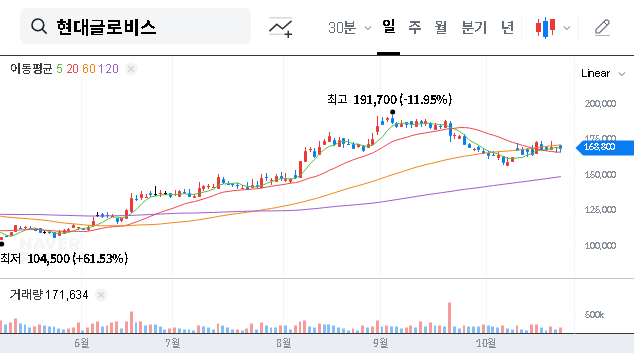
    Global investors are closely watching as HYUNDAI GLOVIS prepares for its pivotal HYUNDAI GLOVIS Non-Deal Roadshow (NDR) on November 3, 2025. This event is a critical opportunity for the integrated logistics giant to communicate its strategic vision and financial health to the international market. For those considering a HYUNDAI GLOVIS investment, this roadshow offers a transparent look into the company’s future, addressing both its immense growth potential and the macroeconomic challenges ahead. This comprehensive guide will break down the key factors investors need to monitor.

    This analysis will delve into the core discussion points of the HYUNDAI GLOVIS NDR, from its exciting new ventures in sustainable technology to its robust, established business lines, providing the insights necessary for informed decision-making.

    The Strategic Purpose of the NDR for Global Investors

    The primary goal of this Non-Deal Roadshow is to strengthen communication and build trust with overseas institutional investors. By elaborately explaining recent management performance and business strategy, HYUNDAI GLOVIS aims to enhance its investment appeal. Unlike a roadshow tied to a specific stock or bond offering, an NDR is about long-term relationship building and ensuring the market fully appreciates the company’s intrinsic value and future trajectory.

    Key Investment Pillars: A Fundamental Analysis

    HYUNDAI GLOVIS will showcase a multi-faceted business model that balances stability with high-growth innovation. Investors should pay close attention to the following areas:

    High-Growth New Business Ventures

    • EV Waste Battery Recycling: As the electric vehicle market explodes, the demand for sustainable battery lifecycle management is surging. HYUNDAI GLOVIS is uniquely positioned to capitalize on this, leveraging synergies with Hyundai Motor Group’s global electrification strategy.
    • Smart Logistics Solutions: The company is at the forefront of the Fourth Industrial Revolution, developing AI-driven and automated logistics solutions. These technologies are crucial for optimizing supply chains, reducing costs, and meeting the demands of modern e-commerce and manufacturing. For more on this trend, see this deep dive into smart logistics.
    • LNG Transportation: Aligning with the global shift towards cleaner energy, the expansion into LNG shipping represents a significant and timely diversification of their maritime business.

    Stable Foundation and Financial Health

    While new ventures are exciting, the company’s core businesses provide a solid foundation. Robust sales growth in integrated logistics, distribution, and shipping, anchored by a strong partnership with Hyundai Motor Company and Kia, ensures stable and predictable revenue streams. This stability is further underscored by a stellar AA+ credit rating, signaling strong financial stewardship to global logistics investors.

    A successful NDR hinges on transparently addressing risks while showcasing a compelling, data-backed vision for future growth. For HYUNDAI GLOVIS, the narrative must weave together its stable core business with the exciting potential of its new, sustainable ventures.

    Navigating Potential Risks and Headwinds

    No HYUNDAI GLOVIS stock analysis would be complete without examining potential risks. The company will need to proactively address investor concerns during the NDR:

    • Currency Volatility: As a global company, exposure to fluctuations in the USD and EUR is significant. Investors will expect a clear explanation of hedging strategies and their impact on net income.
    • Macroeconomic Pressures: Fears of a global recession and persistent high-interest rates could dampen vehicle demand and cargo volumes. The company must present credible countermeasures.
    • Market Fluctuations: The shipping and logistics sectors are sensitive to oil prices and freight market volatility. A robust risk management framework is essential.

    For official details, investors can refer to the company’s public filings. Source: Official Disclosure on DART.

    Conclusion: The Investor Action Plan

    The HYUNDAI GLOVIS Non-Deal Roadshow is a key event that could positively influence investor sentiment and, consequently, the company’s stock price. A successful presentation that clearly articulates growth roadmaps and risk mitigation could attract significant foreign investment.

    Investors should focus on the detail provided on new business profit models, the credibility of macroeconomic risk management, and the tangible results of their ESG strategy, such as their four-year inclusion in the prestigious Dow Jones Sustainability World Index (DJSI). While external market conditions remain a powerful factor, this NDR provides a valuable opportunity to assess the long-term corporate value and strategic direction of HYUNDAI GLOVIS.

    (086280) HYUNDAI GLOVIS Non-Deal Roadshow 2025: An In-Depth Investment Analysis 관련 이미지