Tag: StockInvestment

  • (298040) Hyosung Heavy Industries IR Analysis (2025): Deep Dive into Financials & Stock Outlook

    (298040) Hyosung Heavy Industries IR Analysis (2025): Deep Dive into Financials & Stock Outlook

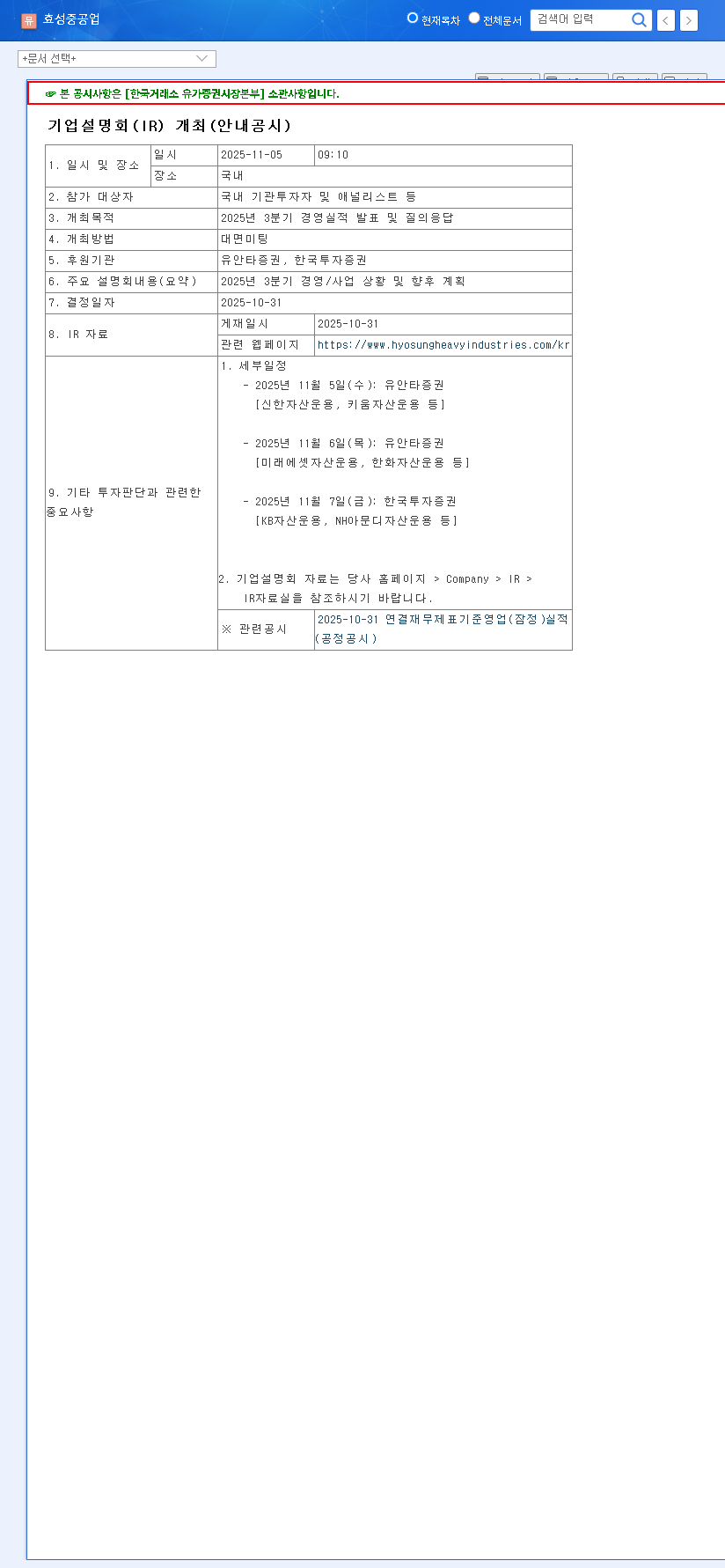
    The upcoming Hyosung Heavy Industries Investor Relations (IR) briefing is poised to be a watershed moment for the company and its stakeholders. Scheduled for November 13, 2025, this event comes at a critical juncture, with the industrial giant navigating severe financial headwinds amidst a challenging macroeconomic landscape. For investors, this isn’t just a standard corporate update; it’s a crucial opportunity to gauge whether the company is on the brink of a rebound or facing a prolonged crisis. This deep-dive analysis will unpack the essential details, from financial performance to market expectations, providing a strategic roadmap for interpreting the outcomes of this pivotal event.

    The Pivotal 2025 Investor Relations Briefing

    Hyosung Heavy Industries Corporation will present its performance and future outlook as a key participant in the Yuanta Securities Corporate Day. The primary goal is to restore investor confidence by transparently addressing recent challenges and outlining a clear path forward. This is more than a formality; it’s a strategic communication effort to redefine the company’s narrative.

    Event Details at a Glance

    • Event: Hyosung Heavy Industries IR Briefing
    • Host: Yuanta Securities Corporate Day
    • Date & Time: November 13, 2025, at 3:30 PM KST
    • Source: Details confirmed in the Official Disclosure (DART).

    Decoding the Financial Storm: A Deep Dive into Performance

    Recent financial reports paint a concerning picture for Hyosung Heavy Industries. A sharp decline in revenue and a plunge into significant operating losses in 2024 have understandably shaken investor sentiment. The IR briefing must directly confront these figures.

    The core challenge lies not just in explaining the past but in presenting a credible, data-backed plan for future profitability and growth. Investors will be scrutinizing every detail for signs of a genuine turnaround.

    The Unsettling Numbers: Revenue and Profitability

    The downward trend is stark when looking at key performance indicators:

    • Revenue: Plummeted from KRW 673 billion (2022) to KRW 334 billion (2024).
    • Operating Income: Shifted from a KRW 9 billion profit (2022) to a staggering KRW -594 billion loss (2024).
    • Return on Equity (ROE): Collapsed from 5.12% to -46.01%, indicating significant value destruction for shareholders.

    These figures are attributed to a perfect storm of project delays, rising material costs, and a broader slowdown in the construction and heavy industry sectors, a trend seen across many global industrial markets.

    A Silver Lining? Analyzing Financial Stability

    Despite the grim profitability metrics, there are positive developments in the company’s balance sheet. The debt-to-equity ratio dramatically improved from 166.40% to a very healthy 38.67% in 2024. Simultaneously, the current ratio surged from 48.45% to 220.61%. These changes suggest a successful deleveraging strategy and a much stronger short-term liquidity position, giving management crucial breathing room to execute a turnaround.

    The Macroeconomic Gauntlet: External Pressures

    Hyosung Heavy Industries does not operate in a vacuum. Persistent high interest rates in Korea and the U.S., coupled with a weak Korean Won (KRW 1,466/USD as of Nov 2025), create significant headwinds. These factors inflate the cost of imported raw materials and increase the burden of foreign currency-denominated debt. The company’s strategy for mitigating these external risks will be a key focus of the IR briefing. For more insights, you can review our guide to analyzing industrial stocks.

    Investor Action Plan & Key Questions

    This IR event could be a major catalyst for the Hyosung Heavy Industries stock price. A convincing presentation could spark a rally, while a lack of clarity could lead to further decline. Investors should focus on the substance of the presentation, seeking answers to critical questions.

    Key Questions for the Briefing:

    • Profitability Roadmap: What are the specific, actionable steps to reverse the massive operating losses of 2024?
    • New Growth Engines: What is the status of investments in high-growth areas like renewable energy infrastructure, and what is the timeline for revenue generation?
    • Order Backlog & Pipeline: Can management provide concrete details on the current order backlog and the outlook for securing new contracts in 2026 and beyond?
    • Capital Management: How will the improved liquidity be deployed? Will it be used for strategic investments, debt reduction, or shareholder returns?

    In conclusion, the upcoming Hyosung Heavy Industries IR is a must-watch event. By carefully analyzing the company’s strategic responses to its current challenges, investors can make more informed decisions about its long-term potential.
    (298040) Hyosung Heavy Industries IR Analysis (2025): Deep Dive into Financials & Stock Outlook 관련 이미지
  • (111380) DONG IN ENTECH Treasury Stock Disposal (111380): An In-Depth Investor Analysis

    (111380) DONG IN ENTECH Treasury Stock Disposal (111380): An In-Depth Investor Analysis

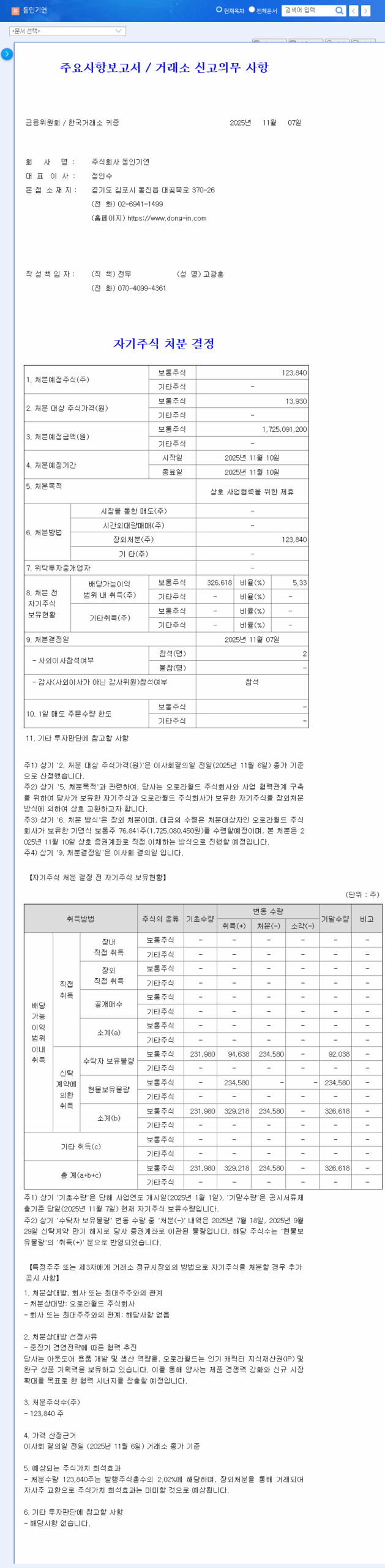
    The recent DONG IN ENTECH treasury stock disposal announcement has sent ripples through the investment community, raising critical questions about the company’s strategic direction. On November 7, 2025, DONG IN ENTECH Co., Ltd. (111380), a major player in the outdoor backpack Original Development Manufacturing (ODM) sector, revealed its plan to sell a significant block of treasury shares. While framed as a move for ‘mutual business collaboration,’ this action comes at a time when the company faces considerable fundamental challenges, including a sharp decline in sales. For investors, this creates a complex picture of potential opportunity mixed with tangible risk. This in-depth analysis will dissect the transaction, evaluate the company’s financial health, and provide a clear guide on what to expect next.

    The Core Announcement: A KRW 1.7 Billion Strategic Move

    According to the official disclosure, DONG IN ENTECH will dispose of 123,840 of its common treasury shares, valued at approximately KRW 1.7 billion. This represents 2.02% of the total shares issued, a notable amount that suggests this is more than a simple cash-raising exercise. The stated purpose—’mutual business collaboration’—points towards a strategic alliance. The infusion of capital is intended to bolster the company’s financial structure and fuel investment in new business ventures. You can view the complete filing here: Official Disclosure (DART).

    Understanding DONG IN ENTECH’s Fundamentals Amidst Challenges

    To understand the impact of the DONG IN ENTECH treasury stock disposal, we must first assess the company’s current operational and financial state. The picture is one of contrast, with signs of cost control efficiency set against a backdrop of shrinking revenue.

    A Strained Core Business Model

    DONG IN ENTECH’s primary business is outdoor backpack ODM, which constituted roughly 70% of sales in the first half of 2025. This model, while historically stable, has shown recent vulnerability:

    • Significant Revenue Contraction: H1 2025 sales plummeted to KRW 119.73 billion, a startling 47% decrease year-over-year. This signals a serious contraction in external growth and market demand.
    • Improved Operating Margin: In a positive counterpoint, the operating profit margin improved to 7.55%. This suggests successful cost management initiatives or a shift in product mix towards higher-margin items, even as overall sales fell.
    • Net Income Collapse: Net income was just KRW 0.33 billion, a drastic drop from the previous year, largely due to rising financial costs and foreign exchange losses.

    The company is attempting to pivot by transitioning to an Original Brand Manufacturing (OBM) model and diversifying into tents and luggage. However, building a successful brand from the ground up is a capital-intensive, long-term endeavor with no guarantee of success. For more on this business model, see our guide on how to analyze ODM companies.

    Analyzing the Impact of the Treasury Stock Disposal

    This corporate action presents both a compelling bull case based on strategic potential and a bearish case rooted in execution risk and dilution.

    The Positive Angle: Synergy and Financial Fortification

    • Strengthened Business Collaboration: A successful partnership could open new markets, provide access to new technologies, or create powerful distribution channels, leading to significant long-term synergies.
    • Improved Financial Structure: The KRW 1.7 billion cash infusion directly improves liquidity, providing crucial capital for the OBM transition or other strategic investments.
    • Increased Market Interest: Such a significant event often attracts market attention, leading to higher short-term trading volumes and potential stock price volatility that active traders may exploit.

    The Negative Angle: Dilution and Lingering Uncertainty

    • Inevitable Share Dilution: Releasing treasury shares into the market increases the total number of outstanding shares. This action will dilute existing shareholders’ equity by 2.02%, potentially putting downward pressure on earnings per share (EPS). For more details, see this explanation of share dilution from Investopedia.
    • Uncertainty on Terms: The disclosure lacks specifics on the collaboration partner, the terms of the deal, and the appropriateness of the disposal price. A weak partner or unfavorable terms could nullify any potential benefits.
    • Not a Fundamental Fix: A cash injection doesn’t solve the core problem of declining sales. The success of this move hinges entirely on whether the subsequent collaboration can reverse the company’s negative growth trajectory.

    Investor’s Guide: Why a ‘Neutral’ Stance is Prudent

    Given the balance of potential and risk, a neutral investment thesis is the most reasonable approach at this juncture. The DONG IN ENTECH treasury stock disposal is a significant event, but it is a means to an end, not the end itself. The outcome is entirely dependent on the yet-unseen details of the business partnership.

    While this event may create short-term volatility, it is premature to view it as a signal of fundamental improvement. Long-term value will be dictated by the tangible results of the forthcoming business collaboration, not the transaction itself.

    Key Due Diligence Checklist for Investors

    Investors should shift from reacting to the news to monitoring for concrete evidence of progress. Keep a close watch on the following points:

    • Partner and Strategy Reveal: The most crucial upcoming data point is the identity of the partner and the specifics of the collaboration. Is it a technology partner, a distributor, or a raw material supplier?
    • Price Justification: Scrutinize whether the disposal price was fair value compared to the market price at the time of the agreement.
    • Tangible Business Outcomes: Over the next several quarters, look for measurable results like new product line sales, entry into new geographic markets, or improved cost efficiencies directly linked to the partnership.
    • Reversal of Fundamental Decline: Ultimately, the only thing that matters is a turnaround in the core financials. Monitor future earnings reports for a stabilization and subsequent reversal of the revenue decline.

    In conclusion, investors should view the DONG IN ENTECH 111380 treasury stock disposal not as a definitive buy or sell signal, but as the beginning of a new chapter. Prudence and diligent monitoring of subsequent disclosures will be key to making an informed and profitable investment decision.

    (111380) DONG IN ENTECH Treasury Stock Disposal (111380): An In-Depth Investor Analysis 관련 이미지
  • (316140) Woori Financial Group Inc. Analysis: Q3 2025 Performance & Investment Strategy Deep Dive

    (316140) Woori Financial Group Inc. Analysis: Q3 2025 Performance & Investment Strategy Deep Dive

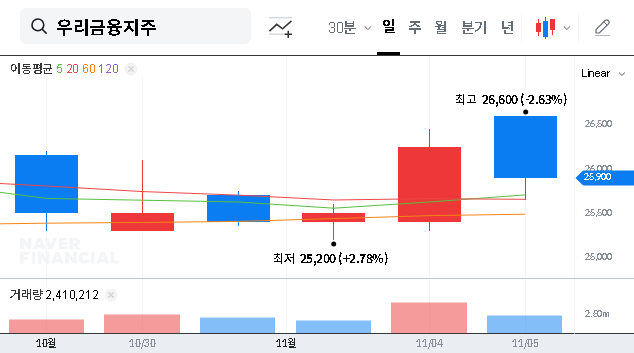
    A critical moment approaches for Woori Financial Group Inc. as it prepares to engage with global investors at the ‘Investment Conference Hong Kong 2025’. Scheduled for November 11, 2025, and organized by Daiwa Securities, this event is far more than a routine earnings call. It represents a pivotal platform for the financial giant to articulate its resilience, detail its Q3 2025 performance, and unveil its forward-looking growth strategy amid a complex macroeconomic landscape. This comprehensive Woori Financial analysis will explore the group’s current health, strategic direction, and the potential implications for investors and WFGI stock.

    Investors are keenly watching to see if Woori can meet market expectations and quell concerns about economic headwinds. We will delve into the group’s robust fundamentals, the performance of its key subsidiaries, and the key messages it is likely to deliver. For the official filing related to this event, please refer to the Official Disclosure on DART.

    Analyzing Woori Financial Performance: H1 2025 Report Card

    The first half of 2025 provided a solid foundation for Woori Financial Group Inc., demonstrating stability and steady growth. A closer look at the numbers reveals a well-managed institution navigating market complexities effectively. This strong Woori Financial performance sets the stage for the upcoming Q3 announcements.

    Key Financial Highlights

    • Impressive Net Profit: The group achieved a cumulative net profit of KRW 1.552 trillion, showcasing strong core earnings power.
    • Strategic Asset Growth: Assets expanded moderately, driven by targeted lending to strategic industries and growth sectors, alongside prudent household loan management.
    • Diversified Income Streams: A healthy interest income was supplemented by robust non-interest income, particularly from its Wealth Management (WM) division and the full integration of its securities arm.

    Capital Strength and Risk Management

    Beyond profits, the group has fortified its financial stability. The Common Equity Tier 1 (CET1) ratio, a critical measure of a bank’s capital strength, exceeded 12.8%—a significant 70 basis point improvement from the previous year. Asset quality also remains stable, with a low Non-Performing Loan (NPL) ratio of 0.71% for the group, indicating a healthy loan portfolio. These metrics are crucial for reassuring investors about the bank’s resilience against economic shocks, a topic often discussed by leading financial analysts at Bloomberg.

    The upcoming conference is a key test. A positive Q3 report and a clear articulation of the Woori investment strategy could significantly boost investor confidence and positively impact WFGI stock value.

    Future Growth Strategy & Subsidiary Outlook

    A core part of the Hong Kong presentation will focus on the group’s strategy for sustainable growth. This involves leveraging the strengths of its diverse subsidiaries while navigating their unique challenges. Understanding this dynamic is key to a complete Woori Financial analysis.

    • Woori Bank: The flagship entity continues to invest in global expansion and digital transformation, including AI, to secure long-term competitiveness.
    • Woori Card & Capital: These units face headwinds from a high-interest-rate environment but are actively diversifying their portfolios and enhancing digital platforms to mitigate risks.
    • Woori Investment & Securities: The final piece in creating a comprehensive financial group, its success hinges on strengthening its Investment Banking (IB) and Wealth Management (WM) capabilities in a competitive market.
    • ESG Leadership: With a top-tier ‘AAA’ MSCI ESG rating for two years running, Woori will likely emphasize its commitment to sustainability, a key factor for many modern investors. You can learn more about this trend in our deep dive into the South Korean banking sector.

    Investor Takeaways: Potential Scenarios

    The investor conference carries both significant opportunities and potential risks for Woori Financial Group Inc.‘s market perception.

    Potential Positives for WFGI Stock

    If Q3 2025 results exceed expectations and management delivers a confident outlook, the stock could see a positive reaction. Key catalysts include strong shareholder return policies (like share buybacks), clear competitive advantages presented by its comprehensive financial services, and continued emphasis on its world-class ESG achievements.

    Potential Risks to Consider

    Conversely, a miss on Q3 earnings or a pessimistic forecast regarding macroeconomic challenges—such as sustained high interest rates or real estate project finance (PF) risks—could pressure the stock. Any unexpected mention of litigation or regulatory hurdles could also introduce uncertainty and negatively impact investor sentiment.

    Conclusion: A Balancing Act

    Ultimately, Woori Financial Group Inc. stands on a solid foundation but faces a dynamic and challenging environment. The Hong Kong Investment Conference is its stage to prove it can harmonize stable, profitable growth with a compelling future strategy. Investors should pay close attention to the Q3 figures, management’s tone on economic outlook, and the detailed plans for strengthening its competitive edge in the evolving financial landscape. The outcomes will be crucial in shaping the narrative for WFGI stock in the coming months.

    (316140) Woori Financial Group Inc. Analysis: Q3 2025 Performance & Investment Strategy Deep Dive 관련 이미지
  • (088290) EWON COMFORTECH Capital Increase: A Deep Dive for Investors

    (088290) EWON COMFORTECH Capital Increase: A Deep Dive for Investors

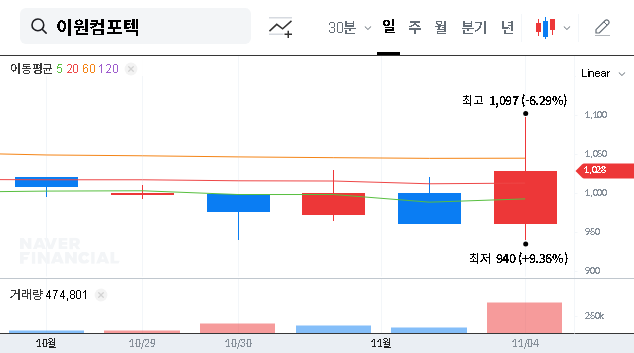
    The recent announcement of the EWON COMFORTECH capital increase has sent ripples through the investment community, forcing shareholders and market analysts to weigh its potential benefits against its inherent risks. This strategic move, a third-party rights offering primarily to its largest shareholder, Rain Partners, is positioned as a critical step toward mending a precarious financial structure and fueling future growth. But will this 3 billion KRW infusion be the catalyst for a turnaround, or will it lead to significant shareholder value dilution? This analysis provides a comprehensive deep dive into the transaction, its implications, and what investors should be watching.

    Breaking Down the EWON COMFORTECH Capital Increase

    On November 4, 2025, EWON COMFORTECH CO.,LTD officially announced its plan to raise capital through a rights offering. The details were outlined in a formal disclosure (Official Disclosure), clarifying the terms of this crucial financial maneuver. The core objective is to stabilize management and secure vital operational funds. For those unfamiliar with the mechanics, our guide on understanding third-party rights offerings provides a great primer.

    Key Terms of the Rights Offering

    • Shares Issued: 3,386,004 common shares
    • Issue Price: 886 KRW per share
    • Total Funding: Approximately 3 billion KRW
    • Key Investor: Rain Partners (Largest Shareholder)
    • Scheduled Payment Date: June 30, 2026
    • New Share Listing Date: July 29, 2026

    The participation of Rain Partners is significant. It signals a strong commitment from the primary stakeholder to steer the company through its financial turbulence, an act of responsible management intended to build market confidence.

    This capital increase is a high-stakes move: it could be the lifeline that secures future growth or a decision that dilutes current shareholder value. The outcome hinges entirely on strategic execution and transparent fund allocation.

    The Financial Tightrope: Why This Move is Necessary

    On the surface, EWON COMFORTECH, a manufacturer of commercial vehicle seats, showed positive signs in the first half of 2025 with sales of 30.9 billion KRW and an operating profit of 1.78 billion KRW, largely thanks to increased production from its main clients, Hyundai and Kia. However, this top-line growth masks a deeper financial vulnerability.

    The company is grappling with an expanded net loss of 4.8 billion KRW and a staggering accumulated deficit of 83.3 billion KRW, creating a significant risk of capital impairment. This situation is worsened by rising financial costs tied to convertible bonds. In this context, the EWON COMFORTECH capital increase was not just a strategic choice but a necessary one to avoid a more severe financial crisis and ensure operational continuity. This trend of deleveraging aligns with broader market movements in a high-interest-rate environment, a topic often covered by financial news outlets like Reuters.

    A Double-Edged Sword: Impact Analysis

    1. The Financial Impact: Deleveraging vs. Dilution

    Positive: The 3 billion KRW injection will directly boost total equity, thereby reducing the company’s dangerously high debt-to-equity ratio. If used to repay debt, it can lower interest expenses and improve the bottom line (net income). This is a clear positive for long-term stability.

    Negative: The issuance of nearly 3.4 million new shares inevitably causes shareholder value dilution. Existing investors will see their ownership percentage decrease. Furthermore, the issue price of 886 KRW is set below the current market price, which is likely to exert downward pressure on the stock in the short term and dilute the Earnings Per Share (EPS).

    2. The Managerial Impact: Growth Fuel vs. Execution Risk

    Positive: Beyond debt repayment, these funds can be allocated to strategic initiatives like R&D for air suspension seats, facility upgrades, and expansion into overseas markets. This capital provides the fuel for long-term growth engines that were previously out of reach.

    Negative: The success of the EWON COMFORTECH rights offering ultimately depends on how the capital is used. A vague or poorly executed investment plan could waste this opportunity, leaving the company with more shares outstanding but no tangible improvement in performance.

    Strategic Outlook and Investor Guidance

    For current and prospective investors, the path forward requires caution and diligent monitoring. While short-term stock price volatility is almost certain, the long-term outlook depends on management’s ability to capitalize on this financial reset.

    What to Watch For:

    • Transparent Fund Allocation: Demand clear communication from the company on exactly how the 3 billion KRW will be spent. Look for detailed plans, not vague promises.
    • Execution on Growth Strategy: Monitor quarterly reports for progress on new business ventures and R&D milestones. Are they meeting their stated goals?
    • Financial Health Metrics: Track key indicators like the debt-to-equity ratio and interest coverage ratio. The positive effects of the capital increase should be reflected in these numbers within a few quarters.
    • Shareholder Communication: Assess the company’s efforts to engage with its shareholders. Active communication can help rebuild trust during this period of uncertainty.

    In conclusion, the EWON COMFORTECH capital increase is a pivotal moment for the company. While it presents immediate challenges like share dilution, it also offers a critical opportunity for financial recovery and a pathway to sustainable growth. A prudent, well-informed investment approach is essential. Investors who remain vigilant and closely track the company’s strategic execution will be best positioned to navigate the path ahead.

    (088290) EWON COMFORTECH Capital Increase: A Deep Dive for Investors 관련 이미지
  • (004590) KoreaFurniture Stock Analysis: CEO Increases Stake – A Deep Dive for Investors

    (004590) KoreaFurniture Stock Analysis: CEO Increases Stake – A Deep Dive for Investors

    In the world of stock market analysis, the actions of a company’s top leadership often speak louder than words. News that KoreaFurniture (한국가구) CEO Choi Hun-hak has increased his personal stake is a significant event that warrants a closer look from savvy investors. This isn’t just a simple transaction; it’s a powerful signal of confidence from the person at the helm. But what does this mean for the future of KoreaFurniture stock and its valuation?

    This comprehensive analysis will dissect the fundamentals of KoreaFurniture, explore the implications of this leadership move, and provide a clear outlook on the opportunities and challenges ahead. We will delve into the company’s diverging business segments and the macroeconomic factors that could shape its trajectory.

    The Details: CEO Choi Hun-hak’s Increased Stake in KoreaFurniture

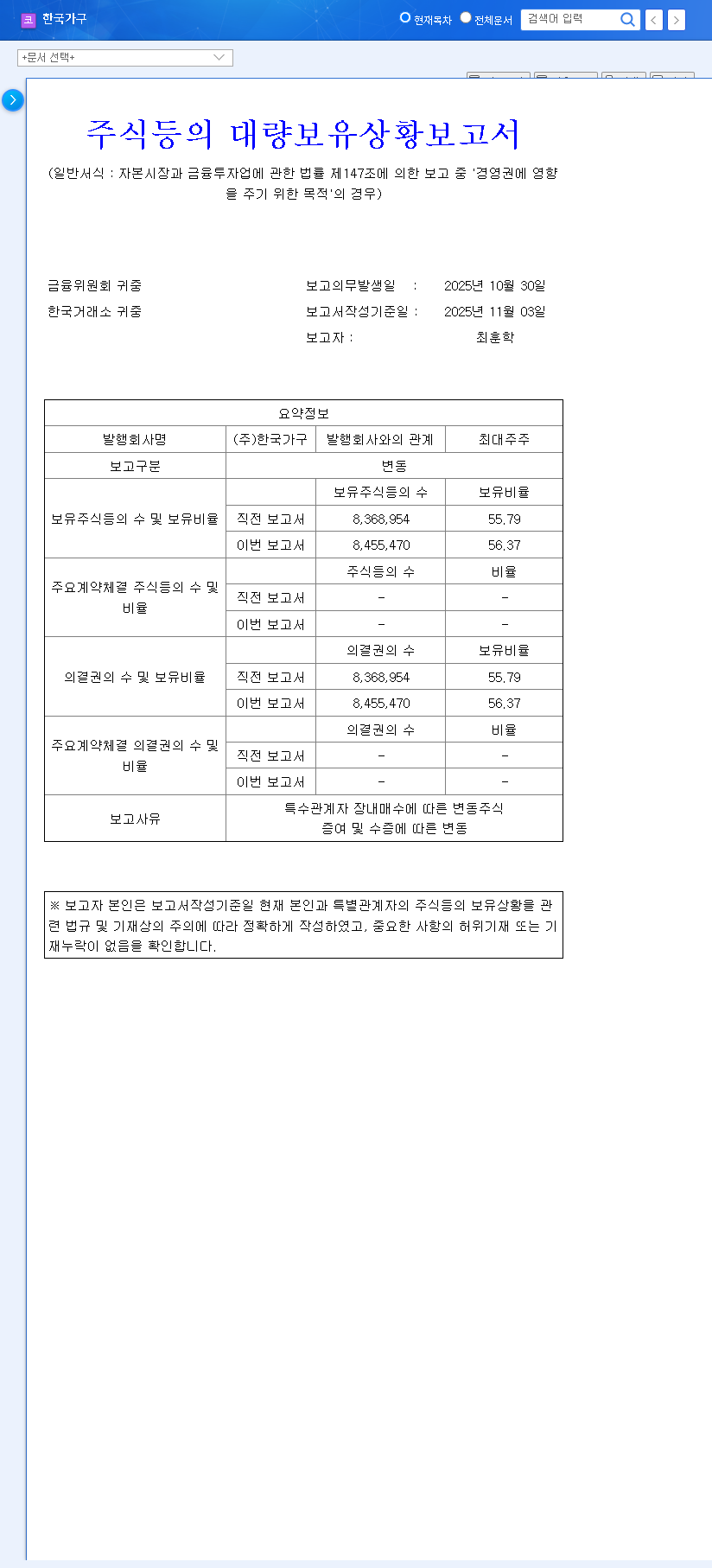
    According to the Official Disclosure filed with DART, on November 3, 2025, KoreaFurniture announced that CEO Choi Hun-hak increased his ownership by 0.58 percentage points. This was achieved through the acquisition of 116,000 shares, elevating his total stake from 55.79% to 56.37%. The stated purpose was explicit: to strengthen influence over management control. For investors, this move is a clear indicator of the CEO’s commitment to the company’s long-term vision and stability.

    A Tale of Two Businesses: Analyzing Company Fundamentals

    A deep dive into KoreaFurniture’s semi-annual report reveals a company with two very different stories unfolding under one roof. Understanding this duality is critical to any KoreaFurniture analysis.

    The Growth Engine: Jeonwon International

    The star performer is undoubtedly the subsidiary, Jeonwon International. Specializing in the distribution of bakery raw materials, this division has been firing on all cylinders. It posted an impressive 26.68% year-on-year increase in sales. This exceptional growth propelled the group’s consolidated sales to 68.5 billion KRW (a 20.8% increase) and operating profit to a staggering 9.9 billion KRW (a 60.0% increase). Jeonwon International is not just a part of the business; it’s the primary driver of profitability and the core reason for the company’s strong consolidated performance.

    The Core Challenge: The Furniture Division

    In stark contrast, the parent company’s original furniture business is facing significant headwinds. Sales in this division declined by 8.84% to 8.7 billion KRW, resulting in an operating loss. This downturn is largely attributed to external pressures, including a slump in the domestic real estate market and weakening consumer confidence, which directly impact big-ticket purchases like high-end furniture. A key question for investors is whether the strengthened management control under CEO Choi can engineer a turnaround for this struggling core segment.

    The CEO’s increased stake signals a commitment to navigating these challenges, enhancing stability and ensuring consistent, long-term strategic execution across both the high-growth subsidiary and the core furniture business.

    Investment Outlook: What This Means for KoreaFurniture Stock

    The increase in CEO Choi Hun-hak’s stake is a multifaceted event with both short-term and long-term implications for the stock price. While it’s a fundamentally positive signal, a comprehensive investment strategy must also account for the company’s financial health and the broader economic climate. For more on this, you can read our Guide to Analyzing Insider Buying.

    Key Factors to Monitor

    • Financial Stability: The company’s financial health is robust. With a current ratio of 253.5%, short-term liquidity is not a concern. The consolidated debt-to-equity ratio is a very stable 27.53%, indicating low financial risk.
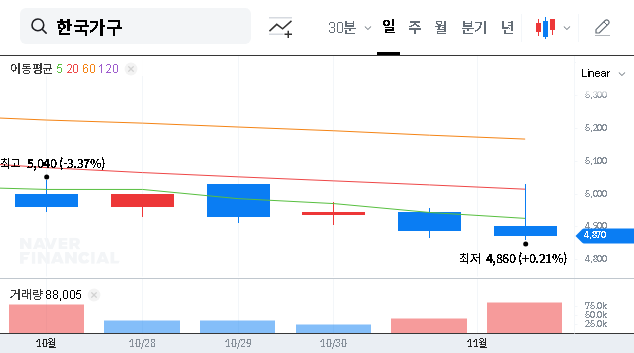
    • Stock Performance: In the six months prior to this news, KoreaFurniture stock has been trading in a narrow range between 3,500 KRW and 4,000 KRW. The key question is whether this catalyst, combined with strong earnings from Jeonwon, can provide the momentum needed for a breakout.
    • Macroeconomic Headwinds: Global economic factors cannot be ignored. Persistent high interest rates, currency volatility, and rising commodity prices could pressure import costs. As noted by sources like Bloomberg, these conditions can impact profitability for companies reliant on international supply chains.

    Frequently Asked Questions (FAQ)

    What is the primary significance of the CEO’s stake increase?

    It signals strong confidence from leadership and a commitment to strengthening management control. This enhances corporate stability, builds shareholder trust, and provides a solid foundation for executing long-term strategy.

    Which part of KoreaFurniture’s business is performing the best?

    The subsidiary, Jeonwon International, which operates in the bakery raw materials distribution sector, is the main driver of growth and profitability for the entire group, showing exceptional year-on-year performance.

    What are the main risks for KoreaFurniture investors?

    The primary risks are the continued underperformance of the core furniture division and exposure to macroeconomic pressures like interest rates and currency fluctuations. The company’s future success depends on turning around the furniture business while maintaining momentum at Jeonwon International.

    (004590) KoreaFurniture Stock Analysis: CEO Increases Stake – A Deep Dive for Investors 관련 이미지
  • (278470) APR Co Ltd Q3 2025 Earnings Preview: In-Depth Stock Analysis & Investment Strategy

    (278470) APR Co Ltd Q3 2025 Earnings Preview: In-Depth Stock Analysis & Investment Strategy

    As a titan in the global K-beauty and home beauty device market, APR Co., Ltd. is approaching a pivotal moment. The upcoming APR Co Ltd Q3 2025 earnings presentation is more than just a financial update; it’s a critical litmus test for the company’s sustained growth momentum. Investors and market analysts are on high alert, eager to dissect the results and glean insights into the future of this innovative powerhouse. This comprehensive APR stock analysis will explore the company’s robust fundamentals, prevailing market trends, and a strategic investment outlook to help you navigate the potential outcomes of this significant event.

    Event Horizon: The APR Co Ltd Q3 2025 Earnings Call

    Mark your calendars. This upcoming earnings call is where APR will lay out its performance for the third quarter and provide crucial forward-looking guidance. The session will offer a direct line to management’s thinking, making it an indispensable event for anyone with a stake in the company.

    • Company: APR Co., Ltd. (Stock Code: 278470)
    • Event: Investor Relations (IR) for Q3 2025 Earnings Release
    • Date: November 6, 2025 (Wednesday)
    • Time: 10:00 AM KST
    • Source: For complete transparency, the official filing can be viewed here: Official Disclosure

    Deconstructing the Growth Engine: A Look at APR’s Fundamentals

    APR’s success isn’t accidental. It’s built on a dual-engine strategy of pioneering home beauty devices and cultivating globally beloved cosmetic brands. The semi-annual report for 2025 already painted a picture of potent growth, which sets high expectations for the Q3 results.

    The Power of Innovation: Home Beauty Devices

    The beauty device segment, spearheaded by breakout products like the ‘Booster Pro’, has been a phenomenal success. This division saw an impressive 30.5% growth rate, highlighting the strong consumer appetite for at-home, professional-grade beauty treatments. This performance solidifies APR’s position as a leader in the fast-growing home beauty device market.

    Cultivating a Global Following: The Cosmetics Powerhouse

    Complementing its hardware, APR’s cosmetics portfolio—featuring brands like ‘Medicube’, ‘Aprilskin’, and ‘Forment’—has seen explosive expansion. This segment achieved a staggering 66.0% growth rate, demonstrating its powerful brand equity and effective global marketing. This success is a key reason why many consider APR a top-tier investment among K-beauty stocks.

    APR’s dual-engine growth in high-tech beauty devices and globally recognized cosmetics presents a compelling narrative. However, a sound APR investment strategy must weigh this against margin pressures and inventory management challenges revealed in the financials.

    Financial Health Check: Profitability & Stability

    While operating profit grew by 13.4%, the operating margin saw a slight contraction to 15.0% from 19.2% the previous year, primarily due to increased selling and administrative expenses. On a positive note, the company’s financial footing has strengthened, with the debt-to-equity ratio improving to a healthy 59.38%. A point of caution for investors is the notable increase in inventory, which will require efficient management to avoid future write-downs.

    Riding the Wave: Market Trends Fueling APR’s Trajectory

    APR’s growth is supported by powerful macroeconomic tailwinds. The global beauty market is undergoing a significant transformation, and APR is perfectly positioned to capitalize on it. According to market research from firms like Grand View Research, the demand for at-home aesthetic solutions is surging worldwide.

    Since its listing in 2024, APR’s stock has maintained a steady upward trajectory, reflecting strong investor confidence. However, with a high proportion of overseas sales, the company’s profitability remains sensitive to exchange rate fluctuations (USD/KRW, EUR/KRW) and broader macroeconomic factors like interest rates and supply chain costs.

    Investment Strategy: Potential Scenarios for APR’s Stock

    The APR Co Ltd Q3 2025 earnings report will likely trigger one of two primary scenarios for the stock price.

    The Bull Case: Catalysts for a Price Surge

    If APR delivers Q3 results that exceed market expectations, particularly with continued strength in its core segments and an improvement in operating margins, it could serve as a powerful catalyst. Further positive momentum could come from concrete announcements on new business ventures (medical devices, home electronics), R&D breakthroughs, and a proactive shareholder return policy.

    The Bear Case: Potential Risks and Headwinds

    Conversely, a miss on revenue or earnings could trigger a sell-off. Key concerns would be any signs of a growth slowdown, failure to manage the rising inventory levels, or further margin compression. Mentions of intensified competition in the home beauty device space or a negative outlook on macroeconomic conditions during the Q&A could also dampen investor sentiment.

    Your Action Plan: How to Approach the APR Investment

    A prudent APR investment strategy requires careful monitoring and analysis. Here are key action points for investors leading up to and following the Q3 IR:

    • Analyze the Numbers: Scrutinize the Q3 report for revenue growth by segment, operating profit margin trends, and, crucially, the status of inventory management.
    • Listen to the Vision: Pay close attention to management’s commentary on future growth strategies, R&D pipelines, and plans for global expansion. Are the plans concrete and actionable?
    • Benchmark Against Consensus: After the IR, compare the results and guidance against market expectations to gauge the likely direction of investor sentiment.
    • Assess Risk Management: Evaluate the company’s stated strategies for mitigating risks related to competition, expense control, and macroeconomic volatility. For more context, review our guide to investing in the K-beauty sector.

    Frequently Asked Questions (FAQ)

    Q1: What are APR Co., Ltd.’s main business segments?

    APR Co., Ltd. operates primarily in two high-growth areas: advanced home beauty devices (like the popular Booster Pro) and a successful portfolio of cosmetics brands (including Medicube, Aprilskin, and Forment).

    Q2: What should I watch for in the APR Co Ltd Q3 2025 earnings call?

    Investors should focus on top-line revenue growth, operating margin performance, inventory levels, and management’s guidance for Q4 and beyond. Any specific updates on new product launches or market expansions will also be critical.

    Q3: What are the biggest risks to my APR investment strategy?

    The primary risks include a potential slowdown in consumer spending, increased competition in the beauty tech space, margin pressure from rising costs, and adverse fluctuations in foreign exchange rates due to the company’s significant international sales.

    (278470) APR Co Ltd Q3 2025 Earnings Preview: In-Depth Stock Analysis & Investment Strategy 관련 이미지
  • (017800) Hyundai Elevator Stock Analysis: Navigating Shareholder Changes & Investment Strategy

    (017800) Hyundai Elevator Stock Analysis: Navigating Shareholder Changes & Investment Strategy

    The outlook for Hyundai Elevator stock has become a focal point for investors following a significant disclosure about its ownership structure. A recent report detailing a major shift in shareholding by Hyundai Holdings Company has introduced a new layer of complexity and potential volatility. This isn’t a routine transaction; the stated purpose of ‘exercising management influence’ combined with intricate financial maneuvers like the exercise of exchangeable bonds signals potentially transformative changes ahead.

    This comprehensive analysis will dissect the official disclosure, explore the underlying reasons for the change, and project the short-term and long-term impacts on Hyundai Elevator’s stock price and corporate strategy. For investors seeking to navigate this uncertainty, we provide a clear action plan to make informed decisions about their Hyundai Elevator investment analysis.

    The Catalyst: Deconstructing the Shareholding Disclosure

    On October 29, 2025, Hyundai Elevator Co., Ltd. filed a regulatory report that immediately captured the market’s attention. The document, a ‘Report on Status of Large Shareholder’s Holding’, outlined a notable change in the stake held by Hyundai Holdings Company. You can view the complete filing here: Official Disclosure (DART).

    Key Details of the Filing:

    • Reporting Entity: Hyundai Holdings Company
    • Stated Purpose: To exercise management influence.
    • Stake Change: A decrease from 27.06% to 22.18%, marking a 4.88% reduction.
    • Primary Reasons: Exercise of exchangeable bonds, modifications to share-related contracts, and a significant share disposal by a related entity, Metropolitan Holdings (Yoo).

    This reduction in Hyundai Elevator shareholding by its major stakeholder is far from a simple sell-off. The combination of factors points to a strategic repositioning that could have lasting implications for the company’s governance and future direction, creating significant uncertainty around the Hyundai Elevator stock.

    Behind the Numbers: Why the Sudden Change?

    Understanding the ‘why’ is crucial for any investor. The disclosed reasons suggest a multi-faceted strategy rather than a single event. The exercise of exchangeable bonds, for instance, introduces new shareholders and can dilute the value of existing shares. Simultaneously, the ambiguity around ‘changes in contracts’ hints at evolving alliances or agreements that could reshape control dynamics. The large-scale share disposal by Metropolitan Holdings adds immediate selling pressure, contributing to the expected stock volatility.

    Despite reducing its stake, Hyundai Holdings Company’s explicit goal to ‘exercise management influence’ is a powerful signal. It suggests they are not relinquishing control but are instead adapting their strategy, possibly to consolidate power or fend off external pressures.

    Impact on Hyundai Elevator Stock: A Two-Fold Analysis

    Short-Term Outlook: Brace for Volatility

    In the immediate future, investors should anticipate heightened stock volatility. The large block of shares sold by Metropolitan Holdings could create a supply-demand imbalance, pushing the price down. Furthermore, the uncertainty surrounding the new shareholder landscape and contract changes will likely fuel speculation, leading to price swings as the market digests the news. For a broader view on market reactions, see analysis from leading sources like Bloomberg’s market coverage.

    Long-Term Perspective: Governance and Strategy at a Crossroads

    The long-term effects are more profound. A shift in the shareholder base could lead to a significant shakeup in the boardroom and, consequently, the company’s strategic priorities. This could manifest in several ways:

    • Strategic Alliances: New major shareholders may push for new partnerships or M&A activities.
    • Capital Allocation: Changes in R&D spending, dividend policies, or global expansion plans could be on the table.
    • Operational Focus: The company’s focus could shift, impacting its strong fundamental position in the vertical transportation industry.

    Ultimately, the stability of the Hyundai Elevator stock will hinge on the company’s ability to maintain its competitive edge amidst these internal changes. For more on this, you might read our Deep Dive into Elevator Industry Trends.

    Actionable Investor Strategy

    Given the circumstances, a cautious and informed approach is paramount. Here’s how investors should respond to the latest news about the Hyundai Elevator shareholding structure:

    • Monitor for Clarity: Watch for subsequent disclosures that provide more detail on the contract changes and the identities of new major shareholders from the bond conversion.
    • Focus on Fundamentals: Look past the short-term noise. Re-evaluate Hyundai Elevator’s core business strengths, market share, financial health, and technological pipeline. A strong underlying business can weather governance storms.
    • Enhance Risk Management: The increased potential for stock volatility means that risk management is key. Consider using stop-loss orders and ensure your portfolio is diversified to mitigate the impact of any sharp downturns in Hyundai Elevator stock.

    (017800) Hyundai Elevator Stock Analysis: Navigating Shareholder Changes & Investment Strategy 관련 이미지
  • (086280) HYUNDAI GLOVIS Investment Strategy 2025: A Deep Dive Analysis (086280 Stock)

    (086280) HYUNDAI GLOVIS Investment Strategy 2025: A Deep Dive Analysis (086280 Stock)

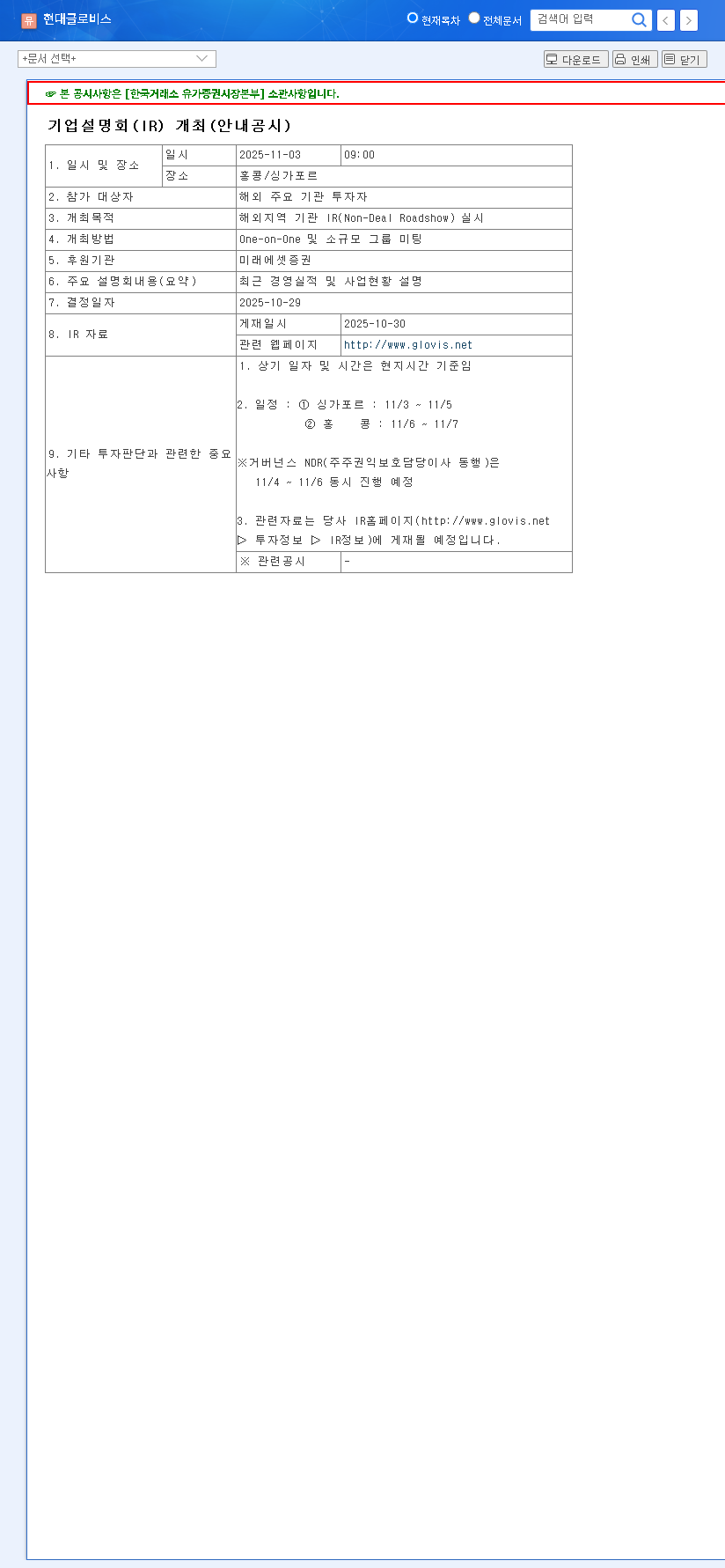
    As global markets brace for 2025, investors are closely examining the HYUNDAI GLOVIS investment landscape. The global logistics giant, HYUNDAI GLOVIS Co., LTD. (086280), is poised to capture significant attention with its upcoming presentation at the AUERBACH GRAYSON Emerging & Frontier Markets Virtual Investor Conference on November 5, 2025. This event is more than a standard update; it’s a critical opportunity for the company to articulate its vision for the future. This deep-dive HYUNDAI GLOVIS analysis will explore the company’s robust fundamentals, pioneering growth engines, and the key risks investors must consider.

    Unpacking the Core: A Resilient Business Foundation

    At the heart of any solid HYUNDAI GLOVIS investment thesis is its deeply entrenched and resilient business model. The company’s strength is not accidental; it’s built upon a diversified and synergistic portfolio that provides stability in a volatile industry.

    Synergistic Powerhouse

    The strategic partnership with Hyundai Motor Company and Kia serves as a powerful economic moat. This relationship guarantees a consistent and substantial revenue stream from finished vehicle logistics (FVL), automotive parts logistics, and aftermarket parts distribution. This foundation allows HYUNDAI GLOVIS to weather economic downturns more effectively than competitors who lack such a captive client base. The company’s balanced structure, encompassing comprehensive logistics, sales distribution, and shipping, further insulates it from market-specific fluctuations.

    The Future is Now: Pinpointing HYUNDAI GLOVIS Growth Drivers

    While the core business provides stability, the most exciting part of the HYUNDAI GLOVIS stock story lies in its forward-looking growth engines. The company is strategically positioning itself at the forefront of major industrial transformations.

    • Eco-Friendly Transport Leadership: HYUNDAI GLOVIS is aggressively investing in sustainable logistics. By securing LNG dual-fuel car carriers and expanding into the hydrogen and ammonia transport sectors, it is preparing for the global energy transition and stricter environmental regulations. This proactive stance could yield significant competitive advantages.
    • EV Battery Circular Economy: As the electric vehicle market explodes, so does the need for battery recycling and second-life solutions. HYUNDAI GLOVIS is pre-empting this high-growth market, aiming to build a comprehensive service chain from battery collection to reuse and recycling. This aligns perfectly with the growth of its primary automotive partners.
    • Smart Logistics and Automation: The company is enhancing its capabilities in AI and logistics automation. By integrating electrical and fire facility construction, it’s building the infrastructure for next-generation smart warehouses, which are critical for improving efficiency and meeting the demands of e-commerce and complex global supply chains.

    Financial Health and Shareholder Value

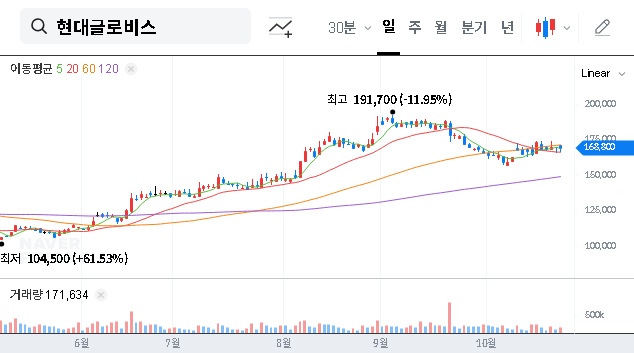
    A deep dive into the 086280 stock reveals a fortress-like balance sheet. With total assets of KRW 17.2 trillion against liabilities of KRW 7.8 trillion, the company maintains a healthy debt-to-equity ratio of just 83.7%. Furthermore, its KRW 3.6 trillion in cash and equivalents provides immense flexibility for strategic investments and shareholder returns. The company has demonstrated a commitment to shareholders through a 1:1 stock split and a clear dividend policy aiming for a payout ratio over 25%.

    Its strong ESG credentials, including inclusion in the DJSI World Index, also attract a growing class of institutional investors. For more on this topic, see our guide to ESG investing.

    HYUNDAI GLOVIS presents a compelling blend of stability from its core operations and high-growth potential from its strategic ventures into green energy and the EV circular economy. This duality is central to its long-term value proposition.

    Navigating Potential Risks

    No investment is without risk. A prudent HYUNDAI GLOVIS investment strategy must account for external headwinds. Key risks include global macroeconomic uncertainties, intense industry competition, and volatility in exchange rates, interest rates, and freight indices. For a detailed breakdown of financial sensitivities, investors should consult the Official Disclosure (DART). The company’s ability to effectively manage these external factors will be a crucial determinant of its long-term success.

    Investor Action Plan & Outlook

    Considering the company’s solid footing and clear growth trajectory, a long-term perspective is recommended. Short-term market volatility may present attractive entry points for accumulating a position in the HYUNDAI GLOVIS stock.

    Key Actions for Investors:

    • Monitor the Conference: Pay close attention to the specific details on new business timelines and capital allocation plans revealed on November 5th.
    • Track Macro Indicators: Keep an eye on key metrics like the Baltic Dry Index, oil prices, and currency exchange rates (USD/KRW, EUR/KRW).
    • Evaluate Execution: In the coming quarters, assess the company’s progress in its new growth ventures as this will be key to unlocking long-term value.

    In conclusion, HYUNDAI GLOVIS stands as a robust logistics player with a clear and compelling strategy for future growth. The upcoming investor conference will be a pivotal moment to gain further clarity, but the underlying fundamentals suggest a positive long-term outlook for those willing to navigate the inherent risks of the global shipping and logistics industry.

    (086280) HYUNDAI GLOVIS Investment Strategy 2025: A Deep Dive Analysis (086280 Stock) 관련 이미지
  • (033920) Muhak Treasury Stock Disposal: A Deep Dive into their ₩10B Exchangeable Bond Strategy

    (033920) Muhak Treasury Stock Disposal: A Deep Dive into their ₩10B Exchangeable Bond Strategy

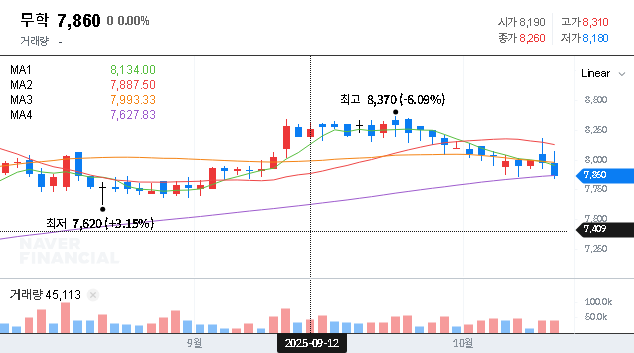
    In a significant move capturing market attention, prominent liquor company Muhak has announced a major financial restructuring. The core of this news is the Muhak treasury stock disposal, a strategic decision to raise ₩10 billion through the issuance of Exchangeable Bonds (EBs). This action presents a classic dilemma for investors: is it a precursor to shareholder value dilution, or a savvy maneuver to fuel future growth? This comprehensive analysis will break down the mechanics of the deal, explore the potential impacts, and provide a clear framework for making an informed investment decision.

    The Announcement: Unpacking the ₩10 Billion Deal

    On October 27, 2023, Muhak officially disclosed its plan to dispose of 1,073,076 of its own common shares, which represents approximately 3.77% of its total outstanding shares. The total value of this disposal is estimated at ₩10 billion. The stated purpose is not a simple market sell-off, but rather to use these shares as the underlying asset for a new issuance of Exchangeable Bonds (EBs). For complete transparency, you can view the Official Disclosure on the DART system.

    What Are Exchangeable Bonds (EBs)?

    Before diving into the impact, it’s crucial to understand the financial instrument at play. Exchangeable Bonds are a form of hybrid debt security. Investors who purchase these bonds receive regular interest payments, much like a traditional bond. However, they also hold the option to exchange their bonds for a predetermined number of the company’s shares (in this case, the treasury stock being set aside) at a specified price. This offers investors the safety of a bond with the potential upside of stock appreciation. To learn more about complex financial instruments, you can consult authoritative sources like Investopedia for detailed explanations.

    Analyzing the Investment Impact: A Two-Sided Coin

    The Muhak treasury stock disposal carries both potential risks and significant rewards. A prudent investor must weigh both sides carefully.

    The Bear Case: Understanding the Risk of Share Dilution

    The primary concern for existing shareholders is the potential for dilution. This can occur in two stages:

    • Immediate Supply Increase: The disposal of nearly 4% of treasury stock effectively increases the number of shares available for trading, which can put short-term downward pressure on the stock price.
    • Future Conversion Overhang: If the company’s stock price rises above the EB conversion price, bondholders will be incentivized to convert their bonds into shares. This future influx of new shares would further dilute the ownership stake and earnings per share (EPS) for existing investors.

    The Bull Case: Fueling Strategic Long-Term Growth

    Conversely, this capital injection could be precisely what Muhak needs to accelerate its growth. The ₩10 billion secured can be a powerful catalyst if used effectively:

    • Financial Fortification: The funds can be used to pay down existing debt, improving the company’s balance sheet and reducing interest expenses.
    • Investment in Innovation: The capital could fund R&D for new products, helping Muhak compete in the dynamic and competitive liquor industry.
    • Market Expansion: These funds could be allocated to marketing campaigns or expansion into new geographic markets, driving top-line revenue growth.

    The success of this strategy hinges entirely on execution. If the ₩10 billion generates a return greater than the cost of dilution, long-term shareholders will be handsomely rewarded. If not, it will have been a costly fundraising exercise.

    Investor Checklist: What to Monitor Moving Forward

    To make an informed decision regarding your Muhak investment, it is critical to move beyond the initial announcement and monitor key subsequent details. Keep a close watch on the following:

    • Detailed EB Terms: Once published, scrutinize the final terms of the Exchangeable Bonds. The interest rate, maturity date, and especially the conversion price will determine the company’s financial burden and the likelihood of future dilution.
    • Clarity on Fund Usage: Look for specific company communications detailing how the ₩10 billion will be allocated. A clear, strategic plan for growth is a much stronger signal than a vague statement about ‘general corporate purposes’.
    • Market and Industry Trends: Context is key. Monitor Muhak’s performance relative to its competitors and overall trends in the liquor market. For more on this, you might read our guide on How to Analyze a Company’s Financial Health.

    Frequently Asked Questions (FAQ)

    What is the core of Muhak’s treasury stock disposal decision?

    Muhak is selling 1,073,076 of its own shares, worth about ₩10 billion, to serve as the underlying asset for an issuance of Exchangeable Bonds (EBs). This is a method of raising capital.

    How will this affect Muhak’s stock price?

    In the short-term, the risk of share dilution could create downward pressure on the stock. In the long-term, if the raised capital is invested successfully to grow the business, it could have a very positive impact on the company’s value and stock price.

    Is this a good or bad sign for investors?

    It is neither inherently good nor bad; it is a strategic trade-off. The outcome depends entirely on how effectively Muhak’s management team utilizes the newly acquired ₩10 billion to create future value that outweighs the cost of shareholder dilution.

    (033920) Muhak Treasury Stock Disposal: A Deep Dive into their ₩10B Exchangeable Bond Strategy 관련 이미지
  • (445090) ASICLAND’s ₩15.4B Mobilint Contract: A Lifeline or a Mirage for Profitability?

    (445090) ASICLAND’s ₩15.4B Mobilint Contract: A Lifeline or a Mirage for Profitability?

    In a significant development for the semiconductor sector, leading design solution provider ASICLAND Co.,Ltd has announced a substantial new sales contract. This deal, valued at ₩15.4 billion, is with AI chip innovator Mobilint Co., Ltd., and appears to be a major validation of ASICLAND’s growth trajectory. However, this promising news is set against a backdrop of ongoing financial challenges, particularly concerning ASICLAND profitability.

    While the contract signals robust revenue potential, persistent operating losses and unstable cash flow have raised valid concerns among investors. The crucial question is: Can this single large-scale project fundamentally reshape ASICLAND’s financial health and solve its long-standing profitability puzzle? This analysis will delve into the company’s fundamentals, the implications of the Mobilint contract, and provide a strategic outlook for investors.

    This in-depth analysis unpacks the paradox of ASICLAND’s revenue growth versus its profitability struggles, offering a clear perspective on whether this new contract is a true turning point for the company.

    The ₩15.4 Billion ASICLAND Contract: A Detailed Breakdown

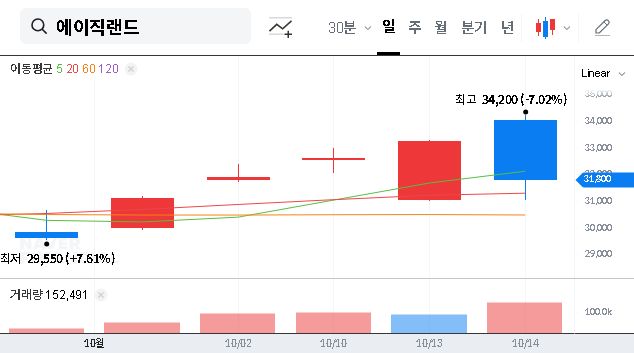
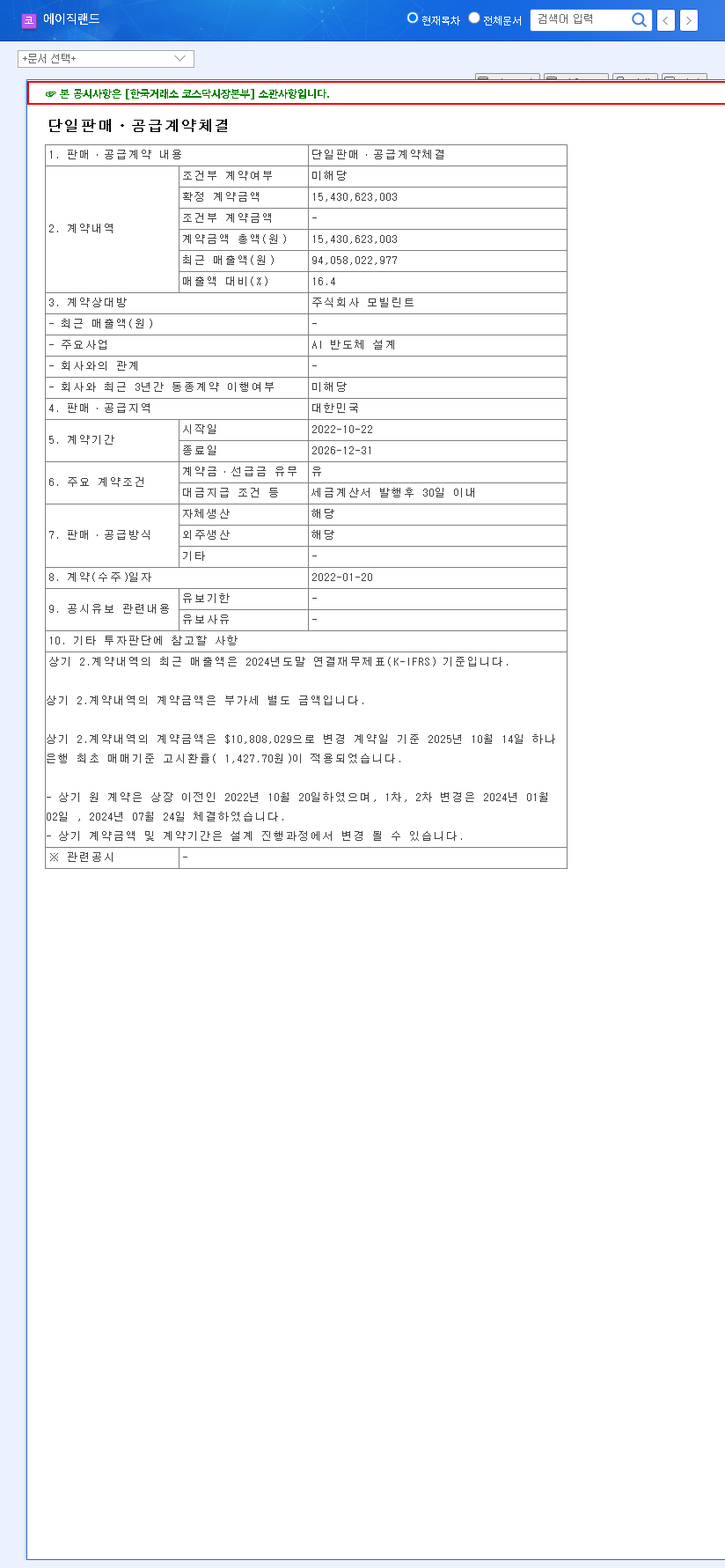
    On October 14, 2025, ASICLAND formally announced a single sales and supply agreement with Mobilint Co., Ltd., valued at a significant ₩15.4 billion. According to the Official Disclosure on the DART system, this contract’s value is equivalent to 16.4% of the company’s entire 2023 annual revenue. The contract period, which extends to December 31, 2026, promises a long-term, stable revenue stream that will be crucial for the company’s performance in the coming years. This partnership with Mobilint, a company specializing in advanced AI semiconductors for the automotive industry, strategically positions ASICLAND within a high-growth market vertical.

    ASICLAND’s Core Business and Financial Health

    The Power of Being TSMC’s Sole Korean VCA

    ASICLAND holds a uniquely powerful position in the Korean market as the sole TSMC VCA (Value Chain Alliance) partner. This grants it exclusive access to the process technology of the world’s largest and most advanced semiconductor foundry. As a premier semiconductor design solution provider, ASICLAND acts as a critical bridge for fabless companies, enabling them to bring complex chip designs to life using TSMC’s manufacturing capabilities. This VCA status is a formidable competitive advantage, providing unparalleled credibility and technical access in sectors like AI, automotive, and IoT.

    The Financial Paradox: Growing Revenue, Worsening Losses

    Despite its strategic strengths, ASICLAND’s financial statements reveal a troubling trend. While revenue grew consistently to ₩94.0 billion in 2024, profitability has sharply declined. The company swung from an operating profit in 2023 to significant operating losses of ₩16.97 billion in 2024 and ₩13.16 billion in the first half of 2025 alone. This deteriorating ASICLAND profitability is the central challenge. Furthermore, consistently negative operating cash flow poses a risk to liquidity and funding for new projects. While the company’s debt-to-equity ratio remains stable, the erosion of equity due to net losses cannot be ignored.

    Impact Analysis: What the Mobilint Contract Truly Means

    Short-Term Boost vs. Lingering Concerns

    In the short term, the ASICLAND contract with Mobilint will undoubtedly bolster revenue figures and enhance market credibility. However, the immediate impact on the bottom line is uncertain. The contract’s profit margin remains undisclosed, and without it, we cannot assume that this revenue will translate into meaningful profit. There’s also a risk that the costs of fulfilling this large-scale project could further strain the company’s already negative cash flow before payments are fully realized.

    Long-Term Strategic Value

    The long-term implications are more promising. Successfully executing this contract strengthens ASICLAND’s portfolio in the booming automotive semiconductor market, a key pillar for future growth. According to industry reports, the demand for advanced automotive chips is expected to grow exponentially. You can learn more about this trend from authoritative sources like Gartner’s latest market analysis. This project serves as a powerful case study, validating ASICLAND’s technological capabilities and potentially attracting more high-value clients. It helps build a stable foundation, mitigating the revenue volatility seen in recent quarters.

    Investment Outlook and Final Recommendations

    The Mobilint contract is a significant and positive catalyst for ASICLAND. It provides revenue visibility and strengthens its strategic positioning. However, investors must look beyond the headline number and focus on the fundamental issue: profitability. Revenue growth without a clear path to profit is unsustainable.

    • Cautious Short-Term Approach: The positive news may already be reflected in the stock price. It is prudent to wait for financial reports that demonstrate a tangible improvement in profit margins and cash flow resulting from this contract.
    • Conservative Long-Term Stance: The company’s core strengths, especially its TSMC VCA status, are highly attractive. For more insights, consider reading about the semiconductor value chain. However, a conservative investment stance is recommended until the company demonstrates a consistent trend of profitability and positive cash flow.

    In conclusion, this contract is a vital opportunity, but the ultimate success of ASICLAND hinges on its ability to translate top-line growth into bottom-line results. Diligent monitoring of the company’s cost management strategies and profitability metrics is essential for any potential investor.

    (445090) ASICLAND's ₩15.4B Mobilint Contract: A Lifeline or a Mirage for Profitability? 관련 이미지