Tag: Stock

  • Gemvax De-listed as a Cautionary Stock, But Re-listing Warning Issued: What Investors Need to Know


    1. What Happened?

    On September 24, 2025, Gemvax was removed from the cautionary stock list but simultaneously placed on the re-listing warning list. This signifies increased investment risk due to recent sharp fluctuations in its stock price.

    2. Why Did This Happen?

    While Gemvax generates stable revenue from its environmental pollution control business, its operating losses have widened due to increased R&D spending in its bio-business. High debt-to-equity ratio and a lawsuit with Biobill are also contributing factors. The potential dilution of shares due to the issuance of convertible bonds adds to the uncertainty. The recent stock volatility is likely a result of these factors combined.

    3. What’s Next?

    • Short-term outlook: De-listing could trigger a short-term price increase, but the re-listing warning may further amplify volatility.
    • Long-term outlook: The results of GV1001 clinical trials and new business performance will determine Gemvax’s future. Positive clinical results could provide upward momentum.

    4. What Should Investors Do?

    A cautious approach is recommended. Investors should be mindful of short-term volatility and closely monitor the progress of Gemvax’s bio-business and improvements in its financial health. Pay close attention to clinical trial announcements and the outcome of the lawsuit.


    Frequently Asked Questions (FAQ)

    What does Gemvax’s de-listing from the cautionary stock list mean?

    De-listing means trading restrictions are lifted. However, price volatility can still be high, so caution is advised.

    What does the re-listing warning for Gemvax mean?

    The re-listing warning signals increased investment risk due to sharp price fluctuations. Investors should be cautious, as re-listing could lead to further trading restrictions.

    What is GV1001?

    GV1001 is Gemvax’s key drug candidate, being developed for pancreatic cancer, Alzheimer’s disease, and PSP. Clinical trial results will significantly impact Gemvax’s future.

    What are the main risk factors for Gemvax?

    The potential failure of clinical trials for the bio-business, high debt-to-equity ratio, and the lawsuit with Biobill are key risk factors.

  • SK Hynix After-Hours Block Trade: A ₩92.7B Investment, Momentum Driven by AI Market Growth?

    1. Decoding the ₩92.7B After-Hours Block Trade

    After the market closed on September 24, 2025, a substantial after-hours block trade of 259,607 SK Hynix shares, amounting to approximately ₩92.7 billion, was executed. Notably, foreign investors were the primary buyers in this transaction, despite significant net selling by foreign investors during regular trading hours.

    2. SK Hynix’s Strengths: A Look at its Solid Fundamentals

    SK Hynix demonstrated robust fundamentals by achieving record-high quarterly revenue and operating profit in its 2025 semi-annual report. The explosive growth of the AI market fueled a surge in demand for HBM (High Bandwidth Memory), and DRAM and NAND shipments also exceeded market expectations.

    • Key Strengths:
      • Leadership in the HBM Market
      • Diversified Portfolio
      • Solid Financial Structure
      • Proactive Shareholder Return
      • Strengthened ESG Management
    • Potential Risk Factors:
      • Economic Volatility
      • Intensifying Competition
      • Exchange Rate Fluctuations

    3. Market Landscape and Future Outlook

    The macroeconomic environment, including the downward trend in US interest rates and the continued weakness of the Korean Won, presents both opportunities and challenges for SK Hynix. Volatility in international oil and gold prices, as well as the potential slowdown in global logistics demand, are factors that warrant close monitoring. While the growth of the AI semiconductor market provides positive momentum, macroeconomic uncertainties and potential fluctuations in the semiconductor industry pose risks.

    4. Action Plan for Investors

    For investors considering SK Hynix, we recommend the following action plan:

    • Monitor AI semiconductor market trends and changes in HBM demand.
    • Analyze the impact of exchange rate and interest rate fluctuations on SK Hynix’s performance.
    • Keep a close eye on competitor activities and technological developments.

    Frequently Asked Questions (FAQ)

    Is the after-hours block trade a positive signal for SK Hynix’s stock price?

    While the block trade itself doesn’t guarantee a specific stock price direction, the observed buying activity by foreign investors can be interpreted as a positive sign. However, investment decisions should be made based on a comprehensive consideration of various factors, including fundamentals and market conditions.

    What is the outlook for SK Hynix’s stock price?

    Key variables influencing SK Hynix’s stock price include the continued growth of the AI semiconductor market, changes in macroeconomic indicators, and competitor activities. Currently, the company’s solid fundamentals and growth prospects suggest a stable stock price trend, but short-term volatility cannot be ruled out.

    What should investors be aware of when investing in SK Hynix?

    The semiconductor industry is susceptible to economic fluctuations and technological competition, requiring a cautious approach to investment. Investors should closely monitor changes in macroeconomic indicators and competitors’ technological developments.

  • KAI Stock Analysis: Decoding the ₩42.6B After-Hours Block Trade

    1. Analyzing the KAI After-Hours Block Trade

    On September 24, 2025, a substantial block trade of 392,310 KAI shares, amounting to approximately ₩42.6 billion, occurred after regular trading hours. Notably, foreign investors were heavily involved, with both significant buying (₩87.6B) and selling (₩82.5B) activity, resulting in a net buy of ₩5.1B.

    2. Fundamental Analysis: Opportunities and Risks

    KAI boasts a robust order backlog exceeding ₩26 trillion and has secured future growth drivers, including the KF-21 development, Surion helicopter exports, and diversification into civil aircraft components. Profitability is also on an upward trend. However, the high debt-to-equity ratio of over 430% poses a concern for financial soundness.

    • Strengths: Strong order backlog, future growth drivers, improving profitability
    • Weakness: High debt-to-equity ratio

    3. Market Environment Analysis: Potential for Volatility

    The global aviation market is recovering post-pandemic, but uncertainties remain, including high interest rates, exchange rate fluctuations, and volatile commodity prices. The military aircraft market is expected to grow steadily, but competition is also intensifying.

    4. Investment Implications: A Cautious Approach

    KAI possesses long-term growth potential, but investors should be mindful of its high debt-to-equity ratio and susceptibility to external factors. The potential for short-term stock price volatility exists, and investors should closely monitor macroeconomic indicators, exchange rates, oil prices, and company announcements before making investment decisions. The current investment recommendation is neutral (Monitor & Wait).

    How will the after-hours trade impact KAI’s stock price?

    It could increase short-term price volatility. While the net foreign buy is a potentially positive signal, the sustainability of this trend depends on future earnings, order momentum, and macroeconomic conditions.

    What are KAI’s main business segments?

    KAI operates across various segments, including fixed-wing aircraft (KF-21, T-50), rotary-wing aircraft (LAH/KUH, Surion), aerostructures, and space programs.

    What are the key investment considerations for KAI?

    Investors should carefully consider the high debt-to-equity ratio, exchange rate and oil price fluctuations, intensifying competition, and potential changes in government policies. Thorough due diligence is crucial before investing.

  • Noel’s 350 Billion KRW Rights Offering: Stock Plunge or Investment Opportunity? Key Analysis and Outlook

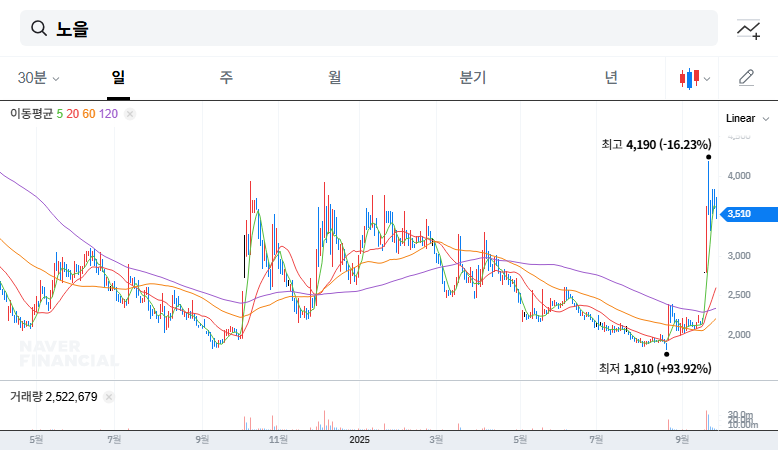
    Noel's 350 Billion KRW Rights Offering: Stock Plunge or Investment Opportunity? Key Analysis and Outlook 대표 차트 이미지

    1. Noel’s Rights Offering: What Happened?

    On September 24, 2025, Noel announced a 350 billion KRW rights offering through a rights issue followed by a public offering of unsold shares. The funds raised will be used for facility investment (26 billion KRW), business acquisition (30 billion KRW), operating funds (274 billion KRW), and debt repayment (20 billion KRW), with a primary focus on securing operating funds.

    2. Why the Rights Offering?

    Despite its innovative technology, Noel is currently operating at a loss. The funds secured through this rights offering are expected to contribute significantly to securing future growth engines by improving financial structure, securing operating funds, and expanding business operations.

    3. Impact on Stock Price: A Double-Edged Sword

    • Positive Impact: Improved financial structure and secured growth momentum are expected to increase corporate value in the long term.
    • Negative Impact: Potential for short-term stock price decline due to stock dilution.

    The rights offering is a double-edged sword. It provides a springboard for growth through fundraising, but it can also lead to a short-term stock price decline due to stock dilution. Therefore, investors should be aware of short-term stock price volatility.

    4. What Should Investors Do?

    • Short-term investors: Carefully analyze offer price, market reaction, etc., and carefully determine investment timing.
    • Long-term investors: Continuously monitor the use of funds, profitability improvement, and changes in fundamentals.

    Before making an investment decision, further information such as the confirmed offer price, fundraising plan, plan for turning to profit, and global market expansion status should be checked.

    Frequently Asked Questions

    What is the purpose of Noel’s rights offering?

    A 350 billion KRW rights offering is being conducted to secure operating funds, facility investments, business acquisitions, and debt repayment.

    How will the rights offering affect the stock price?

    In the short term, there is a possibility of a stock price decline due to stock dilution, but in the long term, it can have a positive impact by improving the financial structure and securing growth momentum.

    What are some precautions for investors?

    Carefully review the offer price, use of funds, and plan for turning to profit, and be aware of short-term stock price volatility.

    Noel's 350 Billion KRW Rights Offering: Stock Plunge or Investment Opportunity? Key Analysis and Outlook 관련 이미지
  • Hwanggeum ST Stock Forecast: CEO Increases Stake, What’s the Hidden Meaning?

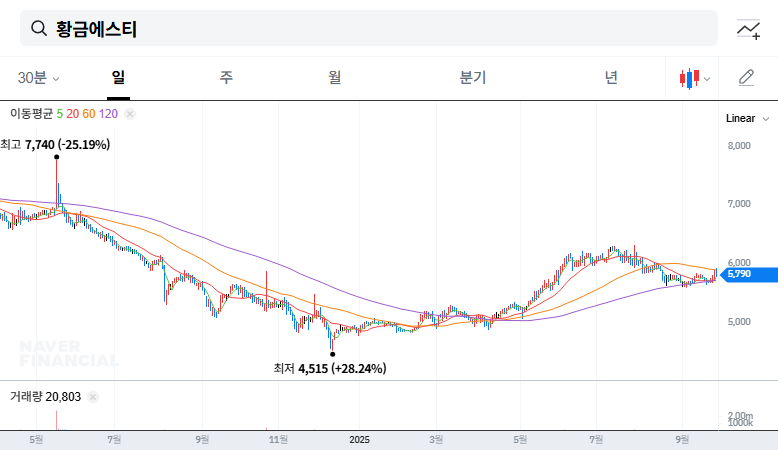
    Hwanggeum ST Stock Forecast: CEO Increases Stake, What's the Hidden Meaning? 대표 차트 이미지

    What Happened at Hwanggeum ST?

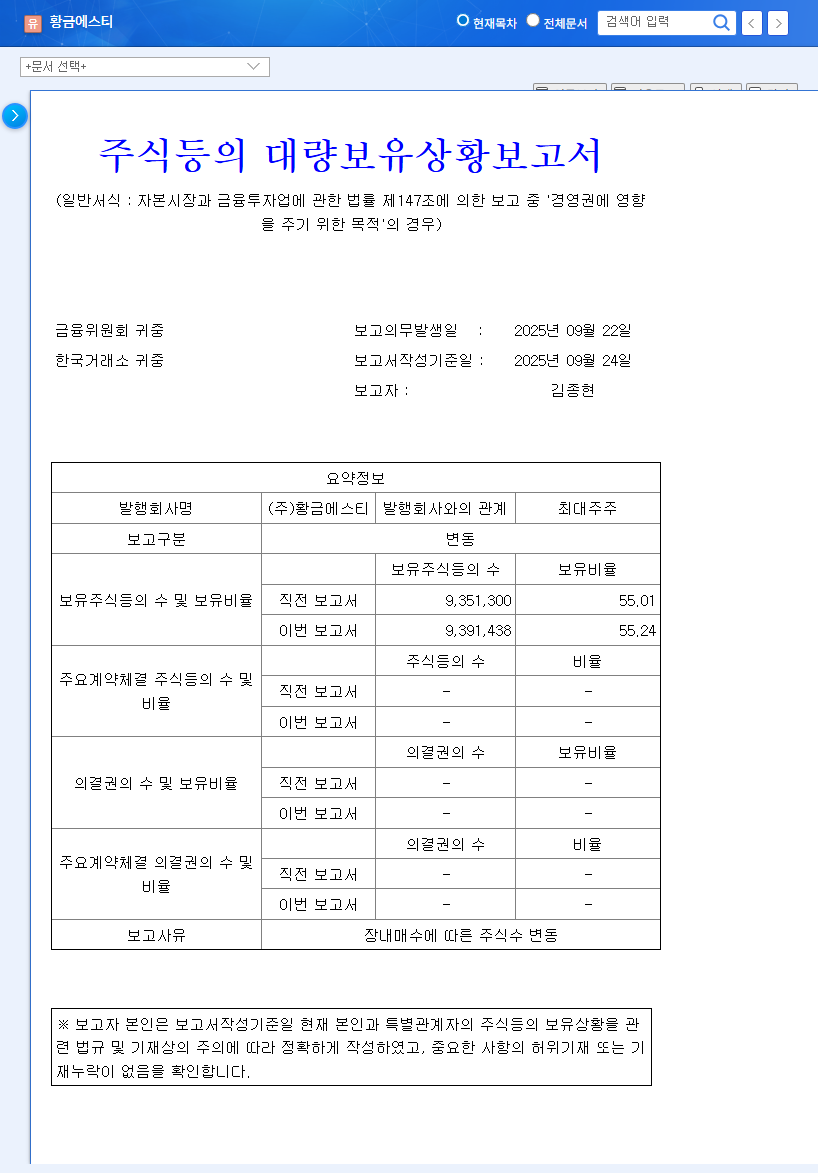
    Kim Jong-hyun, the CEO and largest shareholder of Hwanggeum ST, increased his stake from 55.01% to 55.24% (0.23%p) through open market purchases over three days. This news was announced through a major shareholder report disclosed on September 24, 2025.

    Why is the CEO’s Stake Increase Important?

    This stake increase can be interpreted as a demonstration of commitment to strengthening management control and responsible management. The additional purchase, even with an already majority stake, can be seen as a sign of confidence in the company’s future.

    How are Hwanggeum ST’s Fundamentals?

    Hwanggeum ST demonstrates positive fundamentals through stable performance in its steel business, growth in its construction business, and expansion into new businesses such as ALC and smart farms. Financial soundness is also steadily improving, and a consistent dividend policy contributes to enhancing shareholder value.

    • Steel Business: Strengthening competitiveness through in-house production facility development and high-value-added products.
    • Construction Business: Growth based on proprietary technologies such as IPC girder technology.
    • New Businesses: Securing future growth engines through ALC market entry and smart farm projects.

    What Should Investors Do?

    This stake increase can have a positive impact on stock prices in the short term. However, investment should always be approached with caution. It is important to continuously monitor stock price fluctuations, the CEO’s future actions, the company’s business performance, and changes in macroeconomic indicators.

    Q: How will CEO Kim Jong-hyun’s stake increase affect the stock price?

    A: Generally, an increase in stake by the largest shareholder is interpreted as a positive signal in the market and can lead to expectations of a stock price increase. However, a small change in an already majority stake may have a limited impact.

    Q: What is the future business outlook for Hwanggeum ST?

    A: Hwanggeum ST shows a positive outlook through solid growth in its steel and construction businesses, and expansion into new businesses. Continuous improvement in financial soundness and dividend policy are also expected to contribute to enhancing shareholder value.

    Q: What precautions should be taken when investing?

    A: Investment should always be approached cautiously. Investors should constantly monitor stock price fluctuations, the CEO’s actions, business performance, and macroeconomic indicators, and keep in mind that the responsibility for investment decisions lies with the investor.

    Hwanggeum ST Stock Forecast: CEO Increases Stake, What's the Hidden Meaning? 관련 이미지
  • Mr.Blue Acquires DaysEnter: Investment Strategies to Consider


    Mr.Blue Acquires DaysEnter: Investment Strategies to Consider 대표 차트 이미지


    Mr.Blue and DaysEnter Merger: What’s Happening?

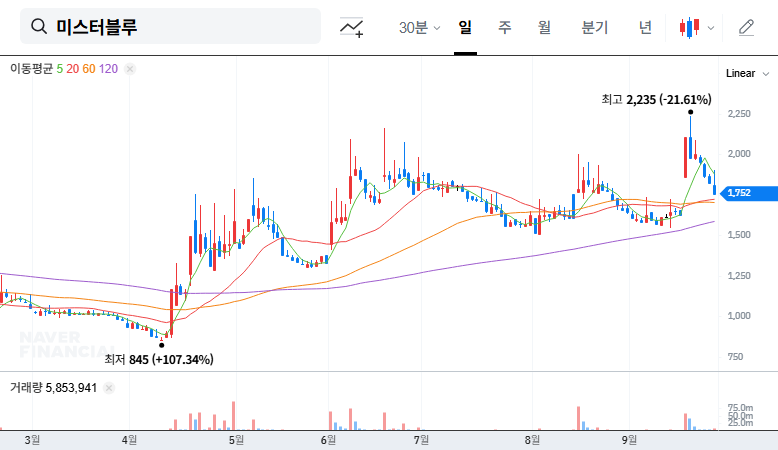
    On September 24, 2025, Mr.Blue announced its decision to acquire DaysEnter, a book publishing and sales company. The stated objective of this merger is to strengthen business operations and enhance management efficiency. DaysEnter’s performance in the first half of 2025, with revenue of ₩12.5 billion and a net loss of ₩0.2 billion, is expected to have a limited impact on Mr.Blue’s overall results.

    Why the Merger?

    • Expected Business Synergies: Strengthening the publishing business and creating synergy to integrate business portfolios and increase operational efficiency.
    • Cost Reduction: Integrating overlapping workforce and resources, streamlining marketing and promotional activities for cost savings and improved operating profit margins.
    • Potential for Financial Restructuring: Possibility of a positive reassessment of the capital structure and financial ratios due to the merger.

    What are the Potential Outcomes?

    Mergers don’t always bring positive results. The following risk factors should also be considered:

    • Uncertainties in the Integration Process: Potential difficulties in business and organizational culture integration.
    • DaysEnter’s Weak Performance: DaysEnter’s low profitability could negatively impact Mr.Blue’s overall profitability.
    • Trading Suspension and Uncertainty: The trading suspension due to the merger decision could cause short-term stock price volatility.

    What Should Investors Do?

    While Mr.Blue is improving its performance based on the growth of its gaming business, it remains to be seen whether this merger will lead to actual synergy. Investors should pay attention to the following:

    • Changes in business structure after the merger.
    • Potential synergy creation with DaysEnter.
    • Continued growth of the gaming business.

    Experts currently have a ‘neutral’ view on Mr.Blue. It’s advisable to review investment decisions after concrete performance announcements related to the merger effects are released.


    Frequently Asked Questions

    When is the merger date between Mr.Blue and DaysEnter?

    The merger announcement date is September 24, 2025, but the actual merger completion date will be announced later.

    What is the outlook for Mr.Blue’s stock price after the merger?

    The merger can cause short-term stock price volatility. The long-term outlook depends on the synergy effect of the merger and the growth of the gaming business.

    What is Mr.Blue’s main business?

    Mr.Blue operates webtoon and web novel platforms and develops and publishes games. It also conducts publishing business through its subsidiaries.


    Mr.Blue Acquires DaysEnter: Investment Strategies to Consider 관련 이미지


  • Hyundai Department Store Stock Forecast: Opportunity or Risk? (September 2025 Analysis)


    Hyundai Department Store Stock Forecast: Opportunity or Risk? (September 2025 Analysis) 대표 차트 이미지


    1. What Happened?

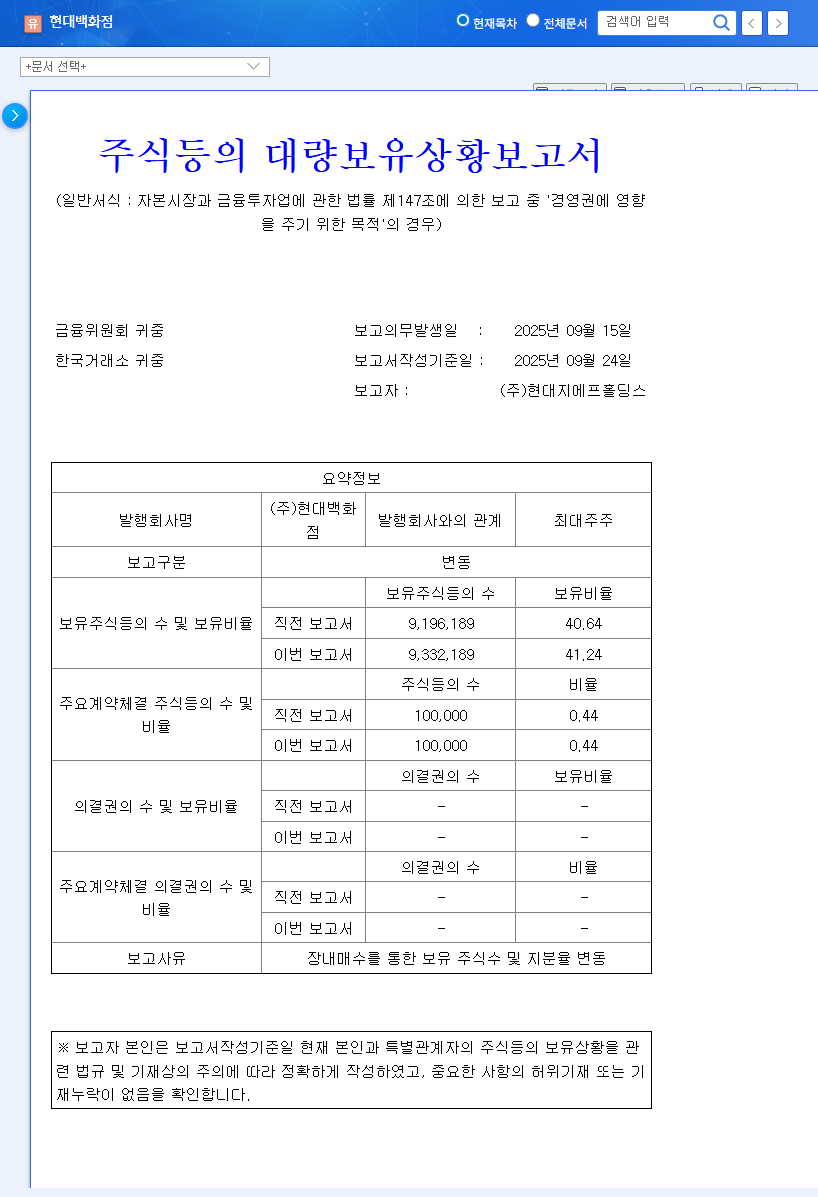
    On September 24, 2025, Hyundai Department Store’s largest shareholder, Hyundai G&F Holdings, increased its stake from 40.64% to 41.24% through open market purchases. This was the result of purchasing over 76,000 shares from September 18th to 24th.

    2. Why the Increased Stake?

    On the surface, it’s a move to strengthen and stabilize management control. However, there may be various underlying intentions, such as strengthening the execution of mid- to long-term management strategies and the possibility of potential restructuring. This is a factor that can significantly affect the future direction and corporate value of Hyundai Department Store.

    3. What’s the Impact on the Stock Price?

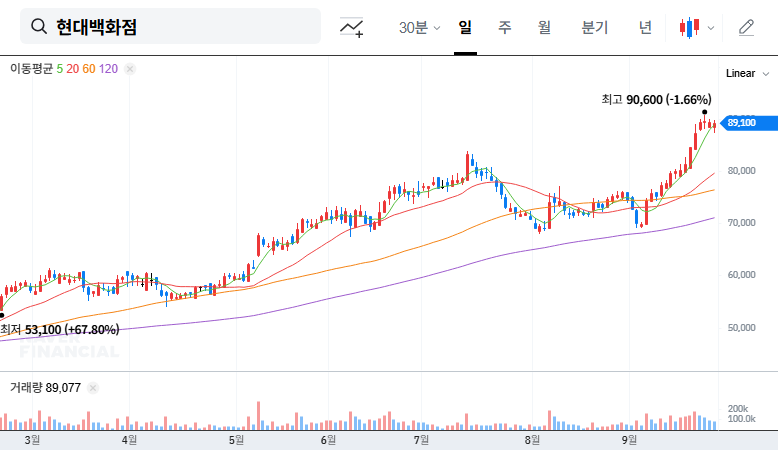
    In the short term, positive sentiment regarding strengthened management control could be a boon to the stock price. However, it may be difficult to expect a significant impact solely from the change in stake without any fundamental changes. In the long term, the stock’s direction will be determined by the management strategies and restructuring direction pursued through the increased stake.

    4. What Should Investors Do?

    The current investment recommendation is ‘Hold’. While there is a possibility of a short-term stock price increase, it is crucial to closely monitor the fundamentals and market conditions. In particular, careful attention should be paid to whether Hyundai G&F Holdings will acquire additional stakes, the performance of new store openings, the recovery of the duty-free business, and macroeconomic volatility.


    FAQ

    Will Hyundai G&F Holdings’ increased stake positively impact Hyundai Department Store’s stock price?

    It may have a positive impact in the short term, but the long-term stock price depends on the company’s fundamentals and market conditions.

    Should I buy Hyundai Department Store stock now?

    The investment recommendation is ‘Hold’. Investment decisions should be made carefully, considering fundamentals and market conditions.

    What is the future outlook for Hyundai Department Store?

    It can vary depending on various factors such as the performance of new store openings, recovery of the duty-free business, and macroeconomic conditions. Continuous monitoring is necessary.


    Hyundai Department Store Stock Forecast: Opportunity or Risk? (September 2025 Analysis) 관련 이미지


  • Hydrol Lithium: Major Shareholder Reduces Stake – What Does It Mean for Investors?


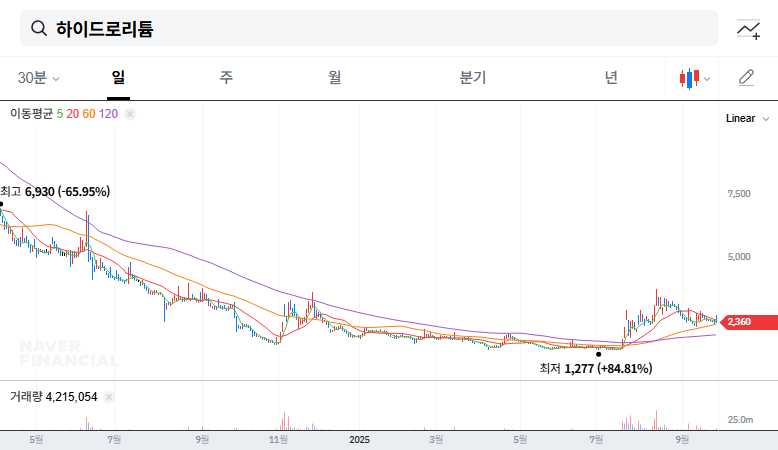
    Hydrol Lithium: Major Shareholder Reduces Stake - What Does It Mean for Investors? 대표 차트 이미지


    What Happened?

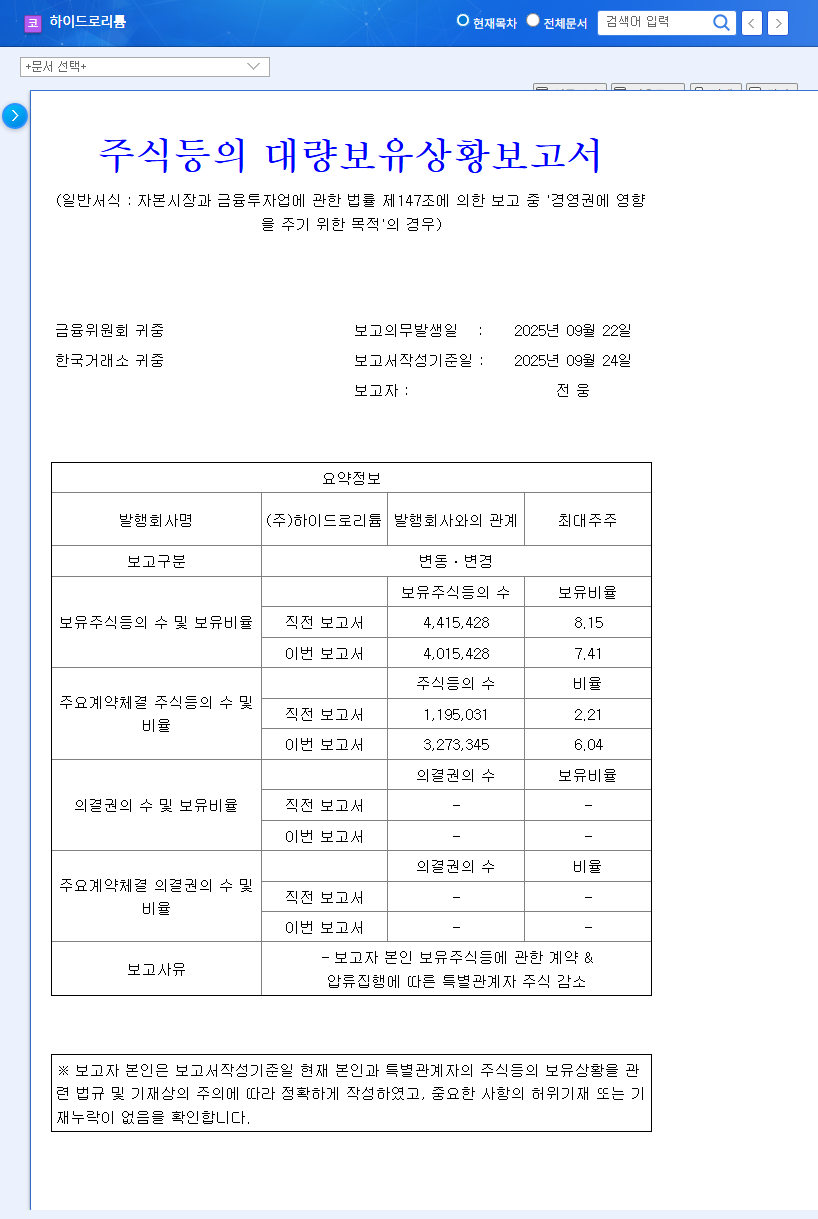
    Jeon Woong (born in 1964), a major shareholder of Hydrol Lithium, announced on September 24, 2025, a decrease in his stake from 8.15% to 7.41%. The reason cited was ‘decrease in shares of related parties due to contracts and seizure execution related to owned shares.’ The shares were sold on the market through Lithium Plus Co., Ltd. on September 16 and 19, 2025, with 200,000 shares sold each day.

    Why the Stake Reduction?

    While the reason given, ‘contracts and seizure execution,’ suggests personal circumstances related to Mr. Jeon, the specifics remain undisclosed. The crucial question is the impact of this stake reduction on the market. Particularly, as Mr. Jeon held the stake for ‘management influence’ purposes, this reduction raises concerns about potential management changes.

    What are the Potential Impacts?

    • Stock Price Decline: The sale of shares by a major shareholder can put downward pressure on the stock price in the short term.
    • Negative Investor Sentiment: A major shareholder reducing their stake in a financially struggling company can amplify investor anxieties.
    • Loss of Confidence: A stake reduction by a shareholder involved in management raises uncertainty about the company’s leadership and can erode confidence.

    What Should Investors Do?

    Hydrol Lithium is attempting a transition to the secondary battery materials business, but it has yet to show significant results, and its financial situation remains precarious. This stake reduction serves as a warning sign for investors. Investors should consider the following:

    • Cautious Investment: Investment decisions should be based on thorough research and analysis, and investors should avoid being swayed by short-term price fluctuations.
    • Monitor for Further Information: Continuously monitor Hydrol Lithium’s announcements and news, paying close attention to its financial restructuring progress and new business developments.
    • Risk Management: Before making any investment decisions, carefully consider the potential for loss and invest only what you can afford to lose.


    FAQ

    Does Jeon Woong’s stake reduction directly impact Hydrol Lithium’s financials?

    No, the stake reduction itself does not worsen the company’s financial status. However, it can have an indirect impact by negatively influencing investor sentiment.

    Is it a good idea to invest in Hydrol Lithium?

    Hydrol Lithium currently carries high investment risks. Before making any investment decisions, thoroughly analyze the company’s financial status, business prospects, and market conditions.

    What is the future outlook for Hydrol Lithium’s stock price?

    Downward pressure on the stock price is expected in the short term. The long-term outlook will depend on the company’s financial restructuring progress and the success of its new business ventures.


    Hydrol Lithium: Major Shareholder Reduces Stake - What Does It Mean for Investors? 관련 이미지


  • Morgan Stanley Acquires 5% Stake in APR: Investment Outlook Analysis


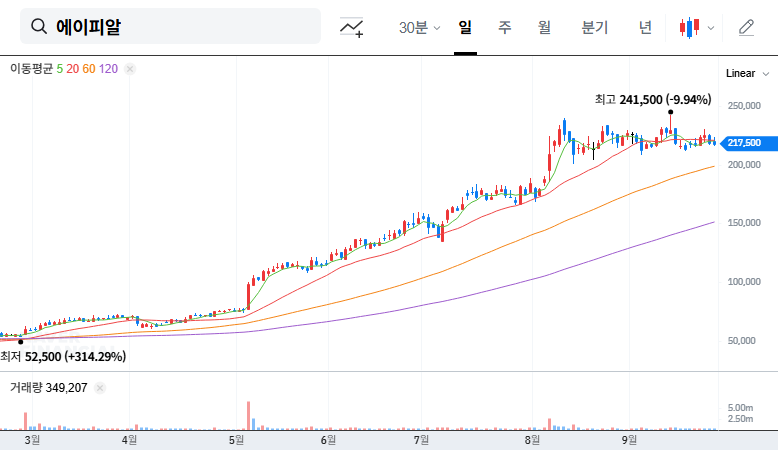
    Morgan Stanley Acquires 5% Stake in APR: Investment Outlook Analysis 대표 차트 이미지


    What Happened?

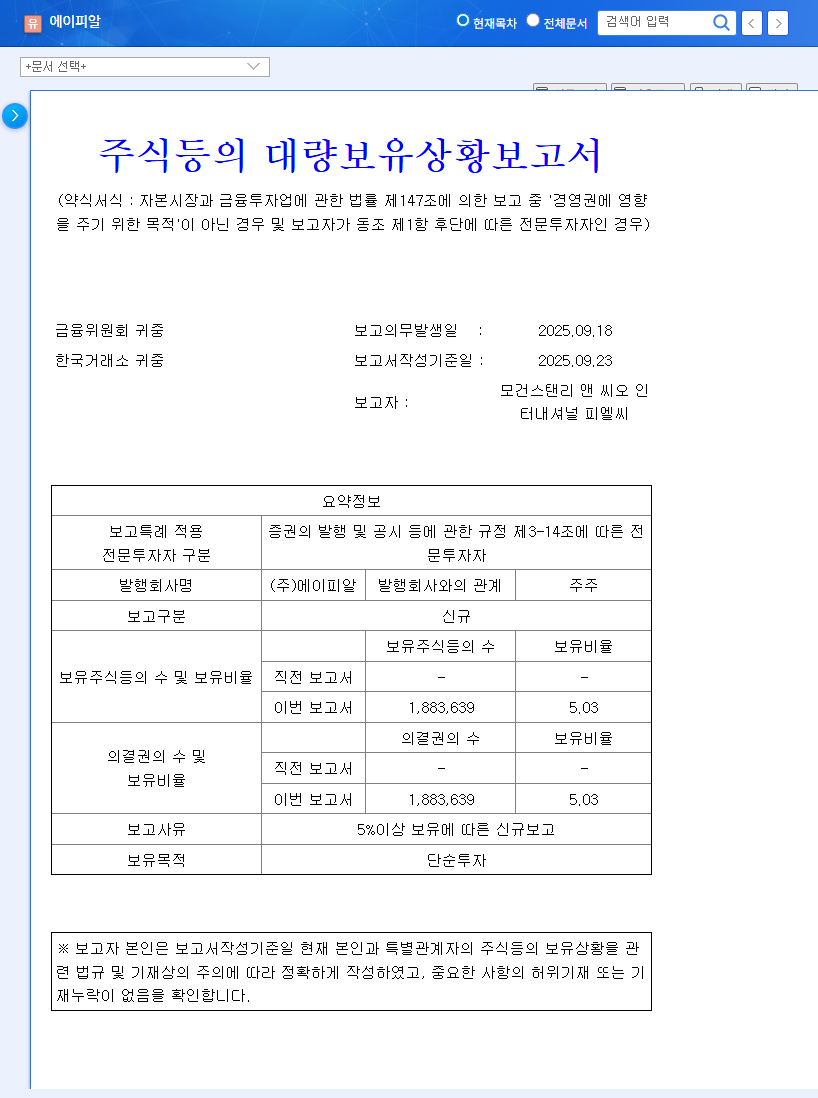
    On September 24, 2025, Morgan Stanley & Co. International plc announced a new 5.03% stake acquisition in APR for ‘simple investment’ purposes.

    Why Did Morgan Stanley Invest in APR? (Positive Factors)

    • Strong Fundamentals: APR shows robust growth in cosmetics (Medicube, Aprilskin, Forment) and home beauty devices (Medicube Age-R). As of the first half of 2025, it recorded sales of KRW 593.8 billion and operating profit of KRW 139.1 billion, maintaining a stable debt ratio (approximately 59.6%) and healthy operating cash flow.
    • Global Growth Potential: Internalization of technology and patent acquisition in the home beauty device business, and global market expansion strategy in the cosmetics business enhance APR’s future growth potential.
    • Shareholder Return Policy: Consistent share buybacks/cancellations and dividend policies are attractive to institutional investors.

    What to Consider When Investing? (Potential Risks)

    • Stock Volatility: Short-term stock price volatility may increase depending on institutional investors’ trading activities.
    • External Environmental Changes: External factors like fluctuations in exchange rates, interest rates, raw material prices, and intensifying competition can affect APR’s performance.

    What Action Should Investors Take?

    Morgan Stanley’s investment can be interpreted as a positive signal for APR’s growth. However, before making investment decisions, investors should consider the global economic situation, beauty industry trends, and APR’s mid-to-long-term business strategies. A long-term investment strategy focusing on the company’s fundamentals and growth potential is necessary, rather than focusing on short-term stock price movements.


    FAQ

    What is the size of Morgan Stanley’s stake acquisition in APR?

    Morgan Stanley acquired a 5.03% stake in APR.

    What are APR’s main businesses?

    APR operates in cosmetics (Medicube, Aprilskin, Forment) and home beauty devices (Medicube Age-R).

    What were APR’s financial results for the first half of 2025?

    APR recorded sales of KRW 593.8 billion and operating profit of KRW 139.1 billion.


    Morgan Stanley Acquires 5% Stake in APR: Investment Outlook Analysis 관련 이미지


  • Namkwang Engineering & Construction Wins $195M Railway Project: Investment Opportunity?


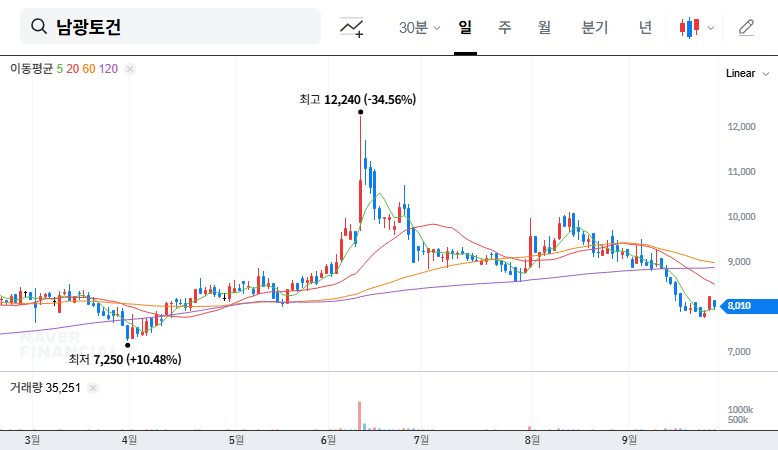
    Namkwang Engineering & Construction Wins $195M Railway Project: Investment Opportunity? 대표 차트 이미지


    What Happened?

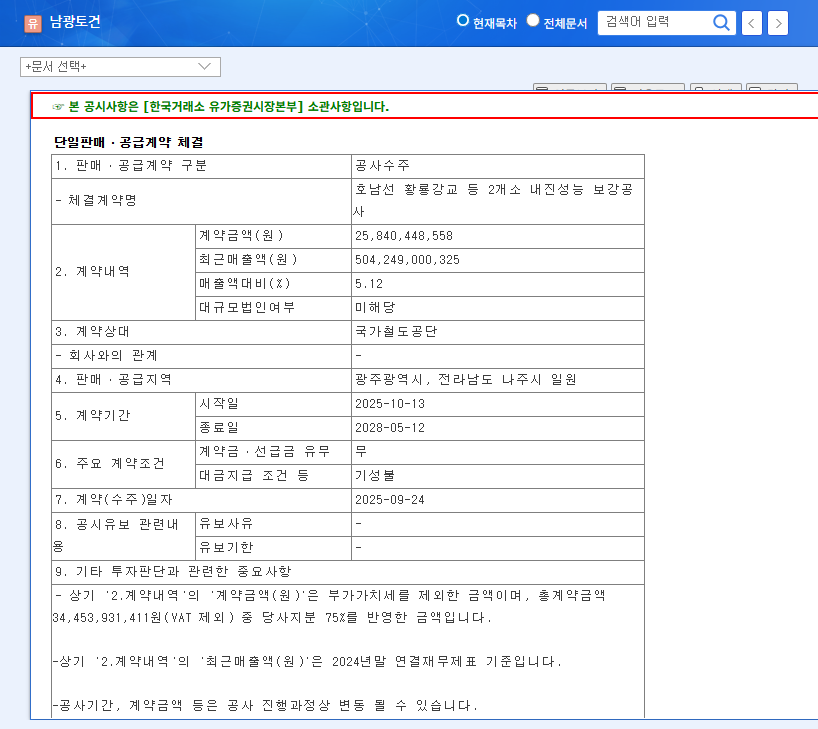
    Namkwang E&C secured a $195 million contract with the Korea Rail Network Authority on September 24, 2025, for the ‘Honam Line Hwangryonggang Bridge Seismic Reinforcement Project.’ This contract represents 5.12% of Namkwang’s projected 2025 revenue and will run for approximately 2 years and 7 months, from October 13, 2025, to May 12, 2028.

    Why is this contract significant?

    This contract is significant not only for its revenue contribution but also for its potential to diversify Namkwang’s portfolio and strengthen its competitiveness in the public sector. Aligned with the government’s increased investment in social overhead capital (SOC), this project could lead to a more stable order backlog. The contract’s duration of 2 years and 7 months also promises stable revenue recognition and cash flow.

    What’s the Outlook?

    In the short term, the contract announcement is likely to positively impact Namkwang’s stock price. The contract’s substantial size relative to the company’s market capitalization could stimulate investor buying. In the long term, successful project execution and revenue recognition, leading to improved financial performance, could further support stock price appreciation. However, potential risks such as a construction market downturn, rising interest rates, and increasing volatility in raw material prices should be considered. The company’s rising debt-to-equity ratio requires ongoing monitoring.

    What should investors do?

    Investors should consider the project’s progress, macroeconomic indicators, currency and oil price volatility, and the company’s financial health when making investment decisions. A long-term investment strategy based on a thorough analysis of the company’s fundamentals and the external environment is crucial, rather than reacting to short-term stock price fluctuations.


    Frequently Asked Questions

    How will this contract impact Namkwang’s financials?

    The $195 million contract is expected to contribute directly to revenue growth. However, the actual profitability may vary depending on external factors like raw material prices and interest rate fluctuations.

    What is the outlook for Namkwang’s stock price?

    A positive short-term impact is anticipated, but the medium to long-term stock price trend depends on various factors, including the construction market, interest rates, and exchange rates.

    What are the key investment risks to consider?

    Investors should consider potential risks such as a construction market slowdown, rising interest rates, and increased raw material price volatility, and continuously monitor the company’s financial health.


    Namkwang Engineering & Construction Wins $195M Railway Project: Investment Opportunity? 관련 이미지