Tag: SOFC

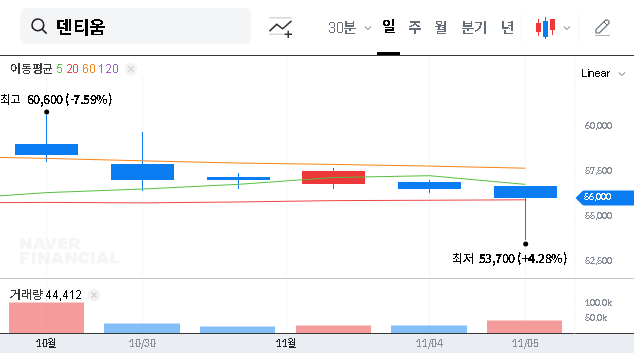
  • (145720) DENTIUM Q3 2025 Earnings Miss: Investment Strategy & Stock Outlook

    (145720) DENTIUM Q3 2025 Earnings Miss: Investment Strategy & Stock Outlook

    The latest DENTIUM Q3 2025 earnings report has sent ripples through the investment community, signaling a significant ‘earnings shock.’ The dental implant specialist’s preliminary results for the third quarter of 2025 fell drastically below market consensus, raising critical questions for current and prospective shareholders. Is this a temporary setback, or does it point to a fundamental shift in DENTIUM’s growth story? This comprehensive analysis will dissect the financial data, explore the underlying causes, and provide a clear DENTIUM investment strategy to navigate the path forward.

    Investors are now faced with a crucial decision: how to react to disappointing performance without letting short-term market volatility dictate long-term financial goals. We’re here to provide the clarity you need.

    Breaking Down the DENTIUM Q3 2025 Earnings Report

    The numbers from the preliminary DENTIUM earnings report for Q3 2025 were stark. The company posted revenues of 78.2 billion KRW, an operating profit of 12.5 billion KRW, and a net income of 4.0 billion KRW. These figures represent a significant miss compared to market expectations, which were pegged at 91.2B KRW, 19.4B KRW, and 12.5B KRW, respectively. This translates to performance being 14% below revenue forecasts, 36% below operating profit forecasts, and a staggering 68% below net income expectations.

    When compared to the same period last year (Q3 2024), the decline in both revenue and operating profit is even more concerning for investors, indicating a potential reversal of its strong growth trajectory. The sharp contraction in both operating and net profit margins further exacerbates these worries. For investors looking for the official numbers, the filing can be found directly from the source. Official Disclosure: Click to view DART report.

    Why the Underperformance? A Fundamental Analysis

    To formulate an effective DENTIUM investment strategy, we must understand the root causes of this slump. The issues appear to be multi-faceted, stemming from both internal operational challenges and external market pressures.

    Key Challenges and Headwinds

    • Decreased Production Efficiency: A critical red flag is the declining utilization rate of the Gwanggyo plant. It has fallen from a healthy 87.1% in 2023 to just 54.9% in the first half of 2025. This suggests significant operational issues, leading to higher fixed costs per unit and a potential inventory buildup.
    • Uncertainty in New Ventures: The strategic pivot into the Solid Oxide Fuel Cell (SOFC) business is a long-term play, but it introduces short-term uncertainty. The path to commercialization and profitability is long and subject to regulatory and economic variables, which may be weighing on investor confidence.
    • Currency Fluctuations: With over 80% of its sales coming from overseas, DENTIUM is highly exposed to exchange rate volatility. While a strong USD can be beneficial, sudden shifts in the Won, Euro, or Chinese Yuan can directly impact profitability.

    Core Strengths and Long-Term Drivers

    Despite the concerning quarter, a holistic DENTIUM stock analysis reveals that the company’s foundational strengths remain intact.

    • Dominant Core Business: The dental implant segment, which constitutes 88% of revenue, continues to benefit from global trends like aging populations and increasing dental health awareness. Its expansive network across 70 countries, particularly its strong foothold in the high-growth Chinese market, provides a stable base.
    • Digital Dentistry Expansion: DENTIUM’s focus on digital dentistry, including CBCT scanners and CAD/CAM solutions, positions it well to capture future market share. This high-tech segment offers higher margins and creates a sticky ecosystem for its customers. For more on this trend, see our analysis of the digital dentistry market.
    • Shareholder-Friendly Policies: The company’s plan to cancel a significant portion of its treasury shares over three years is a clear positive for shareholder value, aiming to increase earnings per share and support the stock price over the long term.

    A Prudent DENTIUM Investment Strategy for 2025

    Given the conflicting signals, a balanced and cautious approach is warranted. The market’s short-term reaction is likely to be negative, with increased selling pressure and a potential stock price correction. However, long-term investors should look beyond the immediate noise. For further reading on investment principles, Investopedia offers excellent resources on fundamental analysis.

    Short-Term Outlook: Caution is Key

    In the immediate aftermath of the DENTIUM Q3 2025 earnings release, a defensive stance is advisable. While a sharp drop might present a ‘buy the dip’ opportunity, it’s prudent to wait for signs of stabilization and a clear explanation from management regarding the operational issues before committing new capital.

    Mid-to-Long-Term Outlook: Watchful Optimism

    The long-term investment thesis hinges on management’s ability to address the production inefficiencies and provide a clear roadmap for future growth. The core business remains strong, but investors will need reassurance. Key points to monitor in upcoming quarters include:

    • Recovery of the Gwanggyo plant’s utilization rate.
    • Performance trends in key overseas markets, especially China.
    • Tangible progress and clear financial projections for the new SOFC energy business.

    In conclusion, while the Q3 earnings shock is a significant concern that warrants immediate caution, it doesn’t necessarily invalidate DENTIUM’s long-term potential. A ‘Neutral’ rating is appropriate for now. The coming months will be crucial in determining whether this quarter was an anomaly or the beginning of a more challenging chapter for the company.
    (145720) DENTIUM Q3 2025 Earnings Miss: Investment Strategy & Stock Outlook 관련 이미지
  • (145720) DENTIUM Q3 2025 IR: A Deep Dive Investment Analysis for Investors

    (145720) DENTIUM Q3 2025 IR: A Deep Dive Investment Analysis for Investors

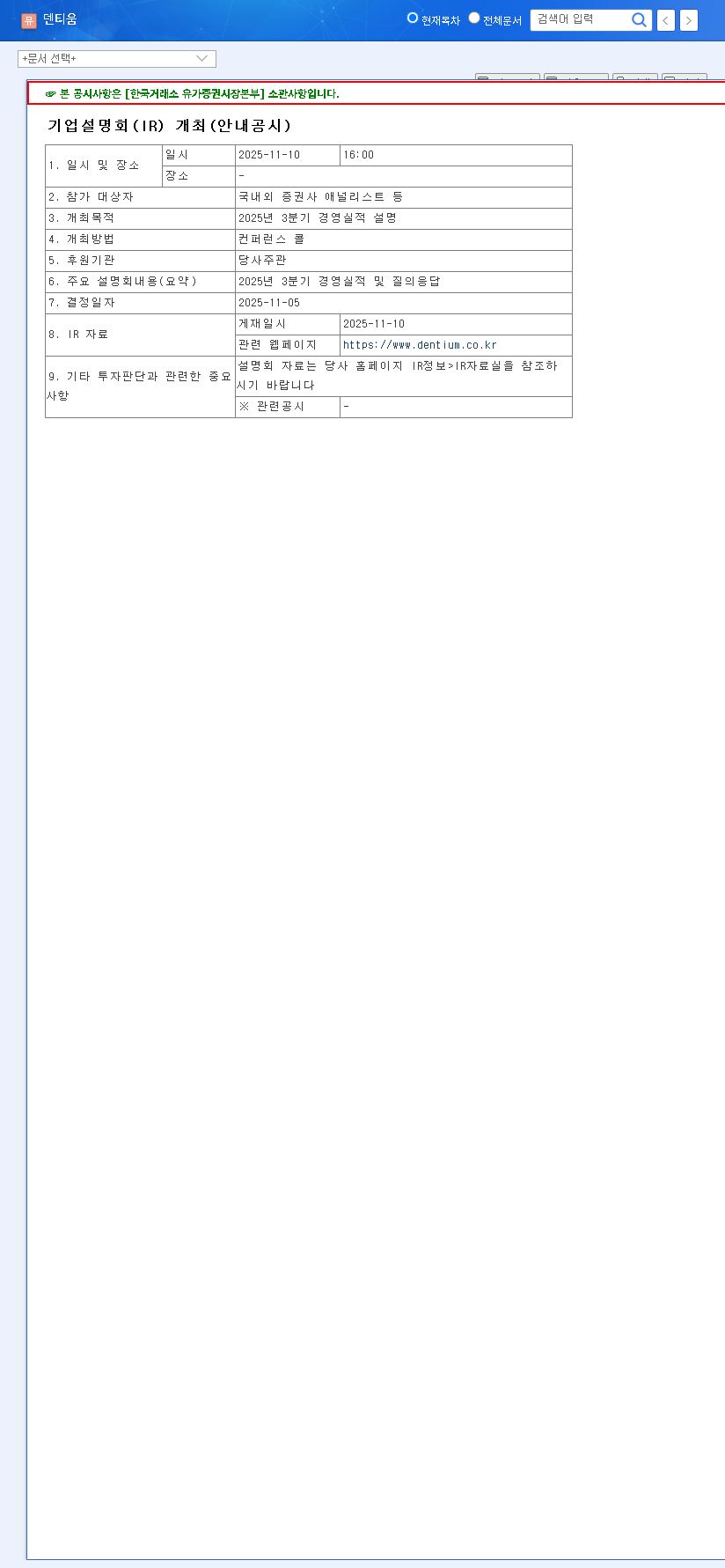
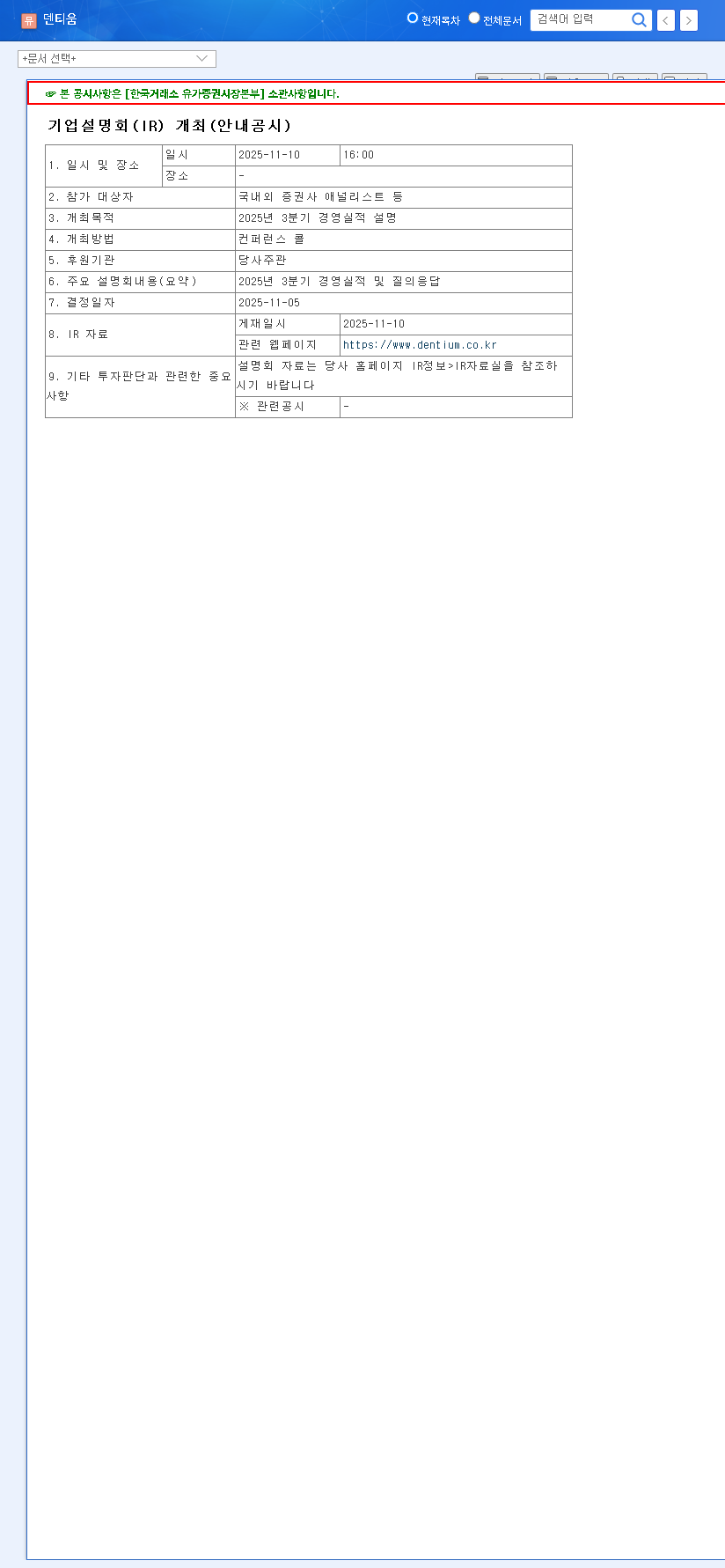
    The upcoming DENTIUM Q3 2025 IR, scheduled for November 10, 2025, is more than just a financial update; it’s a critical inflection point for the company and its investors. As a leading force in the global dental implant market, DENTIUM is navigating a complex landscape of declining profitability, significant debt, and currency fluctuations. This event will be the leadership’s chance to restore confidence and outline a clear path forward. This comprehensive DENTIUM investment analysis will break down the company’s fundamentals, the key challenges, potential growth catalysts, and the essential questions investors should be asking. This crucial information is based on the company’s official filings. (Official Disclosure)

    A Look Under the Hood: DENTIUM’s Core Fundamentals

    To understand the significance of the upcoming IR, we must first assess DENTIUM’s foundational strengths and weaknesses as of the first half of 2025.

    Market Position and Global Reach

    With a market capitalization of 619.9 billion KRW, DENTIUM is a heavyweight in the dental industry. Its business is built on several key pillars:

    • Core Business Focus: Dental implants are the lifeblood of the company, accounting for 88% of total revenue. This focus is augmented by sales of digital equipment like CBCT scanners (2%) and biomaterials (10%), positioning DENTIUM as a comprehensive ‘Total Solution’ provider.
    • Export-Driven Growth: While holding a strong #2 position in its domestic Korean market (approx. 20% share), the company’s future is global. A staggering 80% of its revenue originates from overseas sales across a network spanning over 70 countries.
    • Chinese Market Powerhouse: DENTIUM has a particularly strong foothold in the Chinese market, a region projected for 20% average annual growth. Its established local network there is a significant competitive advantage. More details can be found in our analysis of trends in the Asian dental market.

    Financial Health Snapshot (H1 2025)

    The DENTIUM financials paint a mixed picture that sets the stage for the Q3 IR:

    • Revenue vs. Profit: Revenue saw modest growth to 159.087 billion KRW, but operating profit fell to 25.124 billion KRW, signaling a troubling decline in profitability.
    • Debt Burden: While the debt-to-equity ratio is a manageable 60.39%, the absolute value of borrowings is high at 265.153 billion KRW. This poses a significant risk of increased financial costs in a rising interest rate environment.
    • Currency Exposure: With significant transactions in USD, EUR, and CNH, DENTIUM is highly exposed to foreign exchange volatility. A mere 10% change in exchange rates could swing profits or losses by over 16 billion KRW.

    Navigating Headwinds: Key Challenges for DENTIUM Stock

    The DENTIUM Q3 2025 IR must directly address the structural issues that have been weighing on investor sentiment and the DENTIUM stock price.

    The core challenge for DENTIUM isn’t its top-line growth, but its ability to convert that revenue into sustainable profit while managing significant financial and currency risks. The Q3 IR is a referendum on management’s strategy to solve this puzzle.

    If the sluggish performance seen in Q2 was due to temporary factors, the market may react positively. However, if the IR reveals deeper, structural problems—such as persistently high raw material costs or increased SG&A expenses from new ventures—the negative impact could be prolonged. The uncertainty around the new Solid Oxide Fuel Cell (SOFC) business, which requires heavy initial investment, further complicates the profitability outlook.

    Charting the Future: DENTIUM’s Growth Engines

    Despite the challenges, DENTIUM has powerful growth levers. The global dental implant market is expanding, driven by aging populations and the rise of digital dentistry. As a major player, DENTIUM is well-positioned to capitalize on this trend. According to market analysis from sources like Bloomberg, this sector shows robust long-term potential.

    Key Points to Watch in the IR Presentation

    • Q3 Performance Metrics: Is there a demonstrable recovery from Q2? The key metric will be sales volume and margin recovery in the Chinese market.
    • Profitability Strategy: Investors need a clear, credible plan to combat declining operating margins. This could include cost-cutting measures, price adjustments, or a shift toward higher-value products.
    • SOFC Business Roadmap: Vague promises are not enough. The company must provide specific timelines, investment details, and realistic profit generation forecasts for this new venture.
    • FX Risk Management: A transparent explanation of the company’s hedging strategies and other measures to mitigate currency risk is non-negotiable.

    Conclusion & Investment Strategy

    The DENTIUM Q3 2025 IR is a pivotal event that will likely dictate the stock’s direction for the coming months. The investment decision hinges on the clarity and credibility of the information presented.

    Positive Scenario (Bull Case): If DENTIUM reports strong Q3 results, particularly from overseas markets, and provides a convincing strategy for margin improvement and risk management, the stock could see significant upward momentum.

    Negative Scenario (Bear Case): If Q3 performance remains weak and management fails to offer clear solutions to the pressing challenges, investor confidence will likely erode, putting downward pressure on the stock price.

    Ultimately, a cautious approach is warranted. Investors should scrutinize the IR announcements, focusing on management’s ability to control costs, navigate global markets, and execute on the promise of its new ventures.

    Frequently Asked Questions (FAQ)

    Q1: What are the main risks for DENTIUM investors?

    The key risks are declining profitability, a high debt load that could become more expensive if interest rates rise, and significant exposure to foreign exchange rate volatility due to its large percentage of overseas sales.

    Q2: What is DENTIUM’s position in the dental implant market?

    DENTIUM is a major global player, holding the #2 market share in South Korea and generating 80% of its revenue from international sales. It is particularly strong in the high-growth Chinese market.

    Q3: What is the SOFC business and why is it important?

    The SOFC (Solid Oxide Fuel Cell) business is DENTIUM’s venture into a new high-tech energy sector to secure future growth. However, it requires significant upfront investment and its path to profitability is a key point of uncertainty that investors will be watching closely during the Q3 2025 IR.

    (145720) DENTIUM Q3 2025 IR: A Deep Dive Investment Analysis for Investors 관련 이미지
  • (336260) Doosan Fuel Cell Stock: 2025 IR Event Analysis & SOFC Outlook

    (336260) Doosan Fuel Cell Stock: 2025 IR Event Analysis & SOFC Outlook

    The future of Doosan Fuel Cell hangs in the balance as it prepares for its critical Q3 2025 Investor Relations (IR) event. For investors and market analysts, this event is more than a routine earnings call; it’s a pivotal moment that will reveal the company’s strategy for navigating recent financial headwinds and its roadmap for capitalizing on next-generation SOFC technology. This comprehensive analysis unpacks the company’s current state, the opportunities and risks tied to the IR, and the key metrics every stakeholder should be watching.

    Amid declining revenues and operational losses, Doosan Fuel Cell is betting on future growth engines, including Solid Oxide Fuel Cell (SOFC) development and a strategic entry into the eco-friendly vehicle market. The question remains: can the company’s leadership present a convincing case for a turnaround and sustainable growth, thereby restoring market confidence in the Doosan Fuel Cell stock?

    The Upcoming Doosan Fuel Cell IR Event: What to Expect

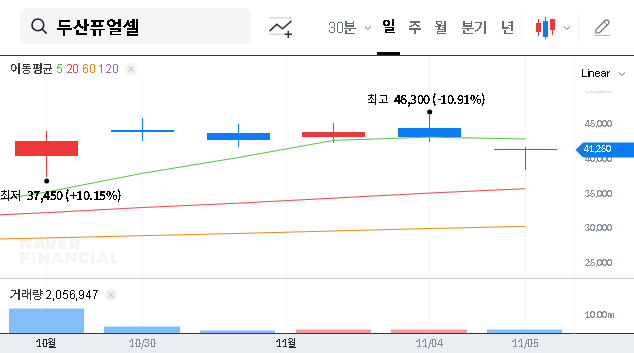
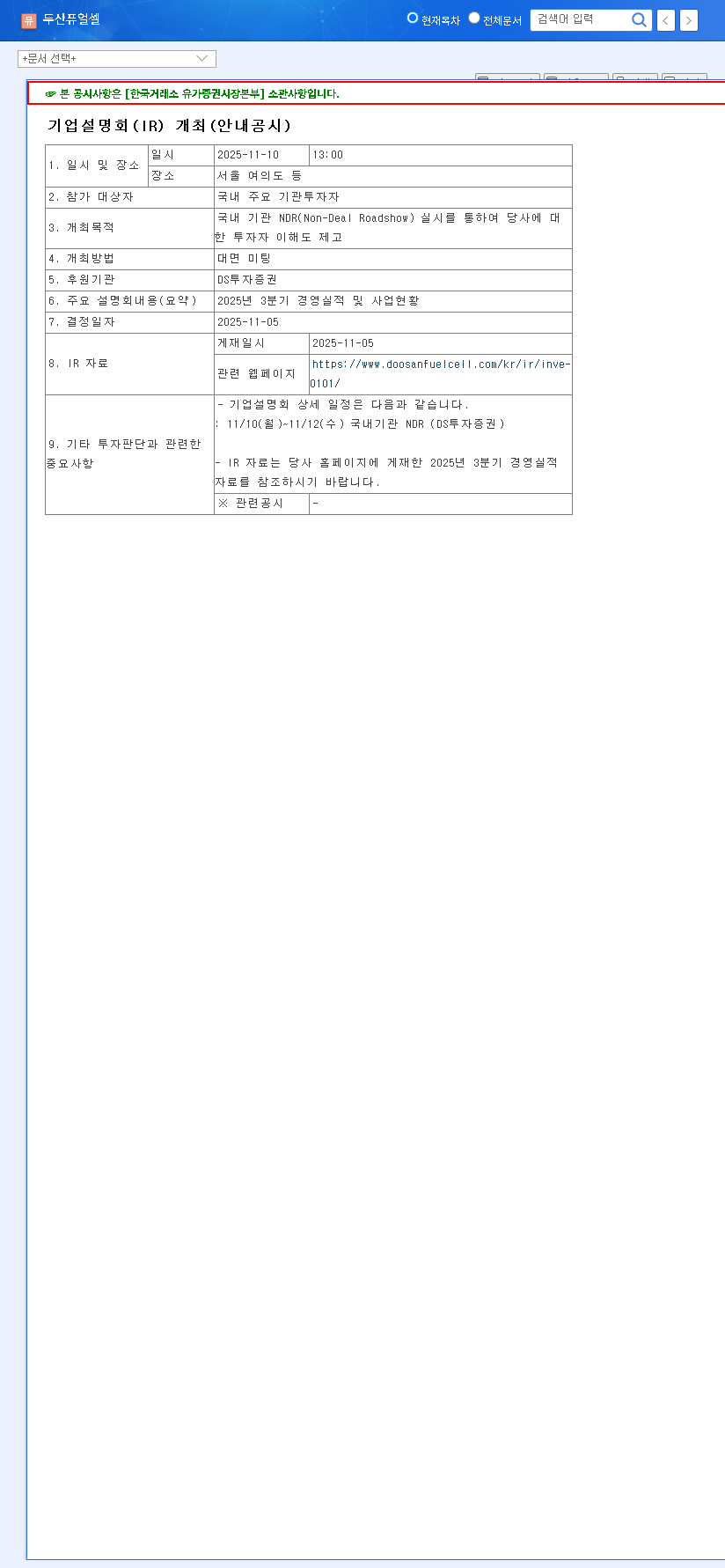
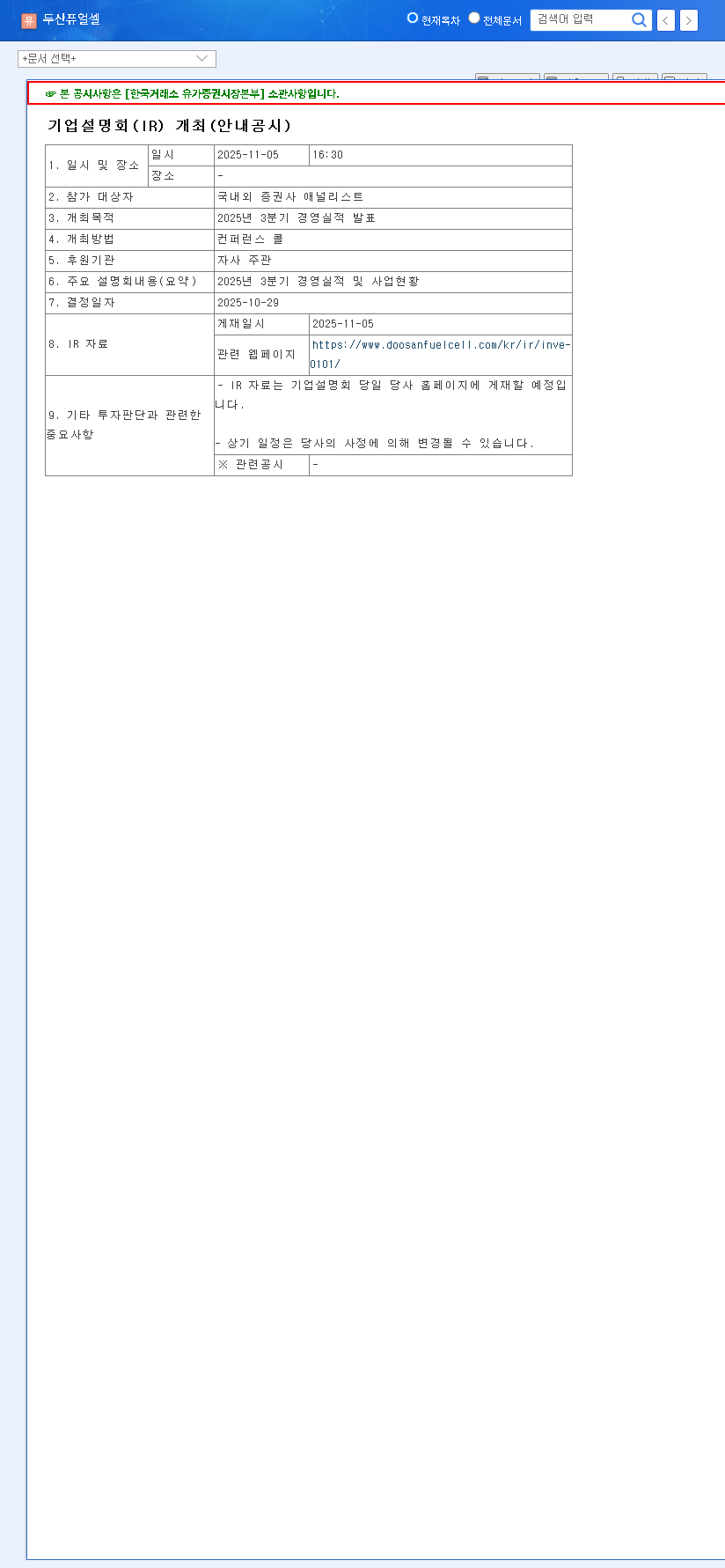
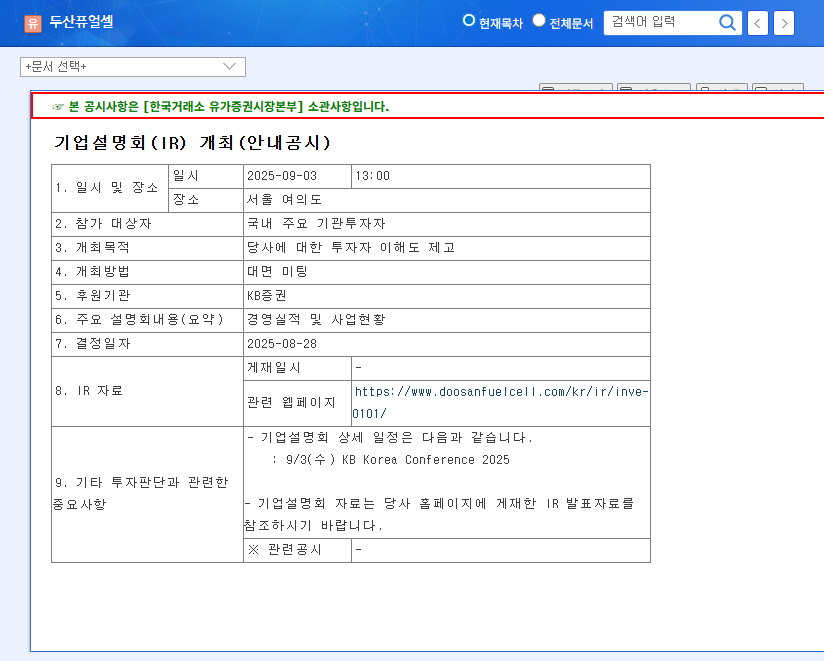
    Doosan Fuel Cell Co., Ltd. has officially scheduled its Doosan Fuel Cell IR event for domestic institutional investors on November 10, 2025, at 1:00 PM. The primary agenda is to present the Q3 2025 management performance and provide a detailed business status update. This event is a crucial platform for the company to address the underperformance seen in the first half of the year and to articulate a clear, actionable plan for recovery and future expansion. The official announcement can be reviewed in the company’s disclosure. (Source: Official Disclosure).

    A Deep Dive into Doosan Fuel Cell’s Current State

    Business Model & Competitive Edge

    Doosan Fuel Cell has long been a leader in the Korean power generation hydrogen fuel cell market, specializing in Phosphoric Acid Fuel Cell (PAFC) technology. This established technology provides stability and versatile fuel utilization, giving the company a strong foothold. However, recognizing the market’s evolution, the company is making strategic pivots:

    • Portfolio Diversification: An equity investment in HyAxios Motors signals a serious commitment to entering the burgeoning eco-friendly commercial vehicle market, reducing reliance on stationary power generation.
    • Future-Proofing with SOFC Technology: The acquisition of next-generation Solid Oxide Fuel Cell (SOFC) technology and the construction of a 50MW production facility are critical for long-term growth and competing on a global scale. You can learn more about this technology in our guide, A Deep Dive into SOFC vs. PAFC Technology.

    Financial Health Under Scrutiny

    The H1 2025 financial report painted a challenging picture. Revenue plummeted to 228.2 billion KRW (a 44.7% decrease YoY), while the operating loss widened to -13.5 billion KRW. This performance raises significant questions about inventory management (358.7 billion KRW in assets) and debt, with the debt-to-equity ratio climbing to 153.8%. A clear strategy to improve financial discipline will be non-negotiable for investors at the IR event.

    Investors will be looking past the promises of future technology and scrutinizing the balance sheet. A credible plan to manage debt and improve operational efficiency is just as important as the roadmap for SOFC technology.

    Macro-Environment and Policy Tailwinds

    It’s not all headwinds. The broader market offers several opportunities. Government policies like the Clean Hydrogen Portfolio Standard (CHPS) are creating a favorable domestic market. Globally, the push towards a hydrogen economy, as outlined by organizations like the International Energy Agency (IEA), provides a long-term tailwind. Furthermore, stabilizing interest rates could ease borrowing costs, providing some financial relief.

    Potential IR Impact on Doosan Fuel Cell Stock

    The upcoming Doosan Fuel Cell IR event is a double-edged sword, presenting both significant opportunities and risks.

    Opportunities (Potential Upside)

    • Restoring Investor Confidence: A transparent explanation for recent struggles coupled with a robust improvement plan could significantly boost sentiment.
    • Highlighting Future Value: A detailed roadmap for the commercialization of SOFC technology and the new vehicle venture can shift the narrative from current losses to future potential.
    • Synergy with Policy: Demonstrating alignment with national and global hydrogen policies can unlock perceived value and de-risk the business model.

    Risks (Potential Downside)

    • Magnifying Poor Performance: If Q3 results show a continuation of the negative trend without a clear path to profitability, investor concerns will intensify.
    • Vague Strategic Vision: A lack of concrete details on financial management or competitive strategy could be interpreted as a lack of direction, further damaging the stock.

    Investor Checklist: Key Watch Points

    Investors should meticulously evaluate the information presented at the IR, focusing on these five critical areas:

    1. 1.Q3 Performance & Outlook: Are there tangible signs of a turnaround in the core business?
    2. 2.Financial Improvement Plan: What are the specific steps and timelines for reducing inventory and improving the debt ratio?
    3. 3.SOFC Commercialization Roadmap: What is the realistic timeline for revenue generation from the new SOFC technology?
    4. 4.Competitive Strategy: How will Doosan differentiate itself as global competition in the hydrogen fuel cell space heats up?
    5. 5.Capital Allocation: How will the company balance investment in future growth with the need for current financial stability?

    In conclusion, the Doosan Fuel Cell IR event is a watershed moment. The company’s ability to deliver a clear, credible, and convincing message that addresses its current challenges while painting a compelling vision for the future will be paramount in determining the trajectory of its stock and its place in the rapidly evolving energy landscape.

    (336260) Doosan Fuel Cell Stock: 2025 IR Event Analysis & SOFC Outlook 관련 이미지
  • (336260) Doosan Fuel Cell Q3 2025 Earnings Shock: Stock Analysis & Future Outlook

    (336260) Doosan Fuel Cell Q3 2025 Earnings Shock: Stock Analysis & Future Outlook

    The latest Q3 2025 preliminary report from Doosan Fuel Cell has sent a clear message to the market: the path to a hydrogen-powered future is fraught with financial turbulence. Once a beacon for the burgeoning hydrogen economy, the company’s performance fell drastically short of expectations, raising critical questions for current and potential investors. The report, officially filed on November 5, 2025 (see the Official Disclosure), reveals widening losses and plummeting revenue, casting a shadow over its short-term prospects. This comprehensive analysis will dissect the Doosan Fuel Cell earnings report, explore the underlying causes, and provide a strategic outlook on what this means for the company’s stock and the broader hydrogen fuel cell investment landscape.

    The Numbers Don’t Lie: A Breakdown of the Q3 Earnings Shock

    The gap between market consensus and reality was stark. Doosan Fuel Cell’s preliminary Q3 2025 results revealed a significant deterioration in its financial health, missing targets across all key metrics. This performance continues a troubling trend of financial decline observed throughout 2025.

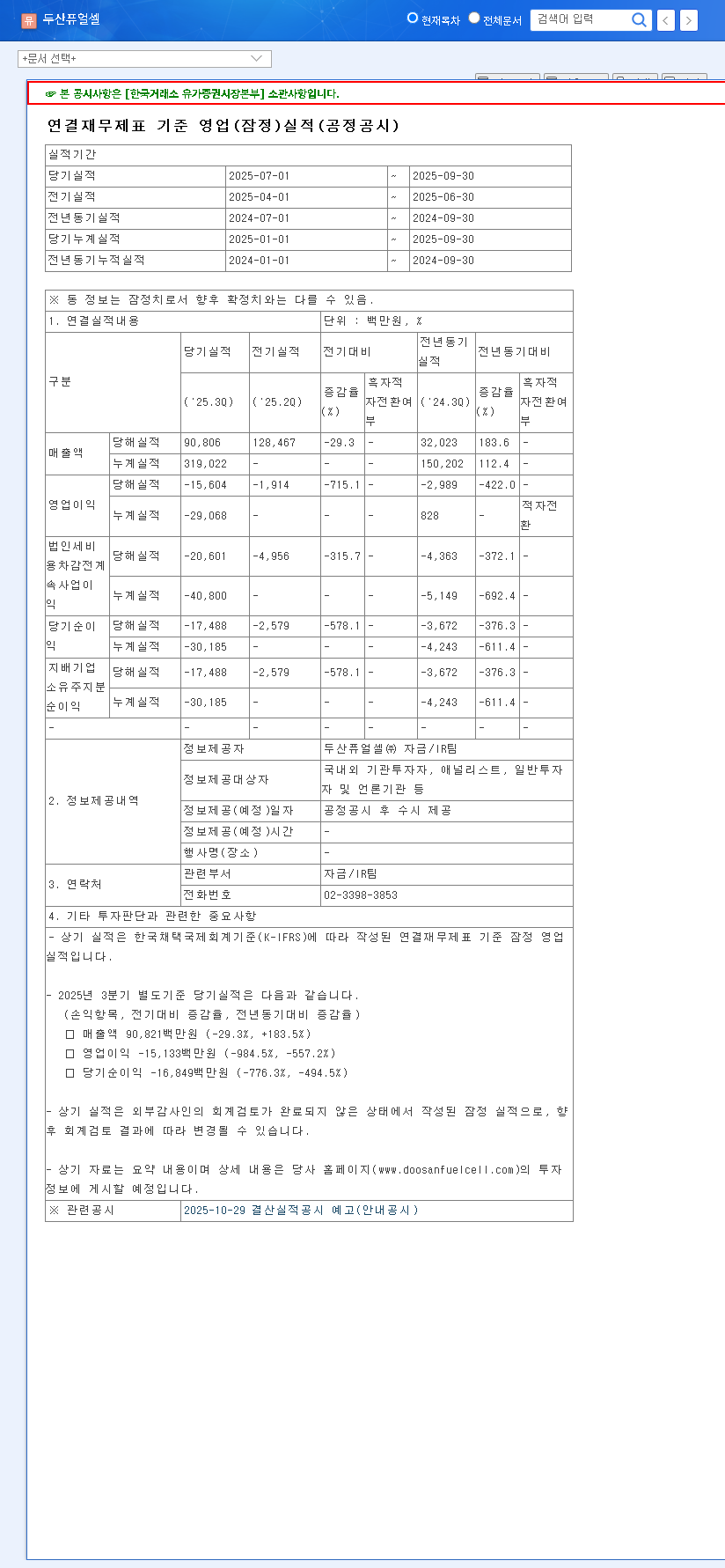
    • Revenue: Clocked in at KRW 90.8 billion, a staggering 31.0% below the projected KRW 131.1 billion.
    • Operating Loss: Widened to KRW -15.6 billion, a full 100% worse than the anticipated loss of KRW -7.8 billion.
    • Net Loss: Ballooned to KRW -17.5 billion, a shocking 298% deviation from the estimated loss of KRW -4.4 billion.

    This isn’t an isolated incident. The financial trajectory from late 2024 through 2025 shows a pattern of revenue contraction and persistent unprofitability, creating significant headwinds for the Doosan Fuel Cell stock price.

    Unpacking the Underperformance: Key Factors at Play

    Several internal and external factors converged to create this perfect storm of poor performance. Understanding these is key to assessing the company’s ability to execute a turnaround.

    Internal Headwinds and Financial Burdens

    The company’s balance sheet reveals significant stress. A high debt-to-equity ratio of 153.8% and a net debt-to-equity ratio of 78.0% signal a heavy reliance on borrowing. This is compounded by an inventory balance of KRW 358.7 billion, which accounts for nearly 30% of total assets and suggests potential issues with sales velocity or production management. These persistent losses, coupled with necessary investments in R&D and new business lines like SOFC technology, are straining financial resources.

    External Macroeconomic Pressures

    The global economic climate has been unforgiving. Volatility in EUR/KRW and USD/KRW exchange rates directly impacts the profitability of overseas operations and component sourcing. Furthermore, aggressive interest rate hikes by central banks in the US, Europe, and Korea have significantly increased the cost of capital, making Doosan’s high debt levels even more perilous. Fluctuating prices for key raw materials add another layer of uncertainty to production costs and profit margins.

    While the short-term outlook is challenging, Doosan Fuel Cell’s long-term thesis remains tied to the undeniable global shift towards clean energy. The key is separating temporary financial strain from permanent structural flaws.

    The Long-Term Vision: Growth Catalysts on the Horizon

    Despite the bleak quarterly report, it would be shortsighted to dismiss the company’s future potential. Several powerful tailwinds could propel Doosan Fuel Cell forward in the coming years.

    • Government Support & Market Growth: Pro-hydrogen policies and the establishment of a hydrogen power bidding market in Korea provide a stable demand foundation. This regulatory support is crucial for the entire industry.
    • Technological Advancement (SOFC): The completion of new Solid Oxide Fuel Cell (SOFC) production facilities is a major milestone. SOFC technology offers higher efficiency and is a key next-generation growth engine for power generation and marine applications. For more on this technology, you can consult authoritative resources like the U.S. Department of Energy.
    • Robust Order Backlog: A substantial order backlog of over KRW 2 trillion, primarily in long-term maintenance contracts, offers a degree of revenue stability and visibility.
    • Market Diversification: Strategic expansion into new markets like China and ventures into eco-friendly commercial vehicles represent promising new revenue streams.

    Investor Outlook: A Cautious Approach to Doosan Fuel Cell Stock

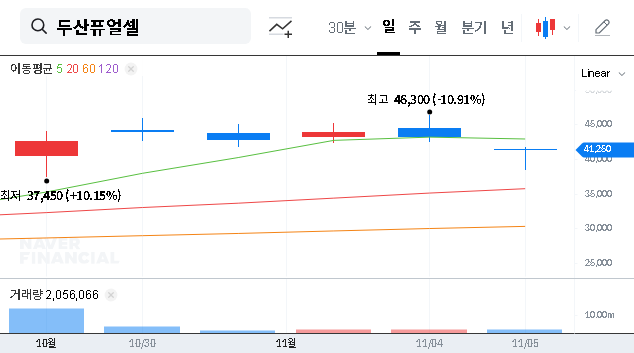
    In the immediate aftermath of such disappointing Doosan Fuel Cell earnings, investors should brace for downward pressure on the stock price. Market sentiment will likely be negative until the company can demonstrate a clear path to profitability and financial stability. A long-term hydrogen fuel cell investment requires patience, but also a critical eye on execution.

    Key Metrics to Monitor Moving Forward

    Investors should adopt a cautious but watchful stance. Keep a close eye on the following indicators in upcoming quarters to gauge whether a turnaround is materializing. For a broader perspective, you might also read our guide on How to Analyze Green Energy Stocks.

    • Profitability Trajectory: Can the company stem the tide of losses and show a clear path to positive operating income?
    • Financial Health: Are there concrete plans and actions to reduce the debt-to-equity ratio and improve liquidity?
    • New Business Performance: Are new ventures, particularly SOFC production and sales, beginning to contribute meaningfully to the top line?
    • Order Intake: Is the company winning new orders at a healthy rate to replenish its backlog and fuel future growth?

    Disclaimer: This analysis is for informational purposes only and is based on publicly available information. All investment decisions are the sole responsibility of the investor.

    (336260) Doosan Fuel Cell Q3 2025 Earnings Shock: Stock Analysis & Future Outlook 관련 이미지
  • (336260) Doosan Fuel Cell Q3 2025 IR: A Deep Dive for Investors & Future Outlook

    (336260) Doosan Fuel Cell Q3 2025 IR: A Deep Dive for Investors & Future Outlook

    As the global energy landscape shifts, investors are closely watching leaders in the hydrogen economy. The upcoming Doosan Fuel Cell IR (Investor Relations) conference, scheduled for November 5, 2025, is a pivotal event. This briefing will not only reveal the company’s Q3 2025 earnings but also offer a critical window into its strategic direction, future growth engines, and resilience in a challenging market. For anyone considering a Doosan Fuel Cell investment, this analysis will break down what to expect, the key metrics to watch, and how to interpret the company’s vision for the future.

    This IR event is more than just numbers; it’s a test of Doosan Fuel Cell’s ability to navigate economic headwinds while executing its ambitious long-term growth strategy centered on next-generation fuel cell technology.

    The High Stakes of the Q3 2025 Doosan Fuel Cell IR

    Following a mixed semi-annual report that showed revenue growth but a notable operating loss, the market’s spotlight is firmly on profitability. The primary question on every investor’s mind is whether Doosan Fuel Cell can turn the corner in Q3. This IR must address the root causes of the previous loss—such as rising raw material costs and heavy R&D spending—and provide a clear, convincing path back to profitability. The company’s credibility hinges on its ability to demonstrate effective cost management and operational efficiency. You can view the company’s latest financial statements via their Official Disclosure on DART.

    Core Business Analysis: Strengths vs. Risks

    A sound Doosan Fuel Cell investment decision requires a balanced view of its fundamental factors. The company boasts significant strengths but also faces undeniable market risks that must be managed proactively.

    Key Strengths to Consider

    • Robust Order Backlog: A massive KRW 2.0456 trillion backlog, with the majority in long-term maintenance contracts, provides exceptional revenue visibility and stability.
    • Future Growth Engines: Aggressive investment in high-potential areas, particularly Solid Oxide Fuel Cell (SOFC) production and the eco-friendly commercial vehicle market, positions the company for the next wave of the hydrogen economy.
    • Market Dominance: As the established leader in South Korea’s power generation fuel cell market, Doosan leverages deep technological expertise and a proven track record. The growth of the global hydrogen economy is a major tailwind.

    Headwinds and Potential Risks

    • Profitability Concerns: The H1 2025 operating loss of KRW 13.5 billion is a major red flag. The IR must provide a clear strategy for mitigating raw material costs and controlling R&D expenditures without stifling innovation.
    • Macroeconomic Volatility: With significant foreign currency transactions and debt, the company is exposed to exchange rate fluctuations and rising global interest rates, which could further squeeze margins.

    Potential Stock Impact: Bull vs. Bear Scenarios

    The IR announcement will likely act as a major catalyst for the stock. A bullish outcome would involve a surprise return to profitability, concrete timelines for SOFC mass production, and a strong outlook that exceeds analyst expectations. Conversely, a bearish scenario would be characterized by continued losses, vague updates on new ventures, and a cautious or negative outlook on the macroeconomic environment. Investors should be prepared for volatility following the event, as detailed in our guide to investing in renewable energy stocks.

    Investor Action Plan: Key Questions for the IR

    To make an informed decision, focus your analysis of the Doosan Fuel Cell IR on these critical questions:

    • Path to Profitability: What specific cost-saving measures have been implemented? Is the Doosan Fuel Cell Q3 earnings report showing a positive trend in operating margin?
    • Growth Engine Progress: Are there firm dates for the SOFC factory launch? What is the go-to-market strategy for commercial vehicle fuel cells? Are there any new partnerships or contracts to announce?
    • Risk Management: How is the company hedging against currency and interest rate risks? What is management’s outlook on supply chain stability for key materials?

    Ultimately, this IR is a crucial moment for Doosan Fuel Cell to reassure the market. By carefully analyzing their presentation and financials, you can better position your portfolio and make a strategic investment decision aligned with your long-term goals. We wish you success in your analysis and investment journey.

    (336260) Doosan Fuel Cell Q3 2025 IR: A Deep Dive for Investors & Future Outlook 관련 이미지
  • LTC Convertible Bond Issuance: Short-term Pain, Long-term Gain?


    LTC Convertible Bond Issuance: Short-term Pain, Long-term Gain? 대표 차트 이미지


    What’s Happening? LTC Announces Convertible Bond Issuance

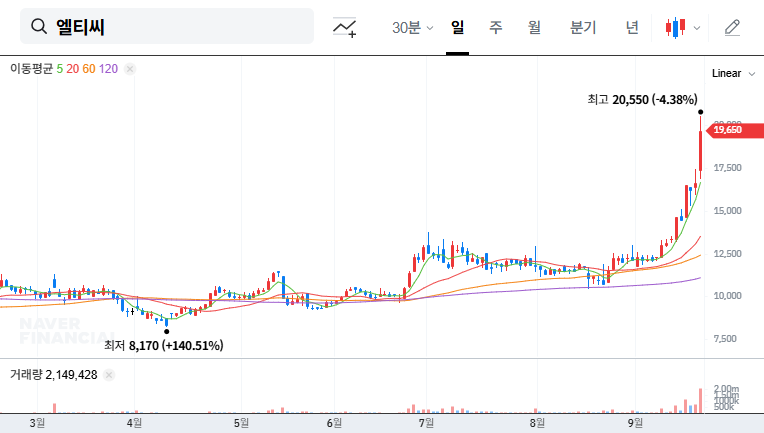
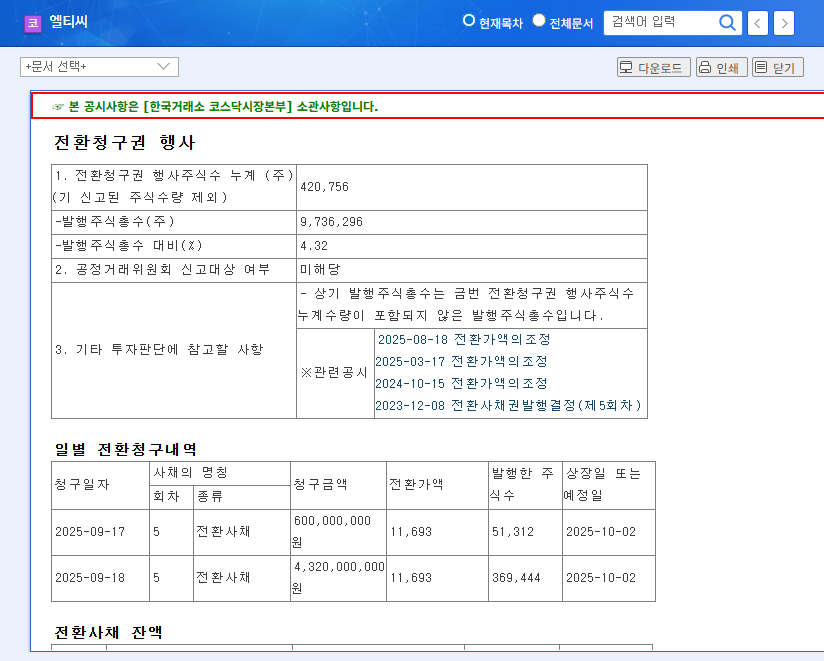
    LTC announced a new convertible bond issuance on September 18, 2025. Bondholders are exercising their conversion rights, leading to the issuance of 420,756 new shares. This represents 4.32% of the current market capitalization. The scheduled issuance date is October 2, 2025, with a conversion price of ₩11,693. The lower conversion price compared to the current stock price (₩19,650) raises concerns about potential profit-taking.

    Why the Issuance? LTC’s Financial Strategy

    LTC achieved a turnaround in the first half of 2025, demonstrating positive fundamentals. The company has secured growth momentum based on strong performance in its equipment division and the potential of new businesses (SOFC, OLED materials). This convertible bond issuance is interpreted as a strategy to improve financial structure by converting debt into equity and to enhance profitability by reducing interest expenses.

    What’s the Impact? Short-term Pain vs. Long-term Gain

    • Short-term Impact: The increased supply of shares and potential profit-taking may exert downward pressure on the stock price in the short term.
    • Long-term Impact: The issuance is expected to improve financial health by reducing debt and increasing capital, and enhance profitability by lowering interest expenses. Considering LTC’s solid fundamentals and growth potential, there is a possibility of stock price recovery in the long run.

    What Should Investors Do? Prudent Approach and Long-term Perspective

    The investment recommendation is ‘Neutral’ or ‘Hold’. Investors should approach with caution, mindful of short-term price volatility. Those who believe in LTC’s growth potential may consider a dollar-cost averaging strategy in case of price declines. Continuous monitoring of post-conversion stock movements, new business performance, and industry trends is crucial.


    Frequently Asked Questions (FAQ)

    What are convertible bonds?

    Convertible bonds are a type of debt security that gives the holder the option to convert the bond into a predetermined number of shares of the issuer’s common stock.

    Does LTC’s convertible bond issuance only have negative impacts on its stock price?

    In the short term, increased share supply can put downward pressure on the stock price. However, in the long term, improved financial structure is expected, and depending on the company’s growth, there is a possibility of a stock price increase.

    Should I invest in LTC?

    Investment decisions should be based on your own judgment. This analysis is not investment advice, and investment involves inherent risks.


    LTC Convertible Bond Issuance: Short-term Pain, Long-term Gain? 관련 이미지
    LTC Convertible Bond Issuance: Short-term Pain, Long-term Gain? 관련 이미지


  • LTC Stock Forecast: Analyzing Major Shareholder Stake Changes and Future Investment Strategies

    LTC Stock Forecast: Analyzing Major Shareholder Stake Changes and Future Investment Strategies 대표 차트 이미지

    1. What Happened? LTC Special Relationship Holder Stake Change Announcement

    The stake held by Choi Ho-seong and other special relationship holders in LTC has decreased from 30.65% to 30.18%. This decrease is due to various reasons, including on-market transactions, executive retirements, and changes in stock collateral loan agreements. Choi Ho-seong himself disposed of 18,967 shares through the exercise of CB call options.

    2. Why? LTC Fundamental Analysis and Market Conditions

    LTC experienced sluggish performance in the first half of 2025. Both operating profit and net income decreased due to declining sales in the semiconductor and FPD materials/equipment sectors and increased SG&A expenses. Currently, uncertainties such as a slowdown in the IT industry, exchange rate volatility, and rising raw material prices persist.

    3. So What? LTC Stock Forecast and Investment Strategies

    While there is a possibility of investor sentiment contracting in the short term due to the stake decrease, the mid- to long-term stock price trend depends on LTC’s fundamental recovery and the performance of its new businesses. Securing new growth engines such as QD-OLED, semiconductor equipment, OLED PR, and SOFC will be key variables. Ensuring management stability can also affect the stock price.

    4. Investor Action Plan

    • Closely monitor LTC’s earnings improvement trend and the progress of its new businesses.
    • Risk management is necessary in response to changes in macroeconomic variables and industry conditions.
    • Be mindful of the possibility of further stake changes and management changes.

    Frequently Asked Questions

    Q. Does a decrease in major shareholder stake always lead to a stock price decline?

    A. Not necessarily. Various factors, such as the reason for the stake decrease, the company’s fundamentals, and market conditions, affect the stock price. As in the case of LTC, reasons such as exercising CB call options can act as negative factors, but in the long run, the company’s growth potential and management stability have a more significant impact.

    Q. What is the expected outlook for LTC’s stock price?

    A. While there is high uncertainty in the short term, there is a possibility of mid- to long-term growth depending on the performance of new businesses such as QD-OLED and semiconductor equipment, and whether fundamentals improve. Risk management is crucial when investing.

    Q. What should investors be aware of when investing in LTC?

    A. It’s essential to consider various factors comprehensively, including the trend of earnings improvement, the progress of new businesses, the possibility of management changes, and macroeconomic variables. Consulting with an expert before investing is also a good approach.

    LTC Stock Forecast: Analyzing Major Shareholder Stake Changes and Future Investment Strategies 관련 이미지
    LTC Stock Forecast: Analyzing Major Shareholder Stake Changes and Future Investment Strategies 관련 이미지
  • Doosan Fuel Cell IR Analysis: Overcoming Challenges and Investment Strategies

    Doosan Fuel Cell IR Analysis: Overcoming Challenges and Investment Strategies 대표 차트 이미지

    1. What Happened? H1 2025 Performance Review

    Doosan Fuel Cell reported a decline in revenue for the first half of 2025, down 44.6% year-on-year to 228.2 billion KRW, with an operating loss of 13.5 billion KRW. This is attributed to a combination of factors, including rising raw material prices and increased production costs. Concerns about financial stability are also rising, as the debt-to-equity ratio increased to 153.8%.

    2. Why Did This Happen? Reasons for Underperformance

    The decline in revenue is primarily due to sluggish sales of fuel cell main units and long-term maintenance services. The operating loss is a result of decreased revenue coupled with rising raw material prices and increased production costs. Furthermore, the company’s high dependence on its top four clients (64.9% of total sales) makes it vulnerable to changes in demand from specific customers.

    3. What’s the Plan? Key IR Focus and Expected Outcomes

    Doosan Fuel Cell intends to use this IR to provide a clear explanation of its recent underperformance, highlighting its new business initiatives and future vision, including its entry into the eco-friendly commercial vehicle market (HyAxiom Motors acquisition) and securing SOFC technology. They are also expected to announce financial restructuring plans and risk management strategies. A successful IR could lead to stabilized investor sentiment, create momentum for a stock rebound, and attract potential investors.

    4. What Should Investors Do? Investment Strategies

    Investors should carefully review the information presented at the IR and assess the company’s future growth potential based on management’s explanations and responses during the Q&A session. Pay close attention to the progress of new businesses, profitability projections, and the feasibility of financial restructuring plans. It’s crucial to make investment decisions based on a comprehensive evaluation of both positive external factors, such as the growth potential of the hydrogen industry and government policy support, and the company’s fundamentals and future strategies.

    What is Doosan Fuel Cell’s main business?

    Doosan Fuel Cell manufactures and sells power generation fuel cell systems based on PAFC (Phosphoric Acid Fuel Cell) technology. They hold the largest market share in the domestic power generation fuel cell market. Recently, they have been diversifying their business by investing in eco-friendly commercial vehicles and SOFC (Solid Oxide Fuel Cell) technology development.

    How did Doosan Fuel Cell perform in the first half of 2025?

    Doosan Fuel Cell recorded revenue of 228.2 billion KRW (down 44.6% year-on-year) and an operating loss of 13.5 billion KRW in the first half of 2025.

    What are the key things to watch for in this IR?

    Key points of interest include the analysis of the reasons for underperformance, the presentation of new business initiatives and future vision, and the proposed financial restructuring plan. It’s especially important to look for information regarding the specific roadmap and profitability outlook for new businesses, such as the eco-friendly commercial vehicle venture and SOFC technology development.

    Doosan Fuel Cell IR Analysis: Overcoming Challenges and Investment Strategies 관련 이미지
  • Doosan Fuel Cell Wins $400M Contract! 🚀 Short-term Boost or Long-term Growth?

    1. The $400M Deal: What Happened?

    On August 22, 2025, Doosan Fuel Cell signed a $400 million fuel cell system supply contract with Samchully ES. This represents a significant 13.45% of the company’s 2024 consolidated revenue, reaffirming Doosan’s strong presence in the domestic green energy market.

    2. Why is This Contract Important?

    This contract signifies more than just a single order. It carries several key implications:

    • Hydrogen Economy Expansion: Aligning with the government’s active promotion of the hydrogen economy, this deal highlights the growth potential of the fuel cell market.
    • New Customer Acquisition & Market Share Growth: The contract with Samchully ES broadens Doosan’s customer base and strengthens its market influence.
    • Expected Revenue Increase: While the immediate financial impact might be limited, the $400 million deal signals positive revenue growth and potential profitability improvement.

    3. So, What’s the Investment Strategy?

    Despite the positive aspects, investors should consider several risk factors:

    • Profitability Improvement: Continuous improvement in cost of sales and operating profit remains a crucial challenge.
    • Financial Stability: High debt ratio and vulnerability to exchange rate fluctuations warrant close monitoring.
    • External Environment Changes: Investors need to constantly monitor the impact of external factors, such as interest rates, exchange rates, and government policies.

    For short-term investors, close observation of stock price movements and potential follow-up orders after the announcement is crucial. Long-term investors should focus on profitability improvements, the growth potential of new businesses (SOFC, eco-friendly commercial vehicles), and the company’s ability to adapt to external environment changes.

    4. Key Checkpoints for Investors

    For a balanced investment decision, make sure to check the following:

    • ✔️ Cost management and pricing strategies for profitability improvement
    • ✔️ Growth potential of SOFC and eco-friendly commercial vehicle businesses
    • ✔️ Debt reduction plans and strategies for managing exchange rate volatility

    What are Doosan Fuel Cell’s main businesses?

    Doosan Fuel Cell primarily focuses on fuel cell power plants. They are also expanding into new businesses such as SOFC (Solid Oxide Fuel Cell) and eco-friendly commercial vehicles.

    How will this contract impact Doosan Fuel Cell’s stock price?

    It can act as a short-term catalyst for stock price appreciation. However, sustained growth depends on fundamental improvements and external market conditions.

    What are the key investment considerations?

    Investors should consider profitability, financial stability, exchange rate fluctuations, interest rate changes, and government policy shifts.

  • Dentium’s H1 2025 Earnings Disappoint: What’s Next for Investors?

    1. What Happened? Dentium’s H1 2025 Performance Review

    While Dentium achieved a total revenue of ₩159 billion in H1 2025, Q2 results significantly missed market projections. Revenue, operating profit, and net profit all fell short, with net profit particularly concerning at only 31% of the expected figure.

    2. Why the Underperformance? Key Factors to Consider

    • Missed Expectations: Q2’s weak performance significantly dampened market sentiment.
    • Currency Volatility: With substantial international revenue, Dentium is highly susceptible to exchange rate fluctuations.
    • Rising Interest Rates and Debt: High interest rates increase Dentium’s debt burden, impacting profitability.
    • New Business Investment Strain: Investments in the SOFC business are creating short-term financial pressure.
    • Increased Inventory: Rising inventory levels suggest potential sales slowdowns or overstocking, highlighting the need for improved inventory management.

    3. What’s Next? Outlook and Investment Strategy

    Short-term headwinds include the earnings miss and macroeconomic uncertainties. However, the continued growth of the dental business and the potential of the new SOFC business offer long-term growth drivers. Investors should focus on:

    • Careful analysis of the reasons behind the underperformance
    • Dentium’s strategy for mitigating currency and interest rate risks
    • Monitoring progress on the new SOFC business
    • Assessing inventory management efficiency

    4. Investor Action Plan

    Investors should avoid overreacting to short-term market fluctuations and focus on Dentium’s fundamentals and long-term growth potential. Continuous monitoring of company announcements and disclosures, along with seeking expert advice, is crucial.

    Frequently Asked Questions (FAQ)

    What is Dentium’s core business?

    Dentium is a global dental company that develops, manufactures, and sells dental implants and related products.

    What was the primary reason for the recent earnings disappointment?

    A combination of factors contributed, including Q2 results missing market expectations, currency volatility, rising interest rates, new business investment burdens, and increased inventory levels.

    What is the outlook for Dentium?

    While short-term uncertainty exists, Dentium’s growing dental business and the potential of its new SOFC business suggest positive long-term growth prospects.

    What should investors pay attention to?

    Investors should carefully consider the reasons behind the underperformance, Dentium’s strategy for managing currency and interest rate risks, the progress of its new SOFC business, and its inventory management efficiency.