Tag: Smart Logistics

  • (000120) CJ Logistics Earnings Analysis (Q3 2025): Profit Soars, But What’s Next for Investors?

    (000120) CJ Logistics Earnings Analysis (Q3 2025): Profit Soars, But What’s Next for Investors?

    This comprehensive CJ Logistics earnings analysis for Q3 2025 unpacks the latest financial results from the logistics giant. While a slight revenue dip caught some attention, the story of the quarter is one of remarkable profitability, with both operating and net profit handily beating market expectations. But what does this mean for the future of CJ Logistics stock and its long-term strategy? We’ll explore the growth drivers, underlying risks, and what investors should be monitoring closely in the dynamic global logistics landscape.

    Despite macroeconomic headwinds, CJ Logistics demonstrated significant operational resilience in Q3 2025, with net profit surging an impressive 37.8% above consensus forecasts, signaling a major win for its efficiency initiatives.

    CJ Logistics Q3 2025 Earnings: The Official Numbers

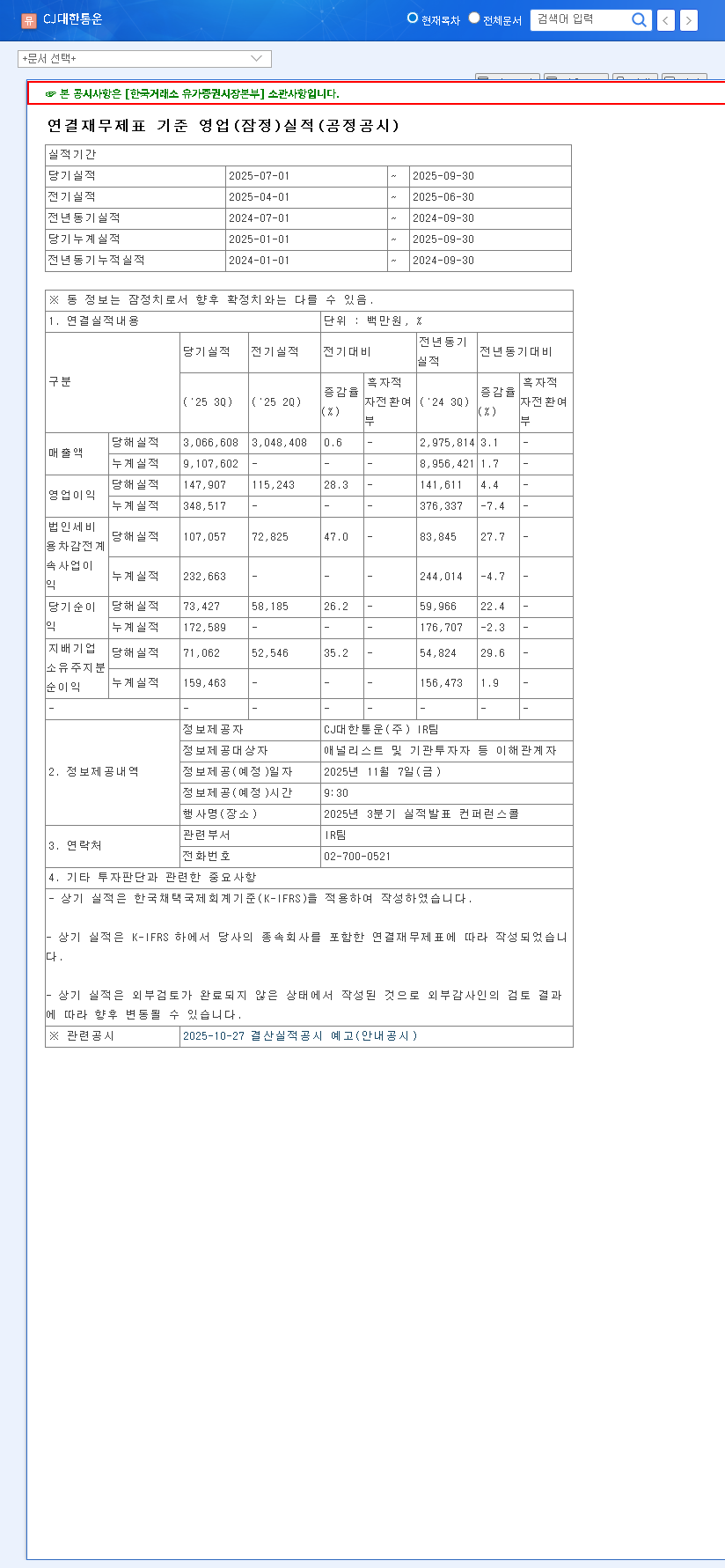
    On November 7, 2025, CJ Logistics released its preliminary third-quarter earnings report, which presented a mixed but ultimately positive picture of its financial health. The figures reveal a company adept at managing costs and maximizing profitability. The full details can be found in the company’s Official Disclosure (DART).

    • Revenue: KRW 3.0666 trillion, which was 1.4% below market expectations of KRW 3.1125 trillion.
    • Operating Profit: KRW 147.9 billion, a strong 6.5% above market expectations of KRW 138.9 billion.
    • Net Profit: KRW 71.1 billion, a significant 37.8% above market expectations of KRW 51.6 billion.

    The substantial beat in profitability metrics has been the focal point for analysts, suggesting that the company’s strategic focus on operational efficiency is paying significant dividends and strengthening its core business.

    Growth Drivers and Strategic Strengths

    Operational Excellence and Financial Stability

    A key theme in this CJ Logistics earnings analysis is the company’s internal strength. The impressive CJ Logistics profit figures are not accidental; they are the result of targeted initiatives to streamline operations and enhance margins. Furthermore, the company’s solid credit ratings (AA- corporate bond, A1 commercial paper) provide a foundation of financial stability. This is complemented by a growing commitment to ESG management, which is increasingly important for attracting long-term, institutional investors and improving its public image.

    Global Expansion and Technology Investment

    With overseas revenue accounting for 37.2% of the total, CJ Logistics has successfully established itself as a major global player. This diversification mitigates reliance on the domestic market and positions the company to capitalize on global trade trends. Crucially, the company is investing heavily in the future through its TES Logistics Technology Institute. By focusing on AI-driven route optimization, Big Data analytics for demand forecasting, and robotics for warehouse automation, CJ Logistics is building a technological moat that will be critical for staying ahead in the competitive logistics industry analysis reports often highlight.

    Key Risks and Headwinds to Monitor

    Despite the positive results, a prudent investor must also consider the challenges on the horizon. CJ Logistics faces several internal and external pressures that could impact future performance.

    Imbalanced Profitability and Sector Weakness

    While the global business segment is a revenue powerhouse, its operating profit margin remains lower than other segments. This points to intense price competition, geopolitical risks affecting supply chains, and rising operational costs in international markets. Closer to home, the construction segment has seen a significant profit decline, burdened by a downturn in the domestic construction market. This underperformance acts as a drag on the company’s overall growth and requires strategic attention.

    Financial and Macroeconomic Pressures

    The company’s debt ratio of 132.57% is a notable risk factor. In an environment of fluctuating interest rates, this level of debt could lead to higher financing costs. Moreover, as a global company, CJ Logistics is exposed to currency volatility. According to global economic reports from authoritative sources like Reuters, the persistent weakness of the Korean Won against major currencies can inflate the cost of servicing foreign currency-denominated debt and impact overall financial results. Proactive financial management will be critical to navigate these macroeconomic challenges.

    Investor Outlook and Strategic Guidance

    In the short term, the strong profit numbers from the CJ Logistics Q3 2025 report are likely to boost investor sentiment and provide positive momentum for the stock. The results clearly validate the management’s focus on profitability.

    For long-term value creation, however, investors should look beyond the headline numbers. The key will be monitoring how CJ Logistics addresses its strategic challenges. Can it improve margins in its global division? Can it successfully navigate the domestic construction downturn? How will it manage its debt load amid economic uncertainty? These are the questions that will define its trajectory.

    The company’s investments in smart logistics, as discussed in our piece on the future of logistics technology, will be a crucial differentiator. Ultimately, a successful investment thesis for CJ Logistics stock will depend on the company’s ability to pair technological innovation with disciplined financial management to overcome its current headwinds.
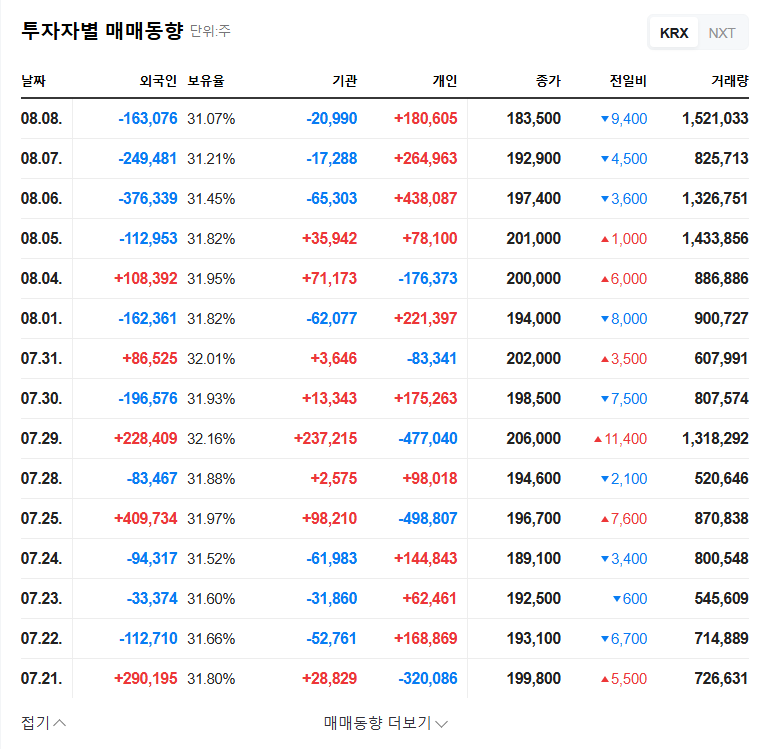
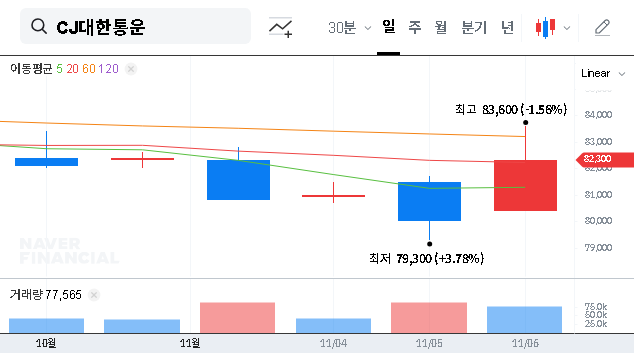
    (000120) CJ Logistics Earnings Analysis (Q3 2025): Profit Soars, But What's Next for Investors? 관련 이미지
  • (086280) Hyundai Glovis Stock Analysis (086280): Q3 Earnings Miss & Long-Term Investment Outlook

    (086280) Hyundai Glovis Stock Analysis (086280): Q3 Earnings Miss & Long-Term Investment Outlook

    This comprehensive Hyundai Glovis stock analysis dives into the company’s recent Q3 2025 earnings report, which fell short of market expectations. While the numbers may cause short-term concern for investors, a closer look reveals a strategic pivot towards long-term growth. We will dissect the financial results, evaluate the underlying fundamental strengths and risks, and outline a prudent investment strategy for navigating the current landscape.

    Is the recent dip in Hyundai Glovis earnings a warning sign, or does it present a strategic entry point for long-term investors who believe in the company’s future in smart logistics and green energy? Let’s explore the data.

    Deconstructing the Q3 2025 Earnings Miss

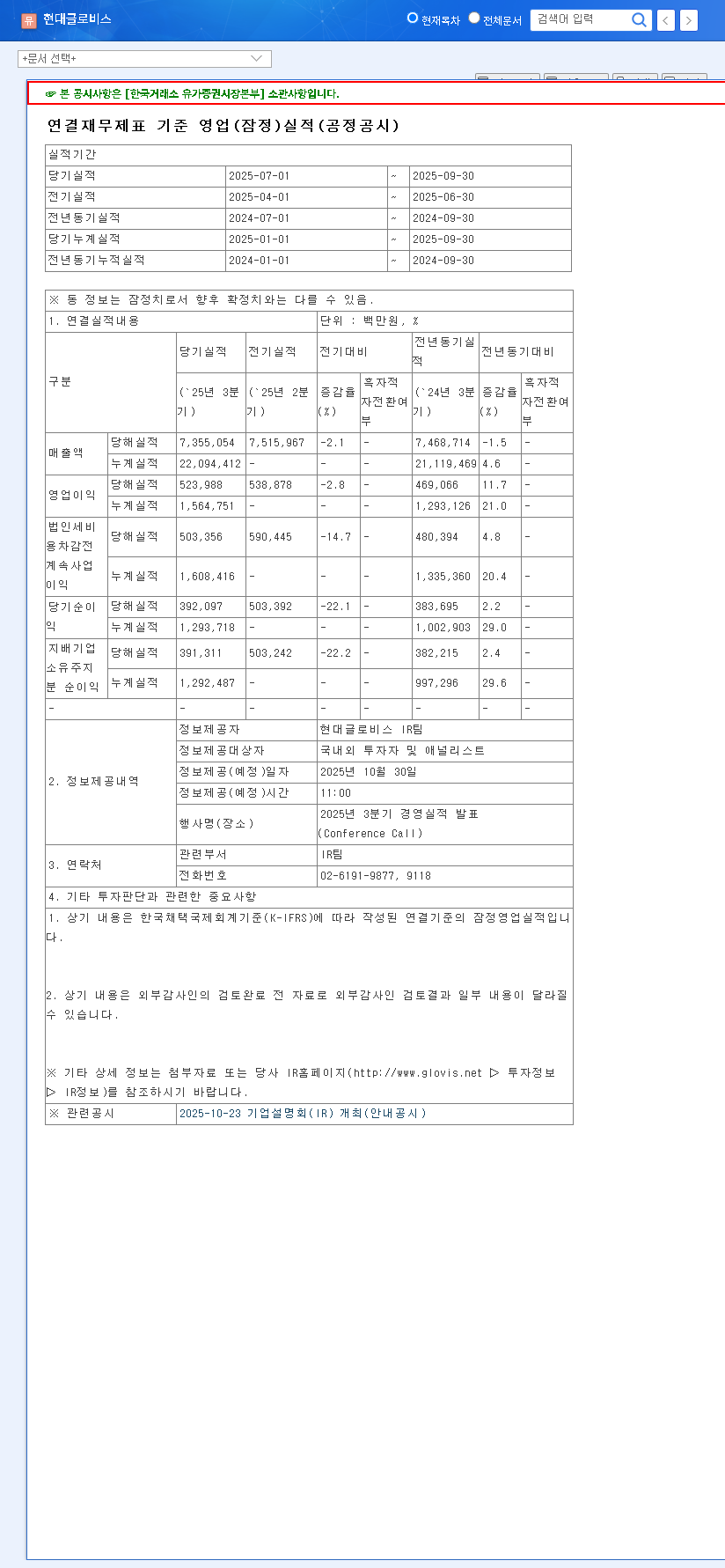
    On October 30, 2025, Hyundai Glovis released its provisional consolidated financial results, revealing a slight underperformance against analyst consensus. The market reacted with caution, particularly to the more significant drop in net profit.

    Here is a breakdown of the results compared to market estimates, as detailed in the Official Disclosure (DART):

    • Revenue: KRW 7,355.1 billion (Missed estimate of KRW 7,611.4 billion by -3.3%)
    • Operating Profit: KRW 524.0 billion (Missed estimate of KRW 530.3 billion by -1.2%)
    • Net Profit: KRW 391.3 billion (Missed estimate of KRW 428.1 billion by -8.6%)

    The shortfall, particularly in net profit, can be attributed to a combination of factors, including fluctuating global freight rates and increased initial investment costs for new business ventures. This suggests a strategic allocation of capital towards future growth, even at the expense of immediate profitability.

    Core Strengths: Building the Foundation for Future Growth

    Despite the short-term earnings pressure, a thorough Hyundai Glovis stock analysis must look beyond a single quarter. The company is aggressively positioning itself in high-growth sectors that promise substantial long-term returns.

    Strategic Expansion into High-Growth Areas

    Hyundai Glovis is not just a traditional logistics firm; it’s evolving into a future-focused mobility and energy solutions provider. Key initiatives include:

    • EV Battery Logistics & Recycling: Tapping into the circular economy, this venture addresses the entire lifecycle of EV batteries, a critical component of the sustainable energy transition. This aligns perfectly with the growth of its parent, Hyundai Motor Group. For more on this trend, see our guide to investing in the EV supply chain.
    • Smart Logistics Solutions: The acquisition of Altio enhances its capabilities in automated warehousing and AI-powered logistics, driving efficiency and offering high-margin services to third-party clients.
    • Clean Energy Shipping: Expanding its fleet and capabilities for LNG, hydrogen, and ammonia transport positions the company at the forefront of the global energy shift.

    Solid Financials and ESG Leadership

    The company’s stable credit ratings (Moody’s Baa1, S&P BBB+) provide a solid financial bedrock for these growth investments. Furthermore, its consistent inclusion in the DJSI World Index and high marks for climate change response (CDP ‘A’ rating) attract a growing pool of ESG-focused institutional capital, which can support the stock’s valuation over time.

    While the market may react to a single quarter’s data, savvy investors focus on the strategic capital allocation and structural changes that build long-term enterprise value. Hyundai Glovis’s investments in future-proof industries are a clear signal of its forward-looking strategy.

    Navigating Risks and Market Headwinds

    No investment is without risk. A balanced Hyundai Glovis investment thesis must acknowledge potential challenges:

    • Macroeconomic Sensitivity: As a global logistics provider, the company’s performance is tied to global trade volumes and economic health. A potential global slowdown, as tracked by institutions like The World Bank, could impact its core shipping and logistics segments.
    • New Business Uncertainty: While promising, new ventures in EV recycling and hydrogen transport carry execution risk and require significant upfront capital, which can continue to weigh on short-term profits.
    • Competitive Landscape: The logistics industry is fiercely competitive. Hyundai Glovis must continue to innovate to maintain its edge and protect its margins against both established players and new tech-driven disruptors.

    Investment Strategy: A Prudent Approach

    Given the crosscurrents of short-term weakness and long-term potential, a tiered investment strategy is advisable for the 086280 stock.

    • Short-Term (1-3 Months): A cautious, observational stance is warranted. The market may need time to digest the Hyundai Glovis earnings miss, and further price volatility is possible. Avoid chasing the stock and wait for a clear support level to form.
    • Mid-to-Long Term (1 Year+): For investors with a longer time horizon, price corrections could offer an attractive entry point. The strategy should be to ‘buy on dips,’ accumulating a position based on the long-term growth narrative. Key catalysts to monitor are the revenue growth and margin expansion in the new business segments.

    In conclusion, while the Q3 2025 earnings were underwhelming, they do not derail the compelling long-term story. The ongoing transformation of Hyundai Glovis into a comprehensive, future-oriented logistics and energy solutions company remains intact. Investors who can look past the immediate noise may be rewarded as these strategic initiatives begin to bear fruit and contribute meaningfully to the bottom line.

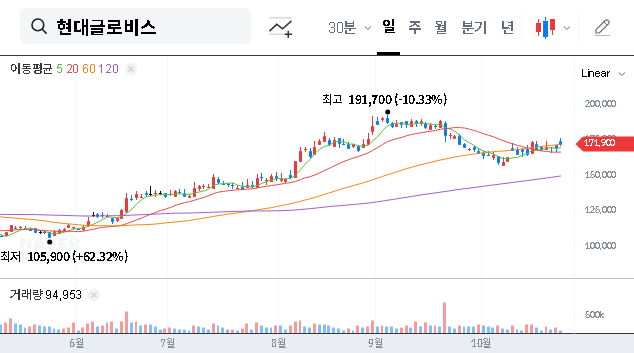
    (086280) Hyundai Glovis Stock Analysis (086280): Q3 Earnings Miss & Long-Term Investment Outlook 관련 이미지
  • Hyundai Glovis IR Analysis: Seizing Investment Opportunities (September 2025)


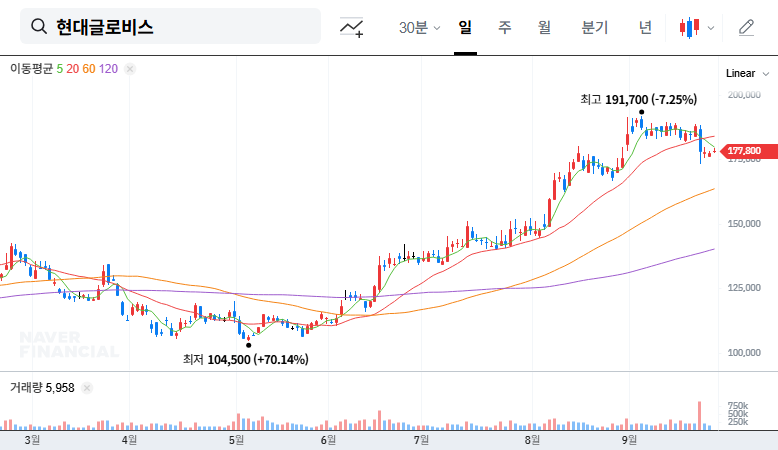
    Hyundai Glovis IR Analysis: Seizing Investment Opportunities (September 2025) 대표 차트 이미지


    What Happened? Hyundai Glovis Holds IR!

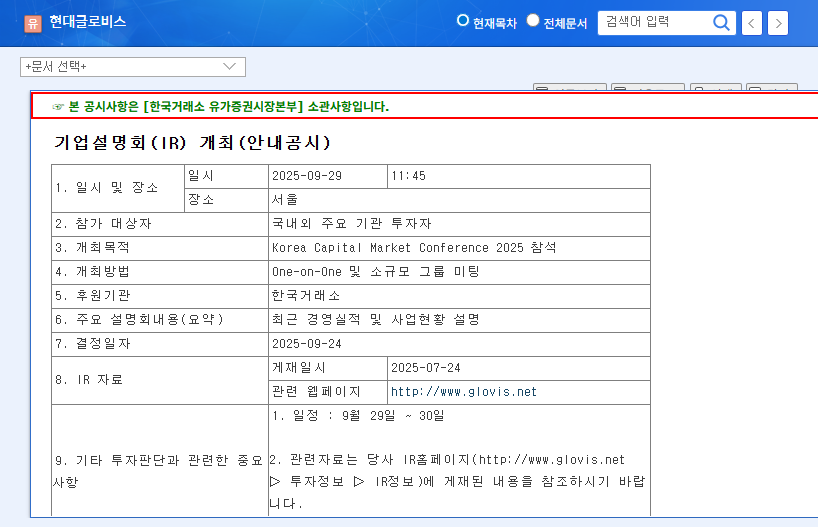
    Hyundai Glovis held its Investor Relations (IR) session on September 29, 2025, at the Korea Capital Market Conference 2025. The company presented its recent business performance and current status.

    Core Business and Future Growth Drivers?

    Hyundai Glovis demonstrates consistent growth based on a stable business portfolio, including integrated logistics, distribution and sales, and shipping. Notably, the close partnership with Hyundai Motor and Kia underpins the stable growth of its core business. Furthermore, the company is securing a foundation for sustainable growth through active investments in promising future industries such as EV battery recycling, smart logistics solutions, and low-carbon energy transportation.

    What Does This Mean for Investors?

    This IR provides investors with a valuable opportunity to evaluate Hyundai Glovis’ growth potential. The presentation of specific achievements and future visions in new business areas is expected to positively impact the stock price. The company’s robust financial soundness and shareholder-friendly policies also enhance its investment appeal. However, investors should also be mindful of potential risk factors such as global economic volatility, exchange rate and interest rate fluctuations, and regulatory changes related to EV batteries.

    What Should Investors Do?

    While maintaining a positive investment outlook, investment decisions should always be made prudently. It is crucial to continuously monitor changes in macroeconomic indicators, competitor trends, and regulatory changes when formulating investment strategies.


    Frequently Asked Questions (FAQ)

    What are Hyundai Glovis’ main businesses?

    Hyundai Glovis’ core businesses are integrated logistics, distribution and sales, and shipping. The company shows particular strength in the automotive logistics sector, based on its close collaboration with Hyundai and Kia.

    What are Hyundai Glovis’ future growth drivers?

    Hyundai Glovis pursues sustainable growth through investments in promising future industries such as EV battery recycling, smart logistics solutions, and low-carbon energy transport.

    What should investors be aware of?

    Continuous monitoring of external factors such as global economic volatility, exchange rate and interest rate fluctuations, and regulatory changes related to EV batteries is necessary.


    Hyundai Glovis IR Analysis: Seizing Investment Opportunities (September 2025) 관련 이미지


  • Hyundai Rotem Q2 2025 Earnings: Strong Performance and Future Outlook

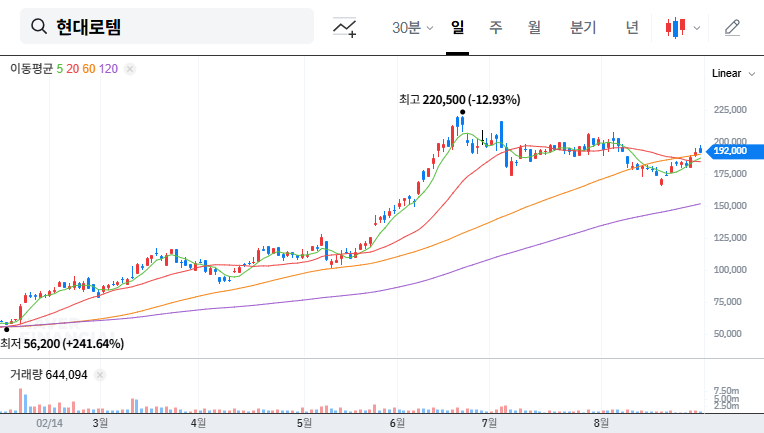
    Hyundai Rotem Q2 2025 Earnings: Strong Performance and Future Outlook 대표 차트 이미지

    What Happened?

    Hyundai Rotem announced its Q2 2025 earnings and key management plans on September 2, 2025. The company showed positive results in its core businesses: defense (K2 tank, wheeled armored vehicles), railway (GTX, high-speed rail), and eco-plant (hydrogen infrastructure, smart logistics).

    Why the Positive Results?

    The key drivers are strong fundamentals, secured growth engines, and a favorable market environment. Hyundai Rotem demonstrated financial strength with increased assets, decreased debt ratio, higher sales and operating profit, and record-high order backlog. Stable growth in defense and railway, coupled with the booming hydrogen economy, further strengthened its growth momentum.

    So, What About the Stock Price?

    While significant short-term volatility is not expected, the mid-to-long-term outlook is positive. The announcement of concrete business plans for future growth engines and overseas expansion strategies is expected to boost investor confidence. We maintain a ‘Buy’ or ‘Positive Outlook’ rating.

    Action Plan for Investors

    • Review IR Materials: Carefully examine the details of overseas export contracts, hydrogen project pipelines, etc.
    • Consult Experts: Minimize risks by consulting with financial professionals before making investment decisions.
    • Maintain a Long-Term Perspective: Focus on the long-term growth potential rather than short-term fluctuations.

    Frequently Asked Questions

    What are Hyundai Rotem’s main businesses?

    Defense (Defense Solutions), Railway (Rail Solutions), and Eco-Plant (hydrogen infrastructure and smart logistics) are the main business areas.

    What are the key takeaways from this IR presentation?

    The key takeaways are the announcement of strong Q2 2025 earnings and strategies for securing future growth engines.

    What should investors consider when investing in Hyundai Rotem?

    Investors should consider factors such as the global economic slowdown, geopolitical risks, and the growth rate of new businesses.

    Hyundai Rotem Q2 2025 Earnings: Strong Performance and Future Outlook 관련 이미지
    Hyundai Rotem Q2 2025 Earnings: Strong Performance and Future Outlook 관련 이미지
  • TaeWoong Logistics Announces ₩12.4B Share Buyback: What’s Next for the Stock?

    What Happened?

    TaeWoong Logistics announced on August 26, 2025, its decision to repurchase and retire 2,570,833 shares of its convertible preferred stock. The total value of the buyback is estimated at ₩12.4 billion, equivalent to approximately 10.18% of the company’s current market cap.

    Why the Buyback?

    Share buybacks are typically implemented to enhance shareholder value. By reducing the number of outstanding shares, the value of each remaining share increases. This also improves the company’s capital structure, sending a positive signal to investors and potentially boosting market sentiment.

    What Does This Mean for the Stock Price?

    Positive Impacts

    • Increased Shareholder Value: Fewer shares outstanding lead to higher value per share.
    • Improved Financial Structure: Potential for a lower debt-to-equity ratio.
    • Positive Investor Sentiment: Share buybacks are often viewed as shareholder-friendly.

    Negative Impacts and Considerations

    • Impact on Cash Flow: Outflow of ₩12.4 billion in cash.
    • Potential Constraint on Future Growth Investments (Low): Possible reduction in investment resources, but unlikely.
    • Market Reaction: Stock price fluctuations due to external factors.

    What Should Investors Do?

    • Monitor Stock Price and Trading Volume: Observe market reactions to the announcement.
    • Track Financial Performance and Cash Flow: Assess the buyback’s impact on the company’s financials.
    • Keep an Eye on New Business Performance and Global Logistics Trends: Understand long-term growth drivers and external market dynamics.

    Frequently Asked Questions

    What is a share buyback?

    A share buyback is when a company repurchases its own outstanding shares from the marketplace, reducing the number of outstanding shares.

    How does a share buyback affect the stock price?

    Share buybacks are generally seen as a positive signal, increasing shareholder value and potentially boosting the stock price. However, market conditions and company fundamentals can influence the actual outcome.

    What is the outlook for TaeWoong Logistics?

    While the share buyback is a positive development, the future stock performance will depend on various factors, including the company’s earnings, market conditions, and the success of its new business ventures.

  • Hyundai Glovis Q2 2025 Earnings: Surprising Beat and Future Outlook

    1. Q2 2025 Earnings Analysis: Decoding the Earnings Surprise

    Hyundai Glovis reported revenue of KRW 75.159 billion, operating profit of KRW 5.388 billion, and net profit of KRW 5.033 billion for the first half of 2025. While revenue fell short of market expectations, operating profit exceeded estimates by 3%, and net profit saw a remarkable 32% surge, creating an ‘earnings surprise.’ This surge in net profit is largely attributed to non-operating factors such as foreign exchange gains and increased interest income.

    2. Core Business Performance and Future Growth Drivers

    Core business segments, including integrated logistics, distribution and sales, and shipping, maintain stable growth. Notably, significant investments in the EV battery recycling business, a key future growth driver, are enhancing the company’s long-term growth potential. Hyundai Glovis is also actively investing in new businesses like smart logistics solutions and LNG transportation to secure future competitiveness.

    3. Investor Action Plan

    In the short term, positive earnings momentum is expected to drive stock price appreciation. However, continuous monitoring of the reasons behind sluggish sales and foreign exchange volatility is crucial. For a mid-to-long-term perspective, maintaining an investment outlook focused on the realization of new business performance, such as EV battery recycling, and the strengthening trend of ESG management is recommended. It’s essential to continuously evaluate Hyundai Glovis’ growth potential while considering potential risk factors.

    Q: What was the key takeaway from Hyundai Glovis’ Q2 2025 earnings?

    A: Net profit significantly exceeded market expectations by 32%, creating an earnings surprise.

    Q: What are Hyundai Glovis’ future growth drivers?

    A: The company is actively investing in new businesses such as EV battery recycling, smart logistics solutions, and LNG transportation.

    Q: What should investors consider when evaluating Hyundai Glovis?

    A: Continuous monitoring of factors like the reasons behind sluggish sales, foreign exchange volatility, interest rate and oil price fluctuations is crucial.