Tag: Share Purchase

  • (086900) Medy-Tox Inc. Stock Forecast (086900): CEO Purchase vs. Financial Headwinds

    (086900) Medy-Tox Inc. Stock Forecast (086900): CEO Purchase vs. Financial Headwinds

    Investors are closely watching the Medy-Tox Inc. stock forecast (KOSDAQ: 086900) after a significant move by its CEO, Hyun-Ho Jeong. He recently increased his personal stake in the company, a classic signal of insider confidence. But does this bullish gesture outweigh the company’s troubling financial performance and mounting market pressures? This comprehensive analysis dives deep into Medy-Tox’s fundamentals, financial health, and the macroeconomic landscape to provide a clear, data-driven outlook for your investment strategy.

    While a CEO’s share purchase is a powerful vote of confidence, it cannot single-handedly reverse a trend of declining fundamentals. Investors must weigh this insider signal against tangible financial performance.

    Decoding the CEO’s Share Purchase: A Vote of Confidence?

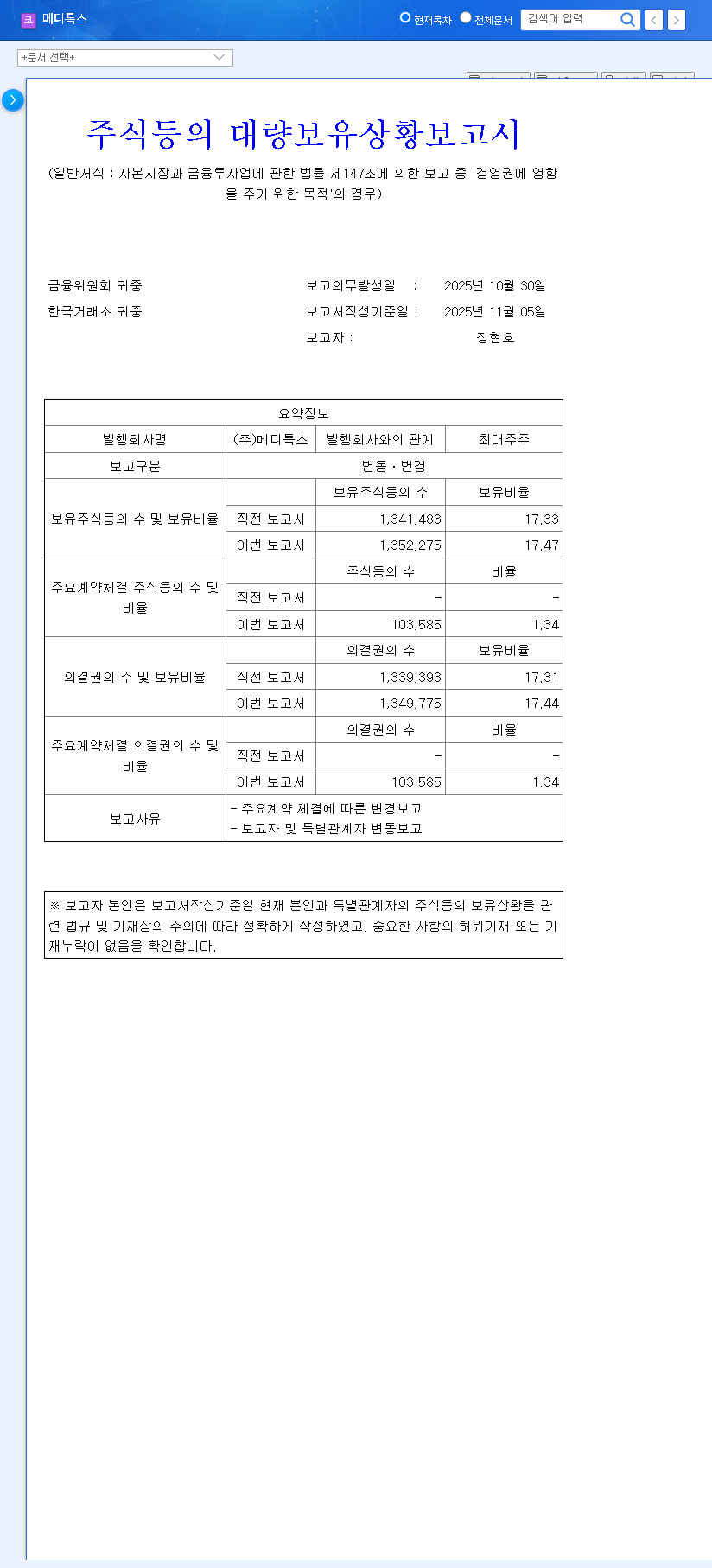
    On November 5, 2025, Medy-Tox Inc. formally announced that CEO Hyun-Ho Jeong had acquired 2,500 common shares, increasing his total stake from 17.33% to 17.47%. The stated purpose for this open market purchase, as detailed in the official disclosure (Source), was to bolster his ‘influence on management’. This move can be interpreted in several key ways:

    • Strengthening Management Stability: The purchase, though modest in size, reinforces the CEO’s commitment and tightens his control over the company’s strategic direction, signaling stability to the market.
    • Insider Confidence: It is a classic bullish signal. When a top executive buys their own company’s stock on the open market, it suggests they believe the shares are undervalued and have strong faith in future growth prospects.
    • Signaling Future Intent: By explicitly mentioning ‘influence on management,’ CEO Jeong may be preparing the company for critical future decisions, such as M&A activities, major R&D pushes, or strategic pivots, where his strengthened mandate will be crucial.

    Financial Health: A Deep Dive into the Numbers

    Despite the positive sentiment from the CEO’s action, a thorough Medy-Tox Inc. analysis reveals significant financial concerns. While the 2025 semi-annual report showed sales of KRW 125.6 billion, buoyed by its botulinum toxin business, the broader trend is alarming.

    Key Financial Indicators Paint a Troubling Picture

    Revenue and profitability have been on a steady decline since 2022. Projections for 2025 suggest the company will swing to an operating deficit, a stark indicator of weakening fundamentals. Revenue is estimated to fall to KRW 469.4 billion from KRW 1,147.7 billion in 2022, with the operating profit margin plummeting from a healthy 15.32% to a projected -6.55%.

    Furthermore, the company’s balance sheet is showing signs of stress. The debt-to-equity ratio has climbed from 92.27% in 2022 to 113.53% in 2023, raising questions about financial soundness and its ability to weather economic downturns. While the estimated EPS for 2025 shows a narrowing deficit, the overall financial trajectory demands caution from investors.

    Catalysts and Headwinds for the Medy-Tox Stock

    Potential Growth Catalysts

    • Legal Overhang Removed: The favorable conclusion of past legal disputes regarding its toxin strains removes significant uncertainty and potential liabilities.
    • Global Expansion: Securing an overseas production base in the UAE is a strategic move to tap into new markets and diversify its manufacturing footprint.
    • Pipeline Progress: The potential for a successful U.S. FDA approval and the commercialization of new pipelines, like its non-animal liquid toxin, could be game-changers.

    Significant Market Risks

    • Macroeconomic Pressures: Rising interest rates increase the cost of capital, while global economic slowdowns could dampen consumer spending on aesthetic treatments.
    • Operational Costs: Increasing R&D expenses, coupled with rising oil prices that affect logistics and raw material costs, could further squeeze profit margins.
    • Intense Competition: The botulinum toxin market is fiercely competitive. Medy-Tox faces global giants and nimble domestic rivals, creating constant pressure on pricing and market share.

    Investment Outlook: What’s Next for the 086900 Stock?

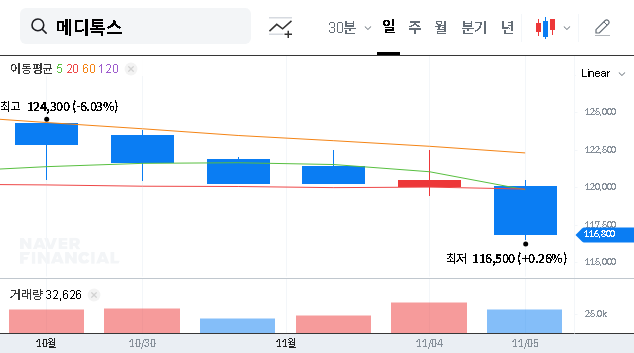
    The central question for anyone evaluating the Medy-Tox Inc. stock forecast is whether the CEO’s confidence is a leading indicator of a turnaround or simply a brave face amid a storm. In the short term, the share purchase may provide a welcome boost to investor sentiment and create a floor for the Medy-Tox stock price.

    However, for sustained, long-term appreciation, the company must address its core performance issues. A clear, executable strategy for reversing the revenue decline and returning to profitability is paramount. Investors should closely monitor the company’s quarterly earnings for signs of a genuine operational turnaround, not just optimistic rhetoric. Key performance indicators to watch include margin improvements, progress on new product approvals, and market share gains in key regions. For more on the sector, see our complete guide to biotech investing.

    In conclusion, Medy-Tox Inc. is at a critical inflection point. CEO Hyun-Ho Jeong’s action provides a glimmer of hope, but the path forward is laden with financial and macroeconomic challenges. Prudent investors should view this as a high-risk, potentially high-reward scenario that requires diligent monitoring of fundamental business improvements.
    (086900) Medy-Tox Inc. Stock Forecast (086900): CEO Purchase vs. Financial Headwinds 관련 이미지
  • (277410) INSAN Inc. Stock Analysis (277410): Is the CEO’s Share Purchase a Bullish Signal?

    (277410) INSAN Inc. Stock Analysis (277410): Is the CEO’s Share Purchase a Bullish Signal?

    The market for INSAN Inc. stock (KOSDAQ: 277410) has been buzzing after a recent disclosure revealed CEO Kim Yoon-se increased his personal stake in the company. An insider buy is often seen as a vote of confidence, but with INSAN Inc. facing notable financial headwinds, investors are left wondering: is this a genuine bullish signal or a minor event overshadowed by larger fundamental concerns? This comprehensive INSAN Inc. stock analysis will dissect the event, weigh the company’s strengths against its weaknesses, and provide a clear investment thesis to help you make an informed decision.

    We’ll go beyond the headlines to examine the underlying financial health, new business potential, and the macroeconomic environment impacting the company’s future.

    The Catalyst: CEO Kim Yoon-se’s Share Purchase

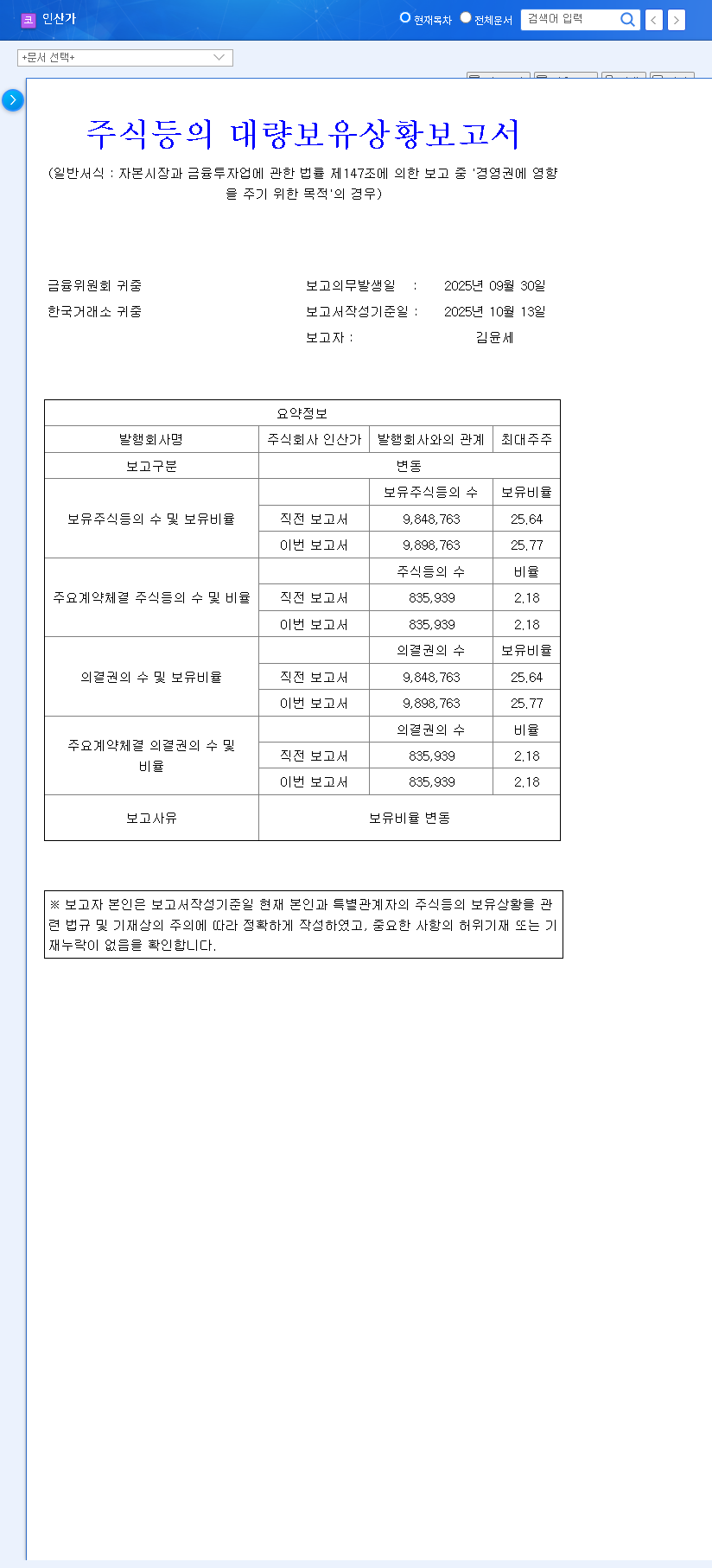
    On October 13, 2025, a mandatory disclosure was filed detailing an on-market share purchase by CEO Kim Yoon-se. Here are the key details from the report:

    • Transaction: Acquisition of 50,000 common shares through open market buys.
    • Stake Increase: CEO’s ownership increased from 25.64% to 25.77%, a modest rise of 0.13 percentage points.
    • Stated Purpose: The official reason cited was to increase “Influence over Management Rights.”
    • Source: The details of this transaction can be verified in the Official Disclosure (DART).

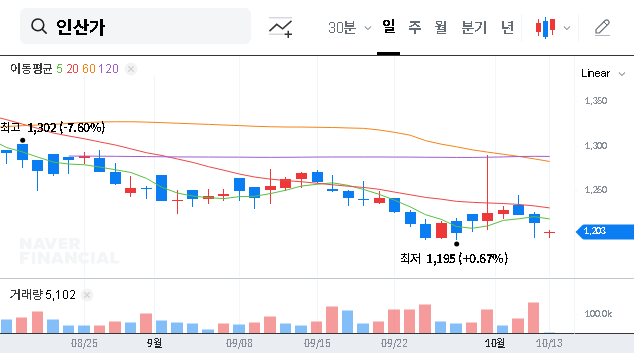
    While the percentage increase is small, an open-market buy using personal funds is typically a more powerful signal than acquisitions via stock options. It suggests the CEO sees the current INSAN Inc. stock price as undervalued. But to understand the true impact, we must look at the bigger picture.

    Fundamental Analysis: The Bull vs. The Bear Case

    The Bull Case: Why INSAN Inc. Could Thrive

    • Dominant Niche Position: As the originator of bamboo salt with a 38-year history, INSAN Inc. enjoys immense brand loyalty and pricing power in its core market.
    • Growth Diversification: Management is not resting on its laurels. The company is actively expanding into high-growth sectors like Home Meal Replacement (HMR), health foods, and Health & Beauty (H&B), which could unlock new revenue streams.
    • Modernized Distribution: By strengthening its online presence and developing a quick commerce logistics system, INSAN Inc. is adapting to modern consumer habits and targeting younger demographics.

    The Bear Case: Significant Financial Red Flags

    Despite the positive narrative, the company’s financial statements paint a concerning picture that could weigh heavily on the INSAN Inc. stock price.

    • Deteriorating Financial Health: Recent reports show a significant increase in current liabilities and a rising debt-to-equity ratio. This indicates growing financial risk and less flexibility.
    • Profitability Concerns: Annual sales decreased in 2023, and operating profit has been on a declining trend. This raises serious questions about the core business’s momentum and the costs of new ventures.
    • Macroeconomic Pressures: The company is vulnerable to sustained high interest rates (increasing borrowing costs) and unfavorable exchange rate fluctuations, which can impact profitability.

    The central conflict for investors is whether the CEO’s confidence and the company’s long-term growth story can outweigh the immediate and tangible financial risks present on the balance sheet.

    Investment Thesis & Action Plan for INSAN Inc. Stock

    So, what does this all mean for your portfolio? The CEO’s share purchase is a positive but small piece of a much larger and more complex puzzle. It reinforces management’s commitment but does not magically erase the underlying financial challenges.

    Investment Outlook

    • Short-Term (Neutral): The news may create positive short-term momentum and a small price bump. However, without concrete improvements in financial performance, these gains are likely to be fragile and could lead to increased volatility as the market digests the fundamental data.
    • Long-Term (Cautious): The long-term success of INSAN Inc. stock depends on two factors: the continued stability of the bamboo salt business and the successful execution of its new growth ventures. Until there is clear evidence of improved profitability and a strengthened balance sheet, a long-term investment remains speculative. For more on this type of investing, see our guide to analyzing small-cap stocks.

    Key Factors to Monitor Going Forward

    Prudent investors should keep a close eye on the following key performance indicators in upcoming quarterly reports:

    • Profit Margins: Is the company returning to operating profitability? Are new businesses contributing positively to the bottom line?
    • Debt Levels: Are there active efforts to manage and reduce the debt burden and interest expenses?
    • Revenue Growth: Is the decline in sales reversing? Are the HMR and H&B segments showing tangible market traction?

    Ultimately, investing in INSAN Inc. at this juncture requires patience and a focus on fundamental improvement over short-term news catalysts.

    (277410) INSAN Inc. Stock Analysis (277410): Is the CEO's Share Purchase a Bullish Signal? 관련 이미지
  • Woolim PTS Management Buys More Shares: A Bullish Signal?

    1. What Happened?

    Woolim PTS management (CEO Han Hyun-seok and Han Min-joo) purchased 32,237 shares, increasing their stake from 54.71% to 54.95%, a 0.24%p increase. This can be interpreted as strengthening management control and demonstrating confidence in the company’s future.

    2. Why the Share Purchase?

    The recent decline in sales is attributed to decreased orders from major clients and rising raw material prices. However, management is confident in the mid-to-long-term growth potential of the high-precision gearbox business for robotics, aerospace, and defense, supported by the government’s policy to localize materials, components, and equipment. A robust financial structure also underpins this confidence.

    3. What’s Next?

    This share purchase could positively impact the stock price in the short term. However, long-term stock movements depend on fundamental improvements. Continued growth in the high-precision gearbox sector, stabilization of raw material prices, and managing risks related to China’s economic slowdown and a potential global recession are key variables.

    4. What Should Investors Do?

    Investors should not be swayed by short-term stock fluctuations and should carefully analyze the company’s fundamentals and external environmental factors. Continuous monitoring of order status from major clients, raw material price fluctuations, competitor trends, and comparing management’s purchase price with the market price are crucial for informed investment decisions.

    Is management buying shares always a positive sign?

    Not necessarily. It’s essential to consider the purpose of the purchase, market conditions, and the company’s fundamentals.

    What are Woolim PTS’s future growth drivers?

    The growth of the high-precision gearbox business for robotics, aerospace, and defense, and government support for localizing materials, components, and equipment.

    What should investors be aware of?

    Investors should monitor external factors like raw material price fluctuations, China’s economic slowdown, and the possibility of a global recession, along with order status from major clients.

  • JW Holdings: Stakeholder Buyout to Strengthen Management Rights? In-Depth Analysis of July 16th Event

    JW Holdings: Analysis of CEO Lee Kyung-ha’s 20,000 Share Purchase Event

    JW Holdings (market capitalization: 276.8 billion KRW) announced that its largest shareholder, CEO Lee Kyung-ha, purchased 20,000 shares on the stock market on July 14, 2025. Following this report, his stake increased slightly from 51.97% to 51.99%. The reported reasons for the purchase are ‘On-market purchase, major contract change,’ indicating an intent to maintain or strengthen his control over the company’s management.

    JW Holdings’ Solid First-Quarter Performance and Growth Drivers

    According to the Q1 2025 report, JW Holdings achieved a sound performance with sales revenue increasing by 9.76% year-over-year to 27.5 billion KRW. This growth was driven by steady performance in its holding company business (up 61.7%) and pharmaceutical import/export business (up 38.3%). Notably, the increase in sales of nutritional solutions (5.6 billion KRW) and penem antibiotics (2.8 billion KRW) was particularly strong, reflecting the growth momentum of its subsidiaries, JW Pharmaceutical and JW Life Science.

    JW Holdings’ Resilience in a Volatile Macroeconomic Environment

    JW Holdings has demonstrated a degree of resilience amidst recent macroeconomic shifts:

    • Exchange Rate Fluctuations: Despite the potential for USD/KRW exchange rate increases in Q1 2025, a rise in overseas sales denominated in USD offset this, leading to increased profits. However, given the recent slight upward trend in the EUR/KRW exchange rate (currently 1,610.19 KRW), close monitoring of profitability changes due to future exchange rate volatility is necessary.
    • Interest Rate Hikes: The rising trend in benchmark interest rates and 10-year Treasury yields in both the US and Korea could increase corporate borrowing costs. While JW Holdings managed to offset this with its Q1 profit growth, sustained high interest rates could pose a long-term financial burden. (US benchmark rate: 4.5%, 10-year Treasury yield: 4.489%; Korea benchmark rate: 2.5%, 10-year Treasury yield: 2.875%)
    • Logistics and Commodity Prices: While crude oil prices showed volatility, the Baltic Dirty Tanker Index is on an upward trend. This could lead to increased logistics costs negatively impacting profitability, though the impact is likely not significant given the Q1 sales growth. Crude oil prices recently showed a slight downward trend, settling at $66.84.
    • Chinese Economy: The Container Freight Index (China) has shown volatility, reflecting the correlation with China’s economic conditions. Information regarding JW Holdings’ market presence and impact in China was insufficient in the Q1 report. (Container Freight Index (China): 1,313.70)

    Potential Impact of the Event: Management Stabilization vs. Hidden Risks

    CEO Lee Kyung-ha’s substantial share purchase can be interpreted as a positive signal of management stabilization and reinforced commitment to the company’s current direction, potentially boosting investor confidence. However, the true significance of this purchase hinges on the details of the ‘major contract change.’

    • Positive Scenario: If this purchase is a measure to preempt potential management disputes or alleviate concerns about a decline in corporate value, it is likely to have a positive impact on the stock price.
    • Negative Scenario: Conversely, if further management-related issues arise post-purchase or if the ‘major contract change’ has negative implications for the company’s value, it could exert downward pressure on the stock price.

    Future Outlook and Recommendations for Investors

    While JW Holdings’ Q1 performance is positive, potential risk factors such as exchange rate volatility, prolonged high interest rates, and fluctuations in commodity prices must not be overlooked.

    Investors should acquire and analyze the following additional information for more accurate investment decisions:

    • Confirmation of the specific details of the ‘major contract change.’
    • An assessment of JW Holdings’ presence and future plans in the Chinese market.
    • A detailed evaluation of each subsidiary’s performance and growth strategies.
    • An analysis of the effectiveness of strategies for securing long-term growth drivers and managing risks.

    In conclusion, the large share purchase by CEO Lee Kyung-ha may provide a positive short-term momentum for JW Holdings’ stock. However, the long-term stock performance will be determined by the details of the ‘major contract change,’ the impact of macroeconomic variables, and JW Holdings’ business strategy and risk management capabilities. We recommend a cautious investment approach, with a thorough understanding of potential risks and careful analysis of the additional information mentioned above.

    Why did JW Holdings’ largest shareholder purchase shares?

    JW Holdings’ largest shareholder, CEO Lee Kyung-ha, cited ‘On-market purchase, major contract change’ as the reason for his purchase, signaling an intent to maintain and strengthen his influence over the company’s management. This can be interpreted as a signal for management stabilization and enhancing shareholder value.

    What is JW Holdings’ recent financial performance?

    As of Q1 2025, JW Holdings showed solid performance, with sales revenue increasing by 9.76% year-over-year to 27.5 billion KRW. This growth is attributed to the robust performance of its holding company and pharmaceutical import/export businesses, reflecting the sales growth of its subsidiaries.

    What are the potential risks for JW Holdings in the current macroeconomic environment?

    Potential risks include increased exchange rate volatility, rising borrowing costs due to higher benchmark and Treasury yields, and potential increases in logistics costs. Changes in the Chinese economy could also have an impact.

    How might this event affect JW Holdings’ stock price?

    The share purchase by CEO Lee Kyung-ha could positively impact the stock price in the short term due to expectations of management stabilization. However, the long-term stock performance may vary depending on whether the ‘major contract change’ is positive and whether any further management-related issues arise.

    What additional factors should investors consider when looking at JW Holdings?

    Investors should verify the specific details of the ‘major contract change,’ assess JW Holdings’ presence and future plans in the Chinese market, and analyze the performance and growth strategies of its subsidiaries. Evaluating the effectiveness of its strategies for securing long-term growth drivers and managing risks is also crucial.