Tag: Semiconductor Equipment

  • (281820) KC Tech Stock (281820) Analysis: Why Korea’s Largest Investor Just Increased Its Stake

    (281820) KC Tech Stock (281820) Analysis: Why Korea’s Largest Investor Just Increased Its Stake

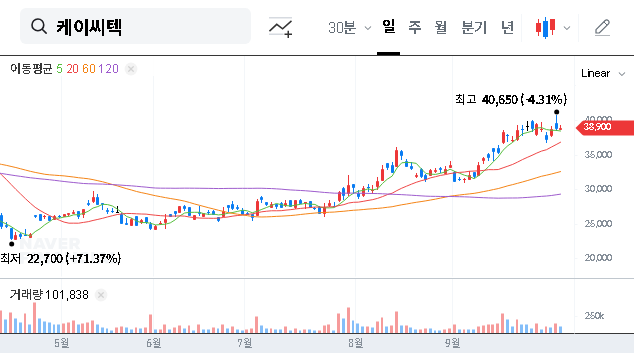
    The recent move by the National Pension Service (NPS) to increase its stake in the KC Tech stock (281820) has sent a significant signal across the market. As Korea’s largest and most influential institutional investor, the NPS’s actions are scrutinized for deeper meaning. While officially labeled a ‘simple investment,’ such a move from an entity managing the nation’s retirement funds often foreshadows a strong belief in a company’s long-term value. This analysis will dissect this pivotal event, explore KC Tech’s underlying fundamentals, and provide a strategic outlook for current and potential investors.

    The Catalyst: NPS Boosts KC Tech Stake

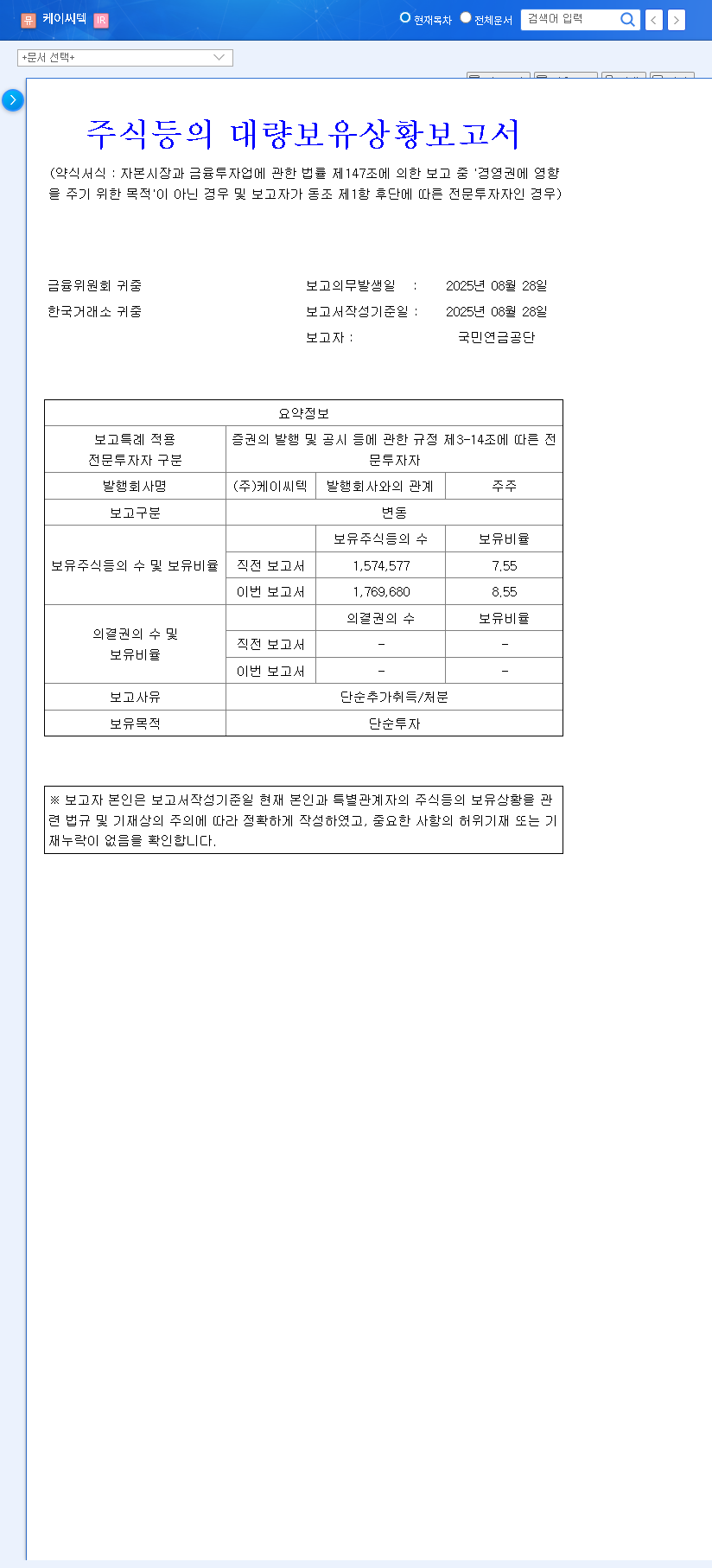
    On October 1, 2025, KC Tech, a key player in the semiconductor and display equipment sector, disclosed that the National Pension Service had increased its ownership from 7.55% to 8.55%. This 1%p increase, detailed in an Official Disclosure with the Financial Supervisory Service, represents a multi-million dollar vote of confidence. For investors analyzing the KC Tech stock, understanding the ‘why’ behind this investment is crucial for forecasting its future trajectory.

    Deep Dive Analysis: The Fundamentals Driving the Investment

    The NPS’s decision wasn’t made in a vacuum. It’s rooted in a thorough analysis of KC Tech’s core business strengths and financial health, weighed against its challenges.

    The Growth Engine: A Booming Semiconductor Segment

    The primary driver for optimism is KC Tech’s semiconductor business. The insatiable global demand for chips, fueled by the expansion of AI, cloud computing, and big data infrastructure, has created a super-cycle for equipment and materials suppliers. KC Tech is well-positioned to capitalize on this trend. Its continuous R&D investment into next-generation technologies ensures its relevance as chipmakers push the boundaries of fabrication. This robust growth in its core segment likely forms the bedrock of the NPS’s positive long-term outlook on the KC Tech stock.

    Rock-Solid Financials: A Foundation of Stability

    In a volatile market, stability is a premium. KC Tech boasts an exceptionally strong balance sheet, highlighted by a very low debt-to-equity ratio of just 11%. This financial prudence means the company is not heavily burdened by interest payments and has significant flexibility to navigate economic downturns or invest strategically in growth opportunities. Its substantial liquid assets provide a further cushion, making it a resilient choice for a risk-conscious institutional investor like the NPS.

    The Headwind: Navigating the Display Sector Slump

    However, the picture is not entirely rosy. The company’s display equipment segment has faced significant headwinds. Intense competition, particularly from Chinese manufacturers, and a cyclical reduction in capital expenditures by major panel makers have led to a noticeable decline in sales. This underperformance has been a drag on the company’s overall net profit and is a key risk factor that investors must monitor closely.

    While the semiconductor segment soars, the sluggish display business remains a critical variable. A strategic turnaround or stabilization in this area could unlock significant upside for KC Tech stock.

    The Bull vs. Bear Case: What’s Next for KC Tech Stock?

    The NPS investment sharpens the debate between the bullish and bearish outlooks for KC Tech.

    • The Bull Case: The ‘smart money’ has spoken. The NPS stake increase provides powerful institutional validation, which can attract other investors and lead to a positive re-rating of the stock. Bulls argue that the market is undervaluing the high-growth semiconductor business by focusing too heavily on the struggling display segment. The long-term secular trends in AI and data firmly support KC Tech’s core competency.
    • The Bear Case: Bears caution that the display segment’s continued weakness could cap profit growth and offset gains from the semiconductor side. Furthermore, the semiconductor industry itself is notoriously cyclical. A global economic slowdown or geopolitical tensions could disrupt demand. Therefore, the stock’s performance is tied not only to company execution but also to broader macroeconomic conditions.

    Action Plan: Key Metrics for Investors to Watch

    For those considering an investment in KC Tech stock, a proactive monitoring approach is essential. Here are the key points to focus on:

    • Display Segment Strategy: Watch for any company announcements regarding restructuring, new technology, or market share gains in the display business. A turnaround here is a major bullish catalyst.
    • Semiconductor Industry Health: Follow reports from authoritative bodies like SEMI (Semiconductor Equipment and Materials International) on global chip demand and capital expenditure forecasts.
    • Quarterly Earnings Reports: Scrutinize margin performance in both business segments. Strong and sustained profitability in the semiconductor division is crucial to the investment thesis.
    • Broader Market Context: To make a fully informed decision, it’s helpful to understand how to analyze semiconductor stocks within the wider industry landscape.

    In conclusion, the National Pension Service’s increased investment in KC Tech stock is a compelling, positive signal backed by the company’s strong semiconductor business and solid financials. While the challenges in the display sector should not be ignored, the long-term growth trajectory appears promising. Careful monitoring of the key metrics outlined above will be essential for navigating this investment opportunity successfully.

    Disclaimer: This article is for informational purposes only and does not constitute financial advice. All investment decisions should be made based on your own research and risk tolerance.
    (281820) KC Tech Stock (281820) Analysis: Why Korea's Largest Investor Just Increased Its Stake 관련 이미지
  • (265520) AP Systems (265520) Investment Outlook: NPS Stake & Future Growth Analysis

    (265520) AP Systems (265520) Investment Outlook: NPS Stake & Future Growth Analysis

    Evaluating the AP Systems investment outlook requires a careful balance of current challenges against future potential. The company (KOSDAQ: 265520) recently reported a significant downturn in its H1 2025 performance, raising concerns among investors. Yet, in a surprising move, South Korea’s influential National Pension Service (NPS) increased its holdings. This analysis dissects the conflicting signals, exploring AP Systems’ financial health, the implications of the NPS investment, and the viability of its new growth ventures to provide a comprehensive investment perspective.

    A Vote of Confidence? NPS Increases Stake in AP Systems

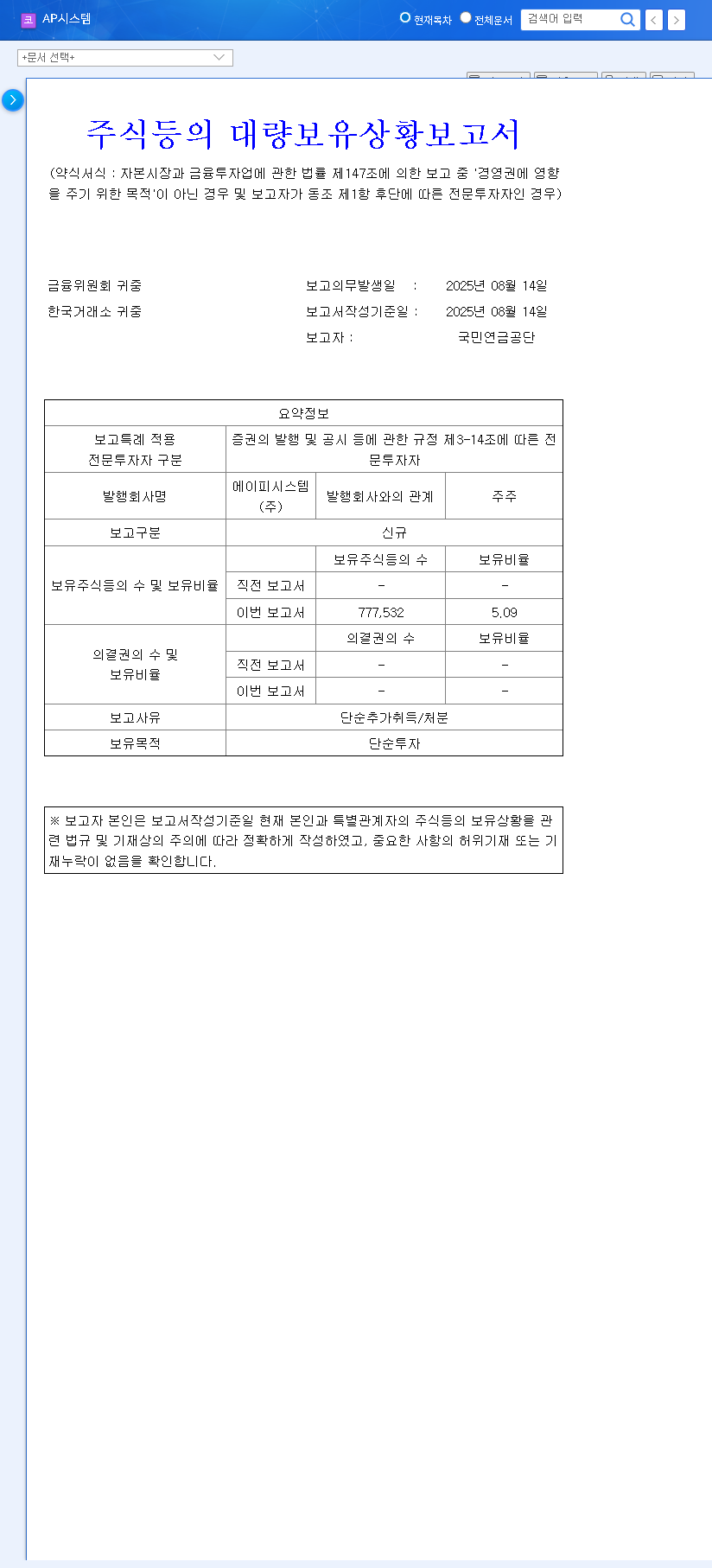
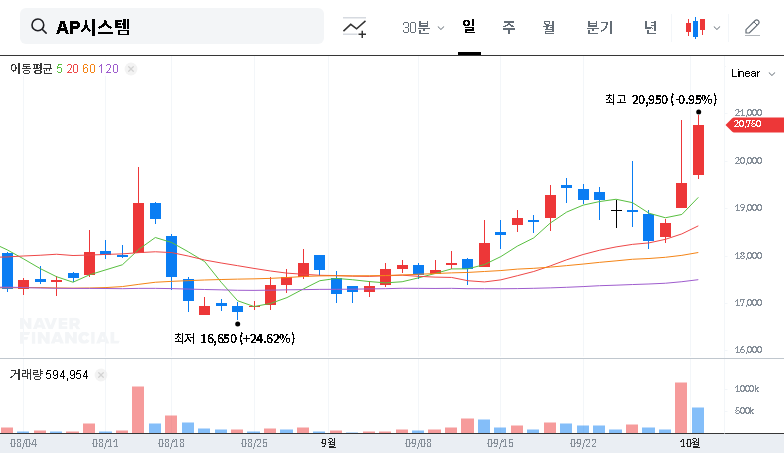
    On October 1, 2025, the National Pension Service, South Korea’s largest institutional investor, disclosed it had increased its stake in AP Systems to 5.09%. According to the Official Disclosure filed with DART, the acquisition was for ‘simple investment purposes’. While not a move to influence management, this action by a major institution signals a potential belief in the company’s long-term value, despite the current turbulence in its core business of semiconductor and display equipment manufacturing.

    Financial Deep Dive: Unpacking the H1 2025 Slump

    AP Systems’ performance in the first half of 2025 was undeniably weak, driven primarily by a sharp decline in the OLED equipment market. The numbers paint a clear picture of the headwinds the company is facing.

    Key Performance Indicators

    • Revenue: Plummeted by 52% year-over-year to KRW 110.26 billion.
    • Operating Profit: Declined a staggering 74% to just KRW 2.79 billion.
    • Net Income: Swung from a profit to a net loss of KRW 4.51 billion.

    These figures highlight a significant contraction in the company’s core operations. While total liabilities decreased, this was offset by a reduction in assets and equity, signaling a challenging operational period.

    While the NPS stake provides a psychological boost, the long-term AP Systems stock performance will be dictated by its ability to successfully pivot to new high-growth sectors and navigate the cyclical nature of the display industry.

    Pivoting to Growth: HBM and Secondary Batteries

    The most compelling part of the AP Systems investment outlook lies in its strategic shift towards new growth engines. The company is actively developing technology for markets poised for explosive growth, moving beyond its reliance on the volatile OLED sector.

    1. Semiconductor Equipment for HBM & Advanced Packaging

    AP Systems is developing semiconductor laser processing equipment. This technology is critical for manufacturing High-Bandwidth Memory (HBM) and advanced chip packaging, which are essential components for AI accelerators and high-performance computing. As the AI revolution continues, demand for HBM is projected to surge, placing AP Systems in a potentially lucrative position if its technology proves successful.

    2. Entry into the Secondary Battery Market

    The company is also venturing into the secondary battery (rechargeable battery) equipment business. This aligns with the global boom in electric vehicles (EVs) and energy storage solutions. Success in this area would provide a significant new revenue stream and diversify its business away from the cyclical semiconductor and display industries.

    Investment Outlook: Navigating Risk and Opportunity

    Investors considering the AP Systems stock must weigh the severe current downturn against the promise of these future growth drivers. The NPS investment provides a degree of stability and institutional validation, which could attract further interest and cushion the stock price.

    Short-Term Perspective

    In the short term, the stock may experience a rebound driven by the positive sentiment from the NPS news. However, this is likely to be temporary unless accompanied by concrete signs of a turnaround in earnings or major contract wins in its new business segments. A cautious approach is warranted.

    Mid-to-Long-Term Perspective

    The long-term outlook depends entirely on execution. Investors should monitor for tangible progress: successful development and commercialization of its HBM equipment, securing clients in the secondary battery space, and a recovery in its core OLED business. The company’s strong cash position (KRW 173.6 billion) and manageable debt-to-equity ratio (63.76%) provide a solid foundation to pursue these initiatives.

    Frequently Asked Questions

    Q1: Why did the National Pension Service invest in AP Systems now?

    The NPS filed its acquisition for ‘simple investment purposes’. This implies that despite poor recent results, they may see long-term value, potentially viewing the current stock price as an attractive entry point given the company’s financial stability and strategic pivots to high-growth areas like HBM and battery technology.

    Q2: What are the main risks facing AP Systems?

    The primary risks include continued weakness in the OLED equipment market, failure to successfully commercialize its new HBM and battery equipment, intense competition, and macroeconomic factors like interest rate volatility that could increase funding costs and dampen investment sentiment.

    Q3: What are AP Systems’ new growth engines?

    AP Systems is focusing on two key areas: 1) Developing semiconductor laser processing equipment for the high-demand HBM and advanced packaging markets, and 2) Entering the secondary battery equipment business to capitalize on the growth of EVs and energy storage.

    Disclaimer: This report is an analysis based on publicly available information and should not be considered investment advice or a financial recommendation. All investment decisions must be made based on your own judgment and responsibility.

    (265520) AP Systems (265520) Investment Outlook: NPS Stake & Future Growth Analysis 관련 이미지
  • (183300) KOMICO (018330) Stock Analysis: Why the National Pension Service Just Invested 5%

    (183300) KOMICO (018330) Stock Analysis: Why the National Pension Service Just Invested 5%

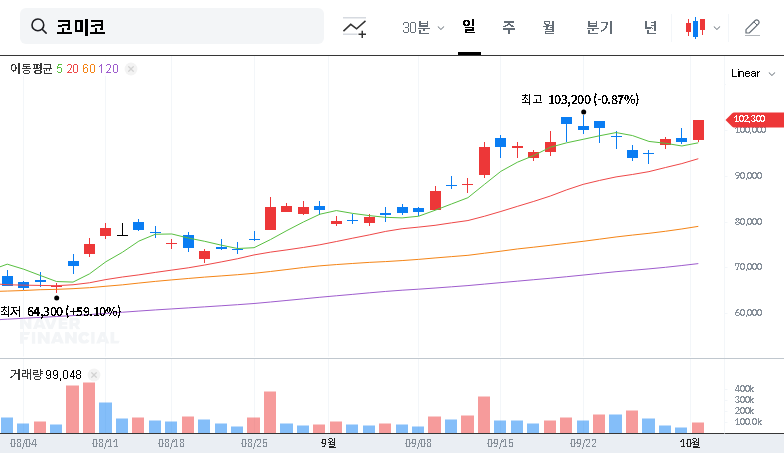
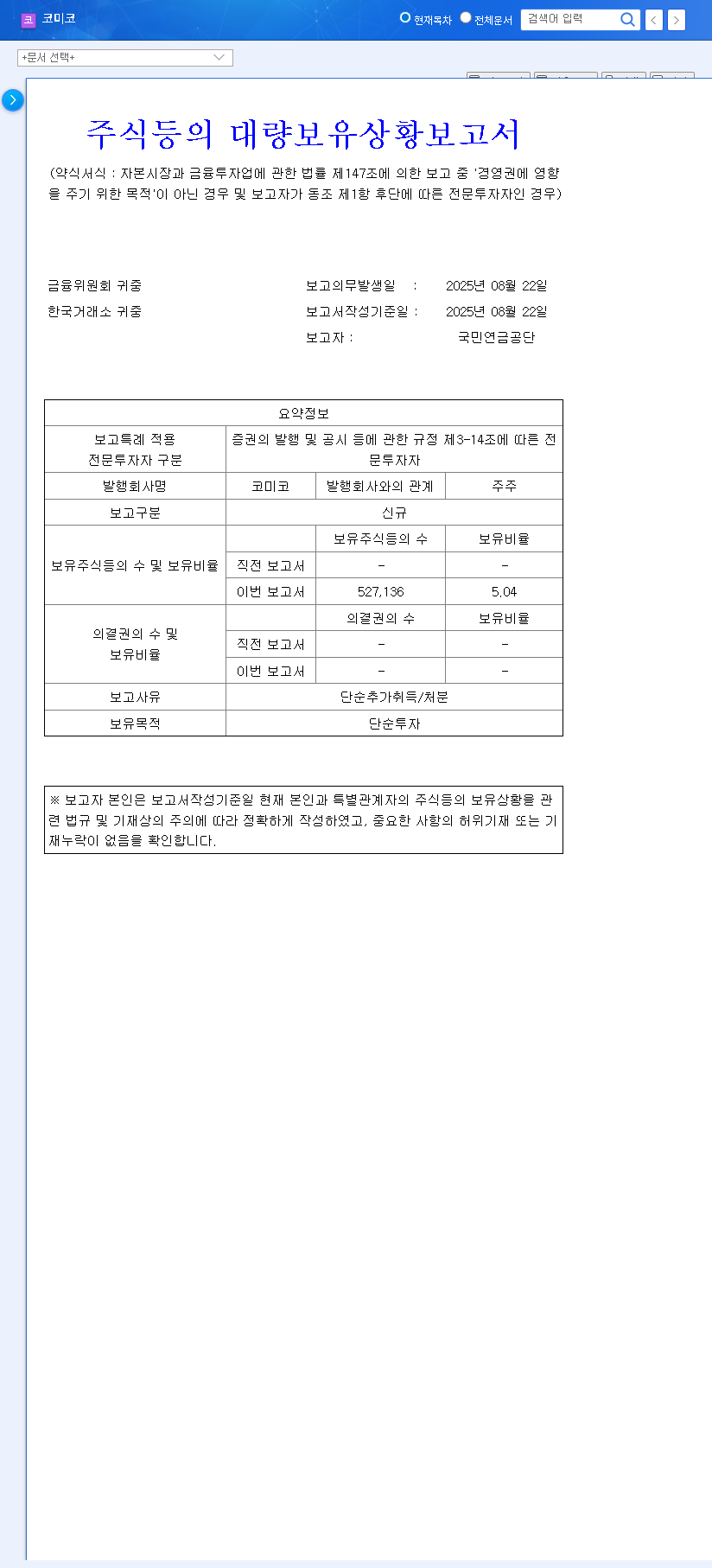
    The recent news of the National Pension Service (NPS) acquiring a significant 5.04% stake in KOMICO (018330) has sent ripples through the investment community. This move by one of the world’s largest pension funds is more than just a line item on a report; it’s a powerful signal about the perceived value and future potential of this key player in the semiconductor industry. For savvy investors, the question is clear: What does the NPS see in KOMICO, and does this strategic investment make KOMICO stock a compelling buy right now?

    This comprehensive analysis delves into the core fundamentals of KOMICO, the strategic implications of the NPS investment, and the broader macroeconomic trends shaping the semiconductor landscape. We’ll uncover why KOMICO (018330) is not just another components company, but a critical partner in the global tech supply chain.

    The Landmark Investment: NPS Takes a 5.04% Stake in KOMICO

    On October 1, 2025, the National Pension Service formally disclosed its acquisition of a 5.04% stake in KOMICO (018330), marking its entry as a major shareholder. The transaction, classified for ‘simple investment purposes’, indicates a strong belief in the company’s intrinsic value and long-term growth trajectory, rather than a move to influence management. This is a classic ‘smart money’ investment, signaling confidence from an institution known for its rigorous due diligence.

    An investment from a national pension fund often serves as a powerful endorsement of a company’s financial stability and future prospects, boosting market confidence and attracting further institutional interest.

    The details of the acquisition underscore the NPS’s calculated entry into KOMICO stock. The official filing confirms the change in shareholding from a non-disclosed amount to a substantial 5.04%. You can view the complete filing here: Official Disclosure (DART Report).

    Why KOMICO? A Deep Dive into Company Fundamentals

    The NPS’s decision is firmly rooted in KOMICO’s robust fundamentals and its critical role in the semiconductor value chain. KOMICO specializes in the high-precision cleaning and coating of semiconductor equipment parts—a service essential for maximizing chip yields and manufacturing efficiency.

    Exceptional Revenue Growth & Profitability

    KOMICO has demonstrated impressive and consistent growth. With a compound annual growth rate (CAGR) of 23.9% since 2020, the company’s financial performance outpaces many of its peers. This growth is fueled by the relentless expansion of the semiconductor market and KOMICO’s ability to secure and retain top-tier global clients.

    Technological Moat and Competitive Edge

    In the world of nanometer-scale manufacturing, cleanliness is paramount. KOMICO’s competitive advantage lies in its proprietary technology. Here’s what sets it apart:

    • Deep Expertise: Over 30 years of specialized experience in micro-contamination control.
    • Intellectual Property: A portfolio of over 101 domestic and international patents creates high barriers to entry for competitors.
    • Global Footprint: Recent expansion with new subsidiaries in China and Japan positions KOMICO closer to major fabrication plants, reducing turnaround times and strengthening client relationships.

    Market Impact and Macro-Environment Analysis

    While the NPS investment doesn’t change KOMICO’s operations overnight, it significantly impacts market perception and is buoyed by favorable industry trends. The demand for semiconductors is projected to grow substantially, driven by AI, 5G, IoT, and automotive technologies, as highlighted in reports by industry authorities like SEMI (Semiconductor Equipment and Materials International).

    This investment also serves as a catalyst for other institutional investors, potentially leading to increased trading volume and stock price stability. As we explored in our analysis of institutional investment trends, such moves can create a sustained positive feedback loop for a company’s stock.

    Financially, KOMICO maintains a healthy debt-to-equity ratio of 141%. While recent investments have increased borrowings, the company’s strong cash flow and the favorable KRW/USD exchange rate trend provide a solid buffer against rising interest rates.

    Investment Strategy & Future Outlook for KOMICO (018330)

    For potential investors, the National Pension Service investment serves as a major validation point. However, a prudent strategy involves monitoring key performance indicators:

    • Overseas Performance: Track the profitability and integration of the new subsidiaries in China and Japan.
    • Financial Discipline: Monitor how the company manages its debt and interest expenses amidst its expansion phase.
    • Institutional Flow: Keep an eye on whether other large funds follow the NPS’s lead, which could provide further upward momentum for the stock.

    In conclusion, the NPS’s stake in KOMICO (018330) is a significant vote of confidence. Backed by solid technological leadership, strong growth, and a pivotal role in a booming industry, KOMICO presents a compelling case for being an attractive long-term investment opportunity. The company’s stock appears well-positioned to benefit from both its internal strengths and positive external market forces.

    (183300) KOMICO (018330) Stock Analysis: Why the National Pension Service Just Invested 5% 관련 이미지
  • (095340) ISC Stock Analysis: Why Korea’s NPS is Betting on this AI Semiconductor Leader

    (095340) ISC Stock Analysis: Why Korea’s NPS is Betting on this AI Semiconductor Leader

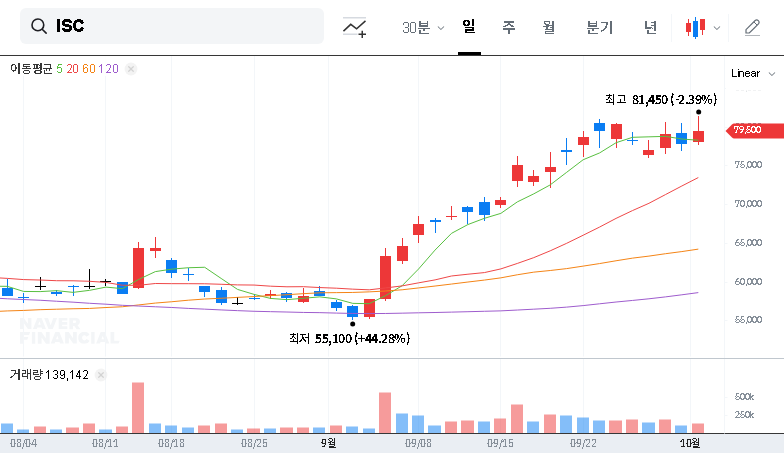
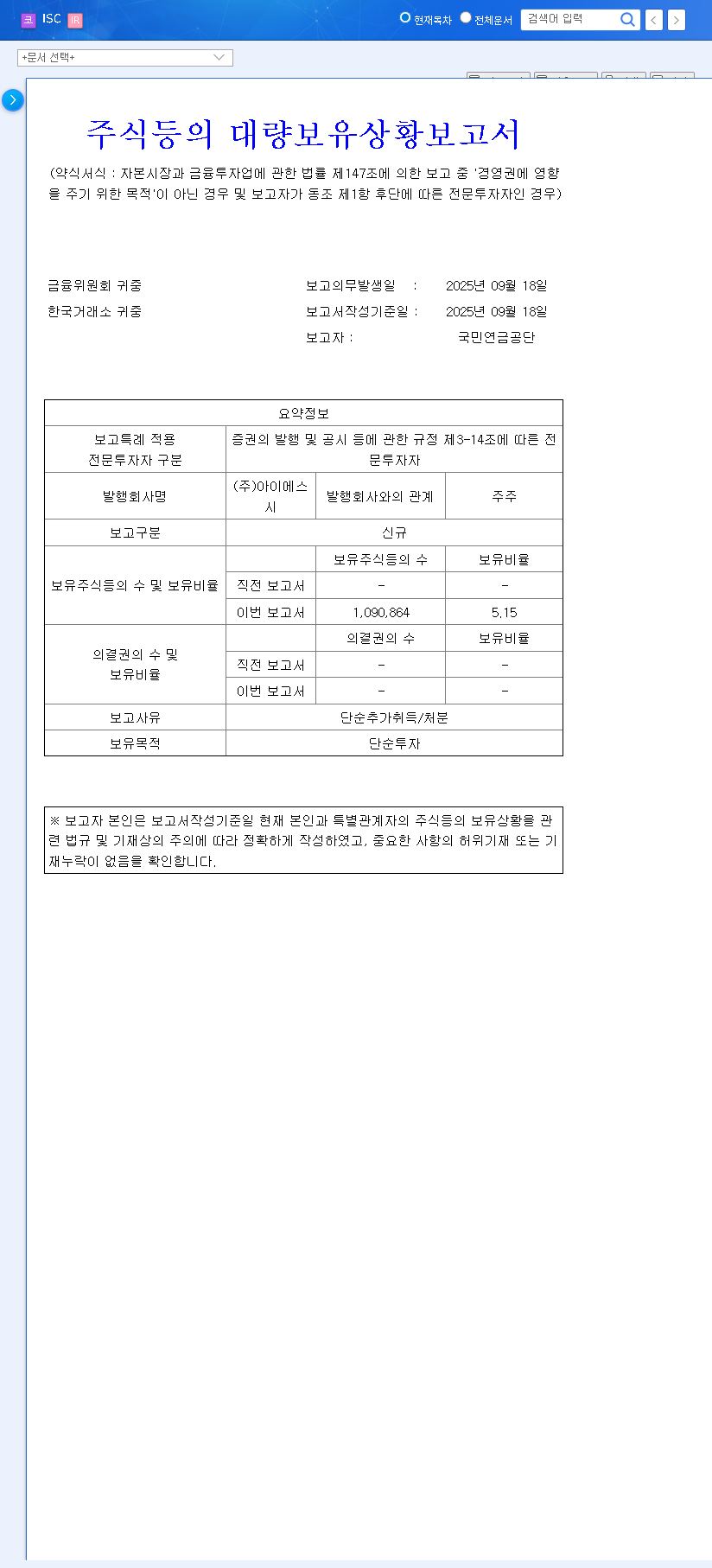
    In the high-stakes arena of artificial intelligence, every move by major players sends ripples through the market. A recent major development involves ISC Co Ltd, a pivotal company in the ISC AI semiconductor supply chain. South Korea’s National Pension Service (NPS), a titan of institutional investment, has officially acquired a significant 5.15% stake, signaling immense confidence in the company’s future. This analysis delves into what makes ISC so attractive, the implications of this major investment, and what investors should consider for their strategy.

    This move is more than just a line item on a balance sheet; it’s a powerful endorsement of ISC’s critical role in powering the next generation of AI technology through its advanced semiconductor test socket solutions.

    The Whale’s Move: NPS Acquires 5.15% Stake in ISC

    On October 1, 2025, the National Pension Service, one of the world’s largest pension funds, filed a large-shareholding report confirming its acquisition of a 5.15% stake in ISC. This move was formally documented in an Official Disclosure (Source). The stated purpose was for ‘simple investment,’ indicating a belief in the company’s fundamental value and long-term growth trajectory rather than a move towards management control. For a company like ISC, with a market capitalization of KRW 1.6852 trillion, this National Pension Service investment is a massive vote of confidence that validates its market position and future prospects.

    Fundamental Analysis: Why ISC is a Prime AI Play

    The NPS’s decision is deeply rooted in ISC’s powerful fundamentals and its strategic alignment with the explosive growth of the AI industry. To understand the ISC stock appeal, we must first look at its core technology.

    The Critical Role of AI Semiconductor Test Sockets

    Before a complex AI chip from a company like NVIDIA can be used, it must undergo rigorous testing. A semiconductor test socket is the critical interface that connects the chip to the testing equipment. As AI chips become exponentially more powerful and complex, the demands on these sockets—for signal integrity, heat management, and durability—skyrocket. ISC is a world leader in this niche but indispensable market, particularly with its innovative silicone rubber socket technology.

    With AI-related products already accounting for a staggering 62% of its revenue, ISC has firmly positioned itself as a primary beneficiary of the generative and on-device AI boom.

    Key Strengths Fueling Growth

    • Dominant Market Position: First in the world to commercialize silicone rubber sockets, backed by over 450 patents and 20 years of expertise.
    • Explosive AI Demand: The surge in generative AI has led to over 50% quarter-over-quarter growth in sales and profit, driven by orders for AI accelerator test sockets.
    • Financial Fortress: An impressively low debt-to-equity ratio of 15.67% and over KRW 80 billion in cash provide a stable foundation for growth and R&D.
    • Global Blue-Chip Clients: A diversified base of around 300 VIP clients, including the world’s largest semiconductor and big tech firms, ensures stable revenue streams.
    • Future-Focused R&D: Consistent investment of 8% of sales into research and development secures a pipeline of future innovations.

    Market Implications & Investor Action Plan

    The NPS investment acts as a powerful catalyst, potentially unlocking further value for ISC stock. It enhances institutional confidence, which can attract other large investors and create sustained buying pressure. This move reaffirms the bright outlook for the entire ISC AI semiconductor ecosystem.

    However, investors should remain vigilant. For more information on navigating this sector, you might review our complete guide to semiconductor investing.

    Key Risks to Monitor

    • Macroeconomic Volatility: Global economic slowdowns, adverse currency fluctuations, and interest rate hikes can impact performance and demand.
    • Memory Market Fluctuations: While the AI segment is booming, a slowdown in the generic memory market could partially offset gains.

    Conclusion: A Compelling Long-Term Story

    ISC Co Ltd presents a compelling investment thesis, standing at the intersection of technological innovation and immense market demand. The company’s robust financials, technical leadership in the semiconductor test socket space, and the powerful endorsement from the National Pension Service create a highly positive outlook. While external risks warrant careful monitoring, ISC appears well-positioned to continue its growth trajectory, making it an attractive long-term holding for investors looking for exposure to the core of the AI revolution.

    Frequently Asked Questions (FAQ)

    What does ISC Co Ltd do?

    ISC is a specialist in semiconductor test solutions. Its main business is producing high-performance test sockets, which are essential components for verifying the quality and performance of advanced chips, especially within the ISC AI semiconductor and non-memory markets.

    Why is the National Pension Service investment in ISC significant?

    This investment is a strong vote of confidence from South Korea’s largest institutional investor. It validates ISC’s strong fundamentals, its leadership in a high-growth market, and signals to the broader market that the company is seen as a key long-term beneficiary of the AI era.

    How might this news affect the ISC stock price?

    An investment by an institution like the NPS typically has a positive impact on investor sentiment and can lead to improved stock liquidity and stability. While short-term volatility is possible, the ‘simple investment’ purpose suggests the NPS sees a gradual, long-term appreciation in value rather than expecting a sharp, immediate spike.

    What are the main risks for investors in ISC?

    Investors should monitor macroeconomic factors like a global recession, which could curb semiconductor demand. Additionally, it’s important to watch for shifts in the competitive landscape and the performance of the broader memory chip market, which can influence parts of ISC’s business.

    (095340) ISC Stock Analysis: Why Korea's NPS is Betting on this AI Semiconductor Leader 관련 이미지
  • (084370) Eugenetech Investment: Why the National Pension Service Bet Big (Full Analysis)

    (084370) Eugenetech Investment: Why the National Pension Service Bet Big (Full Analysis)

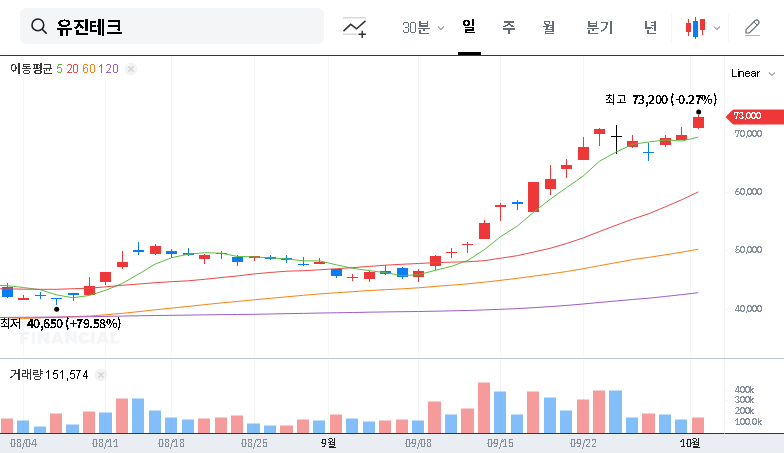
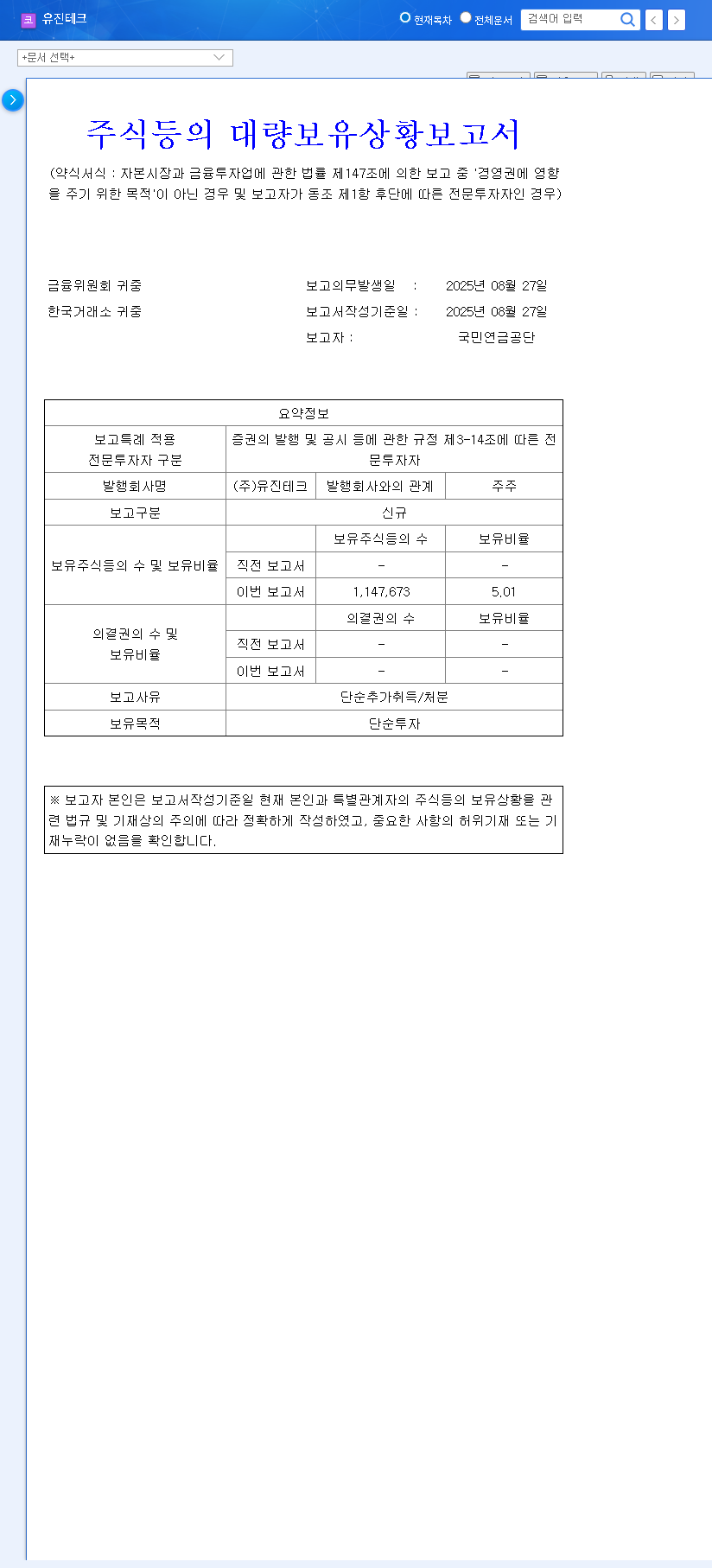
    A significant market event has captured the attention of investors: the Eugenetech investment by South Korea’s largest institutional player, the National Pension Service (NPS). According to an Official Disclosure, the NPS has acquired a new 5.01% stake in the semiconductor equipment manufacturer. When a financial titan like the NPS makes a move, it’s more than just a transaction; it’s a powerful signal about a company’s perceived value and future trajectory. This deep-dive analysis will unpack the fundamentals behind the National Pension Service Eugenetech acquisition, explore the potential impacts on Eugenetech’s stock, and outline a prudent strategy for investors looking to understand this pivotal development in the semiconductor equipment sector.

    The NPS’s ‘simple investment’ purpose signals strong confidence in Eugenetech’s intrinsic value and long-term growth potential, independent of any desire to influence management.

    Deconstructing the NPS’s Eugenetech Investment Thesis

    The decision by the National Pension Service to invest heavily in Eugenetech is not arbitrary. It’s a calculated move based on a rigorous evaluation of the company’s financial health, technological edge, and market position. Let’s examine the core pillars that likely support this major Eugenetech investment.

    1. Explosive Financial Performance

    Eugenetech’s recent earnings report paints a picture of robust health. For the first half of 2025, the company posted sales of KRW 188.078 billion, a 28.6% increase year-over-year. Even more impressive, its operating profit surged by 108.6% to KRW 28.943 billion. This isn’t just growth; it’s a testament to operational efficiency and strong demand within the global semiconductor market, a sector currently being supercharged by advancements in AI and high-performance computing. For more on market trends, industry analysis from authoritative sources like Gartner’s semiconductor reports can provide valuable context.

    2. A Fortress-Like Balance Sheet

    Beyond stellar profits, Eugenetech boasts a remarkably stable financial structure. With a debt-to-equity ratio of just 17.8%, the company operates with very low financial risk. This stability provides a crucial buffer against industry volatility and empowers the company to pursue aggressive R&D and strategic capital expenditures without being over-leveraged.

    3. Commitment to Technological Leadership

    Perhaps the most compelling factor is Eugenetech’s forward-looking strategy. The company dedicates a massive 24.1% of its sales to Research & Development. This investment is focused on critical next-generation technologies, including deposition equipment for sub-10nm processes and advanced Atomic Layer Deposition (ALD) systems. ALD is essential for creating the ultra-thin, uniform layers required in modern 3D NAND and DRAM chips, positioning Eugenetech at the heart of future semiconductor manufacturing.

    Market Impact and Strategic Outlook

    The NPS’s seal of approval is expected to create ripple effects for Eugenetech stock both in the short and long term. In the immediate future, the news serves as a powerful catalyst for positive investor sentiment, potentially driving stock momentum and increasing trading volume as retail and other institutional investors take notice.

    Over the mid-to-long term, the benefits become more structural. Having a stable, long-term investor like the NPS enhances corporate credibility, which can attract other funds and even improve terms for future capital raising. This stability allows Eugenetech’s management to focus on its long-term R&D roadmap without being pressured by short-term market noise. For investors interested in this sector, understanding the nuances of evaluating semiconductor equipment stocks is crucial for making informed decisions.

    Key Risk Factors to Monitor

    Despite the overwhelmingly positive outlook, a prudent investment strategy requires acknowledging potential risks. The following factors should be carefully monitored:

    • Industry Cyclicality: The semiconductor industry is famously cyclical. A global economic downturn could curb demand for electronics, directly impacting equipment orders for Eugenetech.
    • Supply Chain & Raw Materials: As a build-to-order manufacturer, Eugenetech’s profitability can be squeezed by volatility in raw material prices or disruptions in the supply chain.
    • Currency Fluctuations: With over 45% of its sales coming from exports, the company is exposed to foreign exchange risk. A significant appreciation of the Korean Won could negatively impact reported earnings.

    Frequently Asked Questions (FAQ)

    Why did the National Pension Service (NPS) purchase Eugenetech shares?

    The NPS executed this Eugenetech investment based on the company’s strong fundamentals, including high earnings growth, a solid financial structure, significant R&D spending, and a growing international presence. The stake was acquired for ‘simple investment’ purposes, reflecting confidence in its future growth potential.

    How might this acquisition affect Eugenetech’s stock price?

    In the short term, this news is likely to boost investor sentiment and create positive stock momentum. In the long term, the stable backing of the NPS can enhance corporate credibility and support sustained R&D, contributing to a fundamental increase in corporate value.

    What is the long-term investment outlook for Eugenetech?

    The long-term outlook is positive, heavily reliant on the company’s ability to execute its R&D roadmap and lead in next-generation technologies. The NPS investment provides a stable foundation for these efforts. Investors should maintain a mid-to-long-term perspective, continually assessing R&D milestones, industry trends, and macroeconomic conditions.

    (084370) Eugenetech Investment: Why the National Pension Service Bet Big (Full Analysis) 관련 이미지
  • (091440) Hanwool Materials Science (091440) Stock Outlook: Analyzing the ₩8B Hanwool Semiconductor Investment

    (091440) Hanwool Materials Science (091440) Stock Outlook: Analyzing the ₩8B Hanwool Semiconductor Investment 대표 차트 이미지

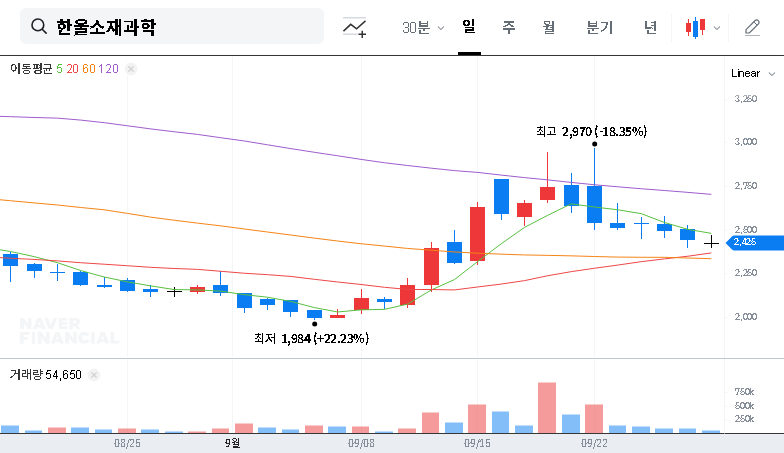
    The latest Hanwool Materials Science stock outlook has become a hot topic for investors following the company’s major announcement. Hanwool Materials Science (KRX: 091440) has committed to a substantial ₩8 billion investment to acquire a larger stake in its subsidiary, Hanwool Semiconductor. This move, coming at a time of significant financial pressure for the parent company, raises a critical question: is this a visionary pivot towards a high-growth future or a risky gamble that could strain its resources to the breaking point? This detailed Hanwool Materials Science analysis will dissect the investment, explore the financial implications, and provide a comprehensive outlook for the 091440 stock.

    Faced with declining performance in its core businesses, Hanwool Materials Science is betting big on the semiconductor industry. This ₩8 billion investment is a clear signal of its strategic shift, but success hinges on navigating severe short-term financial headwinds to realize long-term growth potential.

    The ₩8 Billion Hanwool Semiconductor Investment: A Closer Look

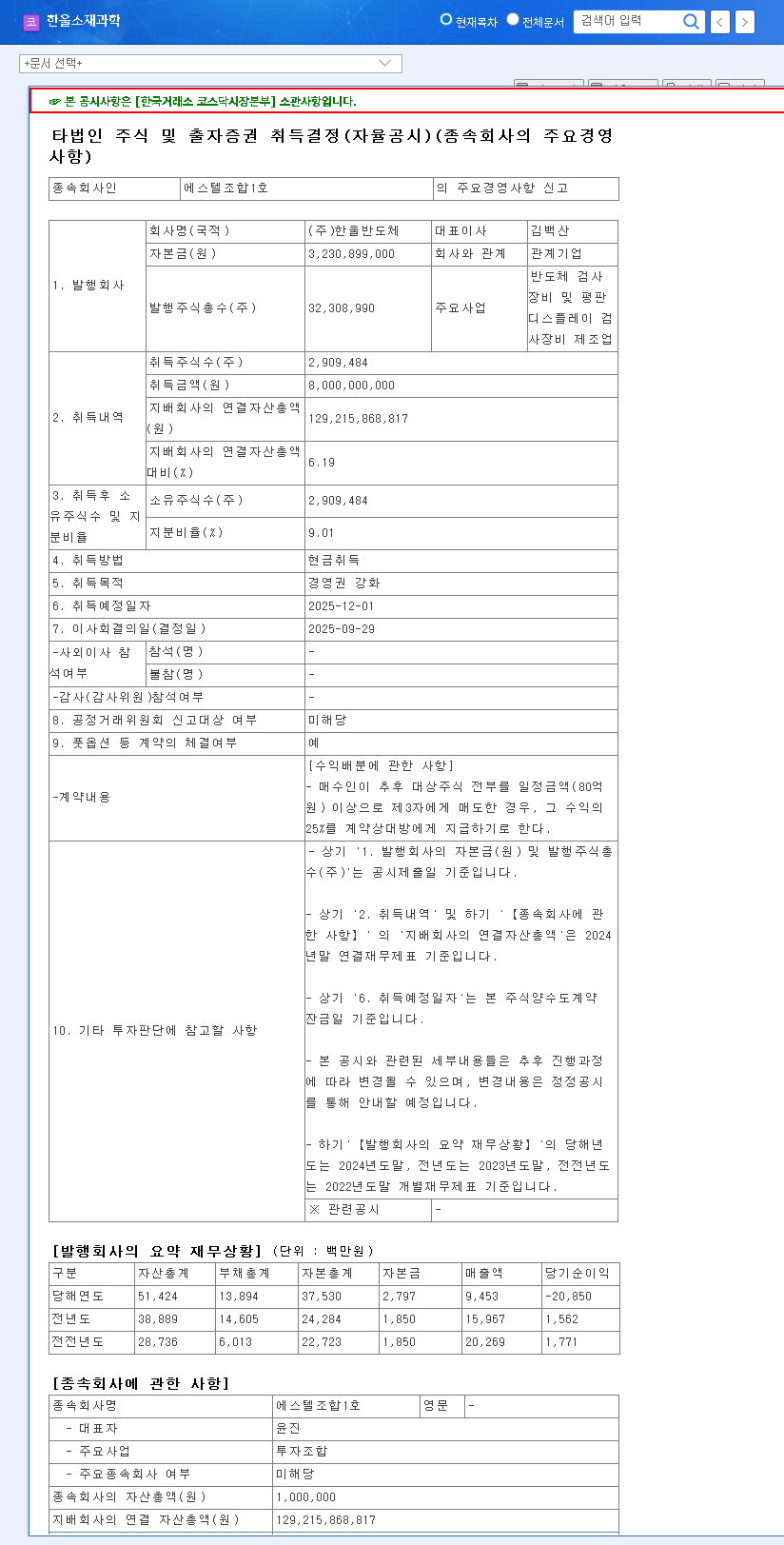
    On September 29, 2025, Hanwool Materials Science formally announced its decision to acquire additional shares in its subsidiary. The core details of this strategic transaction, sourced from the Official Disclosure (DART), are as follows:

    • Target Company: Hanwool Semiconductor (via Estel Fund No. 1)
    • Investment Amount: 8 Billion KRW (₩8,000,000,000)
    • Acquired Stake: 9.01%
    • Stated Purpose: Strengthening management control.
    • Scheduled Acquisition Date: December 1, 2025

    Hanwool Semiconductor is a key player in manufacturing semiconductor inspection equipment and flat panel display inspection tools. This investment solidifies Hanwool Materials Science’s strategic pivot away from its legacy businesses and deeper into the highly competitive, yet potentially lucrative, semiconductor value chain.

    Strategic Rationale: A Necessary Pivot to High-Growth Sectors

    This investment isn’t happening in a vacuum. Hanwool Materials Science’s traditional revenue streams are facing significant challenges. The telecommunication equipment business has been underperforming, and the GFRP rebar distribution arm is struggling with market contraction. The company is actively seeking new growth engines to ensure its long-term viability.

    Why the Semiconductor Industry?

    The global semiconductor market is a cornerstone of the modern economy, projected for continued robust growth driven by AI, 5G, and IoT. By increasing its stake in Hanwool Semiconductor and venturing into semiconductor materials like photoresists, the company is positioning itself in a sector with significantly higher growth potential. According to industry groups like SEMI (Semiconductor Equipment and Materials International), the demand for advanced inspection equipment is critical for next-generation chip manufacturing. Strengthening management control will allow Hanwool Materials Science to more effectively steer its subsidiary’s strategy to capitalize on these trends and foster crucial synergies with its new materials business.

    Financial Impact: A High-Stakes Balancing Act

    The central conflict for investors is weighing the long-term strategic benefits against the immediate and severe financial risks. As of the first half of 2025, the company reported revenues of just ₩4.62 billion against a staggering operating loss of ₩12.15 billion. This context makes an ₩8 billion investment a monumental undertaking.

    The Bull Case: Seeding Future Growth

    • Portfolio Diversification: Reduces reliance on struggling legacy businesses and enters a high-growth market.
    • Synergistic Potential: Creates a vertically integrated strategy, combining new material development (photoresists) with equipment manufacturing. For more information, you can read our guide on understanding the semiconductor value chain.
    • Enhanced Control: Allows for faster, more decisive strategic execution within the promising semiconductor division.

    The Bear Case: Exacerbating Financial Strain

    • Severe Cash Burn: With negative operating cash flow, this investment significantly pressures short-term liquidity and may require additional financing.
    • Execution Risk: The success of the semiconductor venture is not guaranteed and requires flawless execution to generate returns that can offset the initial cost and ongoing losses.
    • Macroeconomic Headwinds: A high KRW/USD exchange rate and sustained high interest rates increase import and borrowing costs, further tightening the financial squeeze.

    Final Verdict: Hanwool Materials Science Stock Outlook (091440)

    The investment in Hanwool Semiconductor is a bold, transformative move. The long-term Hanwool Materials Science stock outlook is now intrinsically tied to the success of this semiconductor pivot. However, the short-to-medium-term path is fraught with risk.

    Our investment opinion is Neutral. The potential for significant future upside is clear, but it is overshadowed by the immediate and substantial financial risks. The market will likely adopt a ‘wait-and-see’ approach. Key catalysts for a positive re-rating of the 091440 stock would include:

    • Tangible revenue growth and contract wins from the semiconductor division.
    • A clear plan to stabilize the company’s overall financial health and improve cash flow.
    • Successful turnaround or divestment of the underperforming legacy businesses.

    Investors should exercise caution and closely monitor the company’s quarterly reports for signs that this strategic gamble is beginning to pay off before committing capital.

    (091440) Hanwool Materials Science (091440) Stock Outlook: Analyzing the ₩8B Hanwool Semiconductor Investment 관련 이미지
    (091440) Hanwool Materials Science (091440) Stock Outlook: Analyzing the ₩8B Hanwool Semiconductor Investment 관련 이미지
  • (140860) Park Systems Stock Analysis: Investment Potential & 2025 IR Event Deep Dive

    (140860) Park Systems Stock Analysis: Investment Potential & 2025 IR Event Deep Dive 대표 차트 이미지

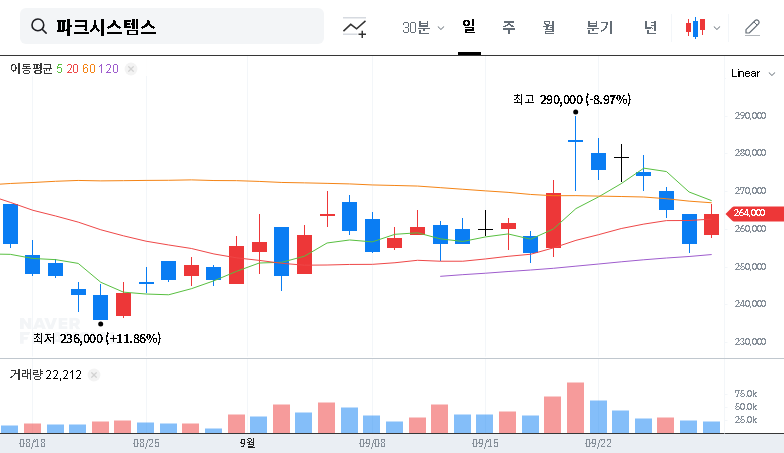
    The Park Systems stock (KOSDAQ: 140860) is drawing significant attention as the company prepares for a pivotal Investor Relations (IR) event. As a global leader in Atomic Force Microscopes (AFM), a critical tool for the world’s most advanced industries, Park Systems stands at the intersection of several high-growth sectors. This analysis will provide a deep dive into the company’s fundamentals, market position, and the key factors that could influence its stock price, offering profound insights for savvy investors.

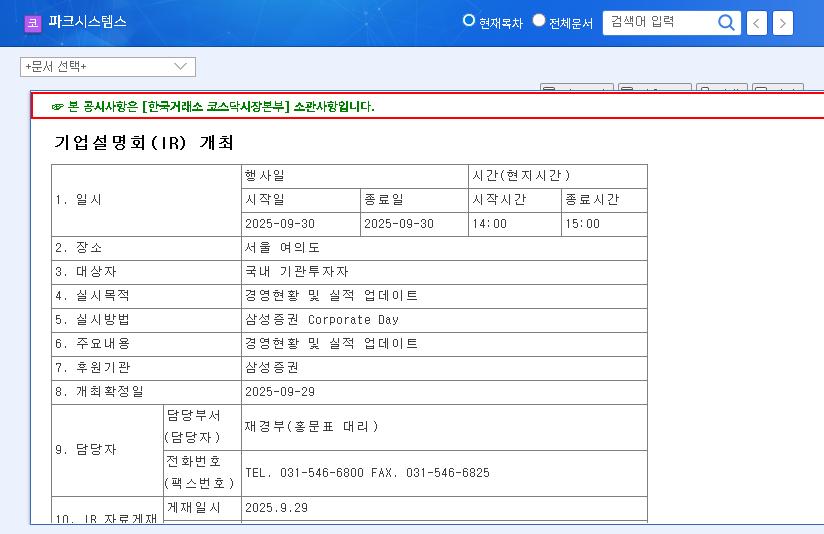
    The upcoming IR event, scheduled for September 30, 2025, at 2 PM (KST), is more than a standard corporate presentation. It is a crucial opportunity for the management to outline future growth strategies and provide clarity on recent performance, potentially serving as a major catalyst for the stock. For official details, investors can refer to the Official Disclosure (DART).

    Deconstructing Park Systems’ Financial Health and Market Position

    Robust Fundamentals Driven by Advanced Industries

    A thorough Park Systems stock analysis begins with its core business segments. The company’s financial performance in the first half of 2025 highlights its strong market penetration:

    • Industrial Equipment: This segment is the primary revenue driver, contributing KRW 63,241 million (75.51% of total sales). This growth is directly tied to expanding capital expenditures in the semiconductor and electronics industries.
    • Research Equipment: Accounting for KRW 18,631 million (22.24% of sales), this segment shows significant future potential, boosted by the new FX series and expansion into the high-growth bio-research market.

    While total revenue showed a significant year-over-year increase, a temporary decrease in operating profit was noted. This is attributed to strategic investments in R&D and new business expansion—costs that are essential for long-term technological leadership. Despite this, the company maintains an impressive operating profit margin of 24.3%, signaling excellent core profitability and a stable financial footing.

    Unparalleled Competitive Edge in the AFM Market

    Park Systems’ unique market position is built on three decades of specialized know-how. The demand for their high-precision Atomic Force Microscopes is surging, driven by the relentless innovation in AI semiconductors, High Bandwidth Memory (HBM), and advanced packaging. According to industry reports, the semiconductor metrology and inspection market is on a steep growth trajectory. The recent acquisition of Lyncee Tec SA adds Digital Holographic Microscopy (DHM) to its technology stack, creating a more comprehensive metrology solution for clients and unlocking new avenues for growth.

    For investors, the core question is whether Park Systems’ technological dominance and strategic investments can outweigh short-term margin pressures and macroeconomic uncertainties, justifying a higher valuation for the stock.

    Key Factors Influencing Park Systems Stock Price

    Any sound Park Systems investment thesis must carefully weigh the positive catalysts against potential risks. Here’s a balanced view of the factors at play.

    Positive Catalysts (The Bull Case)

    • AI & Semiconductor Boom: The exponential growth in AI, HBM, and advanced packaging directly fuels demand for Park Systems’ core products.
    • Synergistic Acquisitions: The integration of Lyncee Tec SA enhances the company’s product portfolio and expands its market reach.
    • Bio-Market Expansion: The application of Scanning Ion Conductance Microscopy (SICM) technology opens up lucrative new opportunities in biological and medical research.

    Potential Risks & Considerations (The Bear Case)

    • Short-Term Margin Pressure: Increased spending on R&D and new ventures, while crucial for growth, can temporarily impact profitability.
    • Currency Volatility: With a high percentage of overseas sales, profitability is sensitive to fluctuations in the USD and EUR exchange rates.
    • Competitive Landscape: As a technology leader, Park Systems must continuously innovate to stay ahead of potential competitors. Investors should learn about evaluating tech company moats for better context.

    Conclusion: Investor Action Plan

    Our overall outlook for the Park Systems stock is Neutral to Positive. The company’s strong technological foundation and alignment with high-growth industries present a compelling long-term narrative. The upcoming IR event will be a critical data point, offering insights into how management plans to navigate short-term challenges while capitalizing on long-term opportunities.

    Investors should closely monitor the IR presentation for details on new business progress, cost management strategies, and the forward-looking sales pipeline. While the long-term potential is evident, prudent investors should remain prepared for short-term volatility and make decisions based on a thorough analysis of the information revealed at the event and subsequent market reactions.

    (140860) Park Systems Stock Analysis: Investment Potential & 2025 IR Event Deep Dive 관련 이미지
    (140860) Park Systems Stock Analysis: Investment Potential & 2025 IR Event Deep Dive 관련 이미지
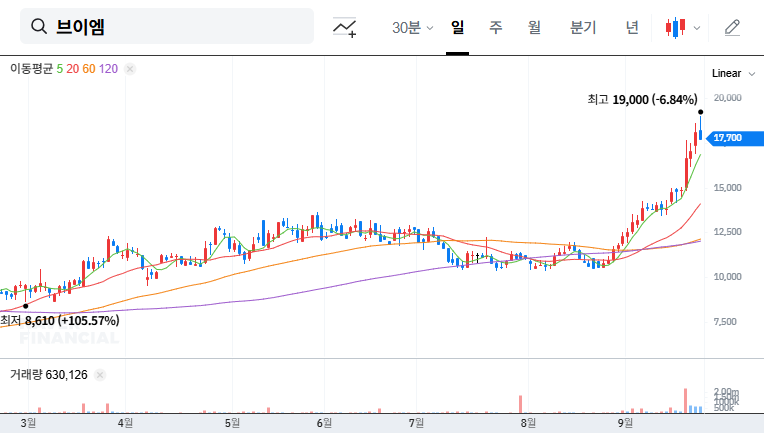
  • VM Co. Ltd. Change in Major Shareholder: Investment Opportunity or Red Flag?


    VM Co. Ltd. Change in Major Shareholder: Investment Opportunity or Red Flag? 대표 차트 이미지


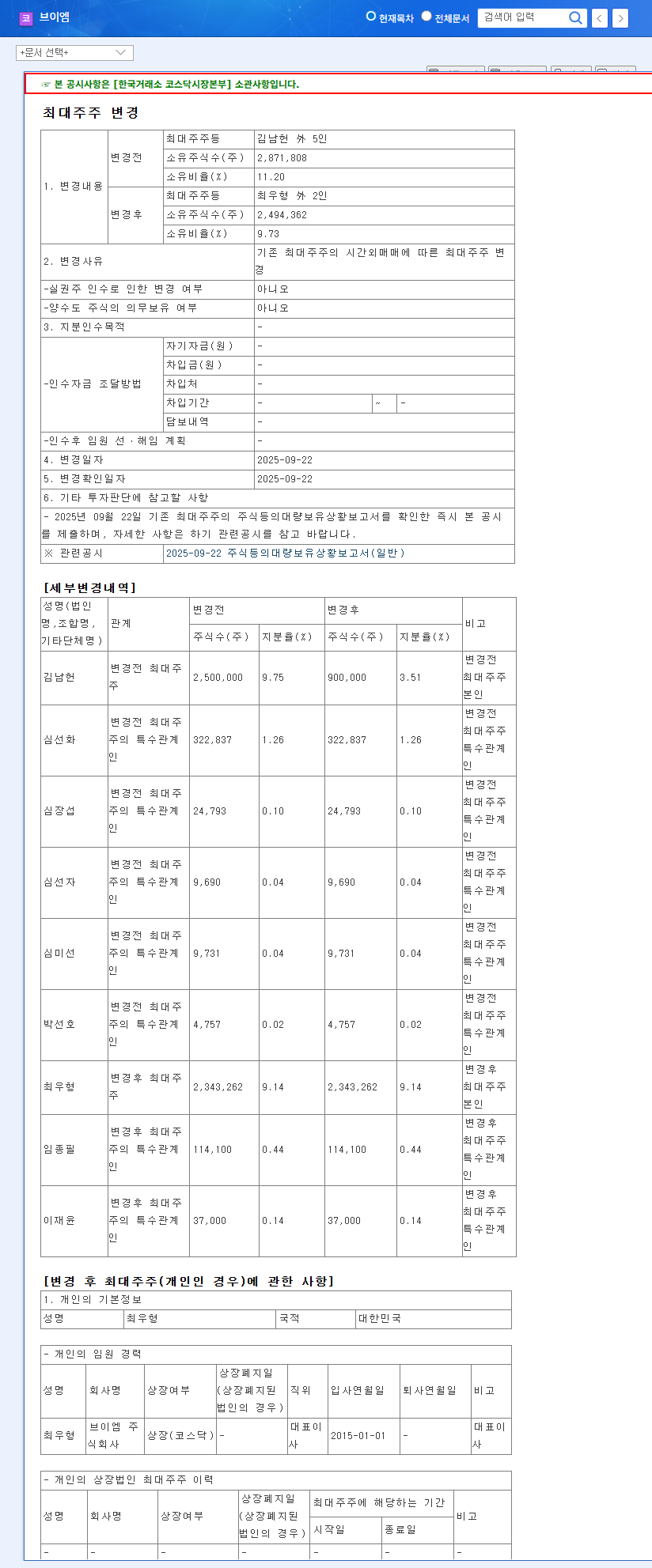
    VM Co. Ltd.’s Change in Major Shareholder: What Happened?

    On September 22, 2025, VM Co. Ltd. announced a change in its major shareholder from Kim Nam-heon et al. to Choi Woo-hyung et al. This resulted from after-hours trading and signifies a change in management control, a crucial event for the company.

    Winds of Change: Analyzing Positive Factors and Potential Risks

    VM Co. Ltd. recently enhanced its management transparency through corrections in its business reports over the past two years and partially resolved uncertainties related to past lawsuits. The company achieved a turnaround in 2024, shifting from a large operating loss in 2022 to profitability, along with a surge in sales. Active R&D investment is also a positive sign for securing future growth engines.

    However, the change in major shareholder introduces new management uncertainties. The key question is whether the new major shareholder’s management capabilities and vision can support VM Co. Ltd.’s growth. External factors like exchange rate and interest rate fluctuations also need close monitoring.

    Key Checkpoints for Investors

    • Analyze the New Major Shareholder: Carefully review their management performance, business expertise, and vision and execution plan for VM Co. Ltd.
    • Check Financial Performance: Evaluate the possibility of maintaining profitability and continuous improvement in profitability.
    • Risk Management: Understand the company’s strategies for dealing with exchange rate and interest rate volatility.
    • Be Mindful of Stock Volatility: The change in major shareholder can cause short-term stock price fluctuations.
    • Monitor Former Major Shareholder Trends: Observe the potential for changes in the former major shareholder’s stake.

    Conclusion: A Cautious Approach Is Necessary

    VM Co. Ltd. has growth potential, but the uncertainty surrounding the change in major shareholder must be considered. It is essential to make prudent investment decisions based on a comprehensive analysis of market conditions and management changes.


    Frequently Asked Questions

    How does a change in major shareholder affect the stock price?

    A change in major shareholder suggests a potential shift in management strategy and can increase stock price volatility in the short term. Depending on the market’s assessment of the new management, the stock price can fluctuate significantly.

    Is VM Co. Ltd.’s fundamentals solid?

    Although the company has recently achieved a turnaround and significant sales growth, securing financial soundness remains a crucial task. Future performance changes should be closely monitored, considering the capabilities of the new management.

    What should investors be cautious about?

    Investors should make prudent investment decisions after considering the new major shareholder’s management capabilities, business vision, market environment changes, and stock price volatility.


    VM Co. Ltd. Change in Major Shareholder: Investment Opportunity or Red Flag? 관련 이미지
    VM Co. Ltd. Change in Major Shareholder: Investment Opportunity or Red Flag? 관련 이미지


  • Hanmi Semiconductor IR: Unveiling Future Strategies in the HBM Market! Investment Analysis


    Hanmi Semiconductor IR: Unveiling Future Strategies in the HBM Market! Investment Analysis 대표 차트 이미지


    What’s happening? Hanmi Semiconductor IR Scheduled

    Hanmi Semiconductor will host an IR session at the ‘CGSI Tech Tour’ on September 22nd. The session will cover AI semiconductor market forecasts, Hanmi Semiconductor’s competitive edge, the launch of next-generation HBM (HBM4, HBM5, FLTCB) and Hybrid Bonder (HB) roadmap, and their strategy for expanding demand into the broader memory semiconductor market.

    Why is it important? The growth of the AI semiconductor market and Hanmi’s Key Role

    The AI semiconductor market is growing rapidly, and HBM is a core component. Hanmi Semiconductor, a supplier of essential equipment for HBM production, is directly linked to the growth of this market. Their strong performance in the first half of 2025 (revenue of KRW 327.4 billion, a 63.1% YoY increase) proves this.

    Key IR takeaways and impact on investors?

    • Positive Impacts:
      • Reinforced technological leadership through the disclosure of next-generation HBM technology roadmap
      • Presentation of an expansion strategy into the overall memory semiconductor market
      • Reaffirmation of solid fundamentals and high profitability
      • Expected improvement in investor sentiment and potential upward momentum for stock price
    • Potential Risk Factors:
      • Possibility of not meeting market expectations
      • Intensifying competition
      • Decrease in operating cash flow
      • Exchange rate volatility

    What should investors do? Key Checkpoints

    • Check the specific technological roadmap and commercialization plan related to HBM4, HBM5, and Hybrid Bonder.
    • Review the feasibility of the strategy to expand demand into the memory semiconductor market.
    • Check the sustainability of profitability and financial soundness.


    FAQ

    What is Hanmi Semiconductor’s main business?

    Hanmi Semiconductor develops and sells semiconductor manufacturing equipment such as essential equipment for HBM production (DUAL TC BONDER, 6-SIDE INSPECTION), micro SAW&VISION PLACEMENT equipment, and EMI Shield equipment.

    What are the key announcements expected during this IR?

    The IR will cover AI (HBM) semiconductor market outlook, Hanmi Semiconductor’s competitive edge, next-generation HBM (HBM4, HBM5, FLTCB) launch and Hybrid Bonder roadmap, and their strategy for expanding demand across the broader memory semiconductor market.

    What are the key considerations for investors?

    Investors should consider factors such as whether market expectations are met, the potential for increased competition, changes in operating cash flow, and exchange rate fluctuations.


    Hanmi Semiconductor IR: Unveiling Future Strategies in the HBM Market! Investment Analysis 관련 이미지
    Hanmi Semiconductor IR: Unveiling Future Strategies in the HBM Market! Investment Analysis 관련 이미지


  • CYMAX Divests Z-Bike Stake: What Does ₩10.5B in Cash Mean for the Future?


    CYMAX Divests Z-Bike Stake: What Does ₩10.5B in Cash Mean for the Future? 대표 차트 이미지


    1. CYMAX Divests Z-Bike Stake – What Happened?

    On September 5, 2025, CYMAX announced the sale of its entire stake in Z-Bike for ₩10.5 billion. This represents 6.05% of CYMAX’s capital.

    2. Reasons for Divestiture – Why Now?

    The official reason for the sale is ‘securing cash liquidity.’ This is interpreted as a move to secure funds for increased R&D investment and new business ventures amidst the recent uncertainties in the semiconductor industry. It also suggests an intention to focus on core businesses by streamlining non-core assets.

    3. Impact of the Divestiture – What Changes for CYMAX?

    • Strengthened Financial Health: The influx of ₩10.5 billion is expected to improve CYMAX’s financial structure by reducing debt-to-equity ratio and enhancing liquidity ratios.
    • Securing Future Growth Engines: The secured funds are likely to be used for R&D investment and new business ventures, securing future growth engines.
    • Business Portfolio Restructuring: Divesting non-core assets allows CYMAX to focus on its core businesses and improve management efficiency.

    4. Investor Action Plan – What Should You Do?

    This divestiture is expected to have a positive impact on CYMAX in the short term. However, it’s crucial to continuously monitor the uncertainties in the semiconductor market and CYMAX’s profitability improvement. Closely examining the use of the secured funds and the actual business performance is essential.


    Frequently Asked Questions (FAQ)

    How will the proceeds from the Z-Bike sale be used?

    Officially, it’s stated for ‘securing cash liquidity.’ It may be used for increasing R&D investment, pursuing new business ventures, or repaying debt.

    Will this sale positively impact CYMAX’s stock price?

    In the short term, it can be positive in terms of strengthening financial soundness. However, the long-term stock price trend depends on CYMAX’s core business competitiveness and profitability improvement.

    What is the outlook for CYMAX’s future business?

    The growth of the semiconductor equipment market is positive, but CYMAX faces the challenge of improving profitability. It’s important to watch whether new business ventures using these funds can become future growth drivers.


    CYMAX Divests Z-Bike Stake: What Does ₩10.5B in Cash Mean for the Future? 관련 이미지
    CYMAX Divests Z-Bike Stake: What Does ₩10.5B in Cash Mean for the Future? 관련 이미지