Tag: Semiconductor Equipment

  • (089970) VM Inc. Stock Option Exercise: A Deep Dive for Investors (089970 Analysis)

    (089970) VM Inc. Stock Option Exercise: A Deep Dive for Investors (089970 Analysis)

    The recent VM Inc. stock option exercise has captured significant attention within the investment community. As a leading semiconductor equipment manufacturer, any corporate action from VM Inc. (브이엠) warrants a closer look, especially when it involves the issuance of new shares. This event, representing 1.23% of its total outstanding shares, comes at a critical time for the company, which is navigating sluggish performance and management uncertainty. This comprehensive guide will dissect the implications of this move, offering a detailed semiconductor stock analysis and outlining crucial strategies for current and potential investors.

    For anyone holding or considering an investment in VM Inc. stock (ticker: 089970), understanding the nuances of this development is paramount to making an informed decision.

    Breaking Down the VM Inc. Stock Option Exercise

    On December 3, 2025, VM Inc. announced the exercise of 320,000 stock options. The details of this corporate action were made public in the company’s Official Disclosure. In essence, a stock option exercise allows employees to purchase company shares at a predetermined, often favorable, price. This common practice serves as a powerful compensation tool, designed to motivate employees by aligning their financial interests with the company’s long-term success. While the number of shares—1.23% of the total—is not massive, its timing and context are what truly matter for investors.

    VM Inc. at a Glance: A Company of Contrasts

    To understand the impact of the stock option event, we must first analyze the company’s current operational and financial landscape. VM Inc. is a key player in the semiconductor ecosystem, specializing in advanced etching process equipment for 300mm wafers, with SK Hynix as a major client.

    Financial Fortitude vs. Performance Slump

    The company’s recent performance has been challenging. VM Inc. recorded operating losses for two consecutive years (2023, 2024), a direct result of the global semiconductor market downturn and subsequent reduction in capital expenditures by clients. In 2024, it posted an operating loss of KRW 8.6 billion on revenues of KRW 70.3 billion. However, despite these operational headwinds, the company’s financial health remains remarkably stable:

    • A low debt-to-equity ratio of 33.31% signals minimal leverage risk.
    • A strong equity ratio of 75.01% demonstrates a solid balance sheet.
    • Substantial cash reserves of KRW 91.9 billion ensure excellent liquidity to weather the downturn and fund future growth.

    This financial stability is crucial, as it allows VM Inc. to continue its significant investment in R&D for next-generation equipment, positioning itself for the inevitable market recovery.

    Navigating Macroeconomic Headwinds

    The broader economic environment presents further challenges. While emerging technologies like AI and autonomous driving promise long-term demand for semiconductors, the industry remains highly sensitive to macroeconomic shifts. As noted by market analysts at reputable financial news sources, factors like currency volatility (KRW/USD, KRW/EUR) and rising interest rates can significantly impact VM Inc.’s costs and profitability, creating a complex risk profile for investors.

    Investor Impact: Reading Between the Lines

    The VM Inc. stock option exercise carries both positive and potentially negative signals for the market.

    The Bull Case: A Signal of Confidence?

    On the positive side, the exercise boosts employee morale and incentivizes performance, which can lead to innovation and operational excellence. It aligns the team’s goals with shareholder value. For the market, it can create short-term positive momentum as it signals a degree of internal confidence and precedes a potential new share issuance.

    The Bear Case: A Distraction from Core Issues

    Conversely, the timing is critical. Executing options during a performance slump suggests the primary driver is employee compensation rather than a signal of an imminent turnaround. While the risk of share price dilution from the 1.23% stake is minimal, the event does nothing to solve the company’s fundamental challenges: lackluster profitability and an ongoing management dispute with its largest shareholder. These core issues remain the primary drag on VM Inc. stock.

    While the stock option exercise is a notable event, its overall impact is likely limited given the company’s current financial struggles and management uncertainties. Therefore, our investment opinion remains ‘Neutral‘.

    Investment Thesis and Action Plan for VM Inc. Stock

    This investor guide concludes that a wait-and-see approach is most prudent. The company’s strong technological base and solid financials are compelling, but they are currently overshadowed by significant risks.

    Key Catalysts to Monitor:

    • Performance Turnaround: The single most important factor is a return to profitability, driven by the mass production of next-generation equipment. Watch for contract wins and earnings reports.
    • Management Stability: Any resolution or escalation of the dispute with the largest shareholder will have a significant impact on corporate strategy and stock valuation.
    • Semiconductor Market Recovery: Monitor industry-wide capital expenditure trends. For more on this, see our full semiconductor industry outlook.

    Ultimately, the VM Inc. stock option exercise is a minor event in the larger narrative. Investors should focus on the fundamental drivers that will determine the company’s long-term value.
    (089970) VM Inc. Stock Option Exercise: A Deep Dive for Investors (089970 Analysis) 관련 이미지
  • (212710) ISTE’s Landmark PECVD Equipment Deal with SK Hynix: Fueling the HBM Revolution

    (212710) ISTE’s Landmark PECVD Equipment Deal with SK Hynix: Fueling the HBM Revolution

    In a significant development for the semiconductor industry, ISTE Co., Ltd. (212710) has officially entered a new phase of growth by securing a pivotal contract to supply its advanced ISTE PECVD equipment to global memory leader, SK Hynix. This deal, centered on Plasma Enhanced Chemical Vapor Deposition (PECVD) technology, is a critical validation of ISTE’s capabilities and strategically positions the company within the explosive HBM market, which is the backbone of the current AI revolution.

    This article provides an in-depth analysis of the contract’s implications, exploring how this partnership with SK Hynix will shape ISTE’s financial fundamentals, market position, and long-term prospects. For investors and industry observers, this is a crucial moment that warrants a closer look.

    This contract is more than a transaction; it’s a technological endorsement from a world leader, signaling ISTE’s readiness to compete on a global scale in the high-stakes semiconductor equipment arena.

    Breaking Down the SK Hynix Contract

    On November 12, 2025, ISTE Co., Ltd. announced the landmark deal via a voluntary disclosure. The agreement involves the sale and delivery of specialized semiconductor PECVD equipment to an SK Hynix facility in South Korea. The details, confirmed in the Official Disclosure (DART Report), are as follows:

    • Contract Value: 2.4 billion KRW
    • Percentage of Recent Sales: 5.90%
    • Contract Period: November 11, 2025 to November 14, 2025

    While the contract value represents a modest portion of total sales, its strategic importance far outweighs the monetary figure. It serves as the commercial debut for ISTE’s flagship PECVD product line, proving its viability in a highly demanding production environment.

    Why This Deal is a Game-Changer for ISTE

    1. The Power of HBM and AI Demand

    The insatiable demand for generative AI and high-performance computing (HPC) has put High-Bandwidth Memory (HBM) in the spotlight. HBM is a specialized type of RAM that stacks memory chips vertically to achieve incredibly fast data transfer speeds, which is essential for training and running large AI models. Manufacturing these complex stacked chips requires cutting-edge techniques, and that’s where ISTE’s technology comes in. The company’s PECVD equipment is understood to be crucial for processes like hybrid bonding, a key enabler for next-generation HBM. By supplying to SK Hynix, a leader in the HBM market, ISTE directly plugs into the most dynamic segment of the semiconductor industry. To learn more about High-Bandwidth Memory (HBM) technology, you can explore detailed industry reports.

    2. Technology Validation and Market Credibility

    Securing a contract with a tier-one manufacturer like SK Hynix is the ultimate vote of confidence. It validates years of R&D and proves that ISTE’s PECVD technology meets the stringent performance, reliability, and quality standards of a global leader. This successful deployment de-risks the technology for other potential customers and significantly boosts ISTE’s credibility. This validation is a powerful marketing tool that can open doors to other semiconductor giants, potentially leading to a cascade of future orders.

    3. A Beachhead for Financial Improvement

    ISTE has been navigating financial challenges, including an operating loss and a high debt ratio. While this 2.4 billion KRW contract won’t single-handedly solve these issues, it represents a crucial first step. It generates positive revenue from a new, high-growth business segment and signals to investors that the company’s strategic pivot is bearing fruit. The key will be converting this initial success into a steady stream of orders for ISTE PECVD equipment, which can create a sustainable path toward profitability and strengthen the company’s balance sheet.

    Investor Outlook: A Prudent Growth Opportunity

    The market reacted positively to the news, with ISTE’s stock price showing a significant jump. This reflects investor optimism about the company’s entry into the high-value HBM supply chain. However, a prudent approach is necessary.

    Key Factors to Monitor:

    • Follow-on Orders: The most critical indicator of success will be the frequency and size of subsequent orders from SK Hynix and other potential clients. Consistent deal flow is essential.
    • Financial Health Metrics: Investors should keep a close eye on quarterly earnings reports for signs of improving operating margins, positive cash flow, and a reduction in the debt-to-equity ratio.
    • Competitive Landscape: The semiconductor equipment market is fiercely competitive. Monitoring ISTE’s technological edge against established players is crucial for assessing long-term viability. For more context, you can read our analysis of the global semiconductor market.

    In conclusion, ISTE’s PECVD equipment contract with SK Hynix is a watershed moment. It confirms the company’s technological prowess and provides a clear pathway into the lucrative HBM manufacturing ecosystem. While significant financial and operational hurdles remain, this deal has fundamentally improved ISTE’s growth narrative. For investors with a long-term horizon and an appetite for technology-driven growth, ISTE Co., Ltd. has become a compelling company to watch.

  • (036810) FINE SEMITECH (FST) Analysis: Is EUV Pellicle Technology the Ultimate Growth Catalyst?

    (036810) FINE SEMITECH (FST) Analysis: Is EUV Pellicle Technology the Ultimate Growth Catalyst?

    Investors are closely watching FINE SEMITECH Corp. (FST), a key innovator in the semiconductor space, particularly for its advancements in EUV pellicle technology. With a major Investor Relations (IR) event on the horizon, the market is buzzing with a critical question: is FST standing at a major growth inflection point? This event is more than a standard corporate update; it’s a crucial opportunity to assess the company’s trajectory and the real-world impact of its core technologies.

    This comprehensive analysis explores FST’s fundamentals, the immense potential of its EUV pellicle business, the surrounding market environment, and the strategic considerations for investors. If you’re seeking a deep dive into FINE SEMITECH Corp. to inform your investment decisions, this breakdown provides the clarity you need.

    The Critical Role of EUV Pellicle Technology

    Before diving into FST’s financials, it’s essential to understand why the EUV pellicle is so significant. Extreme Ultraviolet (EUV) lithography is the cutting-edge process used to manufacture the world’s most advanced microchips. During this process, a photomask (the blueprint for the chip) is exposed to intense light. An EUV pellicle is an ultra-thin membrane that acts as a protective dust cover for this photomask. Without it, even a single microscopic particle could create a defect, rendering a multi-million dollar mask and countless chips useless. As chipmakers like TSMC and Samsung push the boundaries of physics, the demand for high-quality, durable pellicles is skyrocketing, placing companies like FST at the center of the next generation of computing.

    “Mastery of EUV pellicle technology is not just an incremental improvement; it is a fundamental enabler for the future of the entire semiconductor industry. Companies that lead in this niche hold a powerful key to the next wave of technological innovation.”

    Dissecting the Upcoming FST Investor Relations Event

    FINE SEMITECH Corp. is set to host its IR event on November 17, 2025, at 9:00 AM. The primary goal is to enhance investor understanding and provide a clear view of the company’s business status. You can view the Official Disclosure for more details. Key agenda items include:

    • Q3 2025 Performance Review: A detailed analysis of recent financial results and operational milestones.
    • Core Business & Management Strategy: Updates on the current state and future vision for key divisions, with a special focus on the EUV pellicle business.
    • Investor Q&A Session: A direct line for investors to address concerns and clarify the company’s direction.

    Analyzing FST’s Fundamentals: The Bull vs. Bear Case

    The Bull Case: Core Strengths & Growth Engines

    FST presents several compelling factors for a positive outlook within the dynamic semiconductor market.

    • Dominance in EUV Pellicle: With a commanding 80% domestic market share and expanding overseas presence, FST’s leadership in this high-growth segment is its primary catalyst.
    • Diversified Growth: Strong performance from subsidiaries like SP Tech and Hwaseon Ceratech provides a stable foundation and diversifies the company’s revenue streams.
    • Commitment to Innovation: A high R&D investment ratio (10.52% of sales) and a focus on ESG through products like eco-friendly chillers signal a forward-looking strategy for sustainable growth.
    • Impressive Financials: In H1 2025, FST reported sales of KRW 144.49 billion (a 43.2% YoY increase) and a return to operating profitability, showcasing strong momentum.

    The Bear Case: Navigating Potential Headwinds

    Prudent investors must also weigh the potential risks facing FINE SEMITECH Corp.

    • Currency Exposure: A high volume of foreign currency transactions makes FST’s profitability vulnerable to exchange rate volatility.
    • Debt Load: With total borrowings at KRW 219.10 billion, rising interest rates could significantly increase the company’s financial burden.
    • Macroeconomic Sensitivity: The semiconductor industry is cyclical. A global economic slowdown, inflation, or interest rate hikes could dampen demand. For more on this, read this Gartner analysis on market trends.

    Post-IR Investment Strategy & Outlook

    The IR event’s outcome will likely dictate short-term stock volatility. Positive news on EUV pellicle commercialization, new customer acquisitions, or better-than-expected Q3 results could trigger a significant upward re-rating of the stock. Conversely, an emphasis on risks or a lack of clear progress could lead to a pullback.

    Actionable Steps for Investors

    Following the announcement, investors should:

    • Analyze the Details: Scrutinize the specifics of the EUV pellicle business progress, future guidance, and the company’s risk mitigation plans.
    • Watch for Positive Triggers: Confirmation of customer evaluation success or clear visibility into mass production schedules would be strong bullish signals.
    • Re-evaluate Valuation: Based on the new information, reassess FST’s fair value to determine if the current stock price offers an attractive entry point for a long-term semiconductor investment.

    Frequently Asked Questions (FAQs)

    What is FST’s most important growth driver?

    FST’s core growth driver is its EUV pellicle business. The technology’s critical role in advanced chipmaking, combined with FST’s high domestic market share and international expansion, positions it as the central pillar of the company’s future performance.

    What are the main risks for FST investors?

    The key risks for anyone considering a FST stock analysis include currency exchange rate volatility, the financial strain from its significant debt load in a rising-rate environment, and the semiconductor industry’s inherent sensitivity to global economic cycles.

    How might the IR event impact FST’s stock price?

    A positive IR, detailing strong progress in the EUV pellicle segment and solid financials, could significantly boost investor confidence and drive the stock price higher. Conversely, if the presentation lacks substance or highlights major unresolved risks, it could lead to a short-term sell-off.

    (036810) FINE SEMITECH (FST) Analysis: Is EUV Pellicle Technology the Ultimate Growth Catalyst? 관련 이미지
    (036810) FINE SEMITECH (FST) Analysis: Is EUV Pellicle Technology the Ultimate Growth Catalyst? 관련 이미지
  • (217190) Genesem Inc. Stock Dividend: A Complete 2025 Investor’s Guide

    (217190) Genesem Inc. Stock Dividend: A Complete 2025 Investor’s Guide

    The semiconductor industry is abuzz following a major announcement from Genesem Inc., a key player in backend automation equipment. The company’s recent decision regarding a Genesem Inc. stock dividend has captured the attention of investors, prompting critical questions about its impact on share price, intrinsic value, and the company’s future. This move, granting 0.5 new common shares for every existing share, is more than a simple line item—it’s a strategic signal that warrants a thorough investigation.

    In this comprehensive guide, we will dissect this financial event, providing a clear and detailed analysis to help you make informed investment decisions. We’ll explore the immediate details, the company’s underlying financial health, and the long-term implications for shareholders.

    The Announcement: Genesem’s Stock Dividend Details

    On November 10, 2025, Genesem Inc. officially declared its plan to issue a stock dividend. This is a significant event for existing shareholders and potential investors alike. The core of the decision is a dividend ratio of 0.5, meaning for every one common share an investor holds, they will receive an additional half-share.

    This is a non-cash distribution that increases the total number of shares outstanding, effectively diluting the price per share while keeping the investor’s total stake value the same, at least in theory. The move is often seen as a sign of management’s confidence. For full transparency, you can view the Official Disclosure (DART Report).

    Key Dates for Investors

    • Announcement Date: November 10, 2025
    • Record Date: November 25, 2025 (Shareholders must be on record by this date to be eligible)
    • New Shares Listing Date: December 17, 2025 (The new shares begin trading)

    Understanding Genesem Inc. & Its Financial Health

    Before analyzing the dividend’s impact, it’s crucial to understand the company behind it. Genesem Inc. specializes in semiconductor backend equipment—the machinery used in the final stages of chip manufacturing, including testing, handling, and packaging. With over 130 patents, they possess unique technological capabilities in a market projected for robust growth. The company is also making strategic moves, such as establishing a China JV for market expansion.

    Financial Snapshot (H1 2025)

    The company’s recent financials present a mixed but interesting picture:

    • Revenue: KRW 27.02 billion (A decrease year-over-year).
    • Operating Profit: KRW 1.346 billion (Shifted to profitability, a positive sign of operational efficiency).
    • Net Profit: KRW 171 million (Decreased year-over-year, a point of concern).
    • Debt-to-Equity Ratio: 74.83% (Increased, indicating higher leverage that needs monitoring).

    While the return to operating profitability is a strong positive, the declining revenue and net profit, combined with rising debt, create a complex backdrop for the Genesem Inc. stock dividend decision.

    Stock Dividend Analysis: The Pros and Cons for Investors

    A stock dividend is fundamentally different from a cash dividend. For a deeper understanding, resources like Investopedia’s guide on stock dividends can be helpful. Let’s break down what Genesem’s move means.

    Potential Positives

    • Increased Liquidity: With more shares in circulation at a lower price per share, the stock becomes more accessible to a wider range of retail investors. This can significantly boost trading volume and liquidity.
    • Positive Market Signal: Management may issue a stock dividend to signal confidence in the company’s future earnings potential. It suggests they believe the company will grow enough to support a larger number of outstanding shares without value erosion.
    • Enhanced Shareholder Value Perception: It is a form of shareholder return that rewards long-term investors and can improve the company’s image as being shareholder-friendly.

    Neutral Factors & Potential Risks

    • No Change in Intrinsic Value: This is critical. A stock dividend is like cutting a pizza into more slices. The size of the pizza (the company’s total value) doesn’t change. Any short-term price jump is based on market sentiment, not a fundamental improvement.
    • No Financial Structure Improvement: The dividend is an accounting entry moving funds from retained earnings to paid-in capital. It brings in no new cash and does not help pay down debt. Given Genesem’s rising debt-to-equity ratio, this is a significant consideration.
    • Risk of Profit-Taking: A sentiment-driven price rally after the announcement could be short-lived. Investors should be wary of a potential sell-off around the new shares listing date as early movers take profits.

    Strategic Investor Outlook & Final Recommendation

    The Genesem Inc. stock dividend is a catalyst that could generate short-term excitement and liquidity. The high dividend ratio is certain to attract market attention. However, savvy investors must look beyond the immediate hype and focus on the fundamentals.

    Our investment opinion remains Neutral. The positive signal from management is tempered by the lack of fundamental change to the company’s value and the existing financial concerns like declining net profit and rising debt. For those interested in this sector, you might also want to read our guide on How to Analyze Semiconductor Stocks for broader context.

    Actionable Points for Monitoring

    • Watch Q4 2025 Earnings: The next earnings report is crucial. Look for sustained operating profitability, a reversal in the net profit decline, and a strategy to manage the debt-to-equity ratio.
    • Monitor Market Reaction: Observe trading volumes and price stability after the new shares are listed on December 17. A sharp decline could indicate that the initial excitement has faded.
    • Track Business Developments: Pay close attention to news regarding the China JV and any new major client orders, as these are the true drivers of long-term value.

    (217190) Genesem Inc. Stock Dividend: A Complete 2025 Investor's Guide 관련 이미지
    (217190) Genesem Inc. Stock Dividend: A Complete 2025 Investor's Guide 관련 이미지
  • (348350) WITHTECH Stock Analysis: Impact of ₩3.6B SK hynix Deal & 2026 Investment Outlook

    (348350) WITHTECH Stock Analysis: Impact of ₩3.6B SK hynix Deal & 2026 Investment Outlook

    The outlook for WITHTECH stock has entered a pivotal phase following a major contract announcement. WITHTECH, Inc., a key player in the semiconductor ecosystem, recently secured a substantial ₩3.6 billion supply deal with industry giant SK hynix. While this news injects significant optimism, it arrives amidst underlying profitability concerns. This comprehensive analysis will dissect the contract’s implications, evaluate the company’s fundamental health, and present a clear investment strategy for investors considering a position in WITHTECH Inc.

    Can this landmark deal be the catalyst that resolves persistent profitability issues and propels the company into a new era of sustainable growth? We will explore the opportunities and risks to provide a balanced view on making a wise WITHTECH investment.

    The Landmark SK hynix Deal: A Closer Look

    On November 10, 2025, WITHTECH, Inc. announced a significant supply contract with SK hynix, one of the world’s leading memory chip makers. The deal, valued at ₩3.6 billion, is for advanced semiconductor manufacturing environment monitoring equipment, including their flagship NAVI-TM200L model. According to the Official Disclosure, this contract represents a substantial 8.24% of the company’s projected 2025 revenue. The contract period extends from November 7, 2025, to May 31, 2026, ensuring a solid revenue stream for the next two quarters.

    This SK hynix deal is more than just a financial boost; it’s a powerful endorsement of WITHTECH’s technological capabilities, solidifying its position as a critical supplier within the highly competitive semiconductor industry.

    Fundamental Analysis: Growth with Underlying Challenges

    A review of WITHTECH’s H1 2025 semi-annual report reveals a complex picture. The company achieved an impressive 16% year-on-year revenue growth, a clear sign of market demand. However, this top-line growth was overshadowed by an operating loss of ₩590 million, highlighting a critical decline in profitability. This was attributed to a rise in the cost of goods sold and increased SG&A expenses.

    The AMC Segment: WITHTECH’s Growth Engine

    The primary driver behind the revenue surge was the ‘Atmospheric Molecular Contamination’ (AMC) segment, which saw an explosive 393% increase. AMC control is vital in modern semiconductor fabrication, where even parts-per-billion level contaminants can ruin entire batches of wafers. WITHTECH’s expertise in high-sensitivity measurement and contamination control technology places it at the forefront of this crucial niche, a fact validated by the recent SK hynix deal.

    Core Strengths and Weaknesses

    • Strengths: Leading-edge precision measurement technology, a robust portfolio of patents, a deep pool of engineering talent, and promising diversification into new markets like nuclear power plant decommissioning waste analysis.
    • Weaknesses: Deteriorating operating and net profit margins, negative ROE and EPS in H1 2025. The company faces an urgent need to improve its financial health and translate revenue into profit.

    Navigating Macroeconomic Headwinds

    The global environment presents both opportunities and risks for any semiconductor stock analysis. While the overall industry growth is a tailwind, WITHTECH must navigate several macroeconomic factors:

    • Interest Rates: A high-interest rate environment, particularly in the U.S., increases borrowing costs, which can strain a company working to improve its financial standing.
    • Exchange Rates: Fluctuations in the EUR/KRW and USD/KRW rates can impact the value of foreign currency assets and liabilities, affecting both revenue from exports and the cost of imported components.
    • Supply Chain & Logistics: As noted by the rising China Containerized Freight Index, global supply chain instability persists. This can lead to increased logistics costs, directly impacting WITHTECH’s bottom line. For more on this, see analysis from sources like The Wall Street Journal’s logistics reports.

    Investment Strategy: A Prudent Approach to WITHTECH Stock

    Our overall opinion on a WITHTECH investment is currently “Neutral.” The company holds significant growth potential validated by the SK hynix contract, but this is balanced by the critical challenge of improving profitability.

    The core investment thesis hinges on whether WITHTECH can leverage its top-line momentum to achieve operational efficiency and deliver sustainable profit growth. A cautious, monitoring-focused approach is advised.

    Short-Term Outlook (1-3 Months)

    Investors should closely watch for initial market reactions to the deal and the company’s next quarterly earnings report. Look for specific commentary on cost management strategies during the SK hynix contract execution. A strategy of staggered buying or observing from the sidelines is recommended until clear signs of margin improvement appear.

    Mid- to Long-Term Outlook (6+ Months)

    The long-term health of WITHTECH stock depends on two key factors: the sustained growth of its core AMC business and tangible progress in its new ventures, particularly the nuclear power plant decommissioning analysis unit. Investment decisions should be guided by evidence of improving financial health and the successful expansion into these new, high-potential markets.

    (348350) WITHTECH Stock Analysis: Impact of ₩3.6B SK hynix Deal & 2026 Investment Outlook 관련 이미지
  • (240810) WONIK IPS Q3 2025 Earnings: A Deep Dive Investment Analysis for Investors

    (240810) WONIK IPS Q3 2025 Earnings: A Deep Dive Investment Analysis for Investors

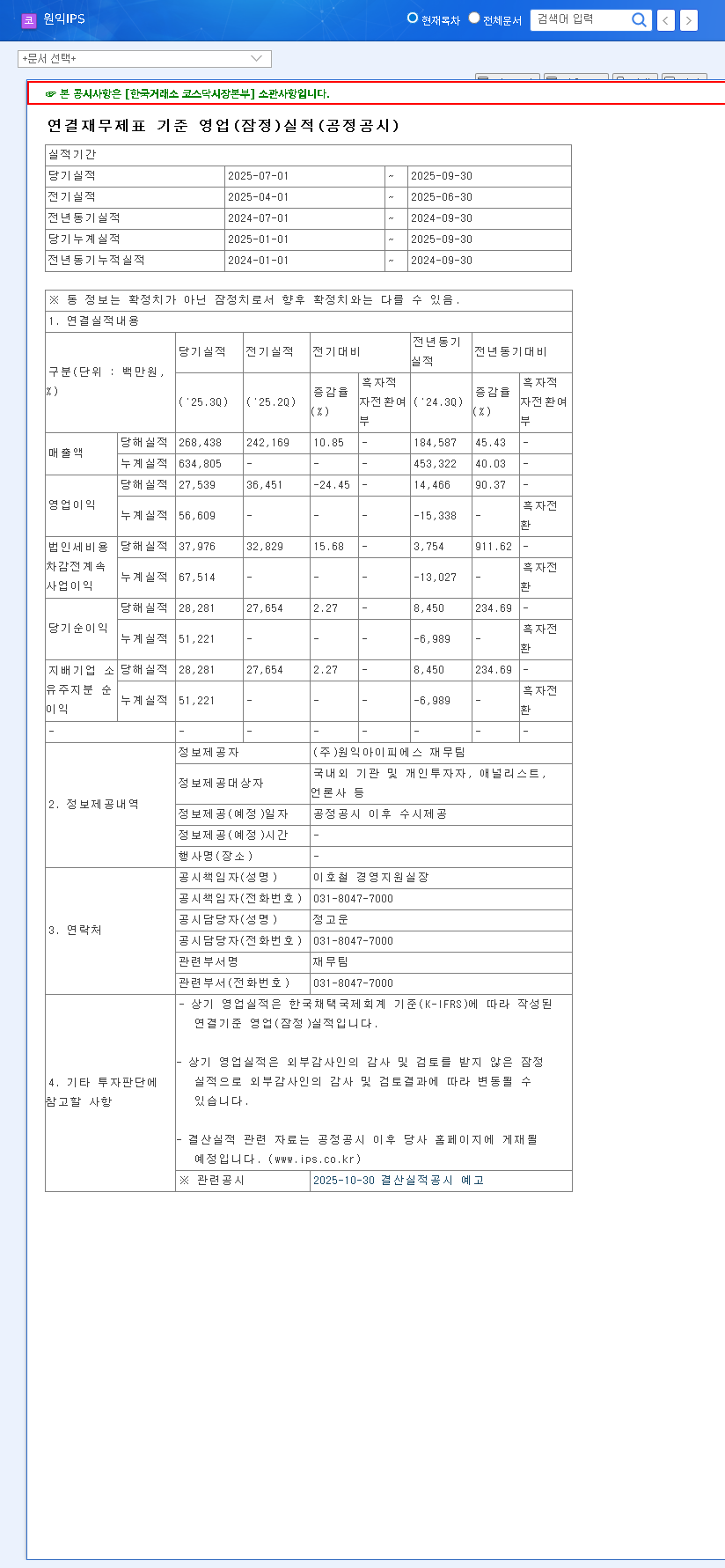
    In a challenging global market, WONIK IPS CO., LTD. has delivered a remarkable performance in its preliminary Q3 2025 earnings report, creating a significant buzz within the investment community. The semiconductor equipment manufacturer didn’t just meet expectations; it shattered them, particularly with a substantial ‘earnings surprise’ in net income. This report has solidified investor confidence and highlighted the company’s resilient growth trajectory.

    This in-depth WONIK IPS investment analysis will dissect the key figures from the Q3 2025 report, explore the fundamental drivers behind this success, evaluate potential risks, and provide a clear outlook for investors considering WONIK IPS stock.

    Deconstructing the Q3 2025 Earnings Surprise

    The preliminary results, announced on November 7, 2025, painted a picture of robust health and operational excellence. The figures, sourced from the company’s Official Disclosure, reveal a company firing on all cylinders.

    • Revenue: KRW 268.4 billion, a solid 6.9% above the consensus estimate of KRW 251.0 billion.
    • Operating Profit: KRW 27.5 billion, beating the estimated KRW 26.3 billion by 4.6%.
    • Net Income: KRW 28.3 billion, a staggering 47.4% above the market’s expectation of KRW 19.2 billion.

    While top-line revenue growth is impressive, the dramatic outperformance in net income is the key takeaway. It signals exceptional cost management, high-margin product sales, and a powerful profit generation engine at WONIK IPS.

    Core Strengths: The Pillars of Growth for WONIK IPS

    This stellar quarter isn’t a fluke. It’s built upon a foundation of strong fundamentals and strategic positioning within a dynamic market. The broader semiconductor industry continues to see tailwinds from AI and Big Data, a trend analyzed by major outlets like Bloomberg.

    Strategic R&D and Technological Leadership

    With an R&D expense ratio of nearly 21% of revenue (as of H1 2025), WONIK IPS demonstrates an aggressive commitment to innovation. This investment is crucial for developing next-generation deposition and etching technologies required for advanced 3D NAND, DRAM, and foundry processes. This focus on technology ensures the company remains a preferred supplier for major chipmakers.

    Diversified Revenue Streams

    The company’s revenue growth is directly tied to expanded capital expenditures in both the semiconductor and display markets. The increasing demand for OLED panels in smartphones, TVs, and automotive displays provides a complementary and robust revenue stream, mitigating some of the cyclicality inherent in the semiconductor sector alone.

    Impeccable Financial Health

    A low debt-to-equity ratio of just 38.02% provides significant operational flexibility and reduces financial risk for investors. This strong balance sheet allows WONIK IPS to navigate economic downturns and fund its ambitious R&D agenda without being overly reliant on debt financing.

    Investor Alert: Potential Risks and Considerations

    Despite the overwhelmingly positive WONIK IPS earnings report, prudent investors must remain aware of potential headwinds.

    • Factory Utilization Rates: Persistently low utilization rates (19% for semiconductor, 15% for display in H1) are a point of concern. While these numbers can be lumpy, they indicate a need for a more consistent flow of large-scale orders to improve production efficiency and absorb fixed costs.
    • Macroeconomic Volatility: The semiconductor industry is sensitive to global economic health. Geopolitical tensions, trade disputes, or a broad economic slowdown could dampen capital spending from chipmakers, impacting the order book for WONIK IPS.
    • Currency and Interest Rate Fluctuations: With a high dependency on exports, the company’s profitability can be affected by adverse movements in foreign exchange rates and rising global interest rates.

    Final Verdict: Investment Outlook for WONIK IPS Stock

    The Q3 2025 results serve as powerful validation of the company’s strategy and operational capabilities. The massive beat on net income, coupled with a solid growth foundation and a stable financial structure, paints a very bullish picture for the future of WONIK IPS.

    Our investment outlook remains firmly Positive with a BUY recommendation. Investors should consider this a core holding within a technology-focused portfolio. For more information on this sector, you can read our Guide to Investing in Semiconductor Stocks. Moving forward, key metrics to monitor will be improvements in factory utilization and the size of the forward order book in the upcoming Q4 and subsequent reports.

    Disclaimer: This analysis is for informational purposes only and is based on publicly available data. It does not constitute financial advice or a direct recommendation for any investment decision. All investment decisions should be made based on an individual’s own judgment and risk tolerance.

    (240810) WONIK IPS Q3 2025 Earnings: A Deep Dive Investment Analysis for Investors 관련 이미지
  • (013030) HY-LOK Q3 2025 Earnings Analysis: Record Revenue Meets Profitability Headwinds

    (013030) HY-LOK Q3 2025 Earnings Analysis: Record Revenue Meets Profitability Headwinds

    This comprehensive HY-LOK CORPORATION earnings analysis for Q3 2025 provides a crucial look into the company’s financial health amid a complex global economic landscape. On November 7, 2025, the company released preliminary figures that painted a picture of impressive top-line growth coupled with underlying profitability challenges. While record-breaking revenue signals strong market demand and operational strength, a slight miss on operating profit has investors asking critical questions. We’ll explore the key metrics, dissect the external pressures, and provide a forward-looking perspective on the potential trajectory for HY-LOK stock.

    The core story of the HY-LOK Q3 2025 results is a classic battle between robust sales expansion and the rising costs of doing business. For investors, the key is determining whether this is a temporary squeeze or a new long-term trend.

    HY-LOK Q3 2025 Earnings at a Glance

    HY-LOK CORPORATION announced its preliminary consolidated earnings, providing a clear snapshot of its performance against market expectations. The results highlight a company successfully capturing market share while navigating cost pressures.

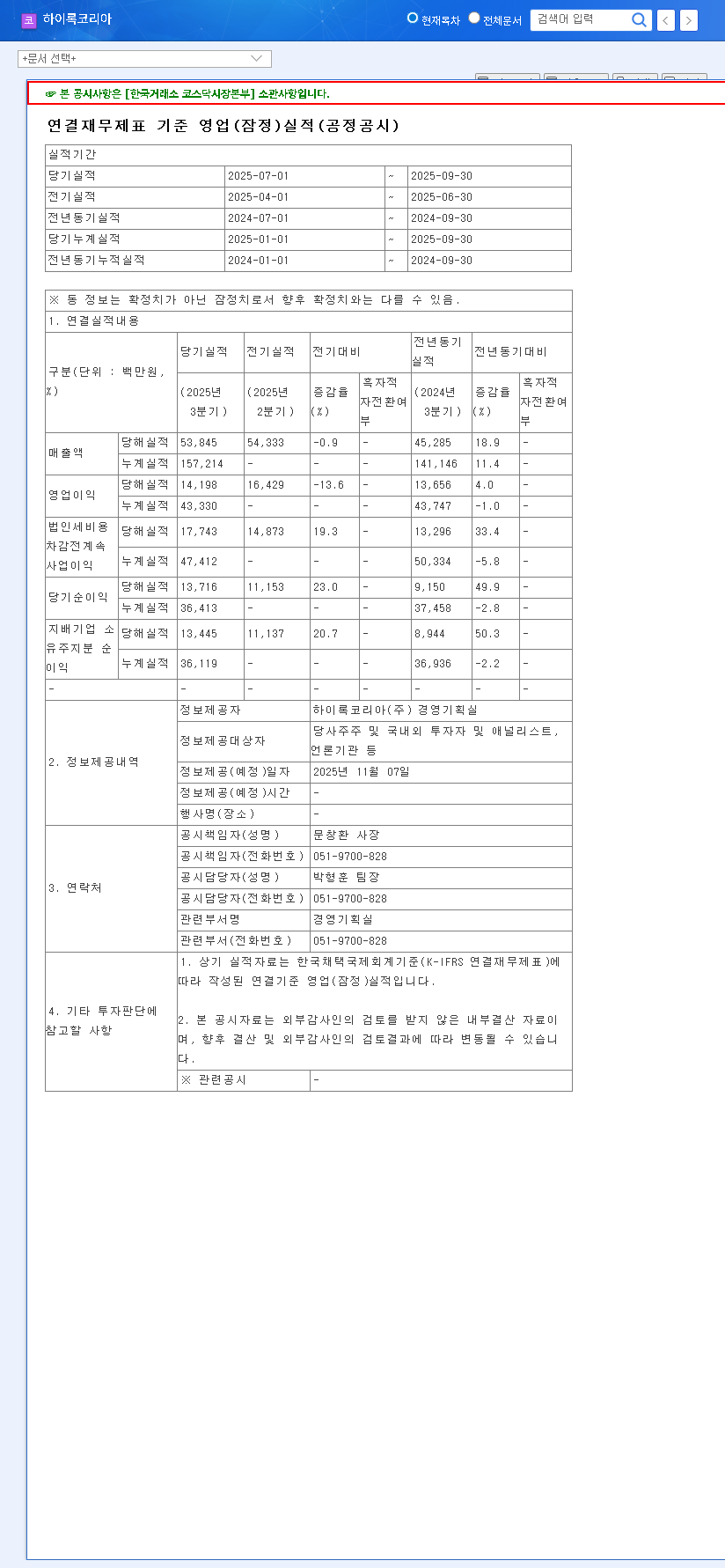
    • Revenue: KRW 53.8 billion, a strong beat against the expected KRW 51 billion. This represents a significant 18.8% increase year-over-year.
    • Operating Profit: KRW 14.2 billion, narrowly missing the consensus estimate of KRW 14.6 billion.
    • Net Profit: KRW 13.4 billion, showing a remarkable increase from KRW 9.2 billion in Q3 2024 and a healthy recovery from the previous quarter.

    For complete details, investors are encouraged to review the Official Disclosure filed with DART.

    Deep Dive into HY-LOK’s Financial Performance

    Beyond the headlines, a closer look at the trends in HY-LOK’s financial performance reveals the dynamics at play. The company’s growth trajectory is clear, but efficiency will be the key narrative moving forward.

    Revenue Growth Driven by Export Markets

    The 18.8% year-over-year revenue surge to KRW 53.8 billion is the standout positive from this report. This momentum is largely attributed to sustained strength in export markets, particularly within high-growth sectors like semiconductors and aerospace. This indicates that HY-LOK’s products remain highly competitive on a global scale. You can read more about these trends in our deep dive into the industrial components market.

    Operating Profit: The Margin Squeeze

    While operating profit grew modestly compared to last year, the miss against expectations suggests that rising costs are eating into profitability. The growth in the cost of sales and SG&A (Selling, General & Administrative) expenses appears to be outpacing revenue growth. This is a critical area for management to address, as sustained margin compression could negatively impact investor sentiment toward HY-LOK stock.

    Macroeconomic Headwinds and Tailwinds

    No company operates in a vacuum. HY-LOK’s performance is influenced by a number of external factors that present both opportunities and risks.

    • Exchange Rate Volatility: A strengthening USD and EUR against the KRW provided a tailwind for export revenues. However, this is a double-edged sword, as it also increases the cost of imported raw materials.
    • High-Interest Rate Environment: Persistently high interest rates in key markets like the U.S. and Korea can dampen overall economic activity and investment sentiment. While HY-LOK maintains a strong balance sheet, a broader market slowdown could eventually impact demand. For more on this, expert analysis from sources like Reuters provides valuable context on global monetary policy.
    • Shipping and Commodity Stability: Fortunately, key shipping cost indicators like the CCFI remained stable in Q3, and no significant raw material price shocks were noted. This stability has helped prevent further margin erosion.

    Investment Outlook: What’s Next for HY-LOK Stock?

    This HY-LOK CORPORATION earnings analysis reveals a company at a crossroads. The path forward for its stock price will likely depend on its ability to translate strong sales into even stronger profits.

    The Bull Case (Potential Positives)

    • Strong Market Position: Continued revenue growth proves the company’s core products are in high demand in critical, future-focused industries.
    • New Growth Drivers: Strategic investments in sectors like hydrogen and next-gen semiconductors could unlock significant long-term value.
    • Financial Stability: A solid financial foundation allows the company to weather economic uncertainty and continue investing in growth.

    The Bear Case (Key Risks to Monitor)

    • Profitability Management: The number one concern. The market will be watching Q4 and beyond for signs that the company can improve cost controls and expand its operating profit margins.
    • Macroeconomic Risks: A global recession or sharp, unfavorable swings in exchange rates could quickly reverse the positive revenue trend.

    Disclaimer: This analysis is based on preliminary public information and is for informational purposes only. It does not constitute investment advice. Investors should conduct their own due diligence before making any investment decisions.

    (013030) HY-LOK Q3 2025 Earnings Analysis: Record Revenue Meets Profitability Headwinds 관련 이미지
  • (348350) WITHTECH SK Hynix Contract: A KRW 3.9B Deep Dive & Stock Analysis

    (348350) WITHTECH SK Hynix Contract: A KRW 3.9B Deep Dive & Stock Analysis

    The recent announcement of the WITHTECH SK Hynix contract, a substantial KRW 3.9 billion deal, has sent ripples through the semiconductor industry and caught the attention of keen investors. As the demand for advanced semiconductors skyrockets, the technology that underpins their flawless production—specifically, manufacturing environment monitoring—becomes mission-critical. This deal not only represents a significant revenue injection for WITHTECH, Inc. but also serves as a powerful endorsement of its technological leadership.

    This comprehensive analysis unpacks the details of this pivotal agreement, examines WITHTECH’s current financial health, and provides a forward-looking perspective for potential investors. We will explore whether this contract is the catalyst for a new era of growth or if underlying financial concerns warrant a more cautious approach to WITHTECH stock.

    Deconstructing the WITHTECH SK Hynix Contract

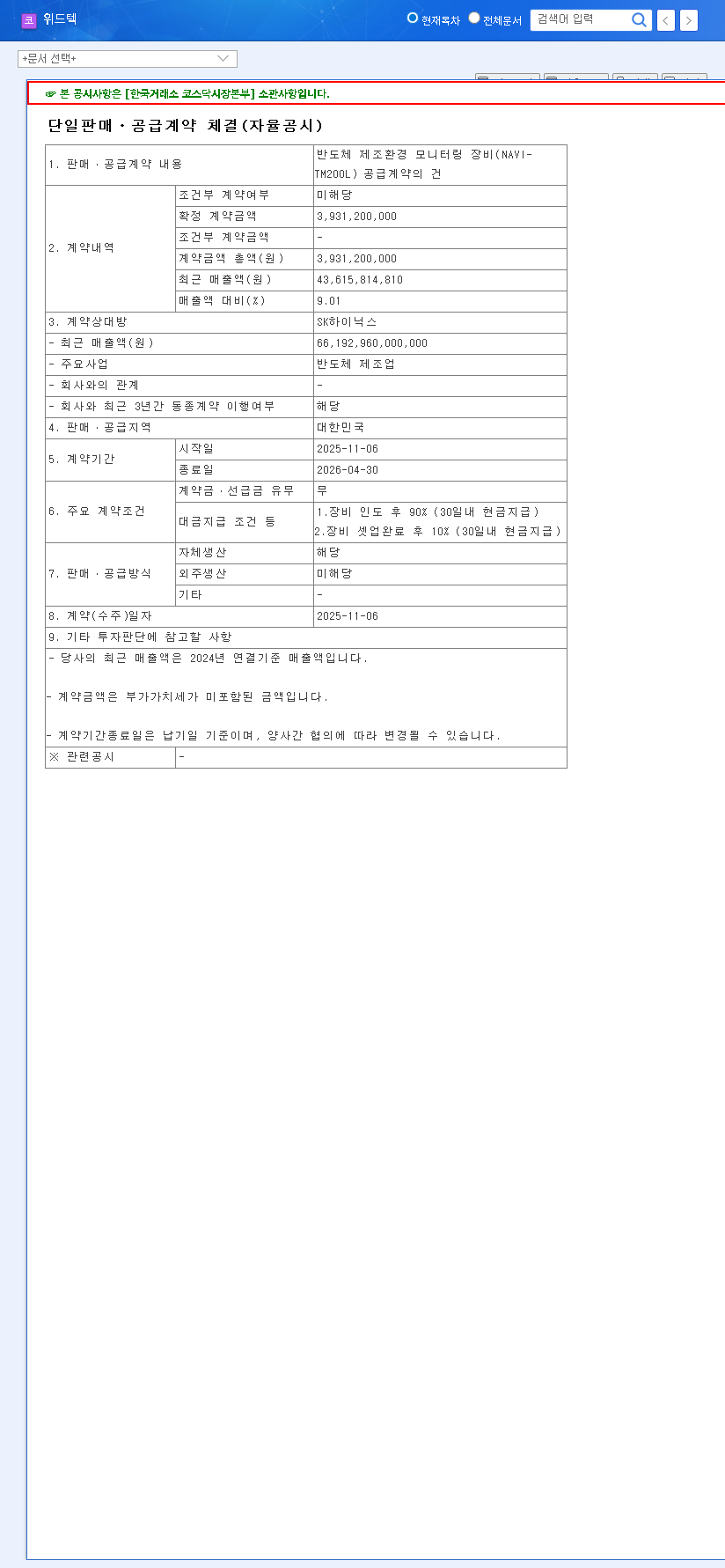
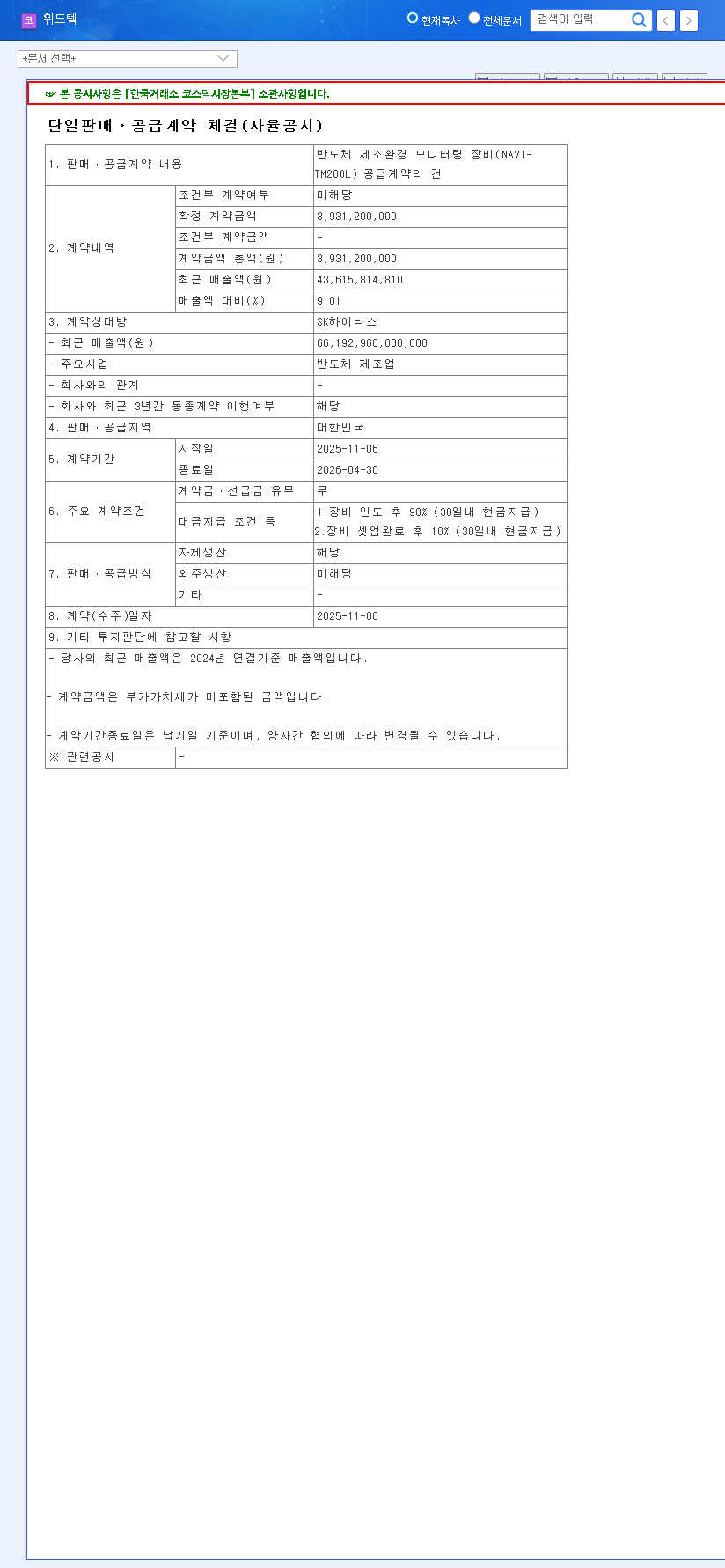
    On November 7, 2025, WITHTECH, Inc. formally disclosed a major agreement with SK Hynix, a global leader in memory semiconductors. The deal involves the supply of its advanced semiconductor monitoring equipment, specifically the NAVI-TM200L model. Here are the core details:

    • Contract Value: KRW 3.9 billion.
    • Financial Impact: This figure represents a significant 20.3% of WITHTECH’s revenue from its 23rd semi-annual period.
    • Contract Period: November 6, 2025, to April 30, 2026.
    • Source: The details of this agreement are publicly available in the Official Disclosure on DART.

    This isn’t just a simple equipment sale. The NAVI-TM200L system is crucial for monitoring and controlling molecular-level contaminants in real-time within fabrication plants (fabs). As chip architecture shrinks to the nanometer scale, even the slightest impurity can render an entire wafer useless, making this technology indispensable for maximizing yield and profitability.

    Why This Deal is a Game-Changer for WITHTECH

    1. Validating Technological Supremacy

    Securing a contract of this magnitude from a tier-one manufacturer like SK Hynix is the ultimate validation. It proves that WITHTECH’s technology meets the incredibly stringent standards required for cutting-edge memory production, such as HBM for AI applications. This credibility can be leveraged to attract new clients and solidify its market position against competitors.

    2. Immediate and Future Revenue Growth

    The immediate KRW 3.9 billion boost is set to significantly impact WITHTECH’s top-line growth. More importantly, it deepens the company’s integration into the SK Hynix supply chain. As SK Hynix continues to expand its production capacity to meet AI-driven demand, WITHTECH is now perfectly positioned to win subsequent, potentially larger, orders. This is a critical step in building a long-term, predictable revenue stream. For a deeper understanding of industry trends, explore insights from authoritative sources like Gartner’s semiconductor forecast.

    This contract is more than a financial transaction; it’s a strategic partnership that anchors WITHTECH’s technology at the heart of the global AI revolution, driven by industry leaders like SK Hynix.

    WITHTECH Investment Analysis: A Look at the Fundamentals

    While the SK Hynix deal is unequivocally positive, a prudent WITHTECH investment decision requires a balanced view of the company’s underlying financial health.

    Strengths to Consider

    • Premier Client Roster: Long-standing relationships with titans like Samsung Electronics and SK Hynix provide a stable business foundation.
    • Favorable Market Tailwinds: The entire semiconductor industry is moving towards more complex processes, increasing the need for sophisticated contamination monitoring.
    • Financial Stability: The company maintains a low debt-to-equity ratio, indicating a healthy balance sheet and reduced financial risk.

    Concerns Requiring Monitoring

    Despite growing revenue, profitability has become a challenge. The 23rd semi-annual report revealed a consolidated operating loss of KRW 0.59 billion and a net loss of KRW 2.1 billion. This was driven by rising costs in sales, administration, and crucial R&D. Furthermore, operating cash flow was negative at KRW -5.017 billion, signaling that the company spent more cash than it generated from its core operations during the period. Investors must watch to see if the profitability of the WITHTECH SK Hynix contract can help reverse this trend. To learn more, you can read our guide on understanding cash flow statements.

    Future Outlook and Investor Action Plan

    The SK Hynix contract is a powerful catalyst for WITHTECH. It provides a clear pathway to revenue growth and enhances its industry standing. However, the long-term success of WITHTECH stock hinges on the company’s ability to translate this top-line momentum into bottom-line profitability.

    Investors should keep a close watch on the following key metrics in upcoming quarterly reports:

    • Profit Margins: Will the new contract carry a high enough margin to improve overall profitability?
    • Operating Cash Flow: Can the company convert its new sales into positive cash flow?
    • Cost Management: Are there clear strategies in place to control rising SG&A and other operational expenses?

    In conclusion, the WITHTECH SK Hynix contract is a significant and promising development that reaffirms the company’s growth potential. For investors, it signals a major opportunity, but one that must be balanced with diligent monitoring of the company’s progress toward sustainable profitability.

    (348350) WITHTECH SK Hynix Contract: A KRW 3.9B Deep Dive & Stock Analysis 관련 이미지
  • (140860) Park Systems Corp. Earnings Analysis (Q3 2025): A Deep Dive for Investors

    (140860) Park Systems Corp. Earnings Analysis (Q3 2025): A Deep Dive for Investors

    The latest Park Systems Corp. earnings report for Q3 2025 has surprised investors. As a global leader in Atomic Force Microscopy (AFM), Park Systems (KOSDAQ: 140860) is a key player in the advanced semiconductor and research industries. However, its recent financial disclosure revealed a significant shortfall against market expectations, triggering a necessary re-evaluation for current and potential shareholders.

    This comprehensive investment analysis breaks down the reasons behind the Q3 underperformance, examines the potential impact on the Park Systems stock price, and provides strategic insights for navigating the path forward. We’ll delve into the company’s core technology, recent acquisitions, and the macroeconomic landscape to help you make a well-informed decision.

    Q3 2025 Earnings Report: A Closer Look at the Numbers

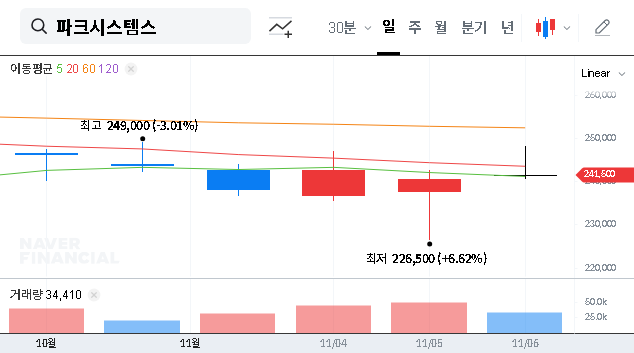
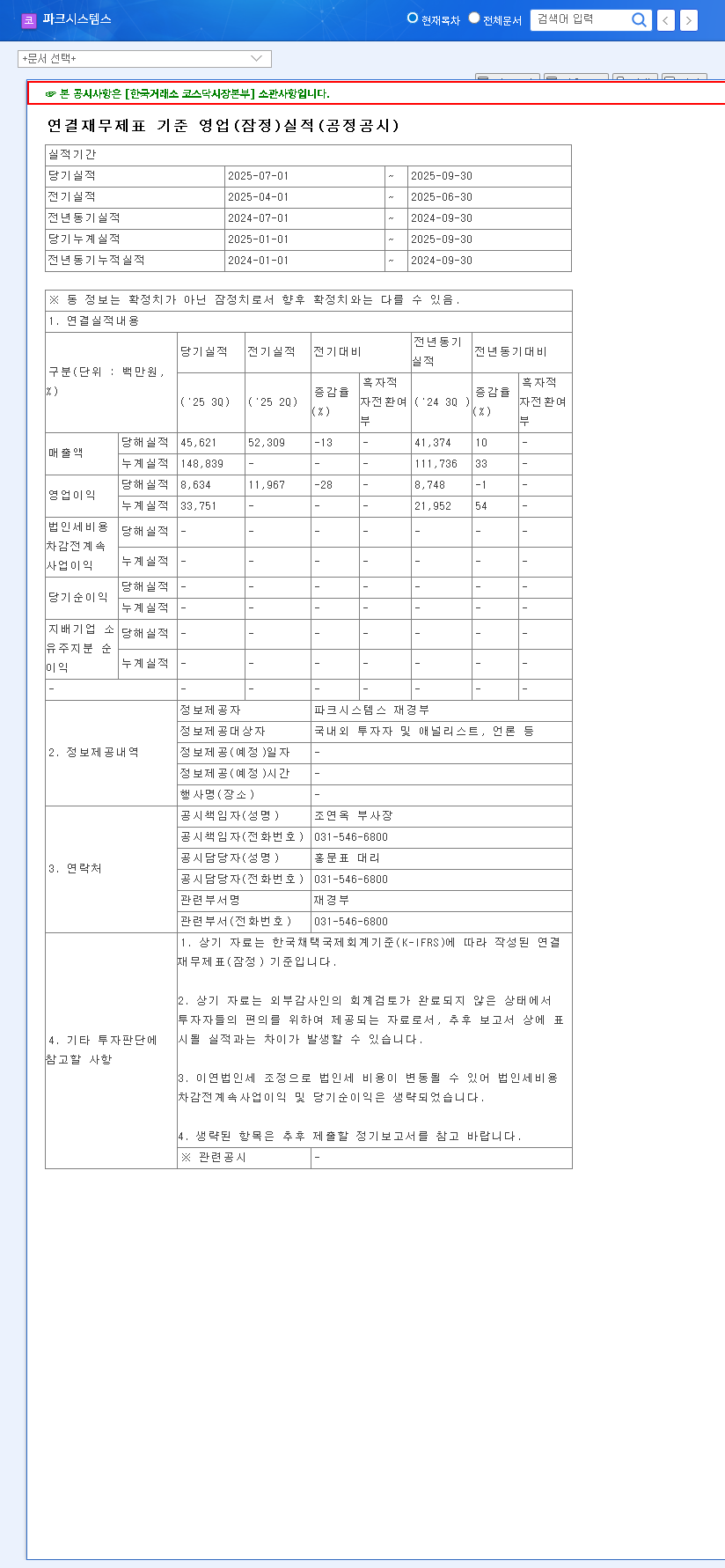
    On November 6, 2025, Park Systems Corp. released its preliminary Q3 earnings, which fell notably short of consensus estimates. According to the Official Disclosure, the key figures were:

    • Revenue: KRW 45.6 billion, missing the estimate of KRW 51.5 billion by 11%.
    • Operating Profit: KRW 8.6 billion, a significant 28% below the estimate of KRW 12.0 billion.
    • Quarter-over-Quarter Decline: These numbers represent a 12.8% decrease in revenue and a 28.3% drop in operating profit compared to Q2 2025.

    This sharp deviation from expectations has understandably raised questions about the company’s growth trajectory and near-term profitability, creating downward pressure on the Park Systems stock.

    Why Did Park Systems Miss Expectations?

    While the company’s fundamentals in the AFM market remain strong, a combination of strategic investments and potential market shifts contributed to the Q3 earnings miss.

    Aggressive M&A and Integration Costs

    A primary factor impacting the bottom line is the cost associated with recent strategic acquisitions. The integration of Lyncee Tec SA (Switzerland) and Accurion GmbH (Germany) are long-term plays to bolster Park’s technological portfolio. However, in the short term, such moves invariably lead to significant one-time costs, including legal fees, severance packages, and the complex process of merging different corporate cultures and technology stacks. These expenses appear to have temporarily compressed operating margins more than analysts anticipated.

    Temporary Slowdown and Market Dynamics

    Despite a generally positive environment in the semiconductor industry, Park’s growth stalled. This could be due to several factors. There may have been delays in large-scale orders from key clients, a temporary saturation in a specific market segment, or intensified competition from other players in the microscopy space. Understanding the nature of this slowdown—whether it’s a cyclical blip or a more structural issue—is crucial for a long-term investment analysis.

    While the short-term financial results are concerning, it’s vital to assess whether the underlying long-term growth story, driven by technological leadership in the AFM market and strategic acquisitions, remains intact.

    Strategic Outlook: An Action Plan for Investors

    Given the latest Park Systems Corp. earnings report, investors should adopt a nuanced and cautious approach. It’s essential to separate short-term market reactions from the company’s long-term fundamental value. For more on this, you can review our guide on how to analyze a tech stock’s fundamentals.

    Short-Term Strategy (3-6 Months)

    • Adopt a Conservative Stance: It may be prudent to hold off on new investments until there is clear evidence of an earnings recovery in the Q4 report or positive forward-looking guidance from management.
    • Monitor Key Levels: Expect increased volatility in the Park Systems stock. Keep an eye on technical support levels and trading volumes for signs of capitulation or stabilization.

    Mid- to Long-Term Strategy (1-3 Years)

    The long-term case for Park Systems hinges on its technological dominance and strategic execution. The importance of Atomic Force Microscopy in enabling next-generation technologies is undeniable.

    • Track M&A Synergy: The key catalyst will be evidence that the recent acquisitions are bearing fruit through new products, expanded market share, or improved technological capabilities.
    • Evaluate R&D Pipeline: Monitor the company’s advancements in integrating AI and robotics into its AFM systems, as these innovations are crucial for maintaining a competitive edge.
    • Assess Macroeconomic Resilience: Given its high export ratio, evaluate how effectively the company manages currency fluctuations and navigates global semiconductor trade policies.

    Frequently Asked Questions (FAQ)

    What were Park Systems Corp.’s Q3 2025 earnings?

    Park Systems reported revenue of KRW 45.6 billion and an operating profit of KRW 8.6 billion, missing market estimates by 11% and 28%, respectively.

    What caused the earnings miss?

    The underperformance is primarily attributed to higher-than-expected costs from the integration of recent acquisitions and a temporary slowdown in growth, possibly due to delayed orders or other market factors.

    What is the outlook for Park Systems stock?

    The short-term outlook involves likely downward pressure and volatility. The long-term outlook depends on the successful integration of its acquisitions and its ability to maintain technological leadership in the expanding AFM market.

    (140860) Park Systems Corp. Earnings Analysis (Q3 2025): A Deep Dive for Investors 관련 이미지
  • (178320) SEOJIN SYSTEM (124075900928) Stock Analysis: Performance, Risks & Investor Outlook

    (178320) SEOJIN SYSTEM (124075900928) Stock Analysis: Performance, Risks & Investor Outlook

    Investors examining SEOJIN SYSTEM (124075900928) are currently facing a complex picture. The company has recently been navigating significant headwinds, including a notable decline in its H1 2025 performance and concurrent shifts in its major shareholder structure. These events raise critical questions for any current or potential investor: Are these temporary setbacks in a volatile market, or do they signal a fundamental turning point for the company’s long-term value? This comprehensive SEOJIN SYSTEM analysis will dissect the company’s recent performance, explore the underlying causes, and provide a clear, forward-looking investment thesis to guide your decision-making process.

    The Dual Challenge: Performance and Ownership

    At the heart of the recent market concern are two primary developments that have created uncertainty around the SEOJIN SYSTEM stock. First, the company’s financial results for the first half of 2025 showed a significant downturn. Second, changes were reported in the holdings of its controlling shareholder, creating speculation about stability and future direction.

    Major Shareholder Fluctuations

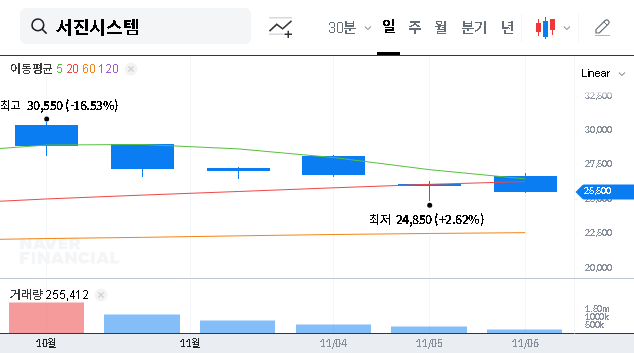
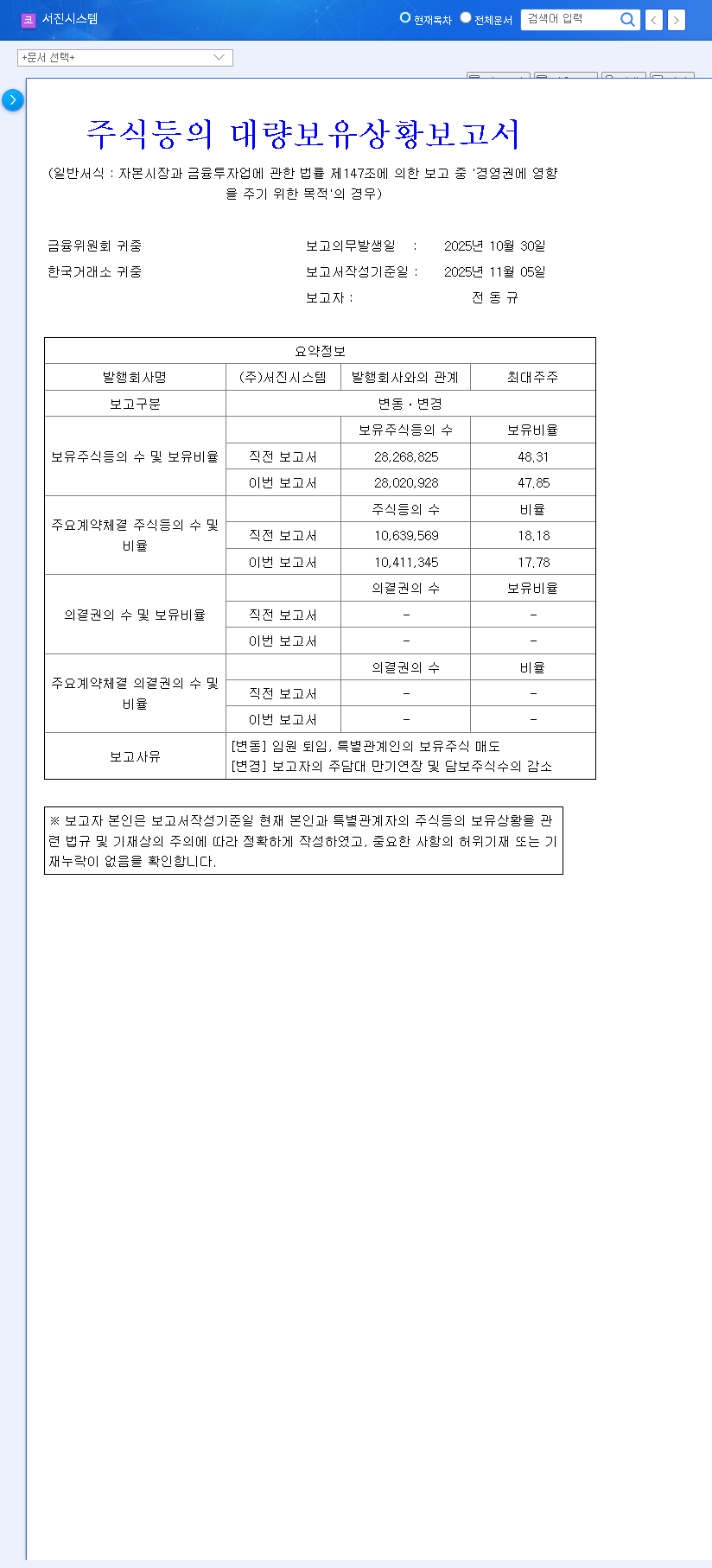
    On November 6, 2025, a mandatory disclosure revealed shifts in the shares held by controlling shareholder Dong-kyu Jeon and related parties. According to the Official Disclosure (DART), the collective stake decreased by 0.46 percentage points, from 48.31% to 47.85%. This was attributed to an executive’s retirement, a sale of shares by an affiliate, and personal financial adjustments by the shareholder. While not a massive reduction, any change in a controlling stake can impact investor sentiment.

    H1 2025 Performance Downturn

    The financial report for the first half of 2025 painted a challenging picture. Consolidated revenue and operating profit saw substantial year-over-year reductions, and net income flipped to a deficit. This slump was not isolated to one area but was observed across all of the company’s key business segments, including Energy Storage Systems (ESS), electric vehicles (EV), semiconductors, and communications equipment.

    Why the Downturn? A Deeper Look at the Fundamentals

    Understanding the reasons behind the performance drop is crucial. The issues stem from both sector-specific challenges and a weakening overall financial structure, which is a key part of this SEOJIN SYSTEM investor report.

    Underperformance Across Key Business Segments

    • ESS Equipment: Despite the global ESS market’s strong growth trajectory, H1 sales for SEOJIN SYSTEM decreased significantly, suggesting potential market share loss or project delays.
    • Electric Vehicle & Battery Components: Similarly, sales in the booming EV sector declined. Compounding this, substantial facility investments are increasing the company’s financial burden without yet delivering commensurate returns.
    • Semiconductor Equipment: While market analysts like Gartner project long-term growth, H1 sales fell, highlighting the company’s vulnerability to industry volatility and intense competition.
    • Communication Equipment: A sharp decline in sales, despite global investment in 5G, shows a high sensitivity to the capital expenditure cycles of major telecom operators.

    Worsening Financial Health

    The company’s balance sheet reflects this operational strain. The debt-to-equity ratio rose from 1.40x to 1.83x, a worrying trend that signals increasing leverage. A decrease in total equity alongside this rising debt raises concerns about overall financial soundness. For a deeper dive into these metrics, investors can review our guide on Understanding Financial Ratios for Tech Stocks.

    Investment Outlook: Navigating the Uncertainty

    Given the dual headwinds of poor performance and ownership changes, the short-to-medium-term outlook for SEOJIN SYSTEM stock is clouded. The market is likely to react with caution, putting downward pressure on the stock price. The declining trend in foreign ownership, which fell from 10.44% in 2020 to 7.84% in August 2024, could accelerate if these negative trends persist.

    Given the confluence of fundamental deterioration and market uncertainty, our current investment opinion for SEOJIN SYSTEM is a ‘Hold.’ It is essential for investors to monitor for clear recovery signals before considering new or additional positions.

    Key Risk Factors to Monitor

    • Delayed Recovery: If the key business segments fail to rebound in the coming quarters, the stock could face further downward pressure.
    • Shareholder Overhang: The potential for additional share sales from affiliates could continue to weigh on market sentiment.
    • Financial Burden: The high debt ratio becomes a significant risk in a sustained high-interest-rate environment, potentially limiting future investment.
    • Macroeconomic Volatility: As an exporter, SEOJIN SYSTEM is highly exposed to exchange rate fluctuations (KRW/USD, KRW/EUR), which can directly impact profitability.

    Potential Positive Catalysts

    Despite the current challenges, it’s important to recognize the company’s underlying strengths. A comprehensive SEOJIN SYSTEM analysis isn’t complete without acknowledging its long-term potential.

    • High-Growth Portfolio: The company operates in industries—ESS, electric vehicles, and semiconductors—that are poised for significant long-term growth.
    • Operational Strengths: Its competitive Vietnam production base and proprietary technology provide a durable competitive advantage that can help it weather market downturns.

    Investors should closely watch upcoming earnings releases for signs of a turnaround, monitor any further shareholder changes, and look for proactive efforts from management to improve the company’s financial structure.

    (178320) SEOJIN SYSTEM (124075900928) Stock Analysis: Performance, Risks & Investor Outlook 관련 이미지