Tag: SAMSUNG HEAVY INDUSTRIES CO.

  • (010140) Samsung Heavy Industries Lands ₩341B Oil Tanker Order: 2025 Stock Outlook & Analysis

    (010140) Samsung Heavy Industries Lands ₩341B Oil Tanker Order: 2025 Stock Outlook & Analysis

    In a significant move that underscores the renewed vigor in the global shipbuilding market, Samsung Heavy Industries (SHI), a titan of South Korea’s maritime industry, has officially announced a massive new shipbuilding contract. The ₩341.1 billion deal for three state-of-the-art oil tankers, destined for a Liberian shipowner, signals more than just another entry in the order books. It offers a crucial glimpse into the company’s strategic direction, financial stability, and the potential trajectory of Samsung Heavy Industries stock.

    This comprehensive analysis will dissect the contract’s details, evaluate its impact on SHI’s financial health and market position, and provide a forward-looking perspective for investors navigating the complexities of the shipbuilding sector.

    Deconstructing the ₩341.1 Billion Shipbuilding Contract

    On October 24, 2025, Samsung Heavy Industries filed an official disclosure confirming the substantial order. This deal is not just a number; it’s a testament to SHI’s enduring competitiveness in constructing high-value vessels. Let’s break down the core components of this agreement.

    Key Contract Specifications

    • Event: Single Sales & Supply Contract
    • Counterparty: A Liberian-based shipowner
    • Scope: Construction and delivery of three advanced oil tankers
    • Contract Value: ₩341.1 Billion (approximately $237 million USD)
    • Performance Period: October 23, 2025 – March 31, 2029
    • Official Source: Click to view DART report

    This oil tanker order, while representing a modest 3.4% of recent semi-annual revenue, is strategically significant. It reinforces SHI’s foothold in the conventional vessel market, providing a balanced portfolio alongside its well-known specialization in high-tech LNG carriers. Learn more about our deep dive into LNG carrier technology.

    Market Context: Navigating a Complex Global Environment

    To appreciate the full impact of this order, we must view it within the broader industry landscape. The shipbuilding world is influenced by a confluence of economic, regulatory, and geopolitical factors. The demand for new tankers is often driven by fleet replacement cycles and evolving environmental standards set by organizations like the International Maritime Organization (IMO). These new vessels will likely feature advanced fuel-efficiency technologies to comply with stricter carbon intensity regulations.

    This contract is a clear indicator that despite global economic uncertainties, the demand for modern, efficient vessels remains robust. For Samsung Heavy Industries, it’s a strategic win that strengthens their order backlog and showcases their technological edge.

    However, challenges persist. Volatility in steel prices, fluctuating currency exchange rates (particularly the USD/KRW pair), and rising interest rates create a complex operational environment. Furthermore, lingering geopolitical risks, such as the previously reported contract terminations related to the Zvezda project, remain a key consideration for investors.

    Impact Analysis for Samsung Heavy Industries Stock

    For current and potential shareholders, the central question is: what does this mean for the Samsung Heavy Industries stock price? The impact can be analyzed from short-term and long-term perspectives.

    Short-Term Stock Momentum

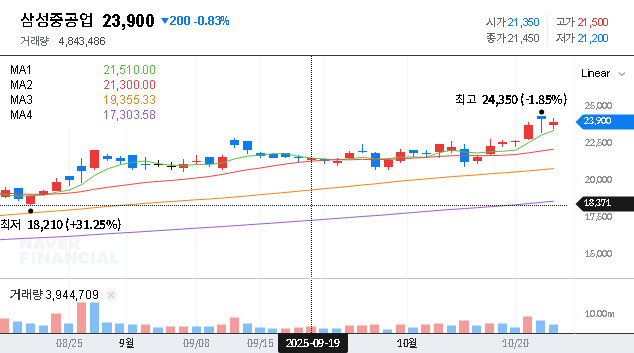
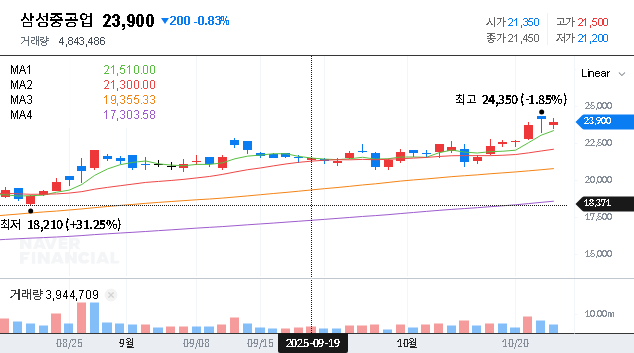
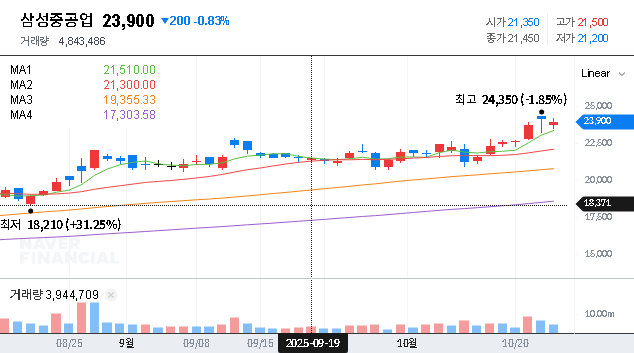
    In the short term, news of a major shipbuilding contract typically provides a positive catalyst. It improves investor sentiment, validates the company’s business model, and can lead to a rally in the stock price. This order reinforces the positive trend SHI has seen since its lows in early 2020, providing fresh momentum for the market.

    Long-Term Value and Stability

    From a long-term perspective, the consistent accumulation of orders is paramount. This contract adds to an already substantial order backlog (₩43.2 trillion), ensuring revenue visibility for the next several years. The USD-denominated nature of the contract also offers a potential hedge against a weakening Korean Won, which can lead to favorable foreign currency valuation gains. However, long-term performance will depend on SHI’s ability to manage project execution, control costs amidst material price volatility, and navigate the aforementioned geopolitical risks.

    Investor Outlook & Key Takeaways

    This ₩341.1 billion oil tanker order is an unequivocally positive development for Samsung Heavy Industries. It demonstrates sustained operational excellence and market trust. For investors, the key is to adopt a balanced and strategic viewpoint.

    • Acknowledge the Positives: The order strengthens the company’s backlog and confirms its competitive position in building conventional vessels.
    • Monitor the Risks: Keep a close eye on raw material costs, interest rate trends, and any developments related to the company’s Russian exposure.
    • Look at the Big Picture: Base investment decisions on a holistic view of SHI’s entire order pipeline, its progress in high-margin sectors like LNG, and its overall financial health, rather than on a single contract.

    In conclusion, this deal is a solid step forward for Samsung Heavy Industries, but it’s one piece of a much larger, more complex puzzle. A smart investment strategy involves appreciating the victory while remaining vigilant about the challenges ahead.
    (010140) Samsung Heavy Industries Lands ₩341B Oil Tanker Order: 2025 Stock Outlook & Analysis 관련 이미지
  • (010140) Samsung Heavy Industries Q3 2025 Earnings: Profit Soars Past Estimates, But Net Income Raises Questions | Full Investor Analysis

    (010140) Samsung Heavy Industries Q3 2025 Earnings: Profit Soars Past Estimates, But Net Income Raises Questions | Full Investor Analysis

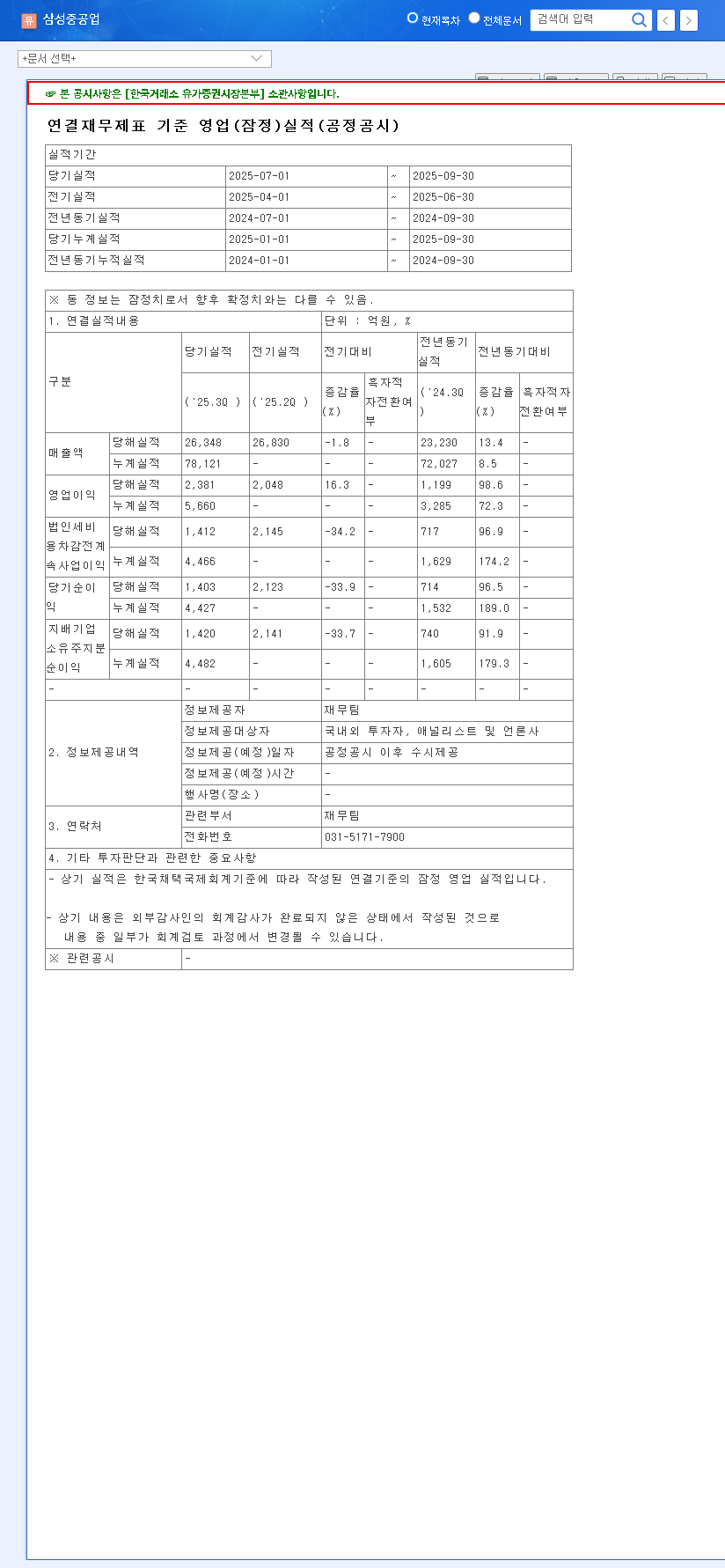
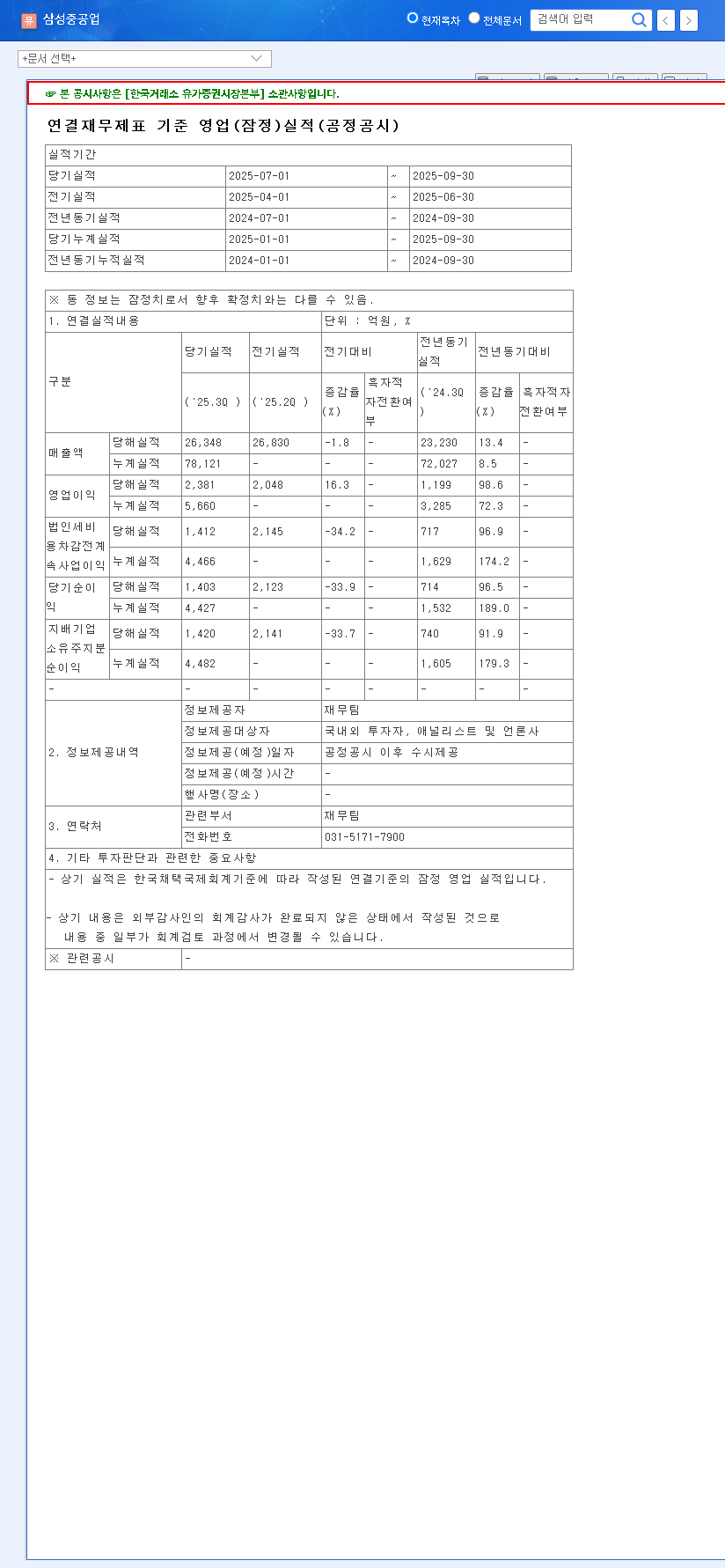
    The latest SAMSUNG HEAVY INDUSTRIES Q3 2025 Earnings report, released on October 23, 2025, has sent a mixed but intriguing signal to the market. While the shipbuilding giant showcased a formidable operating profit that significantly outpaced expectations, a concurrent dip in net income has left investors seeking clarity. This comprehensive analysis will break down the numbers, explore the underlying factors driving this performance, and provide a strategic outlook for both short-term traders and long-term stakeholders.

    Can Samsung Heavy Industries (SHI) harness the momentum from its operational excellence to navigate the complexities revealed in its bottom line? Let’s delve into the data and uncover the full story.

    Q3 2025 Financials: The Tale of Two Profits

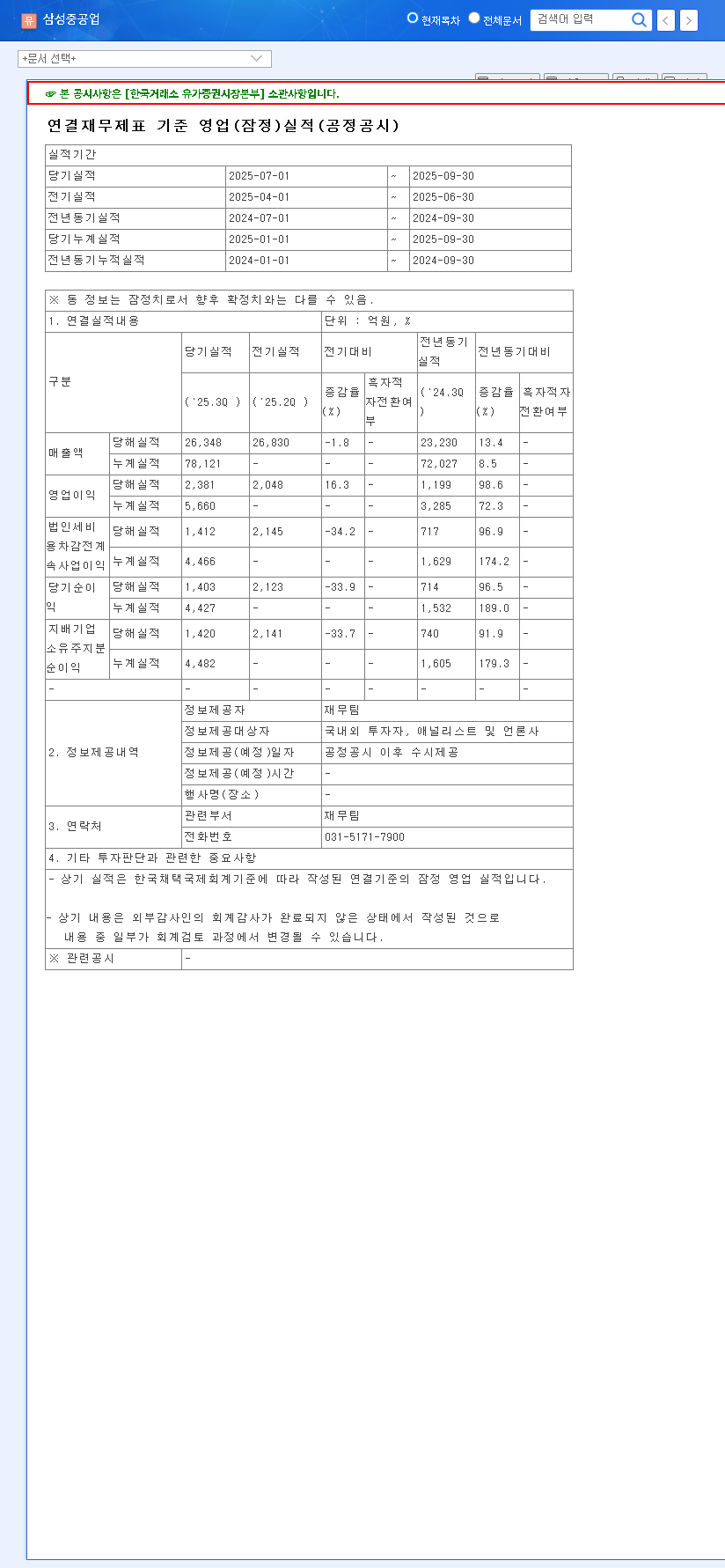
    Samsung Heavy Industries announced its provisional consolidated financial results, revealing a fascinating divergence between operational strength and net profitability. The official figures present a clear picture of this trend. For full transparency, investors can review the Official Disclosure (DART Report).

    • Revenue: KRW 2,634.8 billion, a slight miss of 2.4% against the market estimate of KRW 2,699.0 billion.
    • Operating Profit: KRW 238.1 billion, a robust 8.2% beat over the market estimate of KRW 220.1 billion.
    • Net Income: KRW 142.0 billion, falling 17.1% short of the market estimate of KRW 171.3 billion.

    The core story of the SAMSUNG HEAVY INDUSTRIES Q3 2025 Earnings is one of operational mastery. The company’s ability to control costs, improve margins, and enhance production efficiency is evident in its stellar operating profit. This is a powerful indicator of fundamental business health.

    Decoding the Discrepancy: Why Did Net Income Falter?

    The gap between a surging operating profit and a declining net income requires careful examination. Operating profit reflects the core shipbuilding business’s health, while net income accounts for non-operating factors. The shortfall in the latter could stem from several areas:

    Potential Culprits for the Net Income Miss

    • Financial Costs: As a capital-intensive business, SHI’s debt servicing costs can fluctuate with interest rates. A rise in these costs could have eaten into the bottom line.
    • Foreign Exchange Losses: The shipbuilding industry deals heavily in US dollars. Unfavorable movements in the KRW/USD exchange rate can lead to significant non-operating losses on contracts and foreign currency holdings.
    • Tax Expenses & One-Off Charges: An increased corporate tax burden or non-recurring extraordinary losses related to specific projects or write-downs could also be contributing factors.

    While the operating profit has been on a clear upward trend since Q1 2025, reaching its highest level in three quarters, the net income’s volatility highlights the external pressures impacting the company. A detailed statement from SHI during its upcoming investor call will be critical to fully understand these dynamics.

    Investment Outlook: Navigating the Short and Long Term

    Investors are now weighing the positive operational signals against the concerning net income figures. Here’s how the SHI stock analysis is shaping up.

    Short-Term Market Reaction

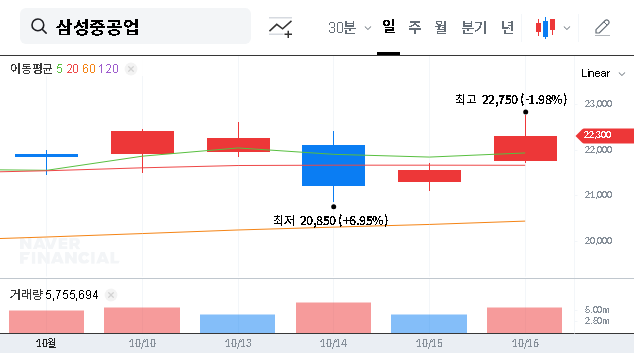
    In the immediate term, the market’s direction will hinge on which narrative wins out. The positive sentiment from the operating profit beat could drive the stock up, as it signals strong core fundamentals. However, the net income miss could create uncertainty and selling pressure. The key variable will be the company’s communication and its ability to reassure investors that the net income issues are manageable and non-recurring.

    Mid-to-Long-Term Growth Drivers

    For long-term shipbuilding industry investment, the focus shifts to the foundational pillars of growth:

    • Order Backlog: The true health of a shipbuilder is its order book. Consistent wins for high-value vessels are paramount for future revenue and profitability.
    • High-Value Vessels: SHI’s competitiveness in building LNG carriers, methanol-fueled ships, and complex offshore plants is crucial. These vessels command higher margins and are in high demand due to global decarbonization efforts, as outlined by bodies like the International Maritime Organization.
    • Technological Edge: Continued investment in eco-friendly technologies and smart ship solutions will define the industry leaders of tomorrow. Investors should monitor SHI’s R&D progress in these areas. For more details, see our analysis on future trends in the shipbuilding market.

    Conclusion: A Cautiously Optimistic Outlook

    The SAMSUNG HEAVY INDUSTRIES Q3 2025 Earnings report paints a picture of a company with a strong operational core facing external financial headwinds. The impressive Samsung Heavy Industries profit at the operating level demonstrates a successful focus on efficiency and high-margin projects. While the net income figure is a point of concern that requires clarification, the long-term thesis for SHI remains tied to its ability to secure high-value orders and lead in the green shipping transition. Prudent investors will watch for the company’s official explanation and focus on the forward-looking order book as the ultimate indicator of sustained growth.

    (010140) Samsung Heavy Industries Q3 2025 Earnings: Profit Soars Past Estimates, But Net Income Raises Questions | Full Investor Analysis 관련 이미지
  • (010140) Samsung Heavy Industries ESG Strategy: Analyzing the KRW 980M Corporate Donation

    (010140) Samsung Heavy Industries ESG Strategy: Analyzing the KRW 980M Corporate Donation

    In the complex world of modern finance, the line between corporate expense and strategic investment is increasingly blurred. A prime example is the recent disclosure from Samsung Heavy Industries CO.,LTD regarding its planned KRW 980 million (approx. $715,000 USD) corporate donation for 2025. While seemingly a minor footnote on the balance sheet of a multi-trillion KRW giant, this move offers profound insights into the company’s long-term vision and its commitment to a robust Samsung Heavy Industries ESG (Environmental, Social, and Governance) framework. This analysis will dissect the donation, exploring its minimal short-term financial impact versus its substantial long-term value creation potential for savvy investors focused on corporate sustainability.

    We will explore the financial and non-financial ramifications of this corporate social responsibility (CSR) initiative, highlighting the critical takeaways for stakeholders and those engaged in ESG investing. This isn’t just about philanthropy; it’s about building a resilient and reputable corporate future.

    Deconstructing the KRW 980 Million Corporate Donation

    On October 23, 2025, Samsung Heavy Industries autonomously disclosed its plan for this significant corporate donation, a move detailed in their Official Disclosure (DART). For a corporation with a market capitalization exceeding KRW 21 trillion, this amount demonstrates a calculated commitment to strengthening its social contract and enhancing its public image without impacting core financial stability.

    A Strategic Allocation of Funds

    The distribution of the funds reveals a thoughtful CSR strategy targeting key areas of societal need, which directly contributes to a stronger Samsung Heavy Industries ESG profile. The key beneficiaries include:

    • Community Chest of Korea (KRW 370M): Broad-based support for vulnerable communities and youth transitioning from care, showing a commitment to social safety nets.
    • Samsung Life Public Welfare Foundation (KRW 310M): Focusing on essential services like childcare and healthcare, addressing foundational societal needs.
    • Samsung Welfare Foundation (KRW 195M): Investing in education for underprivileged students, helping to build the workforce of tomorrow.
    • Sungkyunkwan University (KRW 190M): Nurturing elite talent and fostering innovation, a direct investment in the nation’s future intellectual capital.
    • Other Foundations (KRW 75M): Further support for academic, artistic, and local welfare initiatives, rounding out a comprehensive CSR portfolio.

    The Real ROI: Analyzing the Financial and Non-Financial Impact

    Short-Term Financials: A Ripple, Not a Wave

    Financially, the KRW 980 million donation is negligible. It represents a tiny fraction of total sales and operating profit, resulting in a minimal reduction in net profit and an insignificant cash outflow. For investors focused purely on quarterly earnings, this event will barely register. It is not expected to materially affect cash flow management or deviate from market expectations for a company of this scale.

    Long-Term Value: Building a Fortress of Corporate Value

    The true value of this corporate donation lies in its non-financial impact. These initiatives are foundational to building intangible assets that can drive sustainable growth for decades. By actively participating in social welfare and education, Samsung Heavy Industries significantly enhances its corporate image, fosters goodwill within local communities, and strengthens stakeholder relationships. This builds a reservoir of trust that can be invaluable during challenging times.

    In today’s market, a strong reputation and a proven commitment to corporate social responsibility are no longer ‘nice-to-haves’; they are critical components of long-term corporate value and risk management.

    A Masterstroke for the Samsung Heavy Industries ESG Profile

    For the growing class of ESG investors, this donation is a clear and positive signal. It directly bolsters the ‘S’ (Social) pillar of the company’s ESG framework. As institutional investors and funds increasingly use ESG metrics to screen investments, as highlighted by sources like the World Economic Forum, actions like these become competitive differentiators. A strong ESG score can attract ‘stickier’ long-term capital, potentially lower the cost of borrowing, and improve ratings from agencies like MSCI and Sustainalytics. This move demonstrates that the company’s management is forward-thinking, viewing societal investment as integral to its corporate strategy.

    What This Means for Investors: A Practical Guide

    While this donation is positive, it must be viewed within the broader context of the company’s performance. Core business fundamentals, such as shipbuilding order backlogs and operational efficiency, remain the primary drivers of stock price. For a deeper analysis, you can read our guide on evaluating corporate fundamentals. However, investors should see this CSR activity as a crucial piece of the puzzle that enhances long-term resilience and brand equity.

    Key Considerations for Due Diligence:

    • Transparency: Monitor how the funds are executed. Transparent and efficient use of donations is crucial for maintaining a positive corporate image.
    • ESG Integration: Observe how this initiative connects with the broader Samsung Heavy Industries ESG strategy to create lasting synergy.
    • Balance: Ensure that such activities are well-balanced with the company’s core business competitiveness and financial discipline.

    Frequently Asked Questions

    Q1: Will this donation significantly impact Samsung Heavy Industries’ finances?

    A1: No. The KRW 980 million donation has a very minor direct impact on the financial health of a company with a market capitalization of KRW 21 trillion. It will not have a significant negative effect on cash flow or overall financial soundness.

    Q2: What does this philanthropic activity mean for investors?

    A2: It demonstrates a commitment to corporate social responsibility, which enhances long-term brand value and stakeholder trust. For those focused on ESG investing, it serves as a strong positive signal that can attract future investment and improve sustainability ratings.

    Q3: How does this donation fit into the company’s ESG management?

    A3: This corporate donation is a core part of the Samsung Heavy Industries ESG strategy, specifically strengthening the Social (S) pillar. By investing in welfare, education, and talent development, the company shows a clear effort to create social value, which positively influences ESG evaluations.

    (010140) Samsung Heavy Industries ESG Strategy: Analyzing the KRW 980M Corporate Donation 관련 이미지
  • (010140) SAMSUNG HEAVY INDUSTRIES Stock: Drillship Sale & What It Means for Investors

    (010140) SAMSUNG HEAVY INDUSTRIES Stock: Drillship Sale & What It Means for Investors

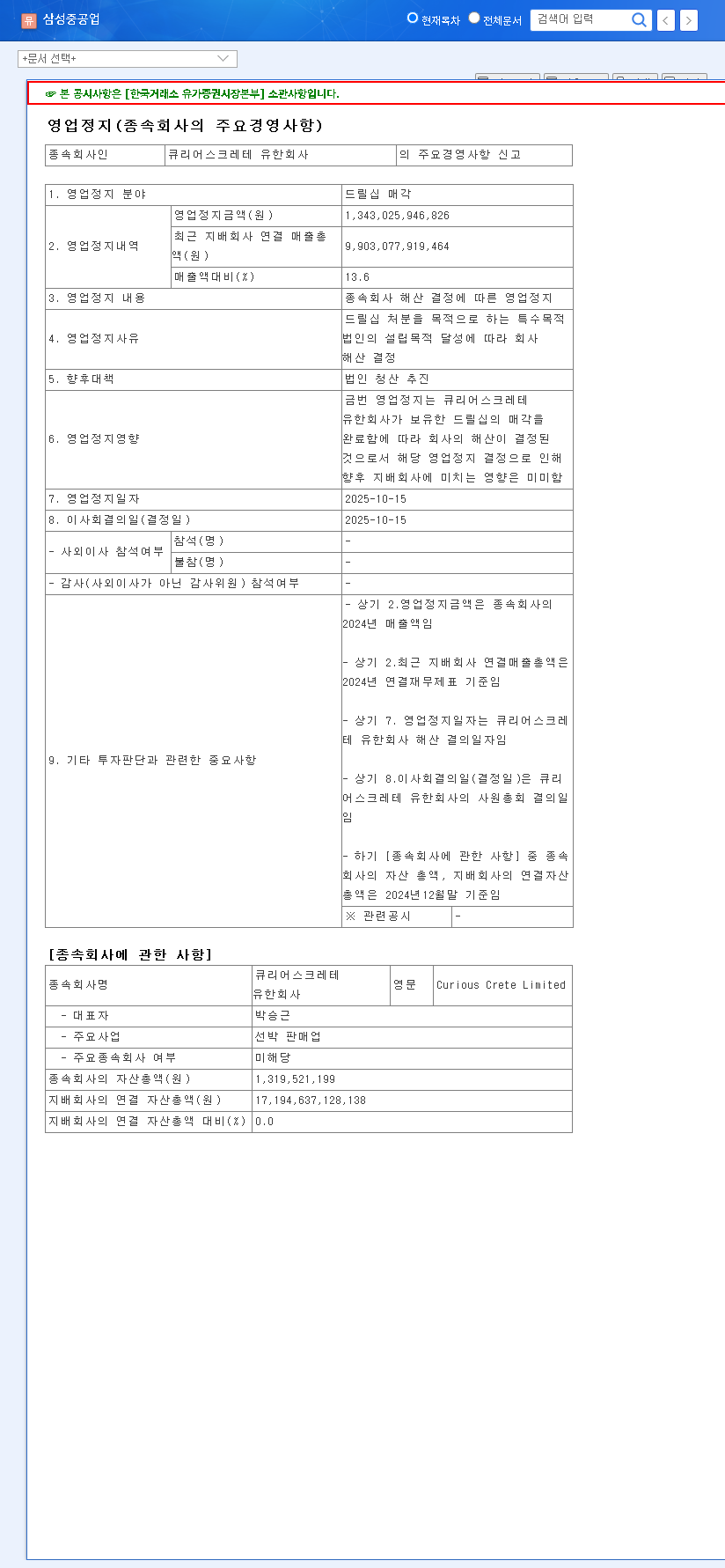
    Recent news surrounding SAMSUNG HEAVY INDUSTRIES (SHI) has caught the attention of the market, signaling a period of potential transformation. The company has announced the impending sale of a drillship tied to its subsidiary, Curious Crete Co., Ltd., which is now slated for liquidation. For investors, this move introduces short-term uncertainty but also hints at a strategic pivot towards a more streamlined and financially robust future. This analysis will dissect the announcement, explore the underlying strategy, and provide a clear roadmap for evaluating your investment in Samsung Heavy Industries stock.

    The Core Announcement: A Drillship Sale and Liquidation

    The central development involves ‘Curious Crete Co., Ltd.’, a subsidiary of SHI, which has been ordered into business suspension effective October 15, 2025. This action is a direct result of the sale of a drillship. The transaction involves a significant sum of 134.3 billion KRW, representing roughly 13.6% of SAMSUNG HEAVY INDUSTRIES’ total revenue. Following this, SHI has confirmed its intention to dissolve and liquidate the subsidiary entirely. For complete transparency and official details, investors can refer to the Official Disclosure (DART Report).

    This isn’t just an asset sale; it’s a strategic maneuver to optimize the company’s balance sheet and sharpen its focus on high-growth, core business areas.

    Decoding the Strategy: Why This Decision Now?

    The liquidation of Curious Crete Co., Ltd. is a clear indicator of SAMSUNG HEAVY INDUSTRIES’ broader strategy of business restructuring and asset optimization. In a challenging and cyclical industry like shipbuilding, carrying non-core or low-profit assets can be a significant drag on financial performance. By divesting the drillship—an asset class facing a volatile market—SHI is taking proactive steps to fortify its financial foundation.

    Key Strategic Objectives:

    • Streamlining Non-Performing Assets: The move directly addresses the need to reduce unnecessary asset burdens, converting a potentially underutilized drillship into liquid capital and improving financial soundness.
    • Sharpening Business Focus: By simplifying its corporate structure, SHI can concentrate its resources, talent, and capital on its core competencies, such as the construction of high-value LNG carriers and advancing green shipping technology.

    Short-Term Turbulence vs. Long-Term Gains

    The market’s reaction to such news is often twofold, and it’s crucial for investors to separate immediate sentiment from the long-term strategic vision.

    Immediate Impact: Expect Stock Volatility

    The unexpected nature of a subsidiary liquidation, coupled with a suspension value representing 13.6% of revenue, will likely trigger short-term volatility in Samsung Heavy Industries stock. The current lack of detailed brokerage reports creates information asymmetry, which can amplify uncertainty among investors. This may be compounded by broader negative sentiment in the offshore plant sector.

    Long-Term Outlook: A Stronger Foundation

    Despite the initial chop, this restructuring could be a catalyst for sustained growth. The capital inflow from the drillship sale, if managed effectively, can significantly improve SHI’s financial health. Potential positive outcomes include:

    • Improved Financial Health: Reduced debt and increased cash reserves for future investments or to weather market downturns.
    • Enhanced Operational Efficiency: A leaner structure allows management to focus on maximizing profitability in its core business segments.
    • Strengthened Core Capabilities: Capital can be redeployed to R&D and securing future growth engines, particularly in eco-friendly shipbuilding technologies.

    An Action Plan for SAMSUNG HEAVY INDUSTRIES Investors

    Prudent investors should adopt a strategy of careful monitoring and analysis. Here are four key areas to focus on:

    • Secure Additional Information: Prioritize SHI’s future disclosures. Look for specifics on the drillship sale terms, plans for the proceeds, and the final financial impact of the liquidation.
    • Analyze Market Reaction: Follow analyst reports and financial news from authoritative sources like Bloomberg to gauge professional market sentiment and future outlooks.
    • Re-evaluate Your Portfolio: Assess how this strategic shift aligns with your long-term investment thesis for SAMSUNG HEAVY INDUSTRIES. For more on this, see our guide to industrial sector investing.
    • Monitor Broader Market Trends: The offshore plant and global shipping industries are crucial contexts. Keep an eye on oil prices, global trade volumes, and demand for new vessels.

    In conclusion, while the headline news may seem disruptive, the liquidation and drillship sale appears to be a calculated and strategic move by SAMSUNG HEAVY INDUSTRIES. It presents a clear opportunity for corporate restructuring that could unlock significant long-term value. For the informed investor, this period of volatility could be a time to watch closely for the emergence of a leaner, more focused, and financially stronger company.

    (010140) SAMSUNG HEAVY INDUSTRIES Stock: Drillship Sale & What It Means for Investors 관련 이미지