Tag: rare earth

  • (229640) LS Eco Energy Earnings Analysis (Q3 2025): Deep Dive Into the Profit Miss & Stock Outlook (229640)

    (229640) LS Eco Energy Earnings Analysis (Q3 2025): Deep Dive Into the Profit Miss & Stock Outlook (229640)

    LS Eco Energy Ltd. (KRX: 229640) has sent ripples through the investment community with its preliminary Q3 2025 earnings report. While top-line revenue remained largely stable, a significant and unexpected miss on operating and net profit has raised critical questions about the company’s short-term health and trajectory. For investors tracking LS Eco Energy stock, this moment demands a deeper, more nuanced understanding than the headlines suggest.

    This comprehensive LS Eco Energy analysis will dissect the Q3 performance, explore the underlying factors contributing to the shortfall, and provide a clear, actionable investment strategy for both short-term traders and long-term believers in the company’s vision.

    The Q3 2025 Earnings Shock: By the Numbers

    On October 28, 2025, LS Eco Energy released its preliminary consolidated operating results. According to the Official Disclosure, the key figures fell short of market consensus:

    • Revenue: KRW 232.8 billion (vs. KRW 236.2 billion estimate, a -1.4% miss)
    • Operating Profit: KRW 14.8 billion (vs. KRW 15.8 billion estimate, a -6.3% miss)
    • Net Profit: KRW 9.8 billion (vs. KRW 13.6 billion estimate, a staggering -28.0% miss)

    The 28% shortfall in net profit is the most alarming figure. It signals that underlying issues beyond simple revenue fluctuations—such as soaring costs, operational inefficiencies, or one-time charges—have severely eroded the company’s bottom line this quarter.

    What Went Wrong? An In-depth LS Eco Energy Analysis

    To understand the Q3 shock, we must look at the preceding performance and external pressures. The deviation from the positive trend established in the first half of 2025 is stark and warrants a closer examination.

    A Reversal from a Strong First Half

    Prior to this report, the narrative around LS Eco Energy was overwhelmingly positive. The first half of 2025 saw robust year-on-year growth, primarily driven by its powerhouse Vietnamese subsidiaries, LS-VINA Cable & System and LS Cable & System Vietnam. Demand for power cables in the region was booming. Concurrently, the company was making strategic pivots into high-growth sectors like submarine cables—a critical component of the offshore wind industry—and rare earth materials, positioning itself for future success. This strong fundamental story makes the Q3 results even more jarring.

    Dissecting the Profitability Plunge

    The Q3 performance represents a significant downturn compared to the immediately preceding quarter (Q2 2025), where the company posted an operating profit of KRW 23.6 billion and a net profit of KRW 18.2 billion. The Q3 figures show a roughly 37% drop in operating profit and a 46% collapse in net profit quarter-over-quarter. This isn’t a minor dip; it’s a cliff. Potential culprits include:

    • Raw Material Costs: Volatility in the prices of electrolytic copper and aluminum, key inputs for cables, may have spiked unexpectedly, squeezing margins.
    • Currency Headwinds: While a strong USD can help exporters, unfavorable hedges or volatility in other currencies like the EUR could have negatively impacted financials.
    • One-Off Expenses: There could be undisclosed one-time costs related to new business investments, asset write-downs, or legal settlements that decimated net profit.

    Investment Strategy for LS Eco Energy Stock (229640)

    Given the conflicting signals—a strong long-term strategy versus a deeply concerning quarterly report—investors need a clear framework for their next steps.

    Short-Term Caution is Advised

    In the immediate term, the market is likely to punish the 229640 stock price. The uncertainty created by the massive net profit miss will weigh heavily on investor sentiment. A conservative, wait-and-see approach is prudent until the company provides a detailed explanation in its full Q3 report. Any new investment should be considered high-risk until there is clarity on whether these issues are temporary or systemic.

    Mid-to-Long-Term Potential Remains Intact

    The long-term investment thesis for LS Eco Energy has not been invalidated by one bad quarter. The company’s strategic initiatives in high-demand areas are still highly relevant. For a broader view on market trends, high-authority sources like Bloomberg’s analysis of the global energy transition confirm the massive demand for cable infrastructure. Furthermore, as we detail in our deep dive into the submarine cable market, this sector is poised for exponential growth. Investors with a longer time horizon may see any significant price drop as a buying opportunity, provided the following points are monitored closely.

    4 Key Factors to Monitor Before Investing

    1. 1.Clarity on the Q3 Shortfall: The company’s official, detailed Q3 report is paramount. Look for a transparent explanation of the profit miss. Was it a one-time event or a structural problem?
    2. 2.Margin Recovery in Q4: Watch the company’s forward-looking guidance. Are they implementing strategies to manage costs and foreign exchange risk more effectively? Evidence of margin stabilization in the next quarter will be crucial.
    3. 3.New Business Milestones: Track tangible progress in their new ventures. This includes securing major contracts for submarine cables, advancing rare earth processing capabilities, and progress on IDC centers.
    4. 4.Geopolitical Risk Management: Keep an eye on updates regarding their Myanmar operations. Any signs of stabilization or successful risk mitigation in this politically volatile region would be a positive signal.

    Conclusion: A Balanced Outlook

    In summary, the LS Eco Energy earnings for Q3 2025 present a classic case of short-term pain versus long-term potential. While the immediate market reaction will likely be negative due to the severe profit miss, the company’s foundational strengths and strategic direction remain compelling. Prudent investors should demand clarity on the recent performance before making new commitments, while long-term holders should focus on the key monitoring points to ensure the company gets back on track.
    (229640) LS Eco Energy Earnings Analysis (Q3 2025): Deep Dive Into the Profit Miss & Stock Outlook (229640) 관련 이미지
  • (229640) LS Eco Energy Ltd. IR Event (Oct 15, 2025): A Deep-Dive Stock Analysis

    (229640) LS Eco Energy Ltd. IR Event (Oct 15, 2025): A Deep-Dive Stock Analysis

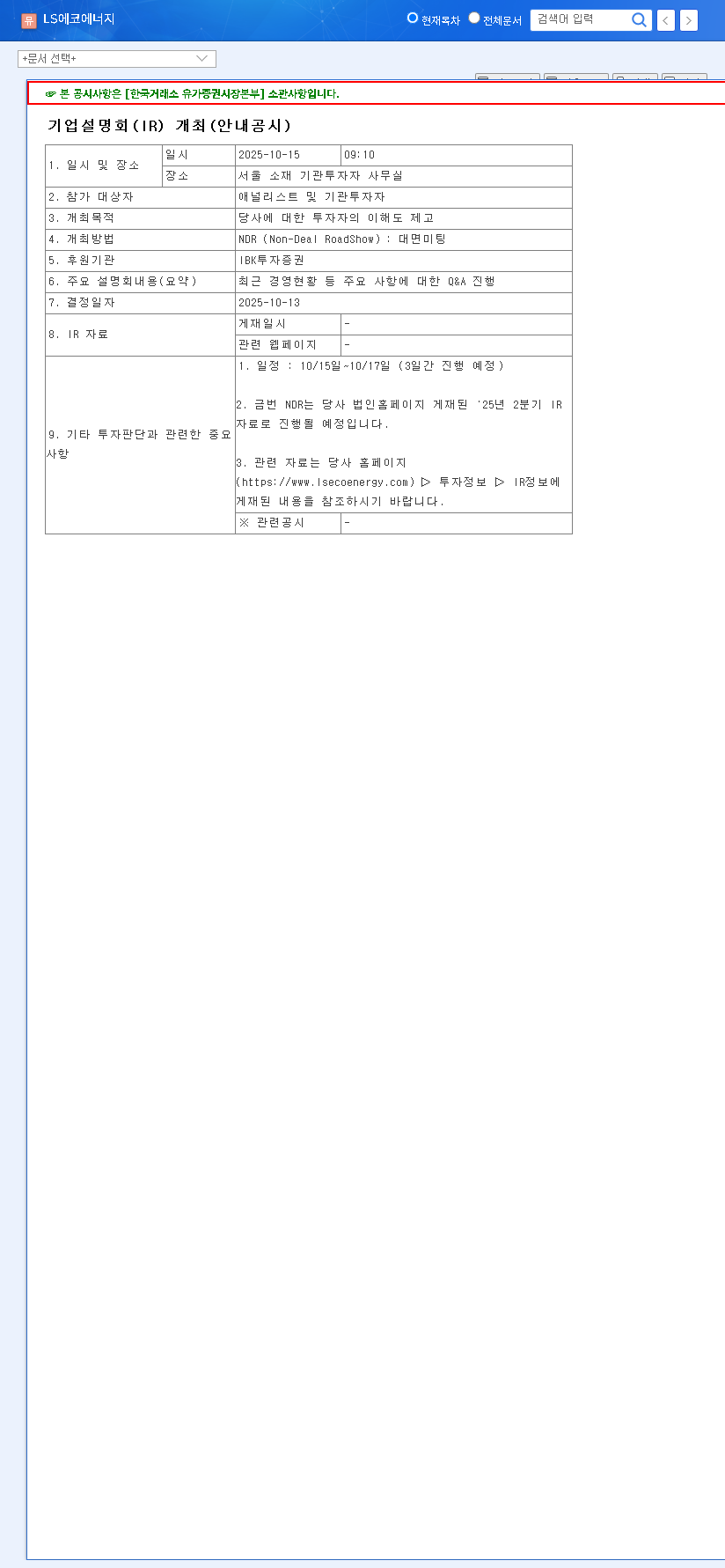
    The upcoming LS Eco Energy Ltd. IR event on October 15, 2025, is a pivotal moment for investors. This isn’t just a standard corporate briefing; it’s a critical juncture that could significantly redefine the company’s stock valuation and future trajectory. For those tracking LS Eco Energy stock, this conference is the key to unlocking insights into their strategic direction, particularly concerning high-growth sectors like submarine cables and rare earths.

    This comprehensive analysis will dissect the potential impacts of the event, providing a clear-eyed view for your investment strategy. We’ll explore the company’s solid fundamentals, anchored in its Vietnam operations, and weigh them against the exciting but uncertain potential of its new ventures. Prepare to gain a strategic edge for your decisions regarding LS Eco Energy.

    The LS Eco Energy Ltd. IR Event: What’s at Stake?

    LS Eco Energy Ltd. (Market Cap: ~KRW 1.25 trillion) has scheduled its Investor Relations (IR) conference for October 15, 2025, at 9:10 AM KST. The stated goal is to enhance investor understanding and hold a Q&A on recent performance. The announcement was made via an Official Disclosure. However, the market’s attention is fixed on one key question: will the company finally unveil a concrete, detailed roadmap for its ambitious new growth businesses?

    Fundamental Analysis: The Core vs. The Future

    A thorough LS Eco Energy analysis reveals a company with a stable, profitable core and a portfolio of high-risk, high-reward future ventures. Based on its H1 2025 report, the primary business remains power and communication cables, predominantly in Vietnam, with recent expansion into the UK. The future, however, is staked on new frontiers: submarine cables, rare earths, IDC centers, and EV materials.

    Positive Factors & Growth Drivers

    • Impressive Financial Health: H1 2025 showed robust growth with revenue hitting KRW 478.6 billion (a 16% YoY increase) and operating profit soaring to KRW 38.9 billion (a 59% YoY increase). This performance is driven by strong power cable demand and effective cost controls.
    • Solid Financial Structure: A low debt-to-equity ratio of 48.64% signifies a stable and healthy balance sheet, providing a strong foundation for future investments.
    • High-Potential New Ventures: The strategic push into submarine cables aligns with the global offshore wind boom, while securing rare earth supply chains is critical for modern technology. These ventures represent significant long-term growth catalysts. Explore our deep dive into the submarine cable market for more context.
    • Shareholder-Friendly Policies: A decade of consistent cash dividends underscores a commitment to shareholder value, building trust and loyalty among investors.

    Negative Factors & Inherent Risks

    • Geopolitical Instability: The scaling back of operations in Myanmar due to political turmoil could create a drag on near-term earnings and performance.
    • New Business Execution Risk: Ventures like submarine cables are capital-intensive and fraught with technological hurdles and market penetration challenges. The path from announcement to profitability is long and uncertain.
    • Macroeconomic Headwinds: The company’s bottom line is sensitive to USD exchange rate volatility and rising interest rates. A 10% change in the USD rate can significantly impact net profit.
    • Commodity Price Fluctuations: Profitability is directly linked to the price of raw materials, particularly copper. Investors should monitor trends on exchanges like the London Metal Exchange (LME).

    Stock Impact Scenarios Post-IR Event

    The market’s reaction will hinge entirely on the substance and clarity of the information presented. The stock has seen considerable volatility, and this event could either calm nerves or amplify them.

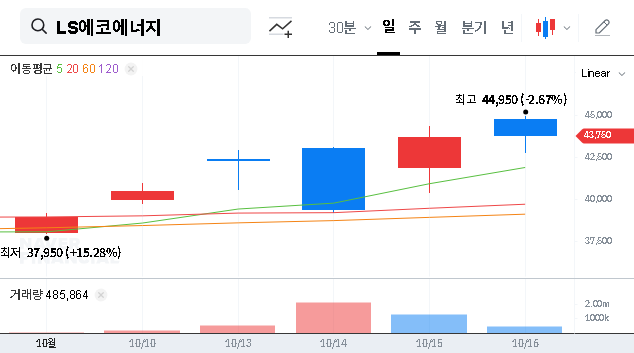
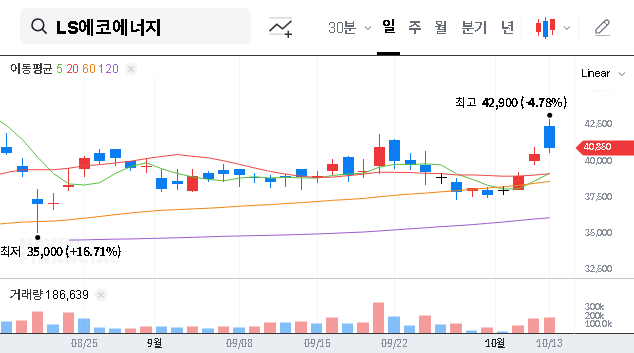
    Given recent stock price volatility, the specificity of the IR presentation and its alignment with market expectations will be crucial for the direction of LS Eco Energy stock.

    The Bullish Scenario (Positive Impact)

    If management presents a clear, funded, and timeline-driven roadmap for its submarine cable and rare earth ventures, expect a positive reaction. Concrete investment plans, major contract wins, or technological breakthroughs would significantly boost investor confidence and likely trigger a short-term rally.

    The Bearish Scenario (Negative Impact)

    A presentation that is vague, lacks financial details, or dodges tough questions about risks could disappoint the market. If the content falls short of expectations, or if unforeseen negative issues surface during the Q&A, selling pressure could lead to a stock price decline.

    Investor Action Plan: A Prudent Strategy

    Our current investment opinion is Neutral, pending the event’s outcome. The LS Eco Energy Ltd. IR event is an opportunity for clarity. Prudent investors should not act on speculation beforehand but should be prepared to act on the information revealed.

    Key Questions to Watch For:

    • What are the specific capital expenditure plans and funding sources for the new ventures?
    • What is the projected timeline for these new businesses to become profitable?
    • What are the company’s strategies for hedging against raw material and currency risks?
    • Are there any potential partnerships or M&A activities on the horizon?

    In conclusion, investing in LS Eco Energy at this moment requires careful observation. The company has a strong foundation and exciting prospects, but execution risk is high. Use the IR event to gather facts, not to follow sentiment. A cautious and informed approach is the best path forward.

    (229640) LS Eco Energy Ltd. IR Event (Oct 15, 2025): A Deep-Dive Stock Analysis 관련 이미지
  • JS Link After-Hours Trading Deep Dive: Opportunity or Red Flag?


    What Happened? JS Link After-Hours Trading Analysis

    After the market closed on September 11, 2025, JS Link experienced a significant after-hours trading event with a volume of 437,987 shares, totaling approximately 7.8 billion KRW. Notably, institutional investors sold off around 5.6 billion KRW worth of shares, while foreign investors bought approximately 580 million KRW. This represents about 1.5% of the company’s market capitalization (520.4 billion KRW), which might not significantly impact short-term stock prices. However, after-hours trading often reflects crucial information, warranting further analysis of its underlying causes.

    Why Did It Happen? Fundamental and Financial Analysis

    JS Link is pursuing business diversification, shifting from its existing bio and healthcare business to permanent magnets and rare earth magnet recycling. While this diversification strategy appears positive for long-term growth, the company’s financial status, as of the 2024 business report, raises concerns. With retained earnings showing a deficit of 86.2 billion KRW and an operating loss of 9.1 billion KRW, the financial burden of investments in new businesses is a significant risk. This financial difficulty could be linked to the substantial sell-off by institutional investors. Furthermore, the current order backlog of 7.2 billion KRW, while contributing to short-term sales, remains insufficient considering the expected contribution from the new business segments.

    What’s the Investment Strategy? Market Context and Recommendations

    Recent macroeconomic indicators, such as exchange rates, interest rates, and oil prices, have remained relatively stable. However, the volatility of exchange rates remains a concern, particularly given the new business’s reliance on raw material imports. In the short term, investors should observe the market’s reaction to the sell-off and seek further information regarding the motivations behind it. A long-term strategy requires close monitoring of the new business’s performance, the improvement of profitability in existing segments, and the company’s efforts to strengthen its financial health.

    Key Action Plan for Investors

    • Short-term: Verify the reasons behind the after-hours trading and monitor stock price trends.
    • Long-term: Monitor the progress of new business ventures, profitability of existing business, and efforts to improve the financial structure.


    Frequently Asked Questions

    What are JS Link’s main businesses?

    JS Link is diversifying its business portfolio beyond its existing bio and healthcare operations to include permanent magnets and rare earth magnet recycling.

    Who were the main parties involved in the after-hours trading?

    Institutional investors sold a large volume of shares (approx. 5.6 billion KRW), while foreign investors purchased a smaller amount (approx. 580 million KRW).

    What is the current state of JS Link’s financials?

    As of 2024, JS Link reported a deficit in retained earnings of 86.2 billion KRW and an operating loss of 9.1 billion KRW. Improving the financial situation is crucial.

    What should investors be cautious of?

    While the business diversification holds growth potential, investors should exercise caution considering the current financial difficulties and the reasons behind the large sell-off in after-hours trading.


  • Cetopia Q2 2025 Earnings: A Red Flag for Investors? Analysis and Investment Strategy

    1. Cetopia’s Q2 Earnings Shock: What Happened?

    Cetopia reported disappointing Q2 2025 results, with revenue of ₩4.4 billion, an operating loss of ₩0.9 billion, and a net loss of ₩5.1 billion. This falls significantly short of even the market’s low expectations. Revenue has been declining since its peak of ₩14.1 billion in Q2 2024, and both operating and net losses persist.

    2. What’s Driving the Poor Performance?

    Cetopia’s deteriorating performance is attributed to the company’s heavy reliance on the steel industry, coupled with increasing uncertainty in the global steel market. Its rare earth and cannabis businesses have yet to make significant revenue contributions, while multiple convertible bond issuances and collateral provisions have increased its financial burden. High interest rates and fluctuating raw material prices are also negatively impacting performance.

    3. Cetopia’s Future and Investment Strategy

    Cetopia is currently facing serious financial difficulties, requiring investors to exercise caution. Downward pressure on the stock price is expected in the short term, so investors should consider selling or cutting losses on existing holdings. New investments are not recommended, and investors should closely monitor the company’s financial restructuring and business normalization plans.

    4. Investor Action Plan

    • Choose a sell, hold, or cut-loss strategy based on the current situation and your investment goals.
    • Continuously monitor Cetopia’s future disclosures and news.
    • Consult with a financial advisor before making any investment decisions.

    Frequently Asked Questions

    What are Cetopia’s main businesses?

    Cetopia primarily focuses on the steel business, with rare earth and cannabis ventures also in progress. However, the steel business is currently its main source of revenue.

    Why is Cetopia’s recent performance so poor?

    A combination of factors, including increased uncertainty in the global steel market, growing financial burdens, high interest rates, and fluctuating raw material prices, have contributed to Cetopia’s poor performance.

    Should I invest in Cetopia?

    Cetopia is currently facing significant financial difficulties, so caution is advised. There is a high likelihood of short-term stock price decline, and consulting a financial advisor before making any investment decisions is recommended.

  • NineTech’s Q2 2025 Earnings: A Deep Dive into Performance and Future Outlook

    1. What Happened? NineTech’s Q2 2025 Earnings Decline

    NineTech reported a significant decline in Q2 2025 earnings, with revenue down 36.9% year-over-year to KRW 43.6 billion, an operating loss of KRW 5.6 billion, and a net loss of KRW 10.7 billion. The downturn in the secondary battery and display equipment markets was the primary driver of this underperformance, particularly impacting sales of lamination equipment and display-related products.

    2. Why Did This Happen? Analyzing the Factors Behind the Decline

    A confluence of factors contributed to NineTech’s weak performance, including the global economic slowdown, reduced investments by key customers, and intensifying competition. Decreased demand for lamination equipment in the secondary battery market dealt a significant blow, while heightened competition in the LCD market further pressured display equipment sales. Increased financial costs and losses from derivative valuations also widened the net loss.

    3. What’s Next? Assessing NineTech’s Future Prospects

    NineTech is actively investing in new business ventures, including rare earth recycling, next-generation electrode technology (MXene-based printed electrodes), and glass substrate equipment development, to secure future growth engines. Considering the long-term growth potential of the secondary battery market and the promise of these new ventures, there remains a possibility for mid-to-long-term growth. Diversification efforts, such as the investment in Energy 11, are also viewed positively. However, in the short term, the company must address the challenges of weak earnings and bolstering its financial health.

    4. What Should Investors Do? Key Investment Considerations

    • Monitor New Business Performance: Closely track the progress and performance of new ventures, including rare earth recycling and next-generation electrode technology.
    • Assess Financial Health Improvement: Pay attention to improvements in operating cash flow and efforts to strengthen financial stability.
    • Watch Market Dynamics: Continuous monitoring of market volatility and competitive landscape changes in the secondary battery and display sectors is crucial.
    Q: What are the main reasons for NineTech’s weak performance in Q2 2025?

    A: The global economic slowdown, reduced customer investments, and intensified competition contributed to the decline. Decreased sales of lamination and display equipment were key factors.

    Q: What are NineTech’s future growth drivers?

    A: NineTech is investing in new ventures such as rare earth recycling, next-generation electrode technology (MXene-based printed electrodes), and glass substrate equipment to drive future growth.

    Q: What should investors consider when evaluating NineTech?

    A: Investors should carefully monitor the progress of new business ventures, the company’s efforts to improve financial health, and market dynamics in the relevant sectors.

  • JS Link Acquires US Magnet Company: Investment Opportunity?

    1. JS Link Acquires US Magnet Company: What Happened?

    On August 11, 2025, JS Link announced a ₩2.8 billion investment (5.35% of its capital) to acquire 100% of JS Link America, Inc., a US permanent magnet producer. This strategic move aims to establish a stable resource supply chain and strengthen global competitiveness.

    2. Why Acquire a US Company?

    JS Link has been facing financial difficulties due to continuous declines in sales and operating losses. To overcome these challenges and secure future growth engines, the company is focusing its investments on the permanent magnet business, a key material for electric vehicles. The acquisition is interpreted as an attempt to accelerate global market entry, particularly in North America, and to diversify away from the China-centric rare earth supply chain.

    3. The Acquisition’s Impact: What to Expect?

    • Positive Impacts:
      • Strengthened global competitiveness and a secure resource supply chain.
      • Accelerated entry into the North American market and a proactive response to the restructuring of the global supply chain.
    • Potential Risks:
      • Increased short-term financial burden due to the ₩2.8 billion investment.
      • Risks associated with integrating and operating the overseas subsidiary.

    4. What Should Investors Do?

    While the acquisition is positive in the long term, short-term financial burdens and business uncertainties must be considered. Therefore, a ‘cautious approach with a positive outlook’ is recommended. It’s crucial to make investment decisions while closely monitoring the following:

    • Progress of the permanent magnet business
    • Performance of the overseas subsidiary
    • Efforts to improve financial soundness
    • Macroeconomic variables such as exchange rates and raw material prices

    Frequently Asked Questions

    What is JS Link?

    JS Link is a company investing in the permanent magnet manufacturing business. They are accelerating global market entry with the recent acquisition of a US permanent magnet producer.

    Why is this acquisition important?

    This acquisition is a crucial strategic decision for JS Link to secure future growth engines and strengthen its global competitiveness.

    What are the investment precautions?

    Investors should be cautious of the increased short-term financial burden, the uncertainties surrounding the new business’s success, and the influence of macroeconomic variables.

  • LS EcoEnergy Q2 2025 Earnings: Vietnam Growth Fuels 55% Net Profit Surge

    1. LS EcoEnergy’s Q2 Performance: What Happened?

    LS EcoEnergy reported outstanding Q2 2025 results with revenue of KRW 250.2 billion (+7% YoY), operating profit of KRW 23.6 billion (+30%), and net profit of KRW 16 billion (+55%). The surge in net profit, in particular, caught investors’ attention.

    2. Reasons Behind the Strong Performance: Why So Good?

    • Vietnam Subsidiary’s Success: Driven by Vietnam’s economic growth and increased power infrastructure investments, LS-VINA and other Vietnamese subsidiaries demonstrated remarkable growth.
    • Non-Operating Income and Efficient Management: While the preliminary earnings release lacks details, increased non-operating income or cost reductions likely contributed to the surge in net profit.
    • Financial Stability: A solid financial structure ensures future investment capacity.

    3. Positive Factors and Potential Risks

    • Myanmar Business Slump: The ongoing political instability in Myanmar and resulting business slowdown pose a continuous risk.
    • Raw Material Price Volatility: The potential for profit decline due to raw material price fluctuations must be considered.
    • Uncertainty Surrounding New Businesses: The success of new ventures like submarine cables and rare earth elements remains uncertain.

    4. Action Plan for Investors

    While LS EcoEnergy’s Q2 results are encouraging, several risk factors exist. Investors should carefully analyze the detailed earnings report to assess both the positive factors and risks before making investment decisions. Closely monitoring the Myanmar situation and the progress of new businesses is crucial.

    Frequently Asked Questions

    What were the key drivers of LS EcoEnergy’s Q2 earnings?

    The significant growth of the Vietnam subsidiary and the higher-than-expected operating and net profit growth were the key drivers.

    What are the key investment considerations?

    Investors should consider the ongoing slump in Myanmar operations, raw material price volatility, and the uncertainty surrounding new business ventures.

    What is the outlook for LS EcoEnergy?

    The sustained growth of the Vietnam business, the successful establishment of new businesses, and the management of risks related to Myanmar operations will significantly impact the company’s future value.