Tag: Pharmaceutical

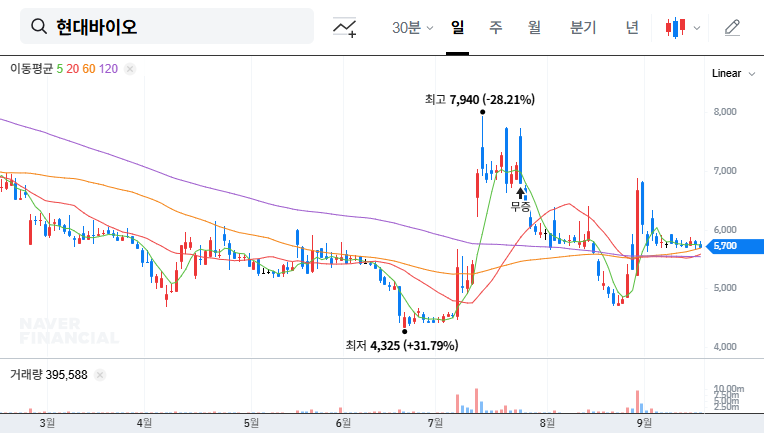
  • Hyundaibio Expands Dengue Fever Treatment Trials: Investment Opportunity?


    Hyundaibio Expands Dengue Fever Treatment Trials: Investment Opportunity? 대표 차트 이미지


    What Happened? Hyundaibio Applies for Clinical Trial Amendment Approval

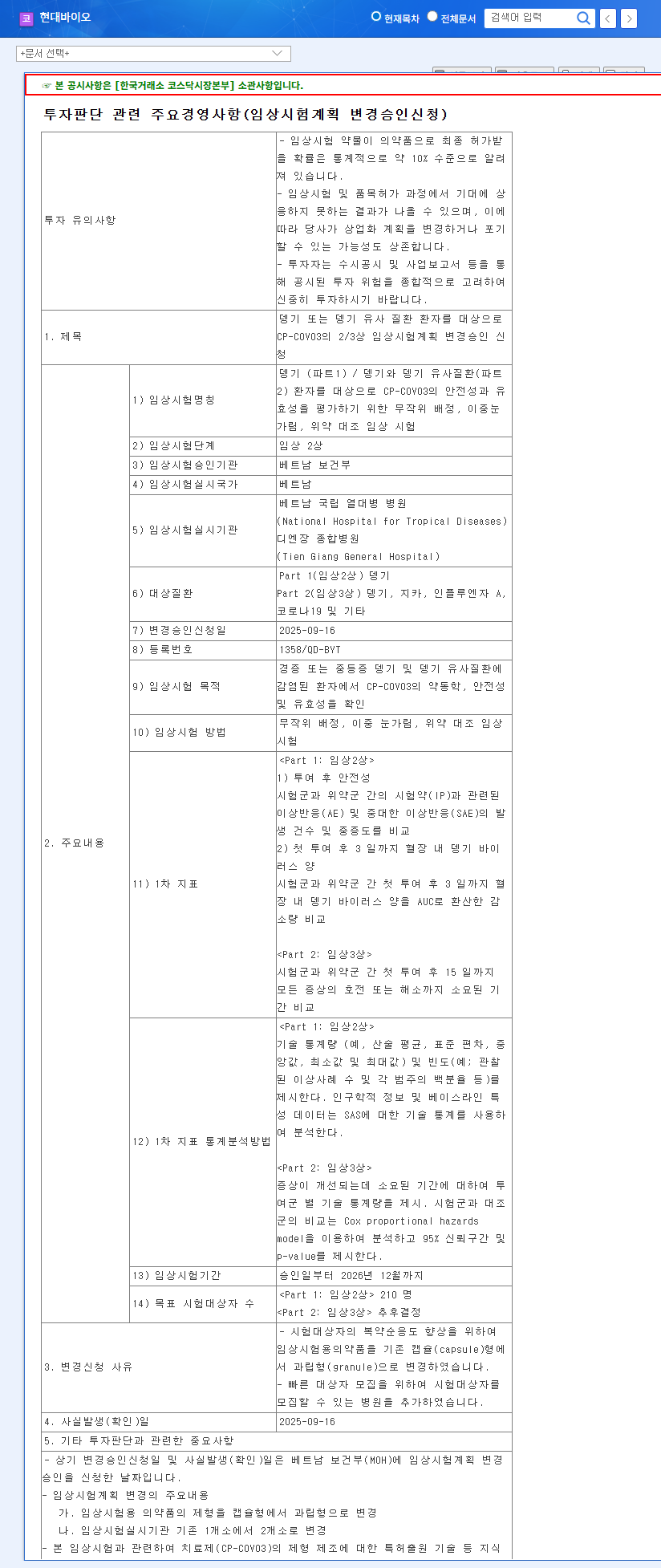
    On September 16, 2025, Hyundaibio applied to the Vietnamese Ministry of Health (MOH) for approval to amend its Phase 2/3 clinical trial plan for CP-COV03 for dengue fever and dengue-like illnesses. The main changes are as follows:

    • • Change in drug formulation: Capsule → Granule
    • • Expansion of clinical trial sites: 1 → 2

    Why is Trial Expansion Important?

    This amendment to the clinical trial plan signifies Hyundaibio’s proactive commitment to developing a dengue fever treatment. Changing the dosage form to granules enhances patient convenience, and expanding the clinical trial sites allows for the collection of more patient data. These changes are expected to improve the reliability of clinical results and positively impact market entry for the dengue fever treatment.

    What’s Next? Analyzing Opportunities and Risks

    Positive Impacts

    • • Accelerated clinical trial progress and increased result reliability
    • • Expanded potential for entry into the Southeast Asian dengue fever treatment market
    • • Strengthening of technology and intellectual property rights

    Potential Risks

    • • Uncertainty of clinical trial results
    • • Financial burden due to increased R&D costs
    • • Intensified competition in the dengue fever treatment market
    • • Uncertainty regarding regulatory approval from the Vietnamese Ministry of Health

    What Should Investors Do? Action Plan

    If considering investing in Hyundaibio, investors should carefully check the following:

    • • Continuous monitoring of Phase 2/3 clinical trial progress and results
    • • Review of the company’s financial status and funding plans
    • • Analysis of the competitive landscape in the dengue fever treatment market
    • • Analysis of the impact of changes in macroeconomic indicators

    Hyundaibio has high growth potential but also carries risks. Investment decisions should be made carefully based on sufficient information.


    FAQ

    What is Hyundaibio’s dengue fever treatment?

    Hyundaibio’s dengue fever treatment candidate is CP-COV03. It is currently undergoing Phase 2/3 clinical trials in Vietnam to confirm its therapeutic effect on dengue fever and dengue-like illnesses (Zika, influenza A, COVID-19, etc.).

    What are the key changes in this clinical trial plan amendment?

    The main changes are the change in drug formulation from capsules to granules and the expansion of clinical trial sites from one to two.

    What are the key points to consider when investing?

    Investment decisions should be made cautiously, considering uncertainties such as the success of clinical trials, financial burden, market competition, and regulatory approvals. It is crucial to continuously monitor clinical results and the company’s financial status.
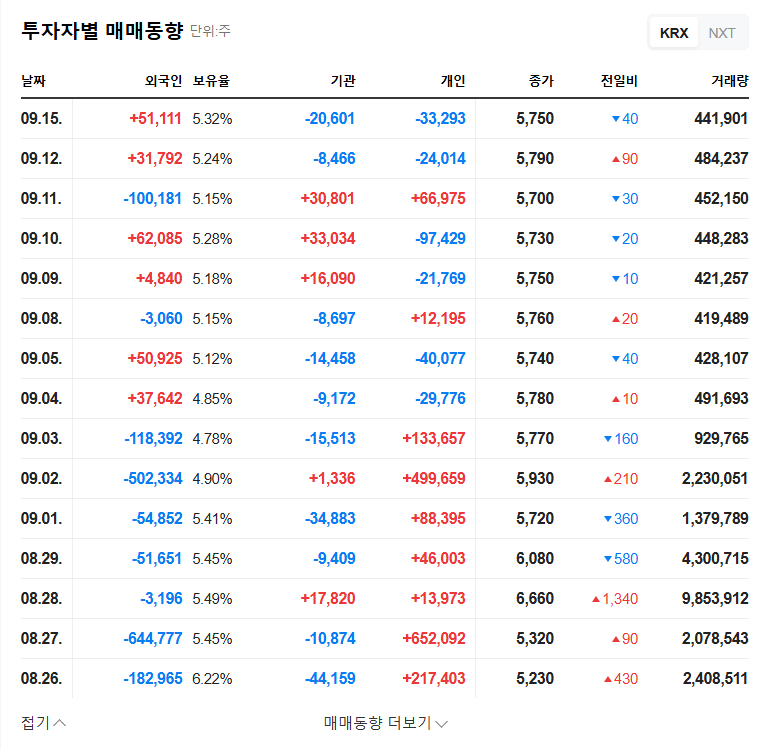
    Hyundaibio Expands Dengue Fever Treatment Trials: Investment Opportunity? 관련 이미지
    Hyundaibio Expands Dengue Fever Treatment Trials: Investment Opportunity? 관련 이미지


  • AprilBio Stock Forecast: Major Shareholder Stake Changes and Their Impact


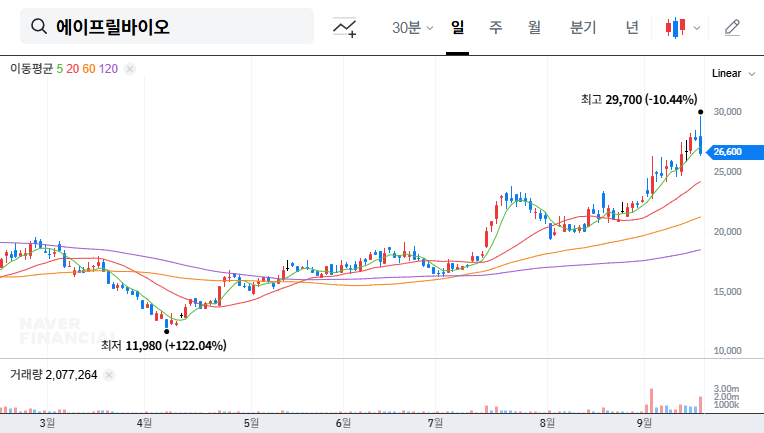
    AprilBio Stock Forecast: Major Shareholder Stake Changes and Their Impact 대표 차트 이미지


    1. What Happened? Changes in AprilBio’s Shareholder Structure

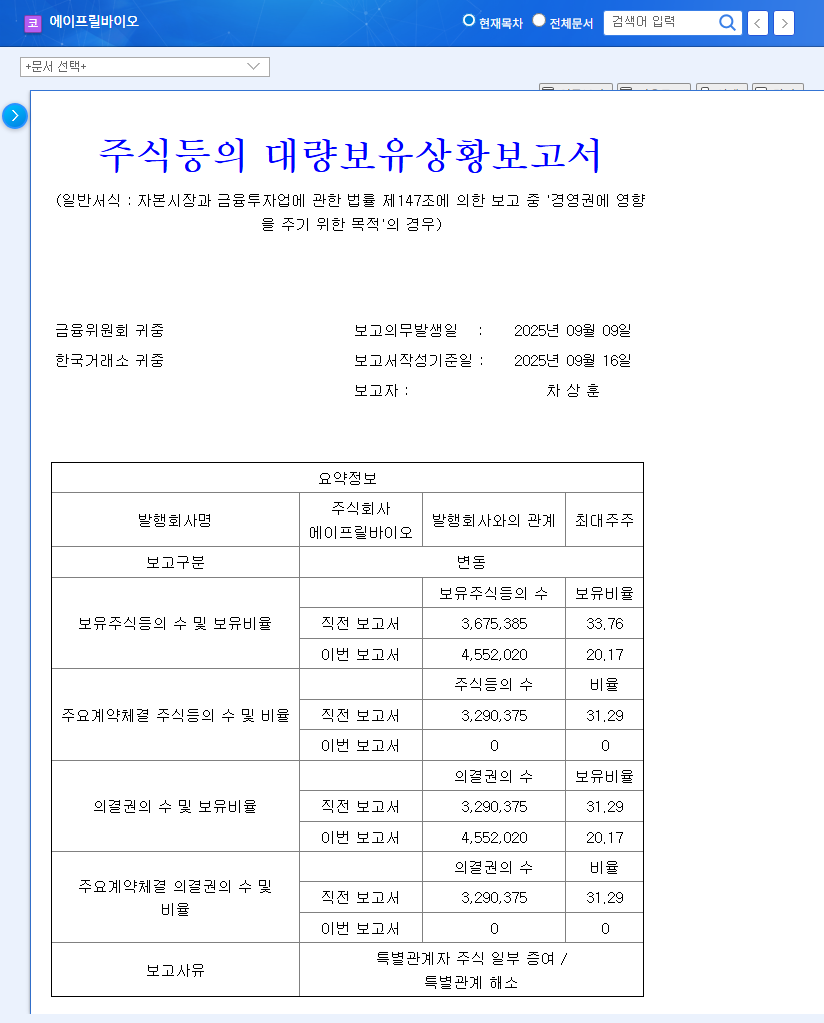
    The stake held by CEO Sang-Hoon Cha and related parties decreased from 33.76% to 20.17%. This was due to gifts within the family and some over-the-counter sales by related parties. This is interpreted as a part of personal asset management or tax planning rather than a weakening of management control. However, the future movements of major shareholders require continuous monitoring.

    2. Why is it Important? Potential for Short-Term Stock Volatility

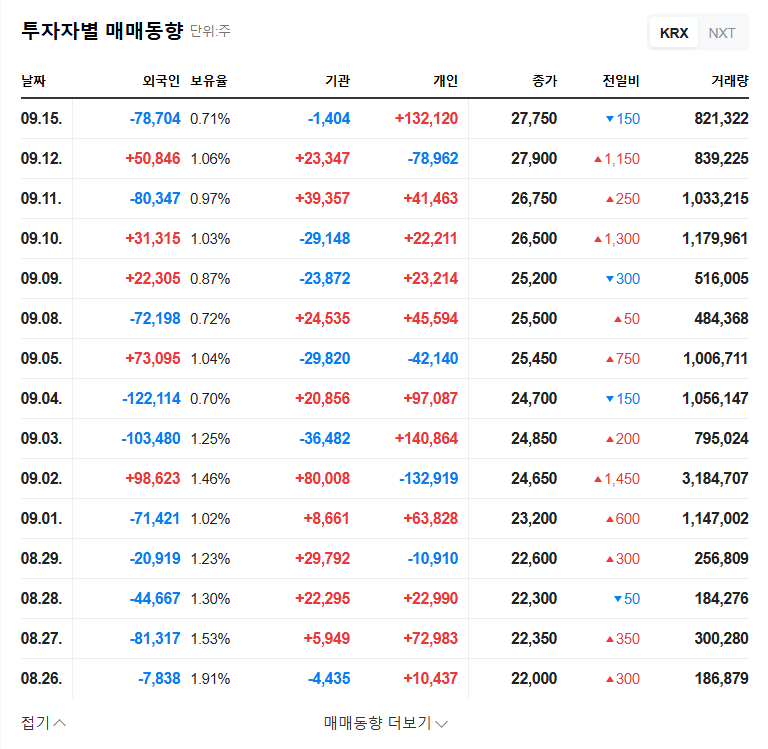
    The decrease in the stake of major shareholders may have a negative impact on the stock price in the short term. However, if there is no significant change in the company’s fundamentals, this impact is expected to be limited.

    3. AprilBio’s Corporate Value: Fundamental Analysis

    AprilBio is a promising new drug development company based on SAFA platform technology. Technology transfer agreements with global pharmaceutical companies such as Lundbeck and Evommune demonstrate the company’s technological prowess. The clinical development results of key pipelines such as APB-A1 and APB-R3 will be the key drivers of future stock prices.

    4. What Should Investors Do? Action Plan

    • Continuous monitoring of major shareholder changes: Pay attention to the reasons for stake changes and future moves of Sang-Hoon Cha and other related parties.
    • Focus on clinical development results of key pipelines: Focus on announcements regarding the clinical results of APB-A1 and APB-R3.
    • Monitoring macroeconomic and industry trends: Establish an investment strategy by considering interest rate fluctuations and global bio market trends.


    FAQ

    Does the decrease in CEO Sang-Hoon Cha’s stake signify a change in management?

    Currently, it’s not an immediate threat to management, but it’s necessary to monitor future changes.

    What is AprilBio’s core technology?

    It is developing new drugs with advantages such as increased half-life and low immunogenicity based on the SAFA platform technology.

    What are AprilBio’s main pipelines?

    These include APB-A1 (autoimmune diseases) and APB-R3 (inflammatory diseases), which are currently in clinical development.

    What are the precautions for investing in AprilBio?

    Clinical development results and changes in major shareholder stakes should be closely monitored. It should be noted that bio investment has high growth potential but also carries risks.


    AprilBio Stock Forecast: Major Shareholder Stake Changes and Their Impact 관련 이미지
    AprilBio Stock Forecast: Major Shareholder Stake Changes and Their Impact 관련 이미지


  • ToolGen Stock Forecast: Analyzing CEO Kim Jin-soo’s Stake Changes & Investment Strategy

    ToolGen Stock Forecast: Analyzing CEO Kim Jin-soo's Stake Changes & Investment Strategy 대표 차트 이미지

    What Happened with CEO Kim Jin-soo’s Stake?

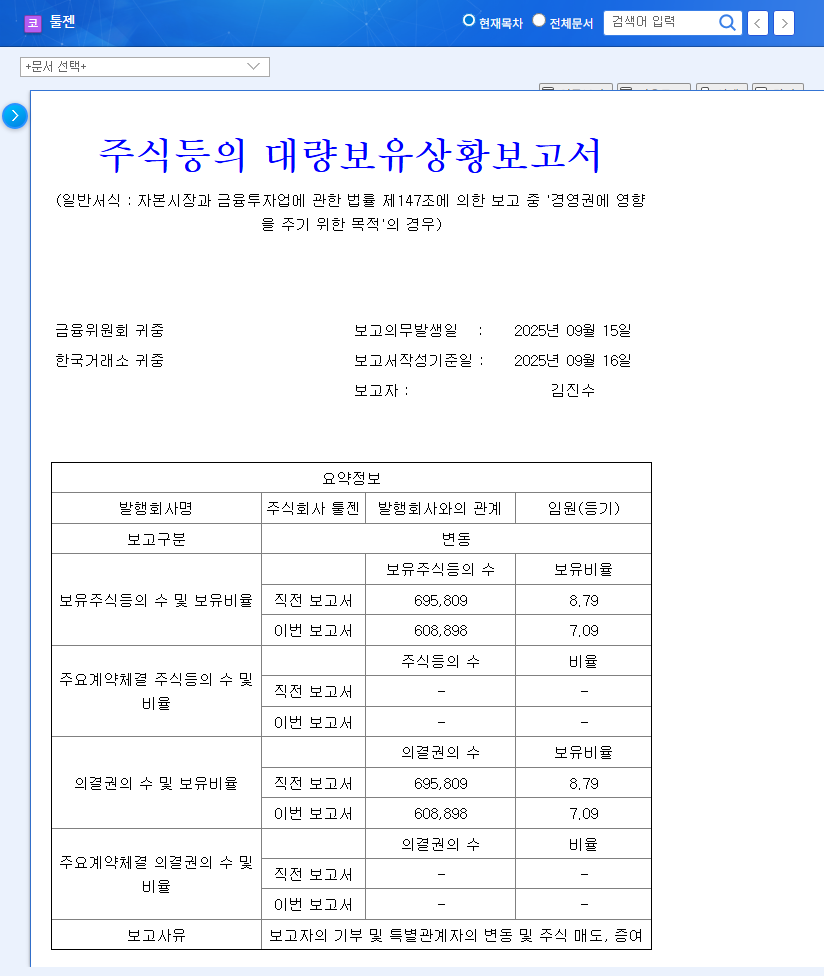
    On September 16, 2025, ToolGen CEO Kim Jin-soo’s stake decreased from 8.79% to 7.09% due to a donation to KAIST (85,000 shares), changes in special relationships (addition of Ms. Lee Ji-young), and stock sales and gifts (319 shares gifted to Mr. Lee Yong-min).

    ToolGen: Fundamental Analysis

    ToolGen is a leading company possessing CRISPR gene-editing technology, securing a stable revenue base through its patent licensing business. However, its revenue in the first half of 2025 decreased by 11.44% year-on-year to KRW 27.174 billion. High R&D investment (1,099.01% of revenue) is positive for securing future growth engines but burdens short-term profitability. The accumulated deficit of KRW 138.199 billion also suggests the need for financial soundness improvement.

    • Strengths: 397 patent portfolios, CRISPR core technology
    • Weaknesses: Revenue decline, high R&D investment burden, accumulated deficit
    • Opportunities: Growth of the gene editing market, expansion of the gene and cell therapy market
    • Threats: Intensifying competition, regulatory changes

    How Will the Stake Changes Affect ToolGen’s Stock Price?

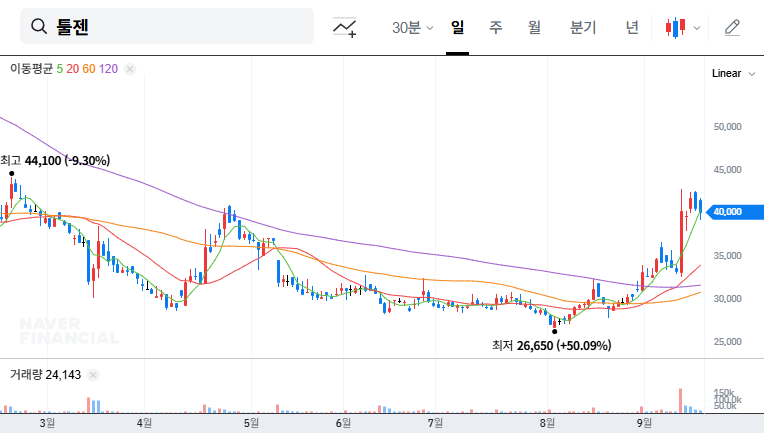
    CEO Kim’s donation can be interpreted as a positive signal for the company’s future growth potential. However, the stock sales and gifts may negatively impact investor sentiment. Investors should be aware of the potential for short-term stock price volatility.

    Action Plan for Investors

    If considering investing in ToolGen, investors should monitor the company’s long-term performance in gene-editing technology development, clinical pipeline progress, technology transfer, and commercialization strategies. It’s crucial to continuously monitor improvements in financial soundness and changes in major shareholder stakes.

    What is the reason for CEO Kim Jin-soo’s stake change?

    CEO Kim’s stake change is due to a combination of factors, including a donation to KAIST, changes in special relationships, and stock sales and gifts.

    What is ToolGen’s core technology?

    ToolGen develops gene editing platforms, gene therapies, and gene-edited seeds based on CRISPR gene-editing technology.

    What are the precautions when investing in ToolGen?

    Careful investment decisions are needed, considering financial burdens from high R&D investment and intensifying competition in the gene editing market.

    ToolGen Stock Forecast: Analyzing CEO Kim Jin-soo's Stake Changes & Investment Strategy 관련 이미지
    ToolGen Stock Forecast: Analyzing CEO Kim Jin-soo's Stake Changes & Investment Strategy 관련 이미지
  • Chaperone (378800) Insider Stake Changes: Opportunity or Risk?


    Chaperone (378800) Insider Stake Changes: Opportunity or Risk? 대표 차트 이미지


    1. What Happened at Chaperone?

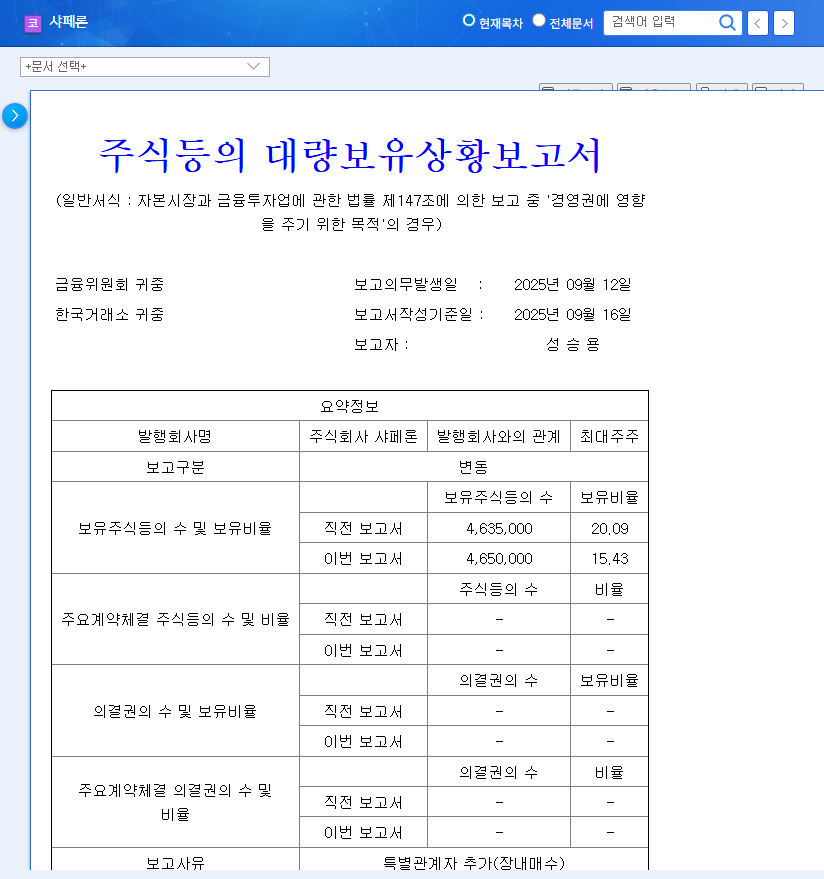
    On September 16, 2025, a disclosure was released detailing changes in the stake held by Chaperone’s CEO, Seung-Yong Sung, and other related parties. While the total stake decreased from 20.09% to 15.43%, it’s crucial to note that this change resulted from the ‘addition’ of related parties. Key among these is Do-Seon Kim, who conducted on-market purchases on September 12th and 15th. The fact that a new related party absorbed the shares sold by existing shareholders allows for a positive interpretation.

    2. Why is Chaperone Important?

    Chaperone boasts a diverse pipeline of drug candidates, including NuGel (atopic dermatitis), NuSepin (COVID-19), NuCerin (Alzheimer’s), and Papiliximab (immuno-oncology). They are also expanding into cosmetics (‘Dr.SHAWN’) and animal pharmaceuticals. The ongoing Phase 2b clinical trial of NuGel in the US is particularly noteworthy. However, high R&D expenses and accumulated operating losses pose financial risks.

    3. What’s Next for Chaperone?

    In the short term, the insider stake purchases could be a positive factor, but the overall stake decrease and existing fundamental concerns may create stock volatility. The mid-to-long-term outlook hinges on the success of new businesses and the clinical results and potential licensing deals for key pipelines, including NuGel. The macroeconomic environment, such as US interest rate policy and exchange rate fluctuations, will also play a significant role in Chaperone’s future.

    4. What Should Investors Do?

    • Hold: Despite short-term uncertainty, we maintain a ‘hold’ recommendation considering the mid-to-long-term growth potential.
    • Monitor Closely: Investors should continuously monitor the progress of new businesses, NuGel’s clinical results, licensing negotiations, and financial performance.
    • New Investment: Approach new investments cautiously, focusing on long-term growth potential rather than short-term stock fluctuations.


    Frequently Asked Questions (FAQ)

    What are Chaperone’s main businesses?

    Chaperone focuses on developing new drugs, along with cosmetics and animal pharmaceuticals. NuGel, a treatment for atopic dermatitis, is currently in Phase 2b clinical trials in the US.

    How will these stake changes affect the stock price?

    While insider buying can be seen as positive, the overall decrease in stake may increase short-term volatility. The long-term impact will depend on the success of new businesses and pipeline development.

    What should investors consider when investing in Chaperone?

    Investors should consider the financial risks associated with high R&D expenses and the inherent uncertainties of drug development. Closely monitoring the progress of new businesses, clinical trial results, and licensing deals is essential.


    Chaperone (378800) Insider Stake Changes: Opportunity or Risk? 관련 이미지
    Chaperone (378800) Insider Stake Changes: Opportunity or Risk? 관련 이미지


  • SK Biopharm’s Cenobamate Shows Positive Phase 3 Results: Investment Analysis


    SK Biopharm's Cenobamate Shows Positive Phase 3 Results: Investment Analysis 대표 차트 이미지


    What Happened? Cenobamate’s Phase 3 Trial Success

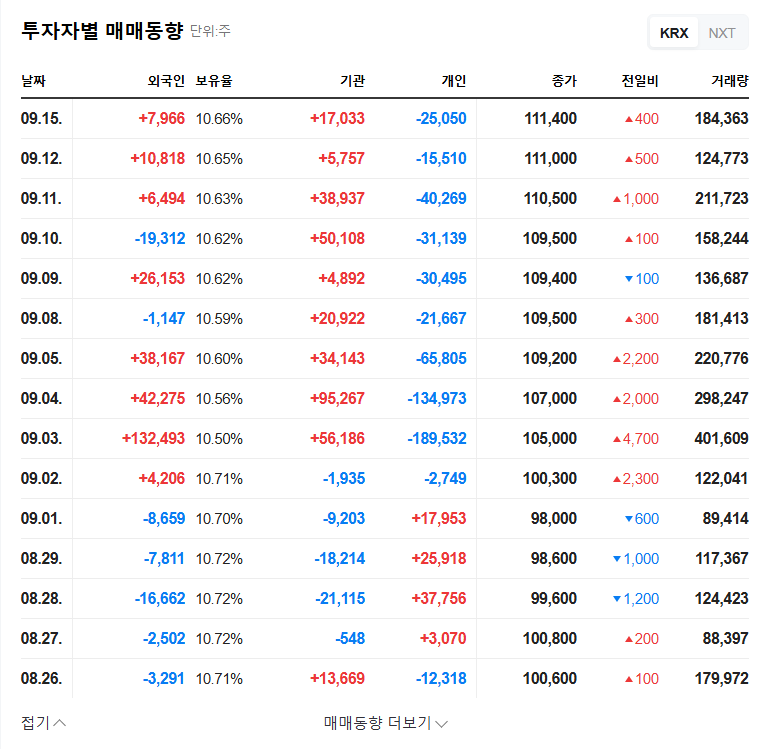
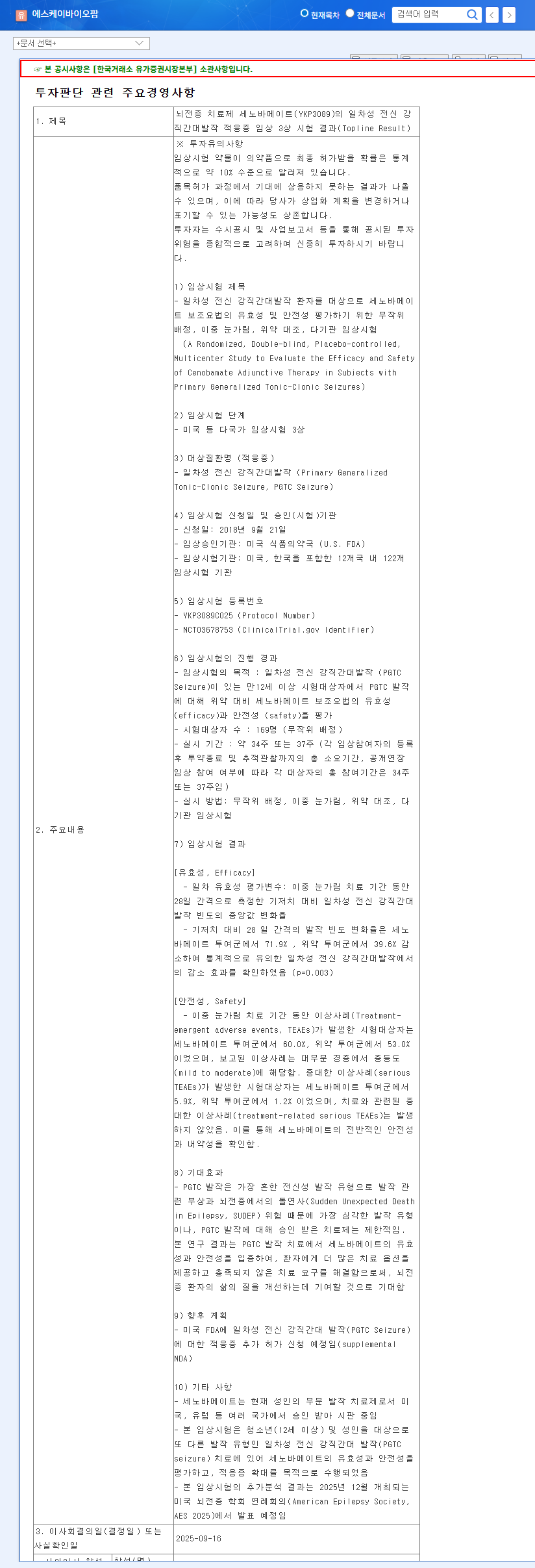
    On September 16, 2025, SK Biopharm announced positive top-line results from its Phase 3 clinical trial for Cenobamate (YKP3089) in patients with primary generalized tonic-clonic seizures (PGTC). The trial, which included 169 patients, showed that Cenobamate significantly reduced seizure frequency compared to placebo, with a favorable safety profile.

    Why Does it Matter? Potential Market Expansion with New Indication

    This positive Phase 3 outcome increases the likelihood of expanding Cenobamate’s indications. PGTC is one of the most common seizure types, but effective treatment options are limited, leading to high demand for new therapies. Therefore, the addition of a PGTC indication for Cenobamate is expected to lead to market expansion and increased sales.

    What’s Next? Strengthened Fundamentals and Potential Stock Price Increase

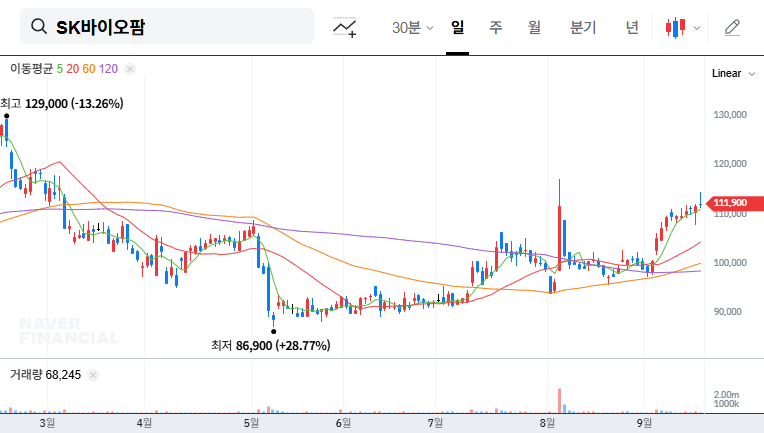
    These positive results are expected to have a very positive impact on SK Biopharm’s fundamentals. It will not only contribute to increased sales of Cenobamate but also strengthen its drug development capabilities and global presence. FDA approval is likely to trigger a stock price increase.

    • Increased Sales: PGTC indication expansion expected to drive Cenobamate sales growth.
    • Stronger Global Presence: Demonstrated drug development capabilities may lead to expanded licensing opportunities.
    • Stock Price Increase: FDA approval could improve investor sentiment and create positive momentum.

    What Should Investors Do? Consider Investment from a Long-Term Perspective

    SK Biopharm maintains robust growth, and Cenobamate’s growth potential remains high. However, investors should consider potential risk factors such as FDA approval uncertainty, increased competition, and exchange rate fluctuations, and approach investment from a long-term perspective.

    Key Points to Watch: FDA approval outcome and timing, market response after PGTC indication launch, changes in the competitive landscape, exchange rate volatility.


    Frequently Asked Questions

    What is Cenobamate?

    Cenobamate is an anti-epileptic drug developed by SK Biopharm.

    What is PGTC?

    PGTC stands for primary generalized tonic-clonic seizures, one of the most common seizure types.

    When is FDA approval expected?

    The exact timing of FDA approval is uncertain and depends on the FDA’s review process. We await further announcements from SK Biopharm.


    SK Biopharm's Cenobamate Shows Positive Phase 3 Results: Investment Analysis 관련 이미지


  • Onconik Therapeutics’ Jacubojung Clinical Trial Update: Investment Analysis

    Jacubojung Clinical Trial Plan Change: What Happened?

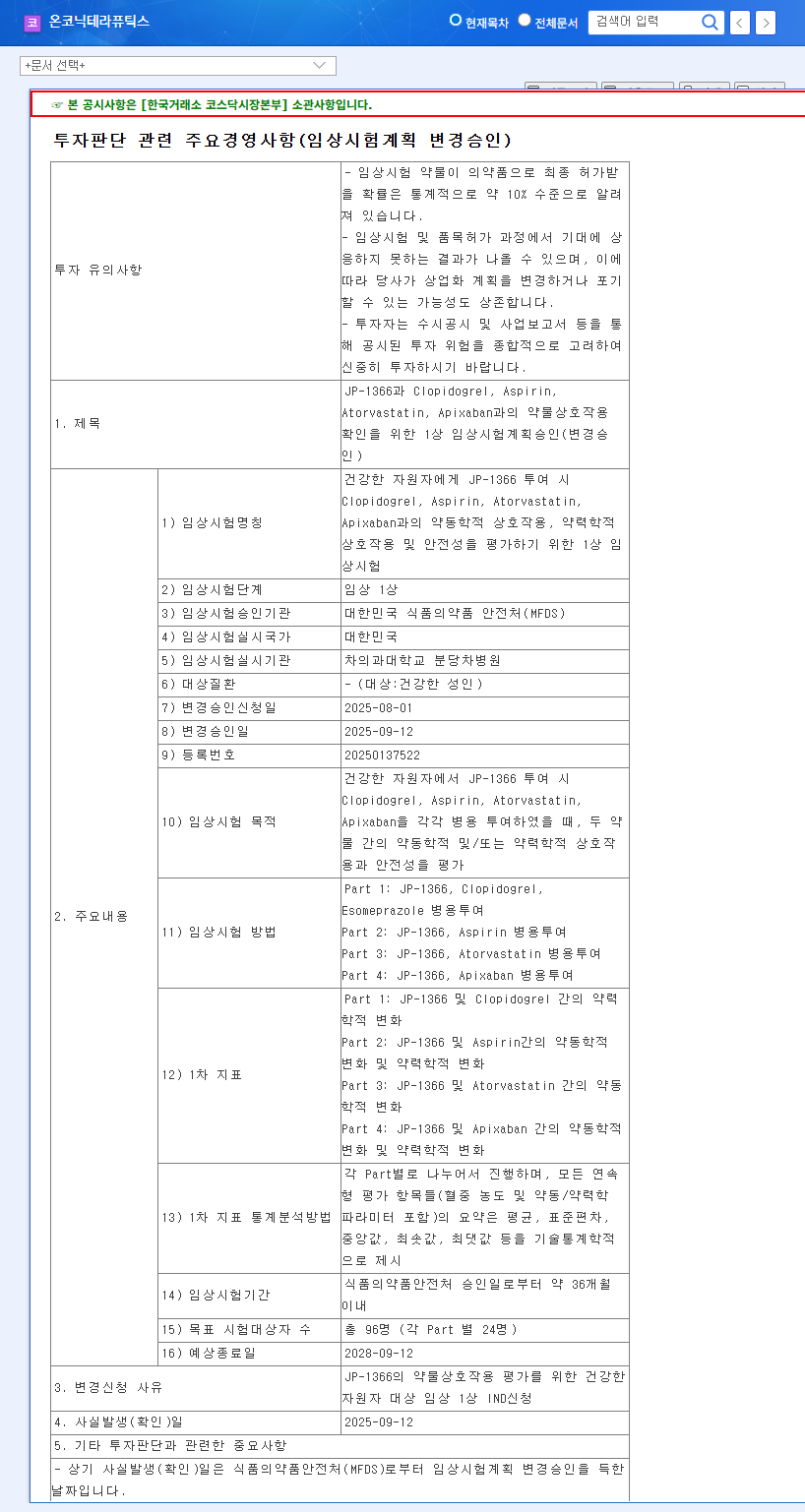
    Onconik Therapeutics has received approval to amend its Phase 1 clinical trial plan for Jacubojung (JP1366), a treatment for acid-related gastrointestinal diseases. This amendment focuses on investigating drug interactions, marking a crucial step towards expanding the application and enhancing the safety profile of Jacubojung.

    Why is this Approval Important?

    This approval is a positive sign, confirming the continued development of Jacubojung and demonstrating Onconik’s R&D capabilities. It can serve as a stepping stone to explore applicability to a wider range of patients and open doors for further technology transfer and partnership opportunities. Additionally, it is expected to further solidify the long-term business value of Jacubojung, which has already seen successful domestic launch and approval for gastric ulcer indication.

    So, What’s the Investment Strategy?

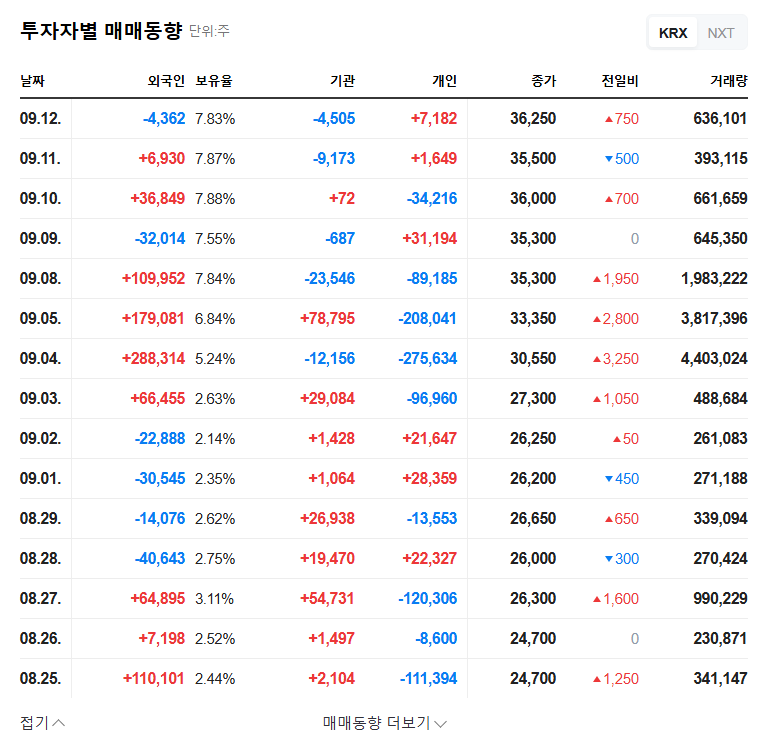
    This event can be interpreted as slightly positive. While short-term stock fluctuations may be limited, it offers a chance to assess Onconik Therapeutics’ long-term growth potential. However, investors must also consider the inherent uncertainties of clinical development and the potential for additional time and cost requirements.

    Investor Action Plan

    • Short-term investors: Significant stock price fluctuations are not anticipated, suggesting a wait-and-see approach may be prudent.
    • Mid- to long-term investors: Consider investing in Onconik Therapeutics’ growth potential. Closely monitor upcoming clinical trial results, technology transfer agreements, and other key events to adjust investment strategies accordingly.

    Key Points to Watch

    • Phase 1 clinical trial results
    • Market expansion and sales growth of Jacubojung
    • Progress of Nesuparib clinical development
    • Potential global technology transfer agreements
    What does the Jacubojung clinical trial plan change approval mean?

    It means additional clinical trials will be conducted to assess Jacubojung’s drug interactions. This will strengthen safety and efficacy data, and explore its potential use in diverse patient populations.

    How will this approval affect Onconik Therapeutics’ stock price?

    It’s expected to have a slightly positive impact. Short-term fluctuations may be limited, but it reinforces the company’s long-term growth potential.

    What should investors pay attention to?

    Investors should focus on the upcoming Phase 1 clinical trial results, market expansion and sales of Jacubojung, progress of Nesuparib clinical development, and potential global technology transfer agreements.

  • Daewoong Pharmaceutical Applies for Nabota Approval in China: Investment Strategy Analysis

    Daewoong Pharmaceutical Applies for Nabota Approval in China: Investment Strategy Analysis 대표 차트 이미지

    1. What Happened?: Nabota’s Application for Approval in China

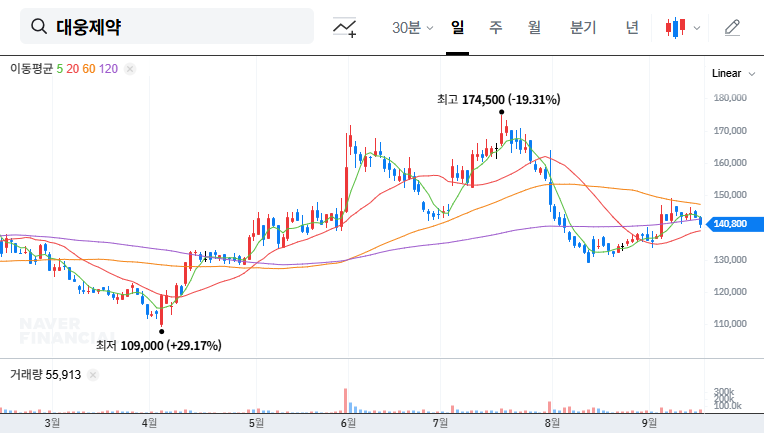
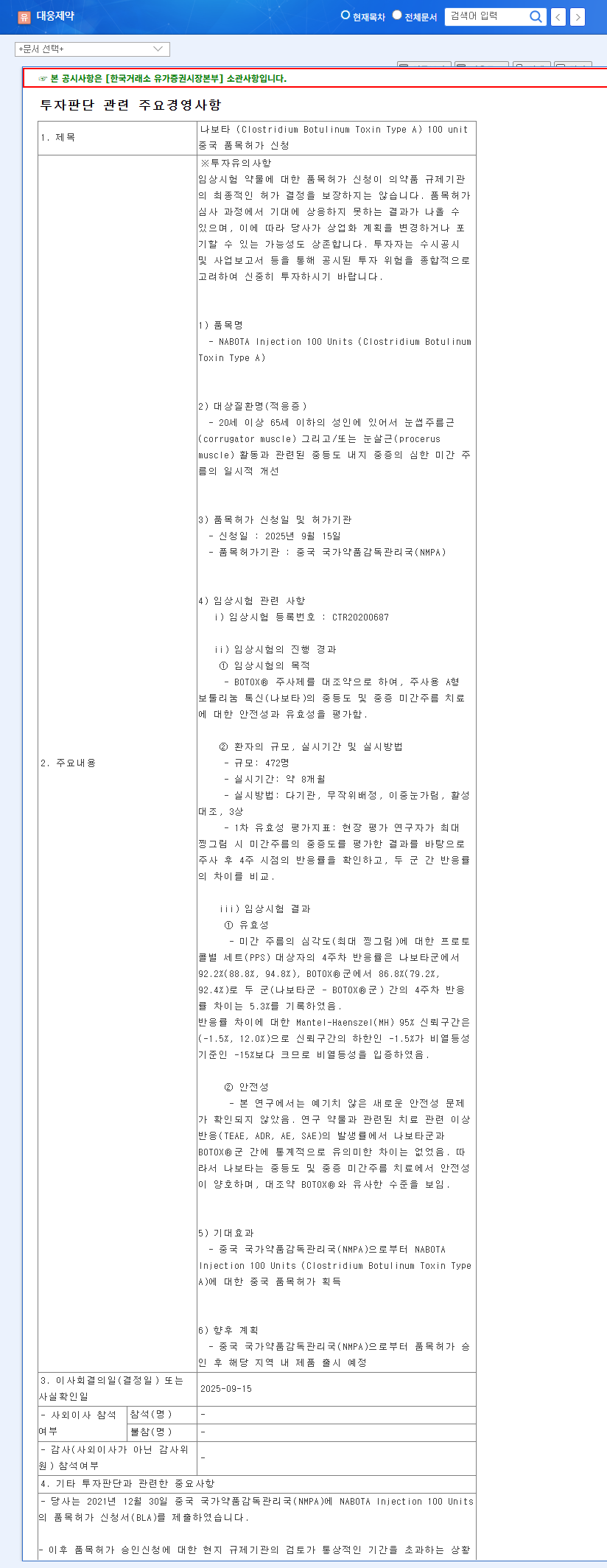
    Daewoong Pharmaceutical announced on September 15, 2025, that it had completed the application process for approval of ‘Nabota Injection 100 Units’ in China. This application is for the treatment of glabellar lines (frown lines between the eyebrows) in adults aged 20 to 65.

    2. Why Is It Important?: China Market Entry, A Growth Driver for Daewoong?

    China represents one of the world’s largest pharmaceutical markets. Successful entry with Nabota could lead to significant sales growth and a subsequent increase in Daewoong’s corporate value. It’s also an opportunity to further validate Nabota’s competitiveness, already recognized in major markets like the US and Europe.

    3. What’s Next?: Expectations and Concerns

    • Positive Aspects:
      • Entry into the Chinese market and securing new revenue streams
      • Strengthening global competitiveness and enhancing brand recognition
      • Building product reliability based on clinical data
      • Potential synergy with other pipelines such as Fexuprazan and Enavogliflozin
    • Negative Aspects:
      • Uncertainty surrounding approval and potential delays in the review process
      • Intensifying competition within the Chinese market
      • Risks associated with exchange rate fluctuations and changes in the macroeconomic environment

    4. What Should Investors Do?: 4 Key Checkpoints

    Investors should carefully monitor the following factors and formulate their investment strategies accordingly:

    • Progress and results of the NMPA approval process in China
    • Competitive landscape in the Chinese market and Daewoong’s marketing strategies
    • Fluctuations in exchange rates and changes in macroeconomic indicators
    • Synergy with the progress of other pipelines, such as Fexuprazan and Enavogliflozin

    Frequently Asked Questions

    When was Nabota’s application for approval in China completed?

    The application was completed on September 15, 2025.

    What are the benefits for Daewoong Pharmaceutical if Nabota is approved in China?

    Approval would allow Daewoong to enter the large Chinese market, leading to increased sales and enhanced global competitiveness.

    What should investors be aware of?

    Investors should monitor the approval outcome, the competitive environment in the Chinese market, and changes in exchange rates and macroeconomic conditions.

    Daewoong Pharmaceutical Applies for Nabota Approval in China: Investment Strategy Analysis 관련 이미지
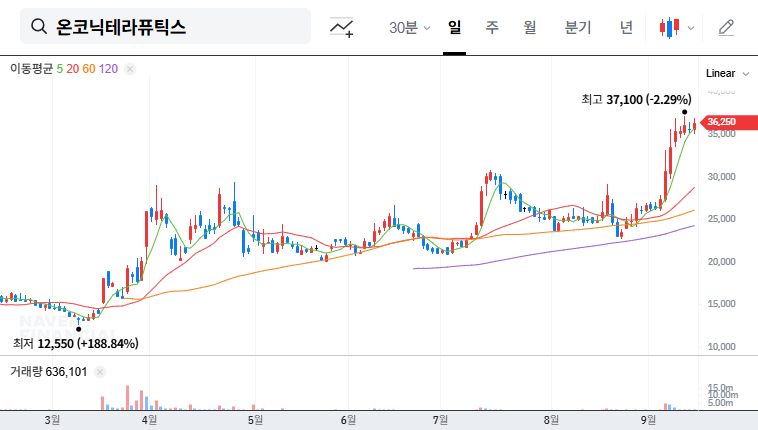
  • Onconik Therapeutics Receives Approval for Zacuvo Phase 1 Trial Modification: Investment Analysis


    Onconik Therapeutics Receives Approval for Zacuvo Phase 1 Trial Modification: Investment Analysis 대표 차트 이미지


    What Happened?

    Onconik Therapeutics announced on September 15, 2025, that it received approval from the Ministry of Food and Drug Safety (MFDS) for a modification to its Phase 1 clinical trial plan for Zastaprazan (Zacuvo), a treatment for digestive diseases caused by excessive gastric acid secretion. The purpose of this clinical trial is to evaluate the safety and efficacy of Zacuvo when administered in combination with other medications.

    Why is This Approval Important?

    This clinical trial modification approval is more than just a procedural step. It holds the key to Onconik Therapeutics’ future, influencing Zacuvo’s safety verification, potential expansion of indications, and even its global market entry.

    • Enhanced Safety and Increased Trust: Securing safety data on combination therapy with various drugs can enhance trust among medical professionals and patients.
    • Expansion of Indications and Enhanced Competitiveness: Securing additional indications and developing combination therapies can give Zacuvo a competitive edge over other drugs.
    • Accelerated Technology Export and Global Market Entry: Robust clinical data can positively influence negotiations for overseas market entry and technology export.

    So, What’s the Investment Strategy?

    In the short term, a buy or hold strategy is valid due to the positive momentum and the high potential for stock price increase. In the medium to long term, continuous monitoring of clinical results, sales growth trends, and Nesuparib’s development status is necessary.

    Investment Considerations

    • Pay attention to the timing and content of clinical trial results announcements.
    • Understand Zacuvo’s market share and competitive landscape.
    • Analyze the progress and likelihood of success of Nesuparib development.


    FAQ

    What is Zacuvo?

    Zacuvo is the 37th domestically developed new drug in Korea, used to treat conditions caused by excessive gastric acid secretion, such as gastroesophageal reflux disease (GERD) and gastric ulcers.

    What is the significance of this clinical trial modification approval?

    It’s a crucial step towards evaluating the safety and efficacy of Zacuvo when used in combination with other medications, paving the way for broader prescription and enhanced market competitiveness.

    What other pipelines does Onconik Therapeutics have?

    In addition to Zacuvo, Onconik Therapeutics is developing Nesuparib, a dual PARP/Tankyrase inhibitor for cancer treatment.


    Onconik Therapeutics Receives Approval for Zacuvo Phase 1 Trial Modification: Investment Analysis 관련 이미지
    Onconik Therapeutics Receives Approval for Zacuvo Phase 1 Trial Modification: Investment Analysis 관련 이미지


  • Cellbion IR Analysis: Is Lu-177-DGUL a Prostate Cancer Treatment Breakthrough? (September 2025)


    Cellbion IR Analysis: Is Lu-177-DGUL a Prostate Cancer Treatment Breakthrough? (September 2025) 대표 차트 이미지


    Key Takeaways from Cellbion’s IR

    • Lu-177-DGUL Phase 2 Clinical Trial Results: Positive results exceeding market expectations could significantly impact the stock price.
    • Conditional Approval and Commercialization Strategy: A clear explanation of the drug’s differentiation from competitors like Pluvicto and its market entry strategy is crucial.
    • CDMO Business Growth Plan: Investors will be looking for details on Cellbion’s CDMO expansion strategy and specific performance targets for stable revenue generation.
    • Financial Restructuring Plan: Addressing concerns about high R&D costs with a clear funding plan and financial stability measures is essential.

    Investment Opportunities and Risks

    • Opportunities: Successful clinical outcomes and market entry for Lu-177-DGUL could boost Cellbion’s valuation.
    • Risks: Disappointing clinical results or difficulties in securing funding could lead to a decline in the stock price.

    Investor Action Plan

    Investors should carefully analyze the information presented during the IR meeting, considering the market competitiveness of Lu-177-DGUL and Cellbion’s financial stability. A long-term investment strategy, rather than focusing on short-term price fluctuations, is recommended.


    Frequently Asked Questions

    What is Lu-177-DGUL?

    Lu-177-DGUL is a radiopharmaceutical drug being developed by Cellbion for the treatment and diagnosis of prostate cancer. It is currently in phase 2 clinical trials and has been designated as an orphan drug and GIFT 11.

    What are Cellbion’s main businesses?

    Cellbion’s primary businesses are new drug development (Theranostics-based precision medicine), production of generic pharmaceuticals, and CDMO services.

    What are the key investment considerations for Cellbion?

    Investors should consider the uncertainties inherent in drug development, the company’s ongoing operating losses, and competition from other drugs. It is crucial to carefully review IR materials and public disclosures before making any investment decisions.


    Cellbion IR Analysis: Is Lu-177-DGUL a Prostate Cancer Treatment Breakthrough? (September 2025) 관련 이미지
    Cellbion IR Analysis: Is Lu-177-DGUL a Prostate Cancer Treatment Breakthrough? (September 2025) 관련 이미지


  • Legochem Bio Enters ADC Collaboration with GO THERAPEUTICS: Investment Analysis


    Legochem Bio Enters ADC Collaboration with GO THERAPEUTICS: Investment Analysis 대표 차트 이미지


    1. What Happened?

    On September 9, 2025, Legochem Bio signed a joint research and antibody technology licensing agreement with GO THERAPEUTICS for the development of new antibody-drug conjugates (ADCs). Through this agreement, Legochem Bio plans to develop new ADCs by incorporating GO THERAPEUTICS’ antibody technology. The agreement is conditional upon regulatory approval and can be terminated if research and development is discontinued or if product approval fails. The financial details of the agreement were not disclosed.

    2. Why Does It Matter?

    This agreement holds significant implications for strengthening and expanding Legochem Bio’s ADC pipeline. The introduction of new antibody technology can complement the existing pipeline and increase the possibility of developing new ADCs. Furthermore, the collaboration with a US biotech company serves as an opportunity to demonstrate Legochem Bio’s technological prowess in the global market and increases the potential for future licensing and commercialization.

    3. So What?

    • Positive Outlook: Successful joint research may lead to the development of new ADC candidates, securing additional milestone and royalty revenue, and strengthening global market competitiveness.
    • Potential Risks: The inherent uncertainties of clinical development, the difficulty in assessing the value due to non-disclosure of the agreement amount, and the volatility of the KRW/USD exchange rate should be considered.

    4. What Should Investors Do?

    This agreement is a positive factor that supports Legochem Bio’s long-term growth potential. However, due to uncertainties such as the progress of clinical development and regulatory approvals, a cautious approach is necessary when making investment decisions. It is crucial to closely monitor future disclosures and market conditions while formulating an investment strategy.


    Frequently Asked Questions (FAQ)

    What is the agreement with GO THERAPEUTICS about?

    It is a joint research agreement for the development of new ADCs and a licensing agreement for Legochem Bio to incorporate GO THERAPEUTICS’ antibody technology.

    Why is this agreement important for Legochem Bio?

    It is expected to contribute to the strengthening and expansion of the ADC pipeline, validation of technological capabilities, and securing future growth engines.

    What are the key points to consider for investment?

    Uncertainties in clinical development, non-disclosure of the agreement amount, and KRW/USD exchange rate fluctuations should be considered.


    Legochem Bio Enters ADC Collaboration with GO THERAPEUTICS: Investment Analysis 관련 이미지