Tag: Permanent Magnets

  • JSLink Issues ₩12B Convertible Bonds: Growth Opportunity or Investment Risk?


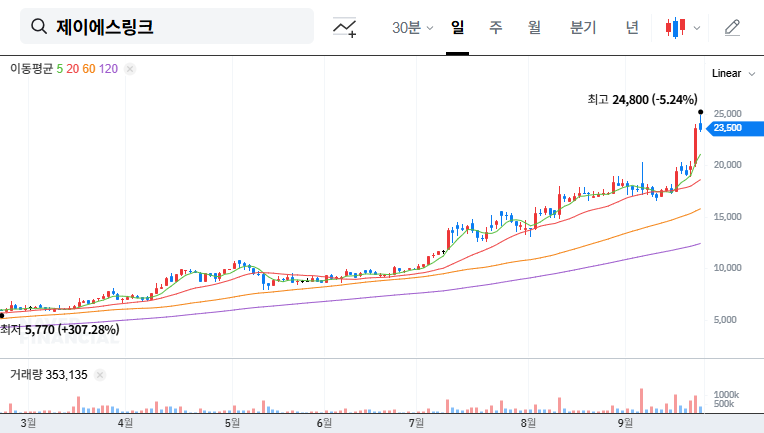
    JSLink Issues ₩12B Convertible Bonds: Growth Opportunity or Investment Risk? 대표 차트 이미지


    1. JSLink’s ₩12 Billion CB Issuance: What Happened?

    On September 22, 2025, JSLink announced its decision to issue ₩12 billion worth of private convertible bonds. The bonds carry a coupon rate of 2% and a maturity rate of 8%, with ‘Rare Earth Mobility Investment Association’ as the main investor. The payment date is October 2, 2025, and the conversion period is from October 2, 2026, to September 2, 2028.

    2. Why Issue Convertible Bonds?

    According to the disclosure, JSLink plans to use the funds raised through this CB issuance to invest in its new permanent magnet manufacturing business and strengthen its existing genomics and healthcare business. Having recently achieved profitability and secured growth momentum, JSLink is interpreted as seeking to secure future growth engines and strengthen its market competitiveness through this investment.

    3. So, What’s the Impact on Company Value?

    • Positive aspects: Securing funds for business expansion and R&D investment, potential debt reduction upon conversion, increased growth expectations
    • Negative aspects: Potential equity dilution upon conversion, interest expense burden due to the 8% maturity rate, possibility of conversion price adjustments, impact of macroeconomic variables

    4. What Should Investors Watch Out For?

    Investors should carefully analyze the impact of the CB conversion ratio, conversion timing, and potential conversion price adjustments on future shareholder value. It’s also crucial to continuously monitor the performance of the new business, macroeconomic variables (exchange rates and interest rates), and the profitability of the existing business. Considering JSLink’s history of financial difficulties, investment decisions should be made cautiously.


    FAQ

    What are convertible bonds?

    Convertible bonds (CBs) are issued as debt but give the holder the right to convert them into shares of the issuing company’s stock after a certain period.

    How does a CB issuance affect stock prices?

    In the short term, concerns about increased stock supply can lead to price declines, but in the long term, stock prices may rise due to company growth.

    What is JSLink’s new business?

    In addition to its existing genomics and healthcare business, JSLink is pursuing a permanent magnet manufacturing business, essential for future industries such as electric vehicles and robotics.



    JSLink Issues ₩12B Convertible Bonds: Growth Opportunity or Investment Risk? 관련 이미지
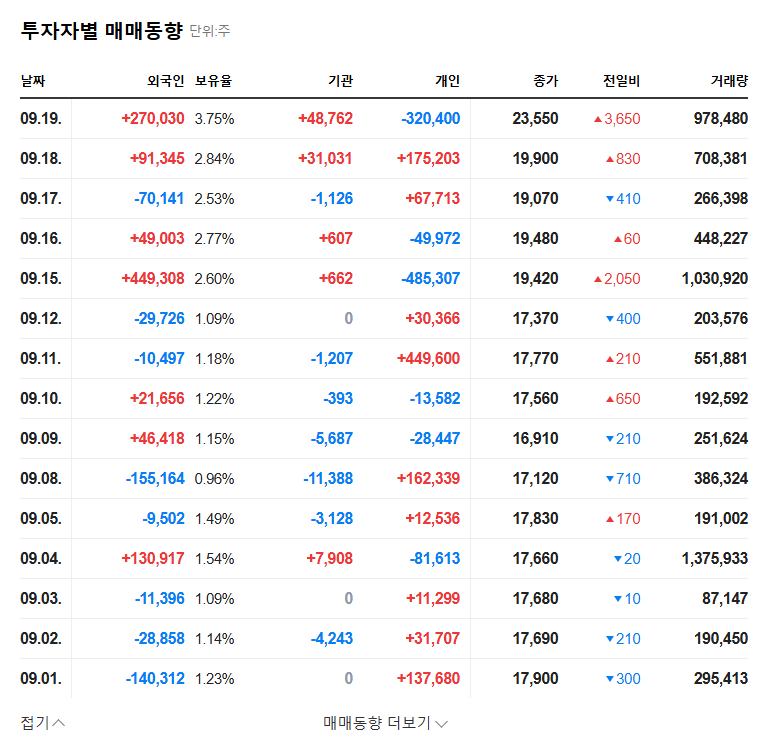
    JSLink Issues ₩12B Convertible Bonds: Growth Opportunity or Investment Risk? 관련 이미지


  • JS Link After-Hours Trading Deep Dive: Opportunity or Red Flag?


    What Happened? JS Link After-Hours Trading Analysis

    After the market closed on September 11, 2025, JS Link experienced a significant after-hours trading event with a volume of 437,987 shares, totaling approximately 7.8 billion KRW. Notably, institutional investors sold off around 5.6 billion KRW worth of shares, while foreign investors bought approximately 580 million KRW. This represents about 1.5% of the company’s market capitalization (520.4 billion KRW), which might not significantly impact short-term stock prices. However, after-hours trading often reflects crucial information, warranting further analysis of its underlying causes.

    Why Did It Happen? Fundamental and Financial Analysis

    JS Link is pursuing business diversification, shifting from its existing bio and healthcare business to permanent magnets and rare earth magnet recycling. While this diversification strategy appears positive for long-term growth, the company’s financial status, as of the 2024 business report, raises concerns. With retained earnings showing a deficit of 86.2 billion KRW and an operating loss of 9.1 billion KRW, the financial burden of investments in new businesses is a significant risk. This financial difficulty could be linked to the substantial sell-off by institutional investors. Furthermore, the current order backlog of 7.2 billion KRW, while contributing to short-term sales, remains insufficient considering the expected contribution from the new business segments.

    What’s the Investment Strategy? Market Context and Recommendations

    Recent macroeconomic indicators, such as exchange rates, interest rates, and oil prices, have remained relatively stable. However, the volatility of exchange rates remains a concern, particularly given the new business’s reliance on raw material imports. In the short term, investors should observe the market’s reaction to the sell-off and seek further information regarding the motivations behind it. A long-term strategy requires close monitoring of the new business’s performance, the improvement of profitability in existing segments, and the company’s efforts to strengthen its financial health.

    Key Action Plan for Investors

    • Short-term: Verify the reasons behind the after-hours trading and monitor stock price trends.
    • Long-term: Monitor the progress of new business ventures, profitability of existing business, and efforts to improve the financial structure.


    Frequently Asked Questions

    What are JS Link’s main businesses?

    JS Link is diversifying its business portfolio beyond its existing bio and healthcare operations to include permanent magnets and rare earth magnet recycling.

    Who were the main parties involved in the after-hours trading?

    Institutional investors sold a large volume of shares (approx. 5.6 billion KRW), while foreign investors purchased a smaller amount (approx. 580 million KRW).

    What is the current state of JS Link’s financials?

    As of 2024, JS Link reported a deficit in retained earnings of 86.2 billion KRW and an operating loss of 9.1 billion KRW. Improving the financial situation is crucial.

    What should investors be cautious of?

    While the business diversification holds growth potential, investors should exercise caution considering the current financial difficulties and the reasons behind the large sell-off in after-hours trading.


  • JS Link Announces Convertible Bond Exercise: What’s Next for the Stock Price?

    1. What Happened?

    JS Link announced on July 30, 2025, the exercise of convertible bonds (CBs) for 693,455 shares, representing 2.56% of its market capitalization. The new shares are scheduled to be listed on August 13th. The conversion price is significantly lower than the current market price, leading to concerns about short-term stock dilution.

    2. Why This Decision?

    JS Link needs funding to address the downturn in its existing genomic analysis business and invest in its new permanent magnet business. The proceeds from this exercise will be used for the new venture. However, the new business’s success remains uncertain, and the initial investment costs are substantial.

    3. What’s the Impact on the Stock Price?

    In the short term, the increased number of shares could dilute earnings per share (EPS), potentially leading to a stock price decline. However, if the new business is successful, it could provide long-term growth momentum. This creates a situation with both short-term risks and long-term opportunities. Additionally, external factors such as raw material prices, exchange rates, and interest rates can also influence the stock price.

    4. What Should Investors Do?

    • Short-term investors: Exercise caution due to increased stock price volatility.
    • Long-term investors: Carefully analyze the growth potential and risks of the new business. Consider the company’s financial stability, competitiveness, and risk management strategies before making investment decisions.
    Does a convertible bond exercise always negatively impact stock prices?

    Not necessarily. While short-term dilution can occur, if the raised capital fuels growth in a new venture, it can have a positive long-term impact.

    What is JS Link’s new business?

    Permanent magnets. While external factors like China’s rare earth regulations present opportunities, challenges remain in securing technology and financing.

    What’s the most crucial factor to consider when making investment decisions?

    Holistically assess the new business’s potential, financial stability, and risk management strategies. Focus on a long-term investment strategy rather than short-term price fluctuations.

  • JS Link Rights Offering: A Leap into Permanent Magnets? Risks and Opportunities for Investors

    1. What is JS Link’s Rights Offering?

    JS Link is issuing 1,742,768 new shares at ₩11,476 per share. The goal is to raise capital to revitalize the struggling genomics business and expand investment in the promising permanent magnet business.

    2. Why the Rights Offering?

    The existing genomics business has suffered declining profitability due to the end of the COVID-19 diagnostic kit boom and increased competition. The rights offering aims to address this and capitalize on the opportunities in the permanent magnet market, driven by the US-China trade war and rare earth supply chain restructuring. Major shareholder participation increases the likelihood of a successful offering, but stock dilution is inevitable.

    3. Impact on Investors

    • Existing Business (Genomics): Sensitive to exchange rate fluctuations (EUR_KRW, USD_KRW). Potential for recovery if funds are used for R&D and marketing.
    • New Business (Permanent Magnets): Risks and opportunities related to raw material prices (crude oil, gold), interest rates (US 10-Year Treasury, US Fed Funds Rate, ECB Refi Rate), and shipping costs (Baltic Dirty Tanker Index). Market entry, technology acquisition, and competitive advantage are key.
    • Financial Stability: Short-term improvement, but long-term stability depends on the success of the new business. Monitor key financial indicators such as debt ratio and liquidity ratio, as well as Korean 10-Year Treasury and Bank of Korea Base Rate.
    • Stock Price: Potential for short-term decline, but long-term upside potential depends on new business performance. Continuous monitoring of stock price trends after the announcement is crucial.

    4. Investor Action Plan

    Before investing, it is essential to review and analyze additional information, including past financial data, recent stock charts, market competition, funding plans, and detailed plans for the permanent magnet business. Continuous attention to external factors such as geopolitical events and raw material price fluctuations is also crucial.

    Frequently Asked Questions

    What is a rights offering?

    A rights offering is a way for a company to raise capital by issuing new shares to existing shareholders.

    What is the purpose of JS Link’s rights offering?

    To revive the genomics business and expand investment in the permanent magnet business.

    What are the advantages and disadvantages of a rights offering?

    The advantage is that it allows companies to raise capital without increasing debt. The disadvantage is that it can dilute the value of existing shares.