Tag: Pan Ocean Co.

  • (028670) Pan Ocean Q3 2025 Earnings Analysis: Stock Under Pressure After Major Profit Miss

    (028670) Pan Ocean Q3 2025 Earnings Analysis: Stock Under Pressure After Major Profit Miss

    The latest Pan Ocean Q3 2025 earnings report has sent a shockwave through the investment community. The shipping giant announced preliminary results that fell significantly short of market consensus, particularly in net profit, raising critical questions about the company’s trajectory and the health of the broader shipping industry. For current and prospective investors, this moment demands a clear-eyed analysis of what went wrong, the immediate impact on Pan Ocean stock, and the strategic outlook for the coming quarters.

    This comprehensive breakdown examines the core numbers, dissects the underlying causes of the underperformance, and offers a strategic perspective on what’s next for Pan Ocean. We will explore everything from macroeconomic headwinds to internal cost pressures to help you make a more informed investment decision.

    Deconstructing the Pan Ocean Q3 2025 Earnings Shock

    On November 3, 2025, Pan Ocean released figures that painted a challenging picture. The deviation from analyst expectations was stark, with the net profit miss being the most alarming signal to the market. Here’s a closer look at the key performance indicators:

    • Revenue: KRW 1,269.5 billion, a significant 9% miss compared to the expected KRW 1,395 billion.
    • Operating Profit: KRW 125.2 billion, narrowly missing the consensus of KRW 127.5 billion by 2%.
    • Net Profit: KRW 57.9 billion, a staggering 40% below the anticipated KRW 97 billion.

    While the operating profit held relatively firm, suggesting some level of cost control at the operational level, the dramatic plunge in net profit points to severe pressures further down the income statement. This discrepancy is what has investors most concerned. For a detailed, unfiltered look at the numbers, investors can review the Official Disclosure filed with DART (Source).

    The 40% net profit miss is a red flag. It indicates that even if the core business is treading water, external financial pressures and non-operational costs are significantly eroding the bottom line. This is a classic sign of a tough macroeconomic environment hitting a cyclical industry.

    Key Factors Behind the Disappointing Performance

    The underperformance wasn’t caused by a single issue but a confluence of persistent headwinds. Understanding these factors is crucial for any shipping market analysis.

    1. Continued Slump in Bulk Freight Rates

    Pan Ocean’s core business remains heavily tied to the bulk shipping market. Key indicators like the Baltic Dry Index (BDI) have reflected sluggish global demand for raw materials like iron ore and coal. This sustained downturn in bulk freight rates directly compresses revenue and profit margins for the company’s primary fleet, a trend that unfortunately continued through Q3 2025.

    2. Macroeconomic and Financial Pressures

    The sharp decline in net profit, despite a more stable operating profit, points squarely at financial costs. Two main culprits are:

    • Exchange Rate Volatility: A rising won/dollar exchange rate (KRW 1,431.20 as of late October) increases the burden of any US dollar-denominated debt and operational costs, leading to foreign exchange losses.
    • High Interest Rates: With global central banks maintaining high-interest rates to combat inflation, the cost of financing Pan Ocean’s capital-intensive operations (e.g., vessel loans) has surged, directly impacting net profitability.

    3. A Glimmer of Hope: The Non-Bulk Segment

    While the bulk sector struggled, Pan Ocean’s strategic diversification into non-bulk areas, particularly its long-term contracts for LNG (Liquefied Natural Gas) carriers, provided some stability. This segment is less susceptible to spot market volatility and represents a critical growth engine. However, in Q3 2025, its positive contribution was not enough to offset the severe downturn in the core business and the external financial pressures.

    Stock Outlook and Investor Strategy

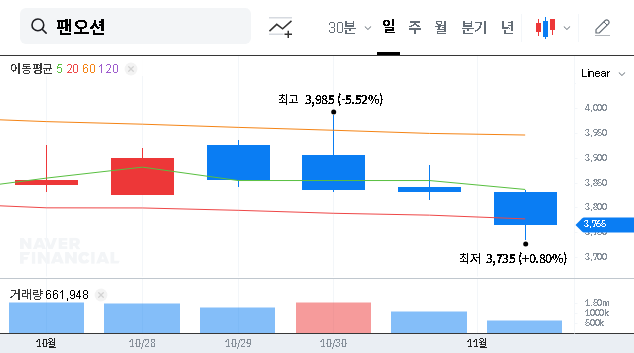
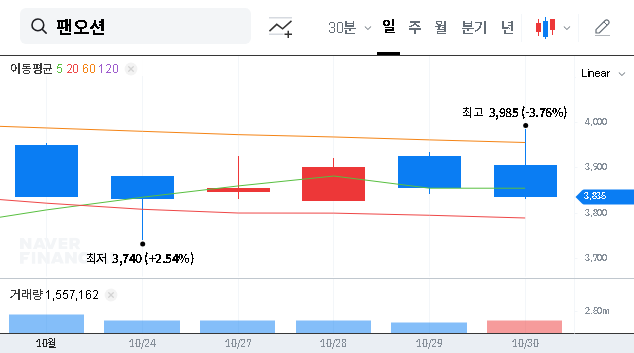
    The market’s reaction to the Pan Ocean Q3 2025 earnings is expected to be negative in the short term. The substantial profit miss will likely lead to analyst downgrades and a sell-off as investors re-price the stock to reflect lower profitability. However, a sound investment strategy requires a more nuanced, long-term view.

    What to Monitor Moving Forward:

    • Global Economic Indicators: The recovery of the shipping market is contingent on a broader global economic rebound. Keep an eye on manufacturing PMI data and trade forecasts from institutions like the International Monetary Fund (IMF).
    • Non-Bulk Segment Growth: Pay close attention to announcements regarding new long-term contracts for LNG carriers or other specialized vessels. This is Pan Ocean’s key to de-risking its business model. For more on this, see our Complete Guide to Shipping Sector Diversification.
    • Cost Management: The company’s ability to control operating expenses, bunker fuel costs, and SG&A will be paramount in protecting margins until revenue recovers.

    For now, a cautious approach is warranted. The earnings shock creates uncertainty, and investors should brace for short-term volatility. The key is to avoid panic-selling and instead focus on whether the company’s long-term fundamentals—including its diversification strategy and balance sheet strength—remain intact through this cyclical downturn.

    (028670) Pan Ocean Q3 2025 Earnings Analysis: Stock Under Pressure After Major Profit Miss 관련 이미지
  • (028670) Pan Ocean POSCO Contract: A Deep Dive Analysis for Investors (2025)

    (028670) Pan Ocean POSCO Contract: A Deep Dive Analysis for Investors (2025)

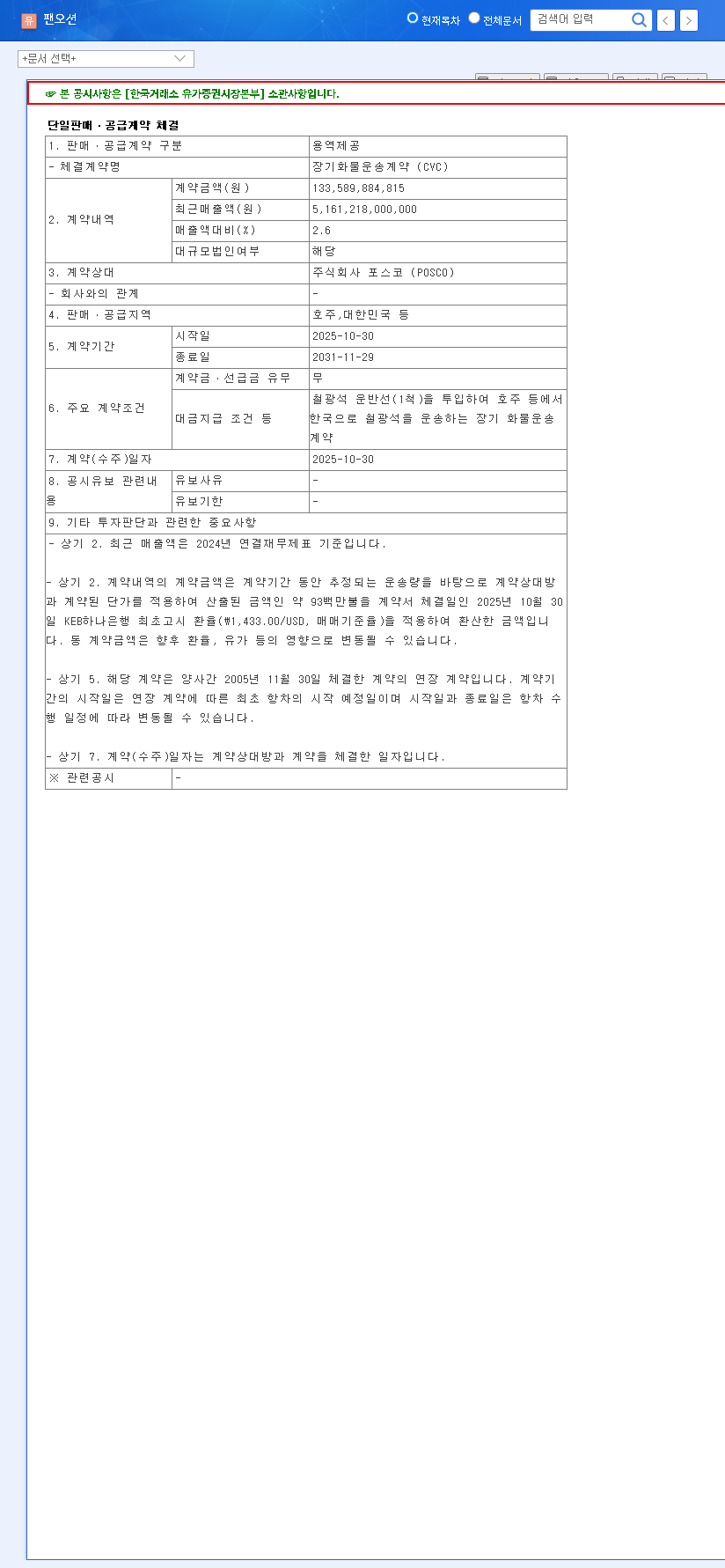
    The new Pan Ocean POSCO contract has sent ripples through the shipping industry, marking a significant strategic move for both South Korean giants. Pan Ocean Co., Ltd., a leading global shipping company, has secured a massive long-term cargo transportation contract with the steel powerhouse, POSCO. Valued at approximately KRW 133.6 billion, this deal raises critical questions for investors: Does this agreement signal a stable growth trajectory for Pan Ocean amidst global economic uncertainty? How does this partnership fortify Pan Ocean’s market position?

    This comprehensive analysis will dissect the contract’s specifics, evaluate Pan Ocean’s current fundamentals, and assess the broader macroeconomic environment. Our goal is to provide precise insights into Pan Ocean’s present and future value, empowering you to make well-informed investment decisions in the dynamic shipping sector.

    Deconstructing the Pan Ocean POSCO Contract

    On October 30, 2025, Pan Ocean announced the landmark agreement with POSCO, a pivotal development for its core business. This Long-Term Cargo Transportation Contract (often referred to as a Contract of Affreightment or CVC) provides a predictable and stable revenue stream, a highly coveted asset in the often-volatile shipping market. For a detailed look at the official filing, you can view the Official Disclosure (Source).

    • Contract Value: KRW 133.6 billion, which constitutes approximately 2.6% of Pan Ocean’s recent annual revenue.
    • Contract Duration: A substantial period of 6 years and 1 month, running from October 30, 2025, to November 29, 2031.
    • Scope of Work: Focused on the transportation of steel-related raw materials and finished products, directly bolstering Pan Ocean’s primary bulk carrier operations.

    Pan Ocean’s Fundamentals: A Business Deep Dive

    The POSCO contract is particularly crucial given Pan Ocean’s current financial and operational landscape. While the company maintains a stable financial footing, the subdued global shipping market necessitates a strong focus on efficiency and securing reliable revenue streams.

    Financial Health and Core Business Segments

    Based on recent financial reports, Pan Ocean’s operating profit has shown improvement despite a slight revenue dip, largely due to successful cost-cutting initiatives. The company’s diverse business segments contribute to its resilience:

    • Bulk Segment (57% of Revenue): As the company’s backbone, this segment’s profitability is a key strength. The stability offered by its portfolio of long-term contracts, now strengthened by the POSCO deal, is vital for weathering downturns in freight indices.
    • LNG Carrier Segment: Positioned as a future growth engine, this division is set to benefit from the global energy transition and rising demand for Liquefied Natural Gas (LNG). Expansion of the gas carrier fleet to 13 vessels by year-end is a strong indicator of future potential.
    • Grain Business: A strategic diversification, this segment has shown remarkable revenue growth thanks to an expanded sales network, positioning Pan Ocean as a more integrated logistics provider.

    The Macroeconomic Landscape: Headwinds and Tailwinds

    No shipping company operates in a vacuum. Pan Ocean’s performance is intrinsically linked to global economic trends. For further reading, industry analysis from sources like Drewry Shipping Consultants can provide broader market context.

    • Shipping Indices: The Baltic Dry Index (BDI), a key barometer for the bulk shipping market, has shown weakness, with a 21% year-over-year decrease. This downturn highlights the importance of long-term contracts like the one with POSCO to insulate revenue from spot market volatility.
    • Currency and Interest Rates: As an international business, Pan Ocean is sensitive to USD/KRW exchange rate fluctuations. Furthermore, while the interest rate environment has been stable, potential increases in borrowing costs require prudent financial management.
    • Commodity Prices: Volatility in international oil prices directly impacts operational costs (bunker fuel), making cost-efficiency and fuel hedging strategies critical.

    This long-term contract serves as a strategic shield, allowing Pan Ocean to stabilize a portion of its core revenue and better navigate the turbulent waters of the spot market.

    Impact Analysis: What This Means for Pan Ocean’s Future

    The Pan Ocean POSCO contract is projected to have a multi-faceted positive impact on the company. Securing roughly KRW 22 billion in stable annual revenue directly strengthens its profit structure and reduces earnings volatility. This enhanced financial predictability is crucial for funding strategic investments, such as the expansion of the LNG fleet. Moreover, deepening its partnership with a blue-chip client like POSCO enhances Pan Ocean’s reputation and could act as a catalyst for securing other major long-term shipping contracts in the future.

    While the 2.6% share of total revenue may not trigger a dramatic short-term stock price surge, its true value lies in reinforcing the company’s long-term fundamentals. This move demonstrates a proactive strategy to gain a competitive edge in a persistently challenging industry.

    Investor Takeaway and Action Plan

    In conclusion, Pan Ocean’s long-term shipping contract with POSCO is a significant strategic victory. It enhances business stability, secures a predictable revenue stream, and strengthens the company’s core bulk segment. This deal provides a solid foundation that can support growth initiatives in more nascent areas like LNG transport and the grain business.

    For investors, this development should be viewed as a strong positive for the company’s long-term health rather than a short-term catalyst. It reinforces Pan Ocean’s status as a resilient and well-managed player in the global shipping industry. Continuous monitoring of macroeconomic indicators and shipping indices remains essential. For those interested in this sector, understanding the nuances of how to analyze shipping stocks is a crucial next step.

    Frequently Asked Questions (FAQ)

    Q1: What are the key details of the Pan Ocean POSCO contract?

    The contract, signed on Oct 30, 2025, is valued at KRW 133.6 billion and will run for over 6 years until Nov 29, 2031, focusing on transporting steel-related materials.

    Q2: How significant is this contract to Pan Ocean’s revenue?

    It represents about 2.6% of Pan Ocean’s total revenue, providing a stable income of approximately KRW 22 billion annually.

    Q3: What is Pan Ocean’s most important business segment?

    The bulk carrier segment is its core business, accounting for 57% of total revenue. This contract directly strengthens the stability of this key division.

    Disclaimer: This analysis is for informational purposes only and is based on publicly available data. Investment decisions should be made at the investor’s own discretion and responsibility. No liability is assumed for any investment outcomes.

    (028670) Pan Ocean POSCO Contract: A Deep Dive Analysis for Investors (2025) 관련 이미지