Tag: Optical Communication

  • (138080) OE Solutions Convertible Bond Exercise: A Deep Dive into Stock Price Impact & Investment Strategy

    (138080) OE Solutions Convertible Bond Exercise: A Deep Dive into Stock Price Impact & Investment Strategy

    The recent OE Solutions convertible bond call option exercise has sent ripples through the investment community, prompting a closer look at the company’s stock price trajectory and long-term corporate value. This strategic financial maneuver, while common, presents a complex scenario for current and prospective investors. It raises critical questions about short-term stock dilution versus the long-term benefits of capital infusion.

    This comprehensive analysis will dissect the event, evaluate the underlying OE Solutions financials, and provide a clear framework for developing a sound investment strategy. We will explore both the immediate pressures and the potential growth catalysts stemming from this decision.

    Decoding the Announcement: The Convertible Bond Exercise Explained

    What Exactly Happened?

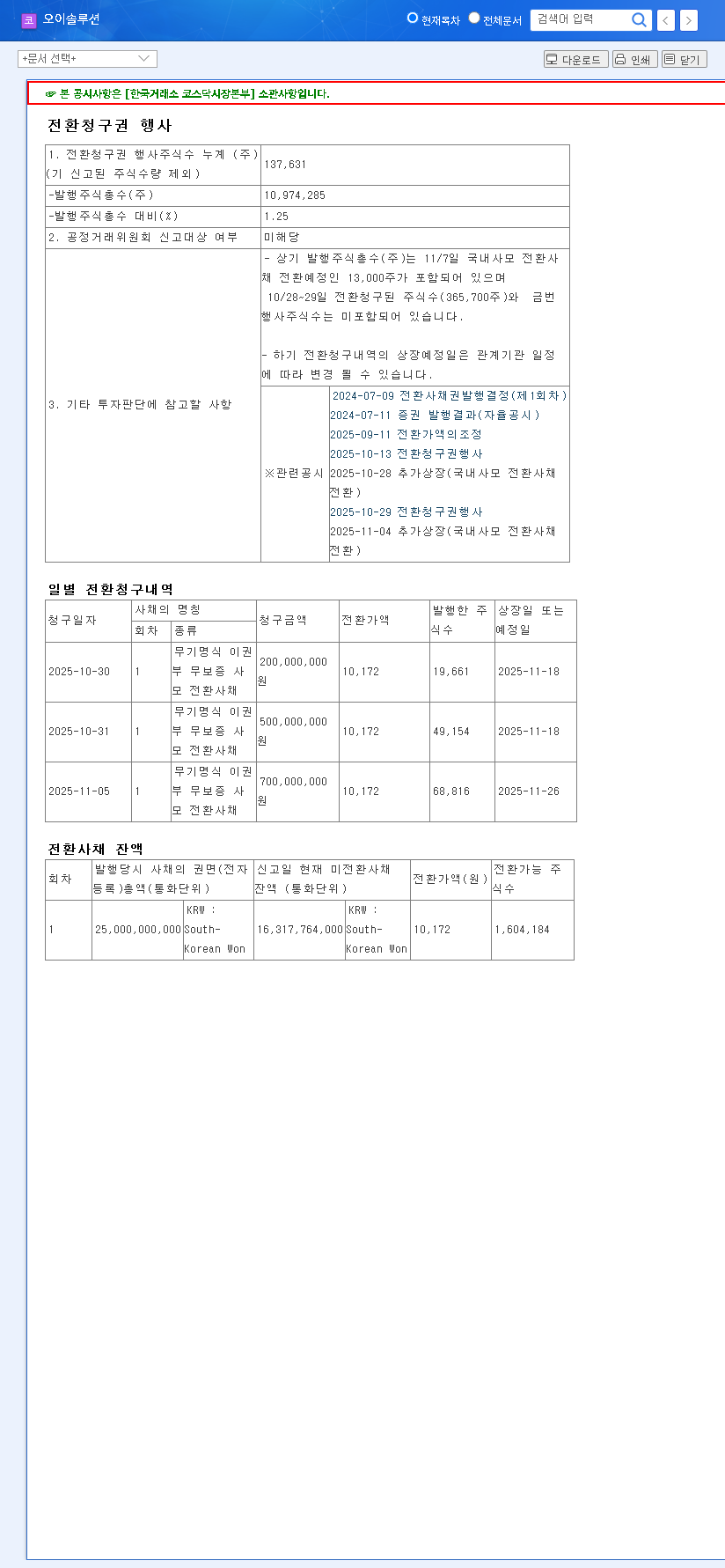
    On November 5, 2025, OE Solutions officially announced its decision to exercise call options on its outstanding convertible bonds. In essence, this forces bondholders to either accept a call price for their bonds or convert them into company stock. The key details are as follows:

    • Shares Converted: A total of 137,631 new shares were issued.
    • Conversion Price: The conversion was executed at 10,172 KRW per share.
    • Capital Infusion: This move is projected to inject approximately 1.4 billion KRW into the company.
    • Source: The details were confirmed via an Official Disclosure on DART.

    This action is significant because it increases the number of shares outstanding, which has a direct impact on the OE Solutions stock price and the ownership stake of existing shareholders.

    A Tale of Two Metrics: Analyzing OE Solutions’ Financials

    Explosive Revenue Growth vs. Deepening Losses

    An OE Solutions investment analysis reveals a stark contrast. The company has demonstrated impressive top-line growth, with Q1 2025 revenue soaring 92.1% year-over-year to 29.9 billion KRW. This is fueled by aggressive expansion beyond 5G into high-demand sectors like Fiber to the Home (FTTH), Cable TV (CATV/MSO), and Datacenters. However, this growth has come at a significant cost.

    Despite revenue doubling, OE Solutions reported an operating loss of 9.7 billion KRW and a net loss of 10.7 billion KRW, primarily due to heavy investment in R&D, which accounts for over 24% of sales.

    This dynamic—investing heavily for future dominance at the expense of current profitability—is a critical factor. Furthermore, the company’s debt-to-equity ratio of 113.53% is relatively high, signaling that its financial health requires careful monitoring by investors.

    Impact of the OE Solutions Convertible Bond Event

    Short-Term Pressure: Dilution and Profit-Taking

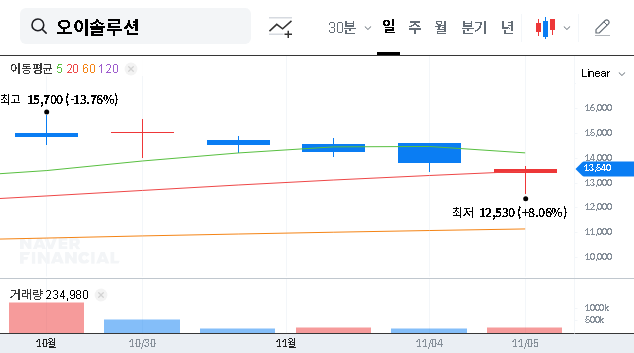
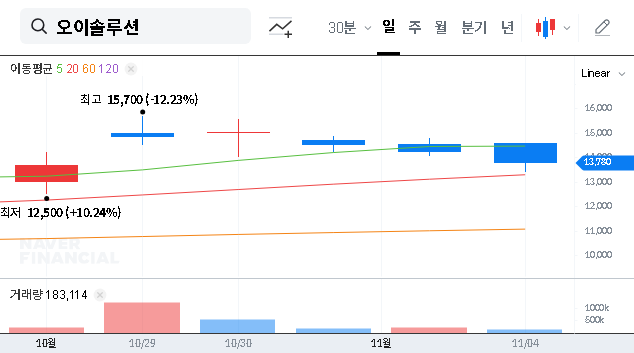
    The most immediate consequence of the convertible bond exercise is shareholder dilution. With more shares in circulation, each existing share represents a smaller piece of the company. Given that the current stock price (13,540 KRW) is significantly higher than the conversion price (10,172 KRW), there is a strong incentive for converting bondholders to sell their new shares for a quick profit. This potential wave of selling can create downward pressure on the OE Solutions stock price in the short term.

    Long-Term Signal: A Bet on Future Growth

    Conversely, the capital raised is a strategic asset. These funds can be used to strengthen the balance sheet and, more importantly, fuel further development of next-generation technologies like Co-Packaged Optics (CPO) and coherent optical transceivers. Success in these areas could secure OE Solutions’ long-term competitive advantage. This move can be interpreted as a signal of management’s confidence in their growth pipeline. For more on market trends, investors often consult sources like Bloomberg’s technology sector reports.

    Investment Thesis & Strategic Outlook

    The OE Solutions convertible bond exercise is a pivotal event, not a simple positive or negative signal. Investors must weigh the immediate risks against the long-term strategic vision.

    • Short-Term Cautious Approach: Expect potential volatility and downward price adjustments due to increased share supply.
    • Long-Term Focus: The key is whether the company can translate its R&D spending into improved profitability. Monitor upcoming earnings reports for a clear path to positive cash flow.

    A successful investment hinges on the company’s ability to execute its growth strategy effectively. Investors should supplement this analysis by understanding broader principles of long-term tech investing. The ultimate test will be if the new capital can generate returns that far outweigh the initial shareholder dilution.

    Frequently Asked Questions (FAQ)

    What is the main takeaway from the OE Solutions convertible bond exercise?

    The company is raising capital to fund future growth, which it believes will create long-term value. However, this action creates short-term risk for the stock price due to dilution and potential selling pressure from new shareholders.

    Is OE Solutions a good investment right now?

    It depends on your risk tolerance and investment horizon. OE Solutions is a high-growth, high-risk company. If you believe in its technology and market expansion strategy, the current volatility could be an opportunity. If you are risk-averse, the ongoing losses and high debt are significant concerns.

    What key metrics should I watch for in OE Solutions’ next earnings report?

    Look beyond revenue growth. Focus on improvements in operating profit margin, a reduction in the rate of cash burn, and any specific updates on the monetization of their new ventures in the Datacenter and FTTH markets. A clear strategy for achieving profitability is the most important factor to monitor.
    (138080) OE Solutions Convertible Bond Exercise: A Deep Dive into Stock Price Impact & Investment Strategy 관련 이미지
  • (138080) OE Solutions Stake Reduction: An In-Depth 2025 Investor Analysis

    (138080) OE Solutions Stake Reduction: An In-Depth 2025 Investor Analysis

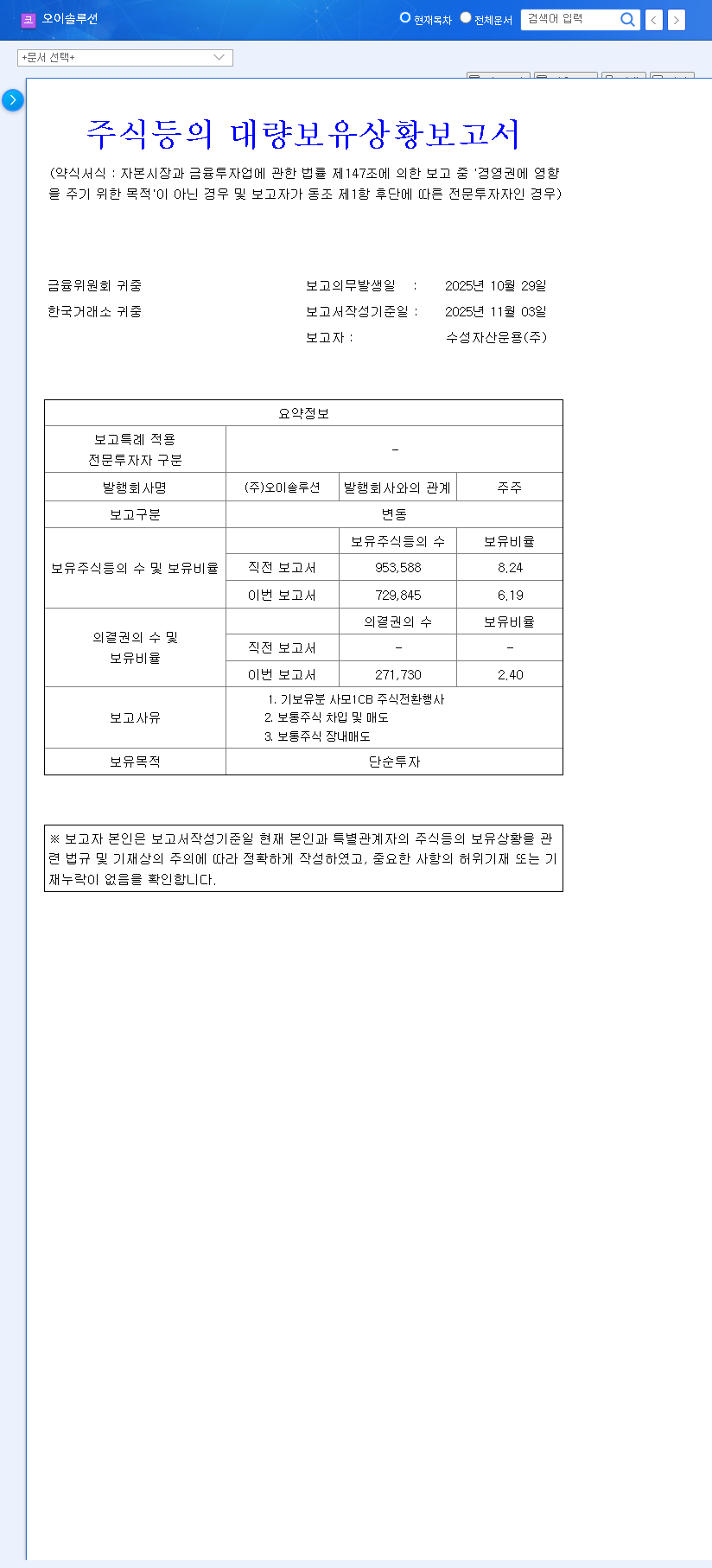
    The recent OE Solutions stake reduction by major shareholder Soosung Asset Management has sent ripples through the investment community, prompting a necessary re-evaluation of the company’s stock and future prospects. This significant move, which saw the asset manager decrease its holding from 8.24% to 6.19%, is more than a simple portfolio adjustment; it’s a critical signal that warrants a thorough investigation. For current and prospective investors, understanding the context behind this divestment is paramount.

    This comprehensive analysis unpacks the implications of Soosung’s move. We will dissect OE Solutions’ current fundamentals, explore the potential impact on investor sentiment and stock price, and outline a strategic framework to help you navigate this period of uncertainty. Is this a warning sign of deeper issues, or a buying opportunity in disguise? Let’s find out.

    The Catalyst: Unpacking Soosung Asset Management’s Divestment

    On November 4, 2025, the market took note as Soosung Asset Management formally disclosed a sale of approximately 2.05 percentage points of its shares in OE Solutions. According to the Official Disclosure (DART), this reduction was achieved through a combination of strategies, including exercising conversion rights on convertible bonds (CBs) and direct market sales. While the stated purpose was for investment, a large-scale divestment by an institutional investor is often interpreted as a bearish signal, reflecting a potential lack of confidence in the company’s near-term growth or valuation.

    Institutional investors are often considered the “smart money,” and their actions can heavily influence market psychology. A significant sell-off can trigger a cascade of selling from retail investors, creating short-term downward pressure on the OE Solutions stock price. Understanding this dynamic is the first step in a sound OE Solutions investor analysis.

    A Tale of Two Halves: OE Solutions’ Current Fundamentals

    To understand the context of the OE Solutions stake reduction, we must examine the company’s financial health and strategic direction as of its H1 2025 report. The picture is complex, with impressive top-line growth overshadowed by persistent profitability challenges.

    The core dilemma for OE Solutions is clear: Revenue is soaring on the back of market diversification and innovation, but the bottom line remains elusive due to heavy investment in future growth and high operational costs.

    Positive Momentum: Growth and Innovation

    • Impressive Revenue Growth: H1 2025 revenue surged to KRW 29.9 billion, a remarkable 92.1% year-over-year increase. This is a direct result of successful market diversification beyond 5G into high-demand sectors like FTTH (Fiber to the Home), CATV, and Datacenters.
    • Investing in the Future: OE Solutions is aggressively pursuing next-generation technologies. Key projects include ELSFP for Co-Packaged Optics (CPO), 100Gbps DCO optical modules, and cutting-edge 400G coherent transceivers. These are critical components for the future of data transmission. For more on this technology, you can read our guide on The Future of Optical Transceivers.
    • New Ventures & Integration: The company is expanding into new markets like LiDAR light sources for autonomous driving and strengthening its supply chain through the vertical integration of core optical components.

    Concerning Headwinds: Profitability and Financial Health

    • Persistent Losses: Despite the revenue boom, H1 2025 saw an operating loss of KRW 9.7 billion and a net loss of KRW 10.7 billion. This indicates that the cost of growth—high R&D spending and SG&A expenses—is currently outweighing income.
    • Financial Strain: The company’s debt-to-equity ratio is on the rise, primarily due to the issuance of convertible bonds to fund operations and R&D. Continuous losses raise valid concerns about long-term financial soundness.
    • Uncertain Monetization Timeline: While the R&D pipeline is exciting, these advanced technologies require lengthy development and customer approval cycles. The timeline for them to generate meaningful profit remains uncertain.

    Investment Strategy: Navigating the Uncertainty

    Given the conflicting signals, a nuanced investment strategy is required. The market’s reaction to the OE Solutions stake reduction creates short-term risks but also highlights long-term performance indicators to monitor.

    Short-Term Outlook: Caution is Key

    In the immediate future, investors should brace for increased volatility. The overhang from Soosung’s sale, combined with the potential for further CB conversions, creates significant selling pressure. A cautious, wait-and-see approach is advisable until the market absorbs this new supply of shares. According to market behavior studies from Reuters, institutional sell-offs can depress a stock for several quarters.

    Mid-to-Long-Term Outlook: Focus on Execution

    The long-term success of OE Solutions hinges on its ability to convert its technological prowess into profit. Investors should shift their focus from short-term stock movements to a few key performance indicators:

    • Path to Profitability: Watch for sequential improvements in operating margins in upcoming quarterly reports. Is the company gaining control over its costs?
    • Commercialization Milestones: Look for announcements of customer acquisitions or design wins for their next-generation products (CPO, 400G modules, LiDAR).
    • Financial De-risking: Monitor the company’s efforts to manage its debt and improve its financial structure.

    Conclusion: A Critical Juncture for OE Solutions

    Soosung Asset Management’s stake reduction serves as a potent reminder of the challenges facing OE Solutions. While the company’s innovation and revenue growth are undeniable strengths, the lack of profitability and financial pressures are significant risks that cannot be ignored. For investors, this is a time for diligence, not panic. The key is to monitor the company’s progress on its path to profitability and its ability to execute its ambitious technology roadmap. The coming quarters will be pivotal in determining whether OE Solutions can translate its vision into sustainable value for shareholders.

    (138080) OE Solutions Stake Reduction: An In-Depth 2025 Investor Analysis 관련 이미지
  • (380540) OptiCore Inc. CB Acquisition: Investment Analysis & Stock Outlook

    (380540) OptiCore Inc. CB Acquisition: Investment Analysis & Stock Outlook

    The recent OptiCore Inc. CB acquisition by Baro Savings Bank has sent ripples through the investment community, casting a spotlight on a company at a critical crossroads. This move, potentially giving the bank a 6.29% stake, raises crucial questions for current and prospective investors. Is this a vote of confidence in a struggling tech firm, or a precursor to further market volatility? Navigating this complex situation requires a deep understanding of the forces at play.

    This comprehensive analysis breaks down the acquisition’s implications, examines OptiCore’s underlying financial health, and provides a clear action plan to help you make an informed OptiCore Inc. investment decision.

    The Event: Baro Savings Bank’s Strategic Move

    On October 16, 2025, Baro Savings Bank officially acquired a significant tranche of Convertible Bonds (CBs) issued by OptiCore Inc. According to the official filing, this acquisition could translate into a 6.29% ownership stake upon conversion. While the bank has stated its purpose as ‘simple investment,’ the sheer size of the stake makes this a noteworthy event that warrants careful scrutiny. For a full breakdown, you can review the Official Disclosure (DART).

    A convertible bond is a type of debt security that the holder can convert into a specified number of a company’s common stock. It’s a hybrid security with features of both debt and equity. Understanding this is crucial to grasping the OptiCore Inc. CB acquisition. You can learn more about how convertible bonds work on Investopedia.

    Context: The Challenges Facing OptiCore Inc.

    To understand why this CB issuance was necessary and what the acquisition means, we must first look at the significant headwinds OptiCore is facing. The company is navigating a perfect storm of market decline, financial complexity, and leadership transition.

    1. Severe Market Downturn & Weak Performance

    The optical communications market, OptiCore’s core business, has stagnated. A key factor is the reduced investment in front-end industries following the initial 5G rollout boom. This has directly impacted OptiCore’s top line, with H1 2025 revenue plummeting by 45% year-on-year to 5.2 billion KRW and operating losses widening to 3.7 billion KRW.

    2. Complex and Leveraged Financial Structure

    To stay afloat, OptiCore has relied heavily on capital raises through large convertible bonds and rights offerings. This has created a complex balance sheet, with financial assets measured at fair value through profit or loss soaring to around 30 billion KRW. This introduces volatility and makes a fundamental stock analysis challenging.

    3. A Pivot Towards New Growth Engines

    Recognizing the need for diversification, management is exploring new ventures. These include developing high-speed optical transceivers for the booming data center market, expanding overseas, and entering new sectors like factory automation and laser processing. The success of these initiatives is paramount to the company’s long-term survival and growth.

    Analyzing the Impact of the CB Acquisition

    The acquisition by Baro Savings Bank OptiCore stakeholders are watching will have distinct short-term and long-term consequences.

    Short-Term (1-3 Months): Selling Pressure & Sentiment Shifts

    The most immediate risk is potential selling pressure. If Baro Savings Bank converts the CBs into shares and sells them on the open market, the increased supply (share dilution) could push the stock price down. This overhang can create negative market sentiment, even if the bank’s stated intent is ‘simple investment.’

    Medium to Long-Term (3+ Months): A Path to Stability?

    Over the long term, the presence of a significant institutional investor like Baro Savings Bank could enhance corporate credibility and diversify the investor base. While not their stated goal, the possibility of the bank taking a more active role in management if the company’s situation deteriorates (or improves dramatically) cannot be dismissed. Ultimately, the conversion or repayment of these bonds will alter the company’s financial structure, ideally reducing debt and strengthening its equity base.

    Investor Action Plan: How to Approach Your OptiCore Investment

    This CB acquisition is a signal, but not a solution to OptiCore’s fundamental challenges. An informed investment strategy must focus on tangible business progress. For further reading, you might want to explore our guide on how to analyze tech company financials.

    • Monitor Institutional Moves: Keep a close watch on Baro Savings Bank’s filings. Any signs of conversion and selling should be noted, as this could signal short-term price pressure.
    • Track Fundamental Improvements: The real driver of long-term value will be results. Look for quarterly reports showing progress in the new business segments (e.g., data center transceiver sales) and improvements in core profitability.
    • Assess Management’s Execution: Pay attention to the new leadership’s strategic decisions and their ability to execute the turnaround plan. Clear communication and hitting milestones are key positive indicators.
    • Consider Market Context: No company exists in a vacuum. A broader recovery in the optical communications sector or continued high demand from data centers could provide a significant tailwind for OptiCore’s recovery.

    Conclusion: A Pivotal Moment for OptiCore Inc.

    The OptiCore Inc. CB acquisition by Baro Savings Bank is more than a simple financial transaction; it’s a critical indicator of the company’s future trajectory. While it provides a much-needed capital injection, it does not erase the underlying operational and market challenges. For investors, the path forward requires a focus on fundamentals, diligent monitoring, and a long-term perspective that looks beyond short-term market noise.

    (380540) OptiCore Inc. CB Acquisition: Investment Analysis & Stock Outlook 관련 이미지
  • (062970) KOREA ADVANCED MATERIALS (062970) Stock Analysis: Shareholder Sale Signals Crisis?

    (062970) KOREA ADVANCED MATERIALS (062970) Stock Analysis: Shareholder Sale Signals Crisis?

    This comprehensive stock analysis of KOREA ADVANCED MATERIALS (062970) delves into a critical event that has sent ripples through the market: a significant stake sale by its largest shareholder. This isn’t just a simple transaction; it’s a potential red flag that, when viewed alongside the company’s deteriorating fundamentals, paints a concerning picture for current and prospective investors. Is this divestment a strategic pivot or a desperate signal of an impending crisis? This report provides the deep insights necessary to navigate the future of KOREA ADVANCED MATERIALS and make informed investment decisions.

    The Catalyst: A Major Shareholder Stake Sale

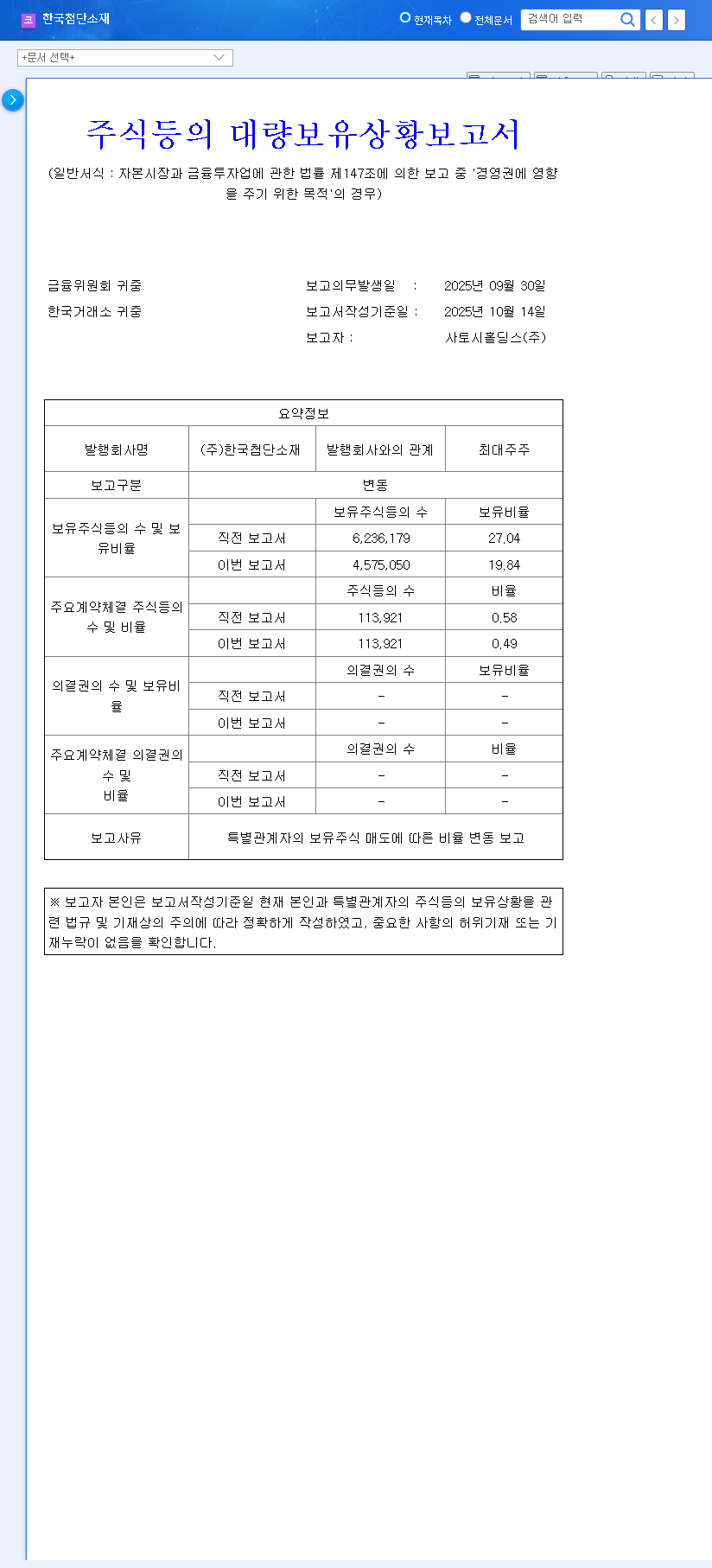
    On October 14, 2025, an official disclosure confirmed that Satoshi Holdings Co., Ltd., the largest shareholder of KOREA ADVANCED MATERIALS (062970), sold a substantial block of 1,660,129 shares on the open market. This sale drastically reduced Satoshi Holdings’ controlling stake from 27.04% to 19.84%. The official reason cited was a sale by a specially related party, Mr. Kim Ho-seon. You can view the Official Disclosure for complete details. Such a move by a primary insider is often interpreted by the market as a vote of no confidence, raising immediate questions about the company’s stability and future prospects.

    Cracks in the Foundation: Examining KOREA ADVANCED MATERIALS’ Fundamentals

    The concern surrounding the shareholder stake sale is magnified by the precarious state of the company’s fundamentals. A close look at the 2025 semi-annual financial report reveals a company in severe distress across multiple fronts.

    1. Collapse of the Core Business

    The bedrock of any company is its core revenue stream, and for KOREA ADVANCED MATERIALS, this foundation is crumbling. The data is stark:

    • Plummeting Revenue: Sales from the primary optical communication components and systems business have fallen by a staggering 67.4%.
    • Widening Losses: The operating loss deepened by 46.9%, and the net loss grew by 38.5%, indicating a severe profitability crisis.
    • Customer Over-Dependence: An alarming 74.4% of revenue comes from specific, concentrated customers, creating significant risk if any one of them reduces orders. For more information, you can read our guide on diversifying revenue streams.

    2. Worsening Financial Health & Aborted Growth

    The company’s financial sheet tells a story of retreat and rising risk. Ambitious plans for new ventures in high-growth sectors like secondary batteries and unmanned aircraft were unceremoniously withdrawn due to a deteriorating balance sheet. Key indicators of this financial decline include a 68.9% increase in the debt ratio and a credit rating downgrade to CCC+, a rating that signals substantial risk of default.

    3. The Double-Edged Sword of Convertible Bonds

    To shore up its finances, KOREA ADVANCED MATERIALS secured a 4 billion KRW investment through convertible bonds. While this provides a short-term liquidity lifeline, it’s a costly solution. These bonds carry a 4% interest burden and, more importantly, pose a long-term risk of stock dilution. When these bonds are converted into shares, it increases the total number of shares outstanding, which can suppress the stock price and reduce the value for existing shareholders.

    Market Impact and Future Outlook

    The combination of a major shareholder exit and dire fundamentals creates significant headwinds. In the short term, investor sentiment is expected to weaken further, leading to increased downward pressure on the stock price. The sale itself fuels speculation about the company’s immediate liquidity needs, exacerbating market anxiety.

    In the mid-to-long term, the reduced stake of the primary shareholder introduces a new layer of management uncertainty. Without a strong, committed leadership anchor, questions about strategic direction and stability will persist. The company faces an urgent, existential need for a complete structural overhaul to restore its core business and repair its financial health.

    Investor Action Plan: A Call for Extreme Caution

    Given the confluence of a major shareholder’s exit, a collapsing core business, and a deteriorating financial position, an aggressive investment in KOREA ADVANCED MATERIALS (062970) at this juncture carries an exceptionally high level of risk.

    A prudent approach is not only recommended but essential. Investors should avoid new positions and existing shareholders should re-evaluate their exposure. Close monitoring of the following areas is critical before any positive re-assessment can be made:

    • Turnaround Evidence: Tangible proof of sales recovery in key products and the successful launch of new, viable growth engines.
    • Financial Discipline: Concrete actions to reduce the debt ratio, improve cash flow, and achieve operational profitability.
    • Management Stability: Clarity on the new shareholder structure, future management strategy, and a commitment to transparent governance.
    • Revenue Diversification: A clear strategy to reduce the dangerous over-reliance on a small number of customers.

    In conclusion, the shareholder stake sale at KOREA ADVANCED MATERIALS (062970) is not an isolated event but a symptom of a much deeper institutional crisis. Until the company can demonstrate a credible path to fundamental recovery, extreme caution is the only wise course of action.

    (062970) KOREA ADVANCED MATERIALS (062970) Stock Analysis: Shareholder Sale Signals Crisis? 관련 이미지
  • Korea Advanced Materials Sells Assets: Will It Improve Fundamentals?


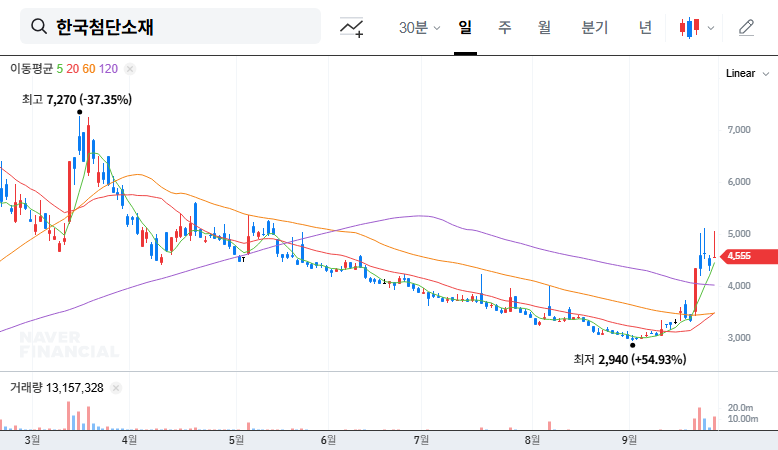
    Korea Advanced Materials Sells Assets: Will It Improve Fundamentals? 대표 차트 이미지


    What Happened?

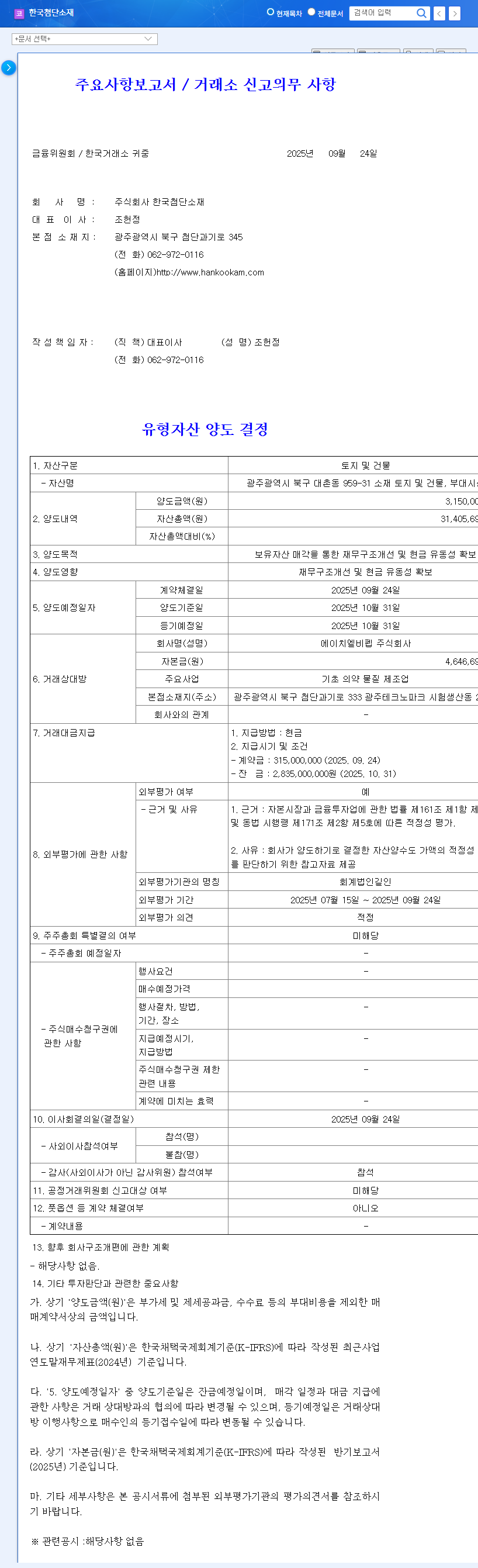
    On September 24, 2025, Korea Advanced Materials decided to sell land and buildings located in Gwangju to HLBPep for 3.2 billion KRW. The company stated this sale aims to improve its financial structure and secure liquidity.

    Why the Asset Sale?

    Korea Advanced Materials has been facing a severe financial crisis in the first half of 2025, marked by continuous operating losses, significant net losses, and a low CCC+ credit rating. The asset sale is likely a strategy to secure emergency funds, reduce debt, and navigate this challenging financial situation.

    What’s the Impact?

    • Positive Impact: Expected short-term improvement in financial health and liquidity, potential decrease in debt ratio.
    • Potential Negative Impact: Possible production disruptions if the sold assets are crucial for operations; 3.2 billion KRW might be insufficient to address underlying financial issues; potential for increased short-term stock volatility.

    What Should Investors Do?

    While a short-term stock rebound is possible, sustained growth is unlikely without addressing the company’s fundamental problems. Long-term investors should closely monitor operating profit, management of derivative losses, and the securing of new growth engines. Given the highly speculative CCC+ rating, caution is advised.


    Frequently Asked Questions

    What is Korea Advanced Materials’ main business?

    Korea Advanced Materials primarily manufactures optical communication components (AWG, splitters, measuring instruments, etc.).

    What is the outlook for Korea Advanced Materials after the asset sale?

    While short-term financial improvements are expected, it might not be enough to resolve underlying issues. Achieving operating profit and securing new growth engines are key.

    Is it a good idea to invest in Korea Advanced Materials?

    The current CCC+ credit rating is highly speculative, requiring careful investment decisions. Consulting a financial advisor is recommended.


    Korea Advanced Materials Sells Assets: Will It Improve Fundamentals? 관련 이미지


  • Korea Advanced Materials Designated as Overheated Stock: Investment Risk Analysis


    1. What Happened? Overheated Stock Designation

    On September 22, 2025, Korea Advanced Materials was designated as an overheated stock, triggering a three-day single-price trading period. This suggests the recent surge in stock price is likely driven by speculative demand rather than fundamental improvements.

    2. Why? Deteriorating Fundamentals and Uncertain Future

    • Financial Distress: The 2025 semi-annual report reveals declining sales, continuing operating losses, and a severe capital impairment. The company’s credit rating has also been downgraded to CCC+, indicating high financial risk.
    • Mixed Performance in Optical Communications: While AWG and 5G MUX (TFF) segments show growth potential, the OSP and portable optical measurement device sectors are struggling, impacting overall performance.
    • Uncertainty Surrounding New Businesses: Despite announcing entry into secondary batteries and unmanned aerial vehicles, concrete plans and investments remain absent. The current financial situation raises doubts about the feasibility of pursuing these ventures.

    3. What’s Next? Short-Term Volatility, Long-Term Uncertainty

    • Short-term Impact: Single-price trading is expected to increase trading volume and price volatility. Investor sentiment may weaken, potentially leading to a price correction.
    • Long-term Impact: Without fundamental improvements, stock price appreciation will be limited, and financial risks will persist.

    4. What Should Investors Do? Proceed with Caution

    Investing in Korea Advanced Materials requires extreme caution. Avoid being swayed by short-term price fluctuations and closely monitor the company’s fundamental improvements. A wait-and-see approach is recommended until tangible progress is made in restructuring finances and demonstrating viable new business ventures.


    Frequently Asked Questions (FAQ)

    What does the overheated stock designation mean?

    This designation triggers a three-day single-price trading period to mitigate sharp price fluctuations and protect investors.

    What is the outlook for Korea Advanced Materials’ stock price?

    The outlook is uncertain due to the company’s financial challenges. Fundamental improvements will be key to future price movements.

    What should investors consider?

    Carefully analyze the company’s financials, business performance, and the reasons behind the overheated stock designation. Be aware of the high investment risk and make informed decisions.


  • Opticore After-Hours Block Trade: Opportunity or Trap? (September 17, 2025)


    1. What Happened? Analysis of the Opticore After-Hours Block Trade

    After the market closed on September 17, 2025, Opticore recorded a ₩1.3 billion after-hours block trade. An ‘other corporation’ purchased all 685,274 shares, while foreign investors sold ₩130 million worth of shares.

    2. Why Did This Happen? Background and Hidden Implications

    While the large purchase by an ‘other corporation’ could be interpreted as a positive sign, caution is advised given Opticore’s current situation. The company faces fundamental challenges, including a struggling optical communication business, deteriorating financial structure, and credit rating downgrade. The possibility of this trade being related to the recent change in majority shareholder (Black Mountain Holdings Co., Ltd.) should also be considered. The sale by foreign investors could negatively impact investor sentiment.

    3. What’s Next? Short-Term and Long-Term Outlook

    In the short term, the influx of buying pressure from the ‘other corporation’ may lead to a stock price increase, but the impact could be limited. In the long term, the new majority shareholder’s management strategy, financial restructuring efforts, and success in the AI market will determine Opticore’s future.

    4. What Should Investors Do? Key Checkpoints

    • Analyze the new majority shareholder: Evaluate the management capabilities and vision of Black Mountain Holdings Co., Ltd.
    • Monitor financial restructuring: Closely examine debt reduction, fundraising plans, and overall improvement in financial health.
    • Track AI business performance: Pay attention to the development and sales of high-speed optical transceivers.
    • Analyze macroeconomic factors: Consider the impact of external factors such as interest rate, exchange rate, and oil price fluctuations.
    • Review internal control systems: Verify efforts to improve internal accounting control systems.

    Investing in Opticore carries significant risk. Thorough analysis and careful judgment are crucial.


    FAQ

    Will the Opticore after-hours block trade positively impact the stock price?

    While a short-term price increase is possible, sustained upward momentum is unlikely without fundamental improvements in the company’s performance.

    Is it a good time to invest in Opticore?

    Opticore is currently facing financial difficulties, posing a high investment risk. Careful consideration is advised.

    How should I assess Opticore’s future growth potential?

    Consider the new majority shareholder’s strategy, the success of their AI ventures, and their ability to improve their financial structure.


  • OI Solutions Stock Forecast: CEO Park Chan Increases Stake, Is it a Buying Opportunity?

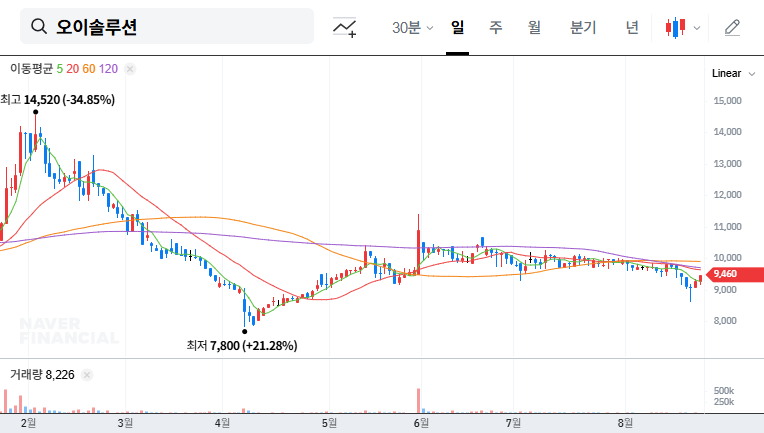
    OI Solutions Stock Forecast: CEO Park Chan Increases Stake, Is it a Buying Opportunity? 대표 차트 이미지

    1. What Happened?

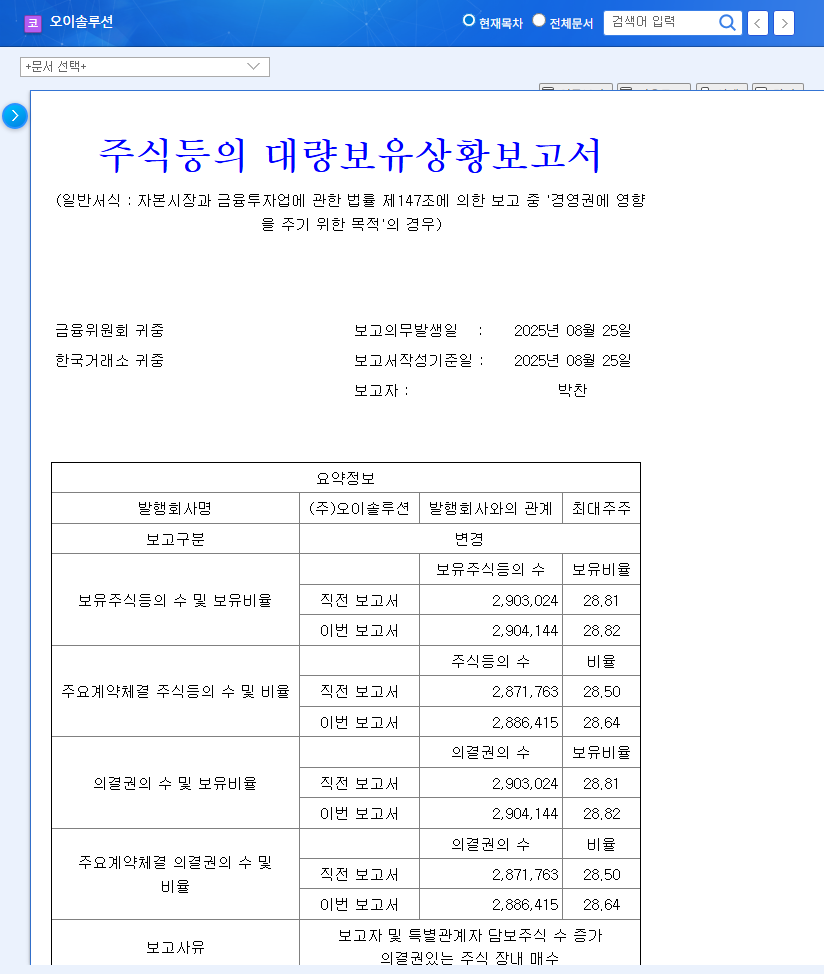
    OI Solutions’ major shareholder and CEO, Park Chan, increased his stake from 28.81% to 28.82%, a 0.01%p increase, through an on-market purchase on August 18, 2025. The purpose of the acquisition is ‘general investment,’ and the reason for reporting is ‘increase in pledged shares and on-market purchase of voting shares.’

    2. Why Does It Matter?

    An increase in a major shareholder’s stake is generally interpreted as a positive signal for the company. In particular, an increase in the CEO’s stake can demonstrate a commitment to responsible management and positively influence investor sentiment. However, the small increase of 0.01%p may limit its impact.

    3. What’s OI Solutions’ Current Situation?

    OI Solutions continues its sales growth by entering various markets such as 5G and FTTH. However, profitability has deteriorated due to investments in new businesses. Financially, debt has increased, and operating cash flow is negative, requiring improvement. Expanding data center investments due to AI market growth is expected to be a future growth driver.

    4. So, What Should I Do?

    In the short term, Park Chan’s stake increase may positively affect the stock price, but the impact is expected to be limited. To assess the mid-to-long-term investment value, continuous monitoring of profitability improvement is crucial. Also, consider Park Chan’s further stake changes, optical communication industry trends, and macroeconomic variables.

    5. Action Plan for Investors

    • Check Profitability Indicators: Confirm whether OI Solutions’ profitability, such as operating profit and net income, has improved through future earnings announcements.
    • Monitor Major Shareholder Trends: Keep track of Park Chan’s additional stake changes and other major shareholders’ activities.
    • Watch Market Conditions: Understand the outlook for the optical communications industry, competitor trends, and macroeconomic variables to inform your investment decisions.
    Will CEO Park Chan’s stake increase positively affect OI Solutions’ stock price?

    It may have a positive impact in the short term, but considering the small increase of 0.01%p, the impact is expected to be limited. The long-term stock trend depends on the company’s fundamentals, especially profitability improvement.

    Is it a good time to invest in OI Solutions?

    Currently, OI Solutions’ profitability has deteriorated despite sales growth. Therefore, it’s important to check for profitability improvement through future earnings releases and comprehensively assess the market conditions before making investment decisions. Maintaining a ‘wait-and-see’ approach and proceeding cautiously is recommended.

    What is the future outlook for OI Solutions?

    OI Solutions has growth potential alongside the growth of the optical communication market. In particular, expanding data center investments driven by AI market growth can be a positive factor. However, sustainable growth will depend on resolving the challenge of improving profitability.

    OI Solutions Stock Forecast: CEO Park Chan Increases Stake, Is it a Buying Opportunity? 관련 이미지
    OI Solutions Stock Forecast: CEO Park Chan Increases Stake, Is it a Buying Opportunity? 관련 이미지
  • Opticore (082210) in Crisis: H1 2025 Report Analysis and Investment Strategy

    1. What’s Happening with Opticore?

    Opticore announced weak earnings in the first half of 2025, with consolidated revenue of KRW 5.2 billion and an operating loss of KRW 3.7 billion. Its core business, optical communication solutions, suffered a significant blow due to decreased 5G investment, and the automation business also failed to deliver tangible results.

    2. Why the Decline in Performance?

    Following 5G investments, decreased new facility investments in downstream industries led to a sharp drop in demand for optical communication components. The dismal operating rate of optical multiplexers at 1.67% highlights the structural difficulties of the business. The automation business also couldn’t escape the impact of the economic downturn.

    3. What’s Opticore’s Future?

    Opticore is focusing on securing future growth engines such as developing high-speed optical transceivers for data centers and expanding into overseas markets. However, considering the current financial status and market environment, short-term performance improvement is expected to be challenging. The growth of the AI market and subsequent increase in data center traffic could be a long-term opportunity, but successful technology development and market entry are crucial.

    4. What Should Investors Do?

    Investing in Opticore requires extreme caution. While negative factors are dominant in the short term, long-term growth potential exists. Investors should carefully monitor quarterly earnings announcements, new business development progress, and financial restructuring efforts before making investment decisions. Pay close attention to the development of high-speed optical transceivers for data centers and the success of overseas market entry.

    What are Opticore’s main businesses?

    Opticore’s main businesses are optical communication solutions and automation systems.

    How was Opticore’s performance in the first half of 2025?

    Opticore recorded consolidated revenue of KRW 5.2 billion and an operating loss of KRW 3.7 billion in H1 2025.

    What is the outlook for Opticore?

    The outlook is negative in the short term, but there is long-term growth potential if the development of high-speed optical transceivers for data centers is successful, driven by AI market growth.

    What should investors be aware of when investing in Opticore?

    Careful investment decisions are needed, considering the financial instability and uncertainty surrounding new businesses.

  • OI Solutions H1 2025 Report: Soaring Revenue, But Profitability Remains a Challenge

    1. What Happened? : OI Solutions H1 2025 Performance Analysis

    OI Solutions achieved consolidated revenue of KRW 29.9 billion in H1 2025, demonstrating explosive growth of 92.1% YoY. This success can be attributed to strategic expansion into new markets such as FTTH, CATV/MSO, Telecom, and Datacenter. However, operating loss of KRW 9.7 billion and net loss of KRW 10.7 billion highlight the ongoing challenge of improving profitability.

    2. Why These Results? : Reasons for Growth and Losses

    Key drivers of revenue growth include successful entry into new markets and vertical integration from core optical components to optical transceivers. Conversely, the losses stem from increased investment in new markets, rising R&D expenses, higher labor costs, and low module utilization rate (31.2%).

    3. What’s Next? : Investment Outlook and Considerations

    While revenue growth is expected to continue in the short term, profitability improvement may take time. In the long term, OI Solutions is expected to strengthen competitiveness through new market development and technology internalization, benefiting from 5G advancements and next-generation communication technologies. However, rising debt ratio, inventory management, and potential losses from securities holdings pose risks.

    4. What Should Investors Do? : Action Plan

    OI Solutions holds high growth potential, but short-term profitability remains uncertain. Investors should closely monitor key points like performance in new markets, profitability improvement trends, and tangible R&D outcomes, considering a long-term investment perspective.

    How was OI Solutions’ revenue in the first half of 2025?

    OI Solutions’ consolidated revenue in H1 2025 reached KRW 29.9 billion, a 92.1% increase year-over-year.

    Why did OI Solutions record a loss?

    The main reasons are investments in new businesses, increased R&D expenses, and rising labor costs. The low module utilization rate also played a role.

    What is the outlook for OI Solutions?

    The long-term outlook is positive. Strengthening competitiveness through new market development and technology internalization is expected, along with benefits from 5G advancements and the development of next-generation communication technologies.