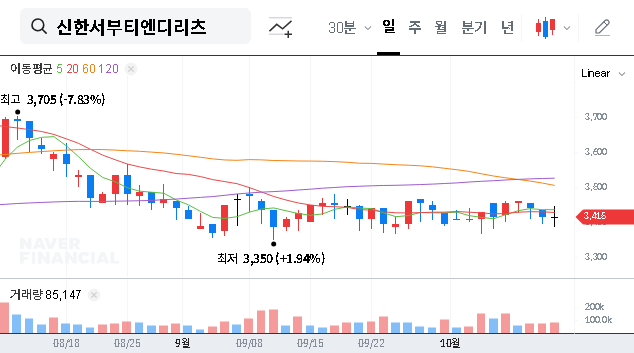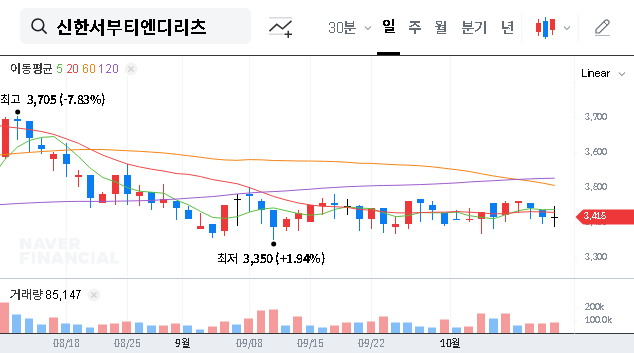
The Korean real estate investment market is buzzing with a significant development: Shinhan Seobu T&D REIT has officially announced it is exploring the sale of a key asset, the ‘Nine Tree by Parnas Seoul Dongdaemun Hotel’. This move represents a potential turning point for the REIT, with major implications for its financial structure, portfolio strategy, and ultimately, shareholder returns. Is this a masterstroke to unlock value in a challenging market, or a defensive measure that hints at underlying risks?
This in-depth analysis will dissect the Shinhan Seobu T&D REIT asset sale plan, examining the company’s recent fundamentals, the strategic rationale behind the sale, and the potential outcomes for investors. We provide the critical insights needed to navigate this pivotal event.
The Core Proposal: Divesting the Nine Tree Hotel
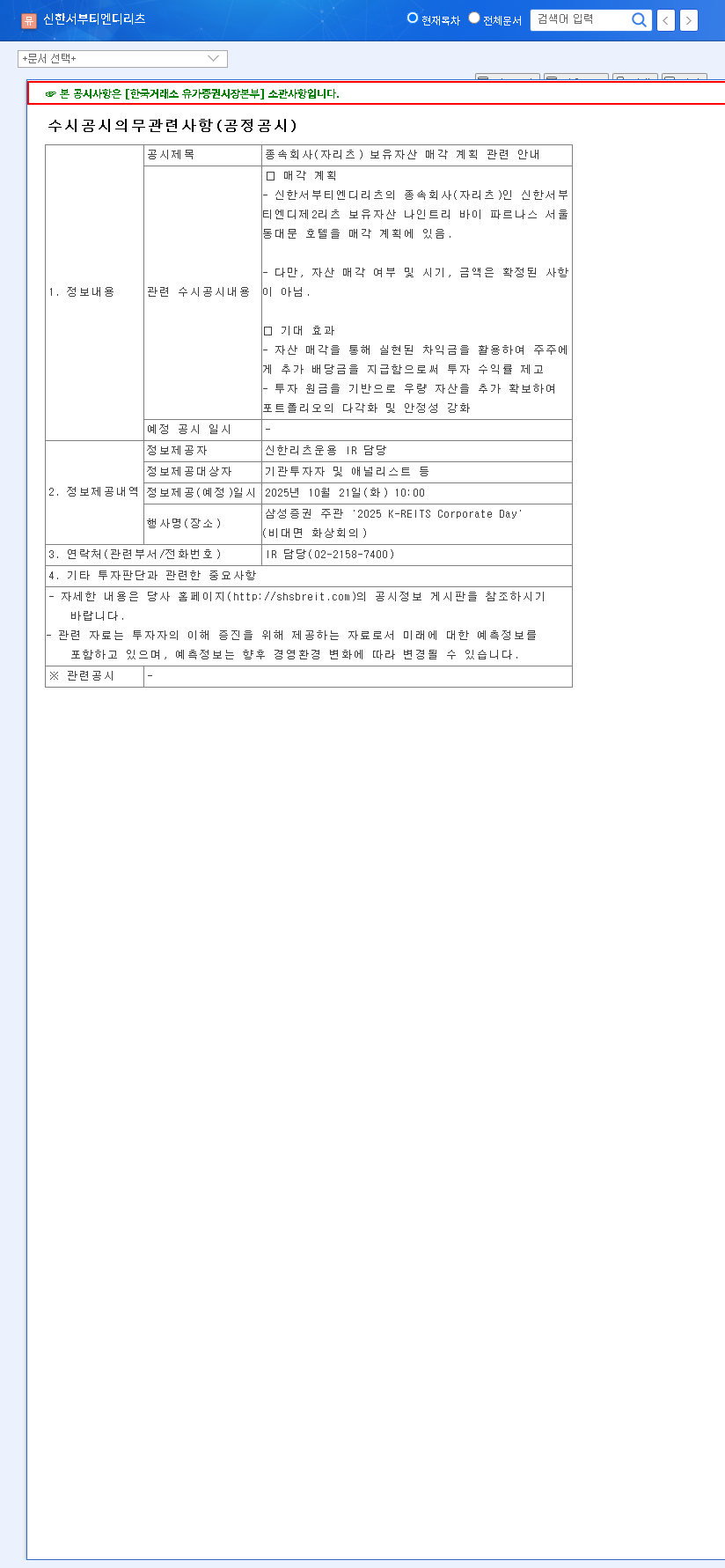
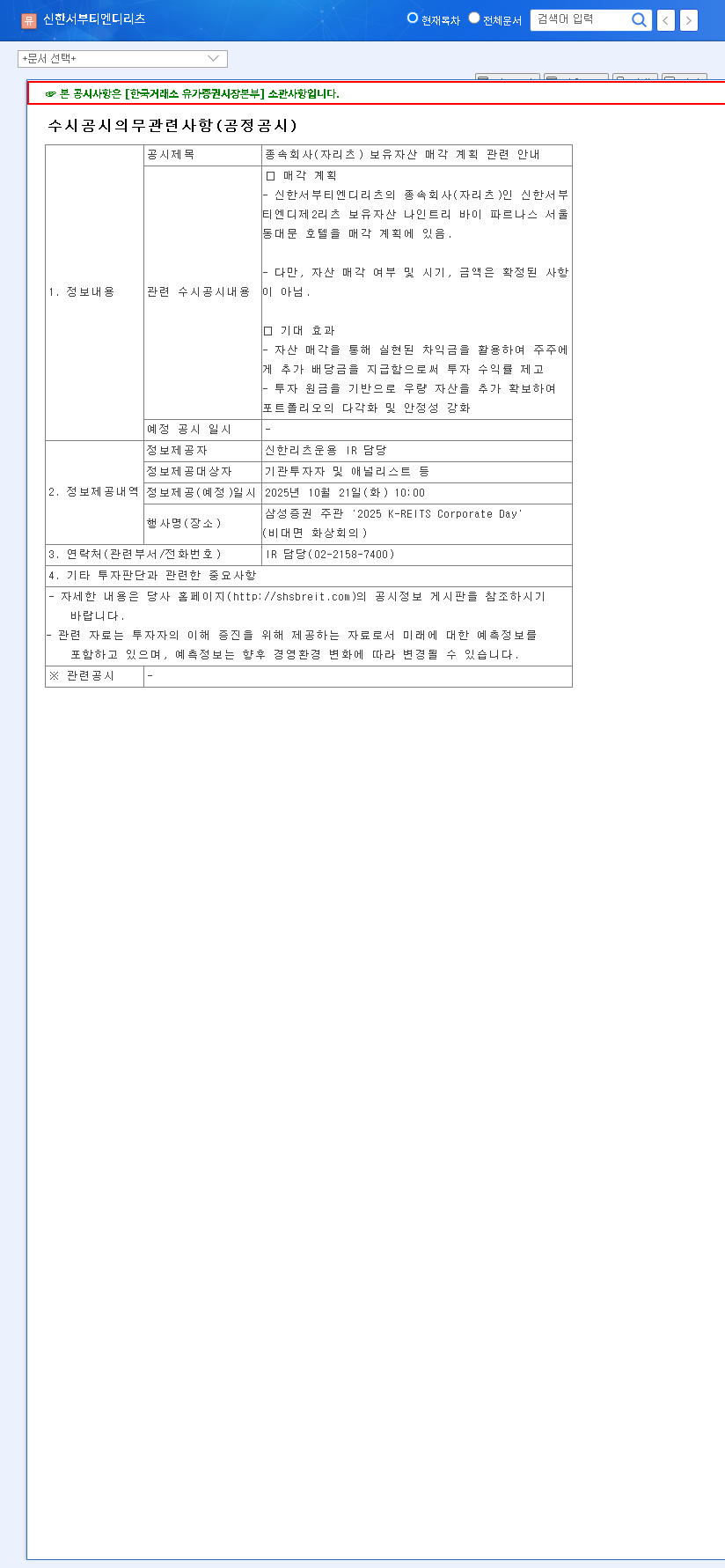
The proposal, as outlined in the company’s disclosure, involves Shinhan Seobu T&D REIT No. 2 (a subsidiary) divesting its entire stake in the ‘Nine Tree by Parnas Seoul Dongdaemun Hotel’. While the decision to sell is confirmed, critical details such as the final sale price, timing, and buyer remain under negotiation. You can view the Official Disclosure on DART for primary source information.
On the surface, the company highlights two primary strategic benefits:
- •Enhanced Shareholder Returns: Profits realized from the sale could be distributed as a special dividend, providing a significant, immediate boost to investor yields.
- •Strategic Portfolio Rebalancing: The capital injection would allow Shinhan Seobu T&D REIT to pursue new acquisitions of prime assets, potentially in more resilient sectors, thereby strengthening and diversifying its long-term revenue streams.
Why Now? A Look at the REIT’s Financial Health
To understand the motivation behind this sale, a look at the Q2 2025 business report for Shinhan Seobu T&D REIT is essential. The financials paint a mixed picture of growth coupled with rising financial pressures.
The Bright Spots
- •Growing Asset Base: Total assets climbed an impressive 13.6% to KRW 1.099 trillion by mid-2025, showing a solid growth trajectory.
- •Strong Operating Performance: Operating revenue and profit saw substantial gains (49% and 32% respectively) in H1 2025, driven by stable income from a portfolio with near-100% occupancy.
Areas of Concern for Investors
- •Shift to Net Loss: Despite strong operations, the REIT swung to a net loss in H1 2025 from a net profit previously. This was caused by surging financial costs, primarily interest expenses on its debt.
- •High Debt Ratio: A consolidated debt ratio of 217.26% is a significant red flag. In a high-interest-rate environment, this level of leverage puts considerable strain on financial stability and profitability.
This context suggests the asset sale is a proactive, strategic move to de-leverage the balance sheet, reduce interest burdens, and secure capital for future growth, turning a challenge into an opportunity.
The Dual-Edged Sword: Opportunities and Risks
A major asset sale like this presents both significant upsides and potential pitfalls. Investors in Shinhan Seobu T&D REIT should weigh both sides carefully.
Potential Positive Impacts
- •Financial Fortification: The primary benefit would be using proceeds to pay down debt, immediately lowering the debt ratio and improving the REIT’s risk profile.
- •Capital for Growth: This is a classic capital recycling strategy. By selling a mature asset, the REIT can reinvest in properties with higher growth potential, such as modern logistics centers or prime office spaces.
- •Increased Shareholder Value: A special dividend is a direct return to shareholders, which could significantly boost the stock’s appeal in the short term.
Potential Risks and Headwinds
- •Execution Uncertainty: The deal isn’t done. A lower-than-expected sale price or a significant delay could disappoint the market and limit the financial benefits.
- •Loss of Stable Income: The hotel, as a core asset, generates steady rental income. Its sale will create a revenue gap that must be filled by new acquisitions, which takes time.
- •Market Timing: The hotel sector’s value is tied to tourism and economic health. Selling in a soft market could mean leaving money on the table if the sector rebounds strongly in the coming years. For more context, see our Guide to Investing in Korean REITs.
Investor Action Plan & Final Thoughts
The Shinhan Seobu T&D REIT asset sale is a pivotal event that warrants close attention. While the strategy to improve the balance sheet is sound, success hinges on execution.
Key Monitoring Points for Investors:
- •Sale Announcements: Watch for official news on the buyer, sale price, and expected closing date.
- •Use of Proceeds: Scrutinize the company’s plan for the capital. How much will go to debt repayment versus new acquisitions?
- •Market Conditions: Keep an eye on interest rate trends from the Bank of Korea and the performance of the broader real estate market. The value of the REIT is intrinsically linked to these factors.
In conclusion, this asset sale could be the catalyst that propels Shinhan Seobu T&D REIT into a more stable and profitable future. However, the path is fraught with uncertainty. Diligent monitoring and a clear understanding of the risks involved will be crucial for making an informed investment decision.