Tag: New Contract

  • (011560) SEBO MEC Secures ₩74.2B Samsung E&A Contract: An In-Depth Analysis (2025-2027)

    (011560) SEBO MEC Secures ₩74.2B Samsung E&A Contract: An In-Depth Analysis (2025-2027)

    In a significant development for the industrial construction sector, SEBO MANUFACTURING ENGINEERING CORPORATION (SEBO MEC) has officially secured a major deal with Samsung E&A. This newly announced SEBO MEC contract, valued at an impressive ₩74.2 billion, provides a much-needed boost and a clear strategic direction amidst a challenging domestic construction market. The project focuses on critical piping construction and represents a substantial portion of SEBO MEC’s annual revenue, signaling both a vote of confidence from an industry leader and a potential catalyst for future growth.

    This analysis will delve into the specifics of the SEBO MEC contract, examine the company’s underlying financial health, and weigh the opportunities against the persistent macroeconomic headwinds. For investors and industry observers, understanding the nuances of this agreement is key to evaluating SEBO MEC’s trajectory over the next few years.

    Breaking Down the Landmark Samsung E&A Contract

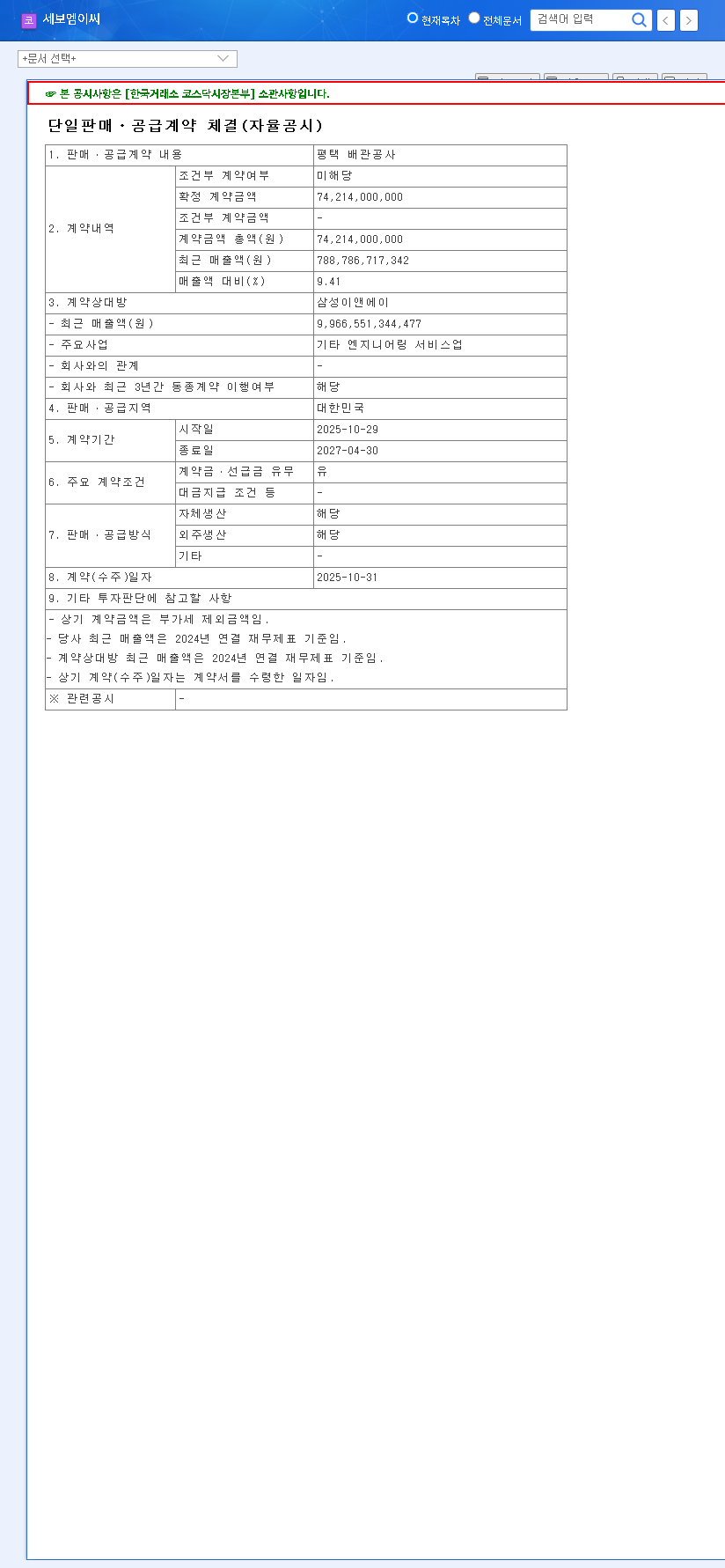
    The core of this announcement is a single sales and supply agreement for Pyeongtaek piping construction with Samsung E&A. Valued at approximately ₩74.2 billion (around $54 million USD), this deal constitutes a remarkable 9.41% of SEBO MEC’s recent total revenue. The contract’s timeline is set from October 29, 2025, to April 30, 2027, ensuring a stable revenue stream for the company for an 18-month period. The full details of this significant agreement have been made public. (Source: Official DART Disclosure). This partnership not only strengthens SEBO MEC’s core business but also enhances its market position as a trusted contractor for large-scale industrial projects.

    SEBO MEC’s Financial Health: A Foundation of Stability

    Despite a year-over-year revenue decrease in the first half of 2025 due to the broader market slowdown, SEBO MANUFACTURING ENGINEERING CORPORATION has maintained solid fundamentals. The company’s core facility business continues to be a reliable pillar, accounting for over 92% of total revenue. While profitability saw a slight dip, proactive cost-efficiency measures have helped mitigate the impact.

    Key Financial Strengths

    • Improved Financial Soundness: The company’s debt-to-equity ratio improved to a healthy 55%, indicating low leverage and a reduced financial risk profile.
    • Strategic Diversification: SEBO MEC is not standing still. By acquiring an environmental specialty construction license, it is actively diversifying its operations to tap into new growth markets.
    • Shareholder Value: Consistent share buyback programs signal management’s confidence in the company’s long-term value and commitment to shareholder returns.

    “Securing a high-value contract with a blue-chip partner like Samsung E&A in this climate is a testament to SEBO MEC’s technical expertise and market reputation. It provides a critical buffer against industry-wide volatility.”

    Navigating the Headwinds: Market Risks and Challenges

    While the SEBO MEC contract is a major victory, the company still operates in a challenging environment. The South Korean construction market is projected to see a further decline in investment through 2026, which could suppress new order opportunities. Furthermore, global economic uncertainties, as highlighted in forecasts from institutions like the International Monetary Fund (IMF), add another layer of risk. Potential trade conflicts, resurgent inflation, and interest rate volatility can negatively impact corporate investment sentiment and project financing.

    Profitability could also face pressure from fluctuating prices of key raw materials like steel coils. Although prices have recently trended downwards, their inherent volatility requires careful and strategic management throughout the duration of the Pyeongtaek piping construction project.

    Investor Outlook and Strategic Path Forward

    For investors, the key takeaway is one of cautious optimism. This contract significantly de-risks SEBO MEC’s short-to-medium-term revenue outlook and solidifies its core business. The immediate positive impact on investor sentiment could provide momentum for its stock price. However, long-term success will hinge on the company’s ability to execute this project flawlessly while navigating the broader economic landscape.

    Recommendations for Sustained Growth:

    • Flawless Execution: Delivering the Samsung E&A project on time and on budget is paramount to building a foundation for future collaborations and securing a reputation for excellence.
    • Aggressive Diversification: Continue to pursue new clients and translate new ventures, like environmental construction, into tangible revenue streams to offset cyclical downturns in the industrial construction sector.
    • Proactive Financial Management: Enhance financial stability by hedging against currency and interest rate volatility. Investors can learn more by reading our complete guide to industrial sector investing.

    In conclusion, the ₩74.2 billion SEBO MEC contract is a powerful strategic win. It provides a stable anchor in a turbulent market, but the company’s long-term prosperity will depend on its agility and continued strategic discipline.
    (011560) SEBO MEC Secures ₩74.2B Samsung E&A Contract: An In-Depth Analysis (2025-2027) 관련 이미지
  • (186230) Greenplus Smart Farm Deal: KRW 8.7 Billion Contract Signals Major Growth

    (186230) Greenplus Smart Farm Deal: KRW 8.7 Billion Contract Signals Major Growth

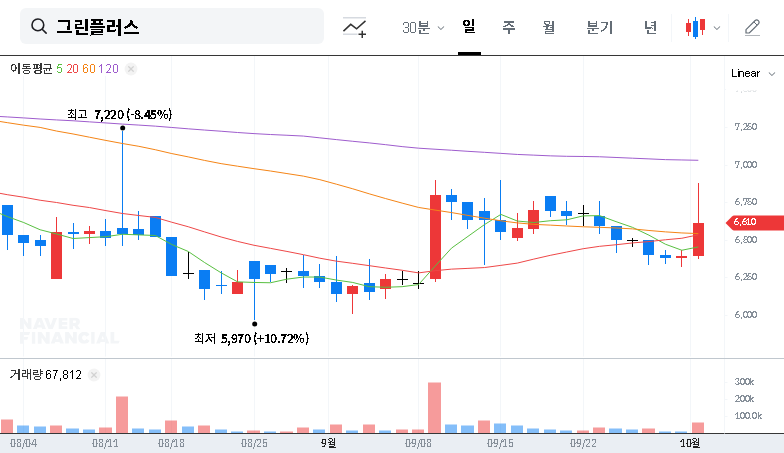
    The Greenplus smart farm division has just secured a landmark contract, sending a clear signal to investors about its competitive edge in the burgeoning agricultural technology sector. On October 1, 2025, Greenplus (186230) announced a substantial KRW 8.7 billion deal, reaffirming its position as a key player in the market. But what does this mean for the company’s future and for potential investors? This article provides a comprehensive analysis of the contract’s significance, the company’s growth trajectory, potential risks, and a strategic action plan for investors monitoring Greenplus stock analysis.

    Breaking Down the KRW 8.7 Billion Contract

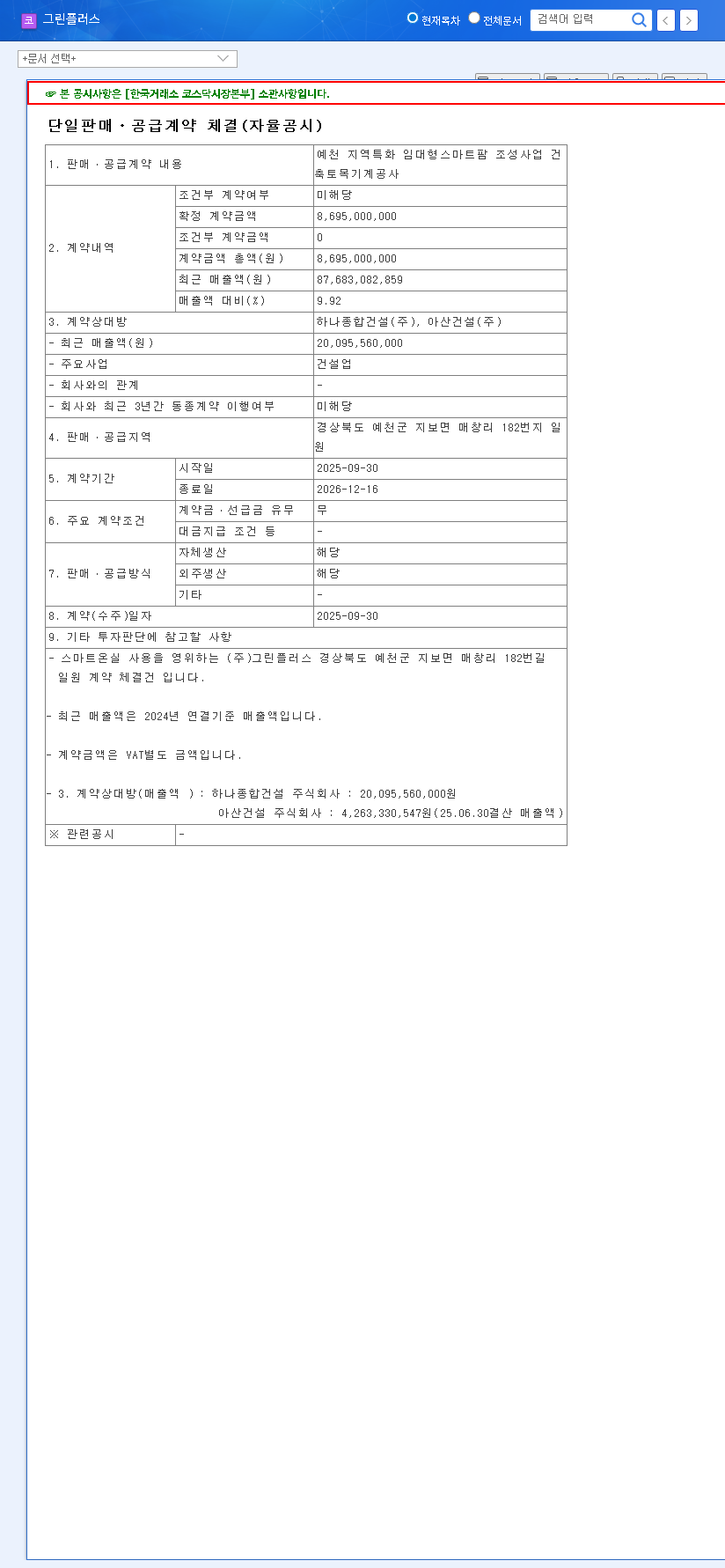
    Greenplus officially finalized a contract with Hanajonghap Construction Co., Ltd., and Asan Construction Co., Ltd. for the comprehensive development of the ‘Yecheon Regional Specialized Rental Smart Farm Development Project’. The project, located in Yecheon-gun, Gyeongsangbuk-do, involves critical architectural, civil, and mechanical engineering works. The total value of this agreement is KRW 8.7 billion, a figure that represents a significant 9.92% of the company’s total revenue from 2022. This deal isn’t just another project; it’s a substantial revenue injection scheduled over approximately 14 months, from September 30, 2025, to December 16, 2026. The specifics of this agreement were made public via an Official Disclosure, reinforcing the company’s commitment to transparency.

    Why This Greenplus Smart Farm Deal is a Game-Changer

    This contract is more than a line item on a balance sheet; it provides critical insights into Greenplus’s strategic direction and market position. Several factors highlight its importance for any smart farm investment strategy.

    Cementing Market Leadership

    Securing an KRW 8.7 billion order powerfully demonstrates Greenplus’s robust contracting capabilities and technical expertise in its core business. In a competitive landscape, this win reinforces their brand as a reliable and leading provider of large-scale smart farm solutions, which is crucial for attracting future, even larger, projects.

    Strengthening Financial Visibility

    For investors, predictability is paramount. While a single contract doesn’t overhaul a company’s entire financial structure, a consistent flow of such significant orders dramatically improves future revenue visibility. This long-term project provides a stable revenue stream, reducing uncertainty and making financial forecasting more reliable—a highly positive signal for the market.

    The global smart farm market is not just growing; it’s exploding. Supported by government initiatives and a pressing need for food security, the market is projected to expand at a compound annual growth rate of 9.4%, reaching an estimated USD 25.4 billion by 2028.

    Greenplus is perfectly positioned to capture a significant share of this expansion. This contract is tangible proof that they are a direct beneficiary of this powerful market trend, turning industry growth into company revenue.

    Navigating Potential Risks and Headwinds

    A balanced Greenplus stock analysis requires a clear-eyed view of potential challenges. While the smart farm division shows immense promise, investors must consider the broader business and macroeconomic context.

    Macroeconomic Volatility

    Global economic factors could pose risks. Fluctuating interest rates can increase corporate debt burdens, while sharp movements in currency exchange rates could affect costs if materials are imported. While this specific contract is domestic, the company’s other divisions, such as aluminum extrusion, are more susceptible to volatile raw material prices. Staying informed on these trends through resources like global market reports is essential.

    Profitability of Legacy Divisions

    Greenplus also operates an aluminum extrusion business. The performance of this division is a key factor to watch. Any underperformance or low profitability here could potentially offset gains from the high-growth smart farm sector. Investors should look for company strategies aimed at improving cost competitiveness across all business units, not just the star performers.

    Investor Action Plan: A Prudent Strategy

    While this contract is a strong positive, it’s unlikely to cause an immediate, dramatic stock price surge. A long-term, strategic approach is recommended. Investors should maintain a Neutral-to-Positive outlook and monitor the following key performance indicators:

    • Track New Orders: Keep a close watch on the pipeline for new Greenplus smart farm contracts to confirm a sustained growth pattern.
    • Analyze Profit Margins: Scrutinize quarterly reports for profitability trends, especially in the aluminum business, to ensure overall corporate health.
    • Monitor Market Sentiment: Look for forthcoming brokerage reports or analyst ratings, as a lack of specific market expectations is currently a minor risk factor.
    • Contextualize with Industry Trends: Understand the broader landscape by exploring guides on how to invest in agricultural technology to better evaluate Greenplus’s competitive positioning.

    In conclusion, Greenplus’s KRW 8.7 billion contract is a powerful validation of its strategy and a testament to the high-growth potential of its smart farm business. For the discerning investor, it represents a compelling fundamental development. By combining this news with a thorough analysis of market conditions and the company’s diversified operations, one can make a well-informed investment decision.

    (186230) Greenplus Smart Farm Deal: KRW 8.7 Billion Contract Signals Major Growth 관련 이미지
  • (375500) DL E&C Investor Analysis: ₩418.6B Wastewater Project & Stock Outlook

    (375500) DL E&C Investor Analysis: ₩418.6B Wastewater Project & Stock Outlook

    This comprehensive DL E&C investor analysis breaks down the landmark announcement of a ₩418.6 billion contract for the Uijeongbu Wastewater Treatment Plant. For investors monitoring DL E&C stock, this deal is more than just a number on a balance sheet; it’s a potential catalyst for long-term growth, improved profitability, and a strategic shift towards high-margin environmental infrastructure projects. We will explore the financial implications, strategic significance, and what this means for the company’s future trajectory and shareholder value.

    The Landmark Deal: Deconstructing the ₩418.6 Billion Contract

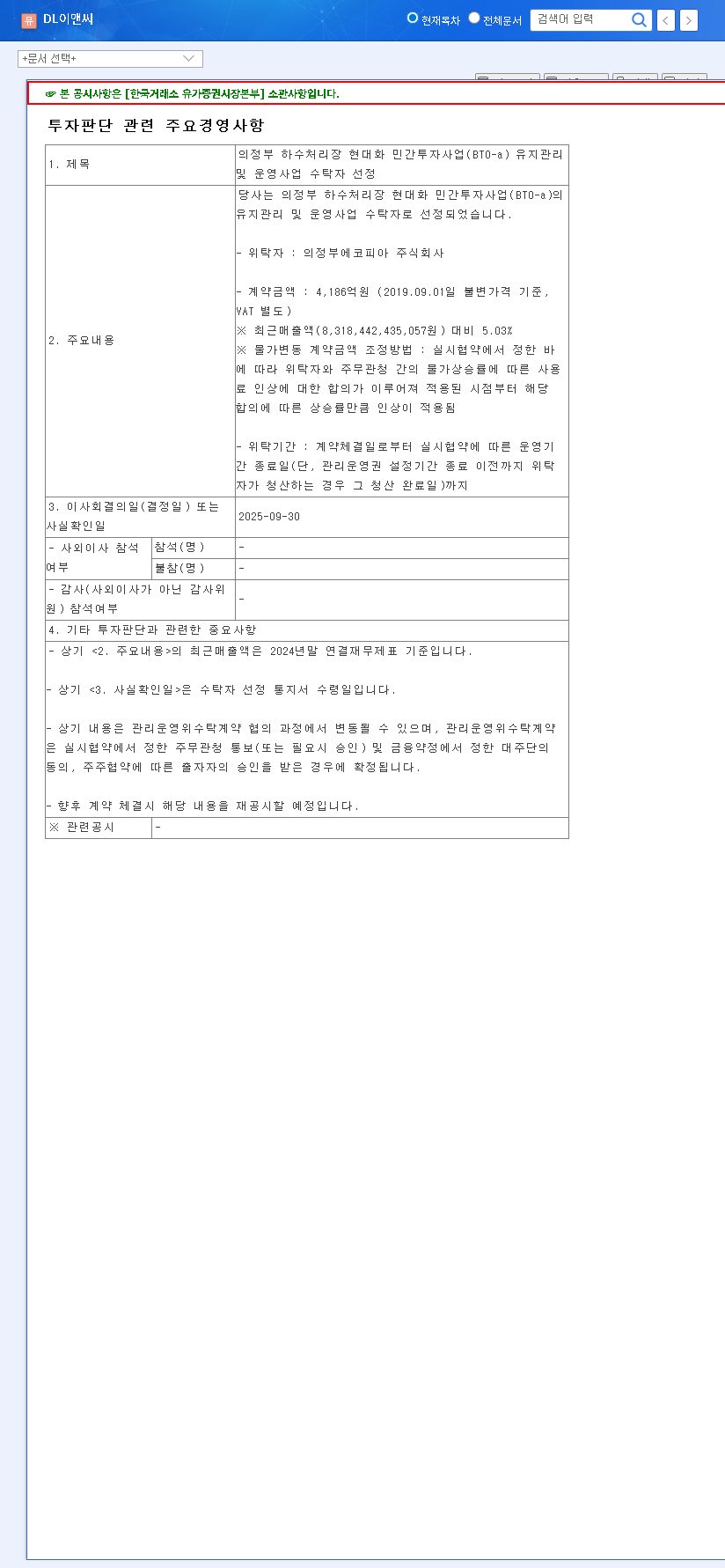
    DL E&C has officially secured the contract for the operation and maintenance (O&M) phase of the Uijeongbu Wastewater Treatment Project. Awarded by Uijeongbu Ecopia Co., Ltd., this project is structured as a BTO-a (Build-Transfer-Operate – adjusted) model, a type of Private Investment Project that ensures stable, long-term revenue streams. The total contract value stands at a significant ₩418.6 billion, which represents approximately 5.03% of DL E&C’s recent annual revenue. The long-term nature of this agreement provides exceptional visibility into future cash flows, a factor highly valued by the market.

    This is not merely a construction order; it’s a multi-decade entrustment to modernize and manage critical civic infrastructure. For full transparency, the Official Disclosure (Source) provides complete contractual details. This move solidifies DL E&C’s position as a leader in the Social Overhead Capital (SOC) sector.

    This contract is a strategic win, transitioning DL E&C towards a more predictable, high-margin business model focused on environmental SOC. It strengthens the company’s financial foundation and aligns perfectly with growing ESG investment trends.

    Core Financial & Strategic Impacts for Investors

    Beyond the headline number, the true value of this DL E&C contract lies in its multifaceted benefits for the company’s financial health and strategic positioning. For anyone conducting a DL E&C investor analysis, these are the key areas to watch.

    Boosting Profitability and Cash Flow Stability

    Operation & Maintenance (O&M) contracts are fundamentally more profitable than traditional construction projects. They provide recurring, predictable revenue, which significantly de-risks the company’s cash flow. While DL E&C’s recent operating margins have been modest, this high-margin project offers a clear path to improvement. The company’s robust financial standing, marked by a low debt-to-equity ratio of 13.72% and a strong current ratio of 216.24%, means it is perfectly positioned to execute this project without financial strain, channeling the profits directly toward strengthening its bottom line.

    Portfolio Diversification and ESG Alignment

    This project is a major step in diversifying DL E&C’s portfolio away from the cyclical nature of the housing and construction markets. By proving its competitiveness in the BTO-a space, especially in the environmental sector, the company opens doors for future government-led initiatives. This move aligns with the global push for sustainable infrastructure and ESG (Environmental, Social, and Governance) investing, making DL E&C stock more attractive to a broader class of institutional investors who prioritize sustainable growth.

    Investor Action Plan & Future Outlook

    Given the positive implications, this contract is a significant momentum driver. However, a prudent investment decision requires continuous monitoring of several key factors.

    • Monitor Margin Improvement: Scrutinize DL E&C’s quarterly earnings reports for evidence that this project is lifting the company’s overall profit margins. Look for specific commentary on the performance of the environmental infrastructure division.
    • Track Macroeconomic Headwinds: Long-term projects are sensitive to inflation, interest rates, and material costs. While contracts often have adjustment clauses, it’s vital to monitor how these factors affect profitability. For data, investors can consult authoritative sources like Reuters Economic Data.
    • Assess Future Project Pipeline: Use this win as a benchmark. Watch for announcements of similar SOC or environmental project bids. A successful pipeline is key to justifying a higher valuation for the DL E&C stock. For more background, see our guide to investing in infrastructure companies.

    In conclusion, the Uijeongbu contract is a fundamentally positive development. In the short term, it should boost investor sentiment. Over the long term, its successful execution has the potential to redefine DL E&C’s profitability profile and solidify its role as a key player in Korea’s sustainable infrastructure future.

    (375500) DL E&C Investor Analysis: ₩418.6B Wastewater Project & Stock Outlook 관련 이미지
  • Gaon Chips Secures New ₩9.8B Contract: What Does It Mean for Investors?


    Gaon Chips Secures New ₩9.8B Contract: What Does It Mean for Investors? 대표 차트 이미지


    Gaon Chips’ ₩9.8B Contract: What Happened?

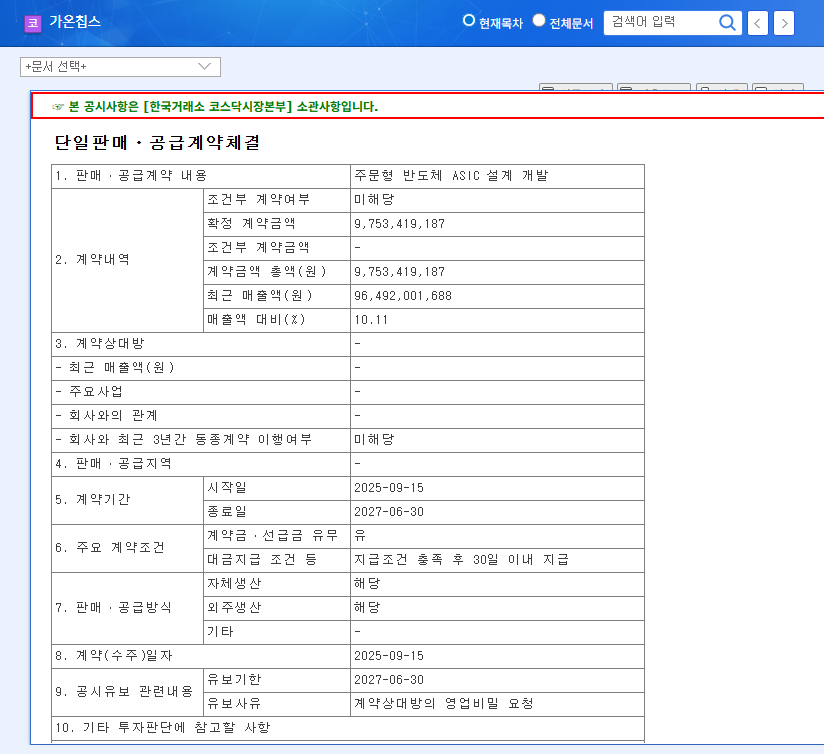
    On September 16, 2025, Gaon Chips announced a new contract for Application-Specific Integrated Circuit (ASIC) design and development, valued at ₩9.8 billion. The client remains undisclosed, and the contract period runs from September 15, 2025, to June 30, 2027. This represents 10.11% of Gaon Chips’ 2024 revenue and is expected to significantly impact future performance.

    The Significance of the Contract: Why Does It Matter?

    This contract is a crucial indicator of Gaon Chips’ growth potential. Focusing on high-value-added markets such as AI, HPC, and Automotive, Gaon Chips has strengthened its advanced process design capabilities through close collaboration with Samsung Foundry. This new contract is a testament to these efforts. Following previous contracts with companies A and B, this additional win demonstrates Gaon Chips’ robust order pipeline.

    Impact and Outlook: What’s Next?

    • Revenue Growth: The contract is expected to contribute to steady revenue growth over the next year and nine months.
    • Profitability: While good profitability is expected due to the high-value-added nature of the service, cost management will be crucial considering the increasing trend in R&D expenses.
    • Stock Price Impact: The contract is likely to provide positive momentum in the short term. Long-term impact will depend on securing further contracts.
    • Risk Factors: Continuous monitoring of external factors like global economic volatility, semiconductor market conditions, and exchange rate fluctuations is necessary.

    Key Takeaways for Investors

    This contract offers a valuable opportunity to assess Gaon Chips’ growth prospects. Investors should consider the client information (when disclosed) and further market analysis when making investment decisions.


    FAQ

    What is the value of the new contract?

    ₩9.8 billion.

    Who is the client for this contract?

    Currently undisclosed.

    How will this contract impact Gaon Chips’ stock price?

    It is likely to generate positive momentum in the short term. The long-term impact depends on securing further contracts.

    What is Gaon Chips’ main business?

    Gaon Chips provides system semiconductor design services, focusing on high-value-added markets such as AI/HPC and Automotive.


    Gaon Chips Secures New ₩9.8B Contract: What Does It Mean for Investors? 관련 이미지
    Gaon Chips Secures New ₩9.8B Contract: What Does It Mean for Investors? 관련 이미지


  • Xi S&D Secures KRW 239.8 Billion Project: A Turnaround Signal for Earnings?

    Xi S&D Lands a Major Development Project Worth KRW 239.8 Billion

    Xi S&D has entered into a contract with Goun Construction to undertake a residential development project in Hamchang-eup, Sangju-si, Gyeongsangbuk-do, valued at KRW 239.8 billion. This figure represents a substantial 15.19% of Xi S&D’s revenue in Q3 2025 (KRW 312.6 billion), signaling a positive boost for its housing business segment, which has recently experienced operating losses.

    Impact of the Contract on Xi S&D

    1. Short-Term Financial Impact: Anticipation of Revenue Growth and Profitability Improvement

    • Revenue Boost: The contract, worth nearly KRW 240 billion, is expected to significantly increase Xi S&D’s future revenue. It could help offset the decline in revenue from its housing business. However, it’s crucial to monitor the revenue recognition timeline, which depends on construction progress, to understand when the actual profit will materialize.
    • Profitability Variables: Whether this contract will lead to improved profitability remains uncertain. Factors like rising raw material costs and a sluggish housing market could negatively impact profit margins. The specific terms of the contract, particularly regarding the sharing of risks associated with raw material price fluctuations, will be critical in determining the impact on profitability.

    2. Long-Term Growth Drivers: Portfolio Expansion and Brand Value Enhancement

    • Strengthening Housing Business: This residential development project in Sangju-si can expand Xi S&D’s housing business portfolio and serve as a foundation for future growth. However, the success of the project will ultimately depend on the long-term outlook of the housing market and changes in government policy.
    • Boosting ‘Xi’ Brand Value: Leveraging the premium ‘Xi’ brand in this residential development project is expected to positively influence brand recognition and customer trust.

    Key Considerations for Investors

    1. External Environment Analysis: Opportunities and Threats

    • Raw Material Price Volatility: The continuous rise in prices of raw materials such as rebar and ready-mixed concrete can negatively affect profitability. Ongoing monitoring of price trends is essential.
    • Housing Market Conditions: Given the current market downturn, the timing and pace of a housing market recovery will significantly influence the success of this project.
    • Exchange Rates and Interest Rates: Fluctuations in the KRW/USD exchange rate and national bond yields (US and Korea) can impact import costs for raw materials and financing expenses, indirectly affecting project profitability.
    • Government Policies: Government policies aimed at easing real estate regulations or stimulating the economy could positively impact the housing market, though their effectiveness and timing remain uncertain.
    • Logistics Indices and Oil Prices: Indices like the Baltic Dry Index, China Containerized Freight Index, and international oil prices can indirectly influence the success and profitability of construction projects, particularly those involving plant construction. Rising trends in these indices could have a positive impact.

    2. In-depth Analysis of Goun Construction

    • It is necessary to assess the stability of contract execution by evaluating Goun Construction’s financial soundness, business capabilities, and track record of past project successes.

    3. Importance of Reviewing Detailed Contract Terms

    • Specific contract details, such as the contract period, payment terms, and penalty clauses for delays, play a crucial role in understanding the actual profitability and risks involved.

    Conclusion and Investment Strategy Recommendation

    Xi S&D’s securing of the KRW 239.8 billion residential development project is a clear positive development expected to contribute to short-term revenue growth. However, the actual improvement in profitability will heavily depend on various external factors such as raw material prices, housing market conditions, exchange rates, interest rates, government policies, as well as the reliability of the contractor and the detailed terms of the contract.

    Therefore, investors are advised to view this contract as a positive signal but to meticulously monitor the various variables mentioned above and make prudent investment decisions. It is crucial to conduct further information gathering on Goun Construction and analyze the contract details before making any investment.

    What kind of company is Xi S&D?

    Xi S&D is a subsidiary of GS E&C, primarily engaged in construction businesses including architecture, housing, civil engineering, and plant construction. It is particularly well-known for its housing projects under the premium ‘Xi’ brand.

    What is the significance of this contract for Xi S&D?

    The contract value of KRW 239.8 billion represents a substantial 15.19% of Xi S&D’s Q3 2025 revenue. This is expected to have a positive impact on reviving its housing business segment, which has recently faced performance challenges.

    Will Xi S&D’s profitability improve immediately with this contract?

    The improvement in profitability is uncertain. It depends on factors such as rising raw material costs, potential housing market downturns, and the specific contract terms (especially regarding the sharing of raw material price fluctuation risks). Close monitoring of these external factors and contract details is necessary.

    How should investors utilize this contract information?

    Investors should consider this contract a positive indicator but must continuously monitor raw material prices, housing market trends, and changes in government policy. It is crucial to conduct further analysis of Goun Construction and review the detailed contract terms before making investment decisions.