Tag: New Business

  • (340360) Daolink’s ₩9.1B LG Uplus Contract: Deep Dive into Financial Risks & Stock Outlook

    (340360) Daolink’s ₩9.1B LG Uplus Contract: Deep Dive into Financial Risks & Stock Outlook

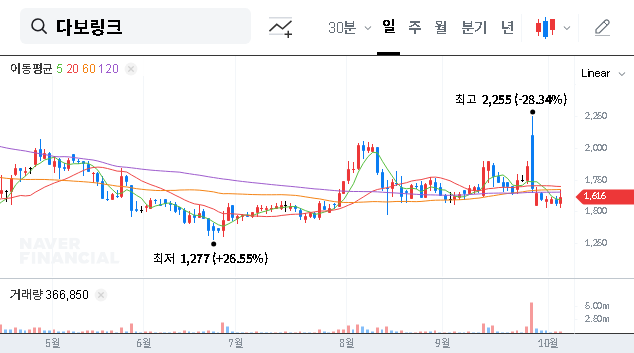
    Daolink has recently captured headlines by announcing the landmark Daolink LG Uplus contract, a deal worth ₩9.1 billion. On the surface, this agreement to supply advanced Wi-Fi routers appears to be a significant victory, promising a much-needed revenue boost and reinforcing the company’s market position. However, a closer look at Daolink’s financial health reveals a precarious situation marked by soaring debt and capital impairment. This creates a critical dilemma for investors: is this contract a genuine turning point or merely a temporary distraction from deeper systemic issues? This comprehensive Daolink financial analysis will dissect the contract’s true impact, evaluate the underlying Daolink investment risk, and provide a clear action plan for anyone considering Daolink stock.

    Unpacking the Daolink LG Uplus Contract

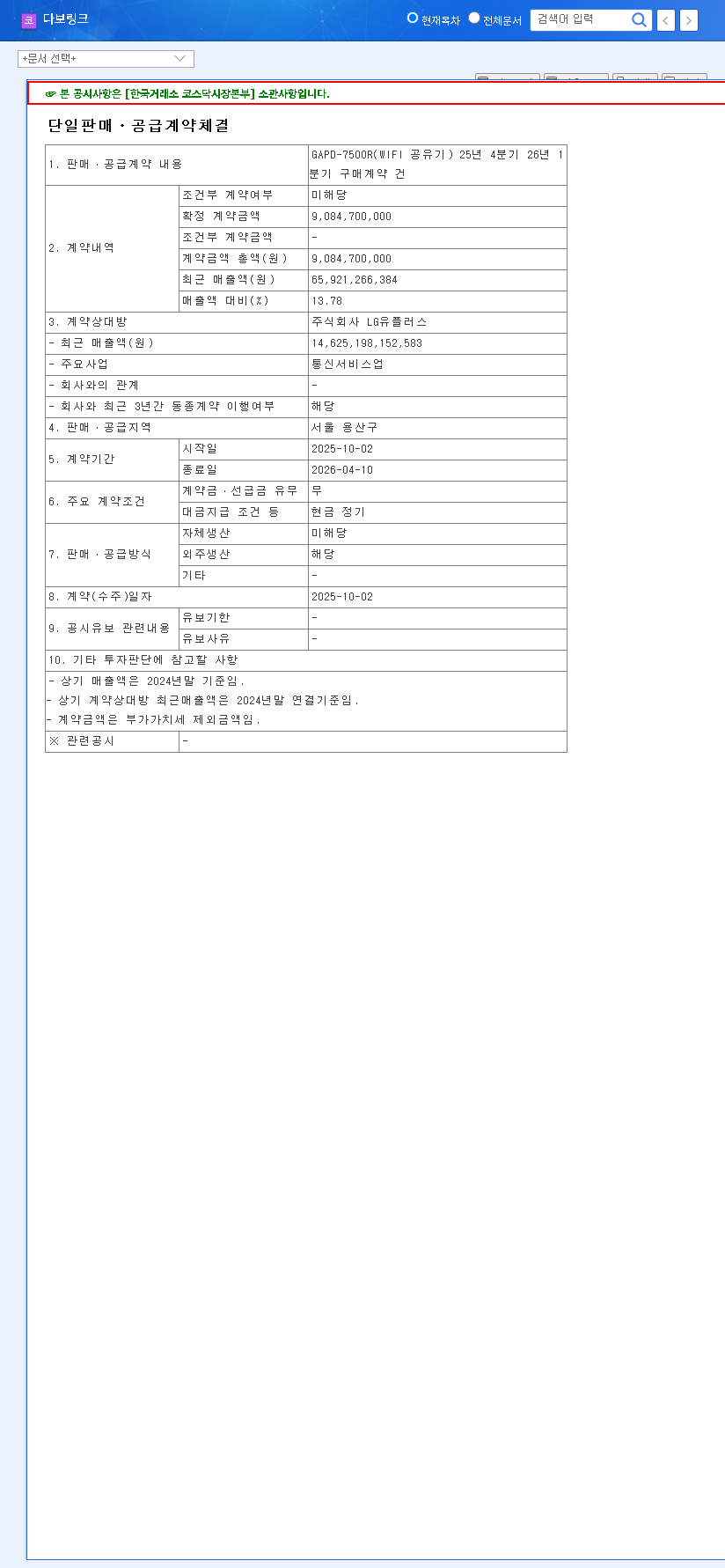
    Daolink has officially secured a ₩9.1 billion single-sales and supply contract with telecom giant LG Uplus. The agreement stipulates that Daolink will provide its GAPD-7500R Wi-Fi routers between the fourth quarter of 2025 and the first quarter of 2026. This deal is substantial, representing 13.78% of the company’s recent annual sales. For investors, this news confirms Daolink’s core competency and competitiveness in the high-stakes telecommunications hardware market. The GAPD-7500R model is a key product, and securing a large order from a major carrier like LG Uplus validates its technology and market relevance.

    The Alarming Contrast: A Deep Dive into Daolink’s Financial Health

    Despite the positive contract news, recent financial disclosures paint a grim picture of Daolink’s stability. These documents, including the company’s Official Disclosure (DART), reveal several critical warning signs that cannot be ignored.

    Key Financial Red Flags

    • Surging Debt Levels: The issuance of convertible bonds has caused total debt to balloon, placing immense pressure on the company’s balance sheet.
    • Deepened Capital Impairment: Persistent net losses and a growing accumulated deficit have severely eroded the company’s capital base, a serious concern for shareholder equity.
    • Soaring Debt-to-Equity Ratio: This critical metric, which you can learn more about from authoritative sources like Investopedia, has reached alarming levels, indicating a high degree of financial leverage and risk.
    • Rising Derivatives Liabilities: The company’s exposure to financial derivatives introduces volatility, as market fluctuations can lead to significant, unpredictable losses.
    • Expanding Non-Operating Losses: Profitability is being undermined by factors outside of its core business, such as interest expenses, further straining its financial position.

    Collectively, these indicators raise serious questions about the company’s ability to continue as a going concern, making the Daolink investment risk exceptionally high at this moment.

    The core issue is whether a ₩9.1 billion contract, while significant, is enough to resolve the systemic financial distress plaguing Daolink. The evidence suggests it is a step in the right direction but falls short of a comprehensive solution.

    Strategic Pivots: Seeking Growth Amidst Crisis

    In response to these challenges, Daolink’s management is not standing still. While working to strengthen its core Wi-Fi solutions business, the company is actively pursuing diversification to create new revenue streams. It has expanded its business objectives to include generator rentals, new and renewable energy projects, and semiconductor materials. This strategy is a double-edged sword: it offers the potential for future growth in high-demand sectors but also requires significant capital investment, further straining an already fragile balance sheet. Investors should look for more information on how these ventures align with broader trends in the tech industry to gauge their viability.

    Smart Investor’s Action Plan: A ‘Hold’ Stance

    Given the conflicting signals, a prudent investment approach is necessary. The Daolink LG Uplus contract is a clear positive, providing short-term revenue stability and reaffirming the company’s technical capabilities. However, the severe financial deterioration represents a critical, overriding risk.

    Therefore, the current investment opinion for Daolink stock is a ‘Hold.’ Recommending a new investment is difficult until the company demonstrates a clear and credible path toward financial stabilization. A cautious, observant approach is required.

    Key Monitoring Points for Investors:

    • Financial Restructuring Efforts: Watch for specific, actionable plans from management regarding debt reduction, capital enhancement, and improving cash flow. Press releases and quarterly reports are crucial sources.
    • New Business Performance: Demand tangible results from the new ventures. Monitor for actual revenue generation and profitability from the energy and semiconductor segments, not just announcements.
    • Macroeconomic Headwinds: Keep an eye on interest rates and currency exchange fluctuations. A challenging macroeconomic environment could further increase Daolink’s financial burden and operational costs.

    In conclusion, while the LG Uplus contract provides a welcome glimmer of hope, Daolink’s long-term survival hinges on its ability to navigate severe financial turbulence. The uncertainty remains very high, warranting extreme caution from the investment community.
    (340360) Daolink's ₩9.1B LG Uplus Contract: Deep Dive into Financial Risks & Stock Outlook 관련 이미지
  • (072770) Yulho Convertible Bond (072770): An Investor’s Deep Dive into Risk & Growth Potential

    (072770) Yulho Convertible Bond (072770): An Investor’s Deep Dive into Risk & Growth Potential

    The recent announcement of the Yulho convertible bond issuance has sent ripples through the investment community. For a company like Yulho (072770), which is navigating a complex transition from a struggling legacy business to aggressive new ventures, this 3 billion KRW capital injection represents a critical juncture. It’s a move that brings both the promise of accelerated growth and the specter of increased financial risk.
    This comprehensive financial analysis of Yulho will dissect the issuance, evaluate the company’s precarious financial health, and provide investors with a clear, actionable guide. Will this funding be the catalyst for Yulho’s ambitious transformation, or will it merely add to a growing debt burden? Let’s explore the key factors that will determine the future value of your Yulho investment.

    Deconstructing the Yulho Convertible Bond Issuance

    On October 2, 2025, Yulho officially disclosed its decision to raise capital through a private placement of convertible bonds (CBs). Understanding the specific terms of this deal is the first step for any potential investor.

    Issuance Amount: 3 Billion KRW
    Investor: KPI No. 2 Fund (Private Placement)
    Conversion Price: 1,134 KRW per share
    Coupon Rate: 2.0% | Maturity Yield: 5.0%
    Conversion Period: October 31, 2026 – September 30, 2028

    These terms provide a lifeline of operating capital but also set the stage for potential stock dilution down the road. The full details were made public via the official disclosure on DART. Official Source: DART Report.

    The Strategy Behind the Fundraising: A Tale of Two Businesses

    To understand why Yulho is raising funds, we must look at its dual identity. On one hand, its traditional IT infrastructure business is facing headwinds. On the other, it’s aggressively pivoting into high-growth, capital-intensive sectors.

    The Pivot to Future-Facing Industries

    Yulho is betting big on a diversified portfolio of next-generation industries. This capital is earmarked to fuel these ambitious projects, which require significant upfront investment before they can generate revenue.

    • Secondary Battery Recycling: Establishing black mass production facilities to tap into the lucrative electric vehicle supply chain.
    • Mineral Resource Development: Securing nickel mining exploration rights in Tanzania, a key component for battery manufacturing.
    • AI and Waste Treatment: Exploring other high-tech ventures to build a robust and diversified business portfolio for the future.

    A Strained Financial Foundation

    This aggressive expansion comes at a cost. The company’s core financial health has shown signs of deterioration, making this fundraising not just strategic, but necessary.

    • Declining Revenue & Profitability: In the first half of 2025, Yulho’s revenue fell 33% year-on-year, leading to an operating loss of 1.7 billion KRW.
    • Surging Debt Levels: The company’s debt ratio has climbed to a concerning 167.60%, with the net debt ratio hitting 82.42%.

    Investor Impact Analysis: Short-Term Pain, Long-Term Gain?

    The Yulho convertible bond issuance creates a classic conflict between immediate market reaction and long-term corporate vision.

    Short-Term: Navigating Dilution and Volatility

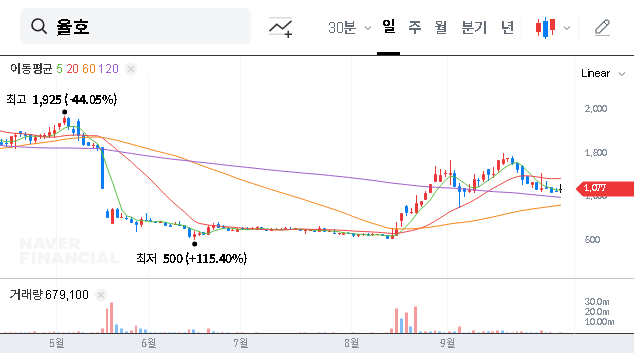
    In the short term, the primary concern for existing shareholders is dilution. When these bonds are converted into stock, it increases the total number of shares outstanding, potentially reducing the value of each individual share. For more on this, you can read our guide on how to assess stock dilution. Given that the current stock price is hovering below the conversion price of 1,134 KRW, investors must watch for potential conversion price adjustments (refixing), which could exacerbate dilution risk and create selling pressure.

    Long-Term: The Success of New Ventures is Everything

    The long-term outlook for Yulho 072770 is entirely dependent on the execution of its new business strategy. If this 3 billion KRW injection translates into tangible results—a functioning battery recycling plant, confirmed mineral deposits in Tanzania, or a profitable AI venture—the initial dilution will become negligible compared to the massive upside in corporate value. Conversely, if these ventures fail to launch or generate revenue, the company will be left with a heavier debt load and diminished prospects, making this a high-risk, high-reward scenario.

    An Actionable Playbook for Yulho Investors

    A prudent investment in Yulho requires diligent monitoring and a clear-eyed assessment of its progress. Here are the key areas to focus on:

    • Track New Business Milestones: Don’t rely on announcements. Look for concrete evidence of progress, such as operational start dates, production volumes, and revenue generation from the new ventures.
    • Scrutinize Financial Reports: Keep a close watch on the company’s quarterly earnings reports. Are they making progress on debt reduction? Is cash flow improving? These are critical signs of financial discipline.
    • Monitor Macroeconomic Factors: Yulho’s new ventures are sensitive to external conditions. Track prices for key commodities like nickel and stay informed about global economic trends that could impact funding costs and profitability.
    • Practice Thorough Due Diligence: Before making any investment, it’s vital to conduct thorough research. Authoritative sources like Investopedia provide excellent resources on how to perform due diligence on a company.

    In conclusion, the Yulho convertible bond is a double-edged sword. It provides the necessary fuel for a potentially lucrative transformation but also magnifies the company’s existing financial risks. Cautious and informed investors who monitor progress closely will be best positioned to navigate the challenges and opportunities that lie ahead for Yulho 072770.

    (072770) Yulho Convertible Bond (072770): An Investor's Deep Dive into Risk & Growth Potential 관련 이미지
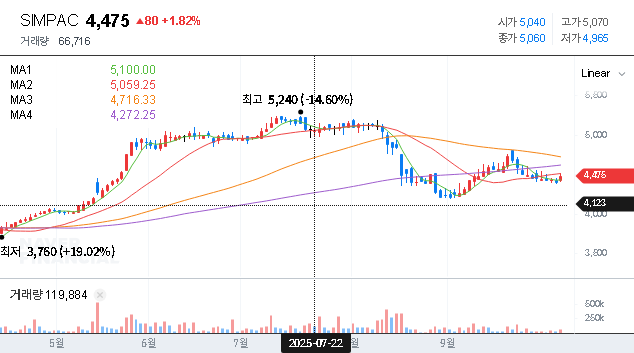
  • (009160) SIMPAC Merger with SIMPAC Holdings: A Deep-Dive Investment Analysis for 2025

    (009160) SIMPAC Merger with SIMPAC Holdings: A Deep-Dive Investment Analysis for 2025

    The recent announcement of the SIMPAC merger with its unlisted subsidiary, SIMPAC Holdings, has sent ripples through the investment community. This strategic consolidation, set to be finalized by October 2025, is far more than a simple corporate restructuring. It represents a pivotal moment for SIMPAC, aimed at unlocking new synergies, enhancing competitive strength, and paving the way for future growth. For investors, this move presents both significant opportunities and critical risks that require careful analysis.
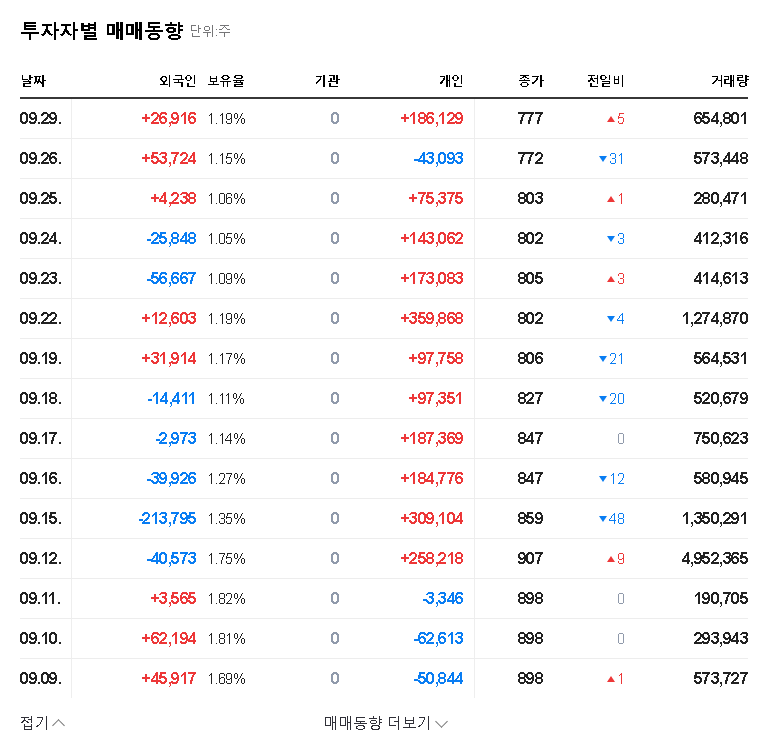
    This comprehensive deep-dive provides a detailed investment analysis of the merger. We will dissect the strategic rationale, evaluate the potential impact on SIMPAC’s stock price, and outline a clear action plan to help you navigate the evolving landscape and make well-informed investment decisions.

    Understanding the SIMPAC Merger with SIMPAC Holdings

    On October 2, 2025, SIMPAC is scheduled to officially absorb its subsidiary, SIMPAC Holdings. In this transaction, SIMPAC will be the surviving corporate entity, while SIMPAC Holdings will be dissolved. The stated objectives are to streamline operations and create a more robust corporate entity. The core goals, as outlined in the official filings, are to integrate management resources, fortify business competitiveness, boost overall management efficiency, and ultimately maximize corporate and shareholder value. For complete details, investors can review the Official Disclosure on the DART system.

    The Rationale: Building on a Strong Foundation

    SIMPAC is not entering this merger from a position of weakness. The company’s 2024 amended business report showcased significant financial improvements, providing a stable platform for this strategic move. Key performance indicators include:

    • Impressive Revenue Growth: Consolidated revenue reached KRW 785.062 billion, a 28.8% year-over-year increase.
    • Return to Profitability: Operating profit surged by 39.7% to KRW 24.453 billion, shifting from a loss to a profit. Net profit also turned positive.
    • Solid Financial Health: A low debt-to-equity ratio and a 3.9% increase in total equity signal strong financial stability.

    This merger is designed to leverage this financial strength. By integrating SIMPAC Holdings’ portfolio, which includes subsidiary investments and metal processing capabilities, SIMPAC aims to create powerful synergies with its core press, industrial machinery, and automotive parts divisions—particularly with an eye on the growing EV parts market.

    Investor Impact Analysis: Opportunities and Risks

    For shareholders, the SIMPAC merger presents a classic case of risk versus reward. Understanding both sides is crucial for a sound investment strategy.

    The Bull Case: Potential Positive Outcomes

    • Enhanced Shareholder Value: A more efficient, profitable, and larger company should theoretically translate into a higher valuation and increased shareholder returns.
    • Improved Profitability: Eliminating redundant administrative functions, streamlining supply chains, and achieving economies of scale are expected to drive cost savings and improve margins.
    • Simplified Corporate Governance: A clearer, more direct ownership structure can improve decision-making speed and transparency, which is often favored by the market. Understanding these structures is key; you can read our guide on analyzing corporate governance for more insight.

    The Bear Case: Potential Risks to Monitor

    • Post-Merger Integration (PMI) Challenges: The process of combining two distinct corporate cultures, IT systems, and operational teams is fraught with risk. Inefficiencies and internal friction can delay or diminish expected synergies. Mergers & Acquisitions (M&A) are notoriously complex to execute successfully.
    • Macroeconomic Headwinds: High global interest rates increase the cost of capital, while exchange rate volatility can impact both import costs and export revenues for a global company like SIMPAC. A broader economic slowdown could also dampen demand for its products.
    • Treasury Stock Uncertainty: The handling of SIMPAC’s significant 17.06% treasury stock post-merger is a major variable. A stock cancellation could be beneficial for existing shareholders, while a market sale could exert downward pressure on the SIMPAC stock price.

    In the mid-to-long term, the market will not reward the merger announcement itself, but the tangible results of its execution. The ultimate driver of SIMPAC’s stock price will be the successful realization of synergies and demonstrable growth in corporate value.

    Action Plan for Savvy Investors

    Given the complexities of the SIMPAC merger, a passive approach is not advisable. Investors should actively monitor several key areas:

    • Monitor the Merger Process: Keep a close watch on the merger ratio, shareholder meeting outcomes, and any updates to the integration plan.
    • Analyze Post-Merger Financials: Scrutinize the first few quarterly reports post-merger. Look for evidence of cost savings, improved margins, and growth in key business segments.
    • Track Macroeconomic Indicators: Stay informed about changes in interest rates, exchange rates, and commodity prices that could impact SIMPAC’s performance.
    • Watch for Treasury Stock News: Any announcement regarding the company’s plans for its treasury shares will be a significant market catalyst.

    Frequently Asked Questions (FAQ)

    Q1: What is the core purpose of the SIMPAC merger?

    The merger aims to integrate management resources, strengthen business competitiveness, and improve efficiency. The ultimate goal is to maximize corporate value and lay a foundation for new business ventures.

    Q2: What benefits does SIMPAC expect from this merger?

    SIMPAC anticipates significant synergistic effects, a stronger global market position, streamlined decision-making, and enhanced shareholder value as a result of a more profitable and efficient combined entity.

    Q3: How will the merger affect SIMPAC’s stock price?

    Short-term, the stock may react positively to the news. However, the long-term trend of the SIMPAC stock price will depend entirely on the market’s assessment of the merger’s successful execution and the real financial benefits it generates.

    Q4: What is SIMPAC’s recent financial status?

    SIMPAC demonstrated strong financial health in its 2024 report, with a 28.8% increase in revenue and a 39.7% rise in operating profit, achieving a successful turnaround to profitability.

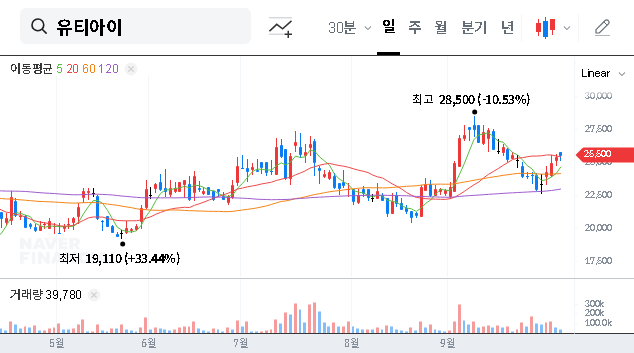
  • (179900) UTI Foldable Cover Glass Investment: Analysis of the ₩11.2B Vietnam Bet & Financial Risks

    (179900) UTI Foldable Cover Glass Investment: Analysis of the ₩11.2B Vietnam Bet & Financial Risks

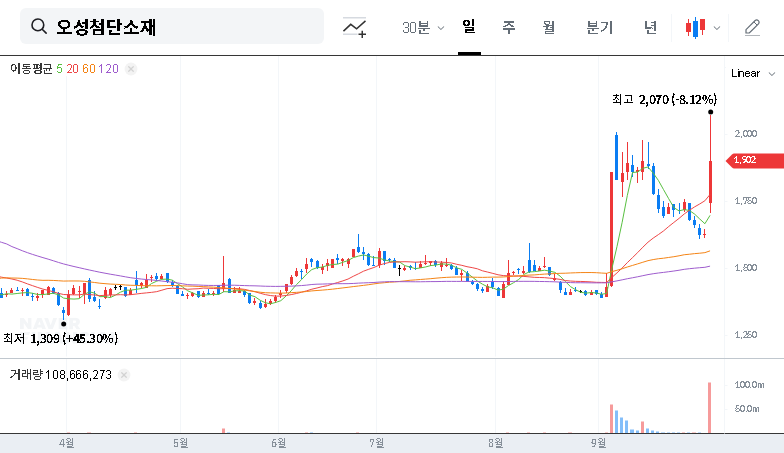
    The recent announcement of UTI’s significant ₩11.2 billion investment into the UTI foldable cover glass market has sent ripples through the investment community. By acquiring a subsidiary in Vietnam, UTI is making a high-stakes play for a dominant position in a next-generation technology sector. However, this ambitious move comes at a time when the company’s financial health is precarious, as revealed by its H1 2025 report. This creates a critical question for stakeholders: is this a visionary step toward long-term growth, or a reckless gamble that could jeopardize the company’s short-term survival? This comprehensive analysis will dissect the investment, evaluate the latest UTI financial analysis, and outline a prudent strategy for investors.
    Unpacking the ₩11.2 Billion UTI Investment

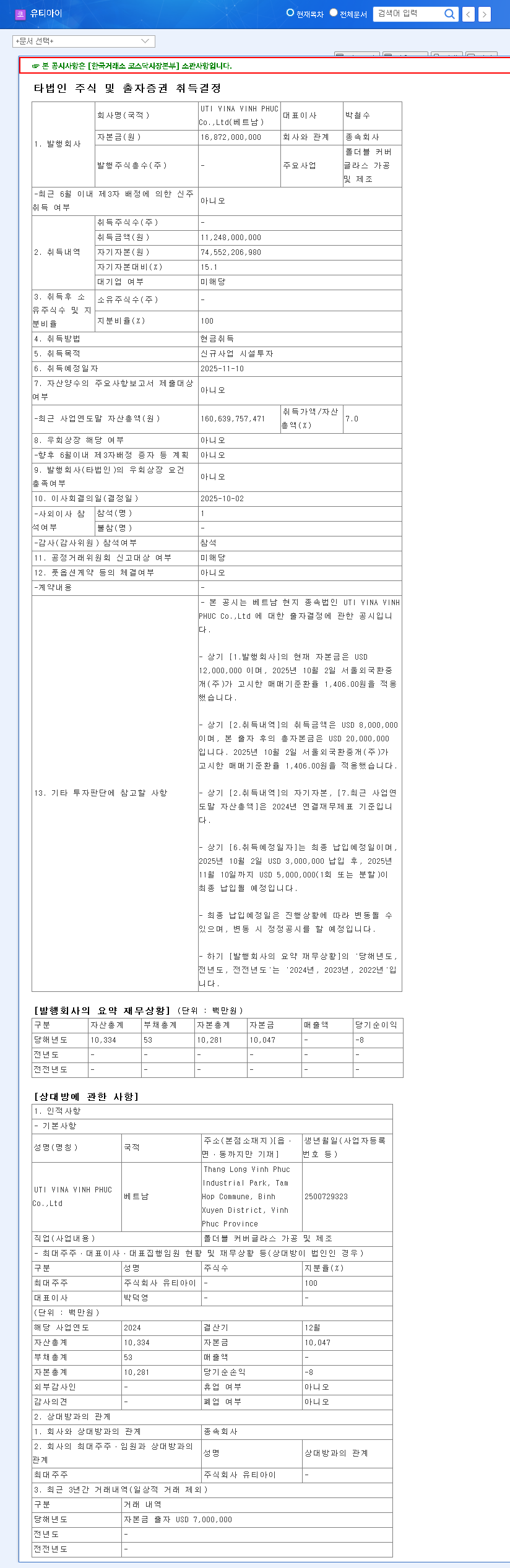
    On November 10, 2025, UTI is scheduled to complete its acquisition of 100% of UTI VINA VINH PHUC Co., Ltd in Vietnam. This strategic move, detailed in an Official Disclosure, represents a major pivot for the company. The core purpose is to establish a dedicated facility for processing and manufacturing foldable cover glass, a critical component for the burgeoning foldable smartphone and device market. The key details of this UTI investment are as follows:

    • Acquired Entity: UTI VINA VINH PHUC Co.,Ltd (Vietnam)
    • Core Business: Foldable Cover Glass Processing & Manufacturing
    • Acquisition Amount: ₩11.2 Billion (representing 15.1% of equity)
    • Strategic Goal: Secure future growth engines and diversify revenue streams.

    A Company Under Pressure: UTI Financial Analysis (H1 2025)

    The timing of this large-scale investment is alarming when contextualized by UTI’s recent performance. The H1 2025 report paints a picture of a company facing severe financial headwinds, making this new venture in Vietnam cover glass manufacturing a significant risk.

    With a debt-to-equity ratio soaring past 215% and cash reserves plummeting, UTI is funding future growth by stretching its present-day finances to the absolute limit.

    Revenue Collapse and Deepening Losses

    UTI’s core business segments are struggling. The Camera Window division saw sales plummet by nearly 60% year-over-year due to a slowdown in the smartphone market and intense competition. While the ‘Slimming’ business showed nascent growth, it was not nearly enough to offset the broader decline. This culminated in a consolidated operating loss of ₩19.2 billion and a net loss of ₩20.4 billion for the first half of 2025.

    Soaring Debt and Liquidity Crisis

    The company’s balance sheet is a major cause for concern. Total liabilities have ballooned to ₩101.5 billion, driven by the issuance of convertible bonds. This has pushed the debt-to-equity ratio to a staggering 215.19%. Even more critically, cash and cash equivalents have dwindled from ₩54 billion to just ₩10.8 billion. The current ratio stands at a perilous 43.99%, signaling a severe short-term liquidity crunch that makes an ₩11.2 billion cash outlay for the UTI VINA VINH PHUC acquisition exceptionally risky. You can learn more about navigating high-debt companies in our guide.

    Opportunity vs. Risk: The Future of the UTI Foldable Cover Glass Bet

    The Bull Case: Securing a High-Growth Future

    Despite the financial strain, the logic behind the UTI foldable cover glass investment is clear. The market for foldable devices is projected to grow exponentially. According to market analysts at IDC, shipments are expected to double within the next few years. By establishing a production base in Vietnam, UTI can leverage lower operating costs, enhance its global price competitiveness, and position itself as a key supplier in this lucrative value chain. Success in this venture could completely transform the company’s growth trajectory and lead to significant long-term returns.

    The Bear Case: A Burden Too Heavy to Carry?

    The negative aspects are immediate and severe. The ₩11.2 billion cash outflow will further cripple the company’s liquidity, potentially forcing it to seek additional, and likely expensive, financing. Furthermore, new manufacturing operations require significant ramp-up time and capital expenditure before they become profitable. In the short term, this will likely expand UTI’s deficit. There’s a tangible risk that the new business will not scale quickly enough to offset the continued decline in its legacy segments, creating a perfect storm of financial distress.

    Investor Strategy: Navigating UTI’s High-Stakes Future

    For current and prospective investors, a cautious and highly diligent approach is paramount. The potential upside of the UTI investment is matched only by its considerable downside. Monitoring the following key areas is essential:

    • Monitor New Business Performance: Closely track tangible results from the Vietnam facility, including production yields, initial client contracts, revenue generation, and profit margins.
    • Scrutinize Financial Health Initiatives: Verify the company’s plans for funding the investment and managing existing debt. Look for concrete strategies to improve cash flow and restore liquidity.
    • Evaluate Core Business Recovery: Assess whether the legacy camera window business can stabilize and if the Slimming business can accelerate its growth to provide a more stable foundation.
    • Stay Abreast of Macroeconomic Factors: Keep an eye on exchange rates (KRW/USD) and the overall health of the IT market, as these will directly impact UTI’s costs and revenues.

    In conclusion, UTI’s move into the UTI foldable cover glass sector is a classic high-risk, high-reward scenario. While the company is commendably investing in its future, the precariousness of its current financial state cannot be ignored. A prudent investment decision requires a deep understanding of both the immense growth potential and the significant, immediate financial dangers.

    (179900) UTI Foldable Cover Glass Investment: Analysis of the ₩11.2B Vietnam Bet & Financial Risks 관련 이미지
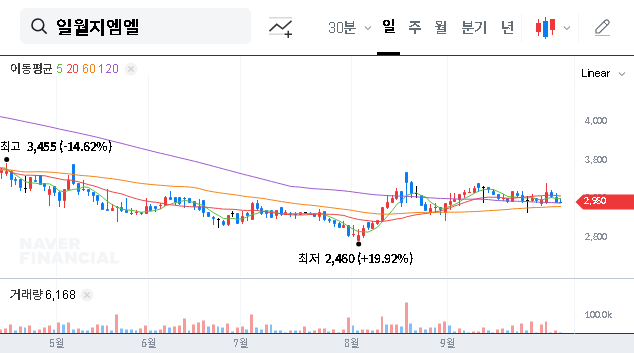
  • (178780) Ilwol GML (178780) Stock Analysis: Shareholder Stake Increase & Future Outlook

    (178780) Ilwol GML (178780) Stock Analysis: Shareholder Stake Increase & Future Outlook

    This comprehensive Ilwol GML (178780) stock analysis examines the recent news of its major shareholder, Ilwol Co., Ltd., increasing its ownership stake. This move, explicitly intended to strengthen management control, comes at a pivotal time for a company navigating significant business challenges. Is this a signal of a turnaround, or a superficial gesture amid deeper financial troubles? We will dissect the fundamentals, analyze the market reaction, and provide a clear outlook for potential investors.

    The Event: A Closer Look at the Shareholder Stake Increase

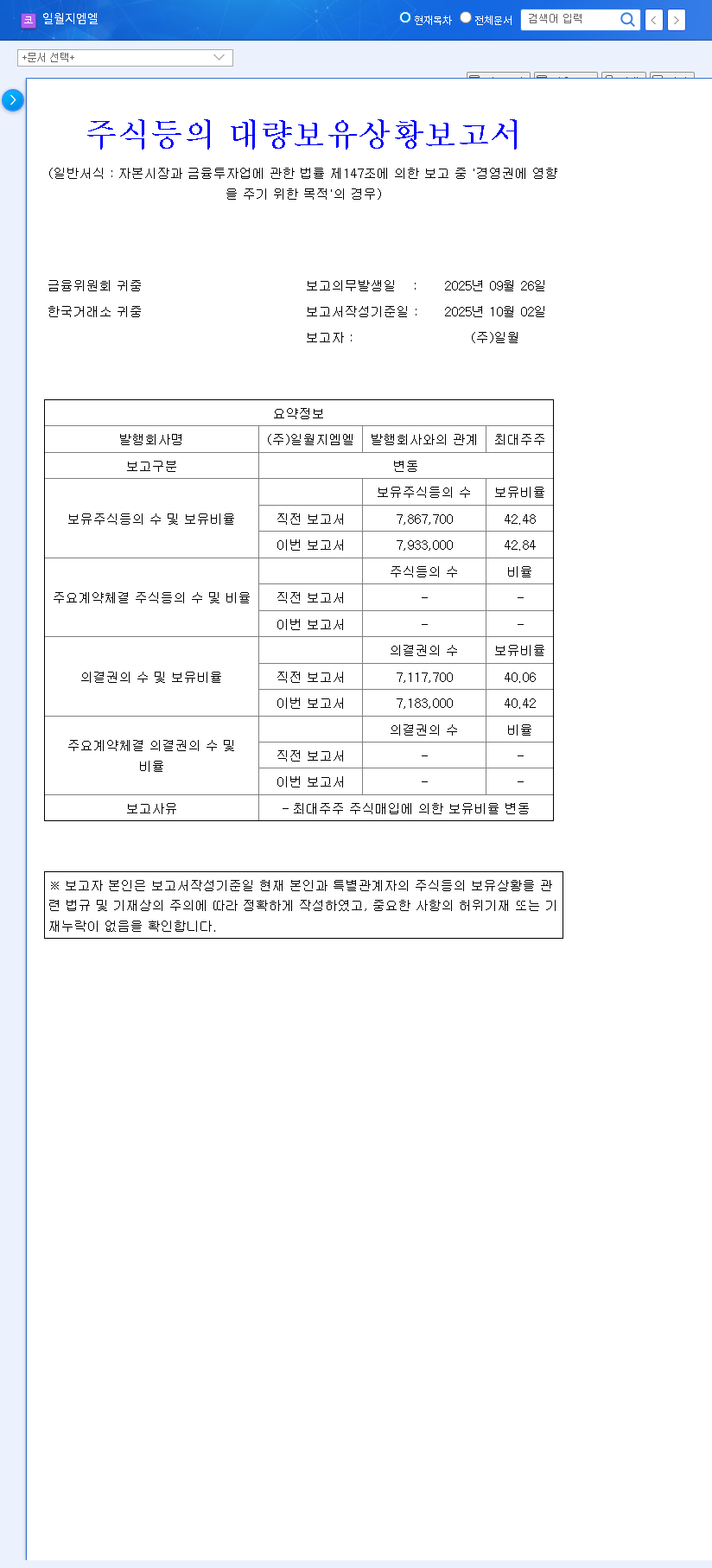
    On October 2, 2025, Ilwol GML publicly disclosed that its largest shareholder, Ilwol Co., Ltd., acquired an additional 65,300 common shares through open market purchases. This transaction increased the major shareholder’s stake from 42.48% to 42.84%. The officially stated purpose was for “management control.” This is a crucial detail, suggesting a deliberate strategy to tighten their grip on the company’s direction. You can view the Official Disclosure on the DART system for verification.

    Why This Matters: Decoding the Signal

    When a major shareholder buys more stock, especially during a challenging period, the market often interprets it as a vote of confidence. It signals a belief in the company’s long-term value that transcends current performance issues. Strengthening management control can also be a defensive move to ensure strategic initiatives are executed without interference, or to build a more stable foundation for a corporate turnaround. This action often leads to enhanced accountability and can accelerate necessary, albeit difficult, business restructuring. While there are no brokerage reports directly tied to this event, understanding the concept of shareholder activism and control is key to grasping its potential impact.

    While the stake increase is a positive signal of commitment, it is not a magic bullet. The company’s underlying financial health and business strategy remain the ultimate drivers of long-term value.

    In-Depth Fundamental Analysis of Ilwol GML

    Business Structure: A Company in Transition

    Ilwol GML has undergone a dramatic transformation. Its legacy business in electronic components (LGP manufacturing) was completely divested in June 2025 due to intense competition and technological shifts. The company’s current focus is the distribution of seasonal home appliances, primarily electric and hot water mats sourced from its major shareholder. This creates a significant risk:

    • High Seasonality: Revenue is heavily concentrated in the winter months. While there are efforts to introduce summer products, this dependency remains a major vulnerability.
    • New Venture Uncertainty: In March 2025, Ilwol GML added food and beverage importation and retail to its business objectives. However, there are no concrete plans or visible progress yet, making this a speculative and unproven diversification effort.

    Financial Health: A Concerning Picture

    The financial statements for the first half of 2025 paint a grim picture for Ilwol GML, largely due to the discontinuation of its previous core business.

    • Plummeting Revenue: Revenue stood at 3.746 billion KRW, a staggering 51% decrease year-over-year.
    • Operating Losses: The company recorded an operating loss of 1.287 billion KRW, highlighting a core inability to generate profit from current operations.
    • Negative Cash Flow: Operating cash flow was an outflow of 4.154 billion KRW, a clear indicator of cash burn.
    • Debt Burdens: Outstanding convertible bonds (15th and 16th) and derivative liabilities present ongoing financial risks that could dilute shareholder value and strain future earnings.

    Stock Performance and Market Sentiment

    The 178780 stock has been in a consistent downtrend since trading resumed in January 2025. This reflects the market’s negative reaction to the business shutdown and poor financial results. While the major shareholder’s lock-up agreement until January 2027 prevents a large-scale sell-off, it doesn’t guarantee a price recovery. For more on this, you might be interested in our guide on analyzing stock price trends.

    Investor Takeaway: Opportunity or Mirage?

    The major shareholder’s action is a double-edged sword. On one hand, it’s a clear commitment to stabilizing the ship. On the other, it doesn’t change the challenging fundamentals overnight.

    The Bull Case: The shareholder’s backing could provide the necessary runway to execute a successful turnaround, improve investor sentiment in the short term, and lend credibility to fundraising for new ventures.

    The Bear Case: The core business is unprofitable, the new ventures are undefined, and significant financial liabilities remain. The stake increase is meaningless if the company cannot generate revenue and achieve profitability.

    Conclusion: A Cautious ‘Wait and See’ Approach

    While the major shareholder stake increase is a noteworthy positive signal for Ilwol GML, it should be viewed with cautious optimism. Investors must look beyond this headline. The critical factors to monitor are tangible progress and visible results from its new food and beverage business, a path to profitability for its core appliance segment, and the effective management of its debt.

    Until these fundamental improvements materialize, the investment appeal of Ilwol GML remains speculative. A patient, long-term observation of the company’s strategic execution is the most prudent course of action.

    (178780) Ilwol GML (178780) Stock Analysis: Shareholder Stake Increase & Future Outlook 관련 이미지
  • (031440) Shinsegae Food PEF Investment: A Deep Dive into the ₩50B ‘Beauty Synergy’ Strategy

    (031440) Shinsegae Food PEF Investment: A Deep Dive into the ₩50B ‘Beauty Synergy’ Strategy

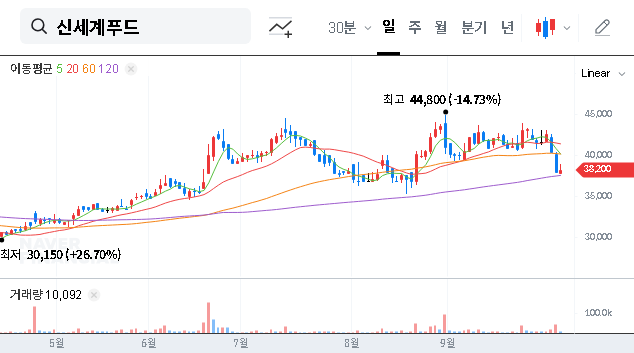
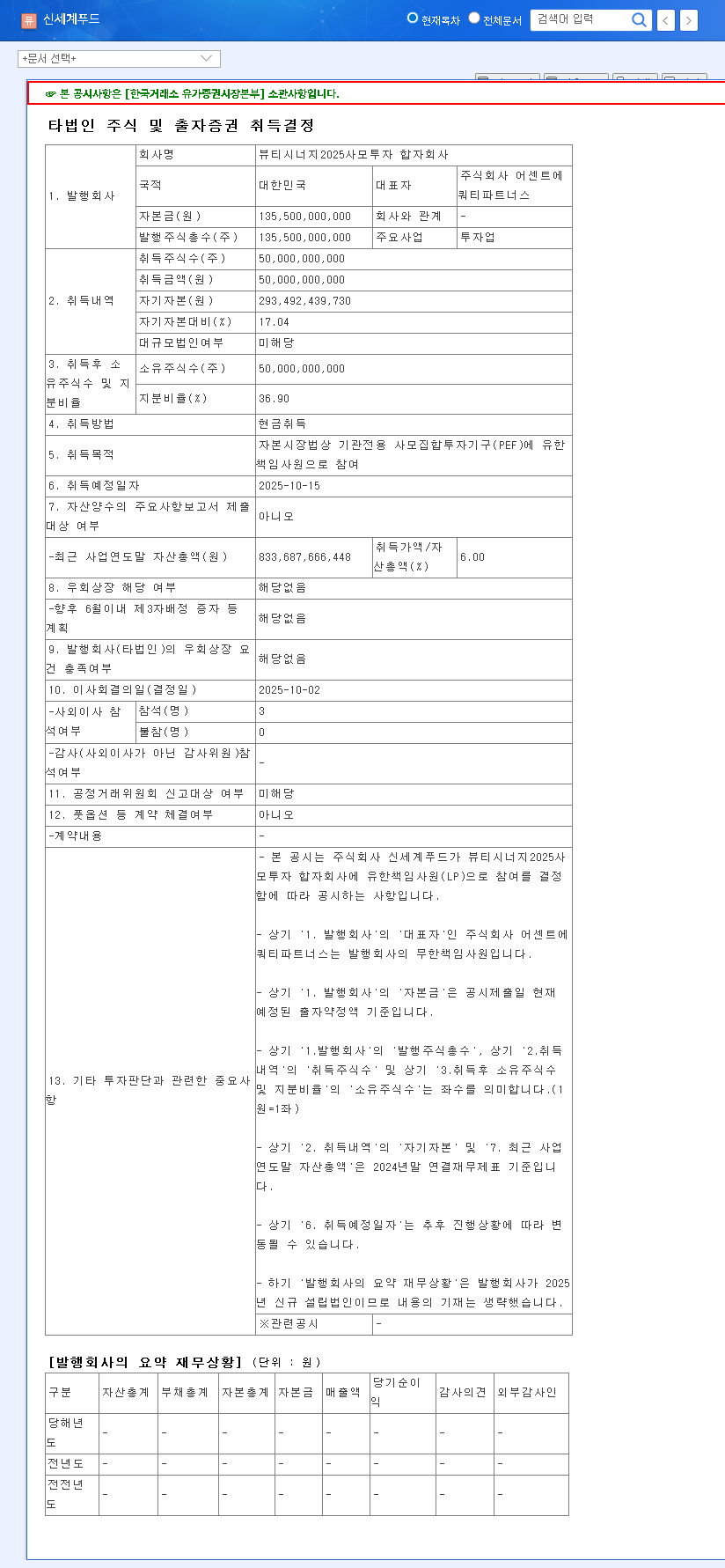
    Shinsegae Food (031440) has made a decisive move that has the market buzzing: a landmark Shinsegae Food PEF investment of ₩50 billion. This significant capital injection into the ‘Beauty Synergy 2025 Private Equity Partnership’ represents over 17% of the company’s equity, sparking a critical debate among investors. Is this a calculated masterstroke to unlock new avenues for growth, or a high-stakes gamble with uncertain returns? This deep-dive analysis unpacks the strategic rationale, financial implications, and potential risks associated with this pivotal investment, providing you with the insights needed to evaluate Shinsegae Food’s future trajectory.

    The ₩50 Billion Deal: What We Know

    Investment Details and Structure

    On October 2, 2025, Shinsegae Food formally announced its commitment to invest ₩50 billion into the ‘Beauty Synergy 2025 Private Equity Partnership.’ This transaction positions Shinsegae Food as a key Limited Partner (LP) with a substantial 36.90% stake in the fund. The official disclosure, filed with the regulatory authorities (Source), confirms this is a structured investment in an institutional private equity fund under the Capital Markets Act. As an LP, Shinsegae Food provides capital but entrusts the active investment management to the fund’s General Partner (GP), indicating a strategy focused on financial returns and strategic exposure rather than direct operational control.

    This investment is not just a financial transaction; it’s a strategic signal. Shinsegae Food is looking beyond its traditional food business, aiming to capture value in adjacent, high-growth industries through this PEF investment vehicle.

    Decoding the Strategic Rationale

    Pursuing New Growth Engines in a Stagnant Market

    The core motivation behind the Shinsegae Food PEF investment is the pressing need to secure new growth engines and diversify its business portfolio. The company’s H1 2025 financial report paints a picture of a mature business, with flat revenue in its core Sourcing & Distribution segment and declining sales in Manufacturing & Service. While the freight brokerage business shows promise, it’s not enough to drive significant corporate growth. This investment is a clear attempt to break out of this slow-growth cycle by tapping into the dynamic world of private equity, which offers access to innovative, unlisted companies and M&A opportunities that would otherwise be out of reach.

    What’s in a Name? The ‘Beauty Synergy’ Clue

    The fund’s name, ‘Beauty Synergy 2025,’ is highly suggestive. It strongly implies that the investment targets will be within the beauty, wellness, or health sectors. This opens up exciting possibilities for synergy with Shinsegae Food’s core competencies. The global trend towards “nutricosmetics” or “beauty foods”—products that offer beauty benefits from within—is a multi-billion dollar market. Shinsegae could leverage the PEF’s investments to:

    • Develop new health-functional food products.
    • Gain insights into consumer trends in the wellness space.
    • Potentially acquire innovative beauty or wellness brands discovered by the fund.

    Financial Impact and Risk Assessment

    A Significant Cash Outlay

    The ₩50 billion investment is a major financial commitment. It represents nearly all of the company’s H1 2025 cash and cash equivalents of ₩49.2 billion. This will undoubtedly place short-term pressure on the company’s liquidity. However, the balance sheet has shown recent strength, with a debt-to-equity ratio that improved to 145.10%. This suggests that while the cash position will be tight, the company is not over-leveraging itself to make the deal, mitigating the risk of a severe financial crisis. For more on how companies manage such investments, you can review guides on corporate capital allocation strategies.

    The High-Risk, High-Reward Nature of PEF Investments

    Private equity offers the potential for outsized returns but comes with significant risks. As a Limited Partner, Shinsegae Food’s success is tied to the expertise of the fund manager and the performance of the underlying portfolio companies. Key risks include:

    • Performance Uncertainty: There is no guarantee of returns, and the initial capital could be lost.
    • Illiquidity: PEF investments are typically locked up for several years, meaning the ₩50 billion is not accessible.
    • Information Asymmetry: Shinsegae Food may have limited visibility into the day-to-day operations of the portfolio companies.

    Furthermore, macroeconomic factors like interest rate changes and raw material costs, as tracked by sources like Bloomberg Markets, will influence the profitability of the companies the fund invests in, adding another layer of external risk.

    Investor Action Plan: Key Monitoring Points

    For current and potential investors, this Shinsegae Food growth strategy requires careful observation. While it presents a compelling long-term vision, its success is not guaranteed. Focus on the following key areas:

    • PEF Portfolio Disclosure: Watch for any announcements regarding the specific companies ‘Beauty Synergy 2025’ invests in. This will be the first concrete evidence of the fund’s direction.
    • Quarterly Financial Impact: Monitor Shinsegae Food’s financial statements for any reported gains or losses from the investment. This will indicate the fund’s performance.
    • Synergy Execution: Look for new product launches, partnerships, or business initiatives from Shinsegae Food that are explicitly linked to the PEF’s activities. This will be the true test of the ‘synergy’ aspect.

    Frequently Asked Questions (FAQ)

    Q1: What is the primary goal of Shinsegae Food’s PEF investment?

    The main objective is to secure new growth engines and expand its business portfolio. It is a strategic effort to find high-return opportunities outside its traditional food business to enhance long-term corporate value.

    Q2: How does this ₩50 billion investment impact Shinsegae Food’s finances?

    The large investment will cause a short-term cash outflow and pressure liquidity. However, the company’s recently improved debt-to-equity ratio suggests that a severe deterioration of its financial structure is unlikely.

    Q3: What kind of companies will ‘Beauty Synergy 2025’ invest in?

    While the specific portfolio is not yet public, the name strongly suggests a focus on the beauty industry and related wellness sectors. Shinsegae Food is participating as a Limited Partner, not a direct operator.

    Q4: What should investors watch most closely regarding this deal?

    Investors should monitor the specific investment targets of the PEF, its impact on Shinsegae Food’s financial statements, and any tangible business synergies that emerge between the fund’s portfolio and Shinsegae’s core operations.

    (031440) Shinsegae Food PEF Investment: A Deep Dive into the ₩50B 'Beauty Synergy' Strategy 관련 이미지
  • (246960) SCL Science Cancer Vaccine: A Deep Dive Analysis for Investors Ahead of the 2025 IR Event

    (246960) SCL Science Cancer Vaccine: A Deep Dive Analysis for Investors Ahead of the 2025 IR Event

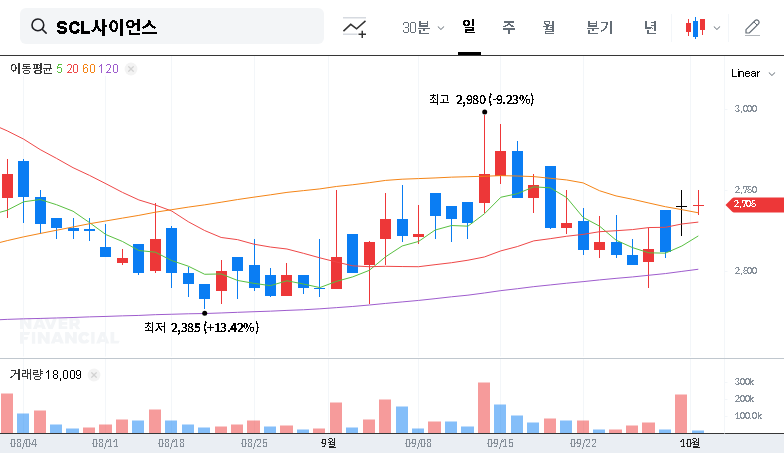
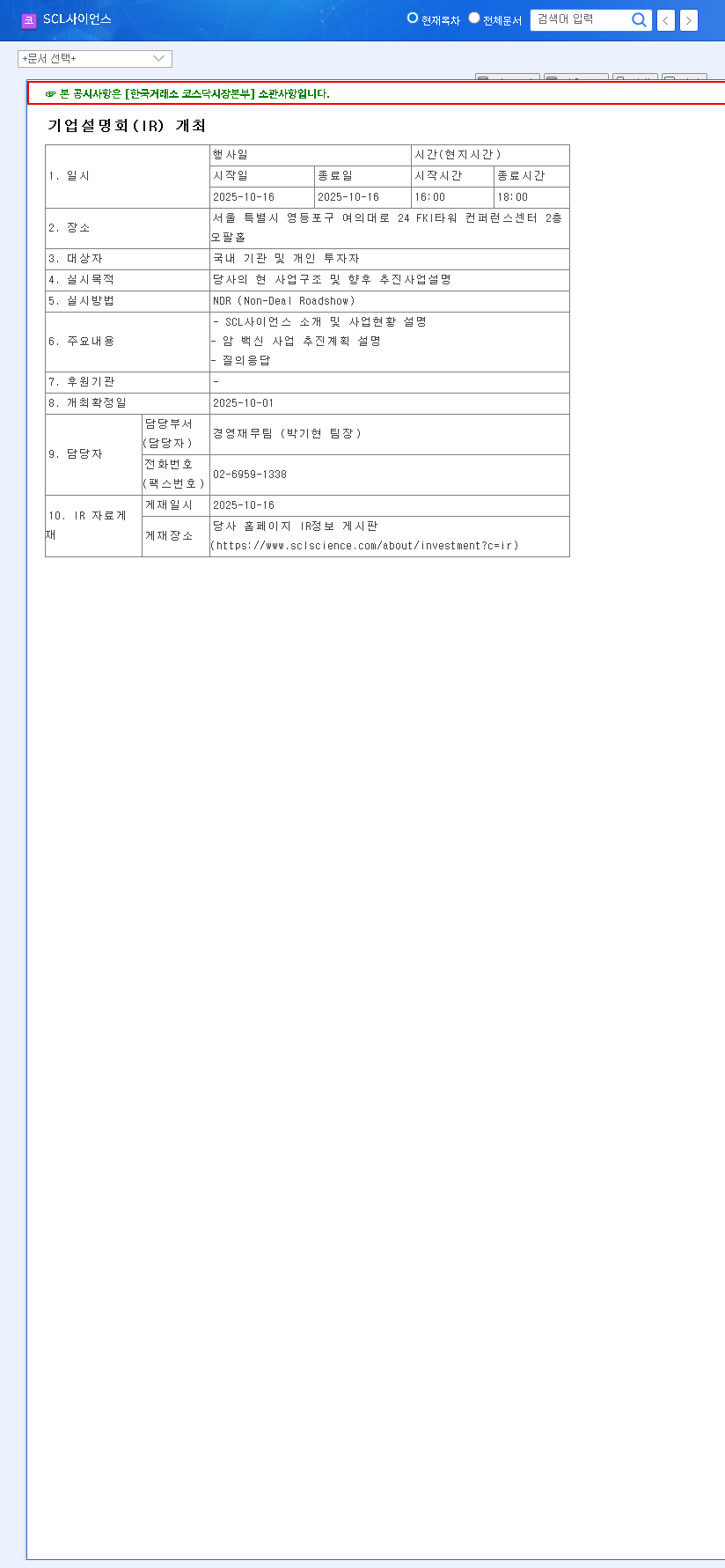
    Investors in SCL Science (246960) are marking their calendars for a pivotal Investor Relations (IR) event on October 16, 2025. This event is generating significant buzz as the company is expected to unveil its strategy for future growth, with a spotlight on the highly anticipated SCL Science cancer vaccine business. While the company has demonstrated staggering revenue growth, concerns over persistent operating losses linger. This deep dive provides a comprehensive analysis to help you formulate a well-informed investment strategy.

    Can SCL Science leverage this IR to calm market jitters and script a new chapter of profitable growth? We will explore the company’s fundamentals, the massive potential of its new ventures, macroeconomic headwinds, and the potential outcomes of this critical event.

    SCL Science at a Crossroads: A Fundamental Analysis

    The Bright Side: Explosive Revenue and Diversification

    According to the H1 2025 report, SCL Science has achieved truly remarkable top-line growth. Revenue skyrocketed by an astounding 347.09% year-over-year. This surge is primarily fueled by its successful bio-logistics and data platform segments, bolstered by the full consolidation of its subsidiary, SCL Healthcare. The company is not resting on its laurels, actively pursuing diversification and global expansion.

    • Sustained Growth: The core bio-logistics and data platform businesses continue to show robust performance.
    • Global Expansion: Efforts are underway to penetrate the global market with its hemostatic agent, InoSeal.
    • New Ventures: Expansion into promising new fields like AI-based medical image interpretation solutions aims to secure future revenue streams. You can read more about this in our guide to analyzing biotech stocks.

    The Challenge: Navigating Persistent Operating Losses

    Despite this impressive revenue growth, the bottom line tells a different story. Operating losses have widened by 41.11% year-over-year. This increase is largely due to escalating Research & Development (R&D) expenditures and costs associated with business expansion. For a company in the biotech sector, high R&D spending is often necessary for innovation, but it creates a classic growth-versus-profitability dilemma that is a major concern for SCL Science stock investors.

    The Game-Changer? The SCL Science Cancer Vaccine

    The market is placing immense hope on the SCL Science cancer vaccine business as the catalyst that could transform the company’s financial trajectory. With little information available from securities firms, the upcoming SCL Science IR event is the primary source for details. The market will be scrutinizing the concreteness, feasibility, and timeline of this ambitious project. A credible and compelling plan could significantly re-rate the company’s valuation.

    For a detailed look at the company’s official filings, please refer to the Official Disclosure (Source: DART).

    External Factors: The Macroeconomic Landscape

    No company operates in a vacuum. Exchange rate volatility (KRW/USD) can impact costs for a global business like SCL Science, while shifting global interest rates can affect the cost of capital for R&D funding. Furthermore, while the growing global hemostatic and bio-logistics markets provide a tailwind, risks from high oil prices and volatile shipping costs could pressure margins. These are critical factors for any prudent biotech investment.

    Potential IR Outcomes: Scenarios for Investors

    • The Bull Case: If SCL Science presents a clear, data-backed, and financially sound plan for the cancer vaccine business, it could ignite investor confidence. A transparent roadmap to profitability could send the stock soaring.
    • The Bear Case: If the presentation is vague, lacks specifics, or fails to adequately address the ongoing losses, market disappointment could be severe. This could lead to a sharp decline in investor sentiment and the stock price.

    Expert Investment Strategy: A Neutral Stance

    Investment Opinion: Neutral. SCL Science is a compelling story of high growth potential versus high risk. The future of SCL Science stock hinges on the success of its new ventures and its ability to manage R&D efficiency. We advise investors to adopt a wait-and-see approach. Carefully analyze the IR presentation for tangible milestones and a clear path to financial stability before committing capital.

    Critical Risk Factors to Monitor

    • Potential setbacks or failure in the cancer vaccine R&D process.
    • Regulatory hurdles or intensified competition in the biotech landscape. For context, see this BioSpace industry report.
    • Ongoing financial strain from high R&D and operational costs.
    • Adverse changes in the macroeconomic environment (e.g., interest rates, currency fluctuations).

    Disclaimer: This article is for informational purposes only and is based on publicly available data. It does not constitute financial advice or an investment recommendation. All investment decisions should be made based on your own judgment and due diligence.

    (246960) SCL Science Cancer Vaccine: A Deep Dive Analysis for Investors Ahead of the 2025 IR Event 관련 이미지
  • (069540) Bitgwa Jeonja Investment (069540): A Deep Dive Into the ₩8 Billion Gamble

    (069540) Bitgwa Jeonja Investment (069540): A Deep Dive Into the ₩8 Billion Gamble

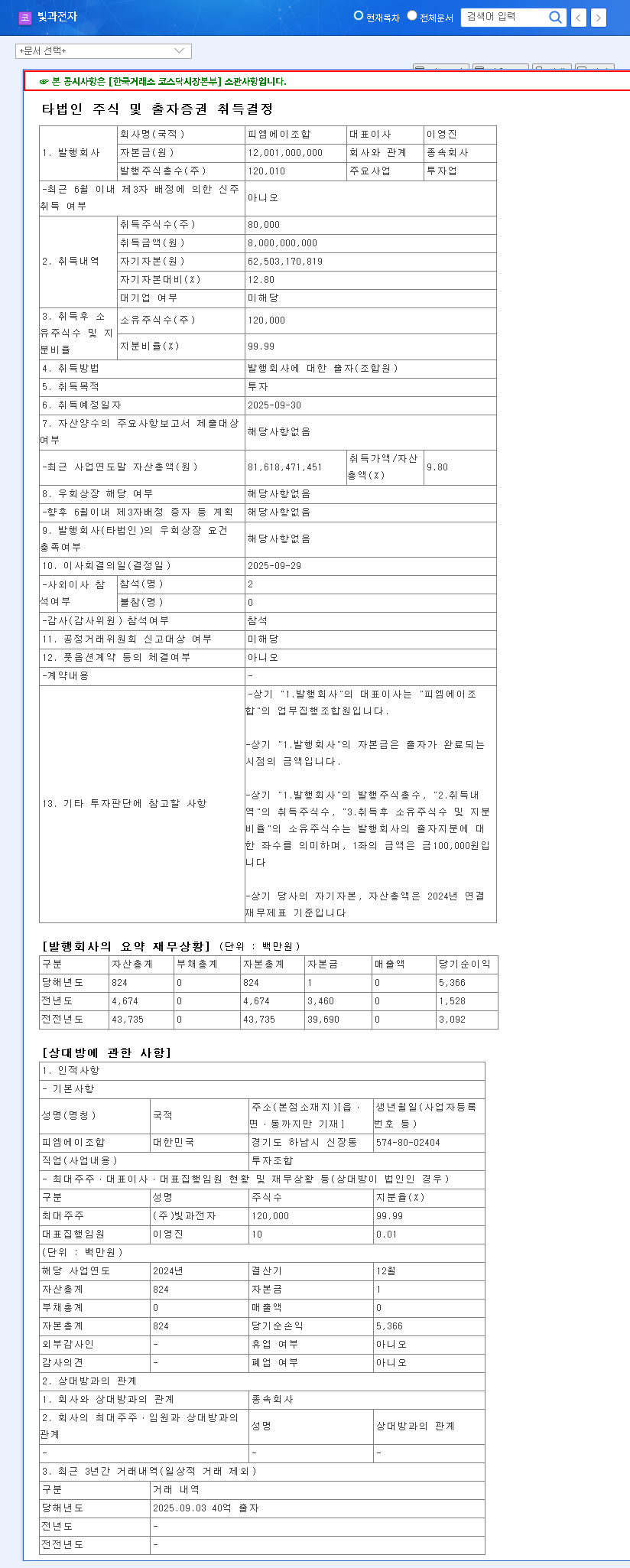
    The recent Bitgwa Jeonja investment of ₩8 billion has sent ripples through the investment community. For a company, ticker 069540, currently navigating the treacherous waters of complete capital impairment, this aggressive move to acquire PMA Association is a high-stakes gamble. It raises a critical question for every stakeholder and potential investor: Is this a visionary play for a new growth engine, or a move that could further strain its fragile financial health? This deep-dive analysis unpacks the official disclosure, explores the potential outcomes, and provides a clear guide for monitoring the Bitgwa Jeonja stock outlook.

    This analysis is based on the company’s official filing on September 30, 2025. For direct verification, investors can review the Official Disclosure on DART, which details the acquisition of shares in another corporation.

    Deconstructing the ₩8 Billion Bitgwa Jeonja Investment

    On September 30, 2025, Bitgwa Jeonja formally announced its decision to acquire shares and equity in PMA Association, an investment firm. This move effectively makes PMA a subsidiary. Here are the core details of the transaction:

    • Acquired Company: PMA Association
    • Acquisition Amount: ₩8 billion
    • Post-acquisition Stake: 99.99%
    • Stated Purpose: Investment for business expansion and securing new growth drivers.

    The Bull Case: A Catalyst for Growth?

    Despite the financial concerns, there is a strategic rationale behind this Bitgwa Jeonja investment that could unlock significant value if executed correctly.

    Strategic Diversification and Synergy

    The investment in PMA Association aligns with Bitgwa Jeonja’s stated goals of diversifying into high-growth sectors like digital communication, resource development, and even quantum computing. By acquiring an investment vehicle, the company can more nimbly deploy capital into these emerging areas, potentially creating new, robust revenue streams that are disconnected from its legacy operations. The key will be achieving synergy between these new ventures and the core business.

    Decisive Management and Control

    Acquiring a 99.99% stake provides absolute control, streamlining decision-making and ensuring that PMA Association’s strategy is perfectly aligned with the parent company’s vision. This is particularly relevant given the recent change in Bitgwa Jeonja’s largest shareholder. This bold investment signals a new, proactive management style committed to transformative change rather than incremental adjustments.

    The Bear Case: A Financial Abyss?

    The significant risks associated with this investment cannot be overstated, primarily stemming from Bitgwa Jeonja’s precarious financial position.

    Exacerbating Capital Impairment

    The company is in a state of complete capital impairment, meaning its accumulated losses exceed its capital reserves—a severe sign of financial distress. For an in-depth explanation of this term, you can refer to authoritative sources like Investopedia. An ₩8 billion cash outlay, which represents a staggering 12.8% of the company’s capital, could deepen this deficit and intensify liquidity pressures, potentially diverting funds from critical operations or debt servicing.

    Uncertainty and Lack of Transparency

    Crucial details about PMA Association’s business activities, existing portfolio, and profitability are scarce. Without this transparency, it is impossible for investors to assess the likelihood of a successful return on this ₩8 billion investment. If PMA’s ventures fail to generate profit, it could result in a massive write-down, further damaging Bitgwa Jeonja’s balance sheet. For more insights on financial metrics, you can read our guide on Understanding Financial Health for Tech Stocks.

    Investor Outlook and Key Monitoring Points

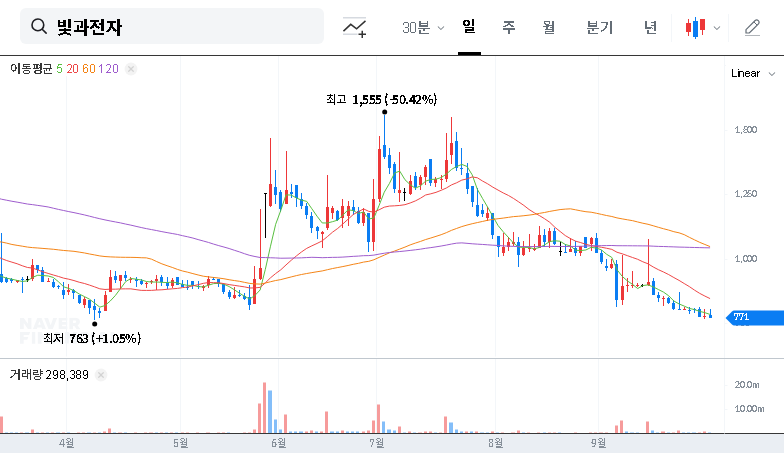
    The market’s reaction to the Bitgwa Jeonja investment will likely be volatile. While there’s potential for short-term momentum driven by speculative interest, the long-term trajectory of the Bitgwa Jeonja stock hinges entirely on tangible results. A prudent investment strategy requires a ‘wait-and-see’ approach, focusing on the following critical points:

    • PMA Association’s Performance: Demand transparent disclosures on PMA’s business plan, how the ₩8 billion is being deployed, and its quarterly financial performance.
    • Financial Health Improvements: Monitor Bitgwa Jeonja’s subsequent earnings reports for any signs of improved profitability or concrete plans to resolve the capital impairment.
    • New Management’s Strategy: Observe the actions and communications from the new major shareholder, K-Head Association, to understand their long-term vision and commitment.

    In conclusion, this ₩8 billion investment is a defining moment for Bitgwa Jeonja. It is a bold, high-risk, high-reward strategy that could either pave the way for a remarkable turnaround or accelerate its financial decline. Cautious and diligent monitoring is essential for any investor considering this stock.

    (069540) Bitgwa Jeonja Investment (069540): A Deep Dive Into the ₩8 Billion Gamble 관련 이미지
    (069540) Bitgwa Jeonja Investment (069540): A Deep Dive Into the ₩8 Billion Gamble 관련 이미지
  • (052420) Ohsung Advanced Materials CB Issuance: A Deep Dive into Growth vs. Dilution Risk

    (052420) Ohsung Advanced Materials CB Issuance: A Deep Dive into Growth vs. Dilution Risk

    The recent announcement regarding the Ohsung Advanced Materials CB issuance of KRW 10 billion in private convertible bonds has sent ripples through the investment community. This significant capital injection stands at a crossroads: is it a powerful catalyst that will propel the company into a new era of growth, or does it signal a looming threat of equity dilution for existing shareholders? For investors, understanding the nuances of this financial maneuver is critical.
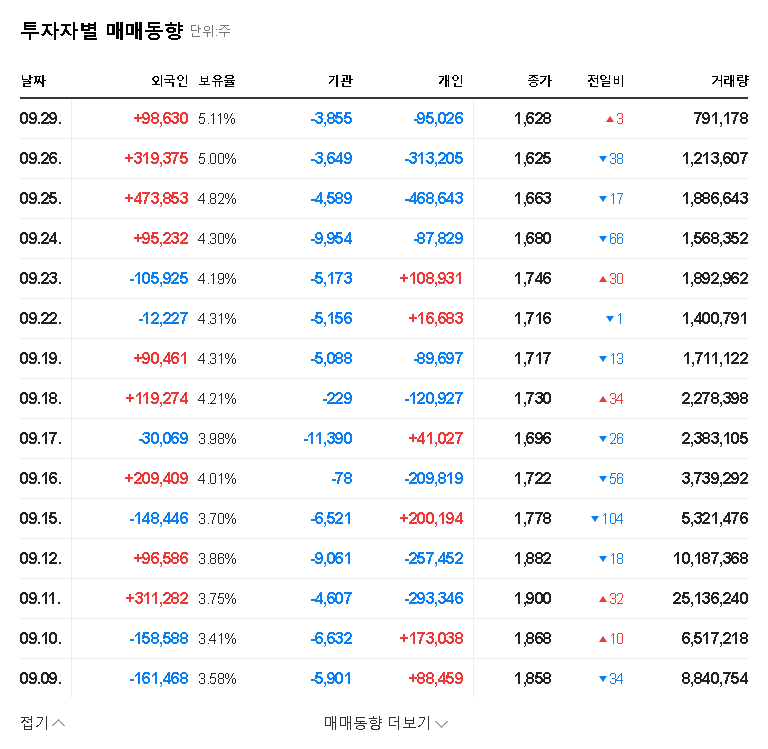
    This comprehensive analysis goes beyond the surface-level announcement. We will dissect the strategic motivations behind the fundraising, evaluate the potential upsides, and weigh them against the inherent risks. By examining the terms of the deal, the company’s expansion plans—including the pivotal acquisition of Hwail Pharmaceutical—and the broader macroeconomic context, this article will provide you with the insights needed to form a clear and informed investment thesis on Ohsung Advanced Materials.

    The KRW 10 Billion CB Issuance at a Glance

    To understand the implications, we must first look at the core details of the deal. A convertible bond is a hybrid security that acts like a bond (paying interest) but can be converted into a predetermined number of common stock shares. Here are the essential terms for the Ohsung Advanced Materials CB issuance:

    • Issuer: Ohsung Advanced Materials Co., Ltd.
    • Total Size: KRW 10 billion
    • Coupon/Maturity Rate: 4% per annum, offering a modest yield to bondholders.
    • Conversion Price: KRW 1,715 per share. This is the price at which bondholders can convert their debt into equity.
    • Conversion Period: October 23, 2026, to September 23, 2028.
    • Lead Investor: Korea Bond Investment Management

    For complete, verified details, investors should always refer to the Official Disclosure (Source: DART).

    Strategic Intent: Fueling a Diversified Future

    This capital raise is not merely about shoring up the balance sheet; it’s a calculated move to finance a strategic pivot. The primary use of proceeds is earmarked for the acquisition of Hwail Pharmaceutical Co., Ltd., an initiative seen as a cornerstone for future growth. By entering the pharmaceutical space, Ohsung aims to diversify its revenue streams away from its traditional—and currently struggling—display material business.

    Furthermore, the funds will bolster the company’s financial stability. Management has been actively deleveraging, with the debt ratio falling from 17.15% in 2022 to a projected 7.90% in 2024. This CB issuance, with its relatively low 4% interest rate, allows the company to secure growth capital without taking on expensive bank debt, aligning with its strategy of prudent financial management.

    This is a classic growth-versus-risk scenario. The capital provides the fuel for transformative acquisitions, but the conversion feature means existing shareholders must be confident that the future value created will outweigh the potential dilution of their stake.

    Fundamental Impact Analysis: The Bull vs. Bear Case

    The Bull Case: Growth and Financial Fortitude

    • Accelerated Business Diversification: The funds are a direct enabler for expansion into promising sectors like pharmaceuticals (via Hwail Pharm), cannabis medical, and international logistics, creating new, potentially high-margin revenue streams.
    • Strengthened Financial Health: With KRW 10 billion in cash, the company enhances its liquidity and investment capacity. This financial cushion is vital for navigating the costly Post-Merger Integration (PMI) process with Hwail Pharm and weathering economic uncertainties.
    • Managed Dilution Risk: The conversion price of KRW 1,715 is set just below the recent stock price, suggesting confidence. A floor price of KRW 1,201 for conversion adjustments also provides a buffer, protecting investors from extreme dilution in a downturn.

    The Bear Case: Risks and Execution Uncertainty

    • Inevitable Shareholder Dilution: If the company succeeds and the stock price rises above KRW 1,715, bondholders will convert their debt to equity. This will increase the total number of shares outstanding, diluting the ownership stake of existing shareholders. This is a primary concern in any Ohsung Advanced Materials investment thesis.
    • New Business Uncertainty: Success in new ventures is not guaranteed. The cannabis medical field faces regulatory hurdles, real estate is cyclical, and integrating Hwail Pharm effectively presents significant execution risk. A failure to generate returns from these investments would leave the company with debt and a weakened core business.
    • Core Business Weakness: The company’s legacy display material business is struggling, with sales down approximately 45% year-on-year. If this core segment cannot be stabilized, its losses could negate any gains from the new ventures, placing further pressure on the company’s overall profitability.

    Investor Action Plan & Key Monitoring Points

    The Ohsung Advanced Materials CB issuance is a strategic bet on the future. While it strengthens the company’s ability to pursue transformative growth, investors must remain vigilant. A successful outcome depends entirely on management’s ability to execute its diversification strategy effectively. For more information on assessing company health, you can read our guide on Understanding Financial Statements for Investors.

    Moving forward, investors should closely monitor the following key areas:

    • Hwail Pharm Integration: Track reports on synergy realization and the financial impact of the PMI. Are cost savings being achieved? Is revenue growing as projected?
    • Core Business Performance: Look for signs of stabilization or a turnaround in the display material segment. Any improvement here would significantly de-risk the overall investment case.
    • New Venture Milestones: Demand tangible progress reports on the other new businesses. Are they hitting development or revenue milestones?
    • Market Reaction and Conversion: Monitor the stock price relative to the KRW 1,715 conversion price and keep an eye on disclosures related to bond conversions as the eligibility period begins.

    (052420) Ohsung Advanced Materials CB Issuance: A Deep Dive into Growth vs. Dilution Risk 관련 이미지
    (052420) Ohsung Advanced Materials CB Issuance: A Deep Dive into Growth vs. Dilution Risk 관련 이미지
  • (453860) AESTECH Rights Offering: A Deep-Dive Analysis for Investors (2025)

    (453860) AESTECH Rights Offering: A Deep-Dive Analysis for Investors (2025)

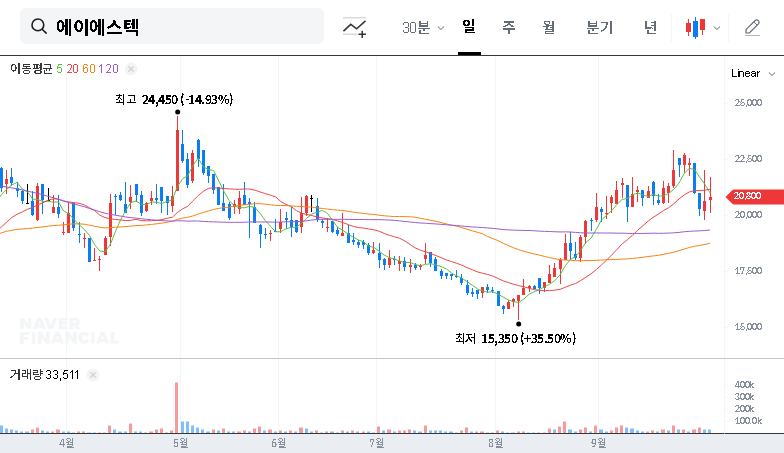
    The recent AESTECH rights offering announcement has sent ripples through the market, creating a complex scenario for current and potential investors. On September 30, 2025, AESTECH disclosed its plan to issue 787,208 new common shares at KRW 20,990 each, a move that immediately triggered discussions about share dilution and short-term price volatility. However, the involvement of global investment giant Firmenich Trading Corporation adds a compelling layer of strategic potential that cannot be ignored. This comprehensive rights offering analysis will dissect the event, evaluate the risks, and illuminate the potential long-term growth trajectory for AESTECH.

    We will explore how this capital injection is poised to reshape the company’s future, from bolstering its core UV protection business to aggressively expanding into the competitive cosmetics retail market. This is a critical moment for any AESTECH investment thesis.

    Understanding the AESTECH Rights Offering Details

    Key Event Overview

    On September 30, 2025, AESTECH formally announced its decision via a Material Fact Report. The full details were published in an Official Disclosure (Source: DART). Here are the core details:

    • Shares Offered: 787,208 common shares, representing 14% of the total outstanding shares.
    • Issuance Price: KRW 20,990 per share.
    • Key Dates: Payment is scheduled for January 9, 2026, with the new shares listed on January 23, 2026.
    • Major Investor: The participation of Firmenich Trading Corporation, a global leader in the flavor and fragrance industry, is the most significant aspect of this offering.

    AESTECH’s Current Financial Health

    To understand the ‘why’ behind this capital raise, we must look at AESTECH’s recent performance. While possessing strong technology in UV protection materials, the company has faced headwinds. The first half of 2025 saw a decrease in sales and a slide into an operating loss. This was attributed to rising raw material costs and heavy investment in its new cosmetics retail venture. The AESTECH rights offering is a direct strategic response to these challenges, aiming to secure capital to navigate this transitional period and fund future growth.

    The core tension for investors is balancing the immediate risk of share dilution against the long-term strategic upside fueled by this new capital and a powerful new partner.

    Strategic Use of Funds & Long-Term Vision

    The approximately KRW 16.5 billion raised is earmarked for pivotal growth initiatives. A successful deployment of these funds is central to justifying any AESTECH investment.

    1. Accelerating the New Cosmetics Business

    A significant portion will be funneled into marketing, brand building, and expanding distribution for the B2C cosmetics retail arm. This is a crucial pivot from a B2B raw material supplier to a vertically integrated consumer brand. Success here means capturing higher margins and diversifying revenue. For a deeper look into industry dynamics, see our analysis of the global beauty market.

    2. Reinforcing the Core Business

    Funds will also support R&D and facility expansion for the UV protection raw material business. This ensures AESTECH maintains its technological edge and can scale production to meet demand, solidifying its foundation.

    3. Improving Financial Stability

    A part of the capital will likely be used for debt repayment. This de-risks the balance sheet, reduces interest expenses, and improves overall financial health, making the company more resilient to macroeconomic shocks, a key part of any AESTECH stock analysis.

    Investment Thesis: Risks vs. Rewards

    Short-Term Risks to Consider

    • Share Dilution: The issuance of 14% new shares will dilute the value per share for existing stockholders. This often leads to immediate selling pressure.
    • Market Sentiment: The offering, combined with recent poor financial performance, may create negative sentiment, causing short-term price drops.
    • Execution Risk: The success of the cosmetics venture is not guaranteed. Failure to execute could mean the capital was not deployed effectively.

    Mid-to-Long-Term Opportunities

    • Strategic Partnership: The involvement of Firmenich Trading Corporation is a massive vote of confidence. It provides not just capital, but potentially invaluable industry expertise, distribution channels, and credibility. Leading financial outlets like Reuters often highlight such partnerships as key value drivers.
    • Value Chain Integration: Successfully integrating from raw materials to consumer products could dramatically improve profit margins and build a defensible brand.
    • Growth Catalyst: The new funds act as rocket fuel for the company’s growth plans, potentially accelerating its timeline to profitability and market leadership in its new segment.

    Frequently Asked Questions (FAQ)

    Q1: Why did AESTECH need this rights offering?

    AESTECH needed the capital to fund the aggressive expansion of its new cosmetics retail business, invest in R&D for its core UV materials division, and improve its overall financial structure by potentially reducing debt.

    Q2: What is the biggest risk of this offering for investors?

    The primary short-term risk is share value dilution. The 14% increase in outstanding shares can put downward pressure on the stock price until the market sees tangible results from the new investment.

    Q3: What does Firmenich Trading Corporation’s participation signify?

    It signifies a strong external validation of AESTECH’s long-term strategy and growth potential. A sophisticated global player like Firmenich has likely done extensive due diligence, and their investment is a powerful positive signal to the market.

    (453860) AESTECH Rights Offering: A Deep-Dive Analysis for Investors (2025) 관련 이미지
    (453860) AESTECH Rights Offering: A Deep-Dive Analysis for Investors (2025) 관련 이미지