Tag: mRNA

  • (237690) ST PHARM Q3 2025 Earnings: A Deep Dive Investment Analysis

    (237690) ST PHARM Q3 2025 Earnings: A Deep Dive Investment Analysis

    ST PHARM Co., Ltd. (KRX: 237690) has captured the market’s attention with its preliminary Q3 2025 earnings, revealing a performance that didn’t just meet expectations—it shattered them. This remarkable achievement signals a pivotal moment for the company, showcasing robust growth in its core businesses and a strengthening financial foundation. For investors, this raises a critical question: Is this the start of a sustained growth trajectory for ST PHARM? This comprehensive analysis will dissect the Q3 results, explore the key drivers behind this success, and evaluate the long-term ST PHARM investment thesis.

    Decoding ST PHARM’s Blockbuster Q3 2025 Earnings

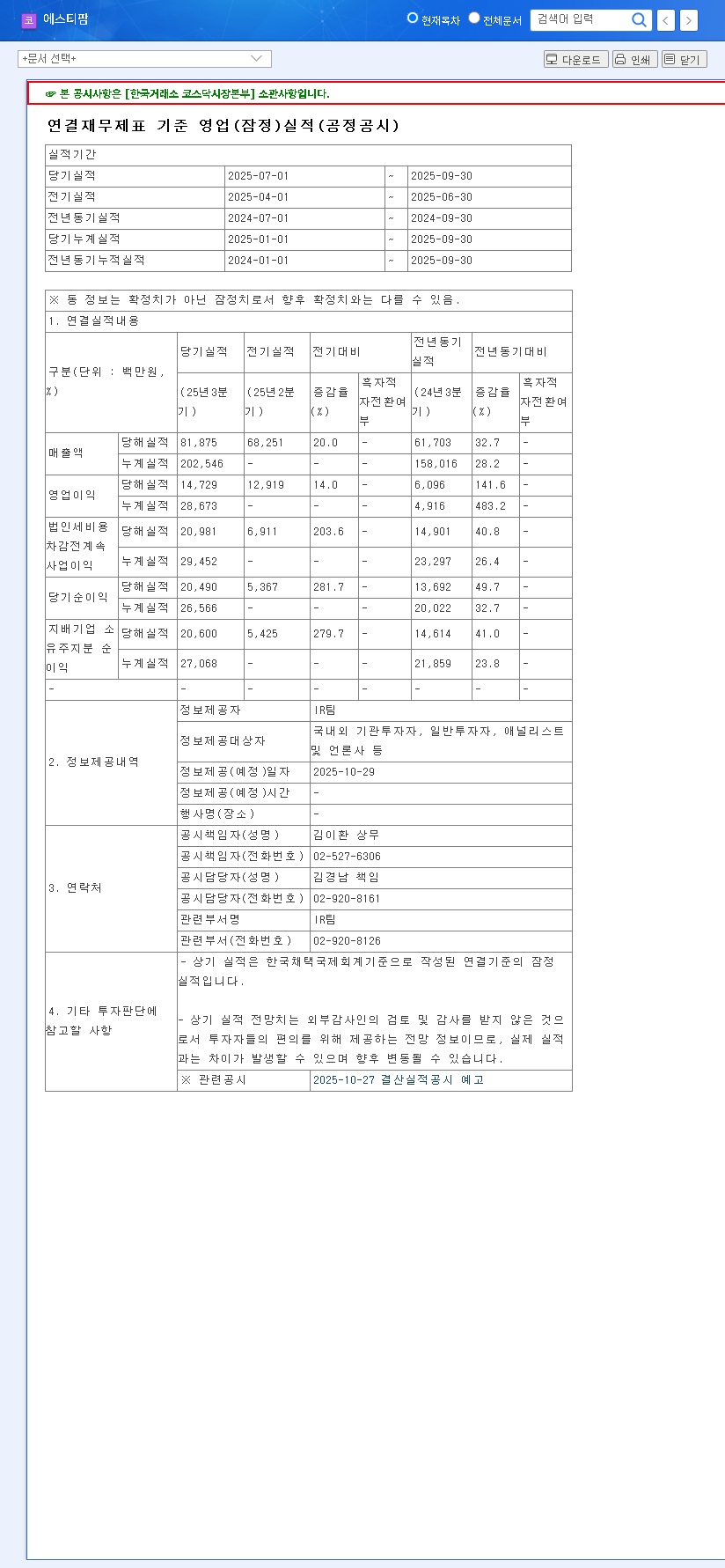
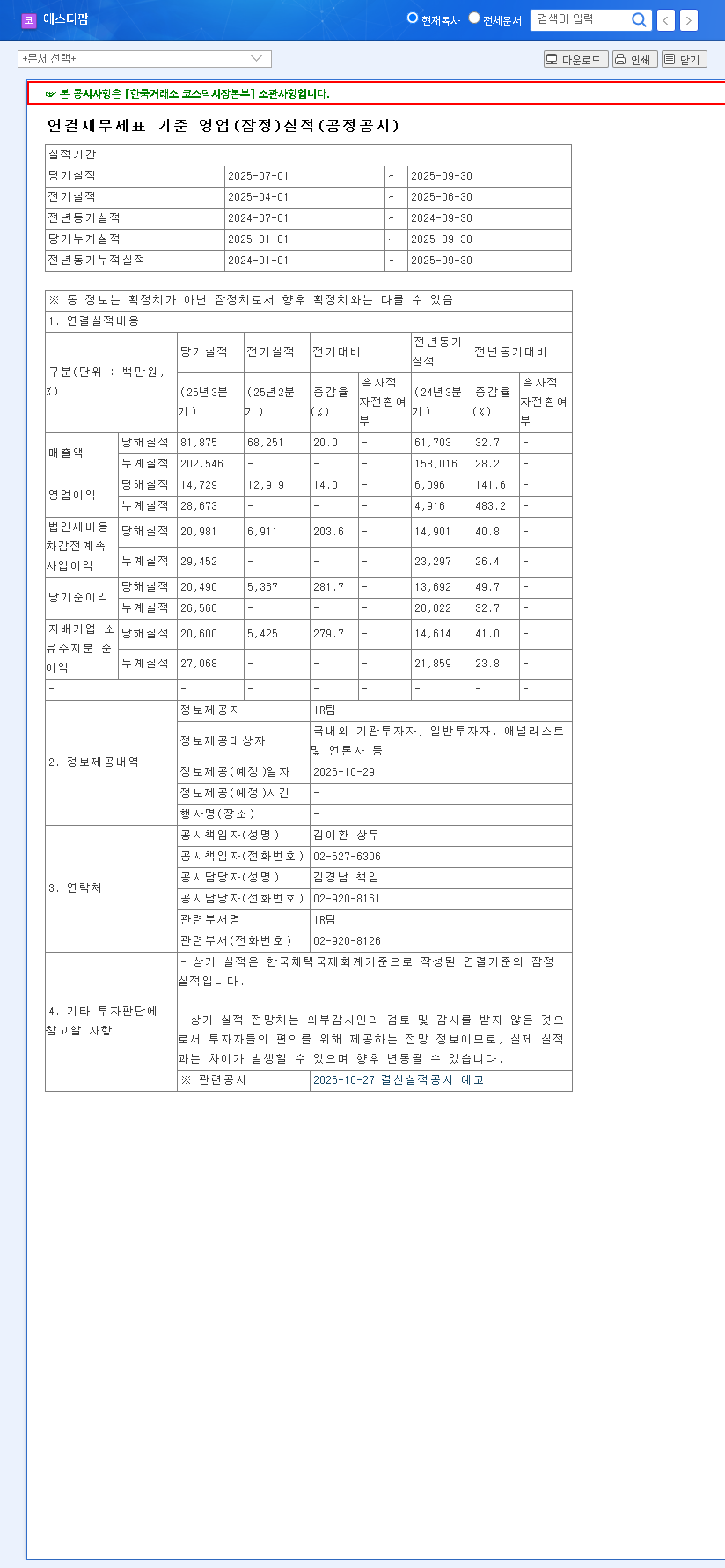
    The preliminary consolidated financial results, announced on October 29, 2025, delivered an exceptionally positive surprise. The numbers speak for themselves, painting a picture of a company firing on all cylinders. According to the Official Disclosure (Source), ST PHARM’s performance far outpaced market consensus:

    • Revenue: KRW 81.9 billion, a remarkable 23% above the projected KRW 66.4 billion.
    • Operating Profit: KRW 14.7 billion, an explosive 130% surge compared to the expected KRW 6.4 billion.
    • Net Profit: KRW 20.6 billion, a staggering 390% above the forecast of KRW 4.2 billion.

    This explosive growth, particularly in operating and net profit, underscores a significant improvement in profitability and highly efficient cost management. The cumulative performance for the first three quarters of 2025 further solidifies this trend, setting a strong precedent for the year-end results.

    The Dual Engines Driving ST PHARM’s Growth

    This outperformance isn’t accidental. It’s the direct result of strategic focus and excellence in high-growth sectors. Two areas, in particular, are responsible for propelling ST PHARM’s financial success.

    Mastery in Oligonucleotide & mRNA CDMO

    The core of ST PHARM’s success lies in its Contract Development and Manufacturing Organization (CDMO) services, specifically for oligonucleotides and mRNA. Oligonucleotides are short DNA or RNA molecules used in precision therapies, while mRNA technology, famously used in COVID-19 vaccines, holds immense promise for treating a wide range of diseases. As the global demand for these advanced therapeutics grows, specialized manufacturing partners like ST PHARM become indispensable. The company has expertly capitalized on this trend, leveraging its advanced technology and production capabilities. To learn more about this revolutionary field, you can explore resources from authoritative bodies like the National Institutes of Health. For a closer look at market dynamics, you can read our guide on navigating the global CDMO market.

    Strategic Expansion: 2nd Oligo Facility & sgRNA Ventures

    ST PHARM is not resting on its laurels. The company is actively investing in future growth. The impending operation of its second oligonucleotide facility is set to significantly boost production capacity, allowing it to take on more and larger contracts. Furthermore, its strategic entry into the sgRNA (small guide RNA) business is a forward-thinking move. sgRNA is a critical component of CRISPR gene-editing technology, positioning ST PHARM at the forefront of the next wave of genetic medicine innovation.

    ST PHARM’s strategy is clear: dominate the current oligonucleotide and mRNA CDMO market while simultaneously building the infrastructure to lead the next generation of gene-editing therapeutics.

    A Comprehensive ST PHARM Investment Analysis

    Strengthening Financials and Profitability

    Beyond the headline numbers, ST PHARM’s financial health is showing marked improvement. The company is transitioning from a period of investment and losses into a phase of sustainable profitability. The impressive operating profit margin of nearly 18% and net profit margin of over 25% in Q3 are not just one-offs but indicators of a structurally sound business model. A steadily decreasing debt-to-equity ratio and rising current ratio also point to excellent liquidity and a stable foundation for future investments.

    Risks and Considerations for Investors

    No investment is without risk. For ST PHARM, a key factor to monitor is exchange rate volatility. With a significant portion of its business conducted in foreign currencies, fluctuations in the KRW/USD and KRW/EUR rates can impact reported profits. Additionally, the CDMO space is becoming increasingly competitive, and investors should watch for how ST PHARM maintains its technological edge and market share against global rivals. It’s also worth noting that past restatement disclosures were procedural corrections and did not affect the company’s intrinsic value, but rather enhanced its transparency.

    Final Verdict: Is ST PHARM a Strong Investment Opportunity?

    The ST PHARM Q3 2025 earnings report is a powerful testament to the company’s robust fundamentals and rapid growth in the high-demand oligonucleotide CDMO and mRNA sectors. With clear growth drivers, expanding capacity, and a strengthening financial position, ST PHARM presents a compelling case as an attractive investment target with significant, sustained growth potential.

    Disclaimer: This analysis is based on publicly available information and is for informational purposes only. It does not constitute financial advice or an investment recommendation. All investment decisions should be made based on your own research and consultation with a qualified financial advisor.
    (237690) ST PHARM Q3 2025 Earnings: A Deep Dive Investment Analysis 관련 이미지
  • (237690) ST PHARM Stock Analysis: Deep Dive into Q3 2025 Earnings and Future Growth

    (237690) ST PHARM Stock Analysis: Deep Dive into Q3 2025 Earnings and Future Growth

    The outlook for ST PHARM stock is at a critical juncture as investors and market analysts eagerly await the upcoming Q3 2025 earnings briefing. Scheduled for November 3, 2025, this Investor Relations (IR) event, sponsored by Daol Investment & Securities, is more than a simple financial report; it’s a pivotal moment that could redefine the company’s trajectory. For stakeholders in ST PHARM CO., LTD., this briefing will offer crucial insights into its strategic direction within the dynamic global CDMO market and its potential for a significant rebound.

    This comprehensive ST PHARM investment analysis will dissect the key factors at play, from its powerhouse Oligo Nucleic Acid CDMO business to its next-generation growth engines in mRNA and sgRNA. We will explore the company’s financial health, potential risks, and what the upcoming announcements could mean for your portfolio.

    The Main Event: Q3 2025 Earnings IR Details

    ST PHARM is set to host a significant Non-Deal Roadshow (NDR) to engage with key market stakeholders. The primary goal is to communicate the company’s intrinsic value and lay out a clear vision for the future, coinciding with its Q3 2025 earnings release.

    • Company: ST PHARM CO., LTD.
    • Event: Investor Relations (IR) / NDR Briefing
    • Date & Time: November 3, 2025, 09:00 KST
    • Key Focus: Q3 2025 ST PHARM earnings, updates on key management affairs, and global industry outlook.
    • Source: The event was confirmed via an Official Disclosure filed with DART.

    A strong performance in the Q3 results, particularly if they meet or surpass market expectations, could provide a significant tailwind for the ST PHARM stock price.

    This IR event is a crucial test for ST PHARM. It’s an opportunity not just to present data, but to rebuild market confidence and demonstrate a clear, executable plan for long-term value creation.

    The Bedrock of Growth: Core Business Pillars

    ST PHARM’s strength lies in its solid fundamentals, particularly its leadership in the specialized field of nucleic acid therapies. Understanding these pillars is essential for any ST PHARM investment analysis.

    Dominance in Oligo Nucleic Acid CDMO

    The Oligo Nucleic Acid CDMO business is the company’s powerhouse. A CDMO (Contract Development and Manufacturing Organization) provides drug development and manufacturing services to other pharmaceutical companies. ST PHARM has established an unparalleled competitive edge in this niche.

    • Market Leadership: Boasting Asia’s #1 and global #3 production capacity, ST PHARM is a dominant force supplying raw materials for four commercial oligo new drugs targeting conditions like hematologic cancer and hyperlipidemia.
    • Aggressive Expansion: With capacity already increased to 6.4 mol and a second oligo plant set to begin production in Q4 2025, the company is positioning itself to capture future demand growth.

    Pioneering Future Therapies: mRNA & sgRNA

    Beyond its core business, ST PHARM is strategically investing in next-generation platforms that represent the future of medicine.

    • mRNA Business: The company is already seeing tangible results with LNP lipid and capping supply contracts. Positive Phase 1 clinical results for its proprietary SmartCap® technology could unlock major partnerships with global pharma giants.
    • sgRNA CDMO: As a key raw material for revolutionary CRISPR-Cas9 gene-editing therapies, this segment is poised to become a high-value growth engine, tapping into one of biotechnology’s most exciting fields. For more information, you can read about investing in the biotech sector.

    Navigating the Headwinds: Key Risks for Investors

    Despite the strong growth narrative, a prudent investor must consider the potential challenges that could impact the ST PHARM stock price. While fundamentals are strong, several cautionary factors warrant attention.

    • Financial Performance: A revenue decline in 2024, coupled with underperformance from European CRO subsidiaries, needs to be addressed with a clear path to recovery in 2025.
    • R&D Investment Risk: While necessary, a high R&D spend (14.30% on a separate basis) carries inherent risks related to pipeline success and potential development discontinuations.
    • External Factors: A high export ratio makes the company vulnerable to foreign exchange volatility, and macroeconomic pressures like interest rate changes can affect investor sentiment.

    Investor Action Plan: What to Watch For

    The upcoming IR announcements will be the deciding factor for the short-to-medium-term performance of ST PHARM stock. Investors should focus on the substance of the presentation.

    Key Checkpoints:

    • CDMO Growth Metrics: Look for specific data on commercial volume growth in the Oligo Nucleic Acid CDMO business and clear revenue projections from the second plant.
    • New Pipeline Progress: Demand tangible updates on mRNA contracts and sgRNA business orders. Vague promises will not be enough.
    • Forward-Looking Guidance: A clear and confident 2025 earnings guidance that shows a strong recovery from 2024 is non-negotiable for a positive market reaction.

    If the company delivers a compelling narrative backed by strong data, it could confirm its long-term growth potential and trigger a significant re-rating of the stock. Conversely, a failure to meet these high expectations could lead to continued pressure. Astute investors will listen carefully and be prepared to act on the information revealed.

    (237690) ST PHARM Stock Analysis: Deep Dive into Q3 2025 Earnings and Future Growth 관련 이미지
  • (237690) ST Pharm Value-Up Plan: An In-Depth Investment Analysis of the ₩500B Revenue Goal

    (237690) ST Pharm Value-Up Plan: An In-Depth Investment Analysis of the ₩500B Revenue Goal

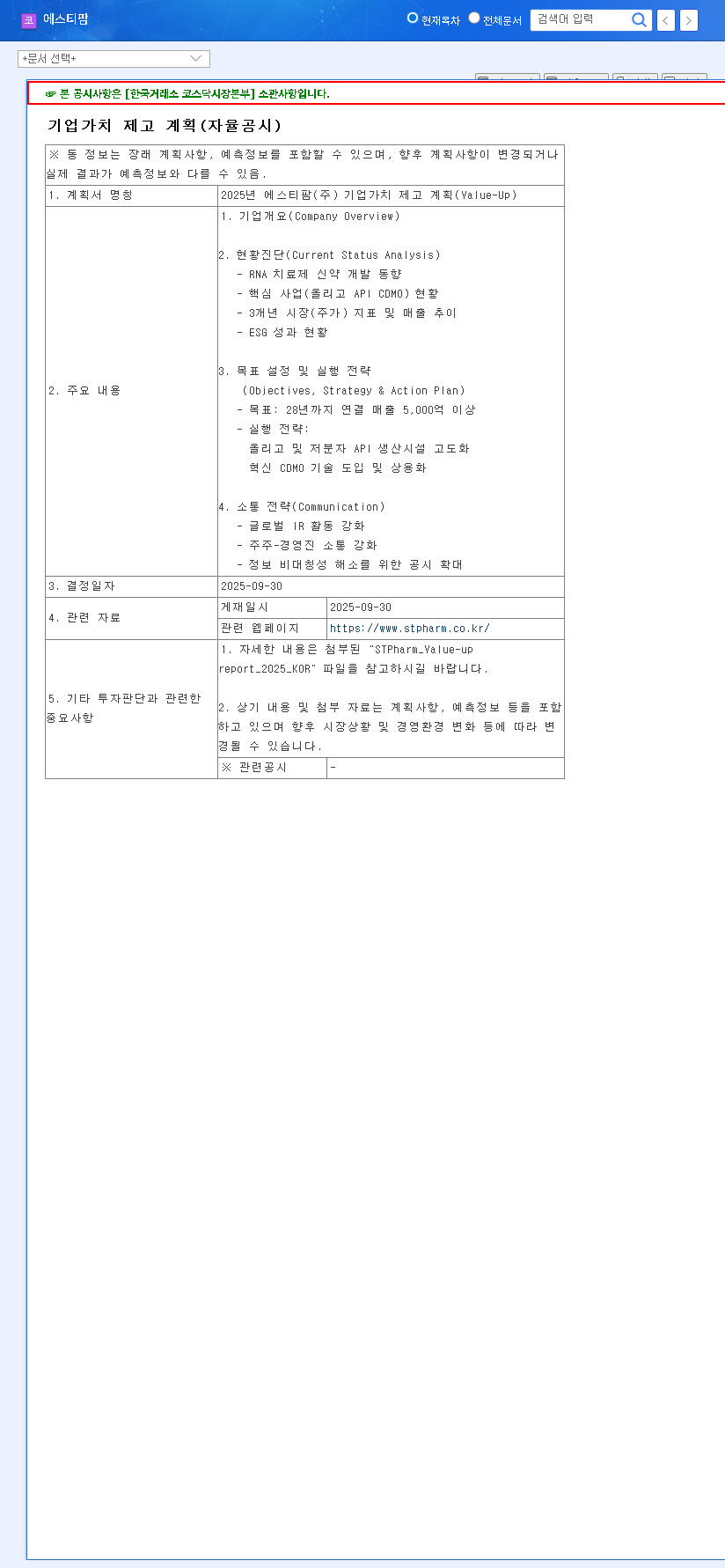
    The ST Pharm Value-Up Plan has captured the attention of the biopharmaceutical investment community. With an ambitious goal to exceed ₩500 billion (approx. $360 million USD) in consolidated revenue by 2028, ST Pharm is charting a bold course for growth. This strategic initiative signals a pivotal moment for the company, promising not only financial expansion but also a reinforced commitment to maximizing shareholder value in a competitive global market.

    This comprehensive investment analysis will dissect the core components of ST Pharm’s plan, evaluate its financial underpinnings, and explore the potential impacts for investors. We will delve into the company’s core strategies, market position, and the critical factors that will determine its success.

    Deconstructing the ST Pharm Value-Up Plan

    Announced on September 30, 2025, the ST Pharm Value-Up Plan is a multi-faceted roadmap designed to propel the company into its next growth phase. It’s more than a financial target; it’s a fundamental strategy to enhance operational excellence, technological innovation, and corporate transparency. The official filing can be viewed here: Official Disclosure (DART).

    Core Strategic Pillars

    The plan is built on three key pillars designed to work in synergy:

    • Operational Excellence: This involves a significant upgrade of their oligo and small molecule API (Active Pharmaceutical Ingredient) production facilities. This modernization is crucial for increasing capacity, improving efficiency, and meeting the stringent quality demands of global pharmaceutical partners.
    • Technological Innovation: ST Pharm plans to introduce and commercialize cutting-edge CDMO (Contract Development and Manufacturing Organization) technologies. This positions them not just as a manufacturer but as an innovative partner in the drug development lifecycle, particularly in the high-growth oligonucleotide CDMO market.
    • Enhanced Communication: A commitment to strengthening global investor relations (IR), improving shareholder communication, and expanding public disclosures aims to resolve information asymmetry and build long-term investor trust.

    Financial Health & Market Position

    A critical part of any ST Pharm investment analysis is understanding the company’s financial stability, especially in light of recent performance. While 2023 and 2024 projections show a temporary slowdown due to CDMO business volatility and increased R&D investments, the company’s foundational balance sheet remains exceptionally robust.

    Despite short-term performance fluctuations, ST Pharm’s financial health is a cornerstone of its strategy. With a projected 2024 debt-to-equity ratio of just 7.90% and a retained earnings ratio of 2,718.73%, the company has a powerful buffer to fund its growth ambitions without taking on significant risk.

    This financial fortitude is vital. It allows ST Pharm to weather macroeconomic headwinds—such as fluctuating exchange rates and rising interest rates—with minimal impact. While these external factors can affect raw material costs and financing, ST Pharm’s low debt burden insulates it from the worst of the volatility, allowing management to focus on executing the Value-Up Plan.

    Potential Impacts and Investor Action Plan

    Growth Catalysts and Potential Risks

    The successful execution of the ST Pharm Value-Up Plan could unlock significant value. Strengthening its core oligonucleotide CDMO business and successfully commercializing new ventures in mRNA and sgRNA are powerful long-term growth drivers. The commitment to transparency and communication should also enhance investor confidence and potentially lead to a positive re-rating of the ST Pharm stock.

    However, risks remain. The market will be scrutinizing the feasibility of the ambitious revenue target. Any perceived delays or shortfalls in execution could lead to selling pressure. Furthermore, the significant capital investment required for facility upgrades could strain short-term financials, though the company’s strong balance sheet largely mitigates this concern. For further reading on market trends, see this analysis from industry leader Fierce Pharma.

    Key Metrics for Investors to Monitor

    For those considering a long-term position, the focus should be on execution rather than short-term price movements. Here are the critical areas to watch:

    • Revenue & Profitability Trends: Watch for a return to growth and improved profitability from 2025 onwards, signaling the investments are paying off.
    • New Order Pipeline: Track announcements of new contracts and partnerships, particularly those related to the newly upgraded Oligo Building 2.
    • New Venture Progress: Monitor clinical trial progress and commercialization milestones for the promising mRNA and sgRNA businesses.
    • Capital Allocation: Observe how the company manages its robust cash reserves to fund growth without compromising its excellent financial health.

    In conclusion, ST Pharm’s Value-Up Plan is a credible and well-defined strategy that leverages its core strengths. While short-term challenges exist, the company’s market leadership, financial stability, and clear vision for the future present a compelling long-term investment thesis. A patient and observant investment approach is recommended.

    (237690) ST Pharm Value-Up Plan: An In-Depth Investment Analysis of the ₩500B Revenue Goal 관련 이미지
  • ESTpharm Warrant Exercise Analysis: Impact on Investors?


    ESTpharm Warrant Exercise Analysis: Impact on Investors? 대표 차트 이미지


    ESTpharm Warrant Exercise: What Happened?

    On September 8, 2025, ESTpharm announced a warrant exercise for 509,246 shares (2.53% of market capitalization). The exercise price is 68,729 KRW, and the conversion is scheduled for September 26.

    Why Does the Warrant Exercise Matter?

    A warrant exercise allows investors holding convertible bonds (CBs) or bonds with warrants (BWs) to convert them into common stock at a predetermined price. This can affect both the company’s financing and investment opportunities for investors. The significant difference between the current stock price (2,493 KRW) and the exercise price (68,729 KRW) is particularly noteworthy, suggesting that these warrants were issued at a much higher stock price.

    Impact on Investors?

    • Increased Shares Outstanding and EPS Dilution: The exercise will increase the number of outstanding shares, potentially diluting earnings per share (EPS).
    • Debt-to-Equity Conversion: Debt is converted to equity, which can positively impact financial health metrics.
    • Limited Short-Term Stock Price Impact: The high exercise price compared to the current stock price suggests limited immediate selling pressure. However, future stock performance will depend on factors like growth in the oligonucleotide CDMO market, competitiveness of new businesses, and the macroeconomic environment.

    Investor Action Plan

    Investors should closely monitor ESTpharm’s growth drivers, particularly in the oligonucleotide CDMO market, the competitiveness of its mRNA and sgRNA ventures, and the company’s ability to navigate macroeconomic changes. It’s crucial to observe the actual change in outstanding shares and EPS dilution post-exercise and formulate a long-term investment strategy accordingly.


    FAQ

    What is a warrant?

    A warrant gives the holder the right to buy a company’s stock at a specific price (exercise price) before a certain date.

    Will this warrant exercise negatively impact the stock price?

    While there might be some short-term EPS dilution, the high exercise price relative to the current stock price suggests limited immediate selling pressure. The long-term impact will depend on the company’s fundamentals and market conditions.

    What should investors watch out for?

    Investors should monitor the actual change in outstanding shares after the exercise, ESTpharm’s core business growth, competitiveness of its new ventures, and the company’s response to macroeconomic changes.


    ESTpharm Warrant Exercise Analysis: Impact on Investors? 관련 이미지
    ESTpharm Warrant Exercise Analysis: Impact on Investors? 관련 이미지


  • Curatis Half-Year Report Analysis: Balancing Growth Potential and Financial Risks

    1. What Happened? Curatis Releases Half-Year Report

    On August 13, 2025, Curatis published its half-year report, detailing its performance for the first half of 2025. While the report highlighted positive developments such as clinical progress in key pipelines and growth in its CDMO business, it also revealed concerns regarding accumulated deficit and financial risks associated with convertible bonds.

    2. Why It Matters: Key Indicators for Investment Decisions

    This report serves as a crucial benchmark for assessing Curatis’s current status and future prospects. For biopharmaceutical companies, pipeline progress and financial health are especially critical factors in investment decisions. A thorough analysis of the report is essential for accurate company valuation and informed investment strategies.

    3. Key Findings: Growth and Risk Coexist

    • Positive Signals:

      • Pipeline Development on Track: Clinical trials for key pipelines, including QTP101 (tuberculosis vaccine) and QTP105 (schistosomiasis vaccine), are progressing smoothly. QTP101’s expansion into international clinical trials enhances its global market potential.
      • CDMO Business Growth: Curatis’s cGMP facility operations are driving revenue growth in its CDMO business, and further gains are expected from the expanding biopharmaceutical market.
      • Synergy from Change in Largest Shareholder: The change in largest shareholder to Inventage Lab is anticipated to strengthen Curatis’s drug development capabilities through synergy with DDS platform technology.
    • Risk Signals:

      • Precarious Financial Structure: An accumulated deficit of KRW 222.642 billion raises concerns about Curatis’s ability to continue as a going concern. Increasing debt, particularly from convertible bonds and derivatives, further amplifies financial risks.
      • Profitability Challenges: High R&D expenditure poses challenges to short-term profitability. The successful commercialization of its pipeline is crucial for Curatis’s financial stability.
      • Internal Control Deficiencies: Identified weaknesses in internal accounting controls raise concerns about financial transparency and management capabilities.

    4. Investor Action Plan: Proceed with Caution

    While Curatis possesses innovative pipelines, it faces significant financial risks. Investment decisions should prioritize a long-term perspective, considering pipeline success probability, efforts to improve financial structure, and management’s risk management capabilities, rather than focusing on short-term stock fluctuations. Consulting with financial advisors and closely monitoring future disclosures are essential steps for informed investment choices.

    Frequently Asked Questions

    What are Curatis’s key pipelines?

    Curatis’s main pipelines include QTP101 (tuberculosis vaccine), QTP105 (schistosomiasis vaccine), and QTP104 (COVID-19 mRNA vaccine).

    What is Curatis’s financial status?

    Curatis currently has a significant accumulated deficit and faces high financial risks due to its debt from convertible bonds and derivatives.

    Should I invest in Curatis?

    Curatis has growth potential, but investors must consider its high financial risks. Before investing, carefully evaluate pipeline progress, financial improvement efforts, and management’s capabilities.

  • Estipharm IR Analysis: Q2 2025 Earnings and mRNA Business Outlook

    1. Estipharm IR: What to Expect

    This IR will cover Estipharm’s Q2 2025 earnings release, along with updates on key management matters and global industry trends. Investors are particularly interested in details regarding the impact of the second oligo plant expansion, mRNA business pipeline, and progress in their proprietary drug development.

    2. Why It Matters

    Estipharm maintains a top-three global ranking in the oligonucleotide therapeutics CDMO market and is securing future growth drivers through collaborations with big pharma in the mRNA business. This IR presents a crucial opportunity to enhance investor confidence and boost corporate value by transparently disclosing the company’s current status and future strategies.

    3. Key IR Insights and Investment Points

    • Q2 Earnings: Performance compared to the previous quarter and operating profit margin trends.
    • Second Oligo Plant Expansion: Projected revenue contribution and profitability improvement from the second oligo plant, scheduled to operate in Q4 2025.
    • mRNA Business: Partnership progress with global big pharma and commercialization potential.
    • New Drug Development: Clinical progress and future plans for proprietary drug pipelines, including STP0404 (AIDS treatment), STP1002 (anticancer drug), and STP2104 (COVID-19 mRNA vaccine).
    • Financial Stability: Strategies to address increasing debt-to-equity ratio and decreasing cash assets.
    • Exchange Rate and Interest Rate Fluctuations: The company’s strategy for navigating recent volatility in exchange rates and interest rates.

    4. Action Plan for Investors

    Investors should carefully analyze the IR presentation to comprehensively assess Estipharm’s growth potential and risk factors. It’s crucial to pay close attention to the competitiveness of core businesses, pipeline progress, and financial soundness before making investment decisions.

    Frequently Asked Questions

    What are Estipharm’s main businesses?

    Estipharm’s primary focus is on oligonucleotide therapeutics CDMO (Contract Development and Manufacturing Organization) and mRNA business. They also have a proprietary drug development pipeline.

    What are the key takeaways from this IR?

    Key points include Q2 earnings, the impact of the second oligo plant expansion, mRNA business partnerships, new drug development progress, financial stability, and strategies for dealing with exchange rate and interest rate fluctuations.

    What should investors consider when investing in Estipharm?

    Investors should comprehensively assess the growth potential and risk factors based on the information presented in the IR. It’s crucial to consider financial soundness and market competition.

  • Inventage Lab Signs Deal for mRNA-LNP Metabolic Disease Treatment: What’s the Outlook?

    1. What Happened?

    Inventage Lab signed a co-development and exclusive licensing agreement with Terna Therapeutics for an FGF-21 based mRNA-LNP metabolic disease treatment on July 31, 2025. Inventage Lab is responsible for clinical trials, production, and sales, while Terna Therapeutics will handle raw material procurement, patents, and research.

    2. Why is it Important?

    This agreement can provide Inventage Lab with a new growth engine. It diversifies their business beyond the existing LNP CDMO business, allowing entry into the metabolic disease treatment market. Synergy with the GMP facility acquired through the Curatis acquisition is also expected. Successful commercialization could lead to substantial revenue growth.

    • Pros: Pipeline expansion, technology synergy, potential revenue increase
    • Cons: R&D risks, high development costs, increased market competition

    3. So, What’s the Impact?

    While positive in the long term, this agreement could increase stock volatility in the short term due to R&D uncertainties and financial risks. The contract amount, R&D progress, and macroeconomic factors will influence the stock price. Macroeconomic factors like exchange rates, raw material prices, interest rates, bond yields, and China Containerized Freight Index could also impact Inventage Lab’s profitability and financial status.

    4. What Should Investors Do?

    Investors should closely monitor R&D progress, financial indicators, and macroeconomic changes. This could be an investment opportunity from a long-term perspective, but short-term investments require caution. Obtaining additional information such as the contract amount and detailed R&D plans is crucial.

    Q: What is Inventage Lab’s new agreement about?

    A: It’s a co-development and exclusive licensing agreement with Terna Therapeutics for an FGF-21 based mRNA-LNP metabolic disease treatment.

    Q: Why is this agreement important?

    A: It can contribute to Inventage Lab’s business diversification and secure a future growth engine.

    Q: What should investors be aware of?

    A: R&D uncertainties, financial risks, and market competition should be considered. It’s crucial to consider investment from a long-term perspective and continuously monitor relevant information.

  • DXVX Secures $213.2M mRNA Cancer Vaccine Deal: What it Means for Investors

    1. Deal Breakdown: What Happened?

    DXVX entered into a joint research, development, and technology transfer agreement for its Survivin-targeting mRNA cancer vaccine. The deal is worth $213,200,000, including patent support costs and milestone payments at each development stage. DXVX will also receive royalties upon successful commercialization. However, regulatory approval (FDA, etc.) is a prerequisite for the agreement, and failure to secure approval could lead to termination.

    2. Implications and Opportunities: Why Does This Matter?

    This agreement holds significant weight for DXVX, particularly given its recent financial struggles.

    • Financial Boost: The $213.2 million influx will help offset losses reported in Q1 2025 and provide crucial funding for future R&D and business expansion.
    • Pipeline Strengthening: The mRNA cancer vaccine technology bolsters DXVX’s drug development pipeline and offers a promising future growth engine with substantial revenue potential upon successful commercialization.
    • Validation of Technology: The licensing agreement validates DXVX’s technology in the market, potentially attracting further investment and partnerships.

    3. Investment Considerations: What are the Risks?

    Despite the positive aspects, investors must consider several key risks:

    • Regulatory Uncertainty: Potential failures in clinical trials or securing marketing authorization could lead to stock volatility.
    • Prolonged Development Timeline: Drug development can take longer than anticipated, potentially delaying revenue generation.
    • Intense Market Competition: The mRNA cancer vaccine market is highly competitive, making market share capture challenging.
    • Undisclosed Partner: The undisclosed nature of the partner creates uncertainty regarding their creditworthiness and business scale.

    4. Investor Action Plan: What Should You Do?

    Investors should closely monitor clinical trial results and regulatory decisions. Continuous evaluation of DXVX’s business strategies and risk management plans is crucial. While short-term stock gains are possible, the long-term investment outlook hinges on the deal’s success. Disclosure of the partner’s identity and other information will be crucial for reducing investment uncertainty.

    What is the value of DXVX’s mRNA cancer vaccine licensing agreement?

    $213.2 million.

    Who is the partner in this agreement?

    Currently undisclosed.

    What are the key risks associated with this deal?

    Regulatory uncertainty, prolonged development timeline, and intense market competition.

  • Estipharm (237690) Q2 Earnings Announcement: Opportunity or Risk?

    1. What Happened? : Estipharm’s Q2 Earnings Announcement

    Estipharm will announce its Q2 earnings and hold an investor relations (IR) meeting on July 28th, hosted by NH Investment & Securities. With market concerns heightened after a weak Q1 performance, this IR is crucial for alleviating investor anxieties and showcasing Estipharm’s future growth potential.

    2. Why It Matters: Balancing Q1 Underperformance and Growth Potential

    Estipharm reported weak Q1 earnings, with a 52.4 billion KRW decrease in revenue. While seasonal factors and the end of a large contract are cited as reasons, the Q2 results will provide a clearer picture of the underlying causes and future revenue outlook. Maintaining an operating profit margin of 10% is a positive sign. The company’s future stock price hinges on its ability to secure growth drivers like oligonucleotide CDMO, mRNA business, and new drug development.

    3. Estipharm’s Future: Growth Drivers and Challenges

    • Oligonucleotide CDMO: FDA cGMP certification and investment in the second oligo plant are positive, but raw material price fluctuations and intensifying competition pose risks.
    • mRNA Business: SmartCap®, STLNP® technology, and collaboration with the CDC are opportunities, but market competition and rising interest rates create uncertainty.
    • New Drug Development: The progress of clinical trials for AIDS treatment (STP0404) and anticancer drug (STP1002), and the success of licensing out strategies, are key variables.

    4. Investor Action Plan: Focus on Key IR Takeaways and Risk Management

    The upcoming IR is expected to provide not only Q2 results but also insights into future business prospects and strategies to address intensifying market competition. Investors should pay close attention to the IR content, especially explanations regarding revenue projections and R&D investment efficiency. Risk management is also crucial in preparation for potential stock price volatility.

    Frequently Asked Questions

    When is Estipharm’s Q2 earnings announcement?

    It will be held on July 28th at 9:00 AM KST, hosted by NH Investment & Securities.

    What caused the weak Q1 performance?

    Seasonal factors and the end of a large contract are suspected to be the main causes, with more details to be revealed during the Q2 IR.

    What are Estipharm’s main growth drivers?

    Oligonucleotide CDMO, mRNA business, and new drug development.

    What should investors be aware of?

    Investors should consider risks such as intensifying market competition, raw material price fluctuations, exchange rate fluctuations, the risk of new drug development failure, and rising interest rates.

  • Estipharm Q2 2025 Earnings: Soaring Operating Profit, but Declining Net Income – What Investors Need to Know

    1. Estipharm’s Q2 Performance: A Mixed Bag

    Estipharm reported revenue of KRW 68.2 billion (+2.55% YoY), operating profit of KRW 12.8 billion (+93.94%), and net income of KRW 4.8 billion (-26.15%) for Q2 2025. While the surge in operating profit is encouraging, the decline in net income raises concerns.

    2. Decoding the Operating Profit Surge: Cost Efficiency and CDMO Growth

    The impressive operating profit growth is attributed to improved cost management and operational efficiency, coupled with the continued growth of its oligonucleotide therapeutics CDMO business. Notably, the FDA cGMP certification has positively impacted CDMO sales.

    3. Unraveling the Net Income Decline: Financial Costs and Market Volatility

    The decrease in net income stems from increased financial costs, rising raw material prices, and foreign exchange fluctuations. The company’s high debt-to-equity ratio poses a challenge in a rising interest rate environment. Additionally, the mRNA business segment’s underwhelming short-term profitability contributed to the decline.

    4. Investment Strategy: Focusing on Long-Term Growth Potential

    In the short term, managing the debt-to-equity ratio and navigating market volatility are crucial. However, the long-term outlook hinges on the successful operation of the second oligo plant, strengthening its market dominance in oligonucleotide therapeutics CDMO, and the growth potential of its mRNA business. Investors should carefully consider the company’s debt management and hedging strategies against raw material price fluctuations before making investment decisions.

    Q: What drove Estipharm’s operating profit surge in Q2?

    A: Improved cost management, operational efficiencies, and continued growth in the oligonucleotide therapeutics CDMO business.

    Q: Why did net income decline?

    A: Increased financial costs, rising raw material prices, foreign exchange fluctuations, and the mRNA business segment’s short-term underperformance.

    Q: Should I invest in Estipharm?

    A: Consider both the short-term risks and long-term growth potential. Carefully evaluate the company’s debt management and hedging strategies before making a decision.