Tag: Market Outlook

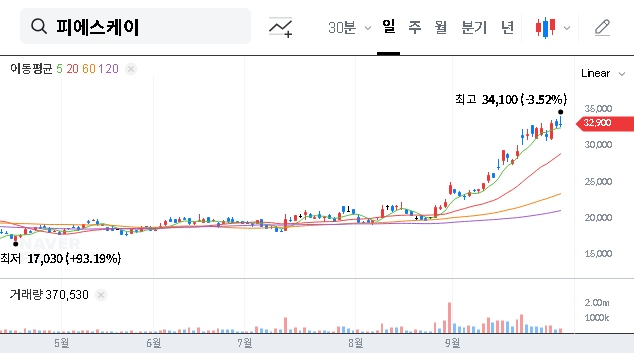
  • (319660) PSK Stock Analysis (319660): National Pension Service Cuts Stake – What Investors Must Know

    (319660) PSK Stock Analysis (319660): National Pension Service Cuts Stake – What Investors Must Know

    Investors in PSK stock (319660) are on high alert after a significant portfolio adjustment by one of South Korea’s largest institutional investors. The National Pension Service (NPS) recently announced a reduction in its holdings of the semiconductor equipment specialist, sending ripples through the market. This move prompts critical questions: Is this a routine portfolio rebalancing, or does it signal underlying concerns about the company’s future? This analysis will dissect the NPS stake reduction, examine PSK’s current fundamentals, and provide a clear outlook for investors.

    The Disclosure: NPS Reduces PSK Stake

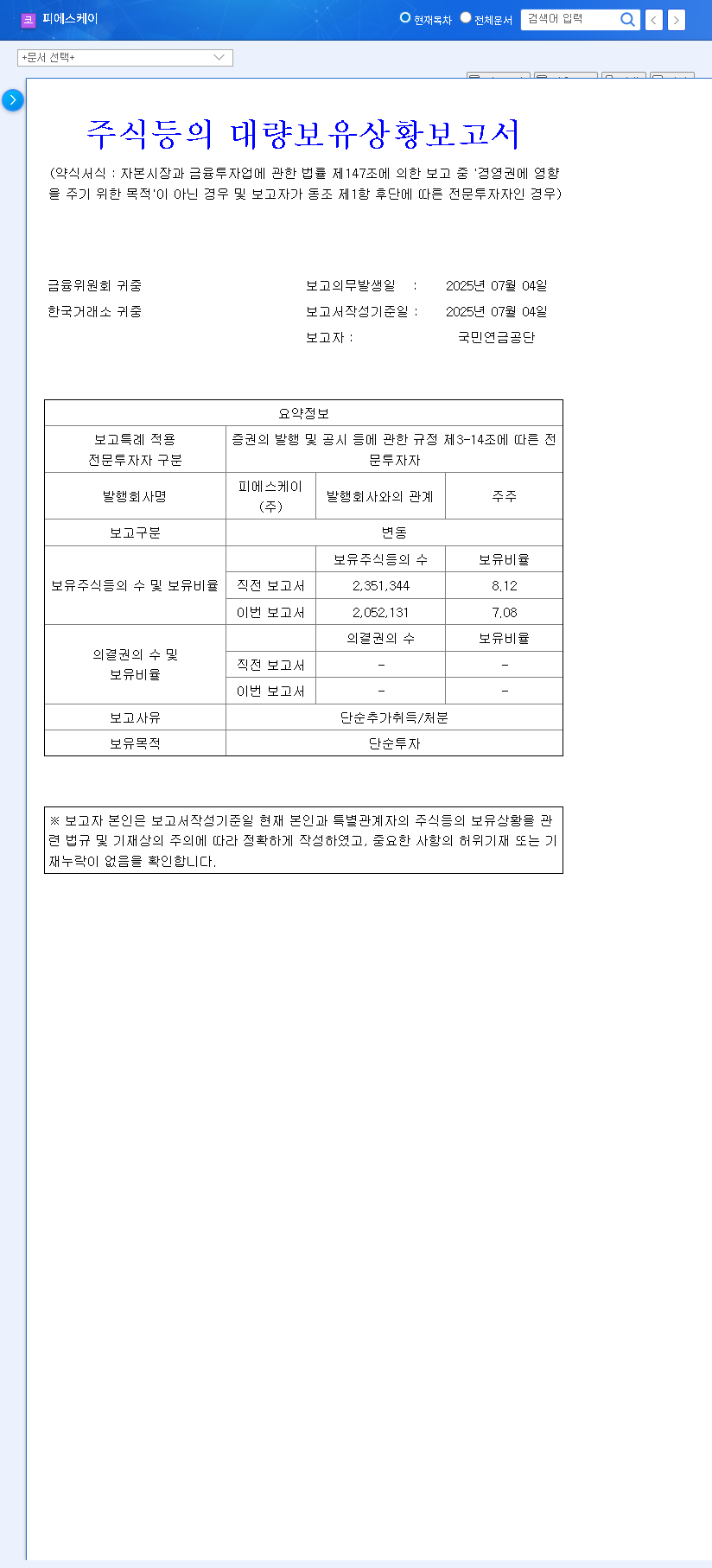
    On October 1, 2025, an official disclosure revealed that the National Pension Service had decreased its ownership in PSK from 8.12% to 7.08%, a net reduction of 1.04%. According to the filing, the reason cited was a “simple investment purpose, resulting from additional acquisitions/disposals.” You can view the filing directly from the source: Official Disclosure. While the stated reason appears neutral, any reduction in holdings by a major entity like the NPS is scrutinized by the market and can act as a catalyst for selling pressure and heightened volatility for PSK stock.

    Analyzing the ‘Why’: PSK’s Fundamentals and Market Headwinds

    To understand the potential rationale behind the NPS stake reduction, we must look beyond the disclosure and evaluate PSK’s internal health and the external environment it operates in.

    1. A Look at Corporate Fundamentals

    PSK’s recent financial performance presents a mixed picture. The 2025 half-year report indicated a significant downturn, with revenue dropping by 47% and operating profit by 48.5% year-over-year. This slump was primarily attributed to weaker sales in non-semiconductor process equipment and rising administrative costs. However, the company’s financial foundation remains solid. Its debt-to-equity ratio is a healthy 19.93%, and a notable increase in operating cash flow suggests efficient core operations. Furthermore, PSK continues to invest heavily in its future, with R&D expenditures accounting for 8.2% of revenue—a crucial factor for staying competitive in the fast-evolving semiconductor equipment industry.

    While the top-line numbers are concerning, PSK’s strong balance sheet and commitment to R&D provide a buffer and a potential springboard for future growth once the industry cycle turns positive.

    2. Macroeconomic and Industry Context

    No company operates in a vacuum. Rising interest rates in the U.S. and Korea increase the cost of capital, potentially dampening corporate investment and investor sentiment. Simultaneously, exchange rate volatility poses both a risk and an opportunity. For PSK, with more USD-denominated assets than liabilities, a stronger dollar can boost profits. However, this factor is a double-edged sword that requires careful risk management. On a brighter note, the long-term outlook for the semiconductor industry remains robust. According to industry analysis from authoritative sources like Gartner, the demand for advanced chips continues to grow, which will inevitably drive investment in sophisticated semiconductor equipment.

    3. Known Risk Factors

    Investors must also weigh an ongoing patent infringement lawsuit with competitor Lam Research. An unfavorable outcome could have a material impact on PSK’s financial statements and market position. This existing legal risk, combined with the news of the NPS sale, could compound investor caution and create headwinds for the PSK stock price.

    Investor Action Plan: Navigating the Uncertainty

    In light of the NPS’s move and the company’s current state, a measured approach is crucial. The short-term outlook for PSK stock is likely to be choppy, with downward pressure from the stake sale. However, the mid-to-long-term trajectory will depend on fundamental improvements and industry tailwinds. Here are key areas for investors to monitor:

    • Quarterly Performance: Watch for a recovery in revenue and operating profit. A clear sign of a turnaround, tied to the broader semiconductor cycle, will be the most powerful bullish catalyst.
    • Patent Litigation Updates: Stay informed on any developments in the Lam Research lawsuit. A settlement or favorable ruling could remove a significant overhang from the stock.
    • Institutional Investor Flow: Monitor whether other major institutions follow the NPS’s lead or if they use the price dip as a buying opportunity. This will provide clues about broader market sentiment.
    • Industry Investment Trends: Track capital expenditure plans from major chipmakers like TSMC, Samsung, and Intel. Increased spending by these giants is a direct leading indicator for equipment suppliers like PSK. For more on this, see our guide on how to analyze semiconductor stocks.

    Conclusion: Signal or Noise?

    The National Pension Service‘s stake reduction is a significant event that introduces short-term risk and uncertainty for PSK stock. However, it may ultimately be more noise than a definitive signal about the company’s long-term demise. PSK’s solid financial health, technological edge, and the structural growth of the semiconductor industry remain compelling long-term positives. Prudent investors should proceed with caution, weigh the risks against the potential rewards, and base their decisions on the fundamental developments in the coming quarters.
    (319660) PSK Stock Analysis (319660): National Pension Service Cuts Stake – What Investors Must Know 관련 이미지
  • (003350) Korea Cosmetics Manufacturing Treasury Stock Disposal: A ₩58.2B Bet on Growth | In-Depth Analysis

    (003350) Korea Cosmetics Manufacturing Treasury Stock Disposal: A ₩58.2B Bet on Growth | In-Depth Analysis

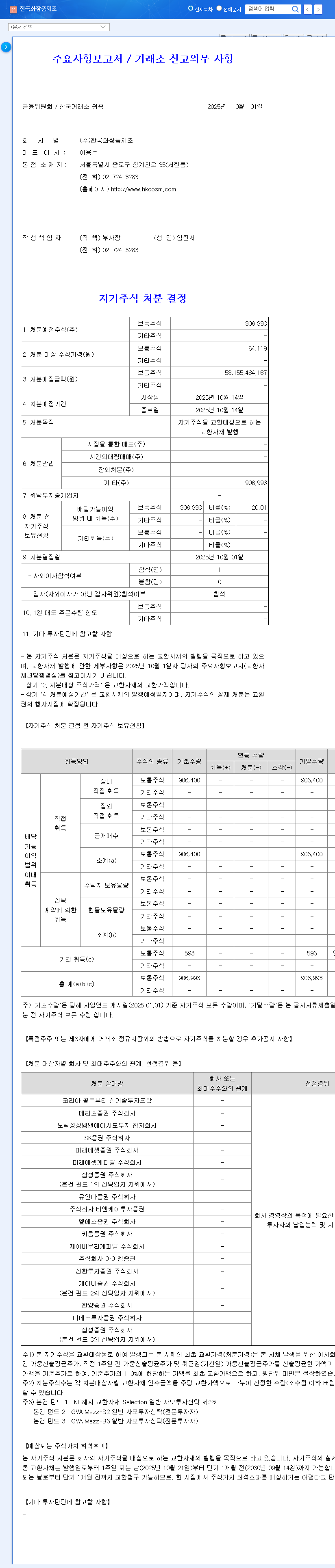
    The recent announcement regarding the Korea Cosmetics Manufacturing Co., Ltd. treasury stock disposal has sent ripples through the investment community. The company, a significant player in the K-beauty industry, revealed plans to dispose of over 900,000 treasury shares, valued at approximately ₩58.2 billion, to fund the issuance of exchangeable bonds (EBs). This strategic financial maneuver raises a critical question: is this a masterstroke to fuel future growth, or does it introduce risks that investors should carefully consider?

    This comprehensive analysis will dissect the purpose behind this major decision, evaluate the company’s robust fundamentals, and weigh the potential opportunities against the inherent risks. For investors tracking the dynamic Korean cosmetics stock market, understanding the implications of this exchangeable bond issuance is paramount.

    Unpacking the ₩58.2 Billion Decision: What Are Exchangeable Bonds?

    On October 1, 2025, Korea Cosmetics Manufacturing Co., Ltd. formally announced its plan to dispose of 906,993 shares of its own stock. The sole purpose is to raise capital by issuing Exchangeable Bonds (EBs). But what exactly does this mean? In simple terms, EBs are a type of hybrid security—a bond that gives the bondholder the right to exchange their bonds for the common stock of a company other than the issuer. In this specific case, investors in the EBs will have the option to exchange them for the treasury shares of Korea Cosmetics Manufacturing Co., Ltd. itself.

    This method of fundraising is often chosen by companies with strong stock performance and a clear vision for growth, as it can offer more favorable financing terms than a traditional loan. You can learn more about the mechanics from authoritative sources like Investopedia’s guide to hybrid securities.

    The ‘Why’ Behind the Treasury Stock Disposal

    A Foundation of Financial Strength

    This decision wasn’t made in a vacuum. The company’s stellar performance in 2024 provides a solid foundation. With sales reaching ₩167.5 billion (a 53.2% year-on-year increase) and an impressive operating profit of ₩26.5 billion (a staggering 194.2% jump), the company is in a position of strength. Its financial health is further evidenced by a current ratio of 269.2% and a low debt-to-equity ratio of 47.2%. These figures paint a picture of a well-managed, stable company with ample capacity to pursue ambitious new investments.

    A Strategic Pivot for Long-Term Growth

    Korea Cosmetics Manufacturing Co., Ltd. recently amended its 2024 business report, signaling a clear strategic shift. The purpose of holding treasury stock was broadened from merely ‘stabilizing stock prices’ to include ‘preparing for management uncertainties, investing in new businesses, employee compensation, and enhancing shareholder value.’ This corporate finance analysis suggests the company is moving from a defensive posture to an offensive one, actively seeking ways to deploy capital for expansion and innovation.

    This treasury stock disposal is more than a financial transaction; it’s a clear signal of the company’s ambition to secure its future as a leader in the highly competitive K-beauty landscape.

    Opportunities vs. Risks for Investors

    The Bull Case: A Catalyst for Value Creation

    • Fueling Innovation: The capital raised can be funneled directly into R&D, helping the company develop next-generation products and secure its technological edge over competitors like Kolmar Korea and Cosmax.
    • Strategic M&A: These funds provide the ‘dry powder’ needed for potential mergers and acquisitions, allowing the company to quickly expand market share or acquire new technologies.
    • Enhanced Shareholder Value: If the investments are successful, the resulting growth in revenue and profit should lead to significant long-term stock price appreciation, benefiting all shareholders.

    The Bear Case: Potential Pitfalls to Monitor

    • Shareholder Dilution Risk: The primary risk is the potential for dilution. If the terms of the EBs are unfavorable (e.g., a low exchange price), the conversion of bonds into stock could dilute the value of existing shares.
    • Execution Risk: Raising capital is only half the battle. If the funds are not deployed effectively or if new ventures fail to deliver expected returns, the company’s financial health could be weakened.
    • Short-Term Market Pressure: The announcement of a large stock disposal can sometimes create a short-term overhang on the stock price as the market anticipates the new supply of shares.

    Investor Action Plan & Final Verdict

    Given the information available, the Korea Cosmetics Manufacturing Co., Ltd. treasury stock disposal appears to be a calculated, strategic move to leverage a strong financial position for future growth. However, prudence is key. Investors should closely monitor the following developments:

    • The final terms of the exchangeable bond issuance, including the interest rate and exchange price.
    • The company’s detailed plan for deploying the raised capital.
    • The performance and integration of any new businesses or acquisitions.

    For complete transparency and detailed figures, investors should always refer to the primary source documents. The Official Disclosure filed on the DART system provides the definitive record of this decision.

    In conclusion, our investment opinion is Neutral with a cautiously optimistic outlook. The initiative is a strong positive signal of management’s confidence. However, a re-evaluation is necessary once the specific terms of the EB issuance and the capital execution plans are announced. For more insights into this sector, you can read our Complete Guide to Investing in the K-Beauty Industry.

    (003350) Korea Cosmetics Manufacturing Treasury Stock Disposal: A ₩58.2B Bet on Growth | In-Depth Analysis 관련 이미지
  • (210540) DY Power Stock (210540) Analysis: Decoding the NPS Stake Reduction & Future Outlook

    (210540) DY Power Stock (210540) Analysis: Decoding the NPS Stake Reduction & Future Outlook

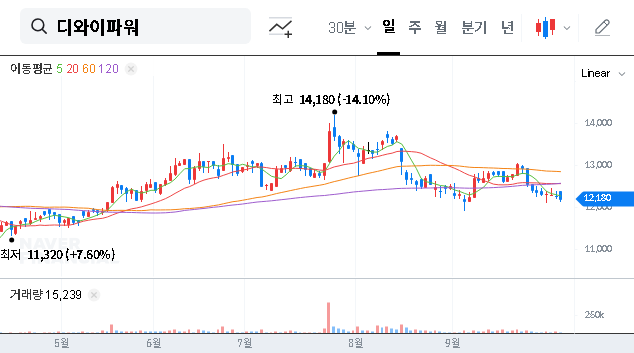
    The recent news about the National Pension Service (NPS) reducing its stake in DY Power (210540) has sent ripples through the investment community. When a major institutional player adjusts its position, investors rightly question the motive: Is it a simple portfolio rebalancing, or a sign of underlying concerns about the DY Power stock‘s future? This comprehensive DY Power analysis goes beyond the headlines to provide clarity.

    We will dissect the NPS stake reduction, evaluate DY Power’s current financial health and business environment, and offer a strategic stock investment guide to help you make an informed decision. Let’s explore whether this event signals short-term turbulence or a hidden long-term opportunity.

    The Event: Unpacking the NPS Stake Change

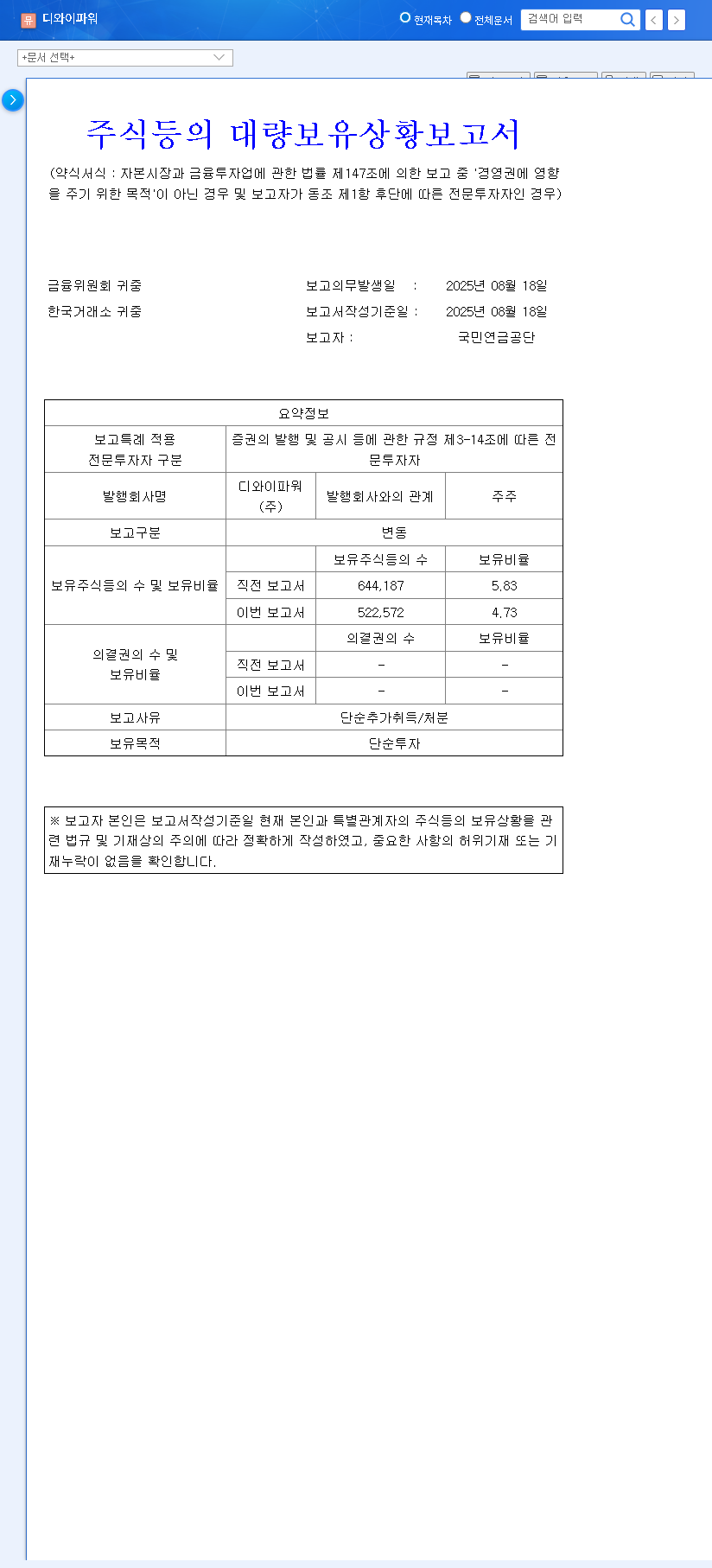
    On October 1, 2025, the National Pension Service (NPS), one of South Korea’s most influential institutional investors, filed a disclosure regarding its shareholding in DY Power (210540). The report revealed that the NPS’s ownership stake decreased by 1.1 percentage points, falling from 5.83% to 4.73%. This change means the NPS holding has now dropped below the 5% threshold, which typically reduces mandatory reporting requirements. You can view the Official Disclosure on the DART system for verification.

    Crucially, the NPS cited the purpose of this change as a ‘simple investment’ decision. This phrasing is key, as it often suggests the move is not based on a negative assessment of the company’s core fundamentals but rather on broader portfolio management strategies.

    Deep Dive into DY Power’s Fundamentals

    A single institutional trade rarely tells the whole story. A thorough DY Power analysis requires a closer look at its operational health, financial stability, and market position.

    Performance in a Challenging Market

    DY Power has faced headwinds, reporting an operating and net loss in 2024. This trend continued into the first half of 2025, with revenue of KRW 206.6 billion marking a decrease from the prior year. These results are largely attributed to a global slowdown in the construction and industrial machinery markets, which has led major clients to reduce investments and adjust inventories. This cyclical pressure is a significant factor affecting the entire hydraulic equipment industry.

    Export Strategy and R&D Commitment

    Despite market challenges, DY Power’s global focus remains a core strength. With an impressive export ratio of 80.4%, the company has strong ties with major construction equipment manufacturers in North America, Europe, and Japan. This diversification helps mitigate reliance on any single market. Furthermore, the company continues to invest in its future, maintaining R&D spending at 1.39% of sales and planning a KRW 6.58 billion facility investment in 2025 to enhance production capacity and quality.

    Rock-Solid Financial Structure

    One of the most compelling aspects of DY Power stock is the company’s robust financial health. With a debt-to-equity ratio of just 23.1%, the company maintains very low leverage. This financial prudence provides significant resilience, allowing it to weather economic downturns more effectively than highly indebted competitors. However, a negative shift in operating cash flow in H1 2025 is a point of concern that warrants close monitoring. For more on this, investors can learn about how to analyze a company’s cash flow statement for deeper insights.

    Investor Action Guide & Strategic Outlook

    The NPS stake reduction is likely to cause short-term price volatility for DY Power stock as the market digests the news. However, savvy investors should look beyond this single data point and focus on the fundamental drivers of value.

    Key Monitoring Points for DY Power

    Instead of overreacting to the NPS sale, concentrate on these critical business indicators:

    • Global Economic Recovery: The company’s performance is tied to the health of the global construction and industrial sectors. Track leading economic indicators and reports on global infrastructure spending.
    • New Order & Export Performance: Monitor quarterly earnings reports for signs of new order growth and success in key overseas markets.
    • Profitability Metrics: Keep an eye on raw material costs and currency exchange rates (especially EUR/KRW and USD/KRW), as they directly impact margins.
    • Cash Flow Improvement: Watch for a return to positive operating cash flow as a sign of stabilizing operations and effective liquidity management.

    Conclusion: A Long-Term Perspective is Essential

    While the NPS stake reduction may create short-term selling pressure, the ‘simple investment’ rationale suggests it is not an indictment of DY Power’s long-term viability. The company faces cyclical industry challenges, but its strong financial foundation, global customer base, and ongoing R&D efforts are significant positive factors. Investors should adopt a patient, long-term perspective, focusing on the company’s intrinsic value and its ability to capitalize on the eventual recovery of its end markets rather than being swayed by short-term market noise.

    (210540) DY Power Stock (210540) Analysis: Decoding the NPS Stake Reduction & Future Outlook 관련 이미지
  • (100090) SK Oceanplant Stock Outlook: NPS Boosts Stake to 10% – In-Depth Analysis

    (100090) SK Oceanplant Stock Outlook: NPS Boosts Stake to 10% – In-Depth Analysis

    When South Korea’s largest institutional investor makes a move, the market pays attention. News recently broke that the National Pension Service (NPS) has increased its stake in SK Oceanplant (100090), signaling a significant vote of confidence. But does this automatically make SK Oceanplant stock a strong buy? For savvy investors, this is not just a headline; it’s a prompt for a deeper investigation.

    This comprehensive analysis will dissect what the NPS’s investment means, evaluate the underlying health of SK Oceanplant, and navigate the complex macroeconomic landscape to provide a clear investment outlook. We’ll explore the fundamentals, risks, and potential rewards to help you make an informed decision.

    The Catalyst: National Pension Service Increases Its Holding

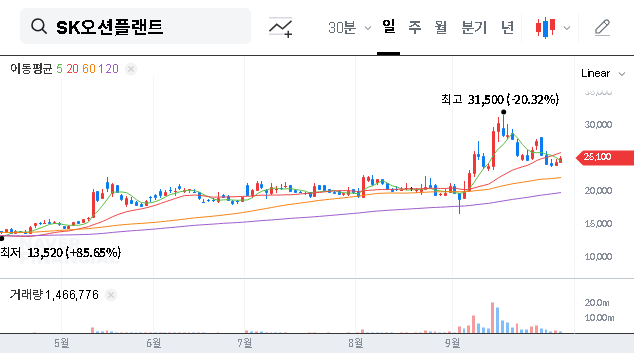
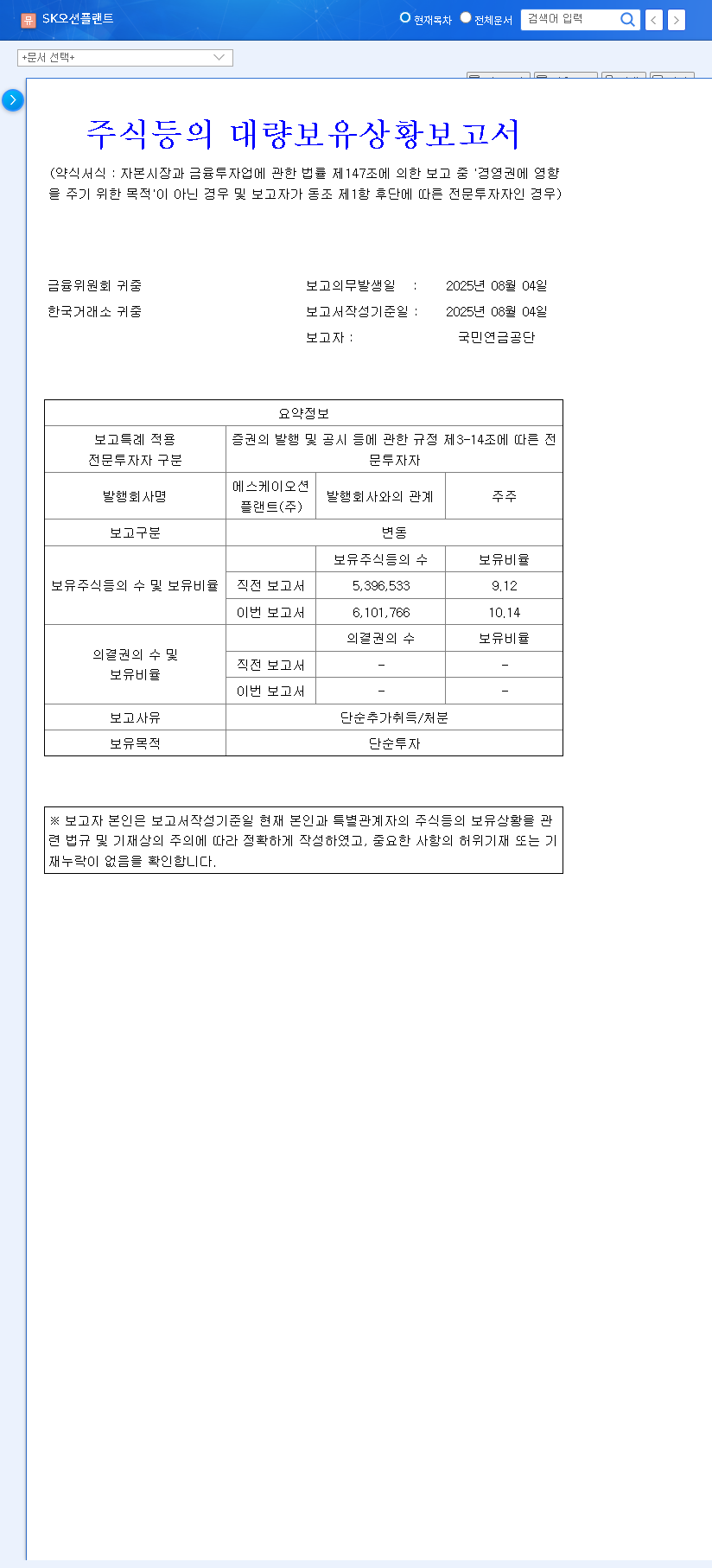
    On October 1, 2025, a significant filing revealed that the National Pension Service of Korea increased its ownership in SK Oceanplant from 9.12% to 10.14%. While the stated purpose is for ‘simple investment,’ the action itself speaks volumes. An institution of this magnitude, managing the nation’s retirement funds, does not make such decisions lightly. This move suggests a belief in the company’s long-term value proposition and growth potential.

    An increased stake from a major institutional investor like the NPS is often interpreted as a strong positive signal, reflecting confidence in a company’s future trajectory and management, independent of short-term market noise.

    Investors can view the official report directly from the source. This transparency is crucial for due diligence. Official Disclosure: Click to view DART report.

    Fundamental Analysis: A Look Under the Hood of SK Oceanplant

    While the NPS news is a bullish signal, the company’s financials present a mixed picture that requires careful consideration. A recent business report restatement has enhanced transparency, which is a positive step toward building investor trust. However, the projected performance for 2024 raises some questions.

    Key Financial Indicators (2022-2024 Projections)

    • Revenue: Expected to rebound to KRW 2,495.8 billion in 2024 after a dip in 2023. This indicates strong top-line demand.
    • Operating Profit: A projected sharp decline to KRW 4.0 billion in 2024 is a major red flag, suggesting significant margin compression or rising operational costs.
    • Net Income & EPS: Both are expected to increase, which may seem contradictory to the operating profit decline. This could be due to non-operational gains or accounting adjustments. For more on this, see our guide on how to analyze an income statement.
    • Debt-to-Equity Ratio: Remaining high at over 700%, this indicates significant leverage and financial risk, which is common but still a concern in capital-intensive industries.

    The Macro Environment: Headwinds and Tailwinds

    No company operates in a vacuum. The SK Oceanplant stock outlook is heavily influenced by global economic trends. These factors can significantly impact profitability.

    Currency, Rates, and Commodities

    • Exchange Rates: A high KRW/USD rate is generally favorable for an exporter like SK Oceanplant, boosting the value of its international sales. However, volatility remains a risk to be monitored.
    • Interest Rates: The trend of falling benchmark rates in the US and Korea is a positive. Lower rates reduce borrowing costs for financing large projects and can improve investor sentiment across the market. Authoritative sources like Bloomberg’s market data show this easing trend.
    • Shipping Indices: A rising Baltic Dirty Tanker Index suggests higher demand for seaborne shipping, a positive for the industry. Conversely, a falling China Containerized Freight Index could signal a slowdown in global trade, presenting a potential headwind.

    Investment Strategy & Final Outlook

    Synthesizing these factors, the investment case for SK Oceanplant is one of long-term potential balanced by short-term risks. The NPS’s backing provides a strong foundation of confidence, but the concerning operating profit forecast and high debt cannot be ignored.

    A prudent strategy would be to adopt a long-term perspective. Instead of anticipating a rapid stock price surge, investors should monitor key performance indicators that will ultimately drive the company’s value.

    Key Factors to Watch Going Forward:

    • New Project Orders: The lifeblood of the business. Securing large-scale offshore plant and shipbuilding contracts is the single most important catalyst for growth.
    • Margin Improvement: Watch for signs that the company is getting its operational costs under control and improving profitability on its projects.
    • Deleveraging Efforts: Any progress in reducing the high debt-to-equity ratio will significantly de-risk the stock and improve its financial stability.

    Frequently Asked Questions (FAQ)

    Q1: Why did the National Pension Service really increase its SK Oceanplant stake?

    A1: The official reason is for ‘simple investment.’ This typically means the institution sees the stock as undervalued and expects it to appreciate over the long term. It’s a vote of confidence in the fundamental value and future growth prospects of SK Oceanplant.

    Q2: What is the biggest short-term risk for SK Oceanplant stock?

    A2: The biggest immediate risk is the projected collapse in operating profit for 2024. If the company fails to manage costs and improve margins, it could put significant pressure on the 100090 stock price, regardless of revenue growth.

    Q3: Is SK Oceanplant a good investment now?

    A3: It appears to be a better fit for long-term, patient investors. While the NPS endorsement is powerful, the financial red flags (low operating profit, high debt) require caution. Success hinges on future contract wins and improved financial management.

    (100090) SK Oceanplant Stock Outlook: NPS Boosts Stake to 10% - In-Depth Analysis 관련 이미지
  • (009830) Hanwha Solutions Stock (009830): In-Depth Analysis After NPS Stake Change

    (009830) Hanwha Solutions Stock (009830): In-Depth Analysis After NPS Stake Change

    Recent disclosures surrounding Hanwha Solutions stock (009830) have sent ripples through the investment community. The news that Korea’s National Pension Service (NPS) adjusted its shareholding has left many wondering: is this a signal of underlying weakness or simply market noise creating a unique opportunity? As Korea’s largest institutional investor, any move by the NPS warrants careful consideration.

    This comprehensive analysis will delve deep into the specifics of the NPS stake adjustment, examine the core fundamentals of the Hanwha Solutions stock, and evaluate its long-term growth trajectory against potential risks. We aim to help investors look beyond the headlines and make informed decisions based on a thorough understanding of the company’s intrinsic value and market position.

    The Catalyst: Unpacking the NPS Stake Adjustment

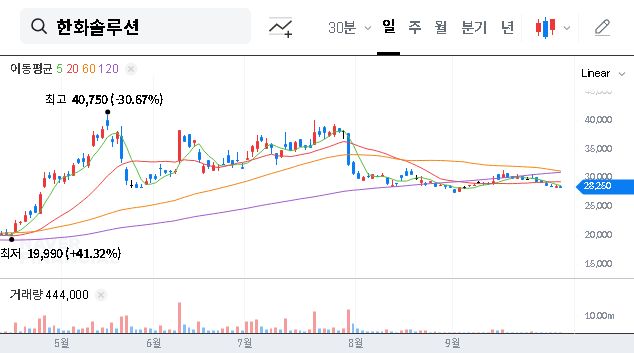
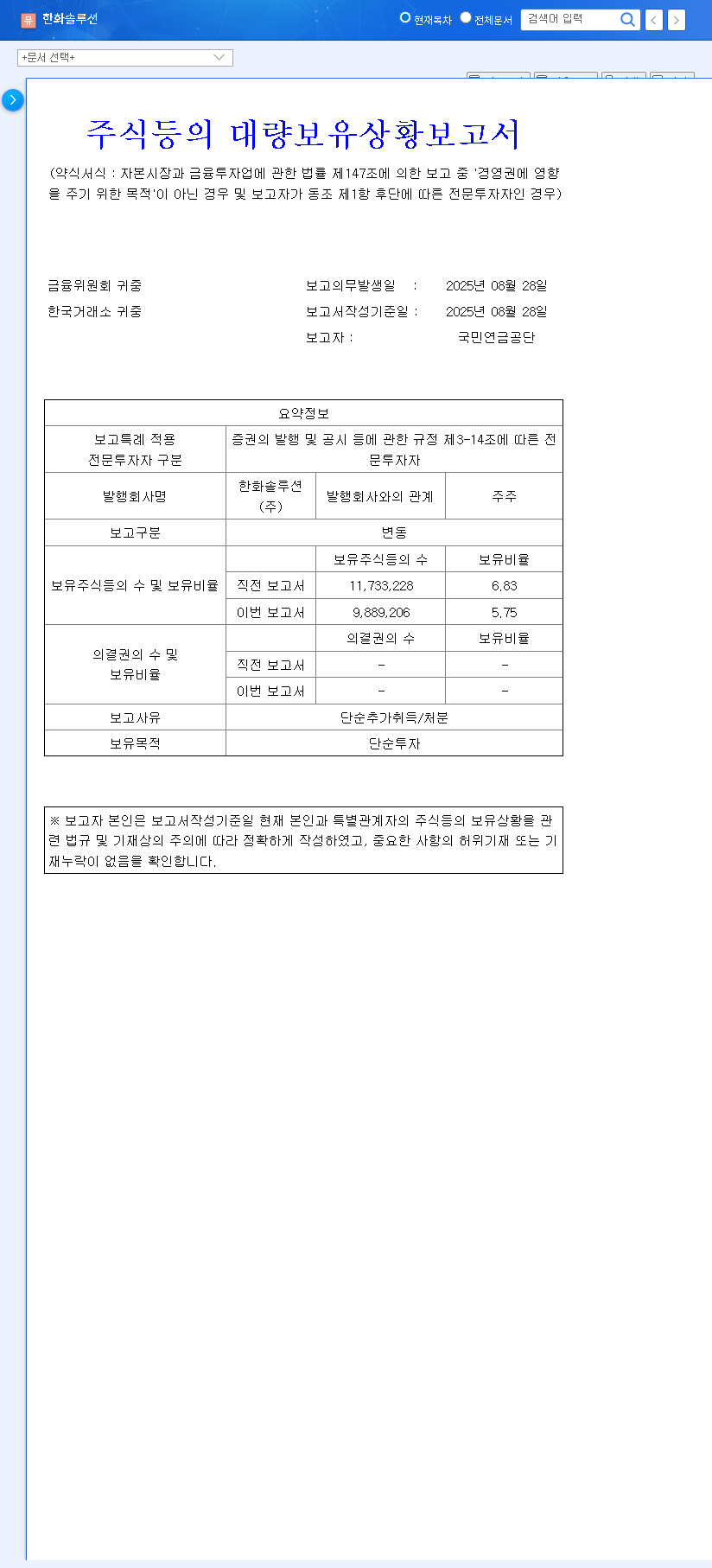
    On October 1, 2025, a mandatory disclosure revealed a notable change in the ownership structure of Hanwha Solutions. According to the ‘Report on the Status of Large-Scale Holdings of Shares’, the National Pension Service (NPS) reduced its stake from 6.83% to 5.75%, a decrease of 1.08 percentage points. This transaction was officially reported as a simple disposition of shares.

    You can view the filing directly via the Official Disclosure (DART). The key question for investors is how to interpret this move. Given that pension funds like the NPS operate with a long-term investment horizon, their actions are often seen as a bellwether for a company’s future prospects, potentially influencing broader market sentiment.

    While the NPS adjustment may cause short-term volatility, it’s crucial to analyze whether it reflects a change in the company’s fundamental value or is merely a strategic portfolio rebalancing act.

    Deep Dive into Hanwha Solutions’ Fundamentals

    To truly understand the investment case for Hanwha Solutions 009830, we must look beyond single events and assess the company’s core operational strengths and weaknesses.

    Positive Catalysts & Growth Engines

    • Dominance in Renewable Energy: Hanwha Solutions, through its Qcells division, is a global leader in the solar industry. The US Inflation Reduction Act (IRA) provides significant Advanced Manufacturing Production Credits (AMPC), boosting profitability. The company’s massive investment in the American ‘Solar Hub’ is set to solidify its market leadership in North America, a key growth market according to the International Energy Agency (IEA).
    • Strategic Business Diversification: The company’s portfolio spans basic materials (chemicals), advanced materials, and insights, which provides a buffer against cyclical downturns in any single industry. This diversification enhances financial stability and creates cross-divisional synergies.
    • Strong Financial Projections: Analysts project a significant upward trajectory in revenue and profitability. Revenue is forecast to grow impressively by 2025, with operating profit margins and Return on Equity (ROE) expected to improve, enhancing the investment attractiveness of the Hanwha Solutions stock.

    Challenges and Risks to Monitor

    • Profitability in Basic Materials: The basic materials (petrochemical) division faces headwinds from oversupply, particularly from China, and a global economic slowdown. Persistent losses in this segment could drag down overall corporate performance.
    • Inventory & Debt Management: A notable increase in inventory levels requires careful monitoring as it could indicate slowing sales or lead to valuation losses. Furthermore, the company’s substantial debt load makes it sensitive to interest rate fluctuations, which could increase financial costs.
    • Execution on New Ventures: Hanwha is making significant capital expenditures in new areas like the Solar Hub and hydrogen business. The long-term value of Hanwha Solutions stock heavily depends on the successful and profitable execution of these large-scale projects.

    Investor Outlook: Signal vs. Noise

    The 1.08 percentage point stake reduction by the NPS is most likely a portfolio rebalancing action rather than a bearish verdict on Hanwha Solutions’ future. The size of the sale is not indicative of a large-scale exit. While this may create short-term downward pressure on the stock price as some market participants follow suit, it does not alter the company’s fundamentals.

    The long-term outlook for Hanwha Solutions stock remains intrinsically tied to its performance in the renewable energy sector. The potential for a cyclical recovery in the basic materials division could provide an additional upside. For a broader perspective, you might be interested in our guide to investing in the renewable energy sector.

    Final Recommendation for Investors

    Investors should focus on the long-term value proposition driven by Hanwha’s leadership in solar energy and diversified business structure. The NPS stake change is best viewed as market noise. A prudent strategy involves maintaining a long-term perspective while continuously monitoring the key risks outlined above, particularly the execution of its US expansion and the performance of its materials division. Any short-term dip caused by this news could present a compelling entry point for those with a long-term investment horizon.

    Disclaimer: This analysis is for informational purposes only and does not constitute investment advice. Investors are solely responsible for their own investment decisions.

    (009830) Hanwha Solutions Stock (009830): In-Depth Analysis After NPS Stake Change 관련 이미지
  • (000100) Yuhan Corp TruSet (AD-209) Approved: Deep Dive into the New Hypertension Treatment & Stock Analysis

    (000100) Yuhan Corp TruSet (AD-209) Approved: Deep Dive into the New Hypertension Treatment & Stock Analysis

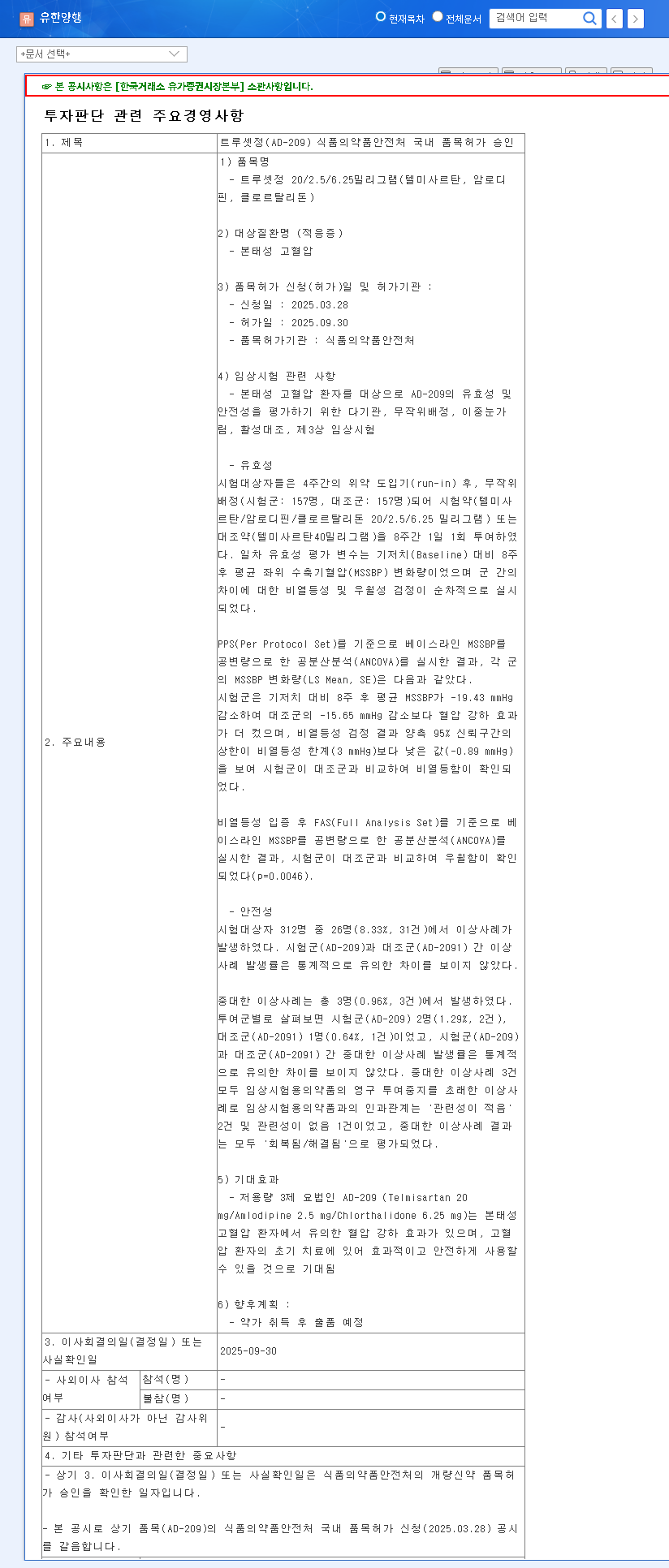
    The pharmaceutical landscape has been stirred by a significant development from Yuhan Corporation. The approval of Yuhan Corp TruSet (AD-209), a triple-combination drug for essential hypertension, by Korea’s Ministry of Food and Drug Safety, marks a pivotal moment for the company and the future of hypertension treatment. This breakthrough immediately raises critical questions for investors and industry observers: What does this mean for Yuhan Corp’s market position, its stock valuation, and the competitive dynamics of cardiovascular medicine? This analysis provides a comprehensive overview of the TruSet approval, its clinical significance, and a strategic outlook for investors.

    We will delve into the core attributes of TruSet, analyze its potential impact on Yuhan’s robust fundamentals, and weigh the macroeconomic factors that could influence its market trajectory. Our goal is to equip you with a detailed, data-driven perspective to inform your investment strategy regarding Yuhan Corp stock.

    Understanding Yuhan Corp TruSet (AD-209): A Closer Look

    The approval of Yuhan Corp TruSet is more than just another product launch; it represents a strategic advancement in managing essential hypertension, a condition affecting millions globally. TruSet is a fixed-dose combination therapy, a modern approach to simplifying treatment for patients.

    By combining three proven antihypertensive agents into a single pill, TruSet aims to improve patient adherence and achieve superior blood pressure control, which is a cornerstone of modern cardiovascular care.

    Key Components and Clinical Edge

    TruSet’s efficacy stems from its synergistic combination of three well-established components:

    • Telmisartan: An angiotensin II receptor blocker (ARB) that relaxes blood vessels.
    • Amlodipine: A calcium channel blocker that widens blood vessels.
    • Chlorthalidone: A diuretic that helps the body remove excess salt and water.

    The Phase 3 clinical trials were crucial, demonstrating not just non-inferiority but also statistical superiority compared to the comparator drug. This confirms both its powerful efficacy and a strong safety profile, making it a compelling option for physicians, especially as a low-dose triple therapy for initial treatment.

    Fundamental Impact: How TruSet Strengthens Yuhan Corp

    The TruSet approval doesn’t happen in a vacuum. It integrates into Yuhan Corp’s already solid foundation, acting as a powerful new growth catalyst.

    Reinforcing Financial Health and R&D Prowess

    Yuhan Corp has demonstrated impressive financial performance, with recent reports showing significant growth in sales (10.0%) and operating profit (194.4%). This success is largely driven by the global expansion of its lung cancer drug, ‘Lazertinib (Leklaza)’. The introduction of TruSet diversifies the company’s revenue streams, reducing reliance on a single blockbuster and strengthening its position in the chronic disease market. This success is a testament to the company’s R&D capabilities, a fact further validated by this approval. For comprehensive details, investors can review the company’s regulatory filings. Official Disclosure (Source).

    Navigating Market Competition and Risks

    While the approval is a major victory, the path ahead requires strategic navigation. The hypertension treatment market is mature and highly competitive. Success for TruSet will hinge on a smart market-entry strategy, effective physician engagement, and competitive pricing. Potential hurdles such as tough drug pricing negotiations or unforeseen launch delays could impact initial revenue forecasts. Furthermore, the inherent risks of pharmaceutical R&D, as noted by leading health authorities like the World Health Organization, mean that long-term value is also tied to the performance of Yuhan’s entire pipeline, a topic we explore in our deep dive on their R&D portfolio.

    Investor Outlook: Stock Price and Macroeconomic Factors

    For investors, the key question is how this translates to stock performance. The Yuhan Corp stock price will likely react positively in the short term, driven by investor optimism. However, sustainable long-term growth will depend on tangible results.

    • Mid-to-Long-Term Value: The stock’s trajectory will ultimately be shaped by TruSet’s sales figures, market share capture, and profitability. Progress in other key R&D programs will also be a critical factor.
    • Exchange Rate Sensitivity: As a global player, Yuhan Corp’s earnings are sensitive to USD/KRW and EUR/KRW fluctuations. A successful global launch of TruSet would increase foreign currency revenue, making exchange rate management even more crucial.
    • Interest Rate Environment: Higher benchmark interest rates increase borrowing costs, which can pressure profit margins. Investors should monitor central bank policies in both Korea and the U.S. as they can impact the company’s financing strategy and overall valuation.

    Conclusion and Actionable Investor Checklist

    The approval of Yuhan Corp TruSet is a clear and powerful positive for the company. It enhances its growth prospects, diversifies its product portfolio, and solidifies its reputation as an R&D leader. However, turning this potential into sustained shareholder value requires flawless execution.

    Key Monitoring Points for Investors:

    • Market Launch & Sales Data: Track the timing of the official launch, the final drug pricing, and initial quarterly sales reports to gauge market adoption.
    • Competitive Response: Watch how competitors in the hypertension market react in terms of pricing and marketing.
    • Pipeline Progress: Continue to monitor news and clinical trial data from Yuhan’s broader R&D pipeline, as this remains the engine for long-term growth.

    (000100) Yuhan Corp TruSet (AD-209) Approved: Deep Dive into the New Hypertension Treatment & Stock Analysis 관련 이미지
  • (005070) Cosmo Advanced Materials Capital Raise: In-Depth 2025 Stock Analysis (005070)

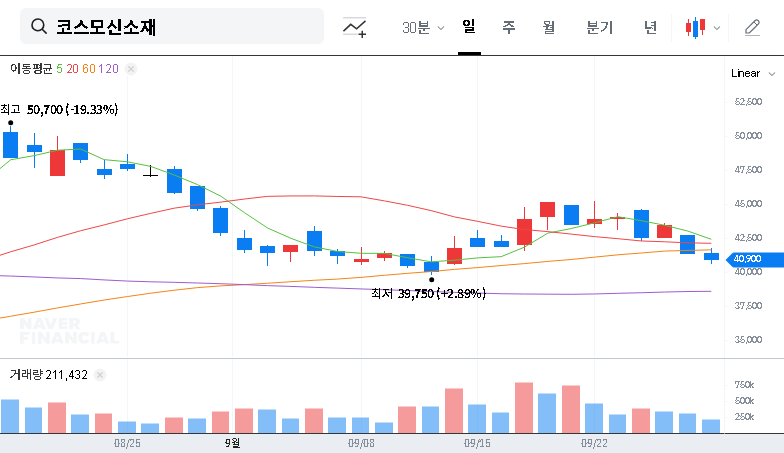
    (005070) Cosmo Advanced Materials Capital Raise: In-Depth 2025 Stock Analysis (005070) 대표 차트 이미지

    The recent news surrounding a potential Cosmo Advanced Materials capital raise has injected significant uncertainty into the market, leaving shareholders and prospective investors at a critical crossroads. A report of a 340 billion won fundraising plan presents a dual narrative: is this a strategic move to fuel future growth, or a red flag signaling potential shareholder value dilution? This comprehensive analysis will dissect the situation, providing the clarity needed for sound investment strategy.

    We will meticulously examine the company’s fundamentals, the challenging macroeconomic landscape, and the potential positive and negative outcomes of this fundraising initiative. Our goal is to equip you with a deep understanding of the risks and opportunities facing Cosmo Advanced Materials (005070) stock.

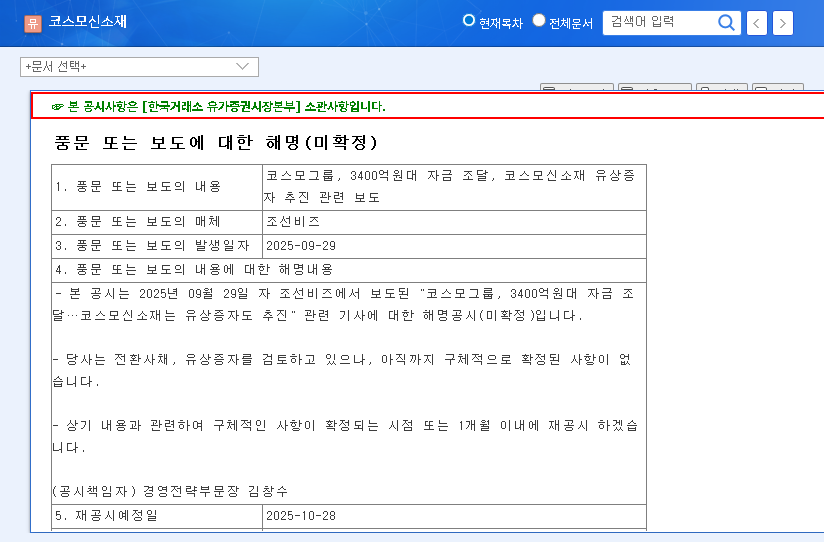
    On September 29, 2025, reports surfaced about Cosmo Group’s large-scale capital raise, with Cosmo Advanced Materials potentially undertaking a rights offering. In response, the company issued a clarification, stating that while options like convertible bonds and a rights offering are being reviewed, no final decision has been made. The official stance can be viewed in their Official Disclosure on DART, with a promise for a re-disclosure within one month.

    Analyzing the Urgency: Why Raise Capital Now?

    The timing of this potential Cosmo Advanced Materials capital raise is not coincidental. It stems from a combination of underperforming business segments and an ambitious investment schedule for future growth.

    Weak Fundamentals in H1 2025

    The company’s performance in the first half of 2025 painted a challenging picture, directly fueling the need for external funding. Key financial metrics were alarming:

    • Revenue Plunge: A staggering 59% year-on-year decrease to 234.08 billion won, driven by a 60% drop in the secondary battery cathode material division.
    • Profitability Collapse: Operating profit plummeted by 93.7% to just 1.573 billion won, with the cathode material division’s dismal 1.62% utilization rate being a major factor.
    • Net Income Decline: Net income fell by 76.2%, reflecting broad-based weakness across its core businesses, including MLCC release film and toner.

    Despite these setbacks, the company’s debt-to-equity ratio remains healthy at 51.3%. However, aggressive facility investments have resulted in negative investing cash flow, highlighting the immense pressure to secure capital for ongoing projects like precursor internalization and MLCC line expansion.

    Navigating a Difficult Macroeconomic Climate

    External economic forces are compounding Cosmo’s internal challenges. Persistently high interest rates increase the cost of borrowing, while a strong USD/KRW exchange rate (around 1,403.60) raises the cost of imported raw materials crucial for production. This environment makes a capital raise, especially through debt-like instruments, a more expensive and risky proposition. For more on global economic trends, see analysis from authoritative sources like Reuters.

    Potential Impacts on Cosmo Advanced Materials Stock (005070)

    The outcome of this capital raise will create one of two very different futures for the company and its stock price.

    The Bull Case: A Springboard for Growth

    • Financial Fortification: A successful raise would immediately improve the balance sheet, providing the flexibility to navigate market downturns and execute on long-term strategy.
    • Accelerated Innovation: Fresh capital can be funneled into expanding cathode material capacity and R&D for next-generation products, solidifying its competitive position.
    • Restored Market Confidence: A clear, well-executed fundraising plan could signal strong leadership and a credible path forward, attracting long-term investors.

    The Bear Case: A Risk of Dilution

    • Shareholder Value Dilution: A rights offering, where new shares are issued, would dilute the ownership stake of existing shareholders, often leading to a short-term drop in stock price. For a deeper dive, read our guide on Understanding Shareholder Dilution.
    • Increased Financial Burden: If funds are raised via convertible bonds, the company takes on new interest payment obligations, which could strain profitability further.
    • Execution Risk: There’s no guarantee the capital raise will succeed or that the funds will be used effectively, leaving the company in a precarious position if the plan fails.

    Investment Strategy & Recommendations

    Given the high degree of uncertainty, a cautious and informed approach is paramount. Hasty decisions based on speculation are ill-advised. We recommend the following strategic steps for anyone conducting a Cosmo Advanced Materials stock analysis:

    • Monitor Official Disclosures: The most critical piece of information will be the company’s official re-disclosure. Pay close attention to the scale, method (rights offering vs. bonds), and intended use of funds.
    • Analyze Performance Turnaround: Watch for signs of fundamental improvement in quarterly earnings reports. Is the cathode material division’s utilization rate improving? Is the MLCC business benefiting from the AI boom?
    • Adopt a Conservative Stance: In the short term, volatility is likely. It is prudent to wait for concrete plans and evidence of a business recovery before committing significant capital. The current situation favors observation over immediate action.

    Frequently Asked Questions (FAQ)

    Why is Cosmo Advanced Materials considering a rights offering?

    The company is facing a cash crunch due to poor performance in its core divisions, particularly secondary battery materials, while simultaneously needing funds for large-scale investments in future growth areas. A rights offering or convertible bond issuance is being explored to bridge this financial gap.

    How will a rights offering affect the 005070 stock price?

    In the short term, a confirmed rights offering often leads to a decrease in stock price due to concerns about shareholder dilution. However, if the market believes the capital will be used effectively to generate long-term growth and profitability, the stock could recover and appreciate over time.

    What is the company’s current financial health?

    While the debt-to-equity ratio was a sound 51.3% as of H1 2025, profitability has severely deteriorated. Operating and net profits have decreased significantly, and heavy capital expenditures have resulted in negative investing cash flow, indicating a need for external financing.

    (005070) Cosmo Advanced Materials Capital Raise: In-Depth 2025 Stock Analysis (005070) 관련 이미지
    (005070) Cosmo Advanced Materials Capital Raise: In-Depth 2025 Stock Analysis (005070) 관련 이미지
  • Hanmi Semiconductor to Host IR: Unveiling Growth Strategy in AI Chip Market (September 9, 2025 Analysis)


    Hanmi Semiconductor to Host IR: Unveiling Growth Strategy in AI Chip Market (September 9, 2025 Analysis) 대표 차트 이미지


    Hanmi Semiconductor IR: What to Expect

    Hanmi Semiconductor will present its outlook on the AI (HBM) semiconductor market, its roadmap for next-generation HBM TC Bonders and Hybrid Bonders, and the potential for demand expansion within the overall memory semiconductor market, including HBM. Building on strong 2025 half-year results, the company is poised to further elevate expectations for future growth.

    Hanmi Semiconductor: Beneficiary of AI Chip Market Growth

    Hanmi Semiconductor leads the market by providing essential equipment for AI semiconductor production, including DUAL TC BONDER and 6-SIDE INSPECTION equipment. The roadmap for next-generation HBM (HBM4, HBM5) and Hybrid Bonders (HB) serves as a key indicator of future growth potential. Furthermore, Hanmi is actively seeking new revenue streams through business expansion, including EMI Shield equipment.

    The IR Presentation: Implications for Investors

    The positive market outlook and next-generation technology roadmap to be presented at the IR are expected to boost investor confidence and positively impact stock prices. The solid 2025 half-year results will reaffirm the company’s stable growth trajectory.

    Investor Action Plan

    • Review IR Materials: Carefully examine the presented information to inform your investment decisions.
    • Analyze Market Trends: Assess the growth trajectory of the AI semiconductor market and the competitive landscape to develop an investment strategy.
    • Consult Expert Opinions: Refer to analyst reports to minimize investment risks.


    Frequently Asked Questions (FAQ)

    What is Hanmi Semiconductor’s main business?

    Hanmi Semiconductor’s core business revolves around producing essential equipment for AI semiconductor manufacturing, particularly HBM. This includes DUAL TC BONDER and 6-SIDE INSPECTION equipment. They are also actively investing in the development of next-generation HBM and Hybrid Bonders, as well as new ventures like EMI Shield equipment.

    What are the key topics of this IR?

    The IR will cover the outlook for the AI (HBM) semiconductor market, the roadmap for next-generation HBM TC Bonders and Hybrid Bonders, and the potential for demand expansion within the broader memory semiconductor market, including HBM.

    How can I participate in the IR?

    You can participate in the IR by attending the ‘KIS Global Investors Conference 2025’. For further details, please contact Hanmi Semiconductor’s IR department or the conference organizers.


    Hanmi Semiconductor to Host IR: Unveiling Growth Strategy in AI Chip Market (September 9, 2025 Analysis) 관련 이미지
    Hanmi Semiconductor to Host IR: Unveiling Growth Strategy in AI Chip Market (September 9, 2025 Analysis) 관련 이미지


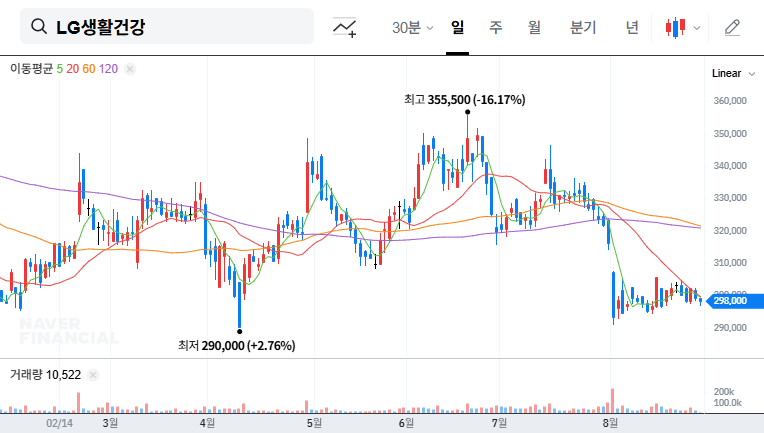
  • LG Household & Health Care: Restructuring and Divestment Strategy Analysis

    LG Household & Health Care: Restructuring and Divestment Strategy Analysis 대표 차트 이미지

    1. What’s Happening at LG H&H?
    The Background and Current Status of the Divestment Rumors

    LG H&H is exploring various options, including the potential sale of its beverage subsidiary, to enhance business competitiveness and management efficiency. While the company denied rumors about selling Coca-Cola Beverage, concerns about the sluggish performance of the beverage business remain.

    2. Why the Restructuring?
    Fundamental Analysis and Financial Health Check

    Despite growth in luxury brands within its beauty business, LG H&H faces challenges due to uncertainties in the Chinese market and intensifying competition in the domestic market. While the HDB business remains stable, the beverage business is grappling with slow growth and volatile raw material costs. Since 2022, revenue and operating profit have been declining, and ROE is also projected to fall. In this context, restructuring appears to be an inevitable choice.

    3. What’s Next?
    Potential Impacts and Risks of the Restructuring

    • Potential Positives: Streamlined business structure, improved profitability, new growth engines, enhanced shareholder value
    • Potential Negatives: Short-term uncertainty, sale price and conditions, intensified competition, lower market expectations, fluctuations in exchange rates and raw material prices

    Restructuring presents both opportunities and risks. Successful restructuring hinges on factors such as negotiation of sale conditions, new business investment strategies, and risk management.

    4. What Should Investors Do?
    Investment Strategy and Key Monitoring Points

    The current investment outlook for LG H&H is ‘Neutral’. Investors should closely monitor the details of the restructuring plan, the performance of the beauty and HDB businesses, and fluctuations in exchange rates and raw material prices. The success of securing funds through the sale of the beverage subsidiary and securing new growth engines will be crucial investment decision points.

    FAQ

    Is the sale of LG H&H’s beverage business confirmed?

    No, it has not been confirmed yet. The company is exploring various options to enhance business competitiveness and efficiency, and the sale is one of the options being considered.

    What are LG H&H’s main business segments?

    LG H&H operates three main business segments: Beauty, HDB (Home Care & Daily Beauty), and Refreshment.

    What are the key factors to consider when investing in LG H&H?

    Investors should consider the progress of the restructuring, the performance of the beauty and HDB businesses, and changes in the external environment.

    LG Household & Health Care: Restructuring and Divestment Strategy Analysis 관련 이미지
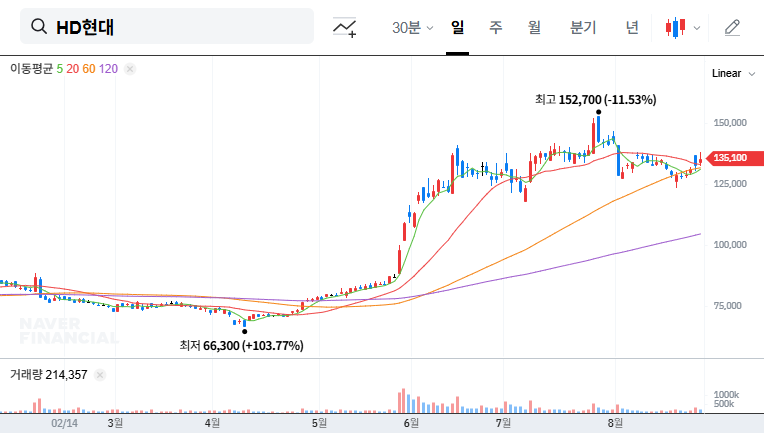
  • HD Hyundai’s Shipbuilding Merger: A Deep Dive for Investors

    HD Hyundai's Shipbuilding Merger: A Deep Dive for Investors 대표 차트 이미지

    1. What Happened?

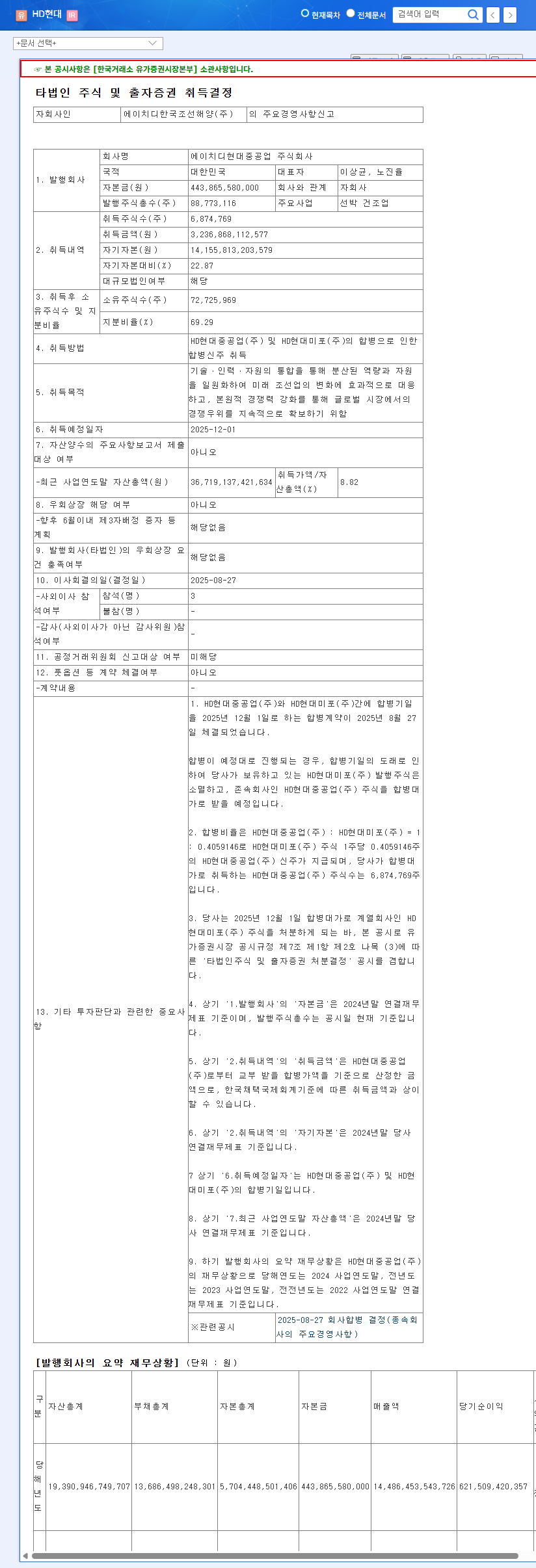
    HD Hyundai announced its decision to merge HD Hyundai Heavy Industries and HD Hyundai Mipo Dockyard through its subsidiary, HD Korea Shipbuilding & Offshore Engineering. This move consolidates ownership of both companies under HD Korea Shipbuilding & Offshore Engineering. The merger is scheduled for December 1, 2025, with a total acquisition cost of ₩32.369 trillion.

    2. Why Merge?

    HD Hyundai aims to strengthen its competitiveness and adapt to future industry trends by consolidating technologies, workforce, and resources. The goal is to achieve economies of scale, maximize synergies, and secure a competitive edge in the global market.

    3. What’s Next?

    a. Positive Impacts

    • Synergies: Reduced redundant investments, increased operational efficiency, and economies of scale.
    • Enhanced Competitiveness: Accelerated development of future technologies like eco-friendly vessels and smart ships.
    • Improved Governance: Enhanced decision-making efficiency and strengthened strategic direction for the group.

    b. Potential Risks

    • Financial Burden: Potential deterioration of financial health due to the substantial investment.
    • Merger Uncertainties: Possibility of unforeseen issues and delays during the integration process.
    • External Factors: Impact of external factors such as global economic slowdown and exchange rate fluctuations.

    4. What Should Investors Do?

    In the short term, investors should monitor market reactions to the merger’s uncertainties and financial impact. In the medium to long term, investment decisions should be made based on an analysis of synergy effects and HD Korea Shipbuilding & Offshore Engineering’s performance improvements. Continuous monitoring of HD Hyundai’s financial health management and capital procurement plans is crucial.

    Frequently Asked Questions

    How will this merger affect HD Hyundai’s stock price?

    Short-term volatility is possible due to uncertainties, but the merger’s synergies could positively impact the stock price in the medium to long term.

    What will HD Hyundai’s financial structure look like after the merger?

    The large investment may increase debt-to-equity ratios, but improved operating profit margins and ROE are expected to maintain financial soundness.

    When will the synergies from the merger become apparent?

    Synergies are expected to materialize in the medium to long term after the merger’s completion and integration process.

    HD Hyundai's Shipbuilding Merger: A Deep Dive for Investors 관련 이미지
    HD Hyundai's Shipbuilding Merger: A Deep Dive for Investors 관련 이미지