Tag: Market Outlook

  • (320000) HanWool Semiconductor Convertible Bond: An In-Depth Stock Analysis for Investors

    (320000) HanWool Semiconductor Convertible Bond: An In-Depth Stock Analysis for Investors

    Amid a challenging global economic climate, HanWool Semiconductor, Inc. has announced a significant financial maneuver: the issuance of ₩5 billion in private convertible bonds. This decision prompts a critical question for stakeholders and potential investors: is this a strategic move to secure future growth, or a necessary measure to navigate a crisis? This comprehensive HanWool Semiconductor stock analysis will dissect the details of the HanWool Semiconductor convertible bond, evaluating its short-term benefits, long-term implications, and the crucial factors investors must consider before making their next move.

    The Details: A ₩5 Billion Convertible Bond Issuance

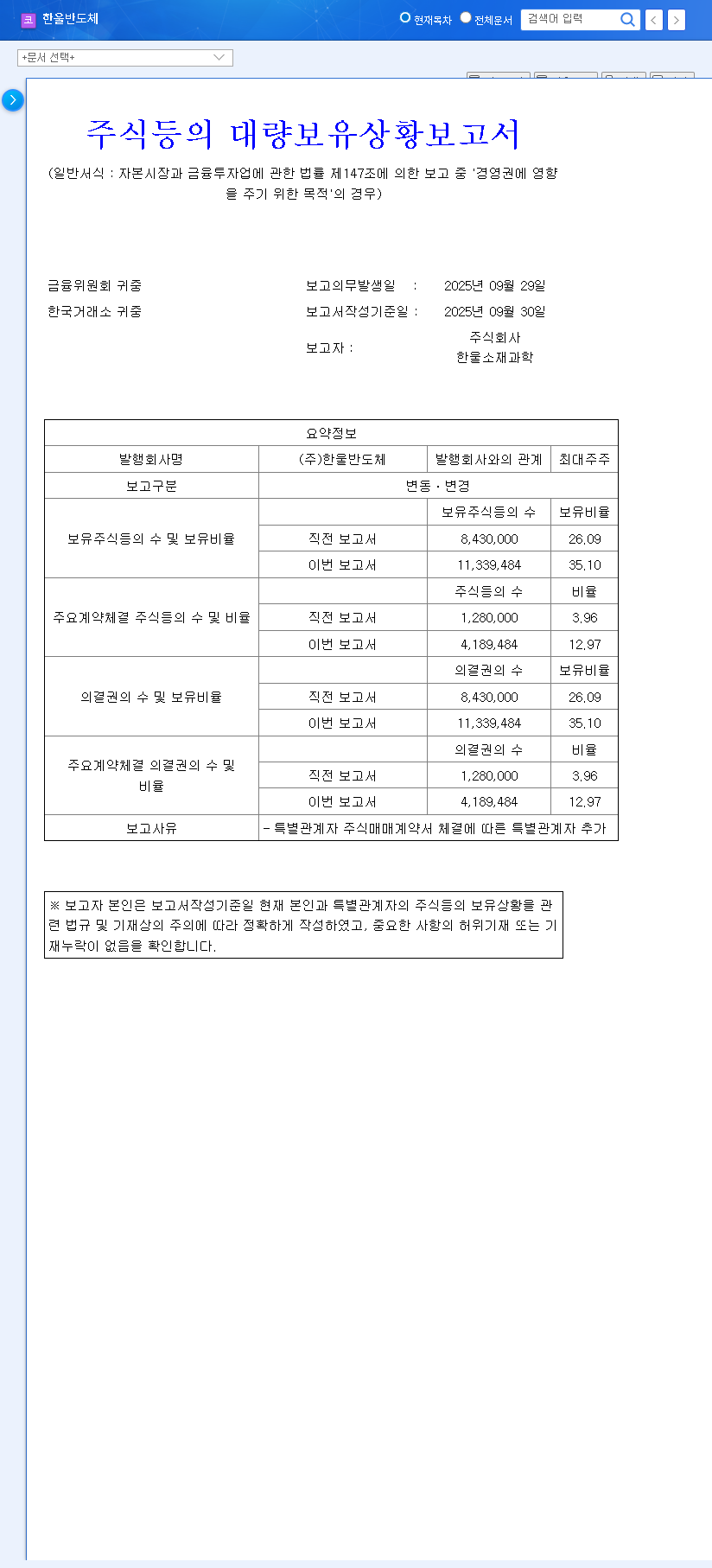
    On November 13, 2025, HanWool Semiconductor officially announced its decision to issue private placement convertible bonds (CBs) valued at ₩5 billion. This sum is notable, representing approximately 7.43% of the company’s market capitalization. A convertible bond is a type of debt security that the holder can convert into a specified number of shares of common stock in the issuing company. This private placement is designated for a single entity, Global Lowell Union. The key terms are outlined in the Official Disclosure (DART) and summarized below:

    • Issuance Amount: ₩5 billion
    • Issuance Method: Private placement to Global Lowell Union
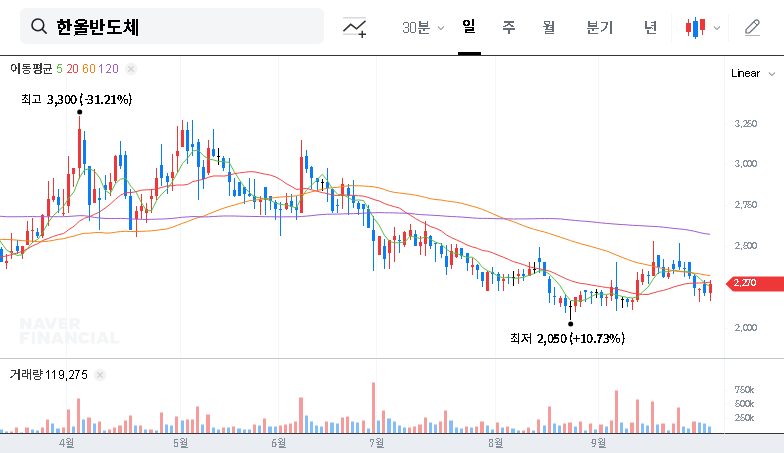
    • Conversion Price: ₩1,928 per share (below the current market price of ₩2,200)
    • Coupon/Maturity Interest Rate: 3%
    • Conversion Period: December 12, 2026 – November 12, 2028

    The conversion price being set below the current stock price is a critical detail. It creates a strong incentive for the bondholder to convert the debt into equity, which signals confidence but also introduces the risk of stock dilution down the line.

    The ‘Why’: Underperformance and Urgent Liquidity Needs

    This HanWool Semiconductor CB issuance is not happening in a vacuum. It’s a direct response to the company’s recent financial struggles and the broader industry downturn. Performance in the first half of 2025 was sluggish, marked by declining sales and a growing operating loss. The core reasons include:

    • Front-End Market Contraction: A significant reduction in investment from the semiconductor and display industries has directly hurt sales, particularly in HanWool’s Film inspection equipment division.
    • Rising Operational Costs: An increase in selling, general, and administrative (SG&A) expenses has further squeezed profitability.
    • Uncertainty in New Ventures: While strategic pivots into AI machine vision and semiconductor IP are promising for the long term, they are in early stages and unlikely to generate revenue soon.

    While the company’s debt ratio has improved, its cash reserves have dwindled. This capital injection is therefore crucial for managing operational liquidity and stabilizing the balance sheet while it navigates these challenges.

    This bond issuance is a classic double-edged sword: it provides a vital short-term cash lifeline but simultaneously places immense pressure on the company to deliver on its long-term growth promises to justify the potential shareholder dilution.

    An Actionable Guide for Investors

    For investors, the HanWool Semiconductor convertible bond news requires a nuanced perspective. While it addresses immediate liquidity concerns, the ultimate success depends on execution. Here’s what to monitor:

    Potential Upsides & Investment Points

    • New Business Success: The most significant catalyst would be tangible progress in the AI machine vision and semiconductor IP businesses. Look for milestones, partnerships, and early revenue generation.
    • Efficient Use of Capital: Track how the ₩5 billion is deployed. Investments in R&D and strategic initiatives that enhance long-term value are positive signs.
    • Industry Recovery: An upturn in the broader semiconductor market, as detailed in our previous semiconductor industry forecast, would lift HanWool’s core inspection equipment business.

    Critical Risks to Consider

    • Prolonged Industry Downturn: If the macroeconomic environment worsens, the industry’s recovery could be delayed, further straining HanWool’s finances. Learn more about market dynamics from authoritative sources like McKinsey’s Global Economics Intelligence.
    • Stock Dilution Overhang: While not immediate, the potential conversion of bonds into nearly 2.6 million new shares creates a supply overhang that could pressure the stock price in the future.
    • Failure to Execute: If the new ventures fail to gain traction, the company will have increased its debt (via interest payments) and potentially diluted shareholders without a corresponding increase in corporate value.

    Final Verdict: ‘Neutral’ with a Cautious Approach

    Our investment opinion on HanWool Semiconductor, Inc. is ‘Neutral’. The CB issuance is a necessary and positive step for securing short-term operational stability. However, the company’s underlying fundamentals remain weak, and its future hinges on unproven business ventures. A positive investment case cannot be made on this fundraising alone.

    A cautious approach is warranted. Investors should wait for concrete evidence of financial improvement and tangible results from the new business segments. Closely monitoring quarterly earnings reports, the specific use of the CB funds, and progress updates on the AI and IP initiatives will be essential for making an informed decision. The path forward is laden with both risk and potential reward, demanding careful and continuous due diligence.
    (320000) HanWool Semiconductor Convertible Bond: An In-Depth Stock Analysis for Investors 관련 이미지
    (320000) HanWool Semiconductor Convertible Bond: An In-Depth Stock Analysis for Investors 관련 이미지
  • (107640) HanJungNCS ESS Investment: A 19B KRW Gamble on Future Growth? | In-Depth Analysis

    (107640) HanJungNCS ESS Investment: A 19B KRW Gamble on Future Growth? | In-Depth Analysis

    In a bold move to capture a larger share of the booming green energy sector, HanJungNCS.Co.,Ltd has announced a landmark 19 billion KRW facility investment. This significant capital injection is aimed squarely at expanding its Energy Storage System (ESS) component production. The HanJungNCS ESS investment represents a pivotal moment for the company, positioning it to capitalize on explosive market demand. However, this aggressive growth strategy is not without substantial risks, especially given the company’s current financial pressures and the volatile macroeconomic climate. This analysis will explore both the promising opportunities and the potential pitfalls of this high-stakes venture.

    Dissecting the 19 Billion KRW Investment

    On November 10, 2025, HanJungNCS officially disclosed its plan for a ‘New Facility Investment.’ The core objective is to significantly scale up its manufacturing capacity for critical ESS components. The 19 billion KRW investment, which constitutes a substantial 23.62% of the company’s equity capital, is scheduled to unfold over a one-year period, concluding on October 31, 2026. This move is a clear strategic pivot, designed to reinforce the company’s position within the high-growth ESS market. For complete transparency, you can view the Official Disclosure (DART) on the matter.

    The Bull Case: Fueling Future Growth in the ESS Market

    From a strategic standpoint, the timing of this investment appears impeccable. The global demand for energy storage solutions is surging, driven by the global transition to renewable energy sources like solar and wind, which require robust storage to ensure grid stability.

    Tapping into Explosive Market Growth

    Expanding production capacity allows HanJungNCS to directly address the soaring demand within the global Energy Storage System (ESS) market. This proactive expansion is expected to drive significant top-line growth for the company’s ESS division, positioning it to capture increased market share from competitors who may be slower to scale.

    This investment isn’t just about producing more; it’s about cementing a leadership position in a market that will define the future of energy for decades to come.

    Sharpening the Technological Edge

    The investment will also fund advancements in HanJungNCS’s core technologies, such as its sophisticated liquid cooling systems for ESS units. Enhancing these capabilities creates a competitive moat, enabling the company to produce higher-value, more efficient products. This technological differentiation is crucial for attracting premium clients and diversifying its customer base beyond its current portfolio.

    The Bear Case: A Cautious Financial Analysis

    Despite the clear growth opportunities, the HanJungNCS ESS investment places immense pressure on an already strained financial structure. A closer look at the company’s recent performance reveals several red flags that investors cannot ignore.

    Deteriorating Profitability and Cash Flow

    The company’s H1 2025 report painted a concerning picture, with operating profit declining and the company slipping into a net loss. This was attributed to rising costs and administrative expenses. Furthermore, the operating profit margin saw a dramatic fall from 16.21% in 2022 to just 4.87% in 2024. With a debt-to-equity ratio already over 100% and negative operating cash flow, taking on this new investment could severely test the company’s financial resilience. For those wanting to learn more, here is our guide to analyzing corporate financials.

    The Uncertainty of Investment Recovery

    There is a significant time lag between capital expenditure and revenue generation. It may take several quarters, or even years, for this new facility to translate into meaningful profit. During this period, HanJungNCS remains vulnerable to external shocks such as fluctuations in raw material prices (like Resin), rising global interest rates that increase borrowing costs, and intensified market competition. The method of funding this 19 billion KRW—be it through debt, equity, or internal reserves—will be critical in determining the immediate impact on its balance sheet.

    A Prudent Strategy for Investors

    The HanJungNCS ESS investment is a classic high-risk, high-reward scenario. The long-term potential is undeniable, but the short-term financial hurdles are significant. Investors should adopt a cautious and diligent approach, focusing on the following key areas:

    • Financial Health Monitoring: Scrutinize the investment’s funding plan. Keep a close watch on the company’s efforts to manage its debt and improve operating cash flow as the project progresses.
    • Path to Profitability: Look for concrete evidence that the investment is leading to enhanced productivity and economies of scale. Are cost-management strategies effectively offsetting rising expenses?
    • Competitive Landscape: Continuously assess HanJungNCS’s position within the competitive ESS market. Is its technology maintaining a competitive edge, and are its new products gaining traction?
    • Market Volatility: Be prepared for short-term stock price volatility. The combination of positive growth news and negative financial reports could lead to significant price swings.

    In conclusion, while HanJungNCS is making a necessary and forward-looking investment, the immediate financial risks warrant a cautious ‘wait-and-see’ approach. The success of this venture will depend entirely on disciplined execution, prudent financial management, and a favorable market environment.

    (107640) HanJungNCS ESS Investment: A 19B KRW Gamble on Future Growth? | In-Depth Analysis 관련 이미지
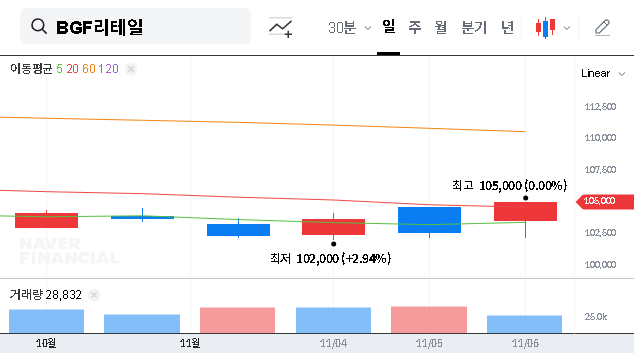
  • (282330) BGF Retail Q3 2025 Earnings Analysis (282330): A Strong Rebound or Temporary Relief?

    (282330) BGF Retail Q3 2025 Earnings Analysis (282330): A Strong Rebound or Temporary Relief?

    The initial analysis of the BGF retail Q3 2025 earnings report reveals a significant outperformance of market expectations, sparking conversations about a potential turnaround for the operator of South Korea’s largest convenience store chain, CU. After a challenging first half of the year, BGF Retail (KRX: 282330) has posted robust growth in revenue, operating profit, and net income, suggesting a recovery in its core business fundamentals. This detailed BGF retail analysis will dissect the quarterly results, explore the underlying drivers, evaluate the persistent risks, and offer a strategic outlook for investors monitoring BGF retail stock.

    BGF Retail Q3 2025 Earnings: The Key Numbers

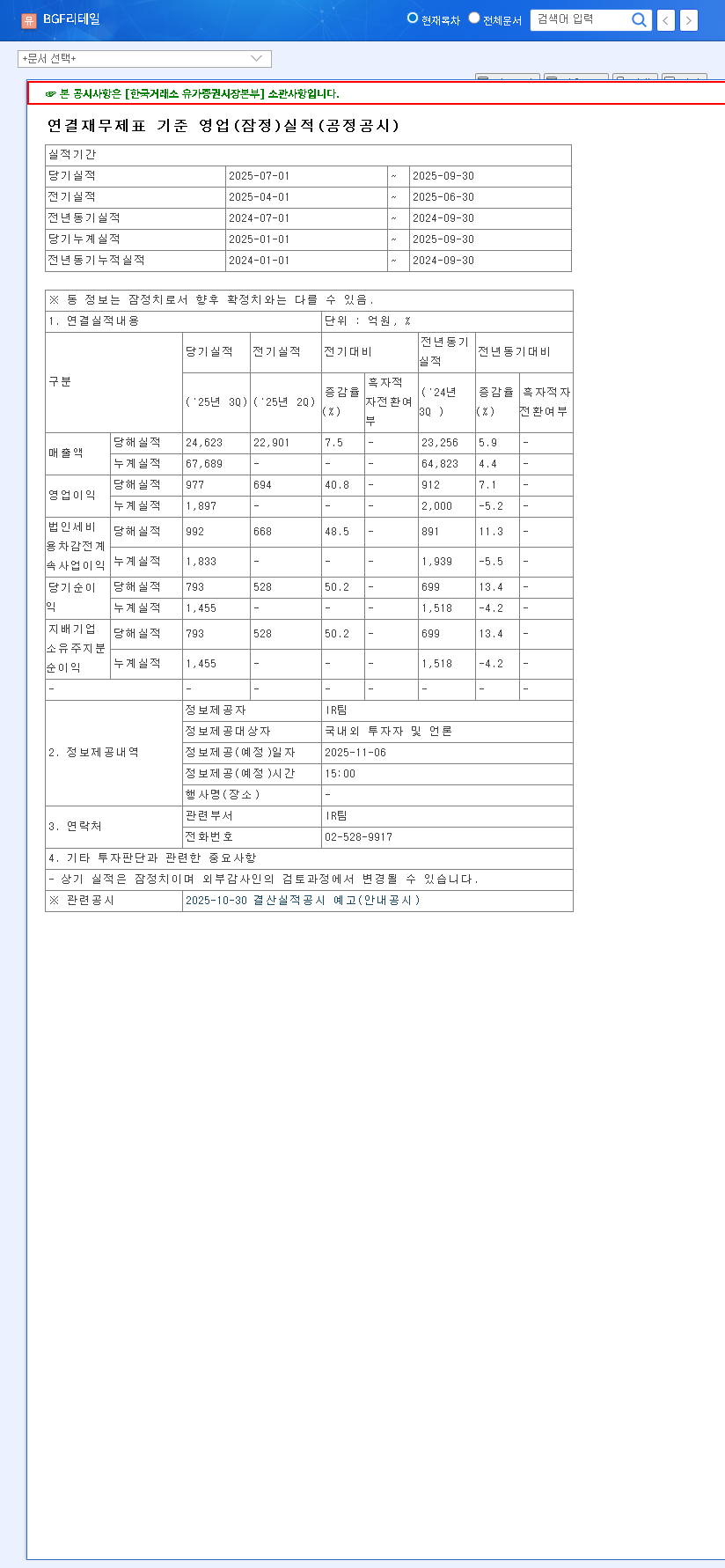
    On November 6, 2025, BGF retail CO., LTD. released its preliminary consolidated financials, delivering a pleasant surprise to the market. The results not only showed growth but also confidently surpassed consensus forecasts across the board. You can view the full report directly from the source: Official Disclosure.

    Here’s a breakdown of the performance against market expectations:

    • Revenue: KRW 2.4623 trillion, which is 1.0% above the market expectation of KRW 2.4375 trillion.
    • Operating Profit: KRW 97.7 billion, standing 2.2% above the market expectation of KRW 95.6 billion.
    • Net Income: KRW 79.3 billion, a significant 6.2% above the market expectation of KRW 74.7 billion.

    The impressive beat in net income is particularly noteworthy, as it suggests stronger-than-anticipated operational efficiency and profitability management during the quarter.

    The Q3 2025 results serve as a crucial data point, potentially marking an inflection point for BGF Retail. The strong bottom-line performance indicates that the company’s strategic initiatives may be starting to bear fruit, alleviating earlier concerns about margin compression.

    Analysis: Why This Earnings Beat Matters

    A Clear Reversal from H1 Weakness

    The first half of 2025 was a period of concern for BGF Retail investors. A sequential comparison highlights the magnitude of the Q3 recovery:

    • Q3 2025 Operating Profit: KRW 97.7 billion
    • Q2 2025 Operating Profit: KRW 69.4 billion
    • Q1 2025 Operating Profit: KRW 22.6 billion

    This sharp upward trend in profitability demonstrates a powerful recovery, moving the company past the operational hurdles seen earlier in the year. This provides a strong foundation for a potential re-rating of the CU convenience store earnings power and, by extension, BGF retail stock.

    Strengthening Fundamentals and Core Business Health

    Delivering results beyond market predictions in a competitive environment validates BGF Retail’s strong business foundation and adaptability. While specific segment results were not detailed in the preliminary report, the overall profit jump suggests encouraging signs. This likely includes improved performance in the high-margin food manufacturing and distribution segment, a key area that had previously faced profitability challenges. A healthier food sector is vital for long-term growth.

    Navigating the Headwinds: Key Risks for Investors

    Despite the positive BGF retail Q3 2025 earnings, a prudent investor must remain aware of the potential risks that could impact future performance.

    Internal Financial Health and Governance

    The company’s balance sheet requires continued monitoring. The debt-to-equity ratio saw an increase to 113.53% in late 2023 from 92.27% the prior year. While manageable, a high debt load can become a significant burden in a high-interest-rate environment, constraining flexibility and pressuring profits. Furthermore, while recent audits have been clean, any history of audit-related issues can make some institutional investors cautious.

    External Macroeconomic Pressures

    The broader economic climate poses several challenges. The sustained high benchmark interest rates from central banks like the U.S. Federal Reserve and the Bank of Korea increase borrowing costs. Moreover, a volatile currency exchange rate, particularly a weak Korean Won against the US Dollar, can inflate the cost of imported raw materials essential for many in-store products. These factors are critical to watch, as they directly impact the company’s cost structure. For more on this, you can read about the global economic outlook on Reuters. Understanding the broader South Korean retail market is also essential context.

    Investment Outlook: Strategic Path Forward

    The strong Q3 results are a bullish signal that could provide a short-term boost to the BGF retail stock price. It effectively counters the narrative of decline from the first half of the year. However, a long-term investment decision requires a more nuanced view.

    Investors should look for confirmation of this recovery in the upcoming Q4 2025 and Q1 2026 reports. Key factors to monitor will be the sustainability of profit margin improvements, management’s strategy for debt reduction, and tangible progress in new growth areas, such as overseas expansion and digital initiatives. A long-term perspective, combined with diligent monitoring of these key performance indicators, will be the most effective strategy for making sound investment decisions regarding BGF Retail.

    (282330) BGF Retail Q3 2025 Earnings Analysis (282330): A Strong Rebound or Temporary Relief? 관련 이미지
  • (011930) SHINSUNG E&G (011930) Q3 2025 Earnings Analysis: Profit Shock & Why Investors Should Be Cautious

    (011930) SHINSUNG E&G (011930) Q3 2025 Earnings Analysis: Profit Shock & Why Investors Should Be Cautious

    This comprehensive SHINSUNG E&G earnings analysis for Q3 2025 unpacks the recent preliminary earnings announcement that sent a shockwave through the investor community. While top-line revenue numbers appeared healthy, a drastic turn to an operating loss has raised serious questions about the company’s fundamental health and future prospects. For investors holding or considering SHINSUNG E&G stock (011930), understanding the underlying issues is more critical than ever. We will explore the performance breakdown, identify core business challenges, analyze external risks, and provide a clear investment thesis.

    SHINSUNG E&G’s Q3 2025 Performance: A Deceptive Headline

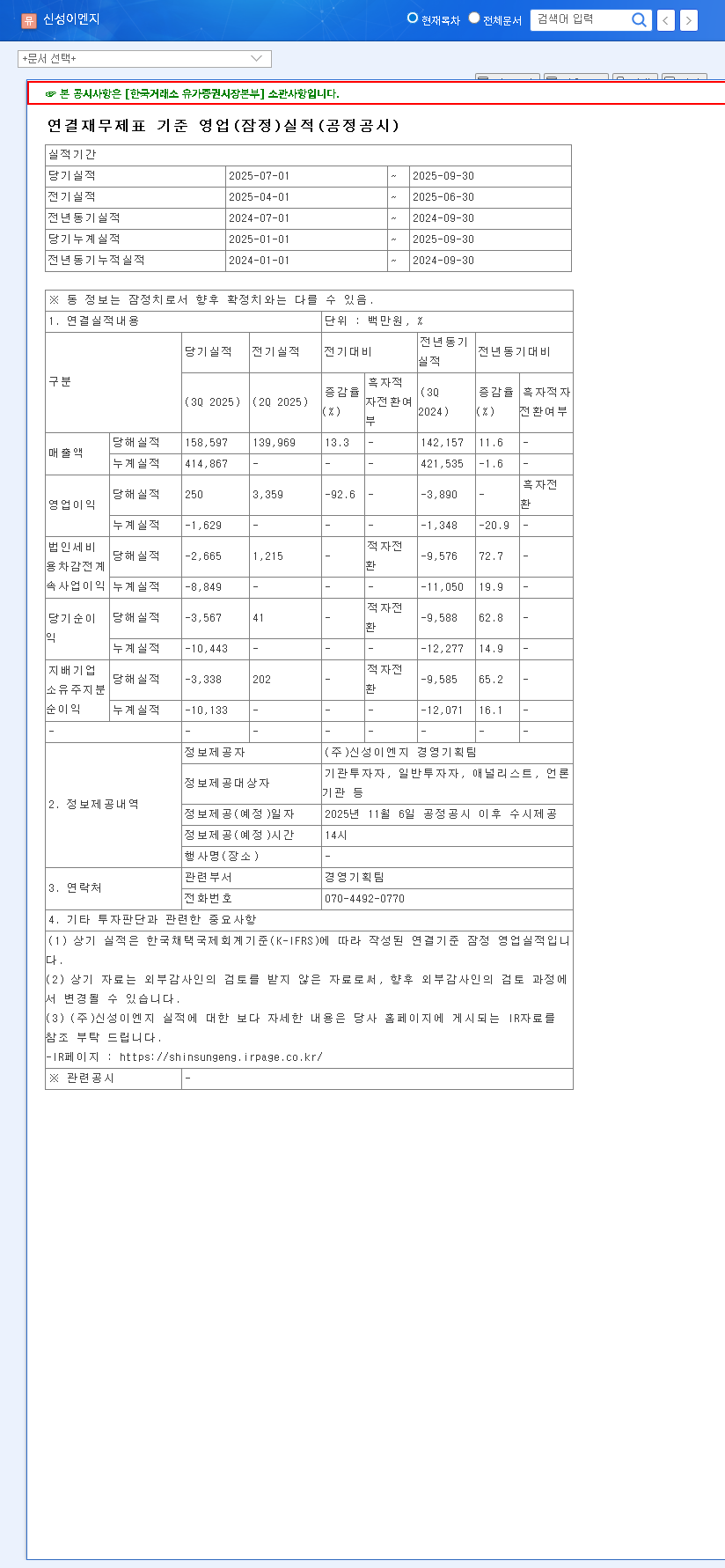
    The preliminary Q3 2025 results for SHINSUNG E&G, announced on November 6, 2025, painted a confusing picture. At first glance, the revenue figure seemed promising, but the profitability metrics told a different, more troubling story. The full details can be found in the company’s Official Disclosure on DART.

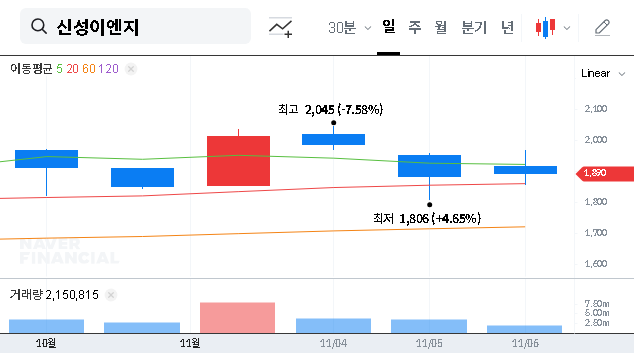
    • Revenue: KRW 158.6 billion, surpassing the forecast of KRW 140.9 billion.
    • Operating Profit: KRW 0.2 billion, a significant miss on the KRW 4.6 billion forecast, representing a turn to an operating loss.
    • Net Income: A loss of KRW 3.3 billion.

    This stark contrast between revenue and profit is a classic red flag. It indicates that while the company is generating sales, it is failing to convert that activity into sustainable profit, signaling deep-seated operational or structural issues.

    Unpacking the Fundamental Crisis

    A detailed review of the company’s semi-annual report reveals that the Q3 earnings shock is not an isolated incident but rather a symptom of a deepening fundamental crisis. Several key areas are cause for significant concern.

    1. Revenue Decline and Profitability Collapse

    Consolidated revenue had already decreased by 8.28% year-over-year to KRW 256.27 billion. This was driven by weakness in both the Clean Environment business (tied to volatile semiconductor and display markets) and the Renewable Energy business (plagued by a global solar module oversupply). More alarmingly, consolidated operating profit swung to a loss of KRW 1.88 billion, thanks to rising SG&A expenses and R&D costs on top of falling sales.

    2. Precarious Financial Health

    The company’s balance sheet is flashing warning signs. The debt-to-equity ratio remains at a high 147.39%, indicating significant leverage. Furthermore, liquidity is a major concern, as highlighted by deteriorating operational cash flow, which fell to a negative KRW 26.31 billion. For more information on evaluating company financials, investors can learn about analyzing key financial ratios.

    With a current ratio of just 0.77x and a quick ratio of a mere 0.05x, the company’s ability to meet its short-term obligations without selling inventory is severely constrained. This raises serious concerns about its short-term financial stability.

    Segment-Specific Headwinds and Risks

    A closer look at the core business units in this SHINSUNG E&G earnings analysis reveals specific challenges that are unlikely to resolve in the short term.

    • Clean Environment Division: While there are long-term opportunities in AI and data centers, the division’s reliance on cyclical display industry investments limits near-term growth potential.
    • Renewable Energy Division: This segment is struggling to secure profitability due to intense global competition, an oversupply in the solar market, and a sluggish domestic recovery. New investments are needed but will be difficult given the weak financial position.
    • Exchange Rate Volatility: With a high volume of foreign currency transactions, the company is highly exposed to currency fluctuations. A 10% appreciation in the USD is estimated to cause a loss of ~KRW 2.2 billion, a significant risk in the current environment.

    Investment Outlook: A Strong ‘Conservative’ Stance is Advised

    Considering the significant Q3 operating profit miss, deteriorating fundamentals, and challenging macroeconomic conditions discussed by sources like Bloomberg, the investment outlook for SHINSUNG E&G stock is decidedly negative. A short-term price rebound appears highly unlikely.

    We strongly recommend investors ‘maintain a conservative view’. A cautious approach is necessary until management presents a clear, actionable strategy to improve profitability and strengthen the balance sheet—and shows tangible results from its implementation.

    Key Risk Factors to Monitor:

    • Persistent Weakness: Continued underperformance in the Clean Environment and Renewable Energy divisions.
    • Financial Deterioration: Worsening liquidity and an increasing debt burden could trigger a financial crisis.
    • Macroeconomic Headwinds: Prolonged high interest rates and a global recession could further dampen demand and increase costs.

    Investors should meticulously track future earnings reports, strategic announcements, and changes in the macroeconomic landscape before making any decisions regarding SHINSUNG E&G stock (011930).

    (011930) SHINSUNG E&G (011930) Q3 2025 Earnings Analysis: Profit Shock & Why Investors Should Be Cautious 관련 이미지
  • (443250) RevuCorporation Inc. Stock Analysis: Q3 2025 Earnings Miss & Short-Form Growth Potential

    (443250) RevuCorporation Inc. Stock Analysis: Q3 2025 Earnings Miss & Short-Form Growth Potential

    Investor attention is sharply focused on RevuCorporation Inc. following its preliminary Q3 2025 earnings announcement. The results, which fell short of market expectations for both revenue and operating profit, have sent ripples of concern through the investment community. However, this immediate challenge is juxtaposed with the company’s significant growth potential in the booming short-form content market, creating a complex and pivotal moment for the firm.

    This comprehensive RevuCorporation Inc. stock analysis will dissect the Q3 2025 performance, evaluate its core business fundamentals, and explore the broader market dynamics. We aim to provide clear, expert insights into its future trajectory and offer strategic guidance for potential investors. Can RevuCorporation Inc. navigate its current headwinds and solidify its position as a leader in the next wave of digital advertising?

    Deconstructing the Q3 2025 Earnings Miss

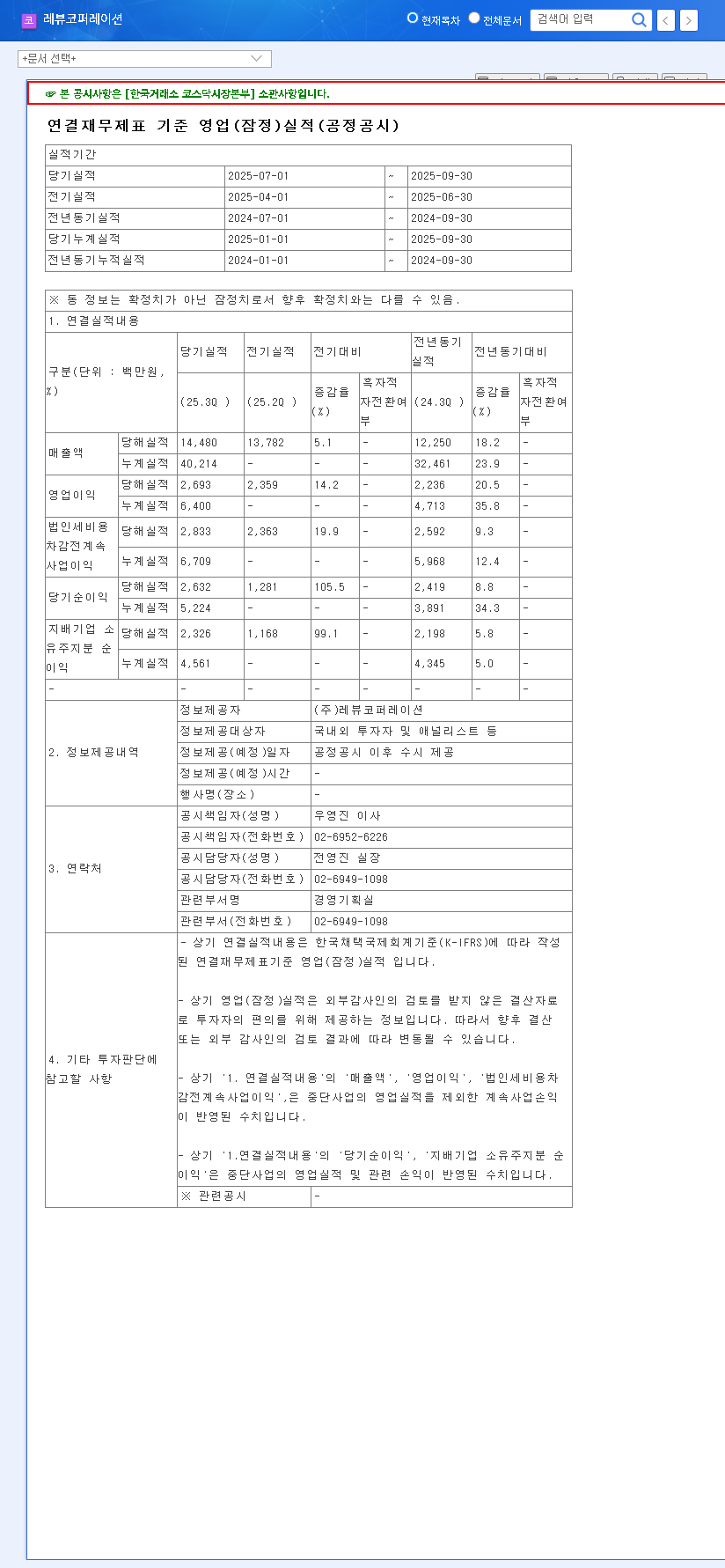
    On November 3, 2025, the influencer marketing specialist RevuCorporation Inc. released its preliminary consolidated financial results for the third quarter. The numbers revealed a performance gap that has understandably unsettled the market. The full Official Disclosure provides granular detail, but the key takeaways are as follows:

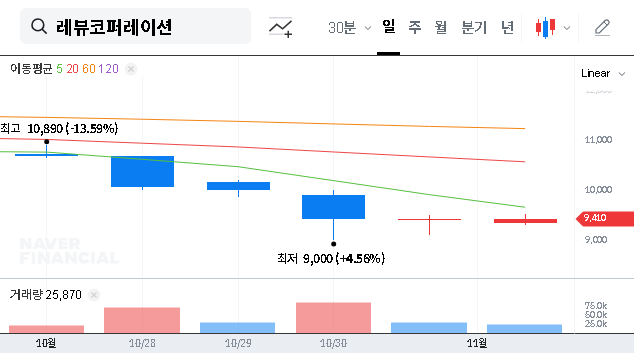
    • Revenue: KRW 14.5 billion, falling 8% short of the estimated KRW 15.7 billion.
    • Operating Profit: KRW 2.7 billion, a 7% decrease from the projected KRW 2.9 billion.
    • Net Profit: KRW 2.3 billion.

    This underperformance signals potential softness in the company’s core operations and raises questions about its near-term growth trajectory, likely leading to a cautious stance from investors in the immediate future.

    Company Fundamentals: A Tale of Two Stories

    The Core Influencer Marketing Engine

    RevuCorporation Inc. built its name as a premier influencer marketing platform, expertly connecting brands with influencers via a sophisticated proprietary system. This model has diversified into several key services, including nano/micro-influencer matching (RevuService), macro/mega campaigns (CastingService), and international expansion (GlobalService). However, recent performance, including a 20.6% YoY revenue decrease in H1 2025, indicates that this core business is facing significant competitive and market pressures.

    The Strategic Pivot to Short-Form Content

    The most compelling part of the RevuCorporation Inc. story is its forward-looking acquisition of Shorttte Co., Ltd., a specialized short-form content agency. This move positions the company directly in the fastest-growing segment of digital advertising. While the broader company’s revenue fell in H1, Shorttte’s revenue grew by 6.8%. This highlights a critical strategic shift: leveraging the explosive growth of platforms like TikTok, YouTube Shorts, and Instagram Reels to offset stagnation in traditional influencer campaigns. The success of this integration is paramount to the company’s long-term valuation.

    The central question for any RevuCorporation Inc. stock analysis is whether the high-growth engine of its short-form content division can accelerate fast enough to outpace the deceleration in its legacy business segments.

    Opportunities and Threats: A Balanced View

    Key Growth Catalysts (Opportunities)

    • Dominance in a Niche Market: The short-form video ad market is expanding rapidly. As noted by industry experts at Statista, user engagement in this format is unparalleled, and RevuCorporation Inc. has a first-mover advantage through Shorttte.
    • Technology-Driven Efficiency: The company’s use of big data and AI in its matching platform can create a significant competitive moat, improving margins and campaign effectiveness over time.
    • Improving Financial Health: Despite profit dips, the company has reduced its total liabilities and improved its debt-to-equity ratio to a healthy 33.28%, indicating prudent financial management.

    Significant Headwinds (Threats)

    • Persistent Underperformance: The Q3 2025 earnings miss isn’t an isolated incident; it continues a trend of declining revenue and profit, which could erode investor confidence.
    • Subsidiary Risks: The impairment losses related to subsidiaries like Mate IM and Shorttte (KRW 607 million) are a financial drag and highlight potential integration and operational challenges.
    • Fierce Market Competition: The digital advertising and influencer marketing spaces are notoriously competitive. Larger players and new disruptive platforms could squeeze margins further.

    Investment Strategy for RevuCorporation Inc.

    Given the conflicting signals, a nuanced investment approach is necessary. The disappointing Q3 2025 earnings will likely exert downward pressure on the stock in the short term.

    Short-Term Outlook (1-3 months): Caution is advised. The market will need time to digest the earnings miss. Investors should wait for signs of stabilization or a clear strategic response from management before considering new positions.

    Mid-to-Long Term Outlook (6-18 months): The focus should be on evidence of a successful strategic pivot. Long-term investors should monitor these key performance indicators:

    • Short-Form Segment Growth: Is Shorttte’s revenue contribution growing as a percentage of total revenue each quarter? Are its profit margins improving?
    • Core Business Stabilization: Are there signs that the revenue decline in the legacy RevuService and CastingService is slowing or reversing? For more on this, read our guide on how to analyze marketing platform performance.
    • Resolution of Subsidiary Issues: Are further impairment losses avoided? Does management provide a clear plan for turning around underperforming assets?

    In conclusion, while RevuCorporation Inc. faces immediate and tangible challenges, its strategic investment in the high-growth short-form content market presents a compelling, albeit risky, long-term opportunity. The coming quarters will be critical in demonstrating whether this pivot can create sustainable value and justify a bullish RevuCorporation Inc. stock analysis.

    (443250) RevuCorporation Inc. Stock Analysis: Q3 2025 Earnings Miss & Short-Form Growth Potential 관련 이미지
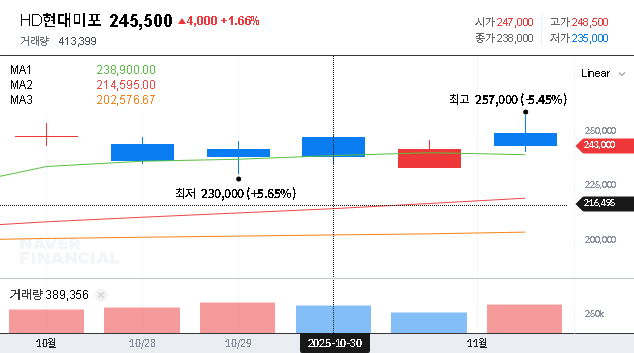
  • (010620) HD HYUNDAI MIPO Q3 2025 Earnings: In-Depth Analysis & Stock Investment Strategy

    (010620) HD HYUNDAI MIPO Q3 2025 Earnings: In-Depth Analysis & Stock Investment Strategy

    In a significant development for the shipbuilding industry, HD HYUNDAI MIPO CO.,LTD. recently unveiled its preliminary consolidated financial results for Q3 2025, delivering an astonishing ‘earnings surprise’ that significantly outpaced market expectations. This performance has not only captivated investor attention but also solidified the company’s robust position in a competitive global market. But what are the core factors driving this success, and what does it signal for the future of HD HYUNDAI MIPO stock?

    This comprehensive analysis dissects the Q3 2025 earnings report, exploring the company’s fundamental strengths, its strategic focus on high-value vessels, and the macroeconomic tailwinds supporting its growth. We will provide actionable insights into what these results mean for your investment strategy and the long-term outlook for HD HYUNDAI MIPO.

    Q3 2025 Earnings: A Story of Overwhelming Success

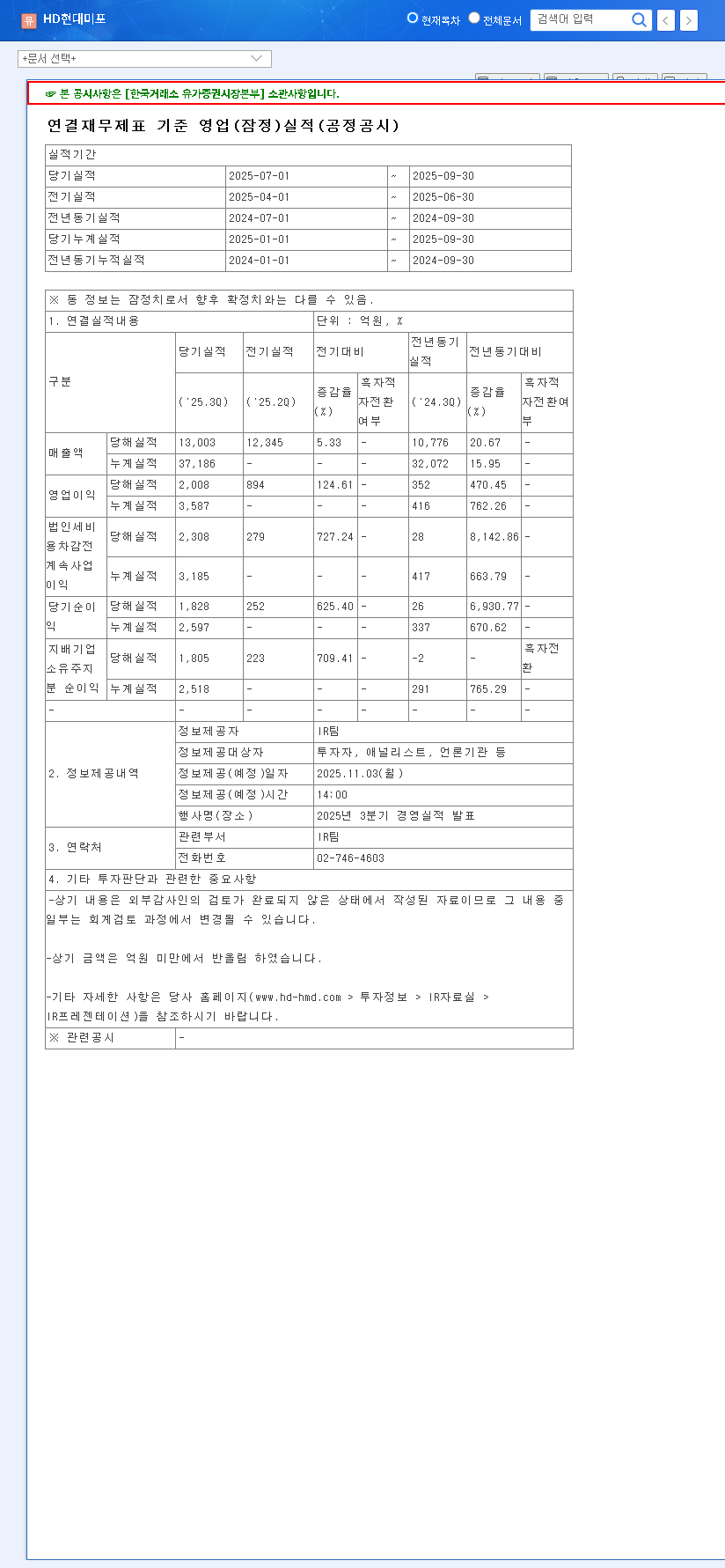
    On November 3, 2025, HD HYUNDAI MIPO announced figures that showcased exceptional strength across all key financial metrics. The results didn’t just meet forecasts; they shattered them, indicating powerful underlying profitability and operational excellence. The official disclosure can be viewed directly from the source: Official DART Report.

    Key Financial Highlights vs. Market Consensus

    • Revenue: Recorded KRW 1,300.3 billion, a substantial +8.5% above the market forecast of KRW 1,198.8 billion.
    • Operating Profit: Reached KRW 200.8 billion, an incredible +90.5% higher than the projected KRW 105.4 billion.
    • Net Profit: Soared to KRW 180.5 billion, more than doubling expectations with a +104.4% surprise over the forecast of KRW 88.3 billion.

    The near-doubling of both operating and net profit compared to market estimates is a clear testament to the company’s superior execution and strategic positioning, marking this quarter as a landmark achievement.

    Drivers of the Stellar Performance

    This outstanding performance wasn’t a fluke. It is the culmination of a deliberate strategy focused on high-growth segments, operational efficiency, and capitalizing on major industry trends.

    Dominance in Eco-Friendly Vessel Orders

    A key pillar of HD HYUNDAI MIPO’s strategy has been its leadership in eco-friendly shipbuilding. As global environmental regulations tighten, led by bodies like the International Maritime Organization (IMO), the demand for vessels powered by alternative fuels like LNG, methanol, and ammonia has skyrocketed. The company’s early investment in the technology and capacity to build these complex ships has created a strong order backlog and allowed for premium pricing, directly boosting revenue and margins.

    Focus on High-Value Ships & Strong Pricing Power

    The dramatic surge in operating profit points directly to enhanced profitability per vessel. By prioritizing high-value product carriers and container ships with advanced specifications, HD HYUNDAI MIPO has successfully improved its product mix. This, combined with sustained high newbuild prices and exceptional cost management, has allowed the company to expand its margins well beyond market expectations.

    Investment Outlook and Strategic Action Plan

    Given the powerful Q3 results and robust industry fundamentals, the investment case for HD HYUNDAI MIPO has been significantly strengthened. The earnings surprise is expected to act as a major catalyst for the stock, attracting positive momentum and reinforcing investor confidence.

    Investment Thesis: Key Points to Consider

    • Upward Revisions Expected: Analysts will likely revise full-year 2025 earnings forecasts and target prices upwards following these results.
    • Market Leadership: The company is consolidating its leadership in the medium-sized, eco-friendly vessel market, a segment with high barriers to entry and strong long-term demand. For more details, see our complete guide to the shipbuilding sector.
    • Financial Stability: A strong balance sheet and efficient financial management provide a solid foundation for navigating market cycles and funding future growth.

    Potential Risks to Monitor

    While the outlook is bright, investors should remain aware of potential headwinds:

    • Global Economic Conditions: A significant global economic slowdown could dampen demand for new vessels.
    • Input Costs: Volatility in the price of steel plates and other raw materials could impact profit margins if not managed effectively.
    • Currency Fluctuations: As a major exporter, the company is exposed to KRW/USD exchange rate volatility, though this is often managed through hedging.

    Frequently Asked Questions

    What drove HD HYUNDAI MIPO’s Q3 earnings beat?

    The primary drivers were a strategic focus on high-value, eco-friendly vessels, which command higher prices, coupled with excellent cost management and sustained strength in the newbuild market. This combination led to significant margin expansion.

    Is HD HYUNDAI MIPO a good investment now?

    Based on the overwhelming Q3 performance, strong market positioning, and positive industry trends, many analysts maintain a ‘Buy’ rating. The results affirm the company’s robust fundamentals and profit-generating capabilities, making it an attractive opportunity, though investors should always consider the associated risks.

    What is the long-term outlook for the company?

    The long-term outlook appears very positive. The global push for decarbonization in shipping provides a durable tailwind for HD HYUNDAI MIPO’s eco-friendly vessel segment. If the company continues to execute and innovate, its mid-to-long-term growth prospects are bright.

    Disclaimer: This analysis is for informational purposes only and is based on publicly available data. All investment decisions are the sole responsibility of the individual investor. It is recommended to conduct your own thorough research before making any financial decisions.

    (010620) HD HYUNDAI MIPO Q3 2025 Earnings: In-Depth Analysis & Stock Investment Strategy 관련 이미지
  • (034830) KOREIT & LH Anchor REIT: A ₩50B Deal Analysis for Investors (2025)

    (034830) KOREIT & LH Anchor REIT: A ₩50B Deal Analysis for Investors (2025)

    In a significant development for the South Korean real estate market, Korea Real Estate Investment & Trust Co., Ltd (KOREIT) has been named the preferred bidder to manage a massive government-backed project. On October 24, 2025, KOREIT secured the Asset Management Company (AMC) role for the Korea Land and Housing Corporation’s (LH) “PF Modernization Catalyst Development Anchor REIT.” This pivotal win is more than just a new contract; it signals a strategic shift for KOREIT, involving a substantial ₩50 billion investment commitment and deep alignment with national policy.

    This in-depth analysis unpacks the implications of the KOREIT LH Anchor REIT deal. We will explore whether this is a golden opportunity for growth or a short-term risk for the company. For investors conducting a KOREIT stock analysis, understanding the nuances of this project is critical.

    The Landmark Deal: KOREIT and the LH Anchor REIT

    What Exactly Happened?

    KOREIT’s selection as the AMC for this large-scale public Real Estate Investment Trust (REIT) is a major endorsement of its capabilities. The deal involves two key commitments:

    • Management Role: KOREIT will be responsible for managing the assets within the Anchor REIT, a crucial role that leverages its expertise in real estate and asset management.
    • Financial Commitment: The company has pledged a significant ₩50 billion investment, representing approximately 5.2% of its total equity. This investment will be made via a ‘Capital Call’ method, meaning funds will be provided as needed by the project rather than all at once. This detail was confirmed in the company’s public filing (Source: Official Disclosure).

    Fundamental Analysis: KOREIT’s Strengths and Weaknesses

    Core Strengths & Growth Engines

    Despite market headwinds, KOREIT maintains a solid foundation. Its core real estate trust business continues to provide a stable and growing revenue base. Furthermore, its subsidiary, KOREIT Asset Management, is showing promising signs, with increasing Assets Under Management (AUM) and narrowing deficits. The company has also actively improved its financial health, evidenced by a falling debt-to-equity ratio.

    Current Challenges and Considerations

    It’s not all smooth sailing. Recent half-year reports indicate a decline in both operating revenue and profit, largely due to a challenging market and the persistent burden of high interest rates on borrowing costs. The competitive landscape in the asset management sector also presents a hurdle to improving profitability. This LH Anchor REIT partnership is therefore crucial, as it could provide a powerful new revenue stream to offset these challenges.

    The partnership with LH is a strategic masterstroke, aligning Korea Real Estate Investment & Trust with national policy. This enhances credibility and opens doors to future public-sector projects, potentially creating a long-term competitive advantage.

    Impact Assessment: Opportunities vs. Risks

    The Upside: Long-Term Growth and Credibility

    • Enhanced Capabilities: Successfully managing a high-profile public REIT will significantly boost KOREIT’s AMC reputation and portfolio.
    • Policy Alignment: Participation aligns KOREIT with the government’s goal to revitalize the REIT market, positioning it favorably for future public projects.
    • Improved Market Trust: A successful partnership with a state-run entity like LH enhances corporate credibility and investor confidence.
    • Future Revenue: The project promises a stable, long-term revenue stream, diversifying income away from more volatile business lines.

    The Downside: Financial Burden and Execution Risk

    • Liquidity Pressure: The ₩50 billion commitment is substantial and could create a short-term financial strain, even with the Capital Call method.
    • Project Risk: Large-scale developments are subject to market shifts, construction delays, and policy changes. Any setbacks could lead to investment losses.
    • Integration Challenges: The new business must create synergy with KOREIT’s existing trust and asset management operations, not conflict with them.

    Investor Action Plan & Recommendation

    Overall Opinion: Cautiously Optimistic (Hold)

    The selection of Korea Real Estate Investment & Trust Co., Ltd for the LH Anchor REIT is a net positive for its long-term trajectory. It provides a clear path to strengthening its AMC division, diversifying its portfolio, and locking in a new, stable revenue source. This deal has the potential to be a significant catalyst for future value appreciation.

    However, the short-term risks—namely the financial burden and execution complexities—cannot be ignored. Therefore, a ‘Hold’ recommendation is prudent. Investors should closely monitor the project’s progress, KOREIT’s management of the capital commitment, and the evolving relationship with LH. Learning more about the broader trends can be helpful for those interested in investing in the South Korean property market.

    While short-term stock price volatility is possible, the strategic focus should be on the company’s long-term vision. An upgrade to our investment opinion would be considered once the project begins to show tangible positive results and synergistic effects on KOREIT’s overall business performance. For now, patience and diligent monitoring are the best strategies for any real estate investment portfolio that includes KOREIT.

    (034830) KOREIT & LH Anchor REIT: A ₩50B Deal Analysis for Investors (2025) 관련 이미지
  • (181710) NHN Stock Buyback: A ₩12.8B Move to Boost Shareholder Value

    (181710) NHN Stock Buyback: A ₩12.8B Move to Boost Shareholder Value

    NHN Corporation (KRX: 181710), a prominent player in the IT sector, has made a significant move that has captured the market’s attention. The recent announcement of an NHN Corporation stock buyback program valued at ₩12.8 billion is a clear signal to investors. This strategic decision raises critical questions: Is this a sign of deep-seated confidence from management? And how will this impact NHN shareholder value in the long run? This comprehensive analysis will dissect the announcement, explore the underlying motivations, weigh the potential benefits against the risks, and provide a clear action plan for current and prospective investors.

    The Details of NHN’s Share Repurchase Plan

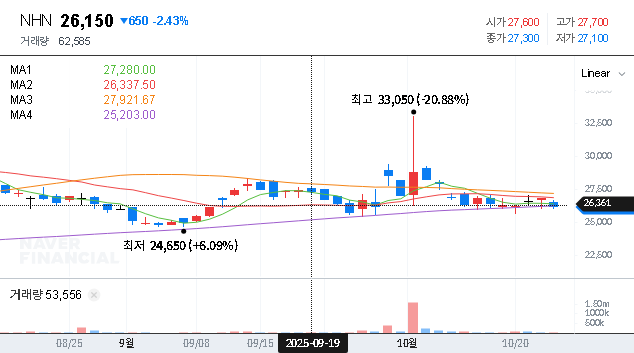
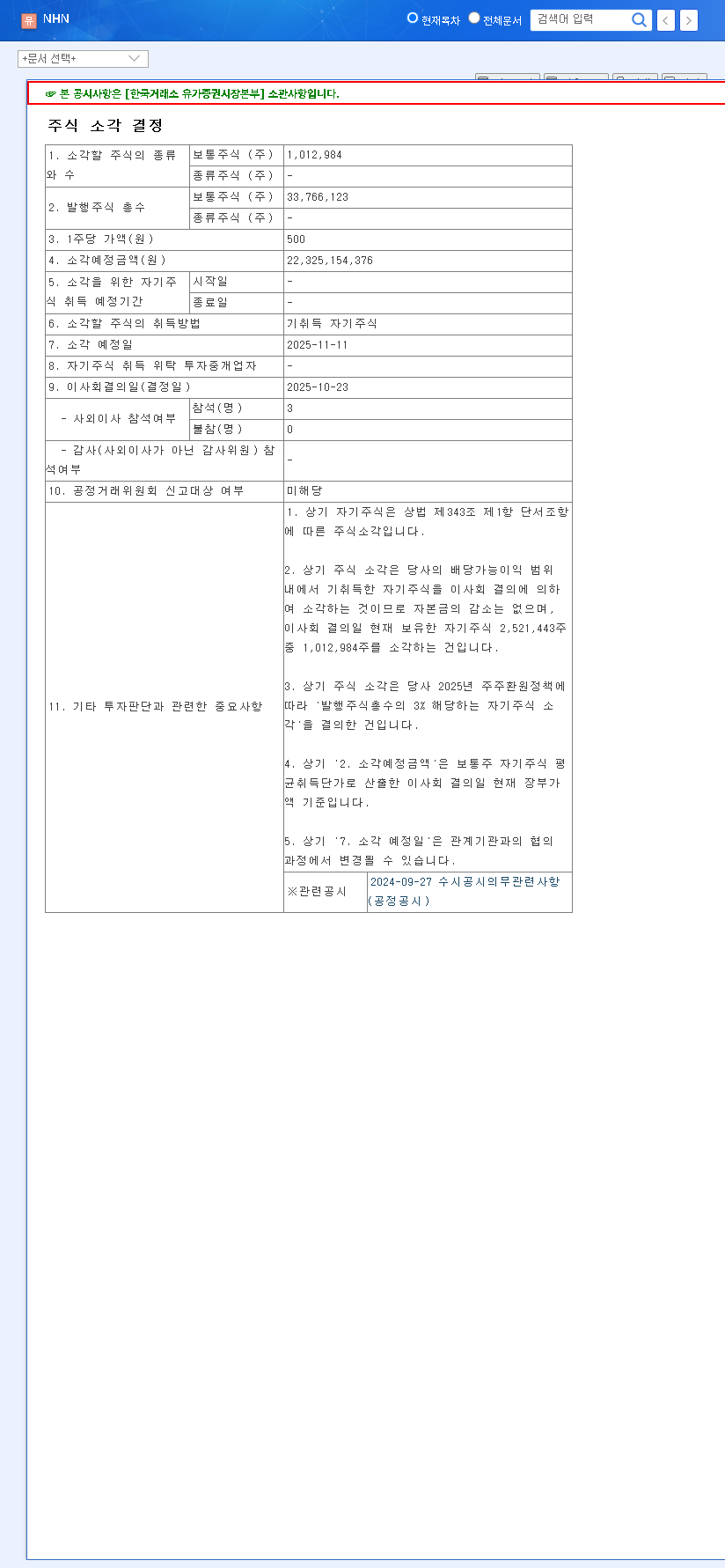
    On October 23, 2025, NHN Corporation formally disclosed its intention to acquire 478,784 of its own common shares from the open market. This transaction, valued at approximately ₩12.8 billion, represents a notable 1.42% of the company’s total market capitalization. The buyback will be executed on the KOSPI exchange, with Samsung Securities managing the acquisition process. For verification, you can view the Official Disclosure on DART, South Korea’s electronic disclosure system.

    A share buyback, or share repurchase, is a corporate action where a company buys back its own outstanding shares from the open market. This reduces the number of shares in circulation, which can have several positive financial effects.

    Why a Stock Buyback? Unpacking the Strategy

    NHN’s stated goals for this initiative are to stabilize its share price and enhance shareholder value. But what does this mean in practice? Generally, a company initiates a buyback when its management believes the market is undervaluing its stock. It’s a powerful signal of internal confidence in the company’s future prospects.

    Boosting Key Financial Metrics

    By reducing the total number of outstanding shares, a buyback automatically increases the company’s Earnings Per Share (EPS), a critical metric watched by analysts. A higher EPS can make the stock appear more attractive to investors, potentially driving up its price. This mechanical boost is often a primary driver behind a share buyback strategy.

    Improving Supply and Demand Dynamics

    The act of purchasing ₩12.8 billion worth of shares creates significant buying pressure in the market. This increased demand, coupled with a reduced supply of available shares, can lead to short-term price appreciation and improved liquidity, benefiting existing shareholders.

    Potential Benefits vs. Underlying Risks

    While the NHN Corporation stock buyback is framed positively, savvy investors must consider both sides of the coin.

    The Upside: A Bullish Outlook

    • Investor Confidence: A buyback signals that management believes the stock is a good investment, which can boost market sentiment.
    • Enhanced Shareholder Returns: It’s a direct way to return capital to shareholders, rewarding them for their investment and reinforcing a shareholder-friendly corporate policy.
    • Price Support: The buyback program can create a ‘floor’ for the stock price, providing stability during volatile market periods.

    The Downside: Potential Red Flags

    • Lack of Growth Opportunities: Critics might argue that a buyback indicates the company lacks better investment opportunities, such as R&D, strategic acquisitions, or expansion, which could generate higher long-term returns.
    • Artificial EPS Inflation: If the company’s core business is not growing, the EPS boost from a buyback can mask underlying performance issues. It is crucial to see revenue and profit growth alongside an improved EPS.
    • Market Timing Risk: If the market enters a significant downturn, the positive impact of the buyback could be completely negated by broader negative sentiment, making the capital expenditure less effective.

    Investor Action Plan: What to Watch Next

    A prudent investor should not make a decision based on this announcement alone. A cautious and observant approach is warranted. For those interested in how to analyze tech stocks, this event provides a perfect case study. Here’s what to monitor:

    • Track the Buyback’s Progress: Follow the disclosures to ensure the company is executing the purchases as planned. The speed and price points of the acquisition can offer clues about their strategy.
    • Scrutinize Financial Reports: Pay close attention to NHN’s upcoming quarterly earnings. Look for organic growth in key segments like cloud services, gaming, and payments. Is revenue growing? Are profit margins stable or improving?
    • Monitor Analyst Commentary: Keep an eye on reports from securities firms and financial analysts. Their target prices and ratings will reflect the expert consensus on the buyback’s impact.
    • Compare with Competitors: How does NHN’s capital allocation strategy compare to its peers? Are competitors investing heavily in growth while NHN is buying back stock? This context is crucial for evaluating its relative attractiveness. You can learn more from our guide on competitive analysis for stocks.

    In conclusion, the NHN Corporation stock buyback is a significant and largely positive development for shareholders. It demonstrates management’s commitment to delivering value. However, its long-term success will ultimately depend on the company’s ability to drive fundamental business growth. This is a key moment for NHN, and informed investors will be watching closely.

    (181710) NHN Stock Buyback: A ₩12.8B Move to Boost Shareholder Value 관련 이미지
  • (086790) Hana Financial Group Q3 2025 Earnings: Complete Investor Guide & Stock Analysis (086790)

    (086790) Hana Financial Group Q3 2025 Earnings: Complete Investor Guide & Stock Analysis (086790)

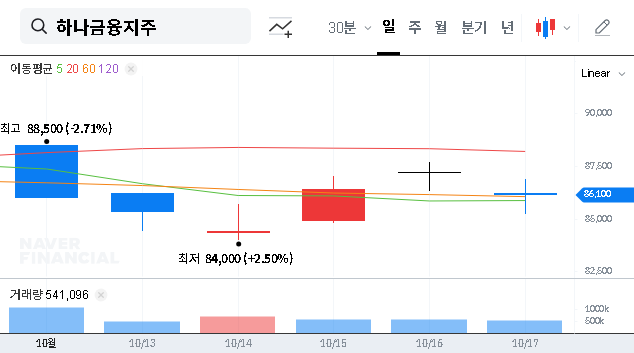
    The upcoming Hana Financial Group Q3 2025 earnings announcement represents a pivotal moment for investors. Scheduled for October 28, 2025, at 15:00 KST, this Investor Relations (IR) conference call for Hana Financial Group Inc. (086790) will provide critical insights into the company’s performance, potentially setting the tone for its stock trajectory in the months ahead. This comprehensive guide will unpack what’s at stake, analyze key metrics, and offer a strategic action plan for making informed investment decisions. The official announcement can be viewed via the company’s regulatory filing (Official Disclosure).

    Why the Q3 2025 Earnings Call is Crucial

    In today’s complex economic environment, the performance of major financial institutions like Hana Financial Group is a bellwether for the broader market. This earnings call is more than just a presentation of numbers; it’s a direct line to management’s thinking on strategy, risk, and future growth. For those following Hana Financial Group stock, this event provides the data needed to validate or challenge their investment thesis. Given the current lack of specific market consensus, the information revealed could lead to significant stock price volatility.

    Key Financial Metrics Investors Will Scrutinize

    Experienced investors will look beyond the headline earnings per share. The true health and trajectory of Hana Financial Group can be gauged by focusing on these core indicators:

    • Net Interest Margin (NIM): This measures the difference between interest income generated and the amount of interest paid out to lenders. A stable or expanding NIM suggests strong profitability from its core lending business.
    • Loan Growth: Indicates the demand for credit and the bank’s ability to expand its market share. Investors will be looking for sustainable, high-quality loan growth.
    • Asset Quality & Loan Loss Provisions: This reflects the bank’s risk management. An increase in non-performing loans (NPLs) or higher provisions for bad debt could be a red flag.
    • Non-Interest Income: Revenue from fees, commissions, and wealth management services. Strong growth here shows successful business diversification.
    • Capital Adequacy Ratios (e.g., CET1): These ratios measure the bank’s capital strength and its ability to absorb potential losses.

    For investors, the difference between a bull and bear scenario lies not just in the Q3 numbers, but in the narrative management presents for navigating future economic challenges and opportunities.

    Analyzing Potential Stock Impact: Bull vs. Bear Scenarios

    The market’s reaction to the Hana Financial earnings call will hinge on whether the results and outlook are perceived positively or negatively.

    The Bull Case: What a Positive Report Looks Like

    A positive report that could drive the stock price higher would involve performance that surpasses market expectations. This could include a surprisingly strong Net Interest Margin, robust loan growth without sacrificing asset quality, and higher-than-anticipated fee income. Furthermore, a clear and confident outlook from management regarding future profitability, digital transformation progress, or enhanced shareholder return policies (like increased dividends or share buybacks) would significantly boost investor sentiment.

    The Bear Case: Warning Signs to Watch For

    Conversely, a negative impact could be triggered if Q3 results fall short of analyst consensus. Key warning signs would be a contracting NIM, deteriorating asset quality (rising NPLs), or a significant increase in loan loss provisions. Vague or pessimistic guidance from management, announcements of unforeseen regulatory hurdles, or any negative changes to the dividend policy could also lead to a sell-off and exert downward pressure on the stock price.

    A Strategic Action Plan for Investors

    To navigate the potential volatility, a structured approach is essential. Consider breaking down your analysis into three phases.

    • Before the Call: Gather intelligence. Review the latest analyst reports to understand market consensus. Analyze recent broader economic trends that could affect the banking sector. It’s also wise to review the performance of competitors to establish a benchmark. Our guide to analyzing financial stocks can provide a useful framework.
    • During the Call: Listen carefully not just to the prepared remarks but also to the Q&A session. This is often where management provides unscripted, candid insights into challenges and opportunities. Pay attention to the tone and confidence of the executives.
    • After the Call: Analyze the market’s reaction in the hours and days following the announcement. Read post-earnings analysis from reputable financial news sources. Re-evaluate your own investment thesis based on the new information to decide whether to hold, buy, or sell.

    Frequently Asked Questions (FAQ)

    Q1: When is the Hana Financial Group Q3 2025 earnings call?

    A1: The IR conference for the Q3 2025 management performance results is scheduled for October 28, 2025, at 15:00 KST.

    Q2: What key information will be disclosed during this IR event?

    A2: The event will cover the detailed Q3 2025 financial results, management’s analysis of the performance, and a discussion of key current issues and the strategic outlook for the company.

    Q3: How might this earnings report affect the 086790 stock price?

    A3: If the results significantly exceed market expectations or the future outlook is very positive, the stock price could appreciate. Conversely, if results disappoint or negative guidance is provided, the stock could face downward pressure. High volatility is possible due to the current limited information.

    In conclusion, the Hana Financial Group Q3 2025 earnings call is a must-watch event for anyone invested in or considering an investment in the company. By conducting thorough due diligence and analyzing the results within a broader context, investors can make more strategic and informed decisions.

    (086790) Hana Financial Group Q3 2025 Earnings: Complete Investor Guide & Stock Analysis (086790) 관련 이미지
  • (222800) Simmtech Convertible Bond Exercise: An Investor’s Deep Dive & Stock Price Analysis

    (222800) Simmtech Convertible Bond Exercise: An Investor’s Deep Dive & Stock Price Analysis

    A significant financial development is unfolding at Simmtech (222800), a global leader in the semiconductor PCB market. The recent announcement regarding the Simmtech convertible bond exercise has sent ripples through the investment community, raising critical questions about the future of Simmtech’s stock price and its long-term trajectory. As a company renowned for its dominance in the GDDR substrate sector, this event presents both opportunities and potential risks.

    This in-depth analysis will dissect the intricacies of the convertible bond exercise, evaluate Simmtech’s current financial standing, and consider the wider macroeconomic environment. Our goal is to provide investors with a clear, actionable framework for navigating this pivotal moment, whether from a short-term trading or long-term investment perspective.

    Understanding the Simmtech Convertible Bond Event

    A convertible bond (CB) is a type of hybrid debt security that can be converted into a predetermined number of the issuing company’s shares. When bondholders choose to exercise this right, it means they are swapping their debt holding for equity. This action directly impacts a company’s financial structure and share count. For Simmtech, this is not just a routine financial maneuver; it’s a signal about market sentiment and the company’s future.

    The core of this event is the conversion of debt into equity. This fundamentally alters Simmtech’s balance sheet, reducing debt while potentially diluting existing shareholder value.

    Key Details of the Conversion

    According to the Official Disclosure, the specifics of the exercise are as follows:

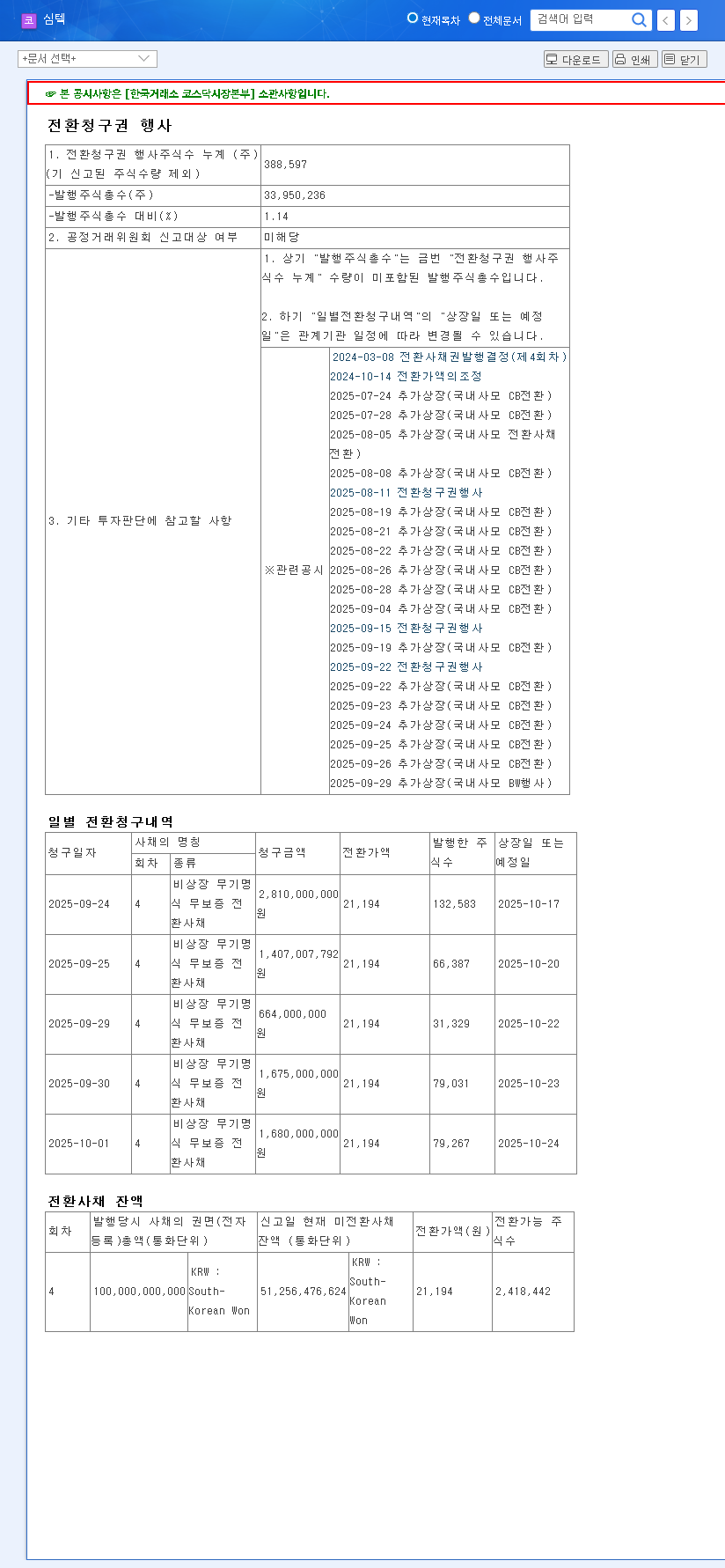
    • Shares Claimed: 388,597 (approximately 1.14% of market cap)
    • Conversion Price: KRW 21,194 per share
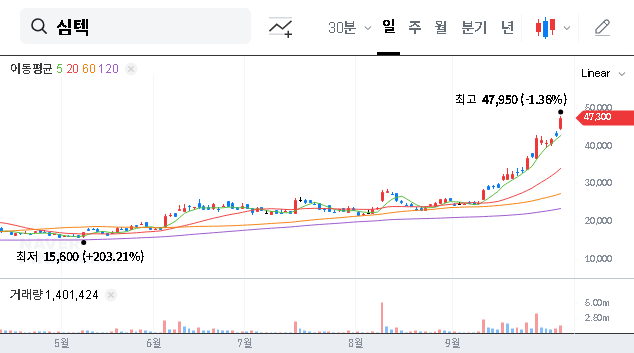
    • Recent Stock Price (Oct 1, 2025): KRW 46,950 per share
    • Key Conversion Dates: October 17, 20, 22, 23, 24, 2025

    Financial Health & Market Position

    To grasp the full impact of the Simmtech convertible bond exercise, we must analyze the company’s fundamentals. Simmtech’s story is one of contrasts: technological leadership set against challenging financial metrics.

    Strengths and Opportunities

    • Market Leadership: Simmtech holds the #1 global market share in the GDDR substrate sector, a critical component for high-performance graphics cards, AI accelerators, and data centers. This positions them perfectly to capitalize on long-term tech trends.
    • Revenue Growth: Despite profitability issues, H1 2025 revenue grew 6.41% year-over-year to KRW 644.365 billion, signaling a recovery in the broader semiconductor market.

    Weaknesses and Threats

    • Profitability Concerns: The company posted an operating loss of KRW -10.780 billion and a net loss of KRW -54.519 billion. Persistent losses are a major red flag for investors.
    • High Leverage: The debt-to-equity ratio stands at a high 243.51%, indicating significant financial risk, especially in a high-interest-rate environment.

    Impact Analysis: What This Means for Investors

    The conversion event has two primary effects that pull in opposite directions, creating short-term uncertainty for the Simmtech stock price.

    1. Stock Price: Dilution vs. Confidence

    The introduction of 388,597 new shares will increase the total number of shares outstanding, leading to a dilution effect of 1.14%. In theory, this can put downward pressure on the stock price. Furthermore, with the conversion price (KRW 21,194) being less than half the current market price, there is a strong incentive for bondholders to convert and sell for a quick profit, creating selling pressure.

    However, this can also be viewed as a vote of confidence. Sophisticated investors (the bondholders) are choosing to become shareholders, signaling they believe in the company’s long-term value. This positive sentiment can sometimes offset the mechanical effects of dilution. For a broader market perspective, investors can consult sources like Reuters Financial News.

    2. Financial Structure: Deleveraging and Capital Boost

    From a balance sheet perspective, the impact is unequivocally positive. The conversion extinguishes debt and replaces it with equity. This will directly reduce the high debt-to-equity ratio, improving the company’s financial stability and reducing interest payment burdens. This deleveraging makes the company more resilient and attractive to fundamentally-driven, long-term investors.

    Investor Strategy and Action Plan

    Given the conflicting signals, a nuanced approach is required for any Simmtech investment analysis. We propose a two-tiered strategy:

    • Short-Term (Cautious Approach): Over the next few weeks, volatility is likely. Monitor how the market absorbs the new shares. It may be prudent to wait for the selling pressure to subside and for the company’s next quarterly earnings report to show a clear path to profitability before initiating a new position.
    • Mid- to Long-Term (Bullish Outlook): The core thesis for Simmtech remains its technological dominance in the high-growth GDDR substrate and semiconductor PCB markets. The improved financial structure post-conversion is a significant long-term positive. Investors with a multi-year horizon can view any short-term price dips as potential buying opportunities, provided the company continues to show progress in its System IC business and a return to operational profitability.

    Ultimately, the Simmtech convertible bond exercise is a complex event with both short-term headwinds and long-term benefits. While immediate price action may be volatile, the move strengthens the company’s balance sheet and reaffirms its potential, anchored by its world-class technology. Cautious observation in the short term, coupled with a focus on fundamental recovery, will be the key to successful investing.

    (222800) Simmtech Convertible Bond Exercise: An Investor's Deep Dive & Stock Price Analysis 관련 이미지