Tag: LED

  • (092190) SEOUL VIOSYS 2025 Q4 Outlook: In-Depth Analysis & Stock Investment Strategy

    (092190) SEOUL VIOSYS 2025 Q4 Outlook: In-Depth Analysis & Stock Investment Strategy

    The latest SEOUL VIOSYS 2025 Q4 Outlook has sent ripples through the investment community, painting a challenging picture for the opto-semiconductor specialist (KRX: 092190). With a projected revenue of just KRW 185 billion, investors are left questioning the company’s trajectory. Is this a temporary downturn for a tech leader poised for a rebound, or a sign of deeper structural issues? This comprehensive analysis will break down the official disclosure, evaluate the company’s fundamentals, and provide a clear investment strategy for navigating the uncertainty surrounding SEOUL VIOSYS stock.

    The core issue is whether Seoul Viosys’s long-term investments in next-generation technologies like Micro LED can offset the severe short-term revenue decline and restore investor confidence.

    A Deep Dive into the SEOUL VIOSYS 2025 Q4 Outlook

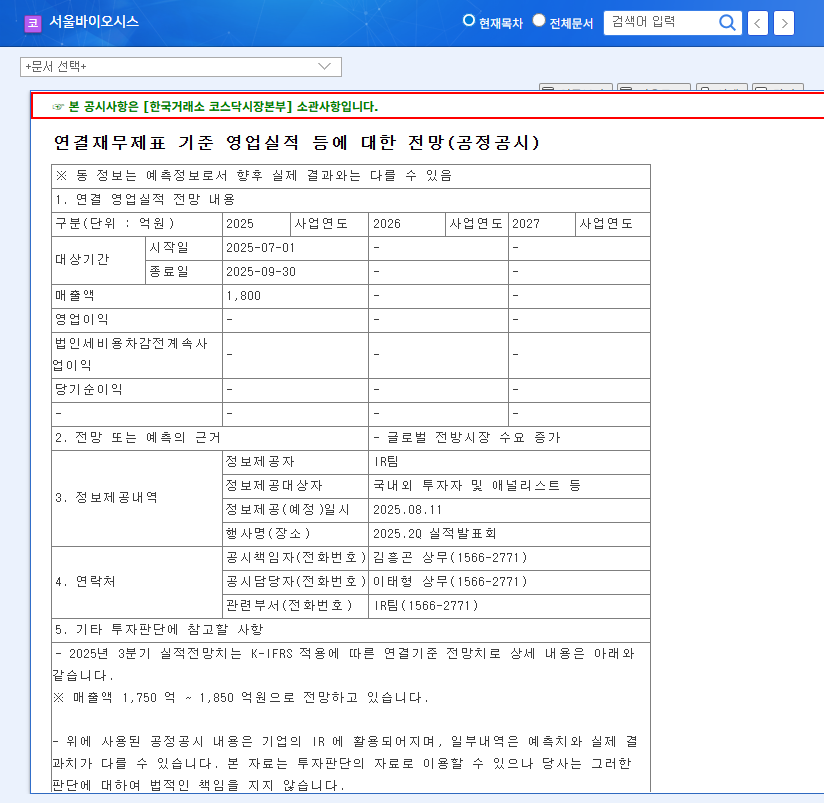
    On November 14, 2025, SEOUL VIOSYS released its consolidated financial performance forecast for the fourth quarter. The headline figure—a revenue of KRW 185 billion—is starkly lower than previous periods. This projection, detailed in the company’s Official Disclosure (DART Report), serves as the primary benchmark for the market in the absence of broad analyst consensus. This figure represents a significant contraction not only year-over-year but also sequentially, amplifying concerns about a deepening business slump and casting doubt on the company’s ability to achieve profitability in the near term.

    Fundamental Weaknesses: Analyzing the Performance Slump

    Persistent Revenue Decline and Profitability Woes

    The Q4 forecast is not an isolated event. It is the culmination of a worrying trend. The company’s cumulative revenue for the third quarter of 2025 had already fallen by 22.3% year-on-year, accompanied by a substantial operating loss of KRW 14.844 billion. While SEOUL VIOSYS holds a commanding market share in niche segments like UV LED, it has not been enough to insulate it from a broader downturn in the global LED manufacturing industry. The projected Q4 revenue pales in comparison to historical figures, suggesting that the probability of continued operating losses is extremely high and that a turnaround is not imminent.

    Concerning Financial Health Indicators

    A closer look at the balance sheet reveals further reasons for caution. While the debt-to-equity ratio has improved, other key metrics signal instability. The company’s financial health can be summarized by these key points:

    • Low Liquidity: A current ratio of just 49.35% indicates potential challenges in meeting short-term obligations, a significant red flag for investors.
    • Negative Cash Flow: The company is experiencing cash outflows from operating activities due to persistent losses. This strains its ability to fund operations and investments without relying on external financing.
    • Declining Projections: Key indicators such as net profit and Return on Equity (ROE) are all projected to decline, offering little solace for those looking for positive signals.

    Stock Impact and Future Growth Potential

    Short-Term Pain for SEOUL VIOSYS Stock

    The disappointing SEOUL VIOSYS 2025 Q4 Outlook is almost certain to trigger a negative reaction in the market. This forecast is likely to fuel bearish sentiment, leading to significant short-term downward pressure on the stock price. The vast gap between this projection and previous performance metrics will likely cause a re-evaluation of the company’s worth by analysts and institutional investors, potentially leading to sell-offs.

    Can Future Tech Investments Save the Day?

    The bull case for SEOUL VIOSYS rests on its investment in high-growth future technologies. The company is a key player in developing Micro LEDs (the next-generation display technology), UV LEDs (for sterilization and industrial curing), and VCSELs (used in 3D sensing and LiDAR). For more information on this market, you can review our comprehensive analysis of the Micro LED market. However, the pressing question is whether these long-term bets can generate revenue quickly enough to offset the current decline. If the performance slump continues, the company’s ability to fund this crucial R&D will be questioned, eroding confidence in its long-term growth story. For a broader understanding of semiconductor trends, resources like Semiconductor Industry Association (SIA) provide valuable data.

    Investment Thesis & Recommendations

    Given the deeply concerning revenue forecast and underlying financial weaknesses, a highly cautious approach is warranted. The current outlook suggests that the company’s challenges are significant and not easily resolved.

    Investment Opinion: Sell / Cautious Hold

    The rationale is clear: the sharp decline in projected revenue points to a severe weakening of business competitiveness and a deteriorating market environment. Confidence that future technology investments can bridge the gap in the short-to-medium term is low. Investors should be aware of the following key risks:

    • Potential for further downward revisions to earnings forecasts.
    • Intensifying competition in the LED and semiconductor space.
    • Delays in the commercialization and profitability of new technologies.
    • Broader macroeconomic headwinds impacting global demand.

    Investors considering a position in SEOUL VIOSYS must exercise extreme caution. It is critical to await the final Q4 earnings announcement and scrutinize management’s strategic plans for a tangible performance recovery before making any investment decisions.
    (092190) SEOUL VIOSYS 2025 Q4 Outlook: In-Depth Analysis & Stock Investment Strategy 관련 이미지
    (092190) SEOUL VIOSYS 2025 Q4 Outlook: In-Depth Analysis & Stock Investment Strategy 관련 이미지
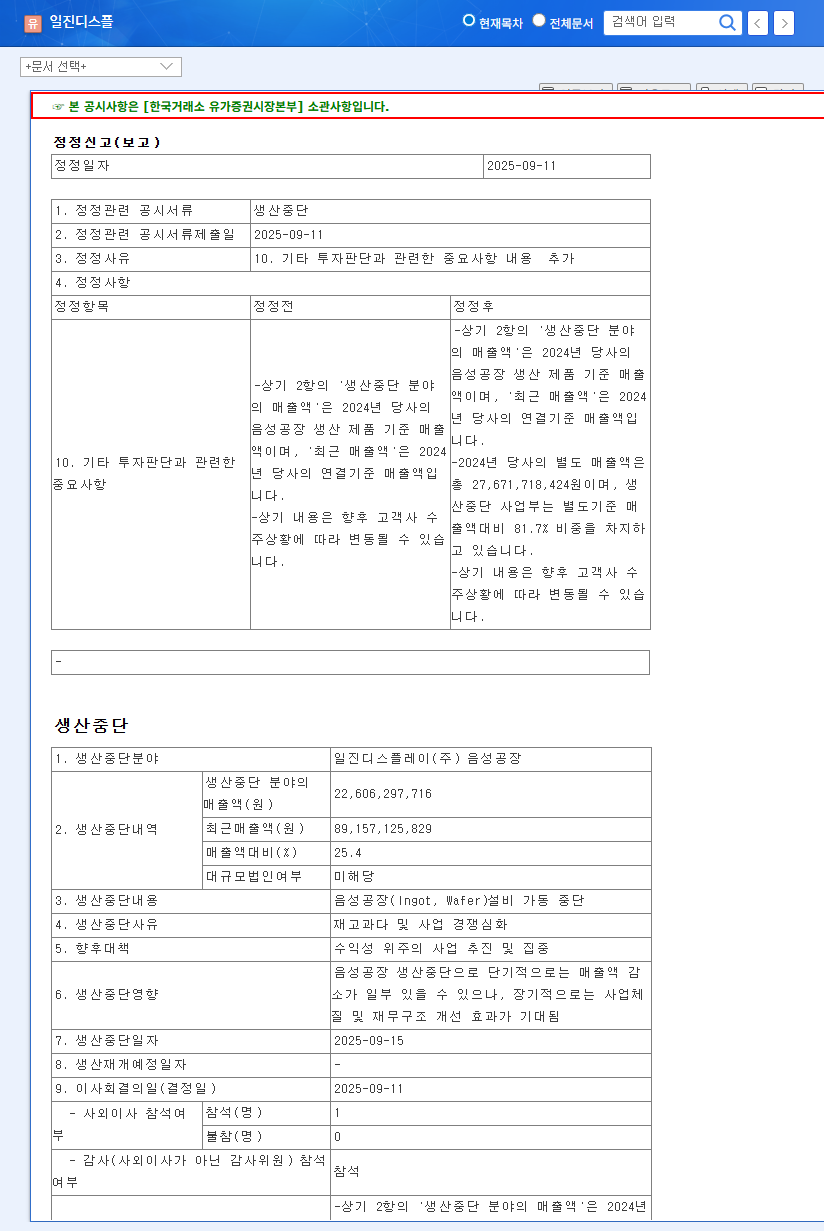
  • Iljin Display Halts Production: What Investors Need to Know


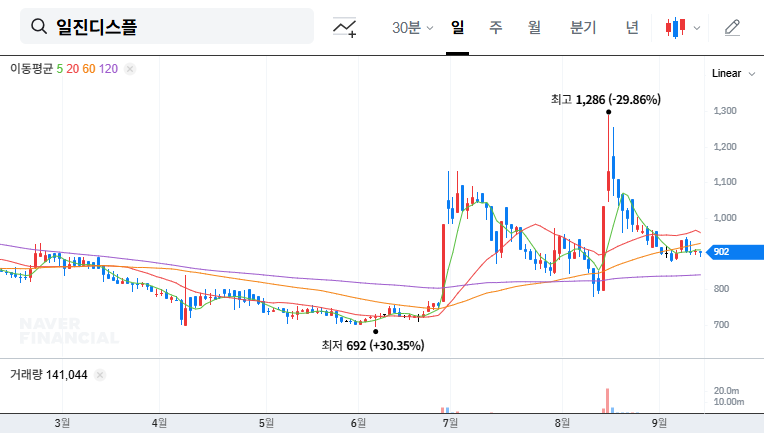
    Iljin Display Halts Production: What Investors Need to Know 대표 차트 이미지


    What Happened?

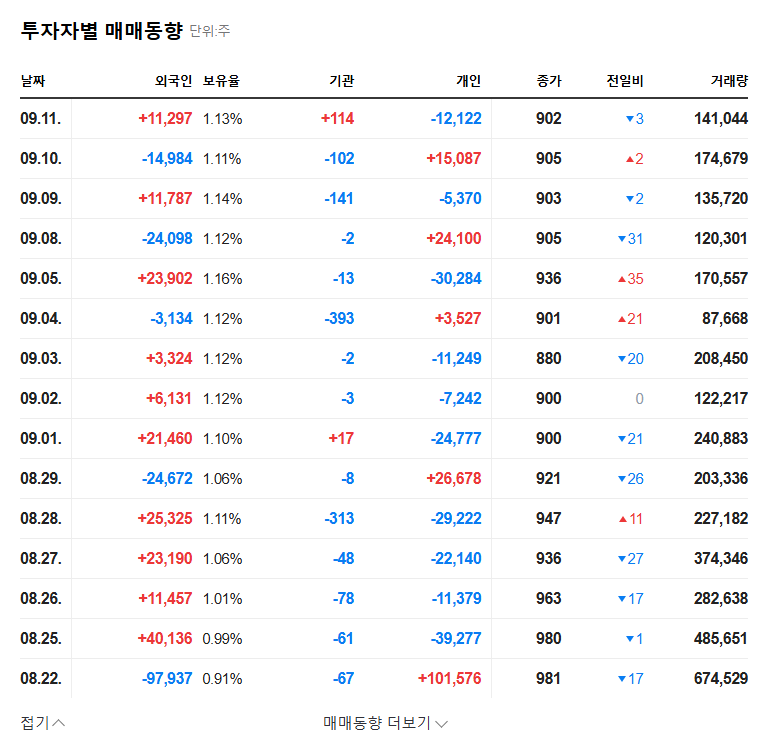
    Iljin Display announced on September 11, 2025, the suspension of Ingot and Wafer production at its Eumseong plant. This is projected to result in a sales decrease of approximately 226 billion won, representing 25.4% of the company’s total revenue.

    Why the Halt?

    Iljin Display has been facing declining sales in its DS (Touch Screen Panel) and AD (Sapphire Wafer) divisions due to a slowdown in the smartphone market and intensified competition. The production halt appears to be an inevitable choice to improve profitability. The company stated its intention to focus on new businesses, such as Micro-LED substrates and SiC processing.

    What’s the Impact?

    • Short-term Impact: Sales decline, profit deterioration, worsening financial health, stock price drop
    • Long-term Impact: Accelerated business restructuring, focus on new businesses, potential weakening of competitiveness, need for strengthened financial risk management, downward adjustment of market expectations

    What Should Investors Do?

    Investors should exercise extreme caution with Iljin Display at this time. Selling or reducing holdings should be considered. Closely monitor the company’s business restructuring, progress in new ventures, and efforts to improve financial health.


    FAQ

    Why did Iljin Display halt production at its Eumseong plant?

    The production halt is a strategic decision driven by struggling existing businesses due to a smartphone market slowdown and increased competition, coupled with a focus on new ventures.

    How will this production halt affect Iljin Display’s stock price?

    The halt is expected to increase downward pressure on the stock price due to weakened investor sentiment.

    How should investors respond?

    Investors should consider selling or reducing their holdings and closely monitor the company’s restructuring efforts and progress in its new business ventures.


    Iljin Display Halts Production: What Investors Need to Know 관련 이미지
    Iljin Display Halts Production: What Investors Need to Know 관련 이미지


  • HMNEX Stock Forecast: Management Reinforcement, Semiconductor Venture, and Investment Opportunity Analysis (August 2025)

    1. What Happened?

    HMN Housing Management Co., Ltd. increased its stake in HMNEX by purchasing an additional 157,684 shares, raising its stake to 37.12%. This is interpreted as a signal of intent to strengthen management control.

    2. Why Does it Matter?

    This change in stake can provide positive momentum for the stock price in the short term. More importantly, the strong will of the management increases the credibility of the business diversification strategy, especially the entry into the semiconductor equipment business.

    3. So, What’s Next?

    • Positive Factors: Management stability, growth potential of the semiconductor business, stable demand for the LED business.
    • Risk Factors: High debt ratio, uncertainty of the new business, macroeconomic variables.

    The long-term stock price trend depends on the actual performance of the new business and the management of financial soundness.

    4. What Should Investors Do?

    • Closely monitor the performance and synergy effects of the new business.
    • Track changes in financial soundness indicators.
    • Refer to market analysis and expert opinions.

    It is crucial to establish an investment strategy from a long-term perspective without being swayed by short-term stock price fluctuations.

    What are HMNEX’s main businesses?

    HMNEX operates LED and semiconductor equipment businesses.

    Why is the recent stake change important?

    It’s a signal of management’s commitment to strengthening its control and pursuing its business diversification strategy.

    What are the key considerations when investing in HMNEX?

    Financial risks, such as the high debt ratio and uncertainties surrounding the new business, should be considered.

  • RF Semi Turns a Profit, But Delisting Risk Remains: What Should Investors Do?

    1. What Happened? RF Semi’s H1 2025 Earnings

    RF Semi reported sales of 5.9 billion KRW, operating profit of 400 million KRW, and net income of 300 million KRW for the first half of 2025, marking a return to profitability. This exceeded market expectations. However, sales of its main product, ECM semiconductors, decreased significantly year-over-year, and the LED lighting division also continued to struggle.

    2. Why Did This Happen? Profitability Drivers and Delisting Risk

    The main drivers of the return to profitability were a decrease in selling, general, and administrative expenses (SG&A), an increase in other income, and a decrease in financial expenses. Despite these positive factors, the risk of delisting due to a qualified audit opinion in 2024 remains. The results of the delisting review are expected on August 31st and will be a critical factor determining the stock’s future.

    3. What’s Next? RF Semi’s Future and Investment Strategy

    The delisting decision will determine RF Semi’s future. If the company avoids delisting, short-term stock price gains are possible. However, delisting could result in significant losses for investors. In the long term, recovery of the main business segments, performance of new businesses such as the foundry business, securing financial soundness, and improving management transparency are crucial.

    4. Investor Action Plan

    Investing in RF Semi is currently very risky. Investment decisions should be made carefully, considering the possibility of delisting. Avoid short-term investment. Even if the company avoids delisting, a thorough analysis of its fundamentals is crucial. For long-term investors, continuous monitoring of the delisting risk, main business recovery, and new business performance is essential.

    Why is RF Semi facing delisting?

    RF Semi received a qualified audit opinion in 2024. The results of the delisting review are expected on August 31st.

    How did RF Semi perform in H1 2025?

    The company reported sales of 5.9 billion KRW, operating profit of 400 million KRW, and net income of 300 million KRW, returning to profitability.

    Should I invest in RF Semi?

    Investing in RF Semi carries significant risk due to the delisting threat. Extreme caution is advised.

  • Seoul Semiconductor’s Q2 2025 Earnings Shock: Analysis and Outlook for Investors

    1. What Happened?

    Seoul Semiconductor reported preliminary Q2 2025 results with revenue of KRW 251.5 billion (-6% YoY), operating loss of KRW 7.8 billion (turning to a loss), and net loss of KRW 24.7 billion (turning to a loss). These figures fell significantly short of market expectations, resulting in an earnings shock.

    2. Why Did This Happen?

    The main reasons for the decline in performance include decreased sales, increased selling, general and administrative expenses (SG&A), and increased financial expenses. The rise in the KRW/USD exchange rate also had a negative impact. Notably, both operating and net income turned to losses, significantly below expectations.

    3. What’s Next?

    Short-Term Outlook:

    • The earnings shock and weakened investor sentiment are expected to put downward pressure on the stock price.
    • Concerns about exchange rate volatility and financial soundness are likely to persist.

    Long-Term Outlook:

    • The company’s solid technology and patent portfolio still offer long-term growth potential.
    • The stock price decline could present an attractive entry point for long-term investors (provided earnings recover).

    4. What Should Investors Do?

    Short-term Investors: Caution is advised before increasing investment. It’s best to make investment decisions after confirming the trend of earnings improvement.

    Long-term Investors: If you believe in Seoul Semiconductor’s technology and growth potential, the current stock price decline could be seen as a buying opportunity. However, it’s crucial to monitor the earnings turnaround in the second half of 2025 and beyond. Closely monitor key indicators such as exchange rate trends, R&D investment performance, earnings improvement in the second half, and valuation in case of a stock price decline.

    Frequently Asked Questions

    What are the main reasons for Seoul Semiconductor’s poor performance in Q2 2025?

    The main reasons are decreased sales, increased SG&A expenses, increased financial expenses, and the rise in the KRW/USD exchange rate.

    Should I invest in Seoul Semiconductor?

    Short-term investors should exercise caution, while long-term investors should consider investing after confirming earnings recovery. While the company’s technology and growth potential are valid, the current uncertainties should be considered.

    What is the outlook for Seoul Semiconductor’s stock price?

    Negative impacts are expected to dominate in the short term, but the stock’s direction will depend on earnings recovery in the long term. Continuous monitoring of key indicators is important.

  • Kumho Electric’s Q2 2025 Earnings: Deepening Losses and Capital Erosion Raise Concerns

    1. What Happened? Q2 2025 Earnings Breakdown

    Kumho Electric reported sales of 9.7 billion KRW, an operating loss of 0.9 billion KRW, and a net loss of 1.4 billion KRW in Q2 2025. Sales declined by 23.8% year-over-year, and the company continues to struggle with operating losses. Most alarmingly, the net loss has further deepened the company’s capital erosion.

    2. Why Did This Happen? Reasons for the Decline

    The main drivers of the sales decline are the sluggish general/LED lighting market and poor performance in other business segments. Rising cost of goods sold and increasing selling, general, and administrative expenses are further squeezing profitability.

    • Market Downturn: The overall stagnation of the lighting market and intensifying competition have severely impacted Kumho Electric.
    • Declining Profitability: Falling sales combined with rising costs and SG&A expenses hinder profitability improvements.
    • Weak Financial Structure: Increasing debt and interest expenses due to convertible bond issuances pose a significant financial burden.

    3. What’s Next? Outlook and Investment Strategy

    Kumho Electric is seeking new avenues for growth through ventures into LED display boards, drones, and smart lighting solutions. However, these initiatives have yet to yield tangible results. Addressing the severe financial risk of capital erosion is the company’s most pressing concern. Investors should closely monitor the progress of new businesses, efforts to improve the financial structure, and future earnings trends.

    4. Investor Action Plan: Risk Management and Investment Decisions

    • Proceed with Caution: Investing in Kumho Electric carries significant risk. Thorough due diligence is crucial before making any investment decisions.
    • Close Monitoring: Continuously track earnings improvements, progress in new business ventures, and efforts to strengthen the financial structure.
    • Risk Management: Acknowledge the potential for losses and invest only within your risk tolerance.

    Frequently Asked Questions

    What are Kumho Electric’s main businesses?

    Kumho Electric’s core business has traditionally been the manufacturing and sale of lighting products. Recently, the company has been actively pursuing new business ventures in LED display boards, drones, and smart lighting solutions.

    What is the current financial status of Kumho Electric?

    Kumho Electric is currently experiencing capital erosion, and its financial situation is precarious due to continuous operating losses. The debt burden from convertible bond issuances is also a significant concern.

    Should I invest in Kumho Electric?

    Investing in Kumho Electric involves substantial risk. Given the uncertainties surrounding the success of new ventures and the company’s ability to improve its financial standing, investors should exercise extreme caution.

  • Seoul Semiconductor H1 2025 Earnings: Continued Losses, But Future Growth Potential?

    1. Seoul Semiconductor H1 2025 Earnings: Key Highlights

    Seoul Semiconductor reported revenue of KRW 251.5 billion, an operating loss of KRW 7.8 billion, and a net loss of KRW 24.7 billion for H1 2025. Despite exceeding revenue expectations, the company remained unprofitable, failing to maintain the momentum from its Q4 2024 return to profitability.

    2. Reasons for the Weak Performance: Macroeconomic and Industry Headwinds

    The global economic downturn and weakening demand in the LED industry are the primary culprits behind Seoul Semiconductor’s struggles. Declining demand across IT, automotive, and lighting markets, coupled with intensifying competition, has significantly impacted profitability. The LED industry, in particular, faces heightened short-term uncertainty.

    3. Future Growth Drivers: Next-Gen Technologies and Market Expansion

    However, the future isn’t entirely bleak for Seoul Semiconductor. Its differentiated technologies, such as WICOP and SunLike, provide a competitive edge in emerging markets like Mini LED, Micro LED, and automotive headlamps. Furthermore, growth in the automotive LED market and increasing demand for health-focused and eco-friendly lighting present new opportunities.

    4. Investment Strategy: A Wait-and-See Approach with Close Monitoring

    The current stock price reflects the recent weak performance. Given the macroeconomic uncertainty and intensified industry competition, a wait-and-see approach is recommended, with close monitoring of performance improvements and new business developments. The visibility of success in the automotive and high-end lighting markets will be crucial for investment decisions. Investors should closely monitor the company’s IR activities and upcoming quarterly earnings releases.

    How did Seoul Semiconductor perform in H1 2025?

    Seoul Semiconductor reported revenue of KRW 251.5 billion, an operating loss of KRW 7.8 billion, and a net loss of KRW 24.7 billion in the first half of 2025. The company experienced declining sales and continued losses compared to the same period last year.

    What are the reasons for the weak performance?

    The global economic downturn, weakening demand in the LED industry, and intensifying competition are considered the primary factors contributing to the weak performance. Declining demand across IT, automotive, and lighting markets has negatively impacted the company’s results.

    What is the future growth potential of Seoul Semiconductor?

    Seoul Semiconductor has growth potential in emerging markets like Mini LED, Micro LED, and automotive headlamps, driven by its differentiated technologies such as WICOP and SunLike. Growth in the automotive LED market and increasing demand for health-focused and eco-friendly lighting are also positive factors.

    What investment strategy should investors consider?

    Given the current stock price reflects the recent weak performance, a wait-and-see approach is recommended, with close monitoring of performance improvements and new business developments. The visibility of success in the automotive and high-end lighting markets should be a key factor in investment decisions.

  • RF Semi 2025 Half-Year Earnings: Delisting Risk Intensifies? Urgent Investor Check Required!

    1. RF Semi’s 2025 Half-Year Results: Far Below Market Expectations

    RF Semi’s 2025 half-year revenue was 5.9 billion KRW, slightly below expectations (6.1 billion KRW). However, operating profit and net income were significantly lower than expected at 0.4 billion KRW and 0.3 billion KRW, respectively, compared to projections of 1.4 billion KRW and 1.5 billion KRW.

    2. Analyzing the Causes of Underperformance: Ongoing Going Concern Uncertainty

    Despite a decline in semiconductor sales, the overall revenue decline was limited due to strong performance in the LED lighting segment. However, the auditor’s opinion of ‘substantial doubt about the company’s ability to continue as a going concern’ remains unresolved, raising doubts about the company’s fundamentals. High debt ratios and convertible bonds maturing in 2026 also pose a financial burden.

    3. Key Information for Investors: Assessing the Delisting Risk

    The most significant risk factor is the possibility of delisting. If the Korea Exchange decides to delist RF Semi, investors could lose their entire investment. Furthermore, macroeconomic uncertainties such as a global economic slowdown, rising interest rates, and raw material price volatility also pose investment risks.

    4. Investment Strategies: Extreme Caution Required

    • New Investments: Under the current circumstances, new investments should be considered with extreme caution. Investing in RF Semi while the delisting risk remains is highly risky.
    • Existing Investments: Closely monitor the company’s financial restructuring efforts and the Korea Exchange’s review results. Consider cutting losses if negative outcomes are anticipated.
    How did RF Semi perform in the first half of 2025?

    RF Semi’s performance fell significantly short of market expectations, reporting lower revenue, operating profit, and net income than projected.

    What is the biggest risk for RF Semi?

    The most substantial risk is the possibility of delisting from the Korea Exchange due to ongoing concerns about its ability to continue as a going concern.

    What should investors do?

    New investors should exercise extreme caution. Existing investors should monitor the company’s situation closely and consider selling their shares if necessary.

  • JT (089790) Earnings Shock: Revenue Plunges 73%, What Should Investors Do?

    1. What Happened?: JT’s H1 2025 Performance Analysis

    JT reported revenue of ₩10.4B (down 73% YoY), an operating loss of ₩0.4B, and a net loss of ₩2.3B for the first half of 2025. While slightly beating expectations, the results represent a significant deterioration compared to the same period last year.

    2. Why Did This Happen?: Causes of the Decline

    The primary drivers are sharp declines in sales within the semiconductor inspection equipment and LED business segments. Increased R&D expenditure also contributed to the worsening profitability. High dependence on specific customers further exacerbated the earnings volatility.

    3. What’s Next?: Outlook and Investment Strategy

    Downward pressure on the stock price is expected in the short term. However, a rebound is possible depending on the semiconductor market recovery, the successful launch of new equipment, and the company’s penetration into the Automotive and HBM markets. The current investment recommendation is ‘Neutral’. It is advisable to consider investment only after observing positive signals, such as a turnaround in the semiconductor industry, increased investment from major customers, and tangible results from new businesses.

    4. Investor Action Plan: What to Watch Out For

    • Short-term Investors: Cautious approach needed, risk management is crucial.
    • Long-term Investors: Continuous monitoring of industry trends and the company’s progress in securing new growth engines is essential.

    Investors should closely monitor the performance of the new Saw Sorter equipment launch, progress in the Automotive and HBM markets, investment plans of major customers, and changes in macroeconomic indicators.

    Frequently Asked Questions

    What are JT’s main businesses?

    JT’s main businesses are semiconductor inspection equipment and LEDs.

    What are the main causes of this earnings shock?

    The sharp decline in sales in the semiconductor and LED business segments and increased R&D spending.

    Should I invest in JT?

    The current investment recommendation is ‘Neutral’. It is recommended to carefully monitor market conditions and the company’s performance before making any investment decisions.
  • KMW (032500) H1 2025 Earnings Report Analysis: Impact of 5G Investment Decline

    1. KMW H1 2025 Earnings: Below Market Expectations

    KMW reported revenue of KRW 25.2 billion (down 41.2% YoY), operating loss of KRW 4.6 billion, and net loss of KRW 14.3 billion for H1 2025. These figures fell significantly short of market expectations. The sharp 98.1% decline in SYSTEM product sales within the RF segment was a major contributor to the overall poor performance.

    2. Reasons for the Decline: 5G Investment Slowdown and Increased Competition

    KMW’s underperformance can be attributed to two primary factors. First, the global decline in 5G investment has led to a sharp drop in demand for RF products. Second, the LED segment has been impacted by the global economic slowdown and intensified market competition. These external factors negatively affected both of KMW’s core business segments.

    3. KMW’s Future Strategy: R&D Investment and Business Reorganization

    Despite the challenging environment, KMW is actively pursuing future growth opportunities. The company issued KRW 30 billion in convertible bonds to improve its financial structure and is investing heavily in R&D for next-generation communication technologies like Massive MIMO and 16port Panel Antenna. KMW is also focusing on cost optimization through business reorganization, including the transfer of overseas production facilities and consolidation of manufacturing functions.

    4. Investor Action Plan: A Cautious Approach is Necessary

    While KMW is currently facing difficulties, there are potential positive factors such as the resumption of 5G investment and the commercialization of new technologies. Investors should closely monitor 5G market trends, KMW’s R&D achievements, and order intake, and make investment decisions cautiously. It’s crucial to evaluate KMW’s investment value from a long-term perspective rather than focusing on short-term performance.

    What were KMW’s financial results for H1 2025?

    KMW reported revenue of KRW 25.2 billion, an operating loss of KRW 4.6 billion, and a net loss of KRW 14.3 billion for the first half of 2025, falling short of market expectations.

    What are the main reasons for KMW’s poor performance?

    The global slowdown in 5G investments and increased market competition are the primary reasons for the decline. The significant drop in SYSTEM product sales within the RF segment particularly impacted the overall results.

    What is the outlook for KMW?

    While there are potential positive factors, such as the resumption of 5G investment and the commercialization of new technologies, short-term improvement is unlikely. A long-term perspective is necessary when evaluating KMW’s investment potential.