Tag: Kumho Tire

  • Kumho Tire Halts Production: Impact Analysis and Investment Strategies

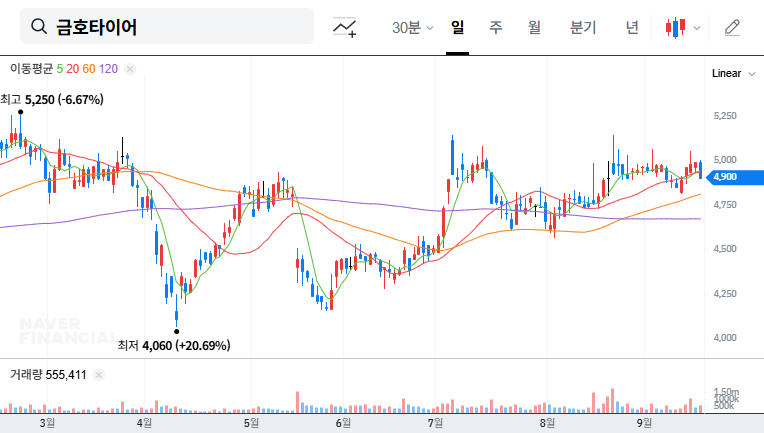
    Kumho Tire Halts Production: Impact Analysis and Investment Strategies 대표 차트 이미지

    1. What Happened? Kumho Tire’s Gwangju Plant Production Halt

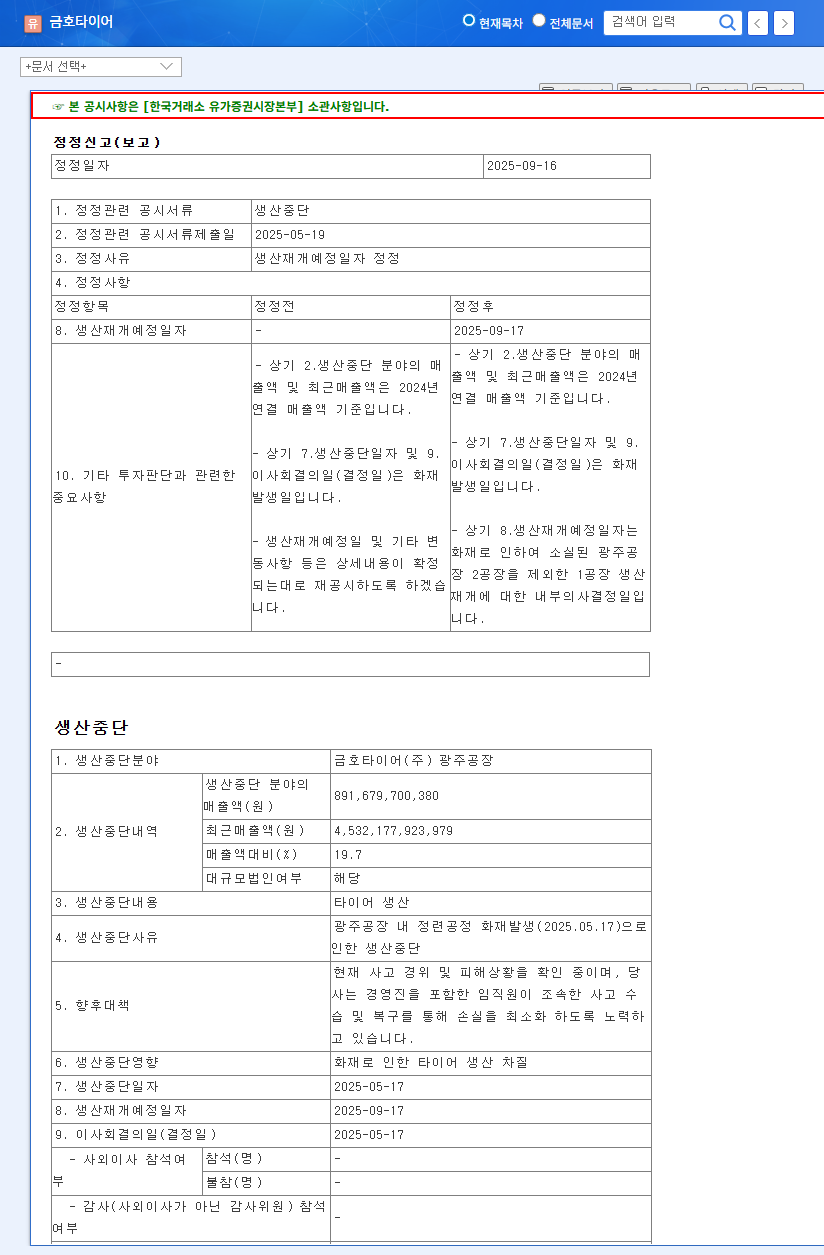
    Kumho Tire announced a production halt at its Gwangju plant on September 16, 2025. This represents a production disruption of 891.7 billion KRW, equivalent to 19.7% of annual sales. Following a strong performance in the first half of the year, this halt has sent shockwaves through the market.

    • Halt Details: Tire production at Gwangju plant
    • Financial Impact: 891.7 billion KRW (19.7% of sales)
    • Announcement Date: September 16, 2025

    2. Why the Halt? Background and Analysis

    The specific cause of the production halt isn’t explicitly stated in the provided text. However, the need for further analysis on the exact cause suggests potential factors beyond the mentioned fire incident. This requires careful monitoring of future company disclosures and news.

    3. What’s the Impact? Short-Term and Long-Term Analysis

    3.1. Short-Term Impact

    • Sales decline and profitability deterioration
    • Production planning adjustments and supply chain disruptions
    • Increased costs (production restart, recovery, alternative production)
    • Downward pressure on stock price

    3.2. Long-Term Impact

    • Delayed profitability recovery
    • Potential market share loss
    • Possible deterioration of financial health
    • Weakening of new growth drivers
    • Potential Positives: Enhanced safety & quality, supply chain restructuring

    4. What Should Investors Do? Investment Strategies

    • New Investors: Wait and see, assess the situation
    • Current Holders: Consider reducing holdings or monitoring the situation
    • Long-Term Investors: Potential buying opportunity (thorough analysis required)

    Frequently Asked Questions (FAQ)

    How will the Gwangju plant production halt affect Kumho Tire’s stock price?

    Downward pressure on the stock price is expected in the short term. The significant scale of the production disruption is likely to negatively impact investor sentiment.

    How is Kumho Tire responding to this situation?

    According to the provided information, specific response measures haven’t been publicly disclosed yet. Future announcements from the company should be closely monitored.

    What is the long-term investment outlook for Kumho Tire?

    Kumho Tire’s crisis management capabilities and the speed of production normalization are crucial. While the situation might present a buying opportunity for those who believe in the company’s long-term growth potential, careful consideration is essential.
    Kumho Tire Halts Production: Impact Analysis and Investment Strategies 관련 이미지
  • Kumho Tire Q2 Earnings Shock: Net Profit Plunge, What’s the Investment Strategy?

    1. Kumho Tire Q2 Earnings: What Happened?

    On August 13, 2025, Kumho Tire announced its Q2 2025 earnings. Revenue reached ₩1.22 trillion, slightly below expectations, while operating profit surpassed expectations at ₩175.1 billion. However, net profit plummeted to ₩5.5 billion, significantly below market expectations, resulting in an earnings shock.

    2. Why the Net Profit Plunge?

    • • Impact of factory fire and related losses
    • • Increased cost burden due to rising raw material and oil prices
    • • Potential increase in financial costs due to exchange rate fluctuations
    • • Provision for potential lawsuits (e.g., ordinary wage lawsuits)

    3. So, What’s the Investment Strategy?

    Downward pressure on stock prices is expected in the short term. Investors should consider the following three perspectives:

    • Hold (Neutral): If the negative impact is already reflected in the stock price, or if long-term growth is anticipated.
    • Reduce: If the cause of the net profit shock is serious and future earnings improvement is uncertain.
    • Buy (with caution): If the net profit decline is clearly a one-off event and there is a high probability of future cost improvement and price increases. However, this carries significant risk.

    4. Key Factors to Watch

    Investors should closely monitor upcoming detailed earnings releases and related disclosures to understand the exact causes of the net profit decline and future outlook. Continued attention to external factors such as raw material prices, exchange rate fluctuations, intensifying competition, and global economic uncertainty is also crucial.

    Frequently Asked Questions

    What were the key takeaways from Kumho Tire’s Q2 earnings?

    While operating profit exceeded expectations, net profit suffered a significant drop, resulting in an earnings shock.

    What caused the sharp decline in net profit?

    The main factors are believed to be losses from the factory fire, rising raw material prices, and increased exchange rate volatility.

    What investment strategies should be considered?

    Investors should carefully analyze the causes of the net profit shock and the possibility of future earnings improvement to choose between holding, selling, or buying. The buy strategy involves high risk.

  • Kumho Tire Q2 Earnings Shock: Sharp Drop in Net Profit, What Should Investors Do?

    1. Kumho Tire’s Q2 Results: What Happened?

    Kumho Tire reported sales of KRW 1.2213 trillion and operating profit of KRW 175.2 billion for Q2 2025. Sales slightly exceeded expectations, and operating profit beat market forecasts. However, net profit plummeted to -KRW 1 billion, resulting in an earnings shock.

    2. The Sharp Drop in Net Profit: What are the Reasons?

    The exact reasons for the decline in net profit are yet to be fully disclosed. As this is a preliminary earnings release, further details will be provided in subsequent announcements. However, the report points to several potential factors, including rising raw material prices, fluctuations in exchange rates and interest rates, increased shipping costs, and ongoing litigation.

    • Rising Raw Material Prices: Increasing prices of crude oil and natural rubber likely contributed to higher input costs.
    • Fluctuations in Exchange Rates and Interest Rates: Changes in the KRW/USD and KRW/EUR exchange rates, coupled with rising interest rates, could have led to increased financial expenses.
    • Increased Shipping Costs: The rise in the Baltic Dirty Tanker Index and the China Containerized Freight Index may have pushed up logistics costs.
    • Litigation: The outcome of ongoing legal proceedings might have negatively impacted net profit.

    3. What Should Investors Do?

    Investors should closely monitor the upcoming detailed Q2 earnings announcement. Clear explanations regarding the decline in net profit will be crucial. Furthermore, investment decisions should be made after careful consideration of macroeconomic conditions, raw material price trends, exchange rate and interest rate movements, and the outcome of any legal proceedings.

    FAQ

    Q: What is the key takeaway from Kumho Tire’s Q2 earnings?

    A: While operating profit surpassed expectations, a sharp decline in net profit resulted in an earnings shock.

    Q: Why did net profit drop so significantly?

    A: As this is a preliminary release, the exact reasons will be disclosed in future announcements. However, potential factors include rising raw material prices, currency and interest rate fluctuations, higher shipping costs, and ongoing litigation.

    Q: How should investors react?

    A: Investors should carefully review the detailed earnings release and consider macroeconomic indicators, legal outcomes, and other relevant factors before making investment decisions.

  • Kumho Tire Q2 2025 Earnings Analysis: Navigating Uncertainty

    1. Kumho Tire Q1 2025 Performance: A Challenging Start

    Kumho Tire faced a double whammy of declining sales and profitability in Q1 2025. Seasonal factors, a global economic slowdown impacting demand, and a sharp 26% rise in natural rubber prices all contributed to the weak performance. Increasing inventory and debt signal further challenges.

    2. Q2 IR Key Checkpoints: Navigating Uncertainty

    The crucial question for the Q2 IR meeting is whether Kumho can show improvement over Q1. Investors should focus on cost-cutting efforts and any signs of profitability gains. Furthermore, clear explanations are needed regarding the outlook for the second half of the year, sales strategies, FX risk management, and plans to strengthen financial health. Of particular importance are risk mitigation strategies related to raw material price fluctuations, exchange rate volatility, and the global economic slowdown.

    3. Investment Strategy: Proceed with Caution

    Analysis of Kumho Tire’s stock data from 2020-2024 reveals sensitivity to external factors. With the likelihood of a stock decline following the poor Q1 results, the post-IR price movement will depend heavily on the market’s assessment of Q2 performance and the outlook for the remainder of the year. Investment decisions should be made carefully after thorough analysis of the IR information.

    4. Key Investor Action Plan

    • Analyze IR materials thoroughly: Focus on performance improvements, H2 outlook, and risk management.
    • Monitor market reaction: Follow post-IR market analysis and expert opinions.
    • Consider portfolio diversification: Mitigate risk by diversifying your investments.

    Frequently Asked Questions

    Will Kumho Tire’s Q2 earnings improve over Q1?

    Improvements over Q1 performance will be addressed in the Q2 IR presentation. Key factors to watch are cost-cutting efforts and profitability gains.

    Is it a good time to invest in Kumho Tire?

    Investment decisions should be based on individual investor judgment. This report is not investment advice, and any investment losses are the sole responsibility of the investor.

    What is the outlook for Kumho Tire’s stock price?

    Post-IR stock price movement will be significantly influenced by the announced Q2 results, future outlook, and the market’s overall reaction.

  • Kumho Tire: Plant Relocation & Q1 Earnings Slump – Investment Opportunity?

    1. What Happened? The Truth Behind the Relocation Rumors

    Following the reports, Kumho Tire clarified that while it’s exploring various options after the Gwangju plant fire, nothing is finalized regarding the Hampyeong relocation. A further announcement is expected on October 15th.

    2. Why the Slump? Dissecting Kumho Tire’s Q1 Earnings

    Kumho Tire’s Q1 2025 earnings were disappointing, with significant declines in both revenue and operating profit. This is attributed to a combination of seasonal factors, economic slowdown, rising raw material prices, and ineffective sales strategies. A strong Korean Won, rising interest rates, and the Chinese economic slowdown also contributed negatively.

    3. What’s Next? Positive & Negative Scenarios

    • Positive Scenario: The Hampyeong relocation could lead to improved production efficiency, reduced logistics costs, and the adoption of newer equipment, ultimately boosting long-term profitability.
    • Negative Scenario: Substantial investment costs, production disruptions, and unforeseen challenges during the relocation process could lead to increased expenses and further profit decline. Potential workforce issues and community conflicts also pose risks.

    4. What Should Investors Do? Action Plan

    Uncertainty will likely persist until the October 15th announcement. Investment decisions should be made after careful consideration of future quarterly earnings, changes in management strategy, the financial impact of the relocation plan, and risk management strategies. Continuous monitoring of raw material prices and currency exchange rates is crucial.

    Frequently Asked Questions

    Is Kumho Tire definitely relocating its Gwangju plant to Hampyeong?

    Nothing is confirmed yet. Kumho Tire is exploring various options and will announce concrete plans on October 15th.

    What caused the Q1 earnings slump?

    A combination of factors contributed, including seasonal factors, economic slowdown, rising raw material prices, ineffective sales strategies, a strong Korean Won, rising interest rates, and the Chinese economic slowdown.

    What should investors be cautious about?

    Investors should await the October 15th announcement and carefully analyze future quarterly earnings, changes in management strategy, the financial impact of the relocation plan, and risk management strategies. Continuous monitoring of raw material prices and exchange rates is crucial.