Tag: JIN AIR CO

  • (272450) JIN AIR Investor Relations (272450): Q3 2025 Financial Analysis & Stock Outlook

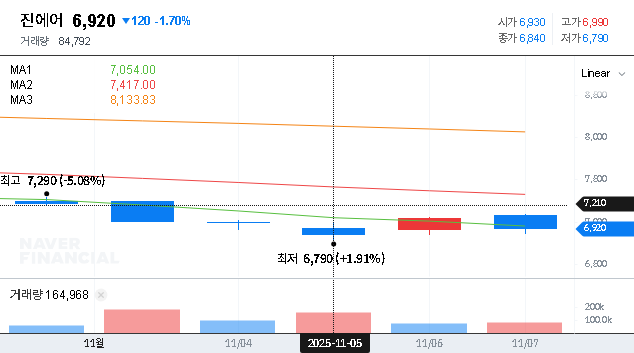
    (272450) JIN AIR Investor Relations (272450): Q3 2025 Financial Analysis & Stock Outlook

    As JIN AIR CO., LTD. (272450) prepares for its crucial Q3 2025 earnings call on November 13, 2025, the aviation industry and investors are watching closely. The upcoming JIN AIR investor relations event is more than just a presentation of numbers; it’s a critical moment for the company to outline its strategy for navigating a challenging economic landscape marked by slowing profitability. After a difficult first half of 2025, this session will reveal JIN AIR’s plans to regain momentum, manage costs, and drive future growth.

    This article provides a comprehensive JIN AIR financial analysis, breaking down the macroeconomic pressures, the company’s recent performance, and the key strategic questions that need answers. We will explore what investors should monitor during the IR call and outline a potential action plan for the 272450 stock analysis.

    The Context: JIN AIR’s Q3 2025 Investor Briefing

    JIN AIR CO., LTD. has formally scheduled its Investor Relations (IR) briefing to announce and discuss its Q3 2025 financial results. The primary objective is to offer transparent, detailed performance data to shareholders and the broader market. More importantly, this event will serve as a platform for management to communicate its strategic direction and future outlook, aiming to rebuild market confidence. For official details regarding the announcement, stakeholders can refer to the company’s filing. (Official Disclosure)

    The core challenge highlighted by H1 2025 results is a significant drop in operating profit, signaling that cost pressures and market competition are currently outpacing revenue generation. This makes the upcoming strategy reveal a pivotal moment for the company’s valuation.

    Deep Dive: A Comprehensive JIN AIR Financial Analysis

    The profitability slowdown observed in the first half of 2025 was not an isolated event but a result of intersecting macroeconomic headwinds and internal performance metrics. Understanding these factors is key to evaluating the JIN AIR Q3 2025 outlook.

    Macroeconomic Environment (H1 2025)

    • Persistent High Oil Prices: Aviation fuel is a primary cost driver. Sustained high international oil prices directly squeezed profit margins, a trend that likely continued into Q3.
    • Exchange Rate Volatility: A strong US dollar against the Korean won increases the cost of fuel and aircraft leases, which are often priced in USD. This currency pressure is a significant variable in JIN AIR’s cost structure. For more context on global economic trends impacting airlines, you can consult authoritative sources like Reuters Market Data.
    • Intense Market Competition: The low-cost carrier (LCC) market is fiercely competitive, leading to pressure on ticket prices even as operational costs rise.

    H1 2025 Performance Summary

    • Revenue vs. Profit: Revenue saw only a slight decrease to KRW 723.9 billion. However, operating profit plummeted to KRW 15.9 billion from KRW 99.3 billion year-over-year, showcasing the severe impact of rising costs on JIN AIR profitability.
    • Improving Financial Health: On a positive note, the debt-to-equity ratio improved to 3.65x, and the company returned to a retained earnings surplus, indicating better balance sheet management.
    • Strategic Bright Spots: The company is actively expanding its network with new routes (e.g., Ishigakijima, Qingdao) and leveraging data for cost optimization. Potential synergies with Korean Air remain a significant long-term positive factor.

    Investor Action Plan: What to Watch in the JIN AIR Investor Relations Call

    Given the mixed signals, our investment opinion remains ‘Neutral‘. The IR session is the key event that could shift this outlook. Investors should focus on the substance behind the numbers. This strategic direction is crucial, as it affects the entire LCC airline industry landscape.

    Key Monitoring Points for Q3 and Beyond

    • Q3 Profit Margin Recovery: Will the announced Q3 results show an improvement in operating profit margin? This is the single most important metric to watch.
    • New Route Performance: Management should provide data on the passenger load factor (PLF) and profitability of recently launched routes.
    • Tangible Cost-Saving Measures: Look for specific details on fuel efficiency gains, operational streamlining, and the financial impact of these efforts.
    • Forward-Looking Guidance: What is the company’s outlook for Q4 2025 and early 2026? Any guidance on demand trends and cost expectations will heavily influence stock performance.
    • Korean Air Synergy Update: Investors will want concrete examples of how the collaboration with Korean Air is yielding cost savings or revenue opportunities.

    Frequently Asked Questions (FAQ)

    When is JIN AIR’s Q3 2025 investor relations call?

    JIN AIR CO., LTD. is scheduled to host its IR session for the Q3 2025 earnings announcement on November 13, 2025.

    What caused JIN AIR’s drop in profitability in H1 2025?

    The primary causes were increased operational costs from high international oil prices and unfavorable exchange rates, combined with intense price competition in the LCC market which limited the ability to pass costs to consumers.

    What are the main positive factors for JIN AIR’s stock?

    Positive drivers include aggressive network expansion into new markets, ongoing efforts to optimize costs through data analytics, potential synergies with parent company Korean Air, and an improving balance sheet.

    What is the current investment outlook for JIN AIR (272450)?

    The current investment opinion is ‘Neutral’. While the company has positive long-term drivers, the short-term profitability challenges are significant. The upcoming Q3 2025 IR call is critical for assessing if a change in outlook is warranted.

    (272450) JIN AIR Investor Relations (272450): Q3 2025 Financial Analysis & Stock Outlook 관련 이미지
  • (272450) JIN AIR Q3 2025 IR: In-Depth Investment Analysis & Stock Forecast

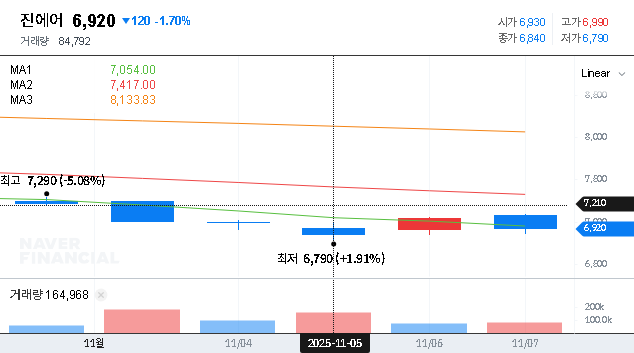
    (272450) JIN AIR Q3 2025 IR: In-Depth Investment Analysis & Stock Forecast

    The upcoming JIN AIR Q3 2025 IR on November 13, 2025, represents a critical juncture for investors. As the aviation industry navigates a complex landscape of recovering demand and macroeconomic headwinds, JIN AIR CO,.LTD. will unveil its latest financial results and strategic direction. This event is poised to significantly influence the company’s stock trajectory, making a thorough pre-emptive analysis essential for any current or prospective shareholder.

    This comprehensive guide provides an in-depth JIN AIR investment analysis, examining its recent performance, the competitive environment, and the key questions investors should be asking. We will dissect the catalysts and risks that will define JIN AIR’s future, helping you make an informed decision.

    Dissecting JIN AIR’s H1 2025 Performance

    To understand the context for the Q3 announcement, we must first analyze JIN AIR’s performance in the first half of 2025. The company’s financial health, as detailed in its official disclosures (Source: DART), reveals a story of both promising recovery and significant challenges.

    Positive Momentum: Riding the Wave of Recovery

    The most significant positive factor has been the robust rebound in international passenger demand. In H1 2025, international passenger revenue constituted a staggering 78.9% of total revenue. This growth was fueled by the strategic expansion of supply on high-demand routes to Japan and Southeast Asia, capitalizing on the post-pandemic travel boom. Furthermore, JIN AIR has been proactive in securing future growth by launching new routes to destinations like Ishigaki, Japan, and Qingdao, China. These efforts, combined with brand-enhancing initiatives like Customer Centered Management (CCM) re-certification, paint a picture of a company actively pursuing growth and long-term value.

    Headwinds and Hurdles: Key Risks to Monitor

    Despite the positive top-line story, JIN AIR faces substantial risks. The low-cost carrier (LCC) market has become fiercely competitive, with aggressive route expansion and fare wars from rivals putting severe pressure on profitability. Macroeconomic volatility remains a primary concern; H1 2025 saw the company suffer a KRW 30.6 billion foreign exchange translation loss. The volatility of fuel prices is another major threat—a mere 10% change in fuel costs could swing net profit by KRW 19.5 billion. Compounding these issues is a significant lease debt burden of KRW 425.1 billion, which increases financial costs and complicates liquidity management.

    “For any airline, but especially an LCC, fuel costs and foreign exchange rates are the twin titans of risk. Effective hedging and operational efficiency aren’t just best practices; they are survival imperatives in today’s market.”

    Investor Checklist: Key Focus Areas for the JIN AIR Q3 2025 IR

    During the upcoming JIN AIR Q3 2025 IR, savvy investors should look beyond the headline numbers and focus on the quality of the results and the clarity of the forward-looking strategy. Here are the critical points to scrutinize:

    • Profitability Deep Dive: Did the impressive international revenue translate into a stronger operating profit margin? Look for details on cost-per-available-seat-kilometer (CASK) and whether the company successfully managed rising fuel and operational costs.
    • Concrete Future Strategy: Vague promises are not enough. Demand specific plans for route expansion in H2 2025 and 2026. How will JIN AIR differentiate itself in an increasingly crowded market? For a broader view, you can explore analysis on the global aviation industry.
    • Risk Management Protocols: How is the management addressing fuel price and FX volatility? Ask about their hedging strategies. A clear and effective risk management plan can significantly de-risk the JIN AIR stock as an investment.
    • Korean Air Synergy Blueprint: What are the tangible, quantifiable benefits of the partnership with Korean Air? Look for details on joint marketing, codesharing, and cost-sharing initiatives that could provide a competitive edge. This is a key part of our internal guide to airline partnerships.

    Conclusion: Balancing Opportunity and Caution

    The investment case for JIN AIR CO,.LTD. is a classic balance of high potential and high risk. The recovery in travel demand presents a powerful tailwind. However, intense competition and macroeconomic pressures cannot be ignored. The Q3 2025 IR will be a moment of truth. A report that beats expectations and is backed by a credible, detailed strategy for navigating risks could send the stock soaring. Conversely, a weak report or an uncertain outlook could amplify investor fears, leading to downward pressure. Careful analysis of the points outlined above will be paramount for making a sound investment decision regarding JIN AIR stock.

    (272450) JIN AIR Q3 2025 IR: In-Depth Investment Analysis & Stock Forecast 관련 이미지
  • (272450) Jin Air Q3 2025 Earnings Analysis: A Deep Dive for Investors (272450 Stock)

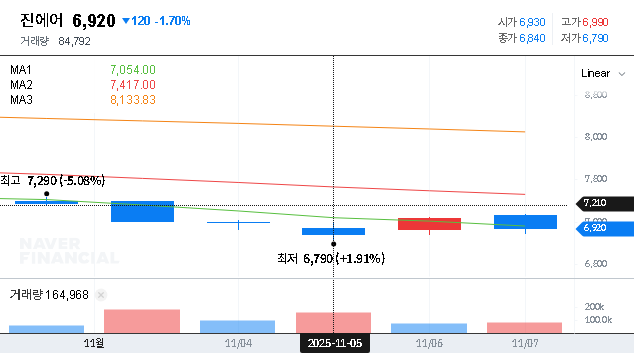
    (272450) Jin Air Q3 2025 Earnings Analysis: A Deep Dive for Investors (272450 Stock)

    The latest Jin Air Q3 2025 earnings report for JIN AIR CO,.LTD. (272450) has sent a wave of concern through the investment community. After a promising turnaround earlier in the year, the preliminary Q3 results revealed a significant miss on all key metrics, plunging the company back into a loss. This downturn raises critical questions: Is this a temporary bout of turbulence, or does it signal a systemic issue within the competitive Low-Cost Carrier (LCC) market? This comprehensive Jin Air stock analysis will dissect the factors behind the earnings shock, evaluate the potential for recovery, and outline a clear Jin Air investment strategy for navigating the path ahead.

    Breaking Down the Q3 2025 Earnings Shock

    Jin Air’s preliminary Q3 2025 operating results fell dramatically short of consensus market expectations, marking a troubling second consecutive quarterly loss. These figures, released in the company’s Official Disclosure, paint a stark picture:

    • Revenue: KRW 304.3 billion (12.0% below the expectation of KRW 347.5 billion)
    • Operating Profit: KRW -22.5 billion (a staggering 249.0% miss from the expected profit of KRW 15.1 billion)
    • Net Profit: KRW -27.5 billion (a 341.0% deviation from the expected profit of KRW 11.4 billion)

    This significant deterioration in profitability, especially when compared to the same period last year, suggests that multiple powerful headwinds are impacting the airline’s financial health.

    A perfect storm of soaring operational costs, fierce price wars in the LCC market, and softening consumer demand created significant headwinds for Jin Air in Q3 2025, erasing earlier gains and raising concerns about the sector’s health.

    Root Cause Analysis: Why Did Performance Decline?

    The poor 272450 earnings are not the result of a single issue, but a convergence of challenging external and internal factors.

    1. The High-Cost Structure Squeeze

    Airlines are notoriously sensitive to macroeconomic volatility. For Jin Air, this was particularly acute. The continued strength of the US dollar amplified the cost of debt and aircraft leases, which are largely priced in foreign currency. Simultaneously, elevated global oil prices, as reported by leading financial news outlets, directly increased fuel expenses—the single largest cost for any airline. Compounded by domestic inflation driving up labor and operational costs, Jin Air’s fixed cost base became a significant burden on its bottom line.

    2. Intensifying LCC Market Competition

    The South Korean LCC market analysis reveals an environment of hyper-competition. With several carriers like Jeju Air and T’way Air vying for market share, price wars have become rampant. The aggressive discounting on popular routes to Japan, even during the peak summer travel season, severely eroded profit margins. While Jin Air succeeded in growing passenger volume, it came at the cost of profitability, indicating that the demand recovery was not strong enough to offset the cutthroat pricing environment.

    3. Rising Financial Burdens

    With a high debt-to-equity ratio, Jin Air is particularly vulnerable to changes in interest rates. The global trend of monetary tightening has increased the company’s interest expenses, adding another layer of financial pressure and constraining its ability to invest in growth or weather further economic shocks.

    A Strategic Roadmap for Investors

    Given the disappointing Jin Air Q3 2025 earnings, investors must adopt a cautious and strategic approach. Short-term volatility is likely, but long-term potential hinges on management’s ability to navigate these challenges.

    Short-Term Strategy: Observe and Verify

    In the immediate aftermath of this report, a ‘watch-and-see’ stance is prudent. The stock price will likely face downward pressure as the market digests the news. Avoid knee-jerk reactions and instead focus on monitoring management’s forthcoming response and any guidance they provide for Q4 and beyond.

    Mid-to-Long-Term Checkpoints for Your Jin Air Investment Strategy

    For a potential turnaround, investors should look for concrete evidence of strategic adjustments. For those learning how to analyze airline stocks, these are the key areas to watch:

    • Cost Control Initiatives: Look for announcements on enhanced fuel and currency hedging strategies. Is the company taking steps to improve aircraft operational efficiency and cut non-essential spending?
    • Route Profitability Focus: Is management re-evaluating its route network to prioritize high-yield destinations over volume? A shift away from heavily contested, low-margin routes would be a positive sign.
    • Synergy with Korean Air: As a subsidiary of Korean Air, Jin Air has a unique potential advantage. Watch for deeper integration, such as codesharing agreements, joint marketing, or operational synergies that could provide a competitive edge.
    • Macroeconomic Tailwinds: A sustained drop in global oil prices or a strengthening of the Korean Won against the US dollar would provide significant and immediate relief to Jin Air’s cost structure.

    Conclusion: A Cautious Outlook for 272450

    The Jin Air Q3 2025 earnings report is an undeniable setback that highlights the profound challenges facing not only the company but the entire LCC industry. While the stock is likely to face a period of bearish sentiment, a complete write-off would be premature. The path to recovery will be difficult and contingent upon disciplined cost management, smart strategic pivots, and a more favorable macroeconomic environment. For now, investors should remain diligent, closely monitoring the key checkpoints before committing further capital. The coming quarters will be critical in determining whether Jin Air can navigate this turbulence and regain altitude.

    (272450) Jin Air Q3 2025 Earnings Analysis: A Deep Dive for Investors (272450 Stock) 관련 이미지