Tag: IT Infrastructure

  • (093320) KINX Inc. Earnings Analysis Q3 2025: Deep Dive for Investors

    (093320) KINX Inc. Earnings Analysis Q3 2025: Deep Dive for Investors

    This comprehensive KINX Inc. earnings analysis breaks down the preliminary operating results for Q3 2025. As a pivotal infrastructure provider for South Korea’s digital transformation, KINX, Inc. (케이아이엔엑스) operates at the heart of the tech economy. Amidst market volatility and shifting IT investment trends, investors are keenly watching to see if the company’s growth engine remains robust. We will dissect the latest financial data, evaluate the company’s core fundamentals, and provide a clear outlook on both short-term impacts and long-term potential.

    This report explores the key drivers, potential risks, and strategic opportunities that will define the future for every KINX stock holder and potential investor.

    KINX Q3 2025 Earnings: The Official Numbers

    According to its preliminary disclosure, KINX Inc. announced its financial results for the third quarter of 2025. The numbers paint a picture of steady operation in a challenging environment. The full official disclosure can be viewed directly from the source: Official DART Report.

    Here are the key takeaways from the KINX Q3 2025 report:

    • Revenue: KRW 39.5 billion, representing a slight increase compared to Q2 2025, but a noticeable decline from the peak of Q4 2024.
    • Operating Profit: KRW 6.2 billion, holding steady with Q2 levels. This results in an operating profit margin of approximately 15.7%, showing an improvement from the previous quarter and suggesting effective cost management.
    • Net Profit: KRW 4.1 billion, also remaining consistent with Q2 but down from late 2024 figures.

    While the quarter-over-quarter stability is reassuring, the dip from late last year could signal either seasonal fluctuations or a broader slowdown in enterprise IT spending, which may cause some immediate concern among investors.

    Despite a mixed Q3, KINX’s foundational strength in the IDC and cloud sectors provides a powerful buffer against short-term market headwinds, positioning it for long-term relevance in the AI era.

    Analyzing KINX’s Core Business Fundamentals

    To understand the complete picture, we must look beyond a single quarter. The H1 2025 report reveals the underlying strength of KINX’s business model, which is firmly rooted in providing critical digital infrastructure.

    IDC & Cloud: The Twin Engines of Growth

    The digital economy runs on data, and KINX provides the essential housing and connectivity. For more on the basics, you can read our guide on What is an Internet Data Center (IDC)?

    • IDC Business: This segment remains the company’s bedrock, generating KRW 43.3 billion in revenue in H1 2025—a 16.8% year-over-year increase. This growth is directly fueled by the relentless pace of digital transformation and the corporate world’s migration to cloud services.
    • Cloud Business (IXCLOUD): The standout performer, achieving a staggering 136.6% growth to reach KRW 7.21 billion in revenue. As a competitive cloud services provider using OpenStack, KINX is successfully capturing market share from businesses seeking flexible and cost-effective cloud solutions.

    Financial Health and Stability

    Strong financial management is a key pillar of KINX’s strategy. Despite significant capital expenditures like the new Gwacheon IDC Center, the company has improved its financial soundness. By actively repaying long-term debt, KINX reduced its debt-to-equity ratio to a healthy 38%, enhancing its resilience against economic downturns.

    Investor Outlook: Risks vs. Opportunities

    This KINX Inc. earnings analysis would be incomplete without weighing the potential headwinds and tailwinds facing the company.

    Potential Risk Factors

    • Intensified Competition: The IDC and cloud markets are battlegrounds, with major domestic and global players competing for enterprise clients. This could put pressure on pricing and margins.
    • Macroeconomic Headwinds: Rising interest rates and potential recessions could lead companies to delay or reduce their IT infrastructure investments, impacting KINX’s growth pipeline.

    Key Opportunity Factors

    • The AI Revolution: The explosive growth of Artificial Intelligence is creating unprecedented demand for data center capacity and high-performance cloud computing. According to market analysis from Gartner, this trend is expected to accelerate, making KINX’s infrastructure assets more valuable than ever.
    • Overseas Expansion: With Points of Presence (PoPs) already in Japan and Hong Kong, KINX has a launchpad for further international growth, tapping into new revenue streams.
    • Synergy with Subsidiaries: Strategic alignment with subsidiaries like SP Soft can enhance service offerings and create a more competitive, integrated ecosystem.

    Conclusion: An Attractive Long-Term Story

    In conclusion, while the KINX Q3 2025 earnings show a temporary adjustment, the company’s long-term growth narrative remains firmly intact. The robust expansion of its core IDC and cloud businesses, combined with a strong financial position, suggests that KINX is well-equipped to navigate current market uncertainties.

    For investors with a long-term horizon who believe in the continued growth of the digital and AI-driven economy, KINX, Inc. represents a compelling company to monitor closely. Key factors to watch will be the recovery in Q4, continued momentum in the cloud segment, and successful execution of its expansion strategies.
    (093320) KINX Inc. Earnings Analysis Q3 2025: Deep Dive for Investors 관련 이미지
  • Gabia Stock Forecast: Miri Capital Increases Stake by 1.05% – Bullish Signal?


    Gabia Stock Forecast: Miri Capital Increases Stake by 1.05% - Bullish Signal? 대표 차트 이미지


    Miri Capital Increases Stake in Gabia: What Happened?

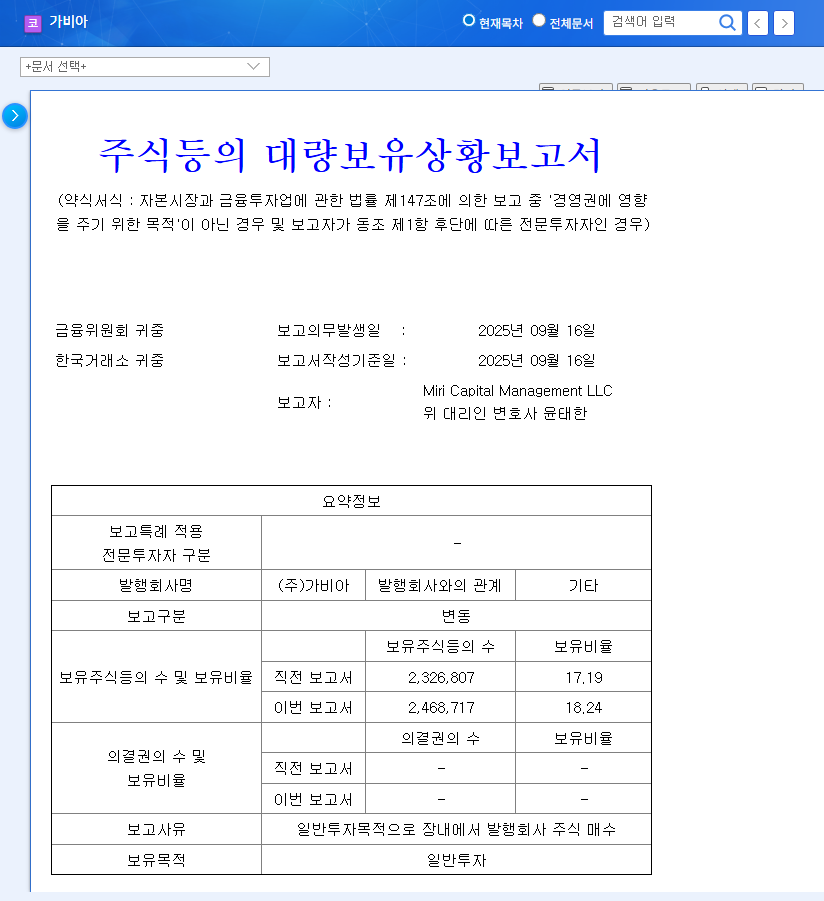
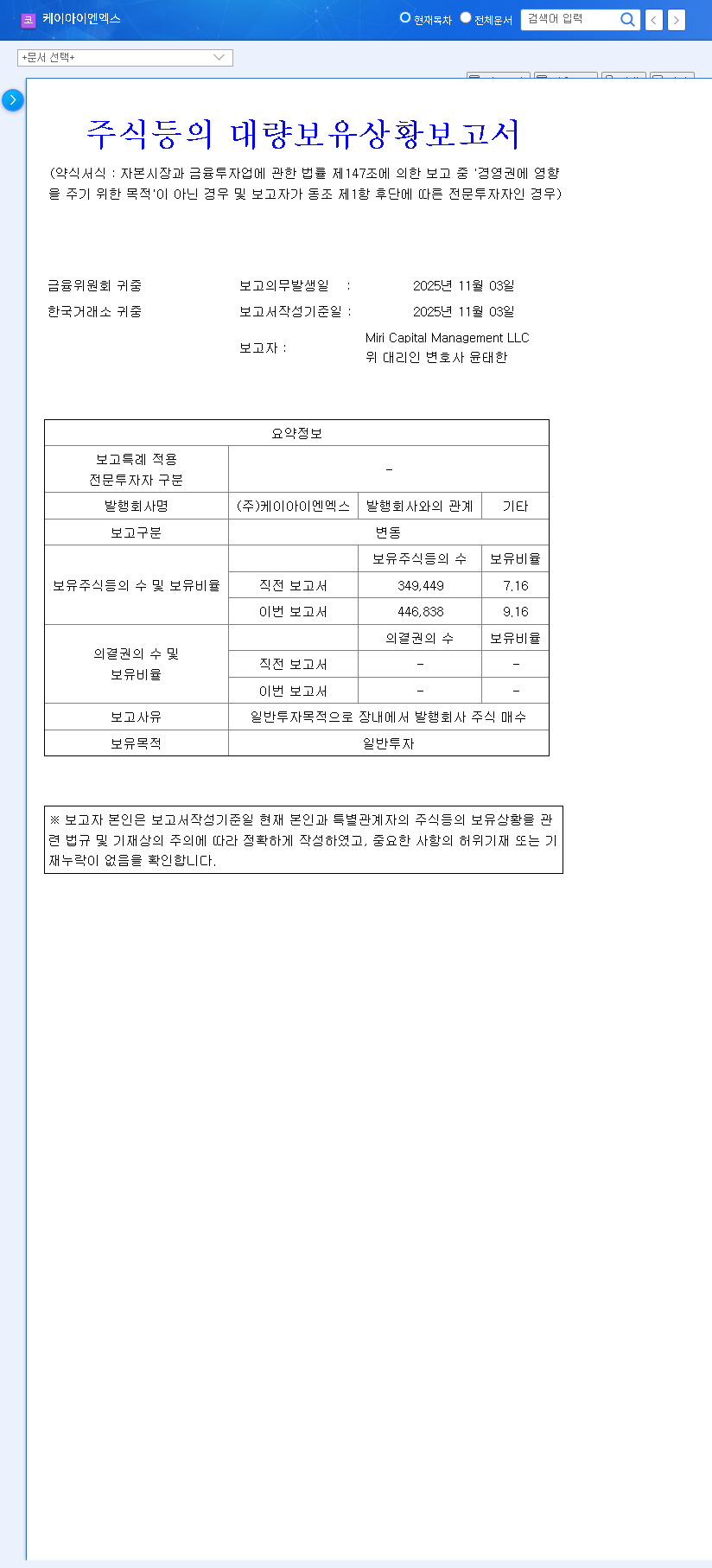
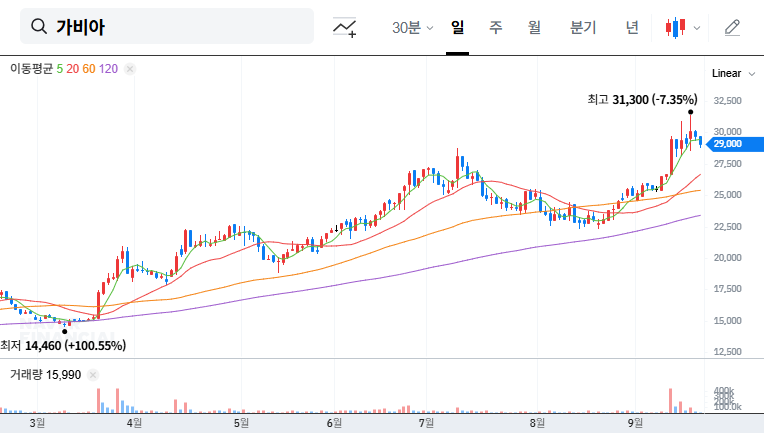
    On September 18, 2025, Miri Capital Management LLC increased its stake in Gabia from 17.19% to 18.24%, a 1.05% increase. While stated as a general investment, the market is interpreting this move in various ways.

    Gabia’s Current Situation

    Gabia shows stable growth in its IT infrastructure business, including cloud, IDC, and IX. The acquisition of CSAP certification is expected to boost its entry into the public cloud market. However, the recent slowdown in sales and operating profit growth, and decrease in liquidity, are points to consider when investing.

    Impact of the Increased Stake on Gabia’s Stock Price

    • Positive Impact: Increased stake by an institutional investor can act as a positive momentum for stock prices. Miri Capital’s investment can be interpreted as a positive signal for Gabia’s growth potential.
    • Potential Risks: There is a possibility of increased short-term stock price volatility. Also, considering Miri Capital’s investment objective is ‘general investment,’ future stake changes should be considered.

    What Should Investors Do?

    • Short-term Investment: If you anticipate a short-term stock price increase, you might consider buying, but be mindful of volatility. It is important to monitor Miri Capital’s future moves.
    • Long-term Investment: Make investment decisions after comprehensively analyzing Gabia’s fundamentals, financial soundness, and market environment. Continuously monitor the growth of the cloud market and changes in the competitive landscape.

    ※ This report is not an investment recommendation, and the responsibility for investment lies with the investor.


    Frequently Asked Questions

    Will Miri Capital’s increased stake positively impact Gabia’s stock price?

    Yes, generally, an increase in stake by institutional investors is interpreted as a positive signal in the market and can be a factor in stock price increases. However, be aware of the possibility of increased short-term volatility.

    What are Gabia’s main businesses?

    Gabia provides IT infrastructure services such as cloud, domain, hosting, and security. Recently, it has been actively entering the public cloud market.

    What should I consider before investing in Gabia?

    You should comprehensively analyze Gabia’s fundamentals, financial soundness, and market competitive environment. Make careful investment decisions considering the recent slowdown in sales and operating profit growth.


    Gabia Stock Forecast: Miri Capital Increases Stake by 1.05% - Bullish Signal? 관련 이미지
    Gabia Stock Forecast: Miri Capital Increases Stake by 1.05% - Bullish Signal? 관련 이미지


  • Yulho’s Rights Offering: Opportunity or Risk? An In-depth Analysis for Investors

    Yulho's Rights Offering: Opportunity or Risk? An In-depth Analysis for Investors 대표 차트 이미지

    1. What Happened? Yulho Announces Rights Offering

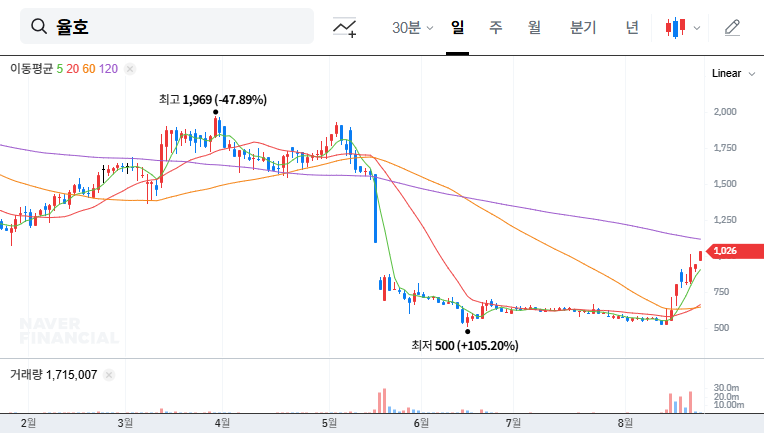
    On August 25, 2025, Yulho announced that it is considering a rights offering to raise capital for investments in new businesses, such as battery recycling, waste treatment, and AI.

    2. Why the Rights Offering? Yulho’s Current Situation and Funding Needs

    Beyond its existing IT infrastructure business, Yulho is pursuing various new ventures for future growth. These investments require substantial capital, and the company’s net loss of 4.5 billion won and debt-to-equity ratio of 167.60% in the first half of 2025 pose financial challenges. The rights offering aims to improve Yulho’s financial structure and secure funding for these new ventures.

    3. What’s Next? Potential Benefits and Risks of the Rights Offering

    • Potential Benefits: Improved financial structure, increased investment in new businesses.
    • Potential Risks: Stock dilution, uncertainty of funding success.

    The rights offering is a double-edged sword. Successful funding can pave the way for growth, while failure could lead to stock price decline and increased financial burden.

    4. What Should Investors Do? Key Investment Considerations

    • Review the terms of the rights offering (offering price, size, participants).
    • Monitor the performance of new businesses (e.g., operation of the battery recycling plant, progress of waste treatment projects).
    • Track improvements in financial health (debt-to-equity ratio, operating cash flow).
    • Analyze the impact of macroeconomic indicators (interest rates, exchange rates, commodity prices).

    Frequently Asked Questions

    What is a rights offering?

    A rights offering allows existing shareholders to purchase newly issued shares at a discounted price. This provides companies with a way to raise capital.

    When will Yulho’s rights offering be finalized?

    The rights offering is currently under review, and no details have been finalized. Further announcements will be made through official disclosures.

    How will the rights offering affect Yulho’s stock price?

    While the increased number of shares could lead to dilution, the anticipated business expansion from the funding could also positively influence the stock price.

    Yulho's Rights Offering: Opportunity or Risk? An In-depth Analysis for Investors 관련 이미지
    Yulho's Rights Offering: Opportunity or Risk? An In-depth Analysis for Investors 관련 이미지
  • Yulho Announces ₩1 Billion Rights Offering: What It Means for Investors

    1. What is Yulho’s Rights Offering?

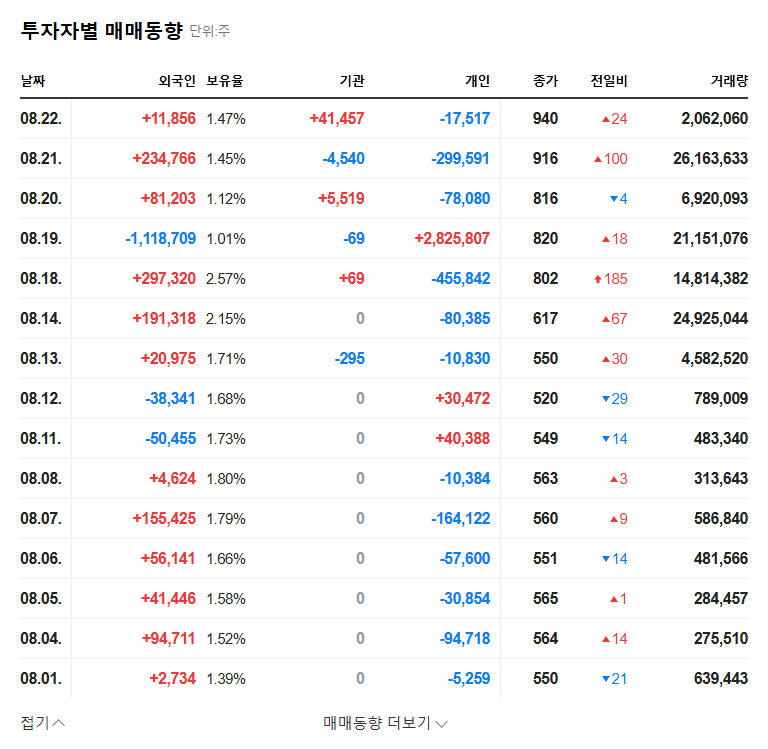
    On August 20th, Yulho announced a rights offering to its largest shareholder, issuing 1,760,563 common shares at ₩568 per share. This aims to raise approximately ₩1 billion for new business investments and operating expenses.

    2. Why is Yulho Raising Capital?

    Yulho is currently pursuing various new ventures, including battery recycling, waste treatment, AI, and mineral resource development. The rights offering aims to secure funding for these investments and improve the company’s financial structure. Despite recent revenue growth, Yulho has recorded operating losses and high debt ratios, necessitating financial stability measures.

    3. How Will the Rights Offering Affect Yulho’s Stock Price?

    • Positive Aspects: Raising capital can improve Yulho’s financial health and fund expansion into promising new sectors, contributing to long-term growth. The major shareholder’s participation signals commitment and confidence in the company’s future.
    • Negative Aspects: The offering price of ₩568 is significantly lower than the current market price of ₩1,797, raising concerns about stock dilution. This could put downward pressure on the stock price in the short term.

    4. What Should Investors Do?

    Investors should carefully evaluate the specific use of proceeds and the growth potential of Yulho’s new businesses. Monitoring key financial metrics after the offering and tracking the actual performance of new ventures are crucial. Pay close attention to stock price fluctuations around the new share listing date on September 12th.

    Frequently Asked Questions

    What is a rights offering?

    A rights offering allows existing shareholders to purchase newly issued shares at a discounted price.

    What is the purpose of Yulho’s rights offering?

    To fund new business investments, manage operating expenses, and improve financial health.

    How might the rights offering affect Yulho’s stock price?

    While raising capital can boost growth, the discounted share price might lead to short-term dilution.

  • KINX Q2 2025 Earnings: Cloud-Powered Growth Surprises Market

    1. Q2 Earnings: A Positive Surprise

    KINX announced its Q2 2025 earnings on August 14, 2025, sending positive signals to the market. Revenue reached 39.1 billion KRW (exceeding estimates by +11%), operating profit hit 5.8 billion KRW (+32% above estimates), and net income reached 4 billion KRW, exceeding projections.

    2. Cloud Computing Fuels Growth

    The key driver behind this strong performance is the remarkable growth of KINX’s cloud business. With a staggering 136.6% increase in revenue, cloud services have solidified their position as a new growth engine. The IDC (+16.8% growth) and IX (+13.1% growth) segments also maintained steady growth, contributing to a stable revenue base. However, the CDN business experienced a 19.1% decline in revenue due to increased competition, highlighting the need for a proactive response strategy.

    3. Strong Fundamentals and Future Growth Potential

    KINX’s first-half consolidated revenue reached 78.56 billion KRW, a 26.4% increase year-over-year. The debt-to-equity ratio also improved significantly to 38%. The stable operating cash flow of 21.1 billion KRW is another positive indicator. The accelerating digital transformation and increasing demand for cloud services are expected to further boost KINX’s growth. The opening of the Gwacheon data center and the expansion of network hubs are also anticipated as future growth drivers.

    4. Investor Action Plan

    While KINX’s Q2 results are positive, investors should consider several factors:

    • • Sustained growth in cloud and IDC business
    • • Strategies to enhance competitiveness in CDN business
    • • KINX’s ability to navigate macroeconomic changes, such as fluctuations in interest rates and exchange rates

    A comprehensive evaluation of these factors is crucial for making informed investment decisions.

    What were KINX’s key financial results for Q2 2025?

    KINX reported revenue of 39.1 billion KRW, operating profit of 5.8 billion KRW, and net income of 4 billion KRW, all exceeding market expectations.

    Which business segment showed the most significant growth?

    The cloud computing segment experienced the most substantial growth, with a 136.6% increase in revenue year-over-year.

    What should investors consider regarding KINX?

    Investors should monitor the sustained growth of cloud and IDC services, strategies to improve CDN competitiveness, and the company’s ability to adapt to macroeconomic changes.

  • DB Secures ₩56.5B IT Contract: Opportunity or Risk?

    1. The ₩56.5 Billion Contract: What’s it all about?

    On August 1, 2025, DB secured a three-year, ₩56.5 billion IT infrastructure maintenance contract with the Korea Insurance Development Institute. This deal acknowledges DB’s IT service capabilities and is expected to contribute to stable revenue generation.

    2. Why it Matters: Analyzing the Positive and Negative Impacts

    Positive Impacts:

    • Expected increase in revenue and profitability
    • Strengthened cooperation with the insurance industry and potential diversification away from DB Insurance

    Negative Impacts:

    • Potential for unforeseen technical difficulties or delays during contract implementation
    • Possible decline in performance of other business segments due to resource allocation issues
    • Increased short-term stock price volatility

    3. Current Market Conditions

    Current indicators such as exchange rates, interest rates, commodity prices, and logistics are not expected to directly impact this contract. However, macroeconomic uncertainties remain a risk factor for DB’s growth.

    4. Investor Action Plan

    While this contract may positively affect DB’s stock price in the short term, long-term performance hinges on fundamental improvements. Investors should consider the following:

    • DB’s progress in addressing imbalances across its business segments
    • Strengthening risk management and strategies for navigating macroeconomic uncertainties
    • Plans to invest the secured revenue in enhancing competitiveness

    Continuous analysis of financial information and business strategies is crucial for informed investment decisions.

    Frequently Asked Questions

    Does this contract guarantee DB’s long-term growth?

    While it contributes to short-term improvements, long-term growth depends on fundamental improvements like business diversification and risk management.

    What should investors be cautious about?

    Avoid being swayed by short-term stock fluctuations and monitor DB’s fundamental improvements consistently.

    How are DB’s other business segments performing?

    While the IT segment shows growth, there are concerns about the underperforming trading segment and uncertainties in the brand business. Reducing dependence on DB Insurance is also key.