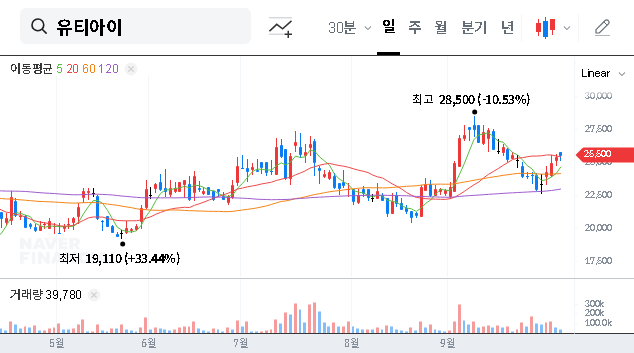
Tag: IT Components

  • (179900) UTI Foldable Cover Glass Investment: Analysis of the ₩11.2B Vietnam Bet & Financial Risks

    (179900) UTI Foldable Cover Glass Investment: Analysis of the ₩11.2B Vietnam Bet & Financial Risks

    The recent announcement of UTI’s significant ₩11.2 billion investment into the UTI foldable cover glass market has sent ripples through the investment community. By acquiring a subsidiary in Vietnam, UTI is making a high-stakes play for a dominant position in a next-generation technology sector. However, this ambitious move comes at a time when the company’s financial health is precarious, as revealed by its H1 2025 report. This creates a critical question for stakeholders: is this a visionary step toward long-term growth, or a reckless gamble that could jeopardize the company’s short-term survival? This comprehensive analysis will dissect the investment, evaluate the latest UTI financial analysis, and outline a prudent strategy for investors.

    Unpacking the ₩11.2 Billion UTI Investment

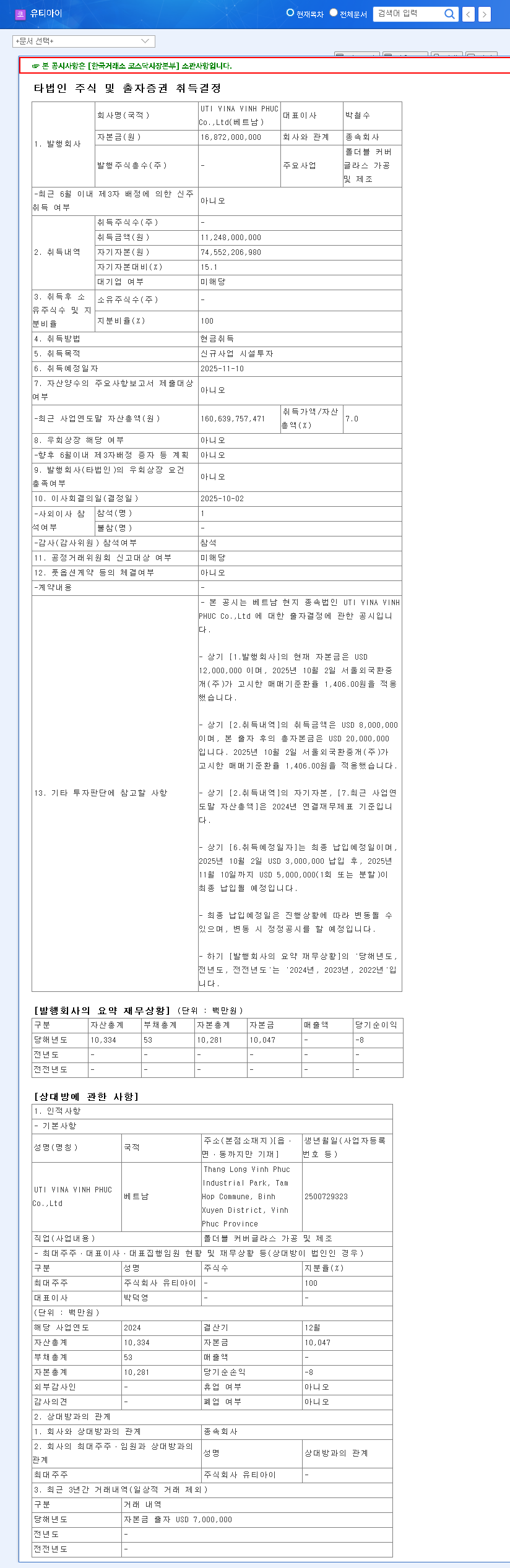
    On November 10, 2025, UTI is scheduled to complete its acquisition of 100% of UTI VINA VINH PHUC Co., Ltd in Vietnam. This strategic move, detailed in an Official Disclosure, represents a major pivot for the company. The core purpose is to establish a dedicated facility for processing and manufacturing foldable cover glass, a critical component for the burgeoning foldable smartphone and device market. The key details of this UTI investment are as follows:

    • Acquired Entity: UTI VINA VINH PHUC Co.,Ltd (Vietnam)
    • Core Business: Foldable Cover Glass Processing & Manufacturing
    • Acquisition Amount: ₩11.2 Billion (representing 15.1% of equity)
    • Strategic Goal: Secure future growth engines and diversify revenue streams.

    A Company Under Pressure: UTI Financial Analysis (H1 2025)

    The timing of this large-scale investment is alarming when contextualized by UTI’s recent performance. The H1 2025 report paints a picture of a company facing severe financial headwinds, making this new venture in Vietnam cover glass manufacturing a significant risk.

    With a debt-to-equity ratio soaring past 215% and cash reserves plummeting, UTI is funding future growth by stretching its present-day finances to the absolute limit.

    Revenue Collapse and Deepening Losses

    UTI’s core business segments are struggling. The Camera Window division saw sales plummet by nearly 60% year-over-year due to a slowdown in the smartphone market and intense competition. While the ‘Slimming’ business showed nascent growth, it was not nearly enough to offset the broader decline. This culminated in a consolidated operating loss of ₩19.2 billion and a net loss of ₩20.4 billion for the first half of 2025.

    Soaring Debt and Liquidity Crisis

    The company’s balance sheet is a major cause for concern. Total liabilities have ballooned to ₩101.5 billion, driven by the issuance of convertible bonds. This has pushed the debt-to-equity ratio to a staggering 215.19%. Even more critically, cash and cash equivalents have dwindled from ₩54 billion to just ₩10.8 billion. The current ratio stands at a perilous 43.99%, signaling a severe short-term liquidity crunch that makes an ₩11.2 billion cash outlay for the UTI VINA VINH PHUC acquisition exceptionally risky. You can learn more about navigating high-debt companies in our guide.

    Opportunity vs. Risk: The Future of the UTI Foldable Cover Glass Bet

    The Bull Case: Securing a High-Growth Future

    Despite the financial strain, the logic behind the UTI foldable cover glass investment is clear. The market for foldable devices is projected to grow exponentially. According to market analysts at IDC, shipments are expected to double within the next few years. By establishing a production base in Vietnam, UTI can leverage lower operating costs, enhance its global price competitiveness, and position itself as a key supplier in this lucrative value chain. Success in this venture could completely transform the company’s growth trajectory and lead to significant long-term returns.

    The Bear Case: A Burden Too Heavy to Carry?

    The negative aspects are immediate and severe. The ₩11.2 billion cash outflow will further cripple the company’s liquidity, potentially forcing it to seek additional, and likely expensive, financing. Furthermore, new manufacturing operations require significant ramp-up time and capital expenditure before they become profitable. In the short term, this will likely expand UTI’s deficit. There’s a tangible risk that the new business will not scale quickly enough to offset the continued decline in its legacy segments, creating a perfect storm of financial distress.

    Investor Strategy: Navigating UTI’s High-Stakes Future

    For current and prospective investors, a cautious and highly diligent approach is paramount. The potential upside of the UTI investment is matched only by its considerable downside. Monitoring the following key areas is essential:

    • Monitor New Business Performance: Closely track tangible results from the Vietnam facility, including production yields, initial client contracts, revenue generation, and profit margins.
    • Scrutinize Financial Health Initiatives: Verify the company’s plans for funding the investment and managing existing debt. Look for concrete strategies to improve cash flow and restore liquidity.
    • Evaluate Core Business Recovery: Assess whether the legacy camera window business can stabilize and if the Slimming business can accelerate its growth to provide a more stable foundation.
    • Stay Abreast of Macroeconomic Factors: Keep an eye on exchange rates (KRW/USD) and the overall health of the IT market, as these will directly impact UTI’s costs and revenues.

    In conclusion, UTI’s move into the UTI foldable cover glass sector is a classic high-risk, high-reward scenario. While the company is commendably investing in its future, the precariousness of its current financial state cannot be ignored. A prudent investment decision requires a deep understanding of both the immense growth potential and the significant, immediate financial dangers.
    (179900) UTI Foldable Cover Glass Investment: Analysis of the ₩11.2B Vietnam Bet & Financial Risks 관련 이미지
  • FineMTec’s Q2 Earnings: A Surprise Turnaround, But Is It Sustainable?

    1. What Happened? FineMTec’s Q2 Performance

    FineMTec reported an operating profit of ₩5.2 billion in Q2 2025, marking a return to profitability. However, revenue of ₩76.5 billion fell short of market expectations. Net income remained negative at -₩3.4 billion.

    2. Why This Result? Analyzing the Factors

    The decline in revenue is primarily attributed to the sluggish IT components business and the overall market slowdown. The return to operating profit suggests successful cost-optimization efforts. The new medical device venture is still in its early stages and has not yet significantly impacted the bottom line.

    3. What’s Next? Outlook and Investment Strategies

    FineMTec’s future performance hinges on the recovery of its IT components business and the success of its medical device venture. External factors, such as the global economic slowdown and exchange rate volatility, also play a crucial role. In the short term, investors should focus on the Q3 earnings release to confirm revenue recovery and net income improvement trends. In the long term, the successful establishment of the medical device business and the strengthening of the existing business’s competitiveness are key factors to watch.

    4. Investor Action Plan

    • Short-term investors: Review Q3 earnings before making investment decisions.
    • Long-term investors: Monitor the progress of the medical device business and overall market conditions.

    Frequently Asked Questions

    What are FineMTec’s main businesses?

    FineMTec’s core business is the manufacturing and sale of IT components. They have recently ventured into the medical device market.

    What is the significance of the Q2 turnaround?

    It suggests successful cost optimization, but the continuing revenue decline raises concerns about the sustainability of profit growth.

    What should investors consider when evaluating FineMTec?

    Key considerations include the global economic slowdown, exchange rate volatility, and uncertainties surrounding the medical device venture.

  • Shinsung E&G’s Q2 Earnings Shock: What Investors Need to Know

    1. Shinsung E&G’s Q2 Earnings Shock

    On August 14, 2025, Shinsung E&G announced preliminary earnings of KRW 23.9 billion in sales, KRW 100 million in operating profit, and a net loss of KRW 200 million. Although exceeding market expectations of KRW 0, this represents a significant decline compared to the previous quarter and the same period last year, leading to an ‘earnings shock’.

    2. Analyzing the Causes of the Downturn

    The primary reasons for this underperformance are the decline in operating rate in the secondary battery segment (54.06%) and decreased sales in the IT/automotive segment. The downturn in the secondary battery segment suggests a possible overall market slowdown and increased competition. The IT/automotive segment is also presumed to be affected by a decrease in demand.

    3. How Should Investors Respond?

    In the short term, there is a high likelihood of increased pressure on stock prices. However, the long-term growth potential, including expansion into the North American ESS market, should be considered. Investors should make investment decisions considering the following:

    • Short-term response: Currently, maintaining a ‘sell’ or ‘hold’ position and waiting for additional information is recommended.
    • Long-term perspective: Carefully review the company’s response strategies and growth potential through future earnings announcements and IR materials.
    • Monitoring key indicators: Continuously monitor key indicators such as secondary battery operating rate, new customer acquisition, competitiveness reinforcement in the IT/automotive segment, and fluctuations in exchange rates and interest rates.

    FAQ

    Q: What are the main reasons for Shinsung E&G’s poor Q2 performance?

    A: The decline in the operating rate of the secondary battery division and decreased sales in the IT/automotive segment are the main causes.

    Q: Should I invest in Shinsung E&G?

    A: In the short term, there is a high possibility of a stock price decline, so a ‘sell’ or ‘hold’ opinion is suggested. Long-term investment should be decided after carefully reviewing the company’s response strategies and growth potential.

    Q: What are Shinsung E&G’s future growth drivers?

    A: Expansion into the North American ESS market and CAPEX investments are expected to be key growth drivers.

  • KB Asset Management Reduces Stake in Sekyung Hi-Tech: What Should Investors Do?

    Why Did KB Asset Management Reduce Its Stake?

    While initially investing in Sekyung Hi-Tech for ‘simple investment’ purposes, KB Asset Management recently decreased its holdings by more than 1%. This continues a trend of net selling observed since the end of July and is likely a reflection of concerns regarding the company’s weak Q1 performance and the slowdown in the mobile market. It’s also possible that this move is part of a broader portfolio adjustment.

    Sekyung Hi-Tech’s Current Situation

    Sekyung Hi-Tech faced challenges in Q1 2025, with declining sales and an operating loss. Key factors contributing to this include slowing demand in the mobile film market, customer inventory adjustments, and increased R&D investment in new businesses. However, net income turned positive due to gains from derivative financial instruments, highlighting the volatility of the company’s financial performance. The company’s current reliance on the mobile market makes it vulnerable to market fluctuations, emphasizing the urgent need for growth in new business areas.

    What Should Investors Do?

    KB Asset Management’s divestment could put downward pressure on Sekyung Hi-Tech’s stock price in the short term. However, from a long-term investment perspective, changes in the company’s fundamentals and the performance of its new businesses will ultimately determine the stock’s direction. For now, it’s advisable to adopt a ‘wait-and-see’ approach, closely monitoring announcements regarding new business performance, signs of recovery in the mobile market, and any further changes in KB Asset Management’s stake. While keeping an eye on the growth potential of the secondary battery and small- and medium-sized IT components businesses, risk management should be a priority.

    Frequently Asked Questions

    What does KB Asset Management’s stake reduction mean?

    KB Asset Management’s selling off shares could put downward pressure on the stock price short term. However, considering their initial ‘simple investment’ objective, this could be part of portfolio adjustments. Long term, the company’s fundamentals and new business performance will be key factors.

    What are Sekyung Hi-Tech’s future prospects?

    While the slowdown in the mobile market and weak Q1 results raise concerns, investments in new businesses could be a long-term growth driver. However, it will take time for these new ventures to generate meaningful revenue, and the recovery of the mobile market remains a crucial factor.

    How should investors react?

    A ‘wait-and-see’ approach is recommended for now, closely monitoring new business performance, the mobile market situation, and any further stake changes by KB Asset Management. Avoid impulsive investments and prioritize gathering more information before making any decisions.