Tag: Investment

  • Samsung Electronics H1 2025 Earnings: Navigating Growth in the Age of AI


    1. Samsung H1 2025 Performance: What Happened?

    Samsung Electronics reported KRW 153.7 trillion in revenue for H1 2025, a 5.3% increase year-over-year. The DX (Device eXperience) division saw a 6.6% rise fueled by AI-powered products and premium offerings. The DS (Device Solutions) division grew by 2.5% thanks to increased AI server demand. However, declining prices for TVs and OLED panels posed profitability challenges.

    2. Behind the Numbers: Why These Results?

    • Positives: Expansion of AI technology integration, strengthened premium product lineup, rising server memory demand.
    • Negatives: Price erosion for key products, global economic slowdown and geopolitical risks, weakening demand for System LSI.

    3. After-Hours Block Trade: The Impact?

    The after-hours block trade of 813,000 shares, worth KRW 69.3 billion, may contribute to short-term price volatility but is unlikely to significantly affect long-term fundamentals. Net buying by foreign investors is viewed as a positive signal.

    4. Investor Action Plan: What to Do?

    Samsung holds strong potential in the age of AI, but profitability management and navigating macroeconomic uncertainties are crucial. Investors should consider:

    • AI market growth and Samsung’s competitiveness.
    • Returns on new technology investments and profitability improvement strategies.
    • Global economic and geopolitical risks.


    Frequently Asked Questions

    What were the key takeaways from Samsung’s H1 2025 earnings?

    Revenue growth was driven by AI integration and premium product sales, but profitability was challenged by declining prices for key products.

    How might the after-hours block trade affect Samsung’s stock price?

    It may contribute to short-term price fluctuations but is unlikely to significantly impact long-term fundamentals.

    What should investors consider when evaluating Samsung?

    Key factors include AI market growth, returns on technology investments, profitability strategies, and global economic/geopolitical risks.
  • Korea Land Trust’s ₩50B EB Issuance: What Investors Need to Know

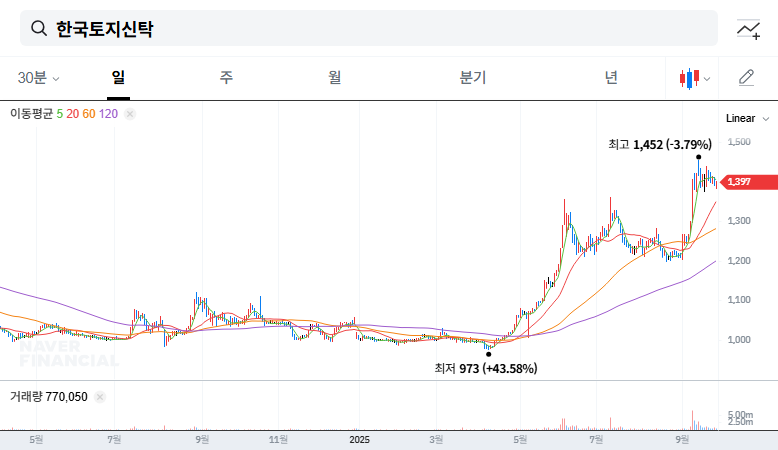
    Korea Land Trust's ₩50B EB Issuance: What Investors Need to Know 대표 차트 이미지

    1. What Happened?

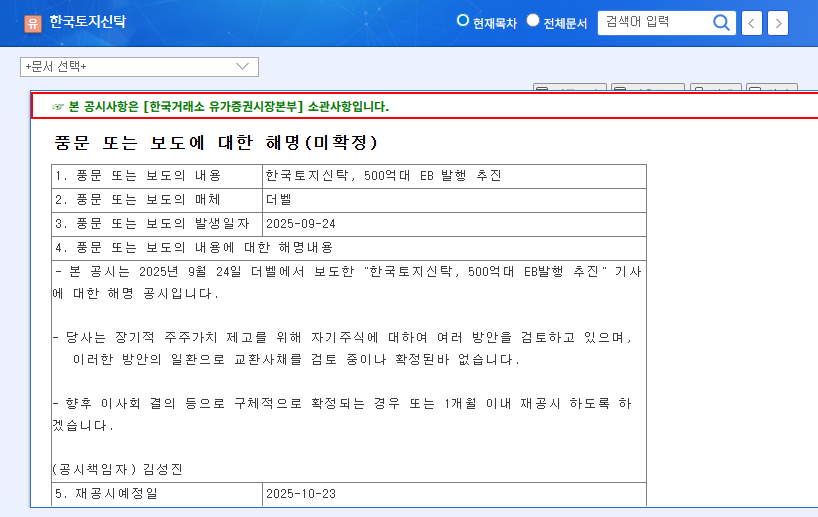
    On September 24, 2025, news broke that Korea Land Trust is exploring the issuance of ₩50 billion in EBs. The company stated that this is being considered as part of a broader strategy to enhance shareholder value, potentially involving treasury stock, but that nothing has been finalized.

    2. Why Issue EBs?

    Korea Land Trust operates a diverse portfolio of businesses, including real estate trust, urban redevelopment, and REITs. The funds raised through the EB issuance are expected to be used for improving the company’s financial structure and securing investment resources for future growth. The link to potential treasury stock strategies also signals a commitment to enhancing shareholder value.

    3. Opportunities and Risks of the EB Issuance

    • Opportunities: Improved financial structure, secured investment resources, potential for increased shareholder value.
    • Risks: Potential for share dilution (upon conversion), increased interest expense burden.

    4. Macroeconomic Considerations

    Current market conditions show increased volatility in interest rates, exchange rates, and the real estate market. This volatility could impact Korea Land Trust’s business and financial performance, and also influence the interest rate on the EBs.

    5. What Should Investors Do?

    • Confirm finalization and terms of the EB issuance (amount, interest rate, maturity, conversion terms, etc.).
    • Analyze the impact of the EB issuance on the company’s financial structure and shareholder value.
    • Monitor changes in macroeconomic indicators, such as interest rates, exchange rates, and real estate market trends.
    • Continuously observe Korea Land Trust’s financial soundness and earnings performance.

    FAQ

    Has Korea Land Trust confirmed the EB issuance?

    No, the issuance is currently under review and will be publicly announced upon confirmation.

    How will the funds from the EB issuance be used?

    The funds will be utilized to strengthen the company’s financial structure and secure investment resources for future growth. Treasury stock strategies are also under consideration.

    How will the EB issuance affect the stock price?

    While it could positively impact the company’s financials and shareholder value, there are risks, including potential share dilution and increased interest expenses.

    Korea Land Trust's ₩50B EB Issuance: What Investors Need to Know 관련 이미지
  • UTI Issues ₩5.2B Convertible Bonds: What Does it Mean for Investors?

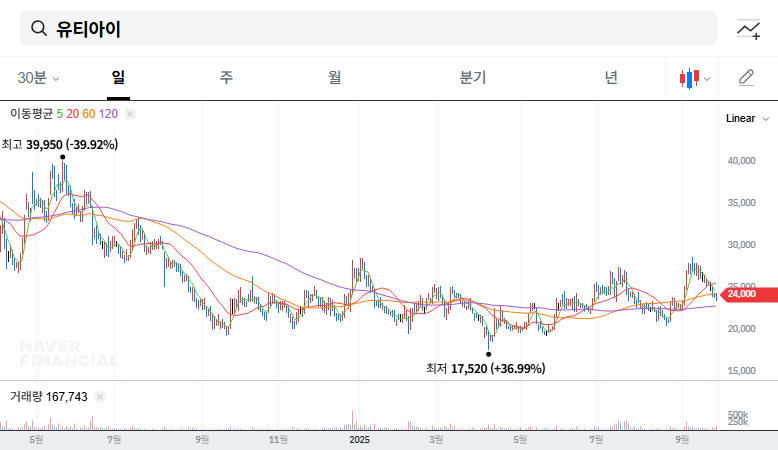
    UTI Issues ₩5.2B Convertible Bonds: What Does it Mean for Investors? 대표 차트 이미지

    1. What Happened?

    UTI announced the issuance of ₩5.2 billion in privately offered convertible bonds, with a conversion price of ₩24,750, significantly higher than the current stock price of ₩364.

    2. Why Issue Convertible Bonds?

    UTI has been facing declining sales and profitability. This move aims to secure short-term liquidity and improve its financial structure, particularly to fund investments in its Slimming business and the expansion of its Vietnam facility.

    3. How Will This Impact the Stock Price?

    • Positive Impacts: Improved short-term liquidity, low immediate dilution risk, new investment attraction
    • Negative Impacts: Increased debt burden, uncertain future profitability, potential future dilution

    The high conversion price reduces immediate dilution concerns, but the long-term financial risks remain if fundamental improvements are not achieved.

    4. What Should Investors Do?

    Investors should look beyond the short-term implications and carefully monitor UTI’s fundamental performance and the success of its new ventures. We maintain a “Neutral (Hold)” rating and recommend reassessing investment strategies based on future earnings reports and business developments.

    Frequently Asked Questions

    What are convertible bonds?

    Convertible bonds are a type of debt security that can be converted into shares of the issuing company’s stock after a specified period.

    What is UTI’s main business?

    UTI primarily manufactures camera windows used in smartphones, tablet PCs, and other devices.

    Will this bond issuance positively impact UTI’s stock price?

    While the injection of liquidity could provide a short-term boost, the long-term impact depends on the company’s ability to improve its fundamentals.

    UTI Issues ₩5.2B Convertible Bonds: What Does it Mean for Investors? 관련 이미지
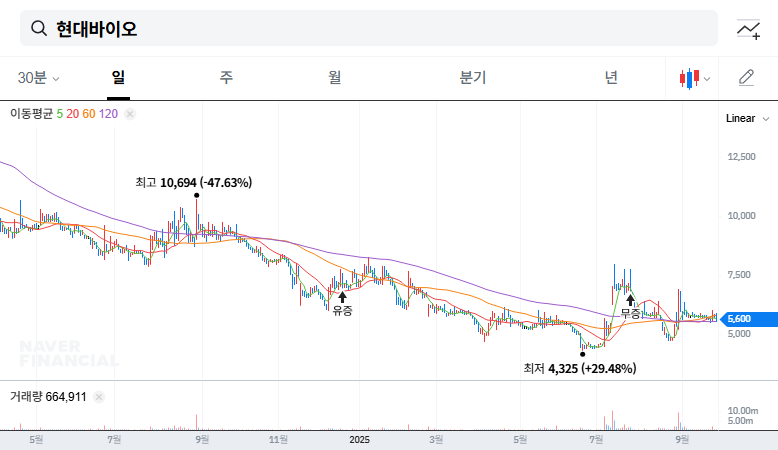
  • Hyundaibio Issues 15 Billion Won in Convertible Bonds: Impact and Investment Strategy


    Hyundaibio Issues 15 Billion Won in Convertible Bonds: Impact and Investment Strategy 대표 차트 이미지


    1. What is Hyundaibio’s CB Issuance?

    Hyundaibio has decided to issue 15 billion won worth of convertible bonds (CBs) through a private placement. The conversion price is set at 5,804 won, with a maturity interest rate of 4%. The funds raised will be used for operating capital.

    2. Why Issue Convertible Bonds?

    Hyundaibio has recently focused on improving its financial structure through rights offerings and debt repayment. This CB issuance is interpreted as a strategy to secure additional operating funds to strengthen R&D investment, including new drug development, and further solidify financial stability.

    3. How Will This Impact the Stock Price?

    Positive Impacts

    • • Increased R&D Investment: Expected acceleration of new drug development.
    • • Improved Financial Structure: Securing long-term stability.
    • • Enhanced Investor Confidence: Participation of savings banks.

    Negative Impacts

    • • Potential Stock Dilution: Upon conversion of CBs to shares.
    • • Conversion Price Adjustment Risk: In case of stock price decline.
    • • Potential Cash Outflow: Repayment burden at maturity.

    4. What Should Investors Do?

    Investors should carefully consider the following:

    • • Progress of key drug pipelines.
    • • Potential for conversion price adjustments.
    • • Changes in financial soundness.
    • • Company transparency and related issues.

    The CB issuance is a complex event that needs to be analyzed from both short-term and long-term perspectives. Prudent investment decisions are essential.


    FAQ

    What are convertible bonds (CBs)?

    Convertible bonds (CBs) are bonds that pay interest like regular bonds but also give the bondholder the option to convert the bond into a predetermined number of shares of the issuing company’s common stock at a specified price (conversion price) before maturity.

    Will this CB issuance positively affect the stock price?

    If the issuance leads to increased R&D investment and positive outcomes in new drug development, it could be a positive catalyst for the stock price. However, the potential for dilution upon conversion exists, requiring a comprehensive assessment of the situation.

    What’s the most important factor to consider when investing?

    It’s crucial to continuously monitor the development progress of core drug pipelines and any changes in the company’s financial soundness.


    Hyundaibio Issues 15 Billion Won in Convertible Bonds: Impact and Investment Strategy 관련 이미지


  • ABPROBIO Management Dispute: A Deep Dive and Investment Strategy

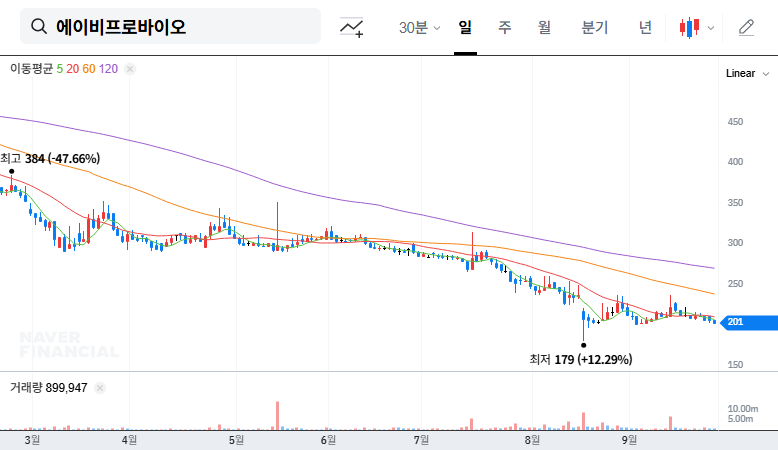
    ABPROBIO Management Dispute: A Deep Dive and Investment Strategy 대표 차트 이미지

    1. What Happened? : Management Dispute Erupts

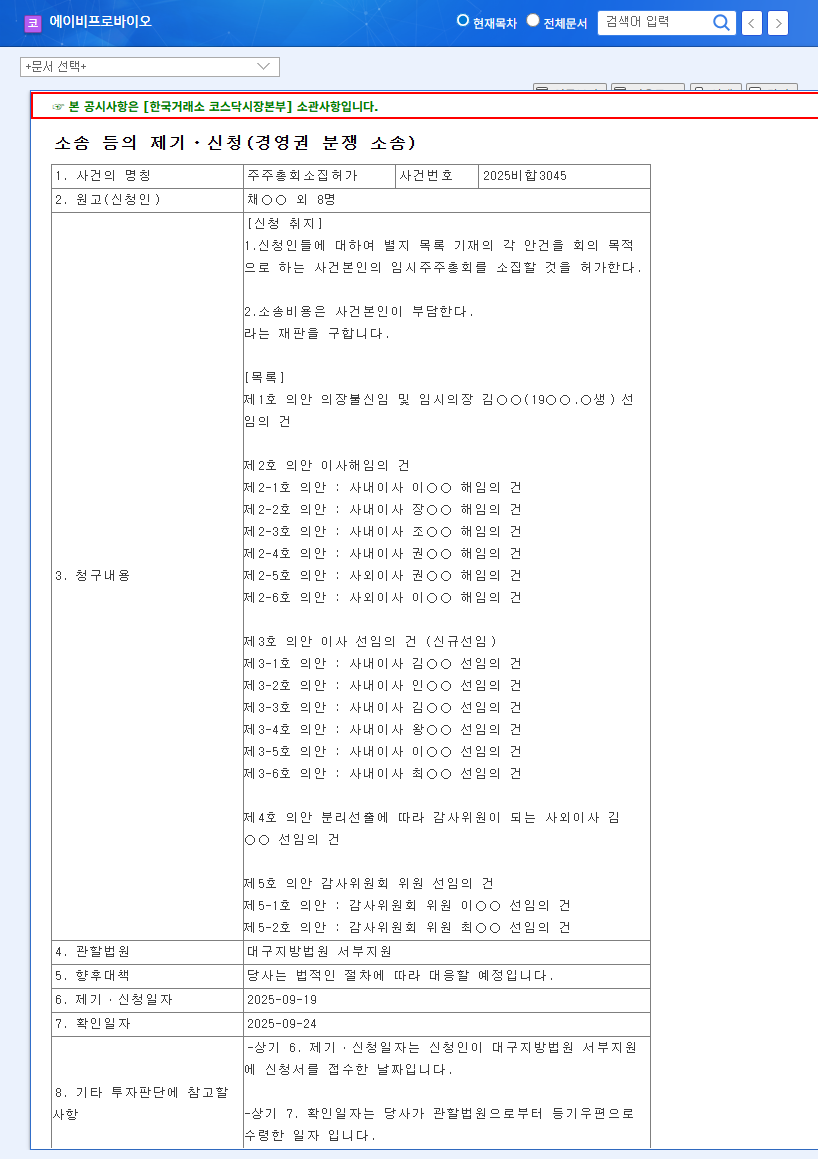
    Shareholders of ABPROBIO have initiated a management dispute by requesting a temporary shareholders’ meeting. Key agenda items include the dismissal of existing leadership and the appointment of new directors and auditors, signaling a potential shift in company control.

    2. Why Does it Matter? : Existing Challenges Amplified

    ABPROBIO is already grappling with a slumping machinery business, uncertainties in its bio division, and the financial burden of its nascent semiconductor equipment venture. This management dispute further intensifies uncertainty and adds to potential stock volatility.

    3. What’s Next? : Increased Uncertainty and Volatility

    In the short term, expect significant stock fluctuations tied to news surrounding the dispute and the outcome of the shareholders’ meeting. The long-term trajectory hinges on the new management’s capabilities and strategic decisions.

    4. What Should Investors Do? : Proceed with Caution

    Investing in ABPROBIO currently carries substantial risk. A cautious approach is recommended until the dust settles and the impact of the dispute becomes clearer. Closely monitor the outcome of the shareholders’ meeting, developments in each business segment, and the company’s efforts to improve its financial health.

    What are the main causes of the ABPROBIO management dispute?

    While the exact reasons haven’t been publicly disclosed, it’s likely due to dissatisfaction with the current management’s performance. The declining machinery business, uncertainties in the bio division, and worsening financial health could be contributing factors.

    How will the management dispute affect ABPROBIO’s stock price?

    Expect increased volatility in the short term. The stock price may fluctuate significantly based on news related to the dispute and the results of the shareholders’ meeting. The long-term impact depends on the new management’s competence and strategic direction.

    Should I invest in ABPROBIO?

    A very cautious approach is advised at this time. Closely monitor the outcome of the dispute and its impact on the company’s operations. It’s wise to hold off on investing until there are clear signs of fundamental improvement and strengthened financial health.

    ABPROBIO Management Dispute: A Deep Dive and Investment Strategy 관련 이미지
  • Noel’s 350 Billion KRW Rights Offering: Stock Plunge or Investment Opportunity? Key Analysis and Outlook

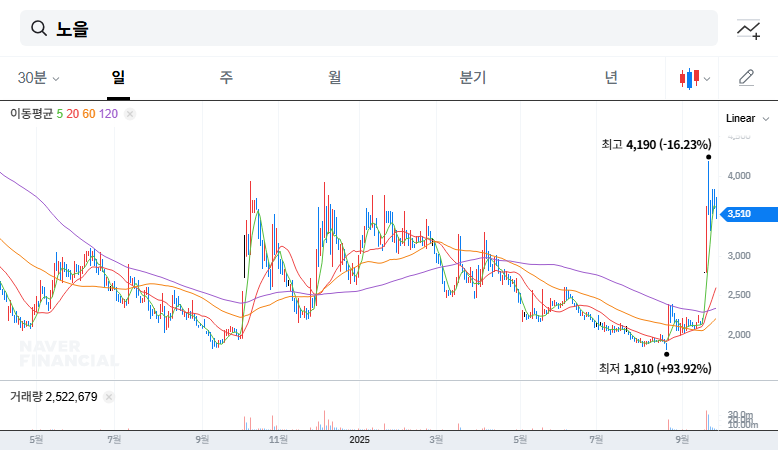
    Noel's 350 Billion KRW Rights Offering: Stock Plunge or Investment Opportunity? Key Analysis and Outlook 대표 차트 이미지

    1. Noel’s Rights Offering: What Happened?

    On September 24, 2025, Noel announced a 350 billion KRW rights offering through a rights issue followed by a public offering of unsold shares. The funds raised will be used for facility investment (26 billion KRW), business acquisition (30 billion KRW), operating funds (274 billion KRW), and debt repayment (20 billion KRW), with a primary focus on securing operating funds.

    2. Why the Rights Offering?

    Despite its innovative technology, Noel is currently operating at a loss. The funds secured through this rights offering are expected to contribute significantly to securing future growth engines by improving financial structure, securing operating funds, and expanding business operations.

    3. Impact on Stock Price: A Double-Edged Sword

    • Positive Impact: Improved financial structure and secured growth momentum are expected to increase corporate value in the long term.
    • Negative Impact: Potential for short-term stock price decline due to stock dilution.

    The rights offering is a double-edged sword. It provides a springboard for growth through fundraising, but it can also lead to a short-term stock price decline due to stock dilution. Therefore, investors should be aware of short-term stock price volatility.

    4. What Should Investors Do?

    • Short-term investors: Carefully analyze offer price, market reaction, etc., and carefully determine investment timing.
    • Long-term investors: Continuously monitor the use of funds, profitability improvement, and changes in fundamentals.

    Before making an investment decision, further information such as the confirmed offer price, fundraising plan, plan for turning to profit, and global market expansion status should be checked.

    Frequently Asked Questions

    What is the purpose of Noel’s rights offering?

    A 350 billion KRW rights offering is being conducted to secure operating funds, facility investments, business acquisitions, and debt repayment.

    How will the rights offering affect the stock price?

    In the short term, there is a possibility of a stock price decline due to stock dilution, but in the long term, it can have a positive impact by improving the financial structure and securing growth momentum.

    What are some precautions for investors?

    Carefully review the offer price, use of funds, and plan for turning to profit, and be aware of short-term stock price volatility.

    Noel's 350 Billion KRW Rights Offering: Stock Plunge or Investment Opportunity? Key Analysis and Outlook 관련 이미지
  • NKMax Faces Delisting: In-Depth Analysis and Future Outlook for Investors


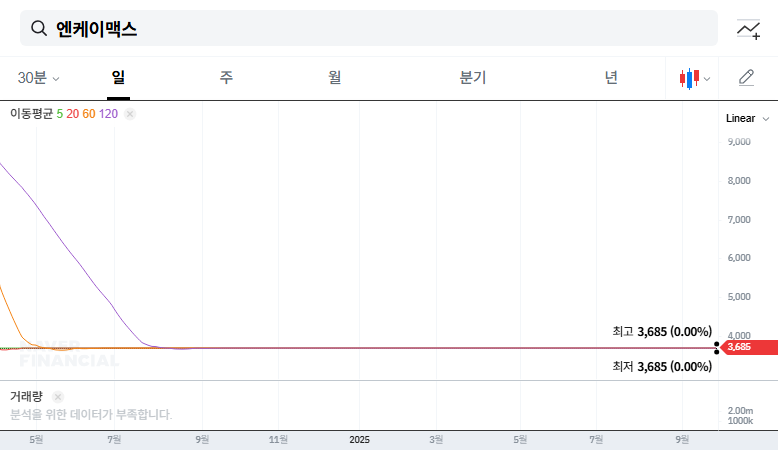
    NKMax Faces Delisting: In-Depth Analysis and Future Outlook for Investors 대표 차트 이미지


    What Happened? NKMax Designated for Delisting Review

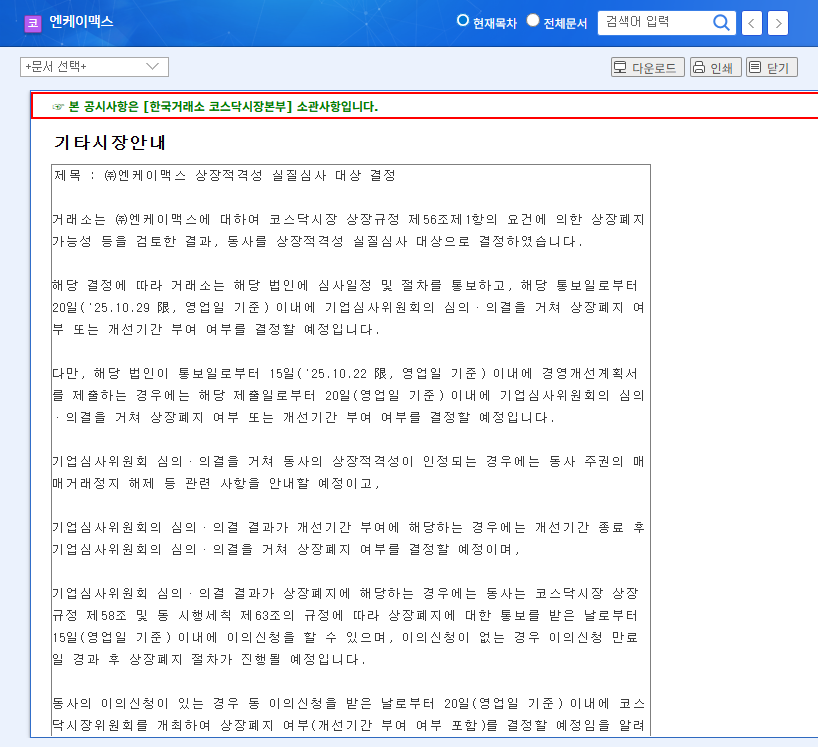
    On September 24, 2025, NKMax was designated for delisting review due to a disclaimer of opinion from its 2023 audit. The Korea Exchange will decide whether to delist NKMax or grant a grace period by October 29, 2025. NKMax must submit a management improvement plan by October 22.

    Why Did This Happen? Understanding NKMax’s Current Situation

    NKMax, a developer of NK cell-based immunodiagnostic and therapeutic solutions, underwent corporate restructuring and returned to positive equity in June 2025. However, as of the first half of 2025, the company continues to face declining sales, operating losses, and net losses, along with losses from affiliates. While the growth potential of the immunocell therapy market is positive, increasing competition and development costs remain significant challenges.

    What’s Next? Analyzing the Short-Term and Long-Term Impact

    • Short-term Impact: Stock price decline, increased trading volatility, potential trading suspension.
    • Long-term Impact: Depending on the management improvement plan and review results, NKMax faces delisting or a grace period. Even with a grace period, uncertainties in fundraising and business operations may persist.

    What Should Investors Do? Investment Strategies and Key Considerations

    • Conservative Approach: Investments in NKMax carry significant risks and require caution.
    • Stay Informed: Closely monitor the management improvement plan, review outcomes, pipeline performance, and financial health.


    FAQ

    Why is NKMax facing delisting?

    NKMax was designated for delisting review due to a disclaimer of opinion on its 2023 audit. Ongoing operating losses and other financial difficulties also contributed.

    What happens if NKMax is delisted?

    If delisted, trading of NKMax shares will be halted, potentially leading to significant losses for investors.

    Is there a chance NKMax can avoid delisting?

    NKMax can potentially avoid delisting by submitting a management improvement plan and passing the Korea Exchange’s review, earning a grace period. However, successful improvement efforts are crucial.

    What should investors keep in mind?

    Investors should exercise extreme caution and closely monitor the management improvement plan, review results, pipeline performance, and financial health of NKMax.


    NKMax Faces Delisting: In-Depth Analysis and Future Outlook for Investors 관련 이미지


  • Hwanggeum ST Stock Forecast: CEO Increases Stake, What’s the Hidden Meaning?

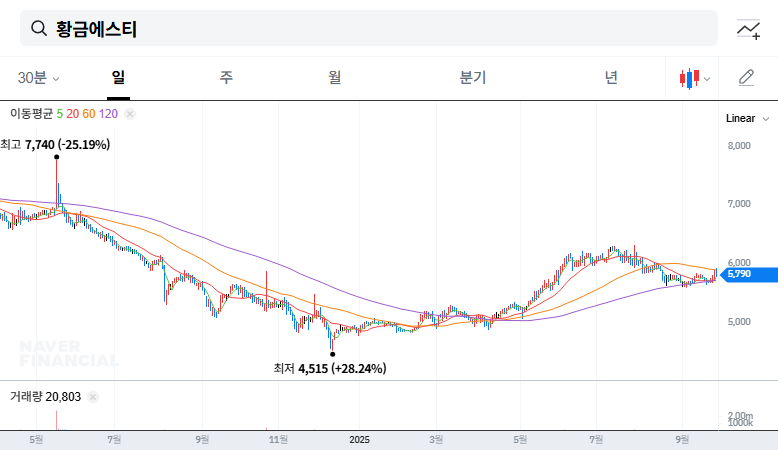
    Hwanggeum ST Stock Forecast: CEO Increases Stake, What's the Hidden Meaning? 대표 차트 이미지

    What Happened at Hwanggeum ST?

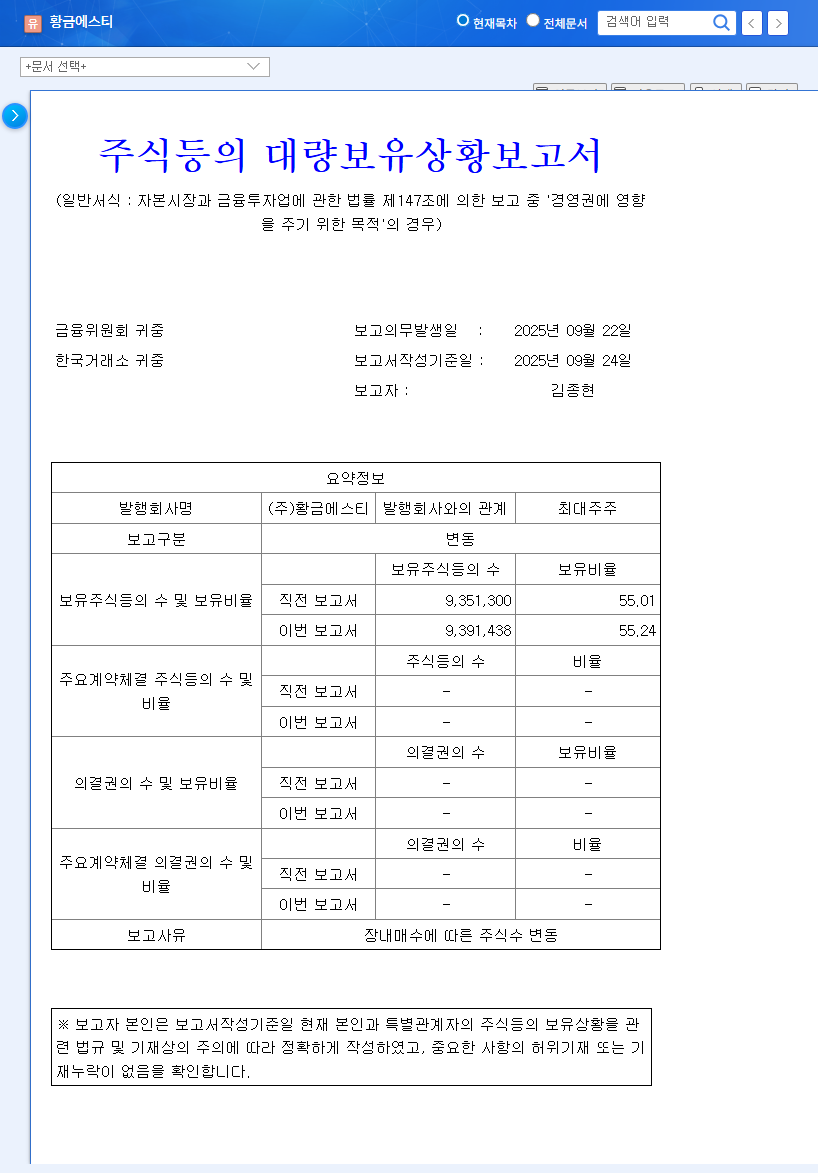
    Kim Jong-hyun, the CEO and largest shareholder of Hwanggeum ST, increased his stake from 55.01% to 55.24% (0.23%p) through open market purchases over three days. This news was announced through a major shareholder report disclosed on September 24, 2025.

    Why is the CEO’s Stake Increase Important?

    This stake increase can be interpreted as a demonstration of commitment to strengthening management control and responsible management. The additional purchase, even with an already majority stake, can be seen as a sign of confidence in the company’s future.

    How are Hwanggeum ST’s Fundamentals?

    Hwanggeum ST demonstrates positive fundamentals through stable performance in its steel business, growth in its construction business, and expansion into new businesses such as ALC and smart farms. Financial soundness is also steadily improving, and a consistent dividend policy contributes to enhancing shareholder value.

    • Steel Business: Strengthening competitiveness through in-house production facility development and high-value-added products.
    • Construction Business: Growth based on proprietary technologies such as IPC girder technology.
    • New Businesses: Securing future growth engines through ALC market entry and smart farm projects.

    What Should Investors Do?

    This stake increase can have a positive impact on stock prices in the short term. However, investment should always be approached with caution. It is important to continuously monitor stock price fluctuations, the CEO’s future actions, the company’s business performance, and changes in macroeconomic indicators.

    Q: How will CEO Kim Jong-hyun’s stake increase affect the stock price?

    A: Generally, an increase in stake by the largest shareholder is interpreted as a positive signal in the market and can lead to expectations of a stock price increase. However, a small change in an already majority stake may have a limited impact.

    Q: What is the future business outlook for Hwanggeum ST?

    A: Hwanggeum ST shows a positive outlook through solid growth in its steel and construction businesses, and expansion into new businesses. Continuous improvement in financial soundness and dividend policy are also expected to contribute to enhancing shareholder value.

    Q: What precautions should be taken when investing?

    A: Investment should always be approached cautiously. Investors should constantly monitor stock price fluctuations, the CEO’s actions, business performance, and macroeconomic indicators, and keep in mind that the responsibility for investment decisions lies with the investor.

    Hwanggeum ST Stock Forecast: CEO Increases Stake, What's the Hidden Meaning? 관련 이미지
  • Daehan Optoelectronics’ Warrant Exercise: What Investors Need to Know 🚨


    Daehan Optoelectronics' Warrant Exercise: What Investors Need to Know 🚨 대표 차트 이미지


    1. What are Daehan Optoelectronics’ Warrant Exercises?

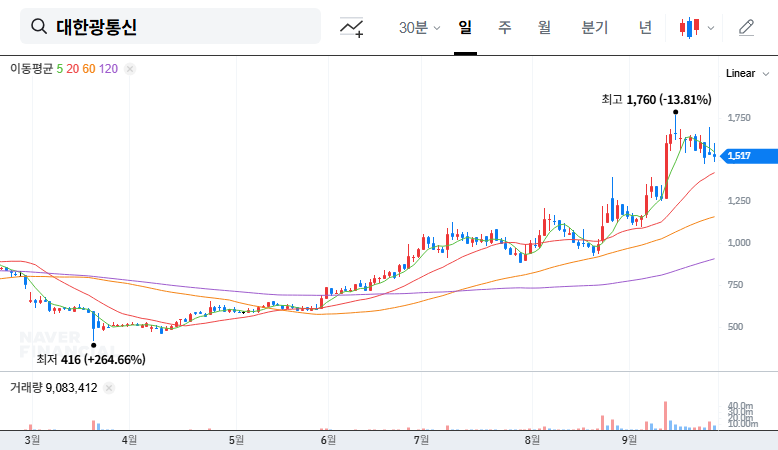
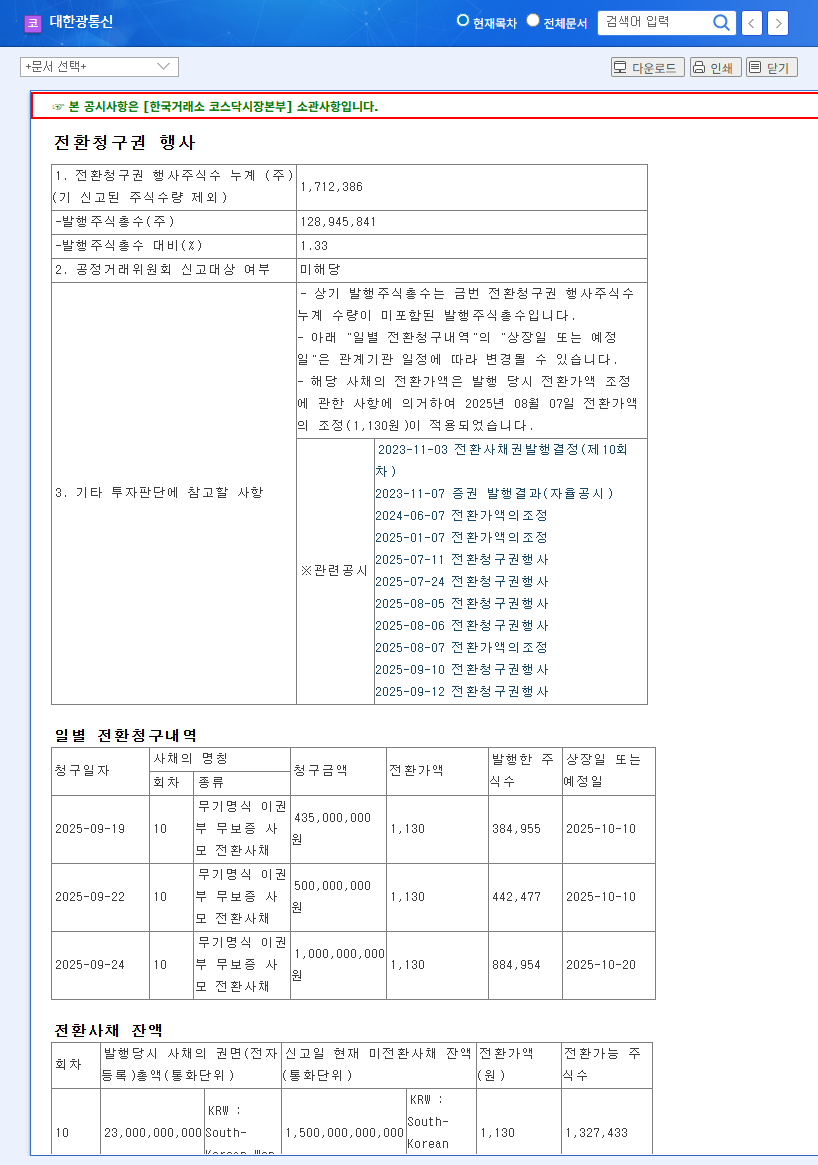
    Daehan Optoelectronics is issuing 1,712,386 new shares due to warrant exercises. The exercise price is 1,130 KRW, and the listing dates are October 10th and 20th, 2025. This represents approximately 1.33% of the market capitalization.

    2. Why the Warrant Exercises and What is the Impact?

    As the current stock price (1,517 KRW) exceeds the exercise price (1,130 KRW), warrant holders are likely to exercise their rights for profit-taking. However, the new share issuance can lead to stock dilution, putting downward pressure on the stock price in the short term.

    3. How is Daehan Optoelectronics’ Financial Status?

    • Decline in Sales: Sales in the first half of 2025 decreased by 8.17% compared to the same period last year, primarily due to declining domestic sales. However, overseas sales are showing growth.
    • Operating Loss: Despite efforts to improve profitability, the company remains in an operating loss.
    • Efforts to Improve Financial Health: A rights issue in February 2025 raised capital and lowered the debt ratio.
    • Going Concern Uncertainty: Net loss and excess current liabilities raise concerns about the company’s ability to continue as a going concern.

    4. What Should Investors Do?

    • Cautious Approach: Investors should consider the financial risks and uncertainties carefully before making investment decisions.
    • Further Monitoring: Closely monitor earnings announcements, overseas market performance, and efforts to improve financial structure.
    • Sell or Hold: It is recommended to sell or hold existing shares until there are clear signs of fundamental improvement. Avoid rushing into bargain hunting based on short-term price drops.


    Frequently Asked Questions

    Do warrant exercises only have negative impacts on stock prices?

    In the short term, stock dilution is likely to lead to a price decline. However, in the long run, it can contribute to improving the financial structure by raising capital. In the case of Daehan Optoelectronics, however, the positive impact might be limited due to high financial uncertainties.

    What should investors pay attention to?

    It’s crucial to monitor the company’s financial status, going concern status, future performance, etc., and make investment decisions from a long-term perspective without being swayed by short-term price fluctuations.

    Should I buy Daehan Optoelectronics stock now?

    Daehan Optoelectronics is currently financially unstable, and the warrant exercise is likely to cause a short-term drop in stock price. Therefore, it’s advisable to wait and see rather than buy new shares until there are signs of fundamental improvement.


    Daehan Optoelectronics' Warrant Exercise: What Investors Need to Know 🚨 관련 이미지


  • Castech Korea: Auditor Appointment Invalidated – What Investors Need to Know

    Castech Korea: Auditor Appointment Invalidated - What Investors Need to Know 대표 차트 이미지

    1. What Happened?

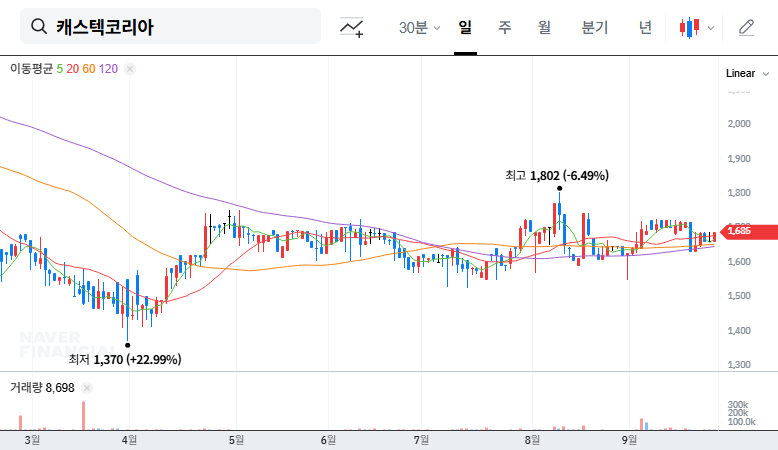
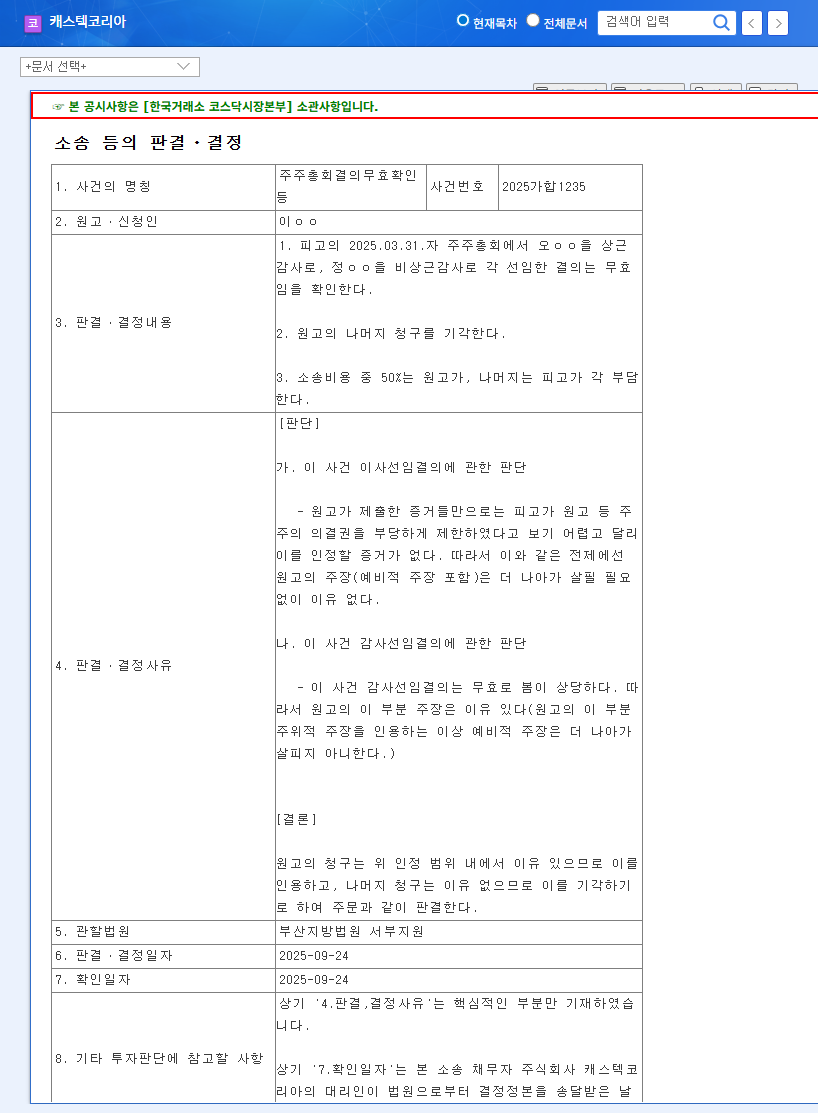
    The Busan District Court’s Western Branch invalidated the appointment of auditors elected during the shareholders’ meeting on March 31, 2025, citing procedural irregularities in the appointment process.

    2. Why Does It Matter?

    This ruling goes beyond a simple procedural issue; it could exacerbate the ongoing management disputes and corporate governance risks at Castech Korea. This is another blow to the company, which is already grappling with poor financial performance. Investors should pay close attention to the negative impact this ruling may have on stock prices and investor sentiment.

    3. So What Happens Now?

    • Intensified Management Disputes: The invalidation of the auditor appointments could further complicate the ongoing management disputes and increase uncertainty surrounding the company’s leadership.
    • Dampened Investor Sentiment: Increased corporate governance risks and uncertainty can further damage investor confidence and put downward pressure on the stock price.
    • Decline in Corporate Value: Prolonged management instability and poor financial performance can erode the fundamental value of the company.

    4. What Should Investors Do?

    • Cautious Investment: Investors should carefully consider the outcome of the management disputes, the possibility of performance improvement, and efforts to improve corporate governance before making any investment decisions.
    • Risk Management: When investing in Castech Korea, consider the various risk factors, including management disputes, corporate governance risks, and poor financial performance. Exercise caution in portfolio management.
    • Information Gathering: Continuously gather and analyze the latest information through company disclosures, news reports, and analyst reports following the ruling.

    Why was Castech Korea’s auditor appointment invalidated?

    The appointment was invalidated due to procedural irregularities during the shareholder’s meeting on March 31, 2025. The court recognized these flaws and nullified the appointments.

    How will this ruling affect Castech Korea’s stock price?

    In the short term, it is likely to dampen investor sentiment and put downward pressure on the stock price. The long-term impact will depend on the outcome of the management disputes and whether the company can improve its financial performance.

    How should investors respond?

    Investors should carefully consider various factors, including management disputes, financial performance, and corporate governance, before making investment decisions. Risk management is crucial.

    Castech Korea: Auditor Appointment Invalidated - What Investors Need to Know 관련 이미지