Tag: Investment Risk

  • (036180) GW Vitek Analysis: KRW 3.8B Lawsuit Threatens Rehabilitation & Investor Confidence

    (036180) GW Vitek Analysis: KRW 3.8B Lawsuit Threatens Rehabilitation & Investor Confidence

    The precarious situation for GW Vitek CO.,LTD., a company already navigating treacherous corporate rehabilitation proceedings, has intensified significantly. A newly emerged appeal for a KRW 3.841 billion goods payment lawsuit casts a dark, ominous shadow over its prospects for recovery. This development introduces a critical layer of uncertainty that investors and stakeholders cannot afford to ignore. This comprehensive analysis will dissect the lawsuit’s implications for GW Vitek, its fragile financial state, and the viability of its entire rehabilitation process.

    The New Legal Hurdle: A KRW 3.8 Billion Lawsuit

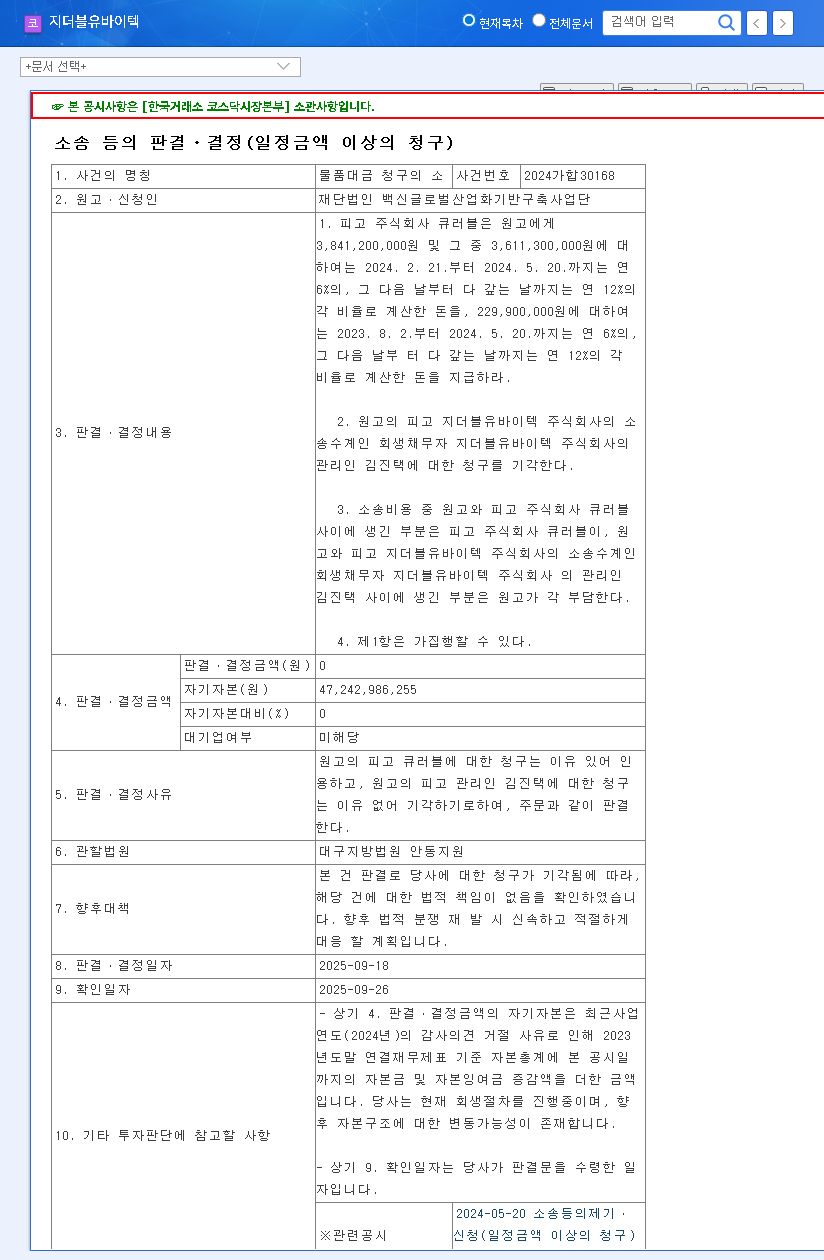
    Already burdened by severe management challenges and suspended stock trading, GW Vitek now confronts another significant legal battle. The Vaccine Global Industrialization Foundation has filed an appeal for a ‘claim for goods payment’ lawsuit valued at KRW 3.841 billion. This amount represents a substantial 7.62% of the company’s total assets, making it a material event with potentially devastating consequences.

    The appeal, which will be heard at the Andong Branch of the Daegu District Court, seeks to overturn a first-instance ruling where the plaintiff was unsuccessful. If the appeal succeeds, this KRW 3.841 billion will be confirmed as a rehabilitation claim, adding a massive financial weight to a company already on the brink. The specifics of this legal challenge were disclosed in an official regulatory filing. You can view the Official Disclosure (Source) for detailed information.

    Understanding the Gravity: GW Vitek’s Deep-Rooted Crisis

    To fully appreciate the impact of this lawsuit, it’s essential to understand the dire state of GW Vitek’s fundamentals. The company is operating under extreme ‘going concern uncertainty,’ a term auditors use when a business is at high risk of failure. This isn’t a new development but a culmination of persistent financial decay.

    With liabilities soaring and equity diminishing, the addition of a multi-billion KRW claim from this GW Vitek lawsuit could be the final straw that breaks the company’s chances of a successful turnaround.

    Catastrophic Financial Performance

    The company’s financial reports paint a grim picture. In Q3 2025, accumulated sales plummeted to KRW 3.25 billion, an 85% decrease year-over-year, while the operating loss ballooned to KRW 3.27 billion. More alarmingly, total liabilities stand at a staggering KRW 136.4 billion against a dwindling total equity of just KRW 15.048 billion, signaling severe capital impairment and a desperate need for restructuring. These are not just numbers; they represent a fundamental collapse of the business’s operational viability.

    Compounding Internal and External Pressures

    The problems extend beyond poor sales. GW Vitek is also dealing with the fallout from alleged embezzlement and breach of trust, resulting in outstanding illegal activity receivables of KRW 18.33 billion. This, combined with numerous other ongoing lawsuits and the loss of control over subsidiaries, has created a perfect storm. The auditor’s ‘disclaimer of opinion’ underscores the chaos, making it nearly impossible for investors to trust the financial statements. Furthermore, the harsh macroeconomic climate of high interest rates and inflation makes sourcing capital or finding operational efficiencies incredibly challenging. For more information on navigating such situations, investors can review resources on analyzing distressed companies.

    How the Lawsuit Derails the Rehabilitation Process

    The success of corporate rehabilitation proceedings hinges on creating a clear and viable path forward. This new lawsuit threatens to shatter that clarity in several ways:

    • Exacerbated Financial Burden: If the court rules against GW Vitek, its already overwhelming debt load will increase, making financial restructuring nearly impossible and potentially triggering liquidation.
    • Deterrent to M&A and Investment: Potential buyers or investors seek stability. A large, unresolved legal claim is a major red flag, significantly reducing the chances of a successful M&A deal that could save the company.
    • Damaged Corporate Trust: Continuous legal disputes destroy a company’s reputation. Even if GW Vitek somehow survives, rebuilding trust with customers, suppliers, and the market will be a monumental task.
    • Complicated Rehabilitation Plan: The entire rehabilitation plan submitted to the court is now thrown into question. Creditors will be less likely to approve a plan when a massive, uncertain liability is looming.

    Conclusion: An Extremely High-Risk Scenario for Investors

    The emergence of this KRW 3.841 billion ‘claim for goods payment’ lawsuit is a profoundly negative event for GW Vitek. It compounds an existing crisis defined by rehabilitation proceedings, suspended trading, embezzlement-related debts, and a damning auditor’s report. The path to normalization now appears more obscured than ever.

    Therefore, any investment consideration in GW Vitek at this juncture carries an exceptionally high level of risk. Investors must exercise extreme caution and diligently monitor all developments. A prudent approach is not just recommended; it is essential for capital preservation. Focus on the outcome of this lawsuit and the progress of the rehabilitation plan, as these will be the ultimate determinants of the company’s fate.
    (036180) GW Vitek Analysis: KRW 3.8B Lawsuit Threatens Rehabilitation & Investor Confidence 관련 이미지
  • (014200) KANGLIM Delisting Crisis (014200): In-Depth Financial Analysis & Investor Alert

    (014200) KANGLIM Delisting Crisis (014200): In-Depth Financial Analysis & Investor Alert

    Investors in KANGLIM Co., LTD. (014200) are navigating treacherous waters. The ongoing KANGLIM delisting crisis has reached a critical inflection point following the company’s immediate appeal against the Korea Exchange’s decision. This comprehensive analysis provides a crucial KANGLIM financial analysis, delving into its deteriorating fundamentals, the implications of its legal battle, and a clear-eyed guide for current and potential investors. The company’s future hangs in the balance, making informed decision-making more critical than ever.

    With a precarious financial position and its listing status dependent on a court ruling, understanding the nuances of this situation is paramount. Can the company reverse its fortunes, or is this the final chapter for KANGLIM on the stock exchange?

    The Legal Battle: KANGLIM’s Appeal Against Delisting

    On November 13, 2025, KANGLIM Co., LTD. took a decisive step by filing an immediate appeal with the Seoul Southern District Court. This legal maneuver is a direct challenge to the court’s earlier dismissal of an injunction that sought to suspend the delisting order from the Korea Exchange, initially issued on February 10, 2025. This escalation signifies that the KANGLIM delisting crisis is far from resolved, plunging the company and its shareholders into a prolonged period of profound uncertainty. The outcome of this KANGLIM stock appeal will be the single most important determinant of its survival as a publicly-traded entity.

    Investing in KANGLIM at this juncture is not just speculative; it’s a high-stakes gamble on a legal outcome, with the company’s fundamental health in rapid decline.

    Unpacking the Financial Decay: A 2025 Semi-Annual Report Analysis

    A thorough KANGLIM financial analysis of its 2025 semi-annual report reveals a company grappling with severe internal and external pressures. The numbers paint a grim picture that extends far beyond the courtroom drama.

    Core Business in Decline

    The heart of KANGLIM’s operations—cranes and special purpose vehicles—is struggling. Intense market competition, coupled with Russian export regulations and a sluggish domestic economy, has eroded performance. Sales dipped by 5.6% year-over-year, and what was a KRW 920 million operating profit has now become a KRW 58 million operating deficit. While the bottom line shows a net income surplus, this is misleadingly propped up by one-off ‘gains on valuation of assets held for sale,’ not sustainable operational success.

    Alarming Cash Flow Instability

    Perhaps the most critical warning sign is the company’s operating cash flow, which registered a negative KRW 10.63 billion. A negative operating cash flow means the core business is spending more cash than it generates, a fundamentally unsustainable position that raises serious doubts about KANGLIM’s ability to fund its day-to-day operations, invest in recovery, or service its debts without resorting to asset sales or further financing.

    Investor Action Plan: Navigating the Uncertainty

    For those holding or considering an investment in KANGLIM (014200), a prudent and highly cautious approach is mandatory. The stock’s future is subject to extreme volatility, as analyzed by leading global financial news outlets. Here are the key factors to monitor:

    • Monitor Legal Proceedings Closely: The fate of the KANGLIM stock appeal is the primary catalyst. A favorable ruling could trigger a short-term rally, but a negative one will likely seal its delisting. Investors should review the Official Disclosure on DART for direct information.
    • Scrutinize Core Business Turnaround: Beyond the legal noise, look for tangible signs of recovery in the crane and special vehicle segments. A positive shift in operating cash flow is a non-negotiable prerequisite for any long-term viability. For more information, you can read about how to analyze a company’s financial health.
    • Assess Profit Sustainability: The company must demonstrate an ability to generate consistent profits from its core operations, not from one-time asset sales. True value is built on operational excellence, which is currently absent.

    Conclusion: An ‘Extreme Risk’ Verdict

    The KANGLIM delisting crisis represents an existential threat to the company. Compounded by severely deteriorating fundamentals and a reliance on a favorable legal outcome, investing in KANGLIM (014200) at this moment is an endeavor of extreme risk. While diversification efforts are noted, they are insufficient to counteract the overwhelming uncertainty. The current recommendation is to avoid investment and maintain a cautious, observational stance pending the resolution of its legal and financial challenges.

  • (151910) FutureCore Co.,Ltd. Delisting Crisis 2024: Complete Investor Guide to the Immediate Appeal & Stock Future

    (151910) FutureCore Co.,Ltd. Delisting Crisis 2024: Complete Investor Guide to the Immediate Appeal & Stock Future

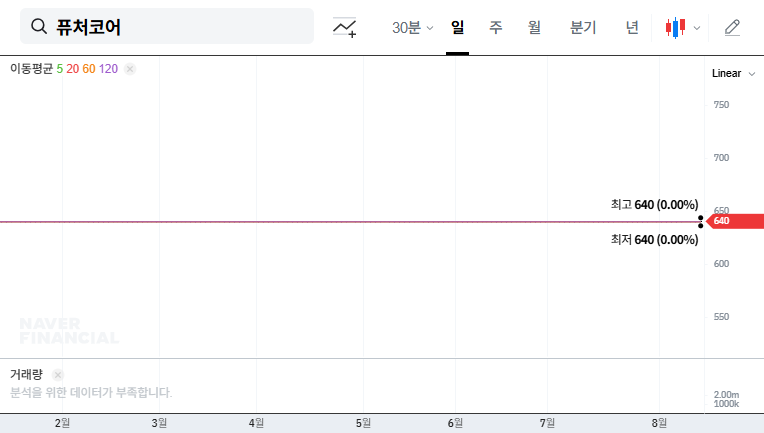
    The FutureCore Co.,Ltd. delisting crisis has reached a critical boiling point. The company, formerly known as SBW Life Science, is locked in a high-stakes legal battle to maintain its position on the stock market after a court rejected its initial attempt to suspend the delisting process. With an immediate appeal filed, investors are on edge, and the company’s future hangs precariously in the balance. This comprehensive guide breaks down the entire situation, from the core reasons for the crisis to the potential market impacts and a crucial investment strategy for navigating these turbulent times.

    The Escalating Delisting Crisis: A Timeline of Events

    Understanding the current predicament requires looking at the sequence of events that led to this moment. The path for FutureCore has been fraught with legal and regulatory challenges, culminating in the current appeal that will likely decide its fate.

    • May 27, 2024: The Korea Exchange officially decides to delist FutureCore Co.,Ltd., citing historical accounting issues as the primary reason.
    • Injunction Filing: In response, the company files an injunction with the Seoul Southern District Court to temporarily suspend the delisting decision and allow it time to argue its case.
    • First-Instance Rejection: The court denies the injunction, dealing a significant blow to the company and intensifying the delisting risk.
    • Immediate Appeal: FutureCore immediately files an appeal against the court’s rejection, initiating a final, desperate legal battle to prevent its removal from the stock exchange. The details of this filing can be viewed in the Official Disclosure (DART).

    Why Is FutureCore Facing This? Fundamentals vs. History

    The core of the FutureCore Co.,Ltd. delisting threat stems from past accounting irregularities that damaged regulatory trust. Despite recent efforts to turn the business around, these historical issues continue to cast a long and ominous shadow over the company’s prospects. FutureCore specializes in optical filters and Hall sensors for smartphone camera modules and has attempted to diversify into high-growth areas like data centers and biotech, but this strategy is hampered by the existential threat of delisting.

    A Look at the Financials

    The company’s financial statements paint a mixed picture, showing signs of operational improvement that are unfortunately overshadowed by its legal and financial vulnerabilities.

    • Revenue Recovery: Sales figures show a promising recovery, indicating that its core business has some stability.
    • Operating Profit: The company successfully achieved an operating profit, suggesting improvements in operational efficiency.
    • High Debt Ratio: A concerning debt-to-equity ratio of over 118% points to significant financial leverage and risk.
    • Persistent Net Loss: On a consolidated basis, the company continues to post net losses, hindering its ability to build a stable financial foundation.

    Even with positive operational trends, the overwhelming legal uncertainty from the delisting appeal makes any fundamental analysis secondary. The company’s survival is the only metric that currently matters.

    Market Impact and Future of FutureCore Stock

    The pending appeal has created an environment of extreme uncertainty, directly impacting the FutureCore stock. Investor sentiment is fragile, and the stock is prone to wild swings based on rumors and legal updates. The market is bracing for high volatility, a phenomenon often seen in distressed assets as discussed by financial authorities like Reuters. A rejection of the appeal would almost certainly lead to a catastrophic price collapse, while an unexpected victory could trigger a massive, albeit likely short-lived, relief rally.

    Investor Guide: What Is the Right Move?

    Given the binary nature of the situation, any investment in FutureCore Co.,Ltd. at this stage is speculative and carries an exceptionally high degree of risk. Our investment opinion is one of extreme caution.

    Recommendation: Avoid or Defer Investment

    We strongly recommend deferring any new investment in FutureCore. The risk of a complete loss of capital is substantial if the delisting is confirmed. The potential for reward is eclipsed by the probability of a worst-case scenario. For more on risk management, see our guide on Understanding Stock Delisting Procedures.

    Key Points to Monitor

    • The Immediate Appeal Outcome: This is the single most important catalyst. The court’s final ruling will determine the company’s existence on the public market.
    • Liquidation Trading Notice: If the appeal is rejected, watch for announcements from the Korea Exchange regarding the schedule for liquidation trading before the final delisting.
    • Post-Ruling Strategy: In the unlikely event the company survives, its subsequent strategy to improve financials and execute its diversification plan will become critical.

    Frequently Asked Questions (FAQ)

    What is the core issue in the FutureCore Co.,Ltd. delisting crisis?

    The crisis stems from a delisting decision made on May 27, 2024, due to historical accounting problems. The company is now in the final appeal stage after its initial injunction to stop the process was denied.

    What does the ‘immediate appeal’ mean for the company?

    This is FutureCore’s last legal option to overturn the rejection of its injunction. If this appeal is granted, the delisting process could be paused. If it is rejected, delisting becomes almost certain, marking a critical turning point for the company’s survival.

    Is it safe to invest in FutureCore stock right now?

    No. This report strongly advises against investing in FutureCore at this time. The risk of delisting is extremely high, which could lead to a total loss of your investment. It is prudent to wait until the appeal’s outcome is clear.

    In conclusion, the situation surrounding the FutureCore Co.,Ltd. delisting appeal represents a high-risk, speculative event. Investors must prioritize capital preservation and understand that the company’s operational improvements are irrelevant until its survival on the stock exchange is secured.

  • (131400) EV ADVANCED MATERIAL CO., LTD. Rights Offering Withdrawal: A Deep-Dive Financial Analysis & Stock Outlook

    (131400) EV ADVANCED MATERIAL CO., LTD. Rights Offering Withdrawal: A Deep-Dive Financial Analysis & Stock Outlook

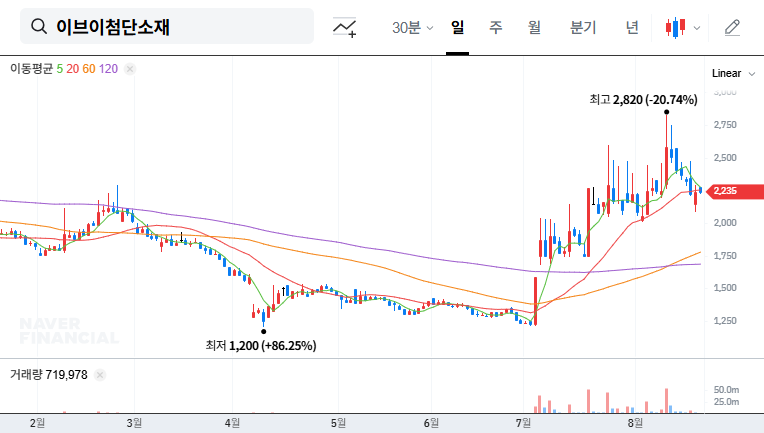
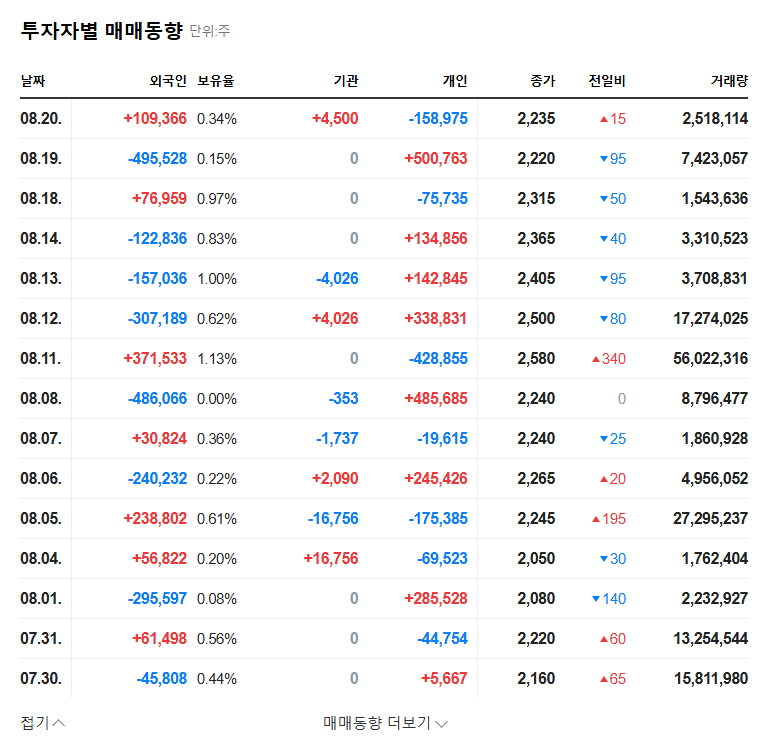
    The sudden rights offering withdrawal by EV ADVANCED MATERIAL CO., LTD. (이브이첨단소재) on November 13, 2025, has sent shockwaves through the investment community. This move, far from a routine corporate decision, signals potential underlying financial distress and raises critical questions about the company’s stability and future prospects. Compounded by the looming threat of being designated an ‘unfaithful disclosure corporation,’ investors are left navigating a storm of uncertainty. This comprehensive financial analysis will dissect the reasons behind this decision, evaluate the company’s Q3 2025 performance, and provide a clear, data-driven investment outlook.

    The company formally announced this decision, citing prolonged reviews by the Financial Supervisory Service (FSS), which could disrupt funding timelines. You can view the Official Disclosure (Source: DART) for complete details.

    A Look Under the Hood: Q3 2025 Financial Red Flags

    While procedural delays were the official reason, a deep dive into the Q3 2025 quarterly report for EV ADVANCED MATERIAL CO., LTD. reveals a much more troubling picture. The company’s fundamentals are flashing several warning signs that likely contributed to the difficulty in securing capital.

    Deteriorating Core Financials

    • Revenue Decline & Profitability Collapse: Consolidated revenue fell year-over-year, while both operating profit and net income plunged into significant losses. This isn’t just a slowdown; it’s a severe erosion of the company’s core earning power.
    • Soaring Debt-to-Equity Ratio: Financial stability is a major concern. The company’s debt-to-equity ratio has climbed, indicating increased leverage and vulnerability to interest rate hikes and economic downturns. This high ratio makes securing new debt or equity financing significantly more challenging.
    • Underperformance in Key Segments: The FPCB (Flexible Printed Circuit Board) business, a primary revenue driver, experienced a notable decline in sales, suggesting a struggle to maintain market share or broader industry headwinds.
    • Costly Affiliate Investments: A substantial impairment loss related to its investment in Dynamic Design Co., Ltd. has placed an additional, heavy burden on the company’s already strained financial position.

    While potential growth in the EV battery and transparent display markets exists, these future opportunities seem insufficient to counterbalance the immediate financial crisis and the severe damage to corporate credibility.

    The Domino Effect: Repercussions of the Withdrawal

    The cancellation of the rights offering is not an isolated event. It triggers a cascade of negative consequences that will impact EV ADVANCED MATERIAL CO., LTD. in both the short and long term, creating a challenging environment for recovery.

    Funding Uncertainty and Eroding Trust

    The most immediate impact is a critical disruption to funding. The capital was earmarked for facility investments, strategic acquisitions, and operational needs—all vital for growth. The failure to secure these funds puts future projects in jeopardy. This, combined with the ‘unfaithful disclosure’ designation, severely damages credibility. Investor trust is paramount, and once lost, it is incredibly difficult to regain, leading to sustained downward pressure on the stock price. For more on this topic, see our guide on How to Analyze High-Risk Tech Stocks.

    Navigating Macroeconomic Headwinds

    The company’s internal struggles are amplified by a challenging external environment. Rising interest rates in key markets increase the cost of borrowing, making alternative financing more expensive. Furthermore, volatility in currency exchange rates (EUR/KRW, USD/KRW) can negatively affect overseas operations and the cost of imported materials, squeezing already thin profit margins.

    Investment Thesis: A Time for Extreme Caution

    Considering the totality of the circumstances—the abrupt rights offering withdrawal, alarming Q3 financials, loss of investor confidence, and macroeconomic pressures—the outlook for EV ADVANCED MATERIAL CO., LTD. is precarious.

    Investment Opinion: Highly Negative. Investment is not recommended at this time.

    The risks associated with investing in the company currently are exceptionally high. A prudent strategy would be to remain on the sidelines and observe. Before any investment can be considered, the company must demonstrate tangible improvements in its financial health, provide a transparent and viable plan for future funding, and take concrete steps to rebuild its credibility with the market. Until these fundamental issues are resolved, the potential for further downside in the stock price remains significant.

    Frequently Asked Questions

    Why did EV ADVANCED MATERIAL CO., LTD. withdraw its rights offering?

    The officially stated reason was potential disruptions in funding timelines due to a prolonged review process by the Financial Supervisory Service. However, our analysis suggests that the company’s poor Q3 2025 financial performance was a significant contributing factor.

    What is the likely impact on the company’s stock price?

    A rights offering withdrawal is a strong negative market signal. This, combined with the anticipated ‘unfaithful disclosure corporation’ designation, is highly likely to erode investor confidence and lead to sustained downward pressure on the stock price.

    Should I invest in EV ADVANCED MATERIAL CO., LTD. now?

    Our expert analysis concludes that investing at this time carries extremely high risk. It is advisable to refrain from new investments and observe the company’s progress in improving its financial health and restoring credibility before reassessing.

    (131400) EV ADVANCED MATERIAL CO., LTD. Rights Offering Withdrawal: A Deep-Dive Financial Analysis & Stock Outlook 관련 이미지
  • (486990) Nota Inc. Investment Alert: Deep Dive into Financial Risks & Stock Sell-off

    (486990) Nota Inc. Investment Alert: Deep Dive into Financial Risks & Stock Sell-off

    A critical Nota Inc. investment warning has been issued, demanding immediate attention from current and prospective shareholders. The recent news of a significant share sell-off by a key investor, CompanyK Partners, is not just a routine market event. It is a major red flag that, when combined with Nota Inc.’s precarious financial fundamentals, paints a deeply concerning picture. This comprehensive Nota Inc. financial analysis will explore the severe risks facing the AI optimization technology company, providing investors with the crucial insights needed to protect their capital.

    We will dissect the implications of the major share disposal, examine the catastrophic state of the company’s balance sheet, and outline a clear action plan for navigating this high-stakes situation. Understanding these factors is paramount to making an informed decision about any Nota Inc. investment.

    The Catalyst: CompanyK Partners’ Massive Stock Sell-off

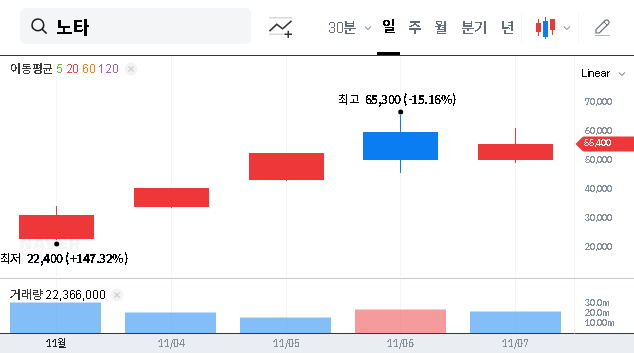
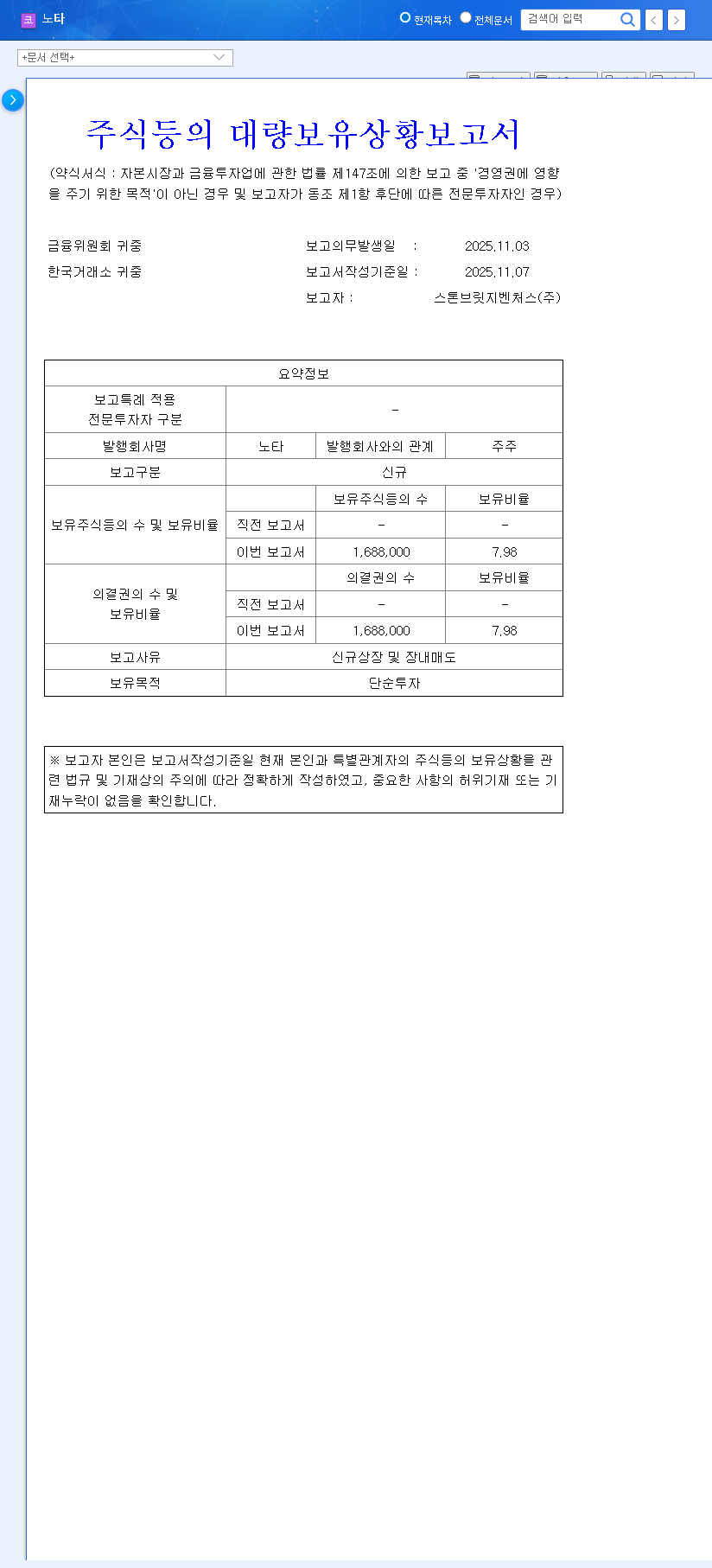
    On November 10, 2025, a pivotal disclosure sent ripples through the market. CompanyK Partners, a significant venture capital backer, officially reported a substantial reduction in its holdings of Nota Inc. (노타) stock. This action, detailed in an abbreviated report, confirmed that two of its funds have been continuously selling shares on the open market since Nota Inc.’s KOSDAQ listing.

    While some may view this as standard profit-taking after an IPO, the context is critical. A major institutional investor aggressively liquidating its position signals a profound lack of confidence in the company’s future. This move forces us to look deeper into the ‘why’—and the answer lies within Nota Inc.’s alarming financial health. You can view the Official Disclosure (DART Report) for primary source details.

    The Core Crisis: A Company on the Brink of Collapse

    The sell-off by CompanyK Partners is not happening in a vacuum. It coincides with fundamental risks so severe they challenge Nota Inc.’s ability to continue as a going concern. An analysis of the company’s 2024 audit report reveals a shocking financial reality.

    Complete Capital Impairment: More Debt Than Value

    The most glaring issue is a state of complete capital impairment. In simple terms, this means the company’s accumulated losses have completely erased its entire equity base. The value belonging to shareholders has been wiped out by debt and losses.

    As of December 31, 2024, Nota Inc.’s accumulated losses of approximately 74.1 trillion KRW fully consumed its total equity of 70.5 trillion KRW. This is a classic sign of a company in extreme financial distress.

    The Ticking Time Bomb: Soaring Derivative Liabilities

    Compounding the problem, derivative financial liabilities skyrocketed to roughly 60.5 trillion KRW. This is largely due to valuation losses on Redeemable Convertible Preference Shares (RCPS). These complex financial instruments can create massive liabilities on the balance sheet as the company’s stock price fluctuates, adding a dangerous layer of volatility and risk. For more on this, you can read about how derivative liabilities work on high-authority financial sites.

    Performance Under the Microscope: A Pattern of Decline

    Beyond the balance sheet crisis, Nota Inc.’s operational performance shows a clear and worrying decline.

    • Plummeting Profitability: Revenue, operating profit, and net profit have all been in sharp decline from 2022 to 2024. Profit margins have collapsed, indicating a fundamental problem with the business model or its execution.
    • Weakening Solvency: The quick ratio, a key measure of a company’s ability to meet its short-term obligations, fell from 73.12% to a dangerously low 37.91%. This suggests Nota Inc. may struggle to pay its bills.
    • Mounting Costs: Financial costs surged more than fivefold in a single year, likely exacerbated by a high-interest-rate macroeconomic environment.
    • Global Losses: Both its German and American subsidiaries are reporting substantial losses, adding further strain to the consolidated financial statements.

    Outlook & Strategic Action Plan for Investors

    Given the severity of these issues, the outlook for the Nota Inc. stock is bleak without drastic intervention.

    Short-Term & Long-Term Impact

    In the short term, the continuous selling pressure from CompanyK Partners will likely drive the stock price down and increase volatility. In the long term, the fundamental risks of capital impairment and potential insolvency will take center stage. Without a massive capital injection and a credible business turnaround plan, the risk of a significant decline in corporate value—or even delisting—is very real.

    Recommendations for Investors

    • Halt New Investments: Initiating a new Nota Inc. investment at this time carries an exceptionally high level of risk. A cautious, wait-and-see approach is strongly advised.
    • Existing Shareholders – Manage Risk: If you currently hold shares, it is crucial to review your position. Consider implementing strict risk management protocols, such as stop-loss orders, to protect against further downside. You can learn more about how to build a risk management plan for your portfolio.
    • Monitor for Turnaround Signs: The only path to recovery is through aggressive action. Watch closely for any official announcements from Nota Inc. regarding concrete plans for capital infusion (e.g., a large rights offering) and a feasible business restructuring strategy.

    Final Verdict

    The combination of a major investor exit and a catastrophic financial state places Nota Inc. in a perilous position. The risks are not theoretical; they are reflected in the company’s audited financials and validated by the actions of a key institutional player. Until the company provides a transparent, credible, and funded plan to resolve its complete capital impairment and secure its financial future, any investment in Nota Inc. should be considered highly speculative and fraught with danger.

    (486990) Nota Inc. Investment Alert: Deep Dive into Financial Risks & Stock Sell-off 관련 이미지
  • (016790) HYUNDAI FEED Inc. Stock: Delisting & Seizure – Urgent Investor Warning

    (016790) HYUNDAI FEED Inc. Stock: Delisting & Seizure – Urgent Investor Warning

    The situation for investors in HYUNDAI FEED Inc. (016790) has escalated from concerning to critical. Already navigating treacherous waters with ongoing delisting procedures, the company has been hit by another severe blow: a provisional seizure of its major shareholder’s stock. This development compounds existing uncertainties and raises fundamental questions about the company’s viability. This in-depth analysis will dissect these crises, evaluate the company’s fragile fundamentals, and provide a clear-eyed view for investors caught in the storm.

    A Company in Crisis: The Provisional Stock Seizure Explained

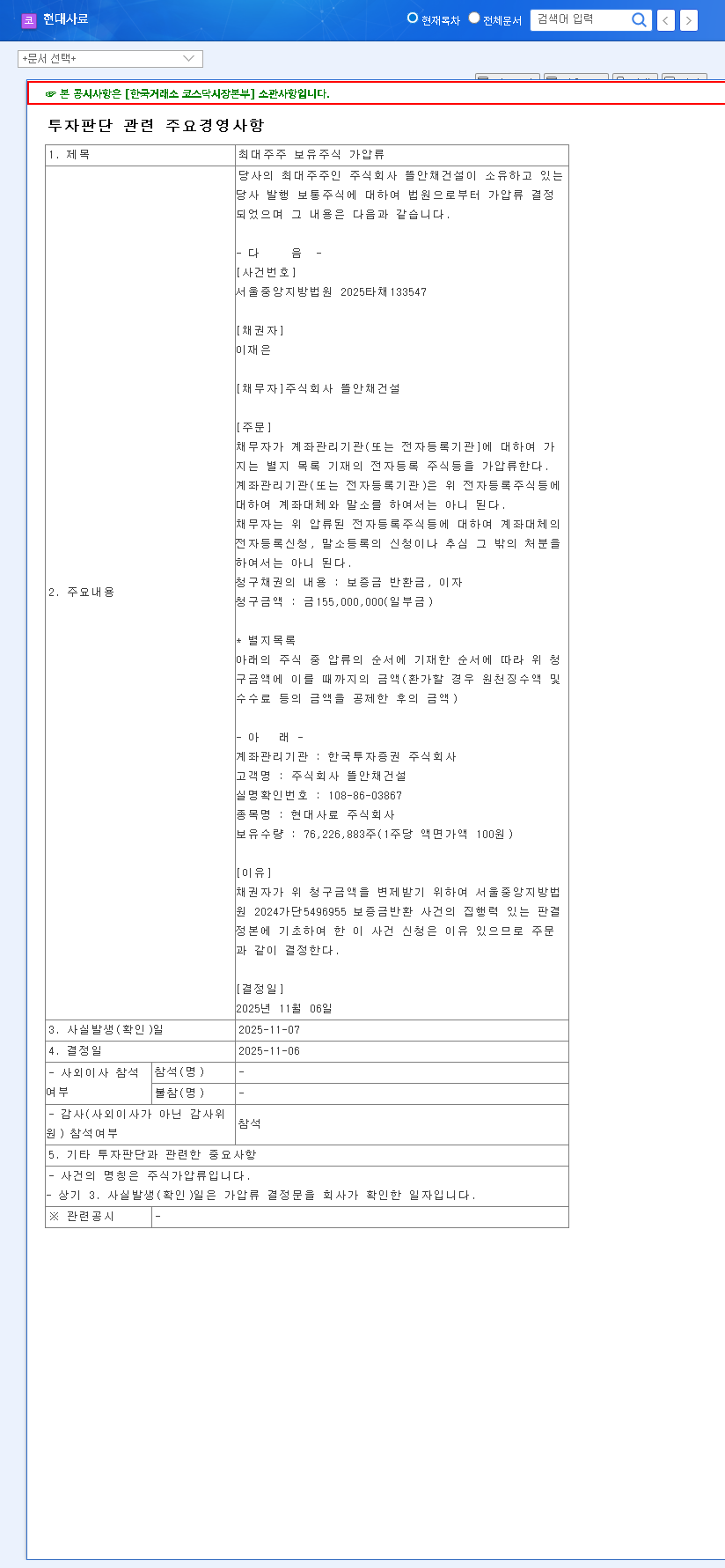
    On November 7, 2025, HYUNDAI FEED Inc. made a critical disclosure that sent shockwaves through its investor base. The Seoul Central District Court enacted a provisional seizure on a substantial portion of shares held by its primary shareholder, Tteulanchae Construction Co., Ltd. This legal action effectively freezes these assets, preventing their sale or transfer pending the resolution of a financial dispute. You can view the Official Disclosure on DART for complete details.

    Key Details of the Provisional Seizure:
    Seized Assets: 76,226,883 common shares of HYUNDAI FEED Inc.
    Debtor: Tteulanchae Construction Co., Ltd. (Major Shareholder)
    Creditor: Lee Jae-eun
    Claim Amount: 155,000,000 KRW (related to a deposit refund)
    Legal Effect: Prohibits the disposal or transfer of the seized shares.

    While the monetary claim is relatively small, the implications are vast. This event, layered on top of the existing HYUNDAI FEED Inc. delisting review, signals deep-seated instability within the company’s controlling structure and further erodes any remaining investor confidence.

    Deconstructing the Cracks: HYUNDAI FEED Inc.’s Shaky Fundamentals

    To understand why this provisional seizure is so damaging, we must examine the company’s underlying health. The foundation was already showing significant stress long before this latest development.

    Core Business Model Under Pressure

    HYUNDAI FEED Inc. has a long history in the compound feed industry, a sector that typically benefits from steady demand. However, the company faces a perfect storm of operational risks:

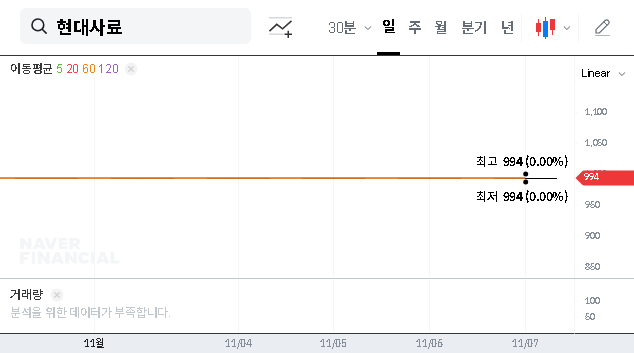
    • Existential Delisting Threat: The primary risk stems from a disclaimer of audit opinion in 2023, which triggered a delisting review. Trading has been suspended since February 2024, leaving shareholders in limbo.
    • Market Volatility: The business is highly sensitive to international grain prices and currency exchange rates (KRW/USD, KRW/EUR), which can severely impact profit margins.
    • Fierce Competition: The feed market is increasingly competitive, with a trend towards large-scale farms that demand lower prices and better terms, squeezing smaller players.

    Financial Health Check (As of H1 2025)

    Financially, the picture is mixed but ultimately precarious. While HYUNDAI FEED Inc. managed to pull itself out of full capital impairment, its recovery is fragile. Revenue has declined significantly after the divestment of its bio business. Although operating profit has shown some recovery, the recent decrease in total capital during the first half of the year is a major red flag, suggesting that the positive turn may not be sustainable.

    The Ripple Effect: How the Seizure Amplifies Delisting Risks

    The provisional seizure is not an isolated event; it’s a catalyst that worsens an already dire situation. Its impact will be felt across several critical areas:

    • Maximized Uncertainty: It casts severe doubt on management’s stability and control. A major shareholder entangled in personal financial disputes undermines the entire corporate governance structure.
    • Compromised Delisting Appeal: The company’s appeal against delisting relies on demonstrating stability and a clear path forward. This event directly contradicts that narrative, potentially giving regulators more reason to uphold the delisting decision.
    • Barriers to Fundraising: Any hope of raising capital to shore up finances is now virtually non-existent. No credible lender or investor would engage with a company facing this level of management and legal risk.

    An Investor’s Guide: What to Do About HYUNDAI FEED Inc. Stock

    Given the confluence of extreme negative factors, investors must act with the utmost caution. The outlook for HYUNDAI FEED Inc. is overwhelmingly negative, and the risk of total capital loss is severe.

    Immediate Recommendations:

    • Avoid New Investment: Initiating any new position in this stock would be pure speculation, not investment. The risks far outweigh any potential, improbable rebound.
    • Monitor Official News: For existing shareholders, the only course of action is to closely monitor the final verdict on the delisting appeal and any updates regarding the provisional seizure lawsuit.
    • Prepare for the Worst-Case Scenario: The most probable outcome is the confirmation of delisting. Investors should understand what this means for their holdings and consult with a financial advisor. You can learn more by reading our guide on How to Handle Delisted Stocks in Your Portfolio.
    • Understand the Legal Terms: For a broader understanding of the legal mechanism at play, authoritative sources like Investopedia offer detailed explanations of asset seizures.

    This analysis is based on publicly available information. Investment decisions carry inherent risks and should be made based on your own judgment and consultation with professional advisors.

    (016790) HYUNDAI FEED Inc. Stock: Delisting & Seizure - Urgent Investor Warning 관련 이미지
  • (066790) CCS Investment Risk (066790): Court Ruling Sparks Deepening Management Disputes

    (066790) CCS Investment Risk (066790): Court Ruling Sparks Deepening Management Disputes

    A pivotal court decision has intensified the spotlight on the significant CCS investment risk associated with KOREA CABLE T.V CHUNG-BUK SYSTEM CO., LTD. (CCS), ticker 066790. For a company already designated as an ‘administrative issue stock’ and navigating severe financial headwinds, a ruling that grants access to its shareholder registry could be the catalyst for a new wave of corporate turmoil. This analysis delves into the court’s decision, examines the company’s precarious financial health, and outlines why extreme caution is warranted for any potential investor.

    The Catalyst: Book Inspection Ruling Against CCS

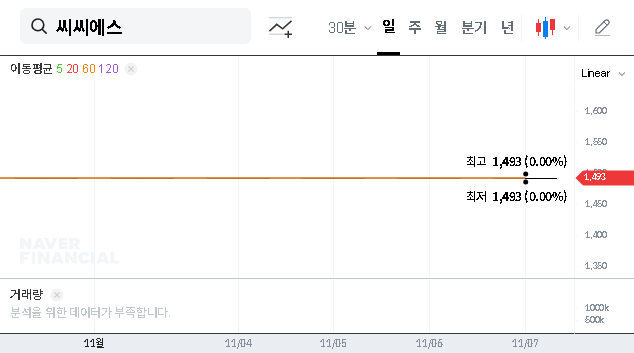
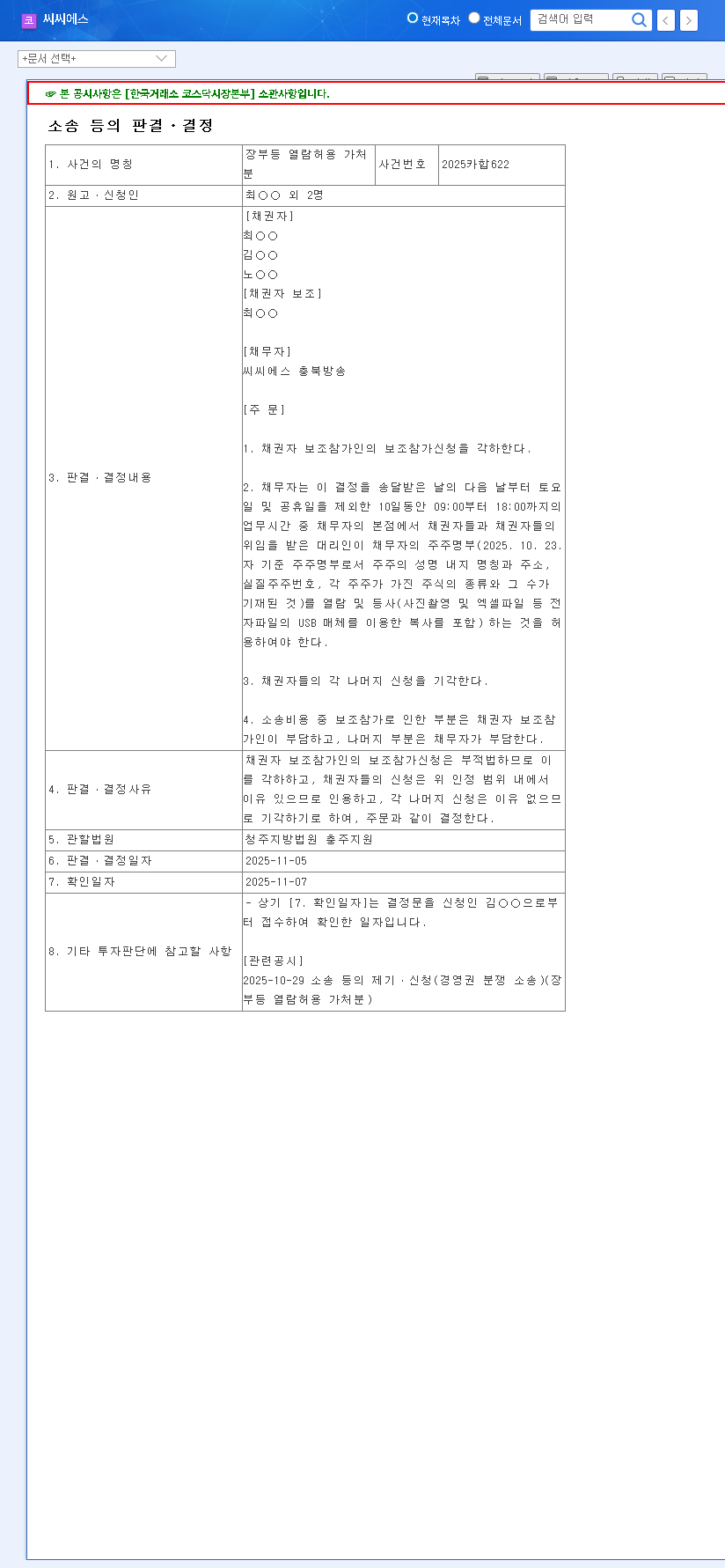
    On November 7, 2025, the Chungju Branch of the Cheongju District Court issued a ‘provisional disposition allowing inspection of books.’ This legal action permits creditors to access, copy, and photograph the complete shareholder registry of CCS Chungbuk Broadcasting. This is not a minor procedural event; it is a significant development that arms certain stakeholders with the precise information needed to challenge the current management structure. The court’s decision, detailed in the Official Disclosure (DART), effectively opens the door for more organized and aggressive shareholder activism, directly fueling the potential for an escalated CCS management dispute.

    This ruling provides shareholder factions with the strategic intelligence to potentially challenge board control, transforming underlying tensions into an open power struggle and magnifying the already high CCS investment risk.

    A Deep Dive into CCS’s Financial & Governance Crisis

    The court ruling does not happen in a vacuum. It lands upon a company already in a state of profound distress. Understanding the existing financial and structural weaknesses is crucial to grasping the full impact of this new development.

    Severe Revenue Decline and Deepening Deficits

    The financial statements paint a bleak picture. CCS is experiencing a sharp decline in its core broadcasting and advertising revenues, leading to a shift into an operating loss and an expanding net loss. This deterioration is not a temporary dip but a systemic problem driven by intense competition in the paid broadcasting market. The rise of global OTT giants, as documented by industry analysis from sources like high-authority media outlets, has fundamentally eroded the business model of traditional cable providers like CCS, making a financial turnaround incredibly challenging.

    Pervasive Governance Instability

    Corporate governance at CCS is alarmingly unstable. The company is entangled in ongoing administrative penalties and legal disputes concerning unapproved changes to its largest shareholder, a violation of broadcasting law. Its designation as an ‘administrative issue stock’—a clear red flag for investors—and a history of trading suspensions for unfair disclosure highlight a management environment fraught with risk and uncertainty. Investors unfamiliar with this designation can learn more about understanding ‘administrative issue’ stocks to grasp the severity of the situation.

    Weakened Momentum for New Business Ventures

    In an attempt to pivot, CCS has added ambitious new objectives to its articles of incorporation, including ventures in secondary batteries, real estate, and superconductors. However, these plans appear to be aspirational at best. With a crumbling core business and a chaotic governance structure, the company lacks the capital, focus, and stability to execute these new initiatives. The ongoing management disputes will only further divert resources and attention, making any meaningful progress highly unlikely.

    Impact of the Shareholder Registry Access

    The book inspection ruling will have several critical and complex impacts on the future of KOREA CABLE T.V CHUNG-BUK SYSTEM:

    • Escalation of Management Disputes: Armed with a detailed shareholder map, opposing factions can now strategize more effectively for proxy fights and influence voting at general meetings. This significantly increases the probability of an intensified CCS management dispute, creating further instability.
    • Forced Corporate Transparency: On a more positive note, greater access to information can enhance transparency. Shareholders may be empowered to demand more accountability regarding management decisions and audit results, which could theoretically lead to better governance in the long term, assuming the company survives the initial turmoil.
    • Influence on Other Legal Cases: The information gleaned from the shareholder registry could be used as leverage or evidence in other ongoing lawsuits and administrative proceedings. This could either expedite resolutions or, more likely, add new layers of complexity to the company’s legal battles.

    Comprehensive Investment Judgment & Final Recommendation

    Considering the confluence of severe financial decay, regulatory penalties, and the new threat of an escalated internal power struggle, market expectations for CCS are justifiably at rock bottom. The book inspection ruling acts as an accelerant on an already raging fire.

    Therefore, the comprehensive investment opinion for CCS (ticker 066790) is unequivocally ‘very negative.’ We maintain a ‘strong recommendation against investment.’ The path to normalization is fraught with obstacles, and this latest development only adds to the immense uncertainty. Investors should exercise extreme caution and recognize that the fundamental CCS investment risk is exceptionally high.

    Frequently Asked Questions (FAQ)

    Q1: What does the ‘book inspection’ ruling mean for CCS?

    It is a court order that allows specific creditors and shareholders to view and copy the company’s full shareholder list. This information is powerful, as it reveals who the key owners are, which can be used to organize opposition against the current management.

    Q2: How does this ruling affect the CCS stock and its management?

    It dramatically increases the risk of a public and messy management dispute. While it could lead to better transparency, the more immediate effect is likely to be increased volatility and uncertainty for the stock as power struggles play out.

    Q3: Is there any positive outlook for CCS?

    Currently, the outlook is overwhelmingly negative. The company faces a collapsing core business, significant losses, and severe governance issues. Any potential turnaround would require a complete overhaul of management and strategy, which is a highly uncertain and distant prospect.

    (066790) CCS Investment Risk (066790): Court Ruling Sparks Deepening Management Disputes 관련 이미지
  • (006380) CAPRO Delisting Review (006380): A Complete Investor Analysis & Outlook

    (006380) CAPRO Delisting Review (006380): A Complete Investor Analysis & Outlook

    The ongoing CAPRO delisting review has placed investors in CAPRO CORPORATION (006380) on high alert. With a final decision from the Korea Exchange expected by November 27, 2025, the company stands at a critical crossroads. This comprehensive analysis will dissect the factors leading to this review, evaluate the company’s dire financial state, and provide a clear outlook on the potential scenarios for shareholders. For anyone holding or considering an investment in CAPRO, understanding these details is not just important—it’s essential for capital preservation.

    With severe financial deterioration and the looming threat of delisting, CAPRO CORPORATION represents one of the highest-risk investments on the market today. Investors must exercise extreme caution.

    The Catalyst: Why a CAPRO Delisting Review Was Initiated

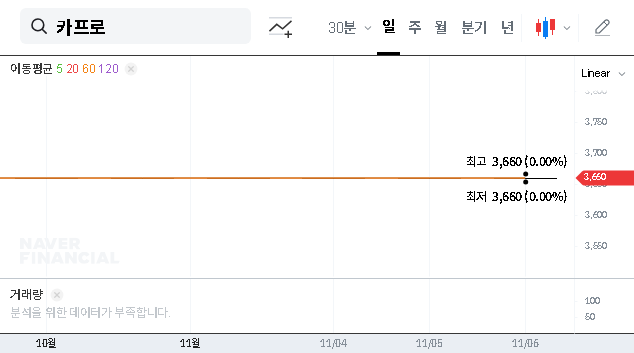
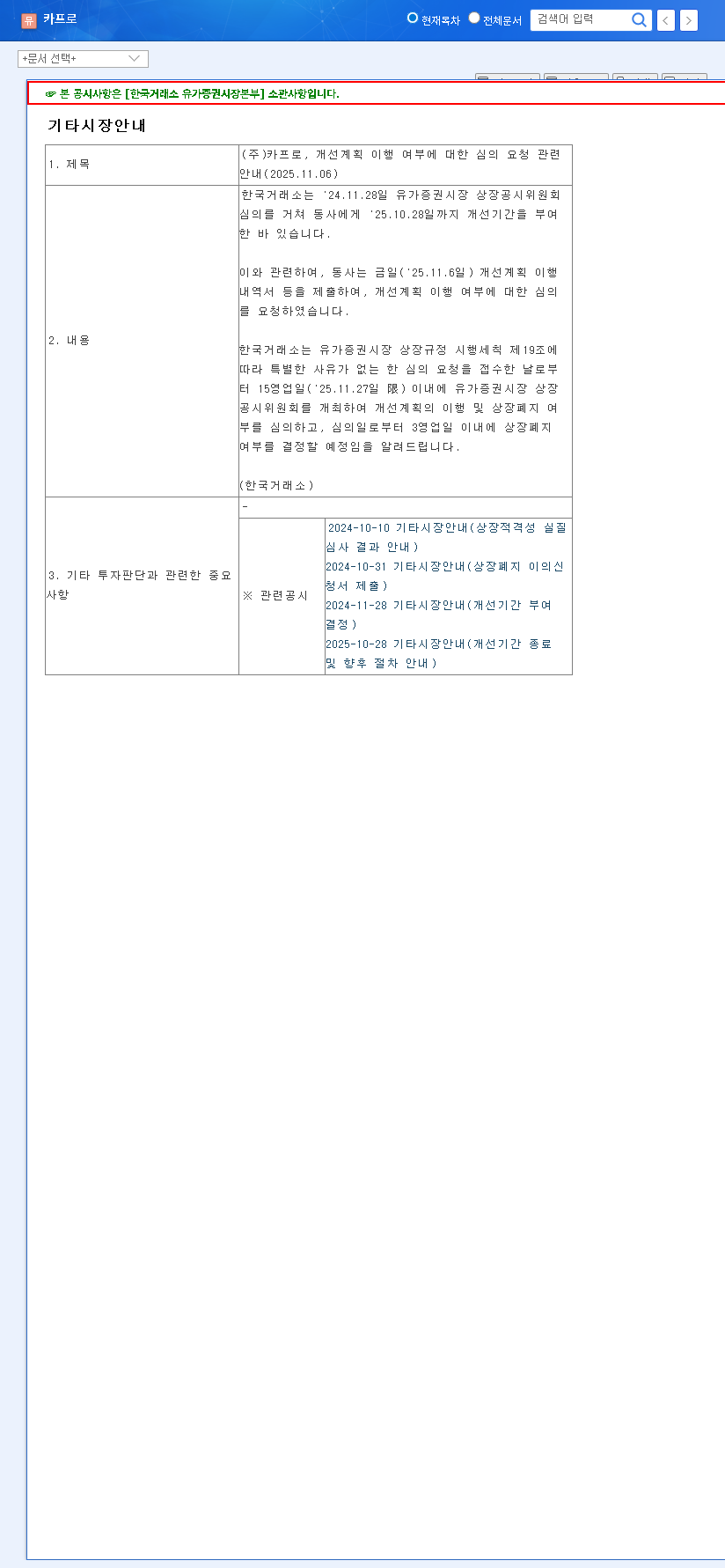
    The situation escalated on November 6, 2025, when CAPRO CORPORATION formally submitted its improvement plan performance report to the Korea Exchange. This action triggered the official review process to determine if the company has sufficiently addressed the issues that led to its probationary status, which was granted back on November 28, 2024. The exchange now has until November 27, 2025, to convene its Listing Disclosure Committee and render a final verdict. The outcome of this CAPRO delisting review will decide whether the company’s stock continues to trade or is removed from the market entirely. You can view the Official Disclosure on the DART system for primary source information.

    Financial Collapse: A Look at the Numbers

    The primary driver behind the delisting concern is CAPRO’s catastrophic financial performance. The numbers paint a grim picture of a company struggling for survival. A deep dive into its financial statements reveals multiple red flags that cannot be ignored.

    Plummeting Revenue and Deepening Losses

    The company’s top line has been in freefall. Revenue collapsed from KRW 1,147.7 billion in 2022 to just KRW 627.2 billion in 2024, with projections for 2025 showing a further slide to KRW 469.4 billion. More alarming is the shift from an operating profit of KRW 175.8 billion in 2022 to a projected operating loss of KRW -30.8 billion in 2025. This indicates a fundamental breakdown in the company’s core business profitability, a key metric for any sustainable enterprise. For more context on evaluating company health, you can learn about analyzing financial statements in our internal guide.

    Worsening Balance Sheet and Debt Burden

    CAPRO’s financial foundation is eroding. The debt-to-equity ratio, a critical measure of financial leverage, has surged from 92.27% in 2022 to a worrying 114.65% in 2024. This signals that the company is increasingly reliant on borrowing to stay afloat, a risky strategy in a high-interest-rate environment. The continuous decline in retained earnings further highlights a lack of internal financial capacity to weather this storm.

    A Desperate Pivot: Business Restructuring Efforts

    In a bid for survival, CAPRO is undertaking a radical business transformation. The company is shuttering its legacy core operations in caprolactam and ammonium sulfate fertilizer. It is attempting to pivot to new, potentially high-growth sectors:

    • Hydrogen: Tapping into the global push for clean energy.
    • Sulfuric Acid: A key industrial chemical with diverse applications.
    • Scrap Metal: A play on the circular economy and raw material markets.

    While ambitious, the success of these new ventures is highly uncertain and will require significant capital investment—something the company desperately lacks. Efforts to attract new investment and change the largest shareholder are underway, but the profitability and timeline for these new businesses remain speculative at best.

    Impact Analysis: Potential Outcomes for Investors

    Investors face two starkly different futures depending on the Korea Exchange’s decision. The uncertainty leading up to the announcement will fuel extreme volatility.

    Scenario 1: Listing is Maintained

    If CAPRO passes the review, a significant relief rally is possible. Investor focus would shift to the viability of its new hydrogen and sulfuric acid ventures. However, the path to recovery would be long and fraught with challenges. The company’s heavy debt load and ongoing losses would continue to weigh on the stock price. Sustainable recovery would depend entirely on the tangible, profitable success of its business pivot, not just on promises.

    Scenario 2: Company is Delisted

    A delisting decision would be catastrophic for current shareholders. Trading of stock 006380 would be immediately suspended, trapping investors and making it nearly impossible to liquidate their positions. Shareholder value would likely be wiped out, with investors facing the real possibility of a total loss of their investment capital. The company’s future would become uncertain, likely leading to restructuring or bankruptcy proceedings. For a broader understanding of market risks, authoritative sources like Bloomberg provide extensive financial analysis.

    Conclusion: A Strong ‘Highly Not Recommended’ Rating

    Given the overwhelming evidence of financial instability, the uncertainty of its business transition, and the existential threat posed by the CAPRO delisting review, investing in CAPRO CORPORATION at this moment involves an unacceptable level of risk. The potential for a complete loss of principal far outweighs any speculative upside.

    Our investment opinion is unequivocally Highly Not Recommended. We strongly advise existing shareholders to re-evaluate their positions and potential investors to avoid this stock until there is concrete, undeniable evidence of a sustainable turnaround. Prudent decision-making is paramount when facing such a high-stakes event.

    (006380) CAPRO Delisting Review (006380): A Complete Investor Analysis & Outlook 관련 이미지
  • (376900) ROKIT HEALTHCARE Inc. (376900) Q3 2025 Earnings Analysis: A Deep Dive into Growth vs. Investment Risk

    (376900) ROKIT HEALTHCARE Inc. (376900) Q3 2025 Earnings Analysis: A Deep Dive into Growth vs. Investment Risk

    This comprehensive ROKIT HEALTHCARE Inc. earnings analysis for Q3 2025 unpacks the critical details behind the company’s latest financial report. While ROKIT HEALTHCARE Inc. (KOSDAQ: 376900) celebrated a 16.7% quarterly revenue increase and a milestone shift to operating profitability, a persistent net loss of KRW 1.1 billion casts a long shadow. For investors, this creates a complex scenario: Is this a turnaround story in the making, or are the underlying financial weaknesses too significant to ignore? We will explore the company’s fundamentals, the macroeconomic landscape, and the significant ROKIT HEALTHCARE investment risk factors that every potential stakeholder must consider.

    This report provides a detailed 376900 financial analysis, examining whether the company’s technological prowess in regenerative medicine can pave a path to sustainable growth or if inherent risks will continue to dominate its outlook.

    Q3 2025 Earnings: The Headline Numbers

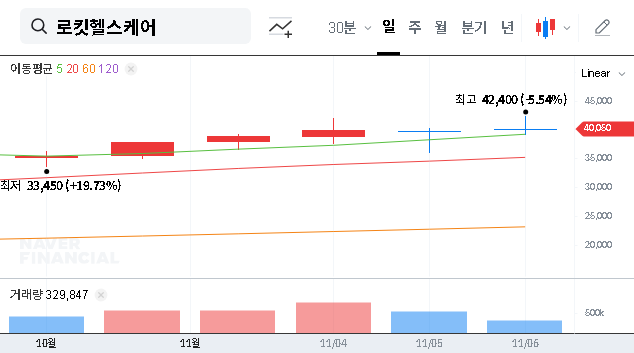
    On November 6, 2025, ROKIT HEALTHCARE Inc. released its preliminary Q3 earnings, painting a mixed but intriguing picture. The key takeaway is the divergence between operational improvement and the bottom-line net result. The official figures can be reviewed in the company’s Official Disclosure. Here are the highlights:

    • Revenue: KRW 7 billion, marking a solid 16.7% increase quarter-over-quarter.
    • Operating Profit: KRW 0.1 billion, a crucial turnaround to profitability for the first time since Q4 2024.
    • Net Profit: -KRW 1.1 billion, continuing the trend of net losses, though the loss did narrow by 10% from the previous quarter.

    The revenue growth and operating profit are positive indicators, suggesting that the company’s core business model is gaining traction and operational efficiency is improving. However, the ongoing net loss signals that non-operating expenses, such as interest payments on debt, continue to weigh heavily on the company’s overall financial health.

    Fundamental Analysis: The Bull vs. Bear Case

    Positive Factors: Technology and Market Potential

    The bull case for ROKIT HEALTHCARE rests on its impressive technological foundation and the vast potential of its target market. The broader regenerative medicine market is projected to be a high-growth industry for the foreseeable future, providing a powerful tailwind.

    • Unique Technological Edge: The company’s core technologies, including AI-driven organ regeneration platforms and 3D bioprinters, are highly innovative. These are not just concepts; they are backed by numerous patents and key regulatory certifications (CE MDR, FDA, MFDS), which validates their credibility and market readiness.
    • Proven Global Growth: With a 40.5% revenue growth in the first half of 2025, the company has already demonstrated its ability to compete and win in the global marketplace, reducing reliance on a single domestic market.
    • Improved Capital Access: A successful KOSDAQ listing and the issuance of convertible bonds have provided crucial capital, which can be used to strengthen its financial structure and fund operations. For more on this, see our guide to understanding company balance sheets.

    Negative Factors: A Deep Dive into ROKIT HEALTHCARE Investment Risk

    The bear case is grounded in severe and persistent financial weaknesses. These are not minor issues; they represent fundamental threats to the company’s long-term viability.

    The most critical red flag for any investor is the “material uncertainty related to going concern” warning highlighted in the half-year report. This is an auditor’s formal declaration that there is substantial doubt about the company’s ability to continue operating for the next year without significant changes.

    • Crippling Accumulated Deficit: An accumulated deficit of KRW 107.9 billion is a massive financial hole that erodes shareholder equity and signals a long history of unprofitability. The Q3 net loss only adds to this burden.
    • High Debt and Liquidity Risk: A debt ratio of 177% is exceptionally high, creating significant pressure from interest payments and making the company vulnerable to credit market shifts. This high leverage is a major component of the overall ROKIT HEALTHCARE investment risk.
    • Accounts Receivable Concerns: A large portion of receivables being overdue by over 270 days presents a real risk to cash flow. It raises questions about the creditworthiness of its customers and the company’s ability to convert sales into cash.

    Final Verdict & Investment Outlook

    The conclusion of this ROKIT HEALTHCARE Inc. earnings analysis is clear: despite encouraging operational progress, the company remains a high-risk, speculative investment. The positive signs of revenue growth and operating profit are overshadowed by the structural financial issues that threaten its existence.

    The Q3 2025 earnings are a step in the right direction, but they are not nearly enough to resolve the fundamental challenges. The path to sustainable profitability and financial stability is still long and uncertain. Therefore, a highly cautious and conservative approach is strongly recommended.

    Investment Recommendation: At this time, initiating a new position or adding to an existing one carries substantial risk. Investors should remain on the sidelines and closely monitor for a clear, multi-quarter trend of net profitability and a concrete, management-led plan to address the going concern uncertainty and reduce the debt burden before reconsidering.

    Disclaimer: This analysis is based on publicly available information. Investment decisions carry risk, and the ultimate responsibility rests with the individual investor.

    (376900) ROKIT HEALTHCARE Inc. (376900) Q3 2025 Earnings Analysis: A Deep Dive into Growth vs. Investment Risk 관련 이미지
  • (007570) ILYANG PHARMACEUTICAL Delisting Risk (007570): A Complete Guide for Investors

    (007570) ILYANG PHARMACEUTICAL Delisting Risk (007570): A Complete Guide for Investors

    Investors in ILYANG PHARMACEUTICAL CO.,LTD (007570) are facing a period of critical uncertainty. The company is now grappling with a significant ILYANG PHARMACEUTICAL delisting risk after a pivotal decision by the Korea Exchange. This comprehensive analysis will break down the situation, explore the underlying financial health, and provide clear, actionable advice for shareholders and potential investors.

    The Critical Event: An ‘Improvement Period’ is Granted

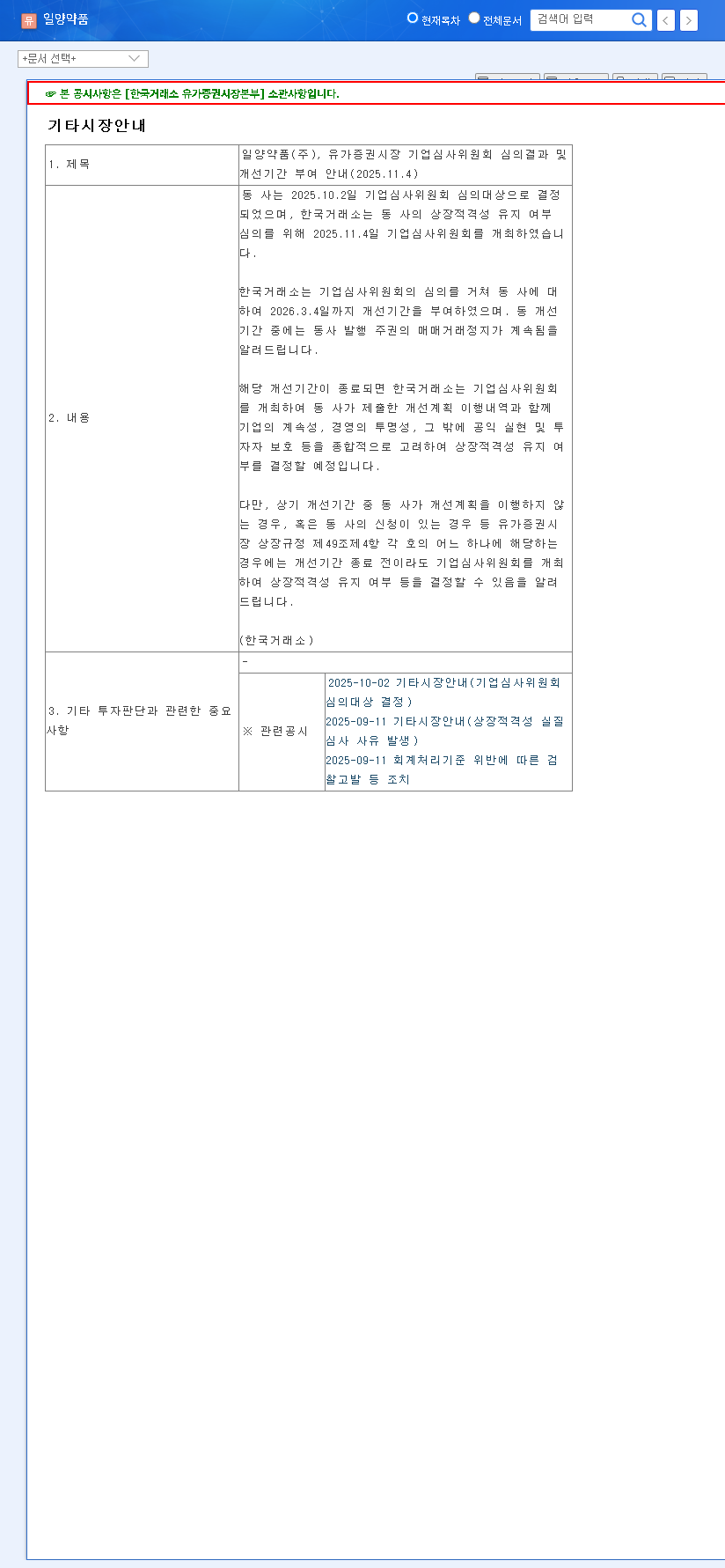
    On November 4, 2025, the Korea Exchange’s Corporate Review Committee made a crucial decision regarding ILYANG PHARMACEUTICAL’s future on the KOSPI market. Instead of an immediate delisting, the company was granted an ‘improvement period’ until March 4, 2026. This decision, detailed in the Official Disclosure from DART, provides a lifeline but also initiates a period of high risk and operational paralysis for investors.

    What This Means in Practice:

    • Complete Trading Suspension: The most immediate consequence is the halting of all trading for ILYANG PHARMACEUTICAL stock. Investors cannot buy or sell shares, effectively locking up their capital for the duration of the improvement period.
    • Mandate for Improvement: The company is now under immense pressure to formulate and execute a robust business improvement plan. This plan will be the sole basis for the final listing decision.
    • Final Judgment Awaits: After March 4, 2026, the Korea Exchange Corporate Review Committee will reconvene. They will scrutinize the company’s progress, management transparency, and overall business viability to make a final, binding decision on whether to delist or maintain the listing.

    Diagnosis: Why Did ILYANG Face Delisting Risk?

    The decision for a 007570 improvement period was not made in a vacuum. It stems from a combination of deteriorating financial metrics and operational challenges, despite some promising long-term prospects.

    While future growth drivers like the new drug pipeline exist, they are overshadowed by immediate financial instability and declining performance, creating a high-risk profile that triggered the review.

    Underlying Strengths (Future Growth Drivers)

    • Robust R&D Pipeline: Ongoing investment in flagship products like ‘Noltec’ and the market entry of ‘Supect’ in China represent significant long-term revenue potential. The R&D investment rate of 11.5% of sales is a strong indicator of this focus.
    • Vaccine Business Potential: The construction of a new vaccine plant and efforts to secure WHO PQ approval could unlock lucrative international markets.

    Critical Weaknesses (Current Financial Risks)

    • Performance Plunge: The first half of 2025 saw a worrying decline across key metrics, including revenue, operating profit, and net income. A sharp slowdown in exports was a major contributor.
    • Deteriorating Balance Sheet: A surge in inventory to KRW 73.195 billion and total borrowings reaching KRW 121.847 billion signals a serious strain on financial health. This level of debt creates significant cash flow pressure.
    • Macroeconomic Headwinds: As an exporter, the company is vulnerable to exchange rate fluctuations, which can erode margins and profitability.

    Investor Playbook: Navigating the Uncertainty

    The ILYANG PHARMACEUTICAL delisting risk fundamentally changes the investment thesis. The primary focus must shift from growth potential to risk management. The expert consensus is a ‘Highly Negative’ outlook, with a recommendation to reduce exposure.

    Guidance for Existing Shareholders

    The inability to trade during the suspension period is the core problem. While you cannot sell now, you must have a clear plan for when, and if, trading resumes. The probability of maintaining the listing is uncertain, and the stock price will likely face extreme downward pressure upon resumption. Hoping for a recovery is a high-risk strategy; preparing for loss mitigation is a more prudent one. You can use this time to read our guide on managing high-risk stock portfolios.

    Advice for Potential New Investors

    Attempting to invest in ILYANG PHARMACEUTICAL at this stage is exceptionally speculative. It is strongly advised to remain on the sidelines until the KOSPI delisting uncertainty is fully resolved. Await the final decision from the Korea Exchange and observe market reaction before considering any new position. Learn more about the general risks involved by reviewing the delisting process explained by high-authority sources.

    Frequently Asked Questions (FAQ)

    Q1: What exactly does ‘improvement period granted’ mean?
    A1: It’s a probationary period given by the stock exchange, allowing the company (ILYANG PHARMACEUTICAL) until March 4, 2026, to fix the issues that put it at risk of delisting. Trading is completely frozen during this time.

    Q2: When can I sell my ILYANG PHARMACEUTICAL stock?
    A2: Trading can only resume after the improvement period ends and only if the Corporate Review Committee decides to maintain the listing. An exact date is impossible to predict right now.

    Q3: Is it certain that ILYANG PHARMACEUTICAL will be delisted?
    A3: No, it is not certain. However, the risk is now significantly elevated. Delisting will occur if the improvement plan is unconvincing or poorly executed. The outcome is highly uncertain.

    Q4: What should I monitor during this period?
    A4: Watch for official company announcements regarding its improvement plan, any news on R&D successes or new contracts, and ultimately, the final verdict from the Korea Exchange after March 4, 2026.

    (007570) ILYANG PHARMACEUTICAL Delisting Risk (007570): A Complete Guide for Investors 관련 이미지