Tag: Global healthcare

  • (041830) InBody Treasury Stock Disposal: A KRW 32.5B Strategic Move Analyzed (041830)

    (041830) InBody Treasury Stock Disposal: A KRW 32.5B Strategic Move Analyzed (041830)

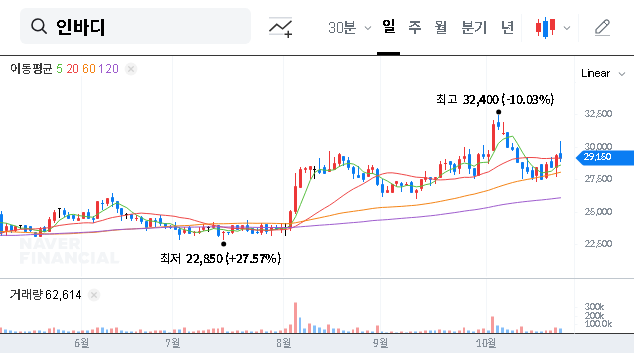
    The recent InBody treasury stock disposal has sent ripples through the investment community. On October 29, 2025, InBody Co., Ltd. (041830), a global pioneer in body composition analysis, announced a pivotal decision to sell approximately KRW 32.5 billion in treasury shares. This isn’t just a financial transaction; it’s a calculated strategic maneuver aimed at cementing the company’s position as a dominant force in the global healthcare market. This in-depth InBody stock analysis will unpack the details of this event, evaluate the company’s robust fundamentals, and project the long-term implications for investors and the MedTech industry at large.

    This move is less about immediate liquidity and more about fueling long-term growth. By unlocking significant capital, InBody is positioning itself for strategic partnerships and aggressive expansion into new healthcare verticals.

    Deconstructing the Treasury Stock Disposal

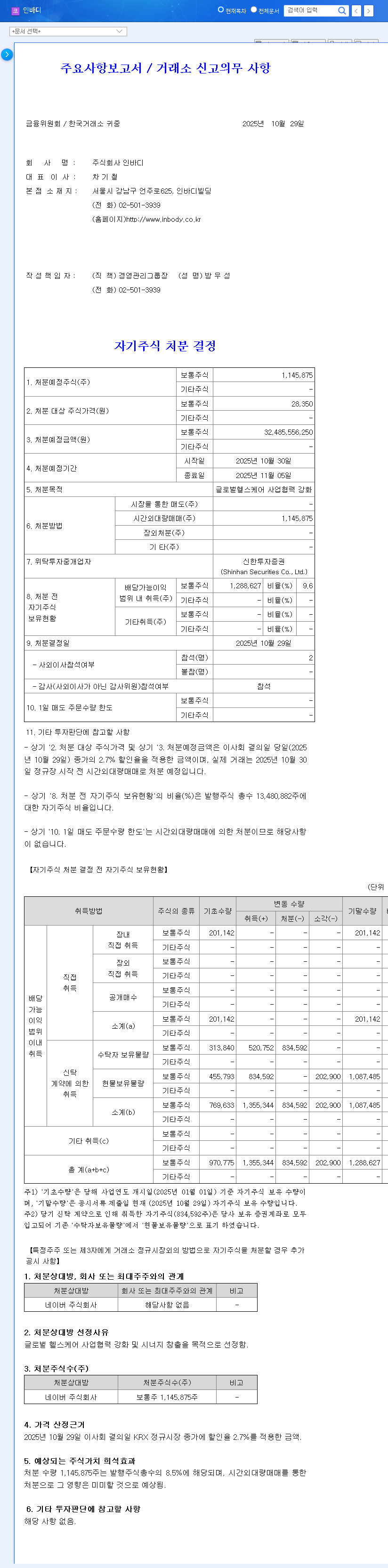
    The formal announcement, made public on October 29, 2025, outlined the disposal of 1,145,875 common shares. This figure represents a notable 8.5% of the company’s total issued shares, valued at KRW 32.5 billion. The stated purpose is explicitly for strengthening global healthcare business collaboration. This signals an offensive strategy, leveraging a strong balance sheet to seize market opportunities. For full transparency, the company’s filing can be reviewed in its Official Disclosure (Source: DART).

    Transaction at a Glance:

    • Company: InBody Co., Ltd. (041830)
    • Event: Disposal of Treasury Stock
    • Value: Approx. KRW 32.5 billion (1,145,875 shares)
    • Purpose: Funding global healthcare partnerships and strategic growth.

    Built on a Foundation of Strength

    This strategic deployment of capital is made possible by InBody’s exceptionally strong corporate fundamentals. An analysis of its 2025 semi-annual report reveals a company firing on all cylinders, making this treasury stock sale a move from a position of power, not desperation.

    Key Strengths Fueling this Decision:

    • Impressive Global Revenue: With H1 2025 revenue hitting KRW 111.8 billion (a 13% YoY increase), InBody demonstrates consistent growth. Critically, 82% of this revenue comes from overseas, insulating the company from single-market downturns and proving its global appeal.
    • Market Dominance: Professional body composition analyzers, the company’s core product, comprise nearly 70% of total revenue. This indicates a deep competitive moat and brand authority in the professional health and fitness space. For more on market trends, see this analysis from leading industry experts.
    • Commitment to Innovation: A consistent R&D investment of 8-10% of revenue ensures a pipeline of next-generation technology, keeping InBody ahead of competitors and solidifying its path towards global healthcare leadership.
    • Fortress-like Financials: An ultra-low debt-to-equity ratio of 11.56% and KRW 33.7 billion in cash equivalents (as of H1 2025) demonstrate pristine financial health and operational flexibility.

    Potential Impacts: A Balanced View

    While the long-term vision is compelling, investors should consider both the upside potential and the short-term risks associated with the InBody treasury stock disposal.

    The Bull Case: Growth Unleashed

    The infusion of KRW 32.5 billion can act as a powerful catalyst. This capital is expected to fund strategic M&A, technology alliances, and market penetration initiatives. This could unlock new revenue streams in areas like remote patient monitoring, personalized digital health, or integration with large-scale healthcare systems, accelerating the company’s growth far beyond its current trajectory.

    The Bear Case: Dilution and Execution Risk

    The primary short-term concern is share dilution. By increasing the number of outstanding shares, the value of existing shares can be temporarily diluted. However, the market often forgives dilution when the capital is used for value-accretive growth. The larger risk is execution. The success of this move hinges on management’s ability to identify the right partners and invest this capital wisely. Investors seeking to understand these risks better can read our guide on how to analyze corporate financial strategy.

    Conclusion: A Strategic Pivot for Future Dominance

    InBody’s decision to sell treasury stock is a confident, forward-looking move. It represents a pivot from steady, organic growth to a more aggressive strategy aimed at capturing a larger share of the global healthcare technology market. While short-term dilution is a factor, the potential for long-term value creation through strategic collaboration and expansion is immense.

    For investors, the key is to monitor the outcomes. Watch for announcements regarding new partnerships, technological integrations, and entry into new markets. The true measure of success for this InBody treasury stock disposal will be the tangible growth it generates in the coming quarters. This is a clear signal that InBody is not content with its current success; it is actively investing to build the future of body composition analysis and integrated health.
    (041830) InBody Treasury Stock Disposal: A KRW 32.5B Strategic Move Analyzed (041830) 관련 이미지
  • (376930) Noul miLab Platform Enters Pakistan: A Deep Dive into the Malaria Diagnosis Deal & Investment Outlook

    (376930) Noul miLab Platform Enters Pakistan: A Deep Dive into the Malaria Diagnosis Deal & Investment Outlook

    The Noul miLab platform is set to make a significant impact on global healthcare, as its parent company, Noul Co., Ltd., has officially secured a landmark exclusive agreement in Pakistan. On October 17, 2025, Noul signed a pivotal supply and distribution deal with Sure Bio Diagnostics & Pharmaceuticals, marking a major strategic push into one of South Asia’s most populous emerging markets. This move is more than just a business transaction; it’s a critical test of Noul’s advanced diagnostic technology and its potential to revolutionize healthcare accessibility, particularly in the field of malaria diagnosis.

    This comprehensive analysis will dissect the fundamentals of Noul Co., Ltd., the profound implications of the Pakistan deal, and the broader market dynamics at play. We will explore the opportunities and risks, offering a prudent investment strategy for those watching this innovative medical device company.

    The Pakistan Deal: A Gateway to Emerging Markets

    The agreement grants Sure Bio Diagnostics & Pharmaceuticals exclusive rights to supply and distribute the Noul miLab platform and its associated product lines across Pakistan for three years. The deal encompasses four key products: the core miLab™ platform, the Malaria Diagnostic Cartridge (Cartridge MAL), SafeFix consumables, and the miLab™ software. This partnership is a strategic entry into a nation of approximately 240 million people, where infectious diseases like malaria remain a significant public health challenge. The successful implementation of this technology could serve as a powerful case study for Noul’s expansion into other developing nations. The full details of the agreement were filed in an Official Disclosure, providing transparency on the venture.

    “This exclusive contract is a crucial stepping stone. It not only opens up a vast new market but also validates the global demand for rapid, accurate, and accessible diagnostic solutions like the Noul miLab platform.”

    Understanding the Noul miLab Platform Technology

    At the heart of this deal is Noul’s innovative technology. The Noul miLab platform is not just another diagnostic device; it’s an all-in-one, decentralized solution designed to bring lab-quality testing to the point of care. Its competitive edge is built on several core technologies:

    • On-Device AI Analysis: The platform uses artificial intelligence to analyze samples directly on the device, reducing the need for highly trained personnel and delivering results in minutes.
    • Solid Staining Technology: Noul has developed a proprietary solid-form reagent technology that simplifies the complex and messy process of traditional slide staining, improving consistency and reducing biohazardous waste.
    • All-in-One Platform: From sample preparation to imaging and analysis, the entire workflow is automated within a single, compact device, making it ideal for remote clinics and resource-limited settings.

    Company Analysis: Strengths, Weaknesses, Opportunities & Threats

    Strengths & Opportunities

    Noul’s primary strength lies in its technological competitiveness, protected by a portfolio of over 112 intellectual property rights. The company has already achieved EU CE certification and product registrations in numerous countries, establishing a foundation for global expansion. The growing global medical device market, particularly in AI-driven healthcare, presents a massive opportunity. According to the World Health Organization, timely and accurate diagnosis is critical for controlling diseases like malaria, creating a strong demand for Noul’s solutions.

    Weaknesses & Threats

    Despite its technological promise, Noul faces significant financial hurdles. The company reported a substantial net loss in the first half of 2025 due to heavy R&D spending and the costs of overseas market entry. The high R&D expense ratio (146.3% of sales) indicates a long-term focus that delays short-term profitability. External threats include exchange rate volatility, geopolitical risks impacting logistics, and the high initial costs of navigating local regulations and competition in new markets like Pakistan.

    Investment Strategy and Concluding Thoughts

    The entry into Pakistan is an undeniably positive catalyst for Noul’s growth story. It offers revenue diversification and enhances the company’s brand recognition. The recurring revenue from consumables and software subscriptions could create a sustainable financial model long-term. For more on this, read our guide on The Future of Diagnostic Technology.

    However, investors must remain cautious. The company’s chronic deficit structure is a fundamental risk not erased by a single contract. The path to profitability in Pakistan is not guaranteed and requires flawless execution. A prudent investment strategy involves:

    • Long-Term Perspective: View this as a long-term play on innovative technology, but be prepared for short-term volatility. Consider a gradual investment approach.
    • Enhanced Monitoring: Closely watch quarterly financial reports, paying special attention to sales figures from the Pakistan market and any changes in the company’s cash burn rate.
    • Risk Management: Keep investment proportions in check and stay informed about Noul’s progress in other international markets, as this will be key to diversifying its revenue base.

    In conclusion, Noul Co., Ltd. represents a high-growth, high-risk opportunity. The success of the Noul miLab platform in Pakistan could be a transformative event, but diligent monitoring of the company’s financial health is essential before making any investment decisions.