Tag: Financial Restructuring

  • (078520) ABLE C&C A’pieu Sale: A Deep Dive into the K-Beauty Giant’s Strategic Pivot

    (078520) ABLE C&C A’pieu Sale: A Deep Dive into the K-Beauty Giant’s Strategic Pivot

    The K-beauty industry is buzzing with a significant development: the potential ABLE C&C A’pieu sale. News that the parent company is considering the divestment of its popular, youth-focused brand ‘A’pieu’ signals a critical strategic shift. This decision could profoundly reshape ABLE C&C’s future, impacting its financial stability, market focus, and ultimately, its value to investors. This analysis explores the driving forces behind this move, its potential consequences, and what stakeholders should watch for next.

    On July 18, 2025, ABLE C&C confirmed it was exploring strategic options for the A’pieu brand, appointing Samjong KPMG as an advisor. According to the Official Disclosure filed, no final decisions have been made, with a follow-up announcement expected within six months. This move has understandably captured the market’s attention, given A’pieu’s role as a past growth engine for the company.

    Why Consider the A’pieu Brand Sale Now?

    The rationale behind the potential A’pieu brand sale is a complex mix of internal financial pressures and external market dynamics. ABLE C&C is navigating a challenging landscape that demands decisive action to ensure long-term sustainability and growth.

    Internal Financial Realities

    While the company has shown positive signs, such as revenue recovery driven by a high export ratio (44.71% in Q3 2025) and an improved capital structure, underlying issues persist. Key challenges include:

    • Declining Profitability: A consistent decrease in consolidated operating profit and margins is a major concern, suggesting that top-line growth isn’t translating to bottom-line health.
    • Asset Management Inefficiency: Challenges in managing accounts receivable and high inventory levels can tie up valuable capital and indicate potential issues with sales velocity or demand forecasting.
    • Currency Exposure: Heavy reliance on exports makes the company vulnerable to performance risks from exchange rate volatility, particularly with the KRW against the EUR and USD.

    Evolving and Competitive Market Trends

    The global cosmetics market is fiercely competitive and evolving at a rapid pace. According to market analysis from sources like Forbes, trends are shifting quickly. Key factors influencing the ABLE C&C investment strategy include:

    • The Rise of Gen Z: Younger consumers (MZ/Z generations) demand authenticity, sustainability (clean beauty), and a strong digital presence. Brands must constantly innovate to remain relevant, which requires significant investment.
    • Channel Shift: The dominance of online and direct-to-consumer channels necessitates a different marketing and distribution playbook compared to traditional retail.
    • Macroeconomic Headwinds: High interest rates increase the cost of capital, while global economic uncertainty can dampen consumer spending on non-essential goods.

    Potential Impacts of the ABLE C&C A’pieu Sale

    Selling A’pieu is a double-edged sword, presenting both significant opportunities and risks that could redefine ABLE C&C’s trajectory.

    The proposed sale represents a strategic choice: streamline operations and focus on core strengths, or risk diluting resources across a portfolio that may not be fully optimized for future market conditions.

    The Upside: A Leaner, Stronger ABLE C&C

    • Enhanced Financial Health: A successful sale would inject significant capital, allowing the company to pay down debt, strengthen its balance sheet, and fund new growth initiatives.
    • Sharpened Business Focus: Divesting A’pieu would allow management to concentrate resources—financial and human—on its flagship brand, MISSHA, potentially accelerating its growth. Learn more about their existing plans in our article on MISSHA’s Global Strategy.
    • Positive Market Perception: A well-executed sale could be viewed by the market as a decisive and smart strategic move, potentially boosting investor confidence and the stock price.

    The Downside: Potential Pitfalls

    • Revenue Contraction: An immediate drop in total revenue is unavoidable. If A’pieu represents a substantial portion of sales, it could weaken the company’s overall market presence.
    • Erosion of Brand Portfolio: The sale could damage corporate image and create a perception of a shrinking empire, potentially affecting the value and appeal of the remaining brands.
    • Execution Risk: The sale process itself carries risks, including restructuring costs, uncertainty about the final price and buyer, and potential for a prolonged period of instability.

    Investor Action Plan: A Time for Cautious Observation

    Given the mix of potential outcomes from the ABLE C&C A’pieu sale, a ‘Neutral’ and watchful stance is advisable. In the short term, investors should anticipate stock price volatility as news develops. The key will be the specifics of the deal, which are expected within six months.

    For a long-term perspective, the focus must be on ABLE C&C’s post-sale strategy. How will the capital be deployed? Will it be used to innovate within MISSHA, acquire a new high-growth brand, or simply pay down debt? The company’s ability to address its fundamental challenges—profitability, asset management, and global market positioning—will ultimately determine whether this strategic pivot is a success. Careful monitoring of future disclosures is essential for making an informed investment decision.
    (078520) ABLE C&C A'pieu Sale: A Deep Dive into the K-Beauty Giant's Strategic Pivot 관련 이미지
  • (083660) CSA COSMIC Rights Offering (083660): An In-Depth Stock Analysis for Investors

    (083660) CSA COSMIC Rights Offering (083660): An In-Depth Stock Analysis for Investors

    The recent announcement of the CSA COSMIC rights offering has sent ripples through the investment community. On one hand, the 10 billion KRW capital injection signals a proactive step by CSA COSMIC CO., LTD. (KRX: 083660) to mend its finances and fuel growth. On the other, it presents existing shareholders with the immediate and unwelcome reality of shareholder dilution. This creates a critical dilemma: is this a strategic pivot towards a brighter future or a desperate measure with significant downside risk? This in-depth analysis will dissect the offering, evaluate the company’s fundamentals, and provide a strategic roadmap for investors.

    Unpacking the CSA COSMIC Rights Offering

    On November 10, 2025, CSA COSMIC CO., LTD. formally announced its plan for a rights offering to raise 10 billion KRW. This move involves issuing new shares to specific investors at a predetermined price, a common method for companies to raise capital without taking on new debt. However, the specifics of this deal are crucial for a complete stock analysis. Here are the key details:

    • Shares to be Issued: 1,436,781 new common shares.
    • Issuance Price: 696 KRW per share, a significant discount to recent trading prices.
    • Total Capital Raised: 10 billion KRW.
    • Key Investors: KB&N Holdings and Nian.
    • Important Dates: Payment on November 18, 2025; New shares listed on December 3, 2025.

    For complete, verified details, investors should review the Official Disclosure (DART Report).

    The Rationale: Why is CSA COSMIC Raising Capital?

    A company doesn’t undertake such a significant financial maneuver without compelling reasons. The decision for a rights offering stems from a combination of financial distress, strategic necessity, and a history of restructuring efforts.

    Deteriorating Financial Health

    The company’s H1 2025 financial report painted a grim picture. Declining revenue combined with mounting operating and net losses revealed deep-seated issues. The primary culprit was a sharp downturn in its core cosmetics business, which its more stable construction materials segment could not offset. This performance indicates an urgent need for liquidity to stabilize operations and fund a potential turnaround.

    The most significant risk is the immediate shareholder dilution. By issuing new shares at a price far below market value, the ownership stake and per-share value for every existing investor is automatically reduced.

    A Pattern of Restructuring and Management Instability

    This is not the company’s first attempt to right the ship. An 8 billion KRW convertible bond was issued in June 2025, also aimed at securing capital. However, the deeply discounted prices of both the bonds and this rights offering suggest that raising funds has been challenging. Compounding these financial concerns is a history of frequent management changes. A new major shareholder is expected through this rights offering, adding another layer of uncertainty about strategic consistency and long-term vision.

    A Strategic Action Plan for Investors

    Given the complexities of the CSA COSMIC rights offering, a prudent investment approach is essential. Investors must weigh the potential for a turnaround against the significant, tangible risks. For more on this topic, you can read our guide on how to evaluate a rights offering.

    The Bull Case: A Path to Recovery?

    Optimists might see this capital injection as the catalyst needed for a new beginning. Potential positive outcomes include:

    • Improved Financials: The 10 billion KRW will immediately strengthen the balance sheet, providing runway to execute a new strategy.
    • Investment in Growth: Funds can be used for R&D, new brand launches, or marketing to revive the struggling cosmetics division.
    • New Management Vision: A change in leadership could bring fresh ideas and a more effective business plan.

    The Bear Case: Navigating the Significant Risks

    Conversely, the risks are substantial and cannot be ignored. The primary concerns are:

    • Guaranteed Dilution: Existing shareholders will see their ownership percentage decrease. Learn more about shareholder dilution from Investopedia.
    • Execution Risk: There is no guarantee that the new capital will be used effectively or that past performance issues will be resolved.
    • Market Headwinds: Intense competition in cosmetics and macroeconomic pressures could hinder any recovery efforts.
    • Stock Volatility: The low issuance price is likely to cause significant short-term price fluctuations.

    Frequently Asked Questions (FAQ)

    Q1: What exactly is the CSA COSMIC rights offering?

    It is a corporate action where CSA COSMIC CO., LTD. is issuing 1.44 million new shares at 696 KRW each to raise 10 billion KRW. This capital is intended to improve its financial stability and provide funds for future business investments.

    Q2: How does this rights offering impact existing CSA COSMIC shareholders?

    The primary impact is shareholder dilution, as the issuance of new shares at a low price reduces the value and ownership percentage of existing shares. Shareholders should also expect increased stock price volatility in the short term.

    Q3: What should investors monitor going forward?

    Investors should closely monitor how the 10 billion KRW is utilized, the strategic vision of the new management team, and whether there are tangible improvements in quarterly earnings reports, especially in the cosmetics division.

    (083660) CSA COSMIC Rights Offering (083660): An In-Depth Stock Analysis for Investors 관련 이미지
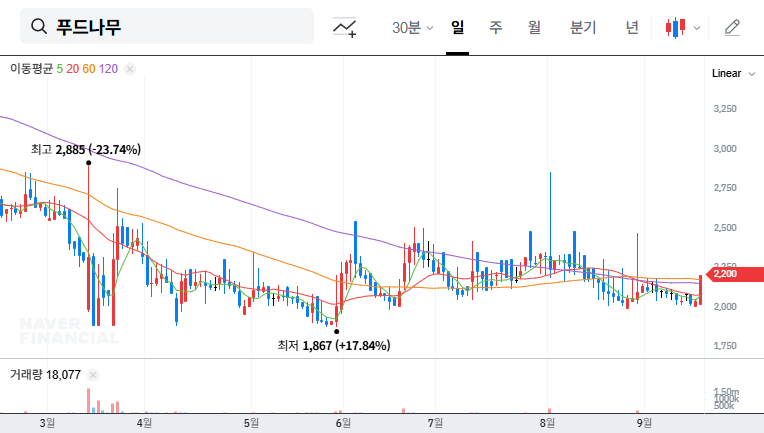
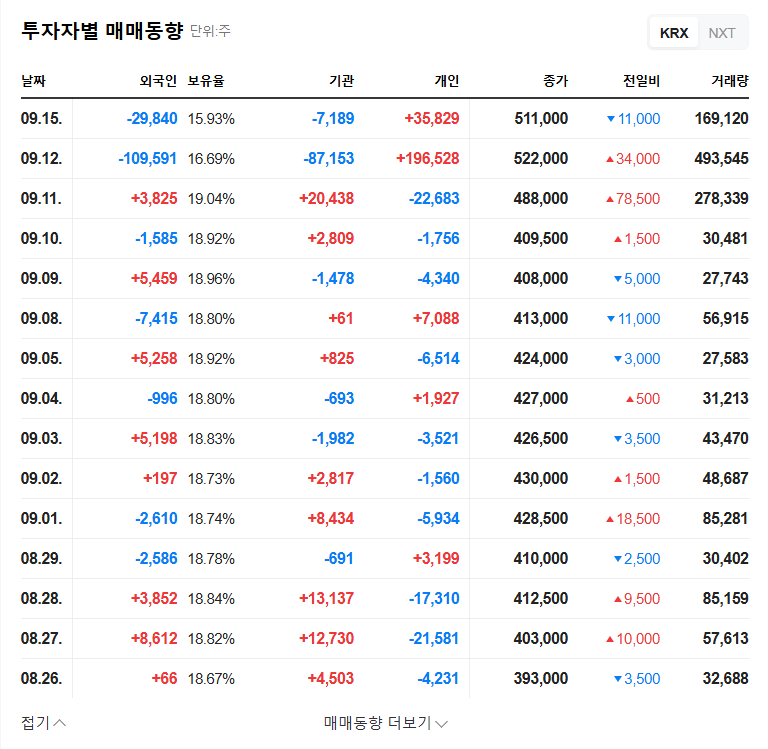
  • (290720) FOODNAMOO INC Divestiture (KRX: 290720): Analysis of the F&PLACE Stake Sale

    (290720) FOODNAMOO INC Divestiture (KRX: 290720): Analysis of the F&PLACE Stake Sale

    In a significant strategic move, FOODNAMOO, INC. (KRX: 290720) announced its decision to sell a major portion of its stake in subsidiary F&PLACE for 6 billion KRW. This FOODNAMOO INC divestiture represents a critical juncture for the company, raising a pivotal question for investors: Is this a calculated step towards sustainable financial health and renewed focus, or merely a short-term measure to patch a leaking balance sheet? This report provides a comprehensive FOODNAMOO financial analysis, dissecting the deal, the company’s precarious fundamentals, and the long-term implications for its stock, KRX: 290720.

    The Deal Explained: Background of the F&PLACE Stake Sale

    On November 10, 2025, FOODNAMOO formally announced the disposal of its shares in F&PLACE, a subsidiary primarily engaged in restaurant operations. The transaction, valued at 6 billion KRW, will reduce FOODNAMOO’s ownership stake to 45.00% upon its completion, scheduled for November 28, 2025. The stated objectives are clear: to sharpen focus on core business activities and to fortify the company’s financial structure. This decision was not made in a vacuum but is a direct response to the immense pressures facing the company. For a complete breakdown of the transaction, interested parties can view the Official Disclosure filed with DART.

    A Company Under Pressure: FOODNAMOO’s Financial Health

    To truly grasp the significance of the F&PLACE stake sale, one must first understand the challenging financial landscape FOODNAMOO navigates. The company’s fundamentals, as of its H1 2025 report, paint a picture of a business grappling with significant headwinds.

    Warning Signs in the Fundamentals

    Several key indicators point to substantial financial risk and operational uncertainty, making a conservative investment approach highly advisable.

    • Eroding Profitability: The company continues to post operating and net income deficits. This is largely driven by soaring selling, general, and administrative (SG&A) expenses and burdensome interest costs from its high debt load.
    • Extreme Financial Leverage: An alarming net debt-to-equity ratio of 1,553.72% (as of June 2025) signals a critical level of financial risk and a heavy reliance on borrowed capital, including convertible bonds.
    • Active Business Restructuring: The FOODNAMOO restructuring is already underway, with the company suspending operations and liquidating other subsidiaries like F&FRESH and F&BLOCK, indicating a broad effort to shed non-performing assets.

    Navigating a Challenging Macroeconomic Environment

    External factors further complicate the situation. Persistently high interest rates directly increase the cost of servicing its massive debt. Meanwhile, a volatile KRW/USD exchange rate adds risk to foreign currency obligations. As noted by financial analysts at authoritative sources like Reuters, global macroeconomic trends are putting significant pressure on companies with high leverage. Furthermore, while the market for healthy food is growing, overall weakened consumer sentiment due to economic slowdowns poses a direct threat to its core e-commerce platform business.

    This divestiture is not just a financial transaction; it’s a survival tactic. The 6 billion KRW provides immediate breathing room, but the company’s long-term success hinges on its ability to fix the core operational and debt issues.

    Impact of the F&PLACE Stake Divestiture

    The FOODNAMOO INC divestiture will create immediate ripples across its financial statements and business strategy. The cash infusion is a clear positive, but it comes at the cost of future growth potential from the disposed asset. For a deeper understanding, investors may want to review our guide to analyzing corporate restructuring.

    • Positive Financial Impact: The 6 billion KRW in cash provides crucial short-term liquidity. These funds can be used to pay down high-interest debt, which in turn reduces interest expense and could lead to a temporary improvement in the debt-to-equity ratio.
    • Negative Financial Impact: With its stake reduced, FOODNAMOO will no longer consolidate 100% of F&PLACE’s profits. This could decrease the net income attributable to shareholders, assuming F&PLACE was a profitable entity.
    • Strategic Business Impact: Selling the non-core restaurant business allows management to redirect capital and attention to its primary operations: its e-commerce platform (DTC mall) and logistics automation services (F&FULFILLMENT). This focus could enhance long-term competitiveness in its main market.

    Comprehensive Investment Outlook for KRX: 290720

    Ultimately, the F&PLACE stake sale is a necessary, but not sufficient, step toward recovery. While the cash injection is a tangible positive, the fundamental challenges of poor profitability and crushing debt remain. Prudent investors should look beyond this single event and monitor several key areas: how the 6 billion KRW is specifically deployed, whether the core e-commerce and logistics businesses can generate sustainable profits, and the real-world impact of other capital-raising efforts. Until there is clear evidence of a turnaround in core profitability, a conservative and cautious stance on FOODNAMOO stock (KRX: 290720) is warranted.

    Frequently Asked Questions (FAQ)

    Why did FOODNAMOO, INC. sell its F&PLACE stake?

    FOODNAMOO executed the F&PLACE stake sale to achieve two primary goals: secure immediate cash to improve its strained financial condition and to divest a non-core asset, allowing the company to concentrate its resources on its main e-commerce and logistics businesses.

    What are the positive financial effects of this sale?

    The main positive effect is the 6 billion KRW cash inflow. This provides vital short-term liquidity, which can be used for debt repayment or as working capital. This can temporarily improve the company’s debt-to-equity ratio and reduce financial pressure.

    Is FOODNAMOO a good investment after this divestiture?

    While the sale is a step in the right direction for financial stability, it doesn’t solve the underlying problems of low profitability and high debt. A conservative approach is recommended. The company’s long-term investment appeal depends on its ability to make its core businesses profitable and achieve sustainable financial health.

    (290720) FOODNAMOO INC Divestiture (KRX: 290720): Analysis of the F&PLACE Stake Sale 관련 이미지
    (290720) FOODNAMOO INC Divestiture (KRX: 290720): Analysis of the F&PLACE Stake Sale 관련 이미지
  • (014790) HL D&I HALLA CORPORATION Asset Sale: Deep Dive on the ₩26.8B Divestment & Stock Impact

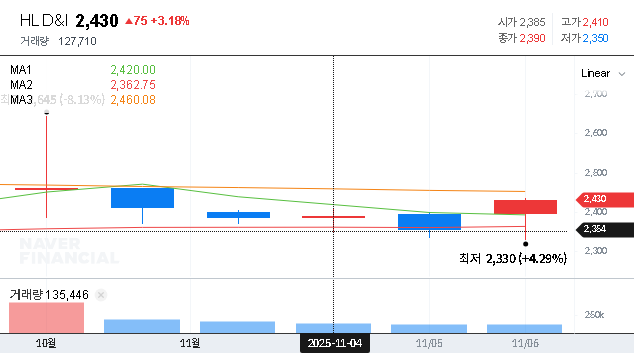
    (014790) HL D&I HALLA CORPORATION Asset Sale: Deep Dive on the ₩26.8B Divestment & Stock Impact

    In a significant strategic move, the HL D&I HALLA CORPORATION asset sale has been officially announced, signaling a deliberate effort to bolster the company’s financial standing. The company has confirmed the divestment of its entire stake in the ‘Balan Namyang Road’ infrastructure project for a total of ₩26.8 billion. This decision, aimed at securing crucial liquidity, comes at a pivotal time for the company and the broader construction industry. For investors, this raises critical questions: Is this a defensive move to shore up a strained balance sheet, or a proactive step towards a more focused and profitable future? This comprehensive investment analysis will dissect the transaction, evaluate its impact on HL D&I’s stock, and provide a clear outlook for stakeholders.

    The Details of the Divestment

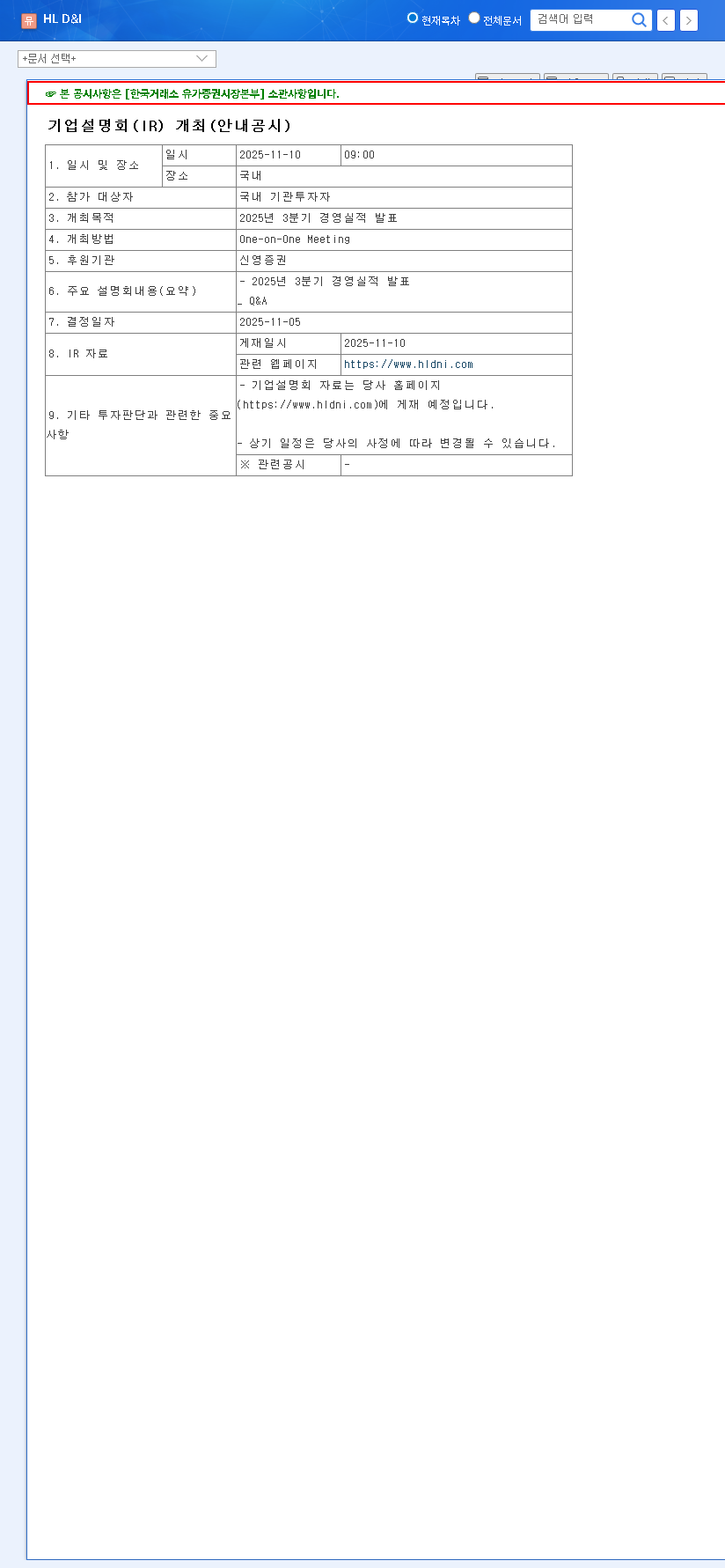
    On November 6, 2025, HL D&I HALLA CORPORATION formalized its decision to dispose of its shares in Balan Namyang Road, a company specializing in road construction and operations. This is not a partial sale but a complete exit, marking a clear break from this non-core asset. The key details, as per the Official Disclosure, are as follows:

    • Asset Sold: Entire stake in ‘Balan Namyang Road’.
    • Disposal Amount: ₩26.8 billion.
    • Ratio to Capital: The sale represents 5.65% of the company’s capital.
    • Stated Purpose: Securing liquidity via investment recovery.
    • Shareholding Post-Sale: 0% (Complete divestment).

    Strategic Rationale: Why This Asset Sale, Why Now?

    The timing and nature of this corporate divestment are critical. It’s a direct response to both internal financial pressures and external market headwinds. While HL D&I maintains a diverse portfolio, its financial health has shown signs of strain that this liquidity injection aims to address.

    Addressing Financial Pressures

    A key concern for analysts has been HL D&I’s consolidated debt-to-equity ratio, which climbed to 305%. While investment in new ventures is necessary for growth, such a high level of leverage introduces significant risk, especially in a rising interest rate environment. This sale provides immediate cash to either pay down debt, reducing interest expenses, or fund operations without taking on more leverage. To learn more, you can read about Understanding Debt-to-Equity Ratios in Construction.

    A Strategic Pivot to Core Operations

    Beyond the balance sheet, this move signals a strategic refocusing. By shedding a non-core infrastructure asset, management can redirect capital and attention towards its primary business lines and future growth engines. These include development projects utilizing its own land, the new ‘EFETE’ housing brand, and promising ventures in Proptech and the Green New Deal. This streamlining is a classic strategy to improve efficiency and long-term profitability.

    This asset sale is a double-edged sword: it provides a much-needed financial cushion but also underscores the underlying pressures the company faces. The market’s long-term reaction will depend entirely on how effectively this new capital is deployed.

    Investor Impact & HL D&I Stock Analysis

    For current and potential investors, the central question is how this HL D&I HALLA CORPORATION asset sale will affect the stock price and the company’s valuation. The impact can be viewed through two lenses: the immediate positive effects and the lingering underlying risks.

    The Bull Case: Positive Catalysts

    • Improved Financial Stability: The ₩26.8 billion cash infusion directly improves the company’s liquidity position, reducing short-term bankruptcy risk and enhancing financial flexibility.
    • Enhanced Business Focus: Divesting a non-core asset allows management to concentrate on higher-growth areas, potentially leading to better operational performance in the long run.
    • Positive Market Signal: The market generally views proactive measures to strengthen a balance sheet favorably. This can be seen as a sign of prudent and responsive management.

    The Bear Case: Risks and Headwinds

    Despite the positives, significant challenges remain. The construction sector is highly cyclical and sensitive to the broader economic climate, which presents ongoing risks that this single transaction cannot eliminate.

    • Limited Short-Term Impact: While helpful, ₩26.8 billion is a relatively modest sum compared to the company’s total assets and debt. It is a step in the right direction, but not a silver bullet for all financial woes.
    • Macroeconomic Volatility: The company is still exposed to risks from interest rate hikes, currency fluctuations, and rising material costs. As reported by authoritative sources like Reuters, global economic headwinds continue to pressure the construction industry.
    • Persistent Market Slowdown: The core construction and real estate markets face uncertainty. A prolonged slowdown could negatively impact revenue and profitability, offsetting the benefits of this liquidity boost.

    Conclusion: An Investment Action Plan

    The sale of the Balan Namyang Road stake is a clear positive for HL D&I’s financial health. It demonstrates proactive management and provides necessary breathing room. However, investors should view this as one piece of a larger puzzle. The company’s long-term success and stock performance will ultimately hinge on its ability to strengthen its core business profitability and successfully navigate the challenging macroeconomic environment. Close monitoring of how the newly secured capital is used—whether for debt reduction or strategic investment—will be the key indicator of the company’s future trajectory.

    (014790) HL D&I HALLA CORPORATION Asset Sale: Deep Dive on the ₩26.8B Divestment & Stock Impact 관련 이미지
  • (006120) SK Eternix Sale: An Investor’s Deep Dive into SK Discovery’s Strategic Move

    (006120) SK Eternix Sale: An Investor’s Deep Dive into SK Discovery’s Strategic Move

    The financial markets are abuzz with speculation surrounding a potential SK Eternix sale by its parent holding company, SK Discovery Co.,Ltd. This development has captured significant investor attention, especially as the global focus on renewable energy intensifies. For any SK Discovery investor, understanding the nuances of this potential divestiture is critical. Why would a company consider selling a key subsidiary in a high-growth sector? This comprehensive guide provides an in-depth analysis of the rumors, the company’s official stance, and the strategic implications for your investment portfolio.

    The Catalyst: Unpacking the SK Eternix Sale Rumors

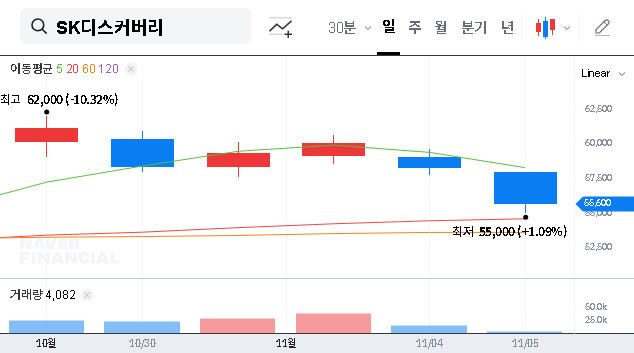
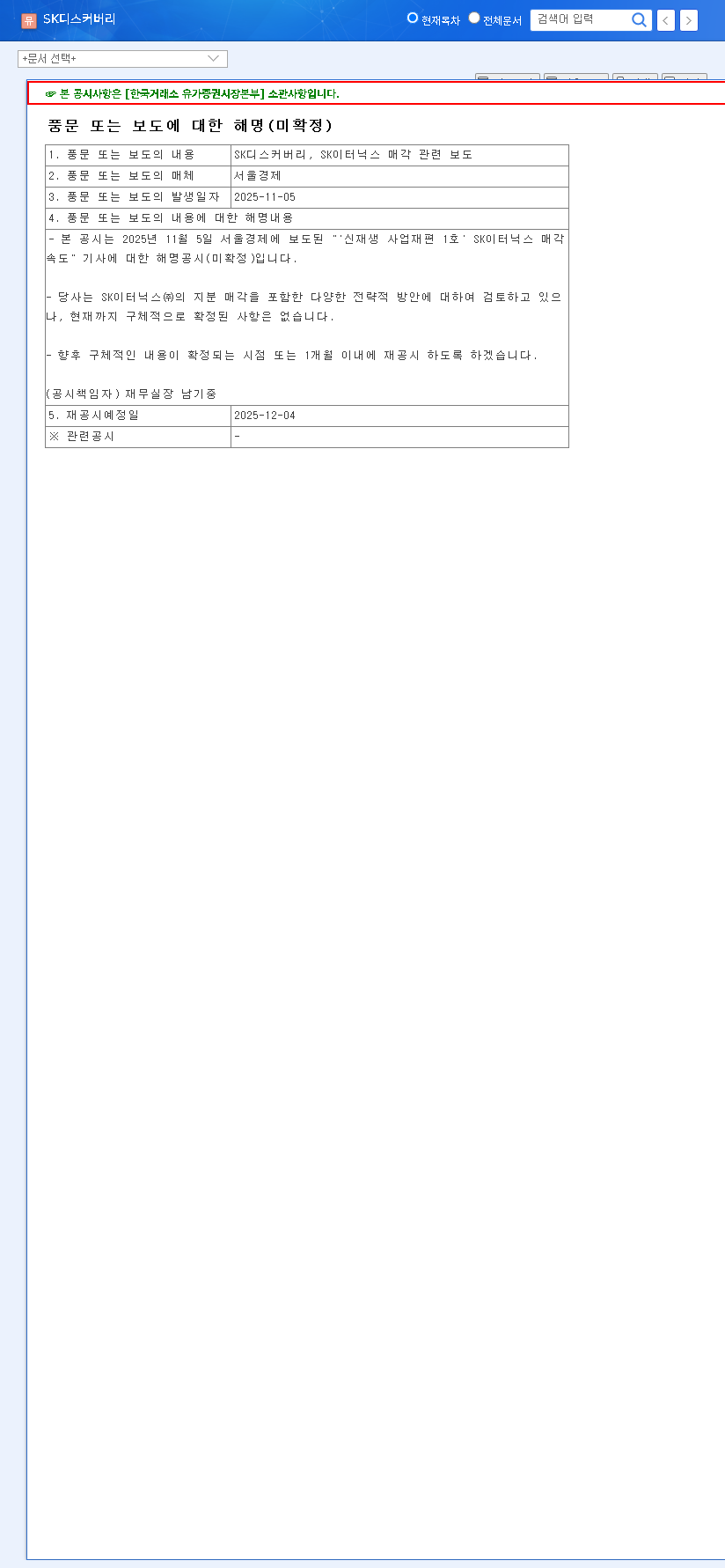
    The speculation gained significant momentum on November 5, 2025, following a report from the Seoul Economic Daily suggesting that SK Discovery Co.,Ltd. was fast-tracking the sale of its stake in SK Eternix as a first step in a broader renewable energy business reorganization.

    In response, the company issued a clarification disclosure to address the market chatter. According to their statement, while they are reviewing various strategic options to enhance corporate value—which includes a potential SK Eternix sale—nothing has been finalized. The company has committed to a re-disclosure by December 4, 2025, to provide a more definitive update. You can view the Official Disclosure (DART) for the precise wording.

    Strategic Context: Company Fundamentals and Market Pressures

    To understand the ‘why’ behind this potential move, we must look at the profiles of both companies and the challenging macroeconomic environment they operate in.

    SK Discovery Co.,Ltd.: The Pure Holding Company

    SK Discovery Co.,Ltd. operates as a pure holding company. This means its primary function is to own and manage shares in its diverse subsidiaries, deriving revenue mainly from dividends. Its portfolio is robust, including key players like SK Gas, SK Chemicals, and SK Bioscience. While its financial health is generally sound, with ‘A+’ and ‘A2+’ credit ratings, its debt-to-equity ratio stood at 164.24% in the first half of 2025. A significant cash injection from an SK Eternix sale could substantially de-leverage its balance sheet.

    SK Eternix: The Renewable Energy Growth Engine

    SK Eternix is undeniably a jewel in the portfolio. Operating in high-demand sectors like solar, wind, fuel cells, and Energy Storage Systems (ESS), it represents the future. The company is at the forefront of major projects, including Korea’s largest private offshore wind power initiative. The global transition to clean energy, a trend confirmed by authorities like the International Energy Agency (IEA), makes SK Eternix a highly attractive asset. This high valuation presents a strategic dilemma: hold on for future growth or capitalize now to fund other ventures?

    For investors, the central question is not just the price of the SK Eternix sale, but the clarity and credibility of SK Discovery’s vision for the future without it.

    Potential Impacts: A Double-Edged Sword for Investors

    A divestiture of this magnitude carries both significant opportunities and risks. A savvy SK Discovery investor must weigh both sides carefully.

    The Bull Case: Positive Outcomes

    • Strengthened Financials: The primary benefit would be a significant improvement in the financial structure, reducing debt and increasing liquidity.
    • Strategic Pivot: It allows management to realign the business portfolio, potentially exiting a capital-intensive sector to focus on higher-margin core businesses.
    • Capital for Growth: The proceeds could fund new M&A, enhance shareholder returns through dividends or buybacks, or pay down expensive debt.

    The Bear Case: Potential Negatives

    • Weakened Growth Profile: Selling a key growth engine could lead the market to question SK Discovery’s long-term growth trajectory.
    • Valuation Concerns: If the market perceives the sale price as too low, it could negatively impact SK Discovery’s stock price.
    • Execution Uncertainty: The period of uncertainty until a deal is confirmed or denied can lead to stock price volatility.

    Investor’s Action Plan: Navigating the Uncertainty

    Given the complexity, a prudent approach is necessary. Focus on the official communications and fundamental business drivers. For those looking to deepen their knowledge, understanding how to approach complex corporate structures is key. You can learn more about analyzing holding company stocks in our related guide.

    Monitor these key areas closely:

    • The Re-Disclosure: The update on or before December 4, 2025, is paramount. It will provide clarity on the company’s intentions.
    • Sale Terms: If a sale is confirmed, the valuation and terms will determine the financial impact on SK Discovery.
    • Future Vision: Pay close attention to management’s plan for using the proceeds and their strategy for future growth post-sale.
    • Core Subsidiary Performance: Keep an eye on the health of other key businesses like SK Gas, as their performance will be even more critical.

    Frequently Asked Questions (FAQ)

    Why is SK Discovery considering the SK Eternix sale?

    The company is exploring strategic options to enhance shareholder value. An SK Eternix sale could achieve this by improving its financial structure, allowing it to focus on core businesses, and providing significant capital for new investments or debt reduction.

    How might this sale impact SK Discovery’s stock price?

    The impact is twofold. In the short term, the stock could react positively to the prospect of a healthier balance sheet. However, the long-term reaction will depend on whether investors believe the sale compromises future growth. The final sale price and the company’s subsequent strategy will be the ultimate drivers.

    What is SK Discovery’s official stance?

    Officially, SK Discovery Co.,Ltd. has confirmed it is reviewing options, including a sale, but states that nothing has been decided. They are legally obligated to provide a follow-up disclosure within one month of their initial statement (by Dec 4, 2025).

    (006120) SK Eternix Sale: An Investor's Deep Dive into SK Discovery's Strategic Move 관련 이미지
  • (038540) Sangsangin Co., Ltd. (038540) Share Disposal: A Deep Dive into Financial Strategy & Risks

    (038540) Sangsangin Co., Ltd. (038540) Share Disposal: A Deep Dive into Financial Strategy & Risks

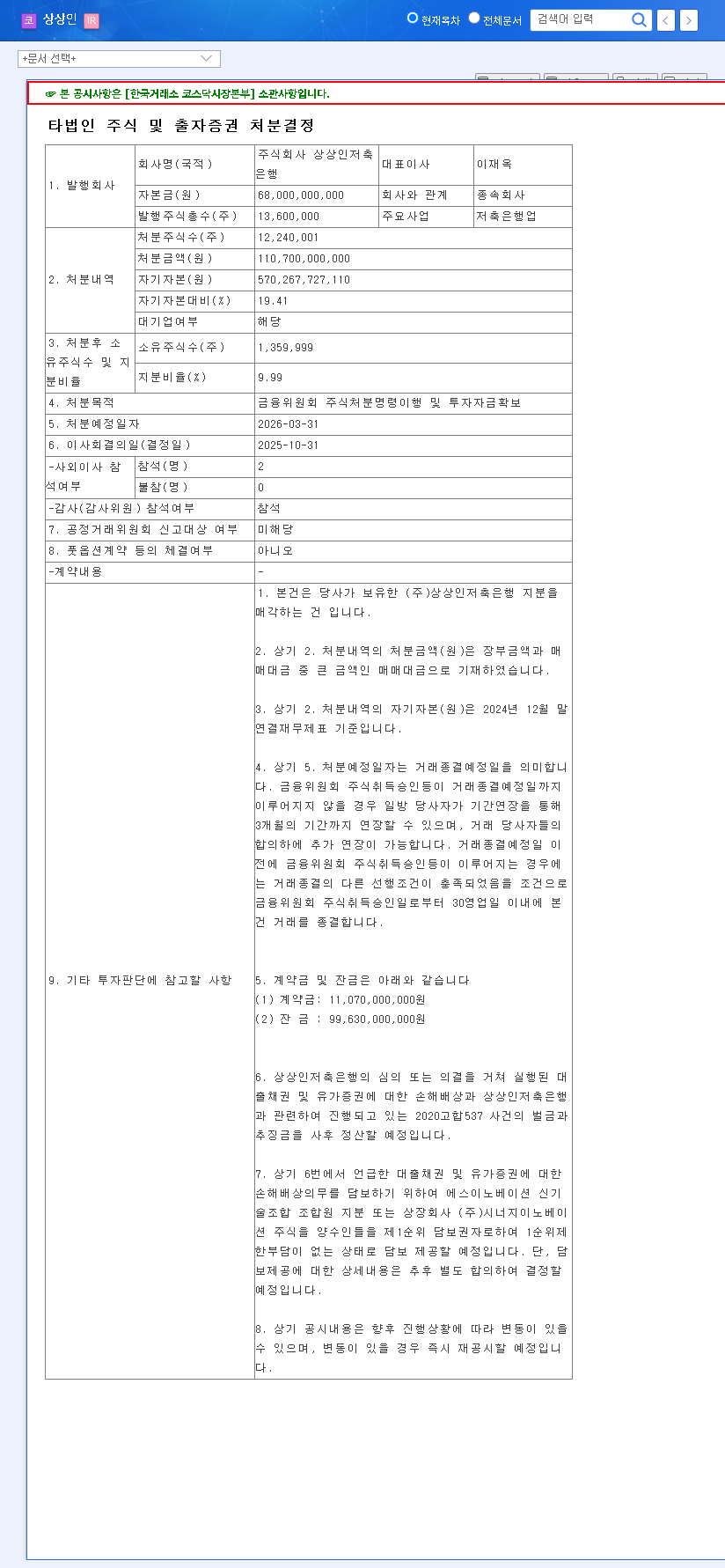
    The recent announcement regarding the Sangsangin Co., Ltd. (038540) share disposal has sent ripples through the market. The company has confirmed its decision to sell a significant portion of its shares in the subsidiary, Sangsangin Savings Bank, amounting to ₩110.7 billion. This strategic move is not just a line item on a balance sheet; it represents a critical juncture for the company, poised between achieving much-needed financial stability and navigating persistent underlying risks. This comprehensive analysis will break down the event, its motivations, and the potential consequences for investors.

    The Core Event: A ₩110.7 Billion Share Disposal

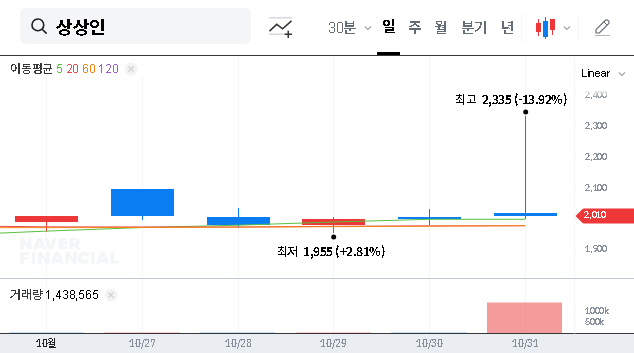
    On October 31, 2025, Sangsangin Co., Ltd. formally announced its ‘Decision on Disposal of Shares and Equity Securities in Other Corporations.’ This decision directly involves its highly valuable subsidiary, Sangsangin Savings Bank. For complete transparency, you can view the Official Disclosure on the DART system.

    Let’s look at the key details of this transaction:

    • Disposal Target: Shares held in subsidiary Sangsangin Savings Bank.
    • Disposal Value: ₩110.7 billion KRW (approximately 19.41% of capital).
    • Post-Disposal Ownership: Reduced to 9.99%.
    • Stated Purpose: Compliance with a Financial Services Commission (FSC) order and securing investment capital.

    Why Now? The Dual Pressures of Finance and Regulation

    This decision wasn’t made in a vacuum. Two primary forces are driving the Sangsangin share disposal strategy. Firstly, the company is grappling with a high consolidated debt ratio of 867.94%, a significant vulnerability. The infusion of ₩110.7 billion is a direct attempt to deleverage and fortify its financial foundation. Secondly, Sangsangin is acting under a mandate from the Financial Services Commission. Complying with this share disposal order is a necessary step to address and mitigate ongoing legal and regulatory risks, which have created uncertainty around the company’s management.

    This share disposal is a calculated move to tackle two of Sangsangin’s biggest challenges simultaneously: shoring up a weak balance sheet and demonstrating compliance to regulators.

    Analyzing the Ripple Effects for Sangsangin Co., Ltd.

    The consequences of this sale will be felt across the company’s operations, market perception, and long-term strategy. It’s a classic case of short-term relief versus potential long-term strategic shifts.

    The Bull Case: A Leaner, More Focused Future

    Optimists will point to the immediate financial benefits. The capital injection provides breathing room to manage debt and reinvest in promising areas, such as its new shipbuilding business. This segment could benefit from the global recovery in shipping, a trend noted by industry experts at authoritative sources like Bloomberg. By addressing the FSC’s order, the company removes a significant regulatory overhang, potentially improving investor sentiment and clarifying its path forward.

    The Bear Case: Weakened Control and Lingering Doubts

    Conversely, critics will argue that reducing ownership in a key subsidiary like Sangsangin Savings Bank weakens the company’s control over a historically important business segment. This could impact the overall financial portfolio and long-term earnings potential. Furthermore, while the disposal addresses one regulatory issue, it does not erase the underlying legal risks, including a first-instance guilty verdict against management. These issues will continue to weigh on the stock until a final resolution is reached.

    Investor Takeaway: A Prudent and Cautious Outlook

    For investors, the Sangsangin Co., Ltd. share disposal creates a complex picture. The move is a net positive for financial health in the short term, but it introduces questions about long-term strategy and does not fully resolve the legal uncertainties.

    • Short-Term (1-3 months): Expect continued volatility. Positive news about debt reduction may be offset by negative sentiment from the underlying legal risks.
    • Long-Term (6+ months): The company’s value will depend on three critical factors: the final outcome of legal proceedings, the performance and recovery of its remaining financial assets, and tangible success from its diversification into the shipbuilding industry. For more on this sector, see our in-depth analysis of the Korean shipbuilding market.

    In conclusion, a conservative and watchful approach is recommended. While the disposal is a proactive step towards solving major issues, the path to a full recovery for Sangsangin Co., Ltd. is still fraught with significant variables that require careful monitoring.

    Frequently Asked Questions

    Q1: What are the main reasons for the Sangsangin share disposal?

    A1: The two primary drivers are to comply with a share disposal order from the Financial Services Commission (FSC) and to raise ₩110.7 billion in capital to significantly reduce its high debt ratio and improve its financial structure.

    Q2: How does this sale impact Sangsangin’s financial health?

    A2: The capital infusion is expected to have a direct positive effect by lowering the company’s consolidated debt ratio from 867.94% and strengthening its overall financial stability.

    Q3: What are the key long-term factors for investors to watch?

    A3: Long-term success hinges on the complete resolution of its legal challenges, the health and profitability of its remaining financial businesses, and whether its new venture into the shipbuilding industry can generate substantial returns.

    (038540) Sangsangin Co., Ltd. (038540) Share Disposal: A Deep Dive into Financial Strategy & Risks 관련 이미지
  • (363280) TY Holdings Capital Increase: Analysis of Taeyoung E&C’s Workout & Stock Impact

    (363280) TY Holdings Capital Increase: Analysis of Taeyoung E&C’s Workout & Stock Impact

    The market is closely watching TY Holdings Co., Ltd. (363280) following its decisive move to participate in a major capital increase for its subsidiary, Taeyoung Engineering & Construction. This strategic financial injection is a cornerstone of the ongoing Taeyoung E&C workout program, signaling a critical effort to stabilize the construction giant and, by extension, the entire TY Holdings group. This analysis explores the nuances of the TY Holdings capital increase, its potential effects on group fundamentals, and the outlook for the TY Holdings stock price.

    The Core Details of the Capital Increase

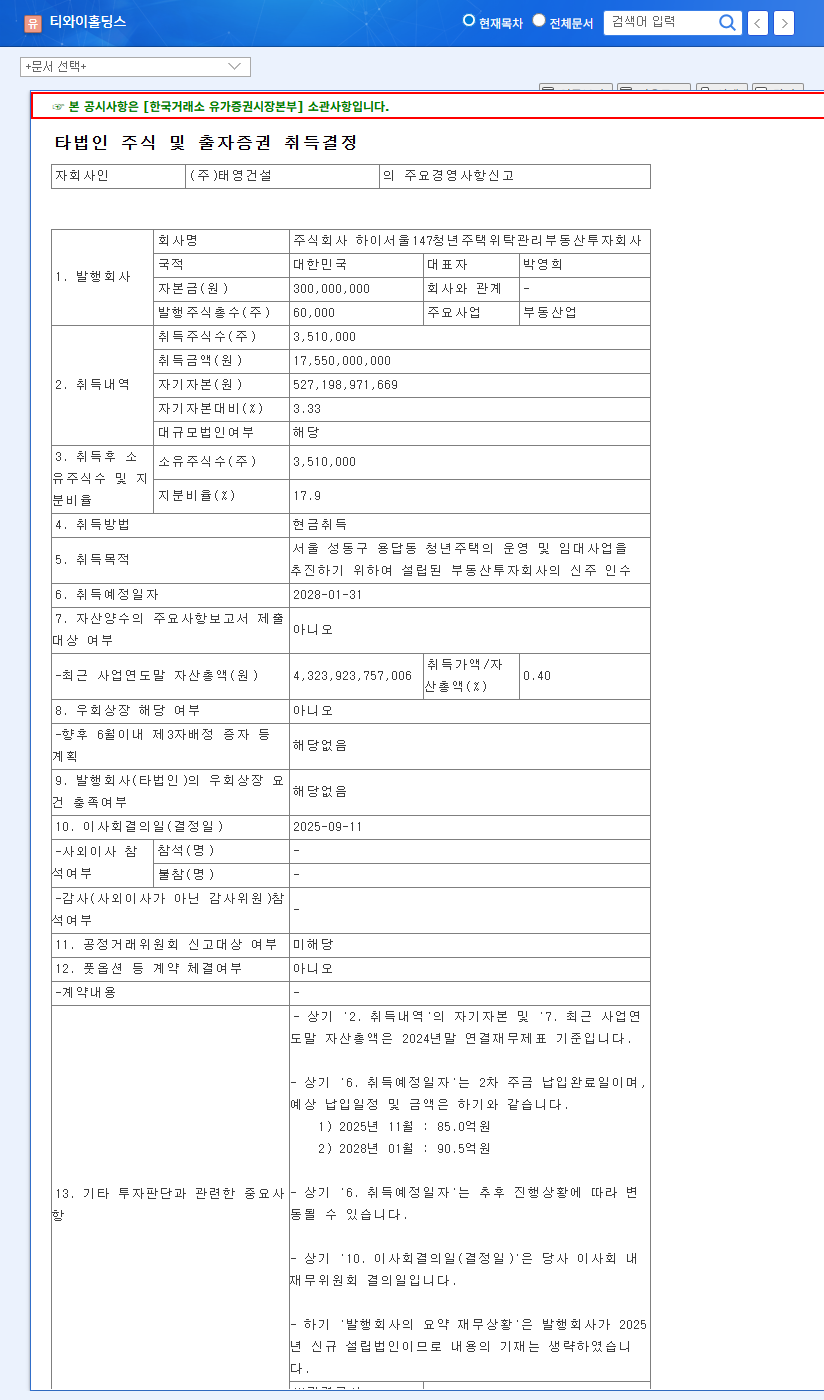
    According to an official disclosure filed on October 28, 2025, TY Holdings has committed to a significant capital injection into Taeyoung E&C. This move is not just a line item on a balance sheet; it’s a foundational step in Taeyoung E&C’s restructuring journey. You can view the Official Disclosure (Source) for complete details. The key figures are as follows:

    • Shares Acquired: 28,347 common shares of Taeyoung E&C.
    • Investment Amount: Approximately 65.5 billion KRW (approx. $65.5 million USD) at 2,310 KRW per share.
    • Participants: 28 investors from the 68th public corporate bond offering.
    • Key Dates: Payment on November 5, 2025, with shares listed on November 21, 2025.

    Strategic Rationale: Why Now?

    The primary motivation for this capital increase is to fortify Taeyoung E&C’s financial structure and sharpen its competitive edge. Since applying for a corporate workout in December 2023, Taeyoung E&C has been navigating a turbulent economic landscape. The construction industry faces a perfect storm of rising material costs, persistent high-interest rates, and a cooling real estate market, as documented by sources like global economic reports. For a company in workout, securing this funding is paramount for survival and future growth, providing essential capital for debt service, operational stability, and pursuing new projects.

    This capital injection is less a simple bailout and more a strategic pivot to de-risk the parent company and stabilize the entire group’s long-term financial health, demonstrating a firm commitment to the Taeyoung E&C workout plan.

    Impact on TY Holdings’ Financials and Stock Price

    Potential Upsides for Investors

    The successful execution of the TY Holdings capital increase could trigger a cascade of positive outcomes:

    • Improved Group Financials: As Taeyoung E&C’s debt ratios fall and liquidity improves, it positively impacts TY Holdings’ consolidated financial statements, bolstering overall stability.
    • Enhanced Corporate Value: The normalization of its key subsidiary is expected to increase Taeyoung E&C’s enterprise value, directly boosting the investment value for TY Holdings as the parent entity.
    • Restored Market Confidence: Proactive steps toward financial health fulfill market expectations and can help rebuild trust among investors and creditors for both companies.

    Key Risks and Considerations

    Despite the positive intent, investors must remain aware of the inherent risks:

    • Short-Term Financial Burden: The 65.5 billion KRW is a significant cash outflow. If Taeyoung E&C’s recovery falters, it could become a drag on TY Holdings’ resources.
    • Macroeconomic Headwinds: The broader construction market’s health is a major dependency. Ongoing stagnation or further rate hikes could hinder Taeyoung E&C’s normalization efforts.
    • Uncertain ROI Timeline: The timing and magnitude of a return on this investment are tied to Taeyoung E&C’s future performance, which remains uncertain.

    Investor Outlook & Strategic Recommendations

    Overall, this capital increase is a necessary and strategic move to ensure long-term value creation. For investors, the focus now shifts to monitoring execution and key performance indicators. For those new to this type of event, it may be helpful to read our guide on Understanding Corporate Workouts in Korea.

    In the short term, the TY Holdings stock price may see some volatility as the market digests the cash outflow against the long-term benefits. A significant, immediate rally is unlikely given industry-wide uncertainty. However, the mid-to-long-term outlook is more constructive. If Taeyoung E&C’s workout progresses successfully, TY Holdings’ corporate value is positioned for substantial growth.

    Investors should demand transparency on the use of funds, scrutinize TY Holdings’ risk management strategies against market volatility, and look for clear plans to generate synergy once Taeyoung E&C has stabilized. While this event is a positive signal, a cautious and informed approach is essential as the recovery story unfolds.

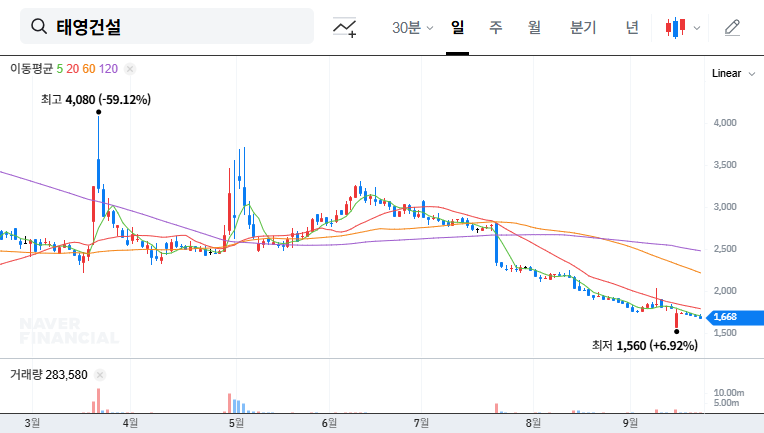
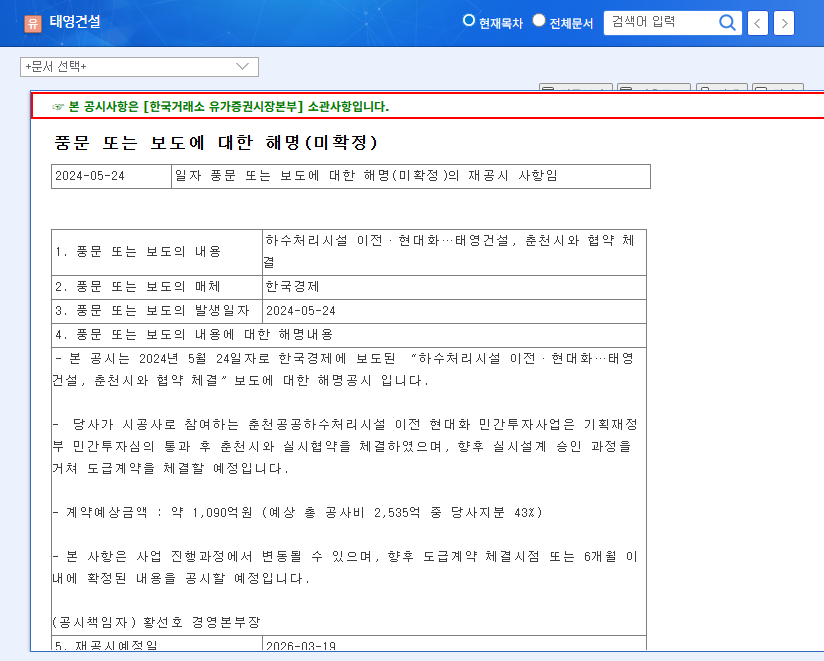
    (363280) TY Holdings Capital Increase: Analysis of Taeyoung E&C's Workout & Stock Impact 관련 이미지
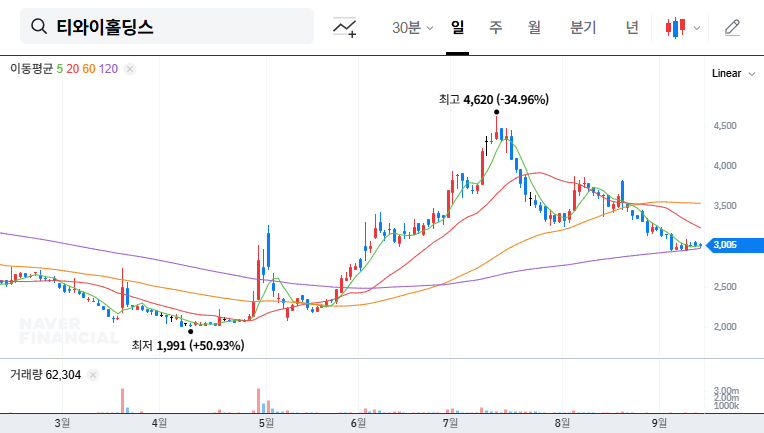
    (363280) TY Holdings Capital Increase: Analysis of Taeyoung E&C's Workout & Stock Impact 관련 이미지
  • (009410) TAEYOUNG E&C Rights Offering: A Deep Dive for Investors on Financial Restructuring & Risks

    (009410) TAEYOUNG E&C Rights Offering: A Deep Dive for Investors on Financial Restructuring & Risks

    The recent announcement of the TAEYOUNG E&C rights offering has sent ripples through the market, capturing the attention of investors closely monitoring the company’s progress. Currently navigating a comprehensive workout program, TAEYOUNG ENGINEERING & CONSTRUCTION stands at a critical juncture. Is this capital raise a definitive signal of financial recovery and a step towards normalization, or does it mask underlying risks that warrant caution? This detailed investor analysis will dissect every facet of this development, from the offering’s specifics to its long-term implications, providing the clarity needed to make informed decisions.

    This rights offering is a pivotal moment in Taeyoung E&C’s journey out of its workout program. For investors, understanding the nuances behind this move is not just important—it’s essential for assessing the company’s true recovery trajectory.

    Breaking Down the TAEYOUNG E&C Rights Offering

    On October 28, 2025, TAEYOUNG E&C formally announced its rights offering decision via a Major Disclosure. The move is a targeted capital infusion aimed at specific stakeholders. The core details, as per the Official Disclosure (Source: DART), are as follows:

    • Shares Issued: 28,347 common shares.
    • Issue Price: 2,310 KRW per share.
    • Total Capital Raised: Approximately 65.6 billion KRW.
    • Target Investors: Preferential allocation to 28 investors of the 68th public corporate bonds.
    • Key Dates: Payment on November 5, 2025, with listing scheduled for November 21, 2025.

    This capital raise is specifically designed to engage existing creditors, a strategic move that often signals confidence from those with intimate knowledge of the company’s financial state. The sum represents a notable portion of Taeyoung E&C’s market capitalization, underscoring the significance of this financial maneuver.

    The Strategic Rationale: Financial Restructuring and the Workout Program

    This rights offering doesn’t exist in a vacuum. It is a calculated step within Taeyoung E&C’s broader workout program—a creditor-led initiative to restore a company to financial solvency. The company’s December 2024 business report already highlighted substantial progress in its financial restructuring efforts.

    Key Recovery Milestones Achieved

    Through aggressive measures like debt-for-equity swaps, the company has engineered a remarkable turnaround on its balance sheet. Consolidated total equity surged from a deficit of 440.2 billion KRW to a positive 527.2 billion KRW by the end of 2024, completely resolving its capital impairment status. Concurrently, total liabilities were reduced, and the debt-to-equity ratio improved dramatically to a healthy 49.01%. This has been complemented by a profitable turnaround in its core construction segment, which posted an operating profit of 20.6 billion KRW despite a challenging market. This rights offering aims to build on that momentum, securing vital operating funds to accelerate the path to graduating from the workout program.

    Potential Impacts: Opportunities and Headwinds

    Positive Signals for Investors

    • Enhanced Financial Stability: The influx of cash will directly strengthen the balance sheet, reduce debt service burdens, and provide a buffer against market volatility.
    • Creditor Vote of Confidence: An offering successfully subscribed to by existing creditors is a powerful endorsement, signaling their belief in the viability of the turnaround plan. This can significantly boost broader market and investor confidence.

    Potential Risks and Considerations

    • Share Dilution: While any issuance of new shares can dilute earnings per share (EPS), the impact here is expected to be minimal as it targets a specific, limited group of creditors and the issuance ratio is low.
    • Execution Risk: The ultimate success depends on how effectively management deploys the new capital. Investors must see these funds translate into tangible business growth and profitability improvements.
    • External Market Pressures: The construction industry is highly sensitive to macroeconomic factors. As noted by sources like Bloomberg, factors like fluctuating currency exchange rates, rising interest rates, and volatile raw material prices can all impact project costs and profitability, irrespective of the company’s internal health.

    Investor Action Plan: Key Monitoring Points

    While the TAEYOUNG E&C rights offering is a fundamentally positive step, a prudent investment strategy requires diligent monitoring. Investors should keep a close watch on the following areas:

    • Workout Program Graduation: The primary goal. Track all announcements related to the successful completion of the workout program.
    • PF Risk Management: The company’s ability to manage project financing (PF) liabilities remains crucial. For more on this, see our guide on understanding PF risks in construction.
    • Capital Allocation: Scrutinize future financial reports to see how the funds from the rights offering are being used and the return on that investment.
    • Market & Order Book Health: Monitor the domestic construction market outlook and Taeyoung E&C’s ability to secure a stable pipeline of profitable projects, particularly in the public sector.

    Frequently Asked Questions (FAQ)

    Q1: What are the key details of TAEYOUNG E&C’s rights offering?

    TAEYOUNG E&C is issuing 28,347 common shares at 2,310 KRW per share to raise approximately 65.6 billion KRW. The offering is targeted specifically at 28 investors who hold the company’s 68th public corporate bonds.

    Q2: How will this rights offering affect TAEYOUNG E&C’s financial structure?

    It is expected to significantly bolster the company’s financial health by securing operating funds, easing debt repayment pressures, and providing capital for future growth, thereby accelerating its exit from the current workout program.

    Q3: How has TAEYOUNG E&C’s financial status changed since entering the workout program?

    The company has made remarkable progress. As of late 2024, it had resolved its capital impairment, with total equity turning positive at 527.2 billion KRW. The debt-to-equity ratio improved to 49.01%, and its operations returned to profitability.

    Q4: What should investors consider before investing in TAEYOUNG E&C?

    Investors should weigh the positive steps in the financial restructuring against external market risks and internal execution challenges. Key factors to monitor include the successful completion of the workout program, effective management of PF liabilities, and the profitable use of the newly raised funds.

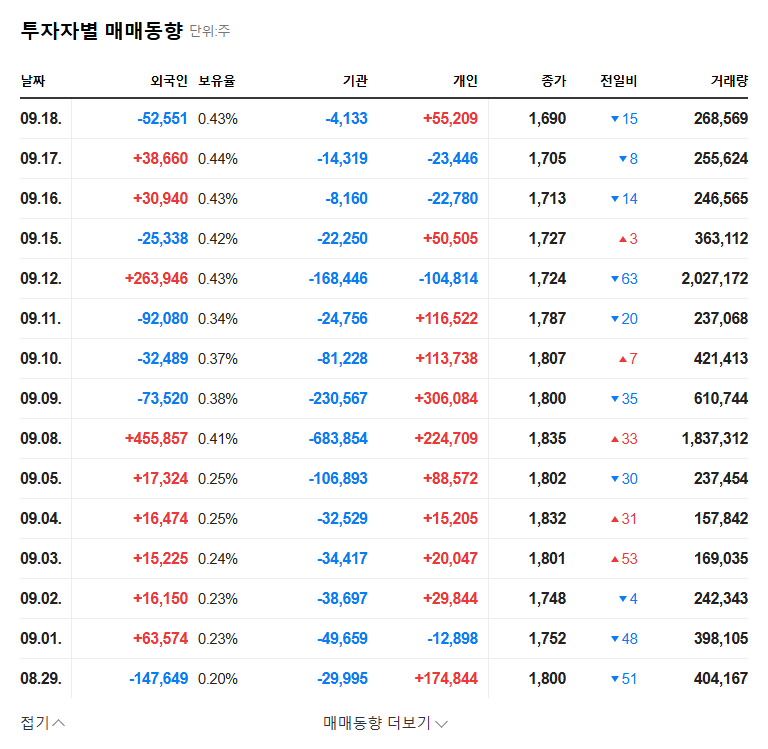
    (009410) TAEYOUNG E&C Rights Offering: A Deep Dive for Investors on Financial Restructuring & Risks 관련 이미지
    (009410) TAEYOUNG E&C Rights Offering: A Deep Dive for Investors on Financial Restructuring & Risks 관련 이미지
  • (179530) ADBIOTECH Capital Increase (179530): A Deep-Dive Analysis for Investors

    (179530) ADBIOTECH Capital Increase (179530): A Deep-Dive Analysis for Investors

    ADBIOTECH Capital Increase: Turning Crisis into Opportunity?

    On October 27, 2025, ADBIOTECH Co.,Ltd. (179530) announced a significant, large-scale ADBIOTECH capital increase, capturing the immediate attention of the market. For a company grappling with severe financial deterioration and persistent operating losses, this move is a critical juncture. This comprehensive analysis will dissect the intricacies of this decision, evaluating its potential to steer the company out of crisis and its profound implications for current and prospective investors. We will meticulously examine the core motivations, from improving financial structure to fueling new business ventures and navigating a pivotal change in management control.

    Is this capital injection the lifeline ADBIOTECH needs to innovate and grow, or will it merely dilute shareholder value and postpone an inevitable reckoning? Let’s dive into the details.

    The Anatomy of the Deal: A Closer Look

    The company detailed the rights offering in a major disclosure report. The move is designed to raise approximately 16.566 billion KRW through a third-party allotment, a method often used to bring in strategic investors. The full details can be verified in the Official Disclosure (DART Source).

    Key Details of the ADBIOTECH Capital Increase

    • Shares Issued: 6,152,988 common shares
    • Issue Price: 2,693 KRW per share
    • Issue Ratio: Approximately 49% of existing shares, indicating significant dilution.
    • Key Investors: BK Partners Investment Fund 1 & 2
    • Key Dates: Payment on December 17, 2025, with an expected listing on January 2, 2026.

    Crucially, this capital raise is intertwined with a change in the largest shareholder and a management rights transfer agreement. This is not just a financial maneuver; it’s a fundamental reset of the company’s trajectory.

    Drivers Behind the Decision: Survival and Strategy

    The decision stems from a dual need: immediate financial survival and long-term strategic repositioning. Understanding these drivers is key to performing a thorough ADBIOTECH stock analysis.

    1. Addressing an Acute Financial Crisis

    The company’s financial health is precarious. As of H1 2025, its debt-to-equity ratio stood at an alarming 877.68%, a figure that signals extreme financial leverage and risk. For context, a healthy ratio is typically below 2.0 (learn more about debt-to-equity ratios on Investopedia). Coupled with continuous operating losses and accumulated deficits, the capital increase was an unavoidable move to shore up the balance sheet and avoid insolvency.

    2. Funding Future Growth Engines

    Beyond survival, the funds are earmarked for growth. The capital is intended to fuel the development of promising new pipelines, such as IgY immune egg yolk antibodies and VHH antibodies (nanobodies). These technologies have significant potential in animal and human health markets. The funds will support critical R&D and both domestic and international clinical trials, securing a pathway to future revenue streams.

    3. Facilitating a Management Overhaul

    The capital increase is the mechanism for a change in control. By bringing in BK Partners as the new largest shareholder, the company is signaling a strategic pivot. This is more than just fundraising; it’s an effort to install a new management team with a fresh vision and, presumably, a more effective strategy for turning the company around.

    Potential Impacts: The Bull vs. Bear Case

    For investors, the ADBIOTECH capital increase presents a classic case of high risk and potential reward. It’s essential to weigh the positives against the significant negatives.

    The Bull Case (Positive Impacts)

    • Improved Financial Stability: The ~16.5 billion KRW infusion will immediately reduce the crippling debt ratio and solve liquidity issues, providing a foundation for recovery.
    • Accelerated R&D and Growth: Secured capital can fast-track development and commercialization of new pipelines, unlocking long-term value for the company.
    • Vote of Confidence: The participation of a new financial investor like BK Partners can be seen as a positive signal, suggesting they see untapped value and a viable path to profitability.

    The Bear Case (Negative Impacts & Risks)

    • Severe Share Dilution: Issuing new shares equivalent to ~49% of the existing float will significantly dilute the value of each existing share. This is the most immediate and certain negative impact for current shareholders.
    • Execution Risk: A capital injection is only a temporary fix. The ultimate success depends on the new management’s ability to execute a turnaround strategy and achieve profitability, which is far from guaranteed.
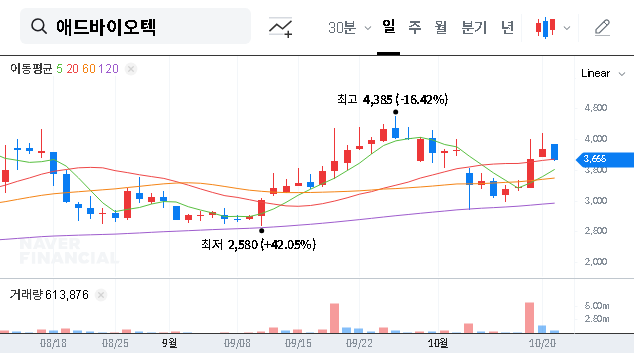
    • Price Pressure: The issue price of 2,693 KRW represents a ~19.8% discount to the recent price, which could create downward pressure on the stock as the market absorbs the new shares.

    Investor Outlook & Key Factors to Monitor

    For investors considering an ADBIOTECH stock position, a wait-and-see approach may be prudent. Long-term value recovery hinges on several critical factors that must be closely monitored in the coming months.

    Pay close attention to the new management’s stated business plan and their execution capabilities. Are their profitability targets realistic? Watch for progress reports on R&D milestones for the IgY and VHH antibody pipelines. Successful clinical data or commercial partnerships would be powerful catalysts. Finally, keep an eye on the broader macroeconomic environment, as high interest rates can continue to pressure highly-leveraged companies. For more on this sector, you can read our Guide to Biotech Investing.

    Disclaimer: This analysis is for informational purposes only and is not investment advice. All investment decisions should be made based on your own research and judgment.

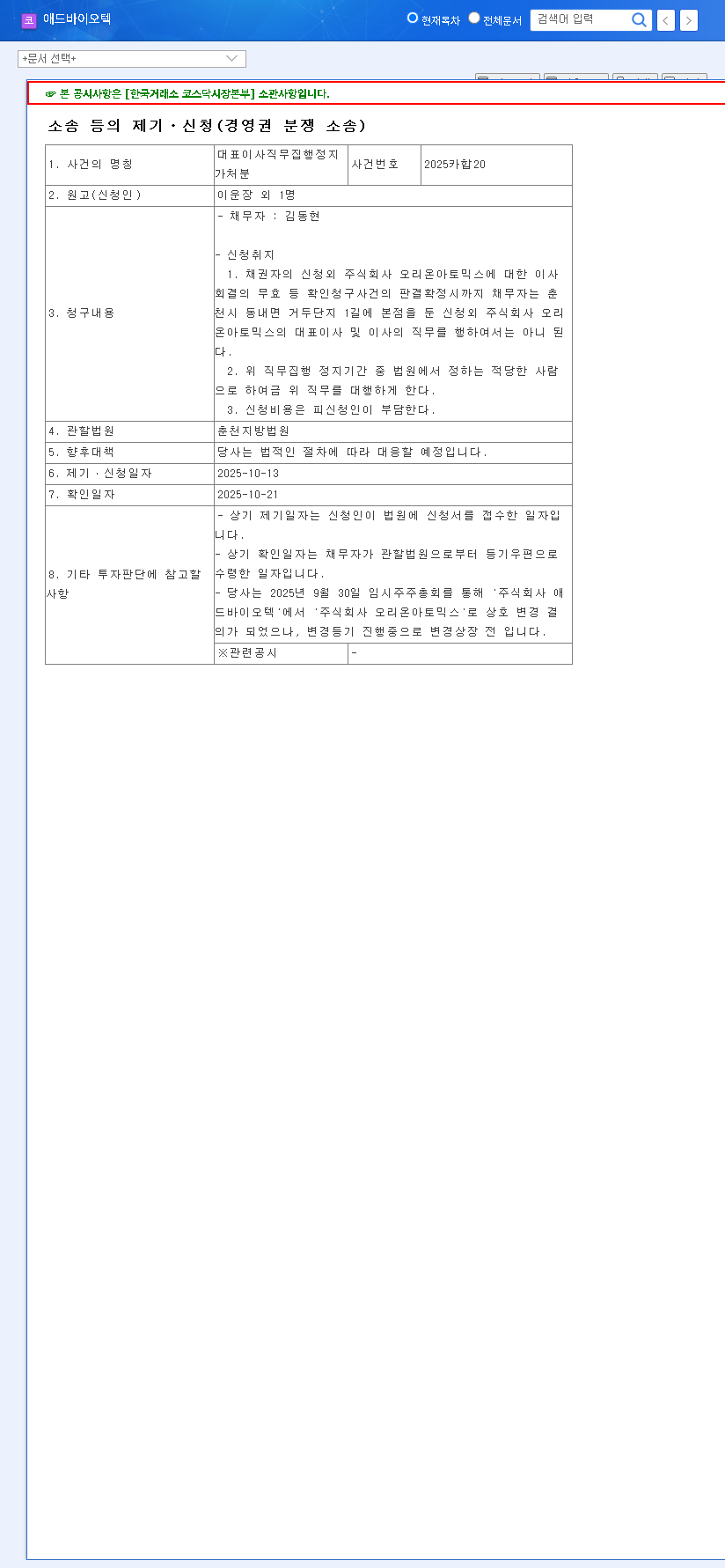
    (179530) ADBIOTECH Capital Increase (179530): A Deep-Dive Analysis for Investors 관련 이미지
  • (000210) DL Holdings CO.,LTD (KRX: 000210): The Cariflex Divestiture & Its Stock Impact

    (000210) DL Holdings CO.,LTD (KRX: 000210): The Cariflex Divestiture & Its Stock Impact

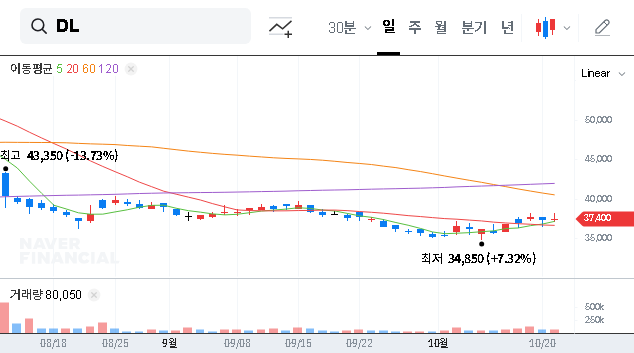
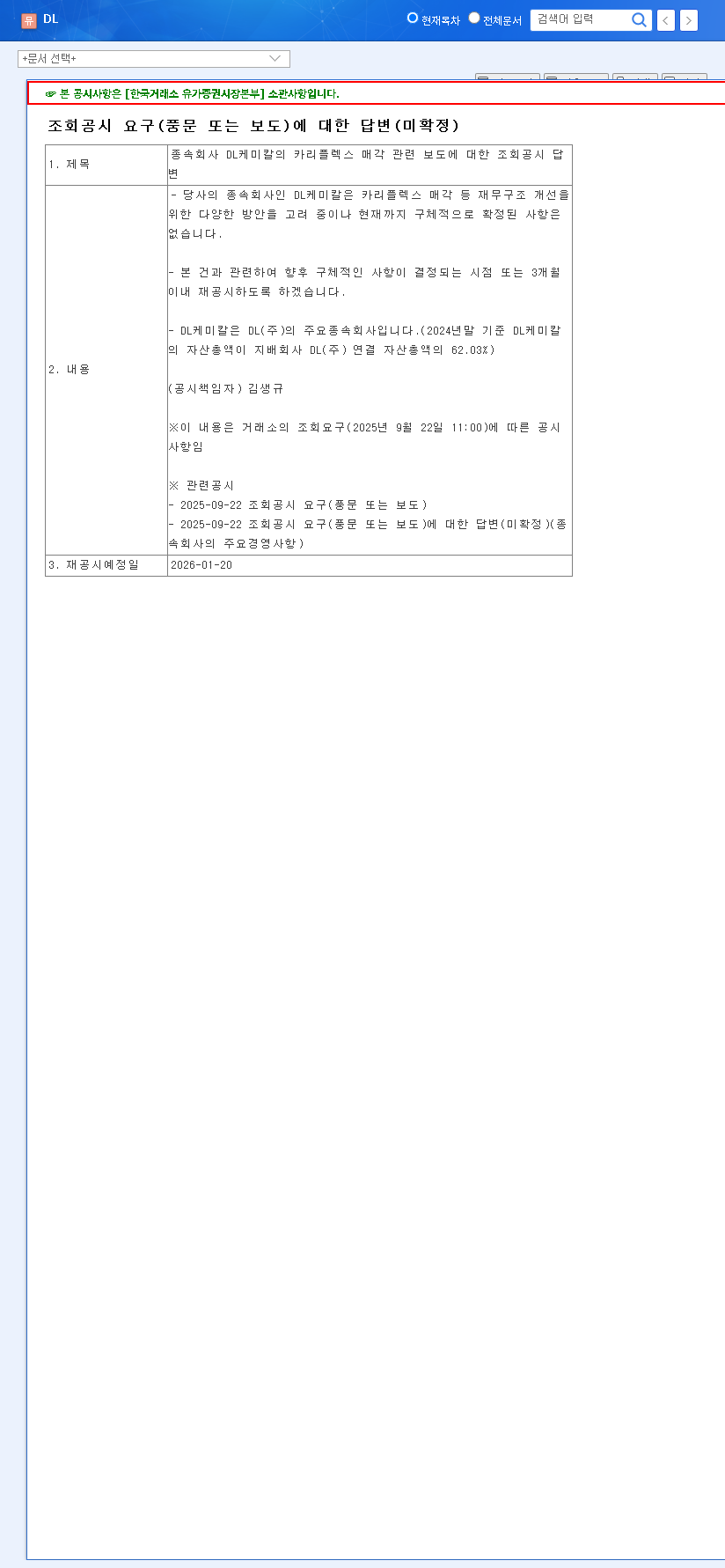
    The market is buzzing with speculation surrounding DL Holdings CO.,LTD (KRX: 000210) following news that its core subsidiary, DL Chemical, is considering a significant strategic move: the Cariflex divestiture. This potential sale represents a critical turning point for the conglomerate, with far-reaching implications for its financial stability, strategic focus, and ultimately, its stock valuation. While details remain unconfirmed, the sheer scale of DL Chemical—accounting for over 62% of the parent company’s assets—means investors must pay close attention.

    This comprehensive analysis unpacks the situation, exploring the potential financial upside, the inherent risks, and a strategic playbook for investors navigating the uncertainty. We will delve into the core of the disclosure, evaluate the long-term scenarios, and provide actionable insights for stakeholders of DL Holdings CO.,LTD.

    Understanding the Official Disclosure

    On October 21, 2025, in response to market inquiries, DL Holdings issued a statement regarding its subsidiary. The core of the matter is that DL Chemical is exploring various options to bolster its financial structure, with the sale of Cariflex being a prominent consideration. As detailed in the Official Disclosure on DART, nothing is finalized. The company has committed to providing a follow-up disclosure by January 20, 2026, or sooner if a decision is made.

    At the heart of this event is uncertainty. The current “unconfirmed” status means the market will likely react to rumors and sentiment, creating short-term volatility for the DL Holdings stock until a clear path is announced.

    Why Cariflex is a Game-Changing Asset

    To grasp the full impact of the Cariflex divestiture, it’s crucial to understand what Cariflex is. Acquired by DL Chemical, Cariflex is a global leader in producing high-purity isoprene rubber latex (IR Latex) and polyisoprene products. These are not commodity materials; they are highly specialized polymers used in critical medical applications like surgical gloves, catheters, and stoppers for vials, where performance and safety are paramount. This niche market commands high margins and has significant barriers to entry, making Cariflex a crown jewel asset.

    The Strategic Rationale for a DL Chemical Sale

    Selling a profitable, high-performing asset may seem counterintuitive. However, the potential benefits for DL Holdings CO.,LTD could be substantial:

    • Major Debt Reduction: A sale would generate a significant cash infusion, allowing DL Chemical to deleverage its balance sheet, reduce interest expenses, and improve its credit profile.
    • Funding Future Growth: Capital could be redeployed into other core areas of the chemical business or new, high-growth ventures, aligning with long-term M&A trends discussed by sources like Bloomberg.
    • Portfolio Optimization: Management may believe Cariflex has reached peak valuation and that now is the opportune time to divest and simplify the corporate structure.

    Potential Scenarios and Stock Price Impact

    The mid-to-long-term impact on DL Holdings’ stock price hinges entirely on the execution and terms of the potential sale. Investors should consider three primary scenarios.

    Scenario 1: The Best-Case Outcome (Highly Positive)

    In this scenario, DL Chemical successfully divests Cariflex at a premium valuation. The proceeds are used to significantly strengthen the balance sheet and are strategically reinvested into growth areas with clear ROI. The market would view this as a masterstroke of financial management, likely leading to a re-rating of the stock and a substantial price increase.

    Scenario 2: The Neutral Restructuring (Slightly Positive/Neutral)

    Here, the sale occurs at a fair, but not spectacular, price. The primary goal of financial improvement is achieved, but the loss of Cariflex’s steady earnings tempers investor enthusiasm. The stock might see a modest bump from the reduced risk profile, but the long-term growth story becomes less clear, leading to a period of stabilization rather than a major rally.

    Scenario 3: The Worst-Case Scenario (Negative)

    This outcome involves a failure to sell, or a sale at a discounted price due to poor market conditions or a flawed process. This would signal weakness to the market, revealing a potential cash crunch without providing the necessary relief. The loss of a key asset without a commensurate financial gain would likely cause a significant drop in the DL Holdings stock price.

    Investor Action Plan & Risk Management

    For investors in DL Holdings CO.,LTD, this period demands vigilance and a clear strategy. Navigating the next three months requires a proactive approach.

    • Monitor Disclosures Actively: Set up alerts for all official filings related to KRX: 000210. The January 20, 2026, re-disclosure date is a key milestone.
    • Analyze Financial Health: Conduct a deep dive into DL Chemical’s financials to understand the potential valuation of Cariflex and the true extent of the parent company’s debt burden. You can learn more about our stock analysis methodology here.
    • Prepare for Volatility: The uncertainty will cause price swings. Consider using options to hedge your position or setting clear stop-loss orders to manage downside risk.
    • Re-evaluate Your Thesis: Once the final decision is announced, reassess your investment thesis for DL Holdings. Does the company’s new profile (post-sale or no-sale) still align with your financial goals?

    In conclusion, the potential Cariflex divestiture is more than just a transaction; it’s a defining moment for DL Holdings CO.,LTD. The outcome will reshape its balance sheet, strategic direction, and market perception for years to come. Informed and cautious investors who monitor the situation closely will be best positioned to respond effectively.

    (000210) DL Holdings CO.,LTD (KRX: 000210): The Cariflex Divestiture & Its Stock Impact 관련 이미지