Tag: Financial Deterioration

  • (036180) GW Vitek Analysis: KRW 3.8B Lawsuit Threatens Rehabilitation & Investor Confidence

    (036180) GW Vitek Analysis: KRW 3.8B Lawsuit Threatens Rehabilitation & Investor Confidence

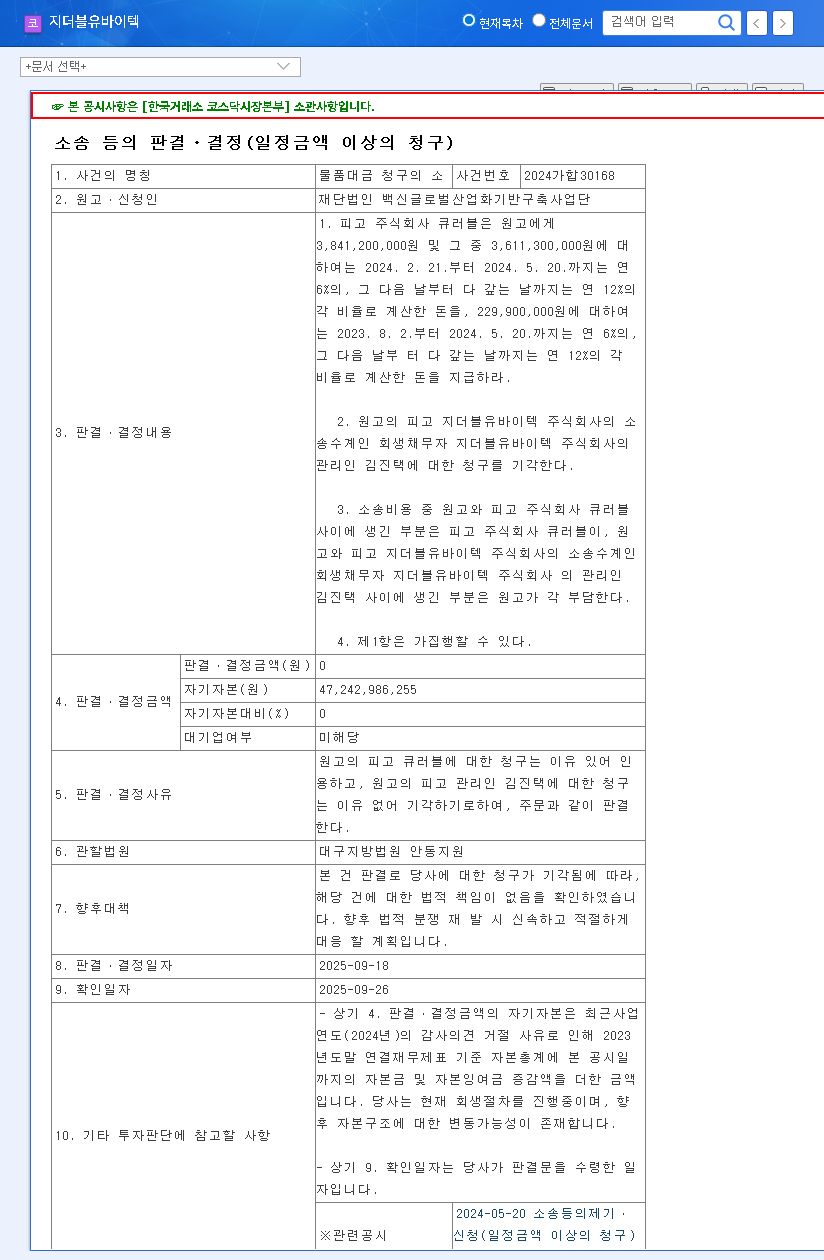
    The precarious situation for GW Vitek CO.,LTD., a company already navigating treacherous corporate rehabilitation proceedings, has intensified significantly. A newly emerged appeal for a KRW 3.841 billion goods payment lawsuit casts a dark, ominous shadow over its prospects for recovery. This development introduces a critical layer of uncertainty that investors and stakeholders cannot afford to ignore. This comprehensive analysis will dissect the lawsuit’s implications for GW Vitek, its fragile financial state, and the viability of its entire rehabilitation process.

    The New Legal Hurdle: A KRW 3.8 Billion Lawsuit

    Already burdened by severe management challenges and suspended stock trading, GW Vitek now confronts another significant legal battle. The Vaccine Global Industrialization Foundation has filed an appeal for a ‘claim for goods payment’ lawsuit valued at KRW 3.841 billion. This amount represents a substantial 7.62% of the company’s total assets, making it a material event with potentially devastating consequences.

    The appeal, which will be heard at the Andong Branch of the Daegu District Court, seeks to overturn a first-instance ruling where the plaintiff was unsuccessful. If the appeal succeeds, this KRW 3.841 billion will be confirmed as a rehabilitation claim, adding a massive financial weight to a company already on the brink. The specifics of this legal challenge were disclosed in an official regulatory filing. You can view the Official Disclosure (Source) for detailed information.

    Understanding the Gravity: GW Vitek’s Deep-Rooted Crisis

    To fully appreciate the impact of this lawsuit, it’s essential to understand the dire state of GW Vitek’s fundamentals. The company is operating under extreme ‘going concern uncertainty,’ a term auditors use when a business is at high risk of failure. This isn’t a new development but a culmination of persistent financial decay.

    With liabilities soaring and equity diminishing, the addition of a multi-billion KRW claim from this GW Vitek lawsuit could be the final straw that breaks the company’s chances of a successful turnaround.

    Catastrophic Financial Performance

    The company’s financial reports paint a grim picture. In Q3 2025, accumulated sales plummeted to KRW 3.25 billion, an 85% decrease year-over-year, while the operating loss ballooned to KRW 3.27 billion. More alarmingly, total liabilities stand at a staggering KRW 136.4 billion against a dwindling total equity of just KRW 15.048 billion, signaling severe capital impairment and a desperate need for restructuring. These are not just numbers; they represent a fundamental collapse of the business’s operational viability.

    Compounding Internal and External Pressures

    The problems extend beyond poor sales. GW Vitek is also dealing with the fallout from alleged embezzlement and breach of trust, resulting in outstanding illegal activity receivables of KRW 18.33 billion. This, combined with numerous other ongoing lawsuits and the loss of control over subsidiaries, has created a perfect storm. The auditor’s ‘disclaimer of opinion’ underscores the chaos, making it nearly impossible for investors to trust the financial statements. Furthermore, the harsh macroeconomic climate of high interest rates and inflation makes sourcing capital or finding operational efficiencies incredibly challenging. For more information on navigating such situations, investors can review resources on analyzing distressed companies.

    How the Lawsuit Derails the Rehabilitation Process

    The success of corporate rehabilitation proceedings hinges on creating a clear and viable path forward. This new lawsuit threatens to shatter that clarity in several ways:

    • Exacerbated Financial Burden: If the court rules against GW Vitek, its already overwhelming debt load will increase, making financial restructuring nearly impossible and potentially triggering liquidation.
    • Deterrent to M&A and Investment: Potential buyers or investors seek stability. A large, unresolved legal claim is a major red flag, significantly reducing the chances of a successful M&A deal that could save the company.
    • Damaged Corporate Trust: Continuous legal disputes destroy a company’s reputation. Even if GW Vitek somehow survives, rebuilding trust with customers, suppliers, and the market will be a monumental task.
    • Complicated Rehabilitation Plan: The entire rehabilitation plan submitted to the court is now thrown into question. Creditors will be less likely to approve a plan when a massive, uncertain liability is looming.

    Conclusion: An Extremely High-Risk Scenario for Investors

    The emergence of this KRW 3.841 billion ‘claim for goods payment’ lawsuit is a profoundly negative event for GW Vitek. It compounds an existing crisis defined by rehabilitation proceedings, suspended trading, embezzlement-related debts, and a damning auditor’s report. The path to normalization now appears more obscured than ever.

    Therefore, any investment consideration in GW Vitek at this juncture carries an exceptionally high level of risk. Investors must exercise extreme caution and diligently monitor all developments. A prudent approach is not just recommended; it is essential for capital preservation. Focus on the outcome of this lawsuit and the progress of the rehabilitation plan, as these will be the ultimate determinants of the company’s fate.
    (036180) GW Vitek Analysis: KRW 3.8B Lawsuit Threatens Rehabilitation & Investor Confidence 관련 이미지
  • (014200) KANGLIM Delisting Crisis (014200): In-Depth Financial Analysis & Investor Alert

    (014200) KANGLIM Delisting Crisis (014200): In-Depth Financial Analysis & Investor Alert

    Investors in KANGLIM Co., LTD. (014200) are navigating treacherous waters. The ongoing KANGLIM delisting crisis has reached a critical inflection point following the company’s immediate appeal against the Korea Exchange’s decision. This comprehensive analysis provides a crucial KANGLIM financial analysis, delving into its deteriorating fundamentals, the implications of its legal battle, and a clear-eyed guide for current and potential investors. The company’s future hangs in the balance, making informed decision-making more critical than ever.

    With a precarious financial position and its listing status dependent on a court ruling, understanding the nuances of this situation is paramount. Can the company reverse its fortunes, or is this the final chapter for KANGLIM on the stock exchange?

    The Legal Battle: KANGLIM’s Appeal Against Delisting

    On November 13, 2025, KANGLIM Co., LTD. took a decisive step by filing an immediate appeal with the Seoul Southern District Court. This legal maneuver is a direct challenge to the court’s earlier dismissal of an injunction that sought to suspend the delisting order from the Korea Exchange, initially issued on February 10, 2025. This escalation signifies that the KANGLIM delisting crisis is far from resolved, plunging the company and its shareholders into a prolonged period of profound uncertainty. The outcome of this KANGLIM stock appeal will be the single most important determinant of its survival as a publicly-traded entity.

    Investing in KANGLIM at this juncture is not just speculative; it’s a high-stakes gamble on a legal outcome, with the company’s fundamental health in rapid decline.

    Unpacking the Financial Decay: A 2025 Semi-Annual Report Analysis

    A thorough KANGLIM financial analysis of its 2025 semi-annual report reveals a company grappling with severe internal and external pressures. The numbers paint a grim picture that extends far beyond the courtroom drama.

    Core Business in Decline

    The heart of KANGLIM’s operations—cranes and special purpose vehicles—is struggling. Intense market competition, coupled with Russian export regulations and a sluggish domestic economy, has eroded performance. Sales dipped by 5.6% year-over-year, and what was a KRW 920 million operating profit has now become a KRW 58 million operating deficit. While the bottom line shows a net income surplus, this is misleadingly propped up by one-off ‘gains on valuation of assets held for sale,’ not sustainable operational success.

    Alarming Cash Flow Instability

    Perhaps the most critical warning sign is the company’s operating cash flow, which registered a negative KRW 10.63 billion. A negative operating cash flow means the core business is spending more cash than it generates, a fundamentally unsustainable position that raises serious doubts about KANGLIM’s ability to fund its day-to-day operations, invest in recovery, or service its debts without resorting to asset sales or further financing.

    Investor Action Plan: Navigating the Uncertainty

    For those holding or considering an investment in KANGLIM (014200), a prudent and highly cautious approach is mandatory. The stock’s future is subject to extreme volatility, as analyzed by leading global financial news outlets. Here are the key factors to monitor:

    • Monitor Legal Proceedings Closely: The fate of the KANGLIM stock appeal is the primary catalyst. A favorable ruling could trigger a short-term rally, but a negative one will likely seal its delisting. Investors should review the Official Disclosure on DART for direct information.
    • Scrutinize Core Business Turnaround: Beyond the legal noise, look for tangible signs of recovery in the crane and special vehicle segments. A positive shift in operating cash flow is a non-negotiable prerequisite for any long-term viability. For more information, you can read about how to analyze a company’s financial health.
    • Assess Profit Sustainability: The company must demonstrate an ability to generate consistent profits from its core operations, not from one-time asset sales. True value is built on operational excellence, which is currently absent.

    Conclusion: An ‘Extreme Risk’ Verdict

    The KANGLIM delisting crisis represents an existential threat to the company. Compounded by severely deteriorating fundamentals and a reliance on a favorable legal outcome, investing in KANGLIM (014200) at this moment is an endeavor of extreme risk. While diversification efforts are noted, they are insufficient to counteract the overwhelming uncertainty. The current recommendation is to avoid investment and maintain a cautious, observational stance pending the resolution of its legal and financial challenges.

  • (102280) SBW Delisting Crisis 2025: An In-Depth Financial Analysis for Ssangbangwool Investors

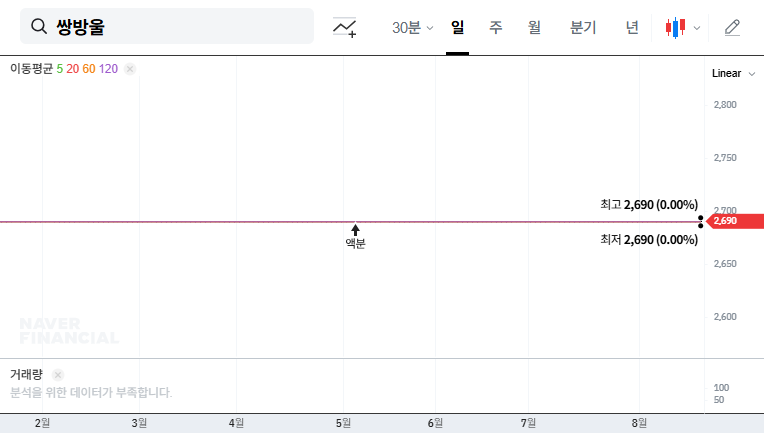
    (102280) SBW Delisting Crisis 2025: An In-Depth Financial Analysis for Ssangbangwool Investors

    The ongoing SBW delisting crisis has reached a critical boiling point, leaving investors of Ssangbangwool (SBW) in a precarious position. Following the court’s dismissal of its injunction to halt the delisting process, the company’s immediate appeal signals a desperate, final stand. This comprehensive analysis will unpack the layers of this corporate crisis, from the dire financial health and severe operational risks to the complete erosion of market trust. For anyone holding SBW stock or considering its future, this guide provides essential clarity and a stark, urgent action plan.

    We will delve into the specific reasons behind the delisting decision, examine the alarming financial figures, and assess the likelihood of the company’s survival. The situation demands immediate attention, as the risk of total investment loss is now higher than ever.

    The Latest Development: A Legal Battle on Life Support

    On November 13, 2025, SBW formally announced its immediate appeal against the court’s decision to dismiss its injunction. This legal maneuver is a direct response to the Seoul Southern District Court’s refusal to suspend the Korea Exchange’s delisting order. The original delisting decision, issued on February 11, 2025, was triggered by serious allegations of embezzlement and breach of trust involving former executives. This appeal represents the company’s last-ditch effort to remain on the stock exchange. You can view the Official Disclosure on DART for more details. However, legal experts suggest the probability of overturning the decision at this stage is extremely low, meaning the SBW delisting crisis is likely entering its final, decisive phase.

    With legal avenues narrowing and financials in a freefall, SBW is facing an existential threat. The core issue is not just poor performance but a fundamental breakdown in corporate governance and trust, making a recovery highly improbable.

    Urgent Financial Analysis: A Company in Distress

    A close look at SBW’s fundamentals reveals a company teetering on the brink of collapse. The numbers paint a grim picture that goes far beyond temporary setbacks, indicating deep-rooted structural problems. For more context on how markets react to such events, see analyses from authoritative sources like Reuters on corporate governance failures.

    1. Severe Financial Deterioration

    • Expanding Losses: For the 2024 fiscal year, SBW reported a consolidated operating loss of approximately KRW 2.29 billion and a staggering net loss of KRW 10.33 billion. This isn’t a one-off event but a continuation of a trend of widening deficits, showing the business is fundamentally unprofitable.
    • Deep Capital Impairment: The company’s financial stability is shattered, with an accumulated deficit of approximately KRW 165.89 billion in retained earnings. This severe capital impairment means its equity has been significantly eroded by sustained losses.
    • Unrecovered Embezzled Funds: A sum of KRW 8.481 billion from the embezzlement and breach of trust scandal remains unrecovered, acting as a direct drain on the company’s already scarce resources.

    2. Operational & Reputational Risks

    • Eroded Credibility: A fine for dishonest disclosure related to its mask business has severely damaged the company’s reputation for transparency. This loss of trust makes it difficult to attract partners, customers, and investors.
    • Declining Core Business: While the Try/mask segment showed a minor increase, sales in retail and overseas operations have fallen, pointing to a loss of competitiveness and market share.
    • Credit Downgrade: The company’s credit rating has been lowered to BB-, a sub-investment grade that will make it incredibly difficult and expensive to secure future funding, effectively cutting off a vital financial lifeline.

    Investor Action Plan: Navigating the SBW Delisting Crisis

    Given the overwhelming negative factors, the investment outlook for SBW is rated as ‘Very Negative.’ The path to recovery is virtually non-existent, and the primary risk is the total and permanent loss of invested capital. New investments in SBW stock should be avoided at all costs. For existing shareholders, the focus must shift from hope for recovery to aggressive loss mitigation. To learn more about managing high-risk assets, you can read our guide on understanding portfolio risk.

    Urgent Recommendations for SBW Investors

    • Investment Opinion: IMMEDIATE SELL. The probability of delisting is exceptionally high. Holding onto shares in the hope of a miraculous turnaround is a high-risk gamble with a very low chance of success. Selling now, even at a significant loss, is the most prudent strategy to prevent a complete wipeout.
    • Cease Further Monitoring: The company’s fundamentals are broken. Continuing to spend time and resources tracking SBW news is unlikely to yield any positive outcomes. It’s time to reallocate your focus and capital to more viable investments.
    • Consider Legal Options (with caution): While investors could explore legal action to recover funds, the success rate for such cases against a financially insolvent company is historically very low. This path should only be considered after consulting with a legal professional and weighing the potential costs against the slim chance of recovery.

    In conclusion, the SBW delisting crisis is not a temporary downturn but a terminal event for the company as a publicly-traded entity. The combination of financial ruin, legal condemnation, and a complete loss of trust creates an insurmountable challenge. The time for decisive, protective action is now.

  • (016790) HYUNDAI FEED Inc. Stock Attachment: A Critical Investor Warning (016790 Analysis)

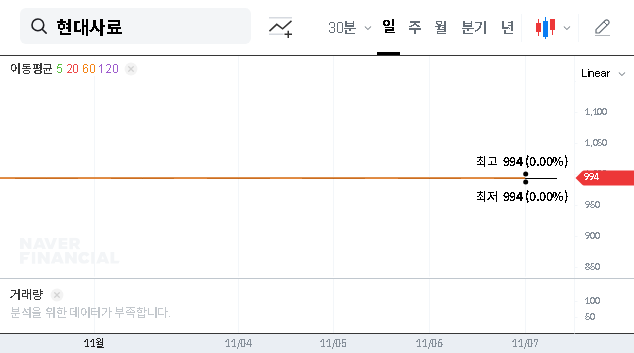
    (016790) HYUNDAI FEED Inc. Stock Attachment: A Critical Investor Warning (016790 Analysis)

    For a company already on the brink, the latest news surrounding HYUNDAI FEED Inc. (016790) serves as a critical alarm for investors. Already navigating the treacherous waters of severe capital impairment and a pending delisting decision, the company now faces a court-ordered HYUNDAI FEED Inc. stock attachment on its major shareholder’s holdings. This development dramatically escalates the existing 016790 investment risk profile, casting a dark shadow over its future management stability and survival on the stock market. What are the precise implications of this legal action, and how should current and potential investors navigate this high-stakes situation? This comprehensive analysis provides the answers.

    The Event: Unpacking the Major Shareholder Stock Attachment

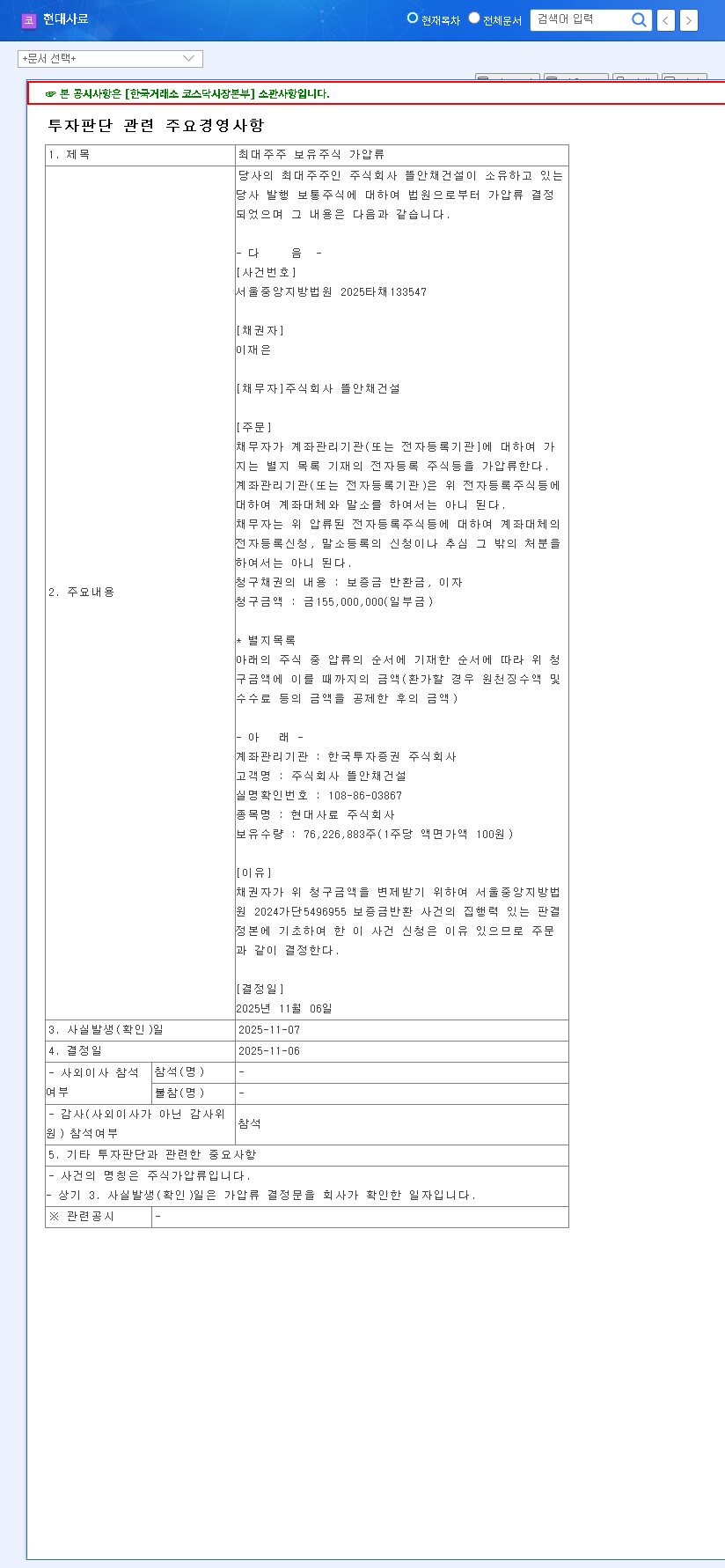
    On November 13, 2025, HYUNDAI FEED Inc. formally disclosed a ‘Key Management Matter’ concerning the attachment of its major shareholder’s shares. This is not a routine filing; it’s a significant event with potentially severe consequences. According to the Official Disclosure, the core details are:

    • Attached Asset: A court has ordered an attachment on 76,226,883 common shares of HYUNDAI FEED Inc. owned by the major shareholder, Tteuranchaechungseol Co., Ltd.
    • Underlying Claim: The legal action stems from a relatively small claim of 30,000,000 KRW for a lease deposit refund.
    • Core Concern: The primary fear is the significant uncertainty this introduces regarding the major shareholder’s ability to exercise management rights and the looming possibility of a forced equity sale.

    Why This Matters: A Perfect Storm of Red Flags

    This stock attachment is not an isolated incident. It pours fuel on an already raging fire of financial and operational crises at HYUNDAI FEED Inc. To understand the full gravity, we must look at the company’s fragile state.

    1. Devastated Corporate Fundamentals

    The company’s H1 2025 report painted a bleak picture. Revenue from its core compound feed business fell 17.8% year-over-year. More critically, as of June 2025, the company’s retained earnings were a staggering -433.88 billion KRW. This signifies a state of severe capital impairment, where accumulated losses have wiped out the company’s entire capital stock, a condition that threatens its very existence.

    2. The Impending HYUNDAI FEED Delisting Threat

    The company is not just financially weak; it is actively fighting for its life on the KOSDAQ market. A delisting decision was already made in August 2025, and HYUNDAI FEED Inc. is currently in a desperate appeal process. This stock attachment event could weaken its case and further jeopardize its chances of remaining a publicly traded company.

    The attachment of the major shareholder’s shares is a significant negative factor that maximizes business uncertainty and further erodes investor confidence in a company already on life support.

    Projected Impact on Investors and the Company

    The ripple effects of the HYUNDAI FEED Inc. stock attachment will be felt in both the short and long term, compounding the existing 016790 investment risk.

    Short-Term Impact (1-4 weeks)

    • Price Pressure: Expect immediate and significant downward pressure on the stock price as investor confidence plummets.
    • Heightened Volatility: Panic selling and speculative trading could lead to extreme price swings and erratic trading volumes.
    • Erosion of Trust: This event completely shatters any remaining market trust, making it nearly impossible for the company to attract new capital.

    Mid- to Long-Term Impact (Beyond 1 month)

    • Risk of Forced Sale: If the claim is not settled, the attached shares could be sold off, leading to a chaotic change in management control. For more on this, read our guide on how to analyze high-risk stocks.
    • Paralyzed Strategy: The uncertainty surrounding ownership will stall any meaningful financial restructuring or long-term business strategy.
    • Weakened Delisting Appeal: This instability could be viewed negatively by market authorities, potentially dealing a final blow to the company’s appeal to maintain its listing.

    Final Verdict & Investor Action Plan

    Given the confluence of severe financial distress, an active delisting threat, and now a destabilizing major shareholder stock attachment, the investment outlook for HYUNDAI FEED Inc. is exceptionally poor.

    Investment Opinion: ‘NOT RECOMMENDED / AVOID’

    We strongly advise against any new investment in HYUNDAI FEED Inc. The risks overwhelmingly outweigh any potential for speculative gains. The fundamental pillars of the company are crumbling, and this latest event has significantly increased the probability of a worst-case scenario, such as a complete wipeout of shareholder value through delisting.

    For Existing Shareholders: Extreme caution is warranted. The likelihood of further capital loss is high. Investors should closely monitor the delisting appeal process and any news regarding the resolution of the stock attachment. Preparing an exit strategy to minimize losses should be a top priority.

    (016790) HYUNDAI FEED Inc. Stock Attachment: A Critical Investor Warning (016790 Analysis) 관련 이미지
  • (066790) CCS 066790 Management Dispute: In-Depth Analysis of Delisting Risk & Financial Crisis

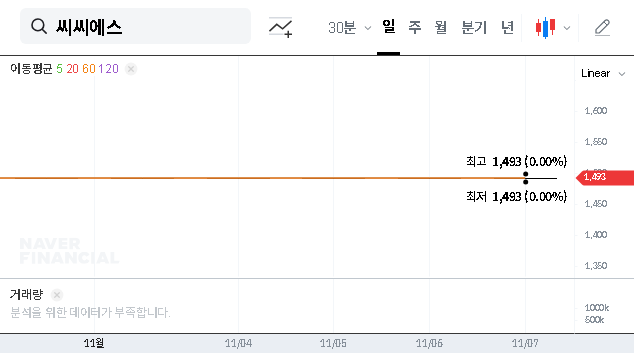
    (066790) CCS 066790 Management Dispute: In-Depth Analysis of Delisting Risk & Financial Crisis

    The ongoing CCS 066790 management dispute has taken a critical turn, placing investors on high alert. A recent public disclosure reveals a shareholder has initiated legal action to compel access to the company’s books, a move that signals deepening distrust and intensifies the already severe turmoil surrounding Korea Cable T.V Chung-Buk System Co., Ltd. (CCS, 066790). This development is not merely a legal footnote; it is a significant catalyst that could accelerate the company’s path toward a potential delisting, compounding its grave financial and operational challenges.

    For any stakeholder, understanding the implications of this shareholder lawsuit is paramount. This article provides a comprehensive CCS 066790 financial analysis, dissecting the latest disclosure, its impact on the company’s fundamentals, and the escalating CCS delisting risk.

    Decoding the Shareholder Lawsuit: A Public Vote of No Confidence

    On November 12, 2025, CCS disclosed a filing titled “Application for Indirect Compulsory Enforcement of Provisional Disposition to Permit Inspection and Copying of Books, etc.” According to the Official Disclosure on DART, a shareholder, Mr. Choi, has requested court intervention to force management to provide access to critical financial and operational documents. This legal maneuver, known as indirect compulsory enforcement, is a powerful tool used when a party believes management is obscuring information or mismanaging company assets.

    This legal action is not just a procedural matter; it is a public declaration of profound distrust in the current leadership. It transforms a private CCS 066790 management dispute into a formal, public crisis with severe financial penalties attached.

    A Company in Crisis: In-depth CCS 066790 Financial Analysis

    This lawsuit doesn’t exist in a vacuum. It is a symptom of a deeply troubled company. The fundamentals of Korea Cable T.V Chung-Buk System have been deteriorating for years, creating a perfect storm of risk.

    Irrecoverable Financial Condition

    • Persistent Revenue Decline: The company’s core business in the hyper-competitive cable TV industry is shrinking, with no clear strategy for a turnaround.
    • Widening Losses: Both operating and net losses are expanding, indicating a fundamental inability to generate profit from its primary operations.
    • Severe Liquidity Pressure: A high provision for doubtful accounts suggests the company is struggling to collect what it’s owed, further straining its cash flow.

    Endless Management Disputes and Litigation

    The company’s leadership has been in a state of constant flux, paralyzing strategic decision-making. The instability is characterized by frequent changes in major shareholders, delays in regulatory approval, and a litany of legal battles. This environment makes it nearly impossible to execute a coherent business plan. Investors looking to protect themselves may want to review our guide on how to analyze at-risk stocks.

    The Domino Effect: How This Lawsuit Amplifies CCS Delisting Risk

    This latest CCS shareholder lawsuit acts as a powerful accelerant to the company’s existing problems, pushing it closer to the brink.

    • Intensified Management Paralysis: Management must now divert precious time and capital to fighting a legal battle instead of fixing the business. This further prolongs any hope of normalization.
    • Accelerated Cash Burn: If the court sides with the shareholder and CCS fails to comply, it faces a penalty of 20 million KRW per day. For a company already in financial distress, this is a potentially fatal blow to its liquidity.
    • Shattered Investor Confidence: With the company already designated an ‘Administrative Issue Stock’ and trading suspended, this public dispute solidifies its toxic reputation. This makes attracting new capital virtually impossible and severely amplifies the CCS delisting risk.

    Conclusion: Extreme Caution Required for CCS 066790

    The situation at Korea Cable T.V Chung-Buk System Co., Ltd. is dire. The shareholder lawsuit is a clear indicator that internal conflicts have reached a boiling point, further threatening the company’s survival. With a paralyzed management, deteriorating financials, and a mounting pile of legal and regulatory issues, the prospect of business normalization appears distant. Investors must exercise extreme caution, as the underlying risks, including the potential for a complete delisting, are substantial and growing daily.

    Disclaimer: This analysis is for informational purposes only and is based on publicly available information. It does not constitute investment advice. All investment decisions should be made based on your own judgment and research.

    (066790) CCS 066790 Management Dispute: In-Depth Analysis of Delisting Risk & Financial Crisis 관련 이미지
  • (245620) EDGC Rehabilitation in Jeopardy: Inside the KRW 4.8B Lawsuit and What It Means for Investors

    (245620) EDGC Rehabilitation in Jeopardy: Inside the KRW 4.8B Lawsuit and What It Means for Investors

    The path forward for the EDGC rehabilitation plan has become significantly more perilous. Eone Diagnomics Genome Center Co., Ltd. (EDGC), a genomics diagnostics company already navigating a complex corporate rehabilitation, has been hit with a devastating legal setback. The recent loss of a KRW 4.8 billion penalty lawsuit has sent shockwaves through its investor community, casting a dark shadow over the company’s prospects for recovery. This comprehensive analysis will dissect the lawsuit’s implications, explore the dire financial reality facing EDGC, and provide a clear-eyed view for current and potential investors.

    Deep Dive: The KRW 4.8 Billion Lawsuit Ruling

    The Seoul High Court delivered an unfavorable ruling against EDGC in a ‘penalty claim lawsuit’ (Case No. 2025나207292) filed by Bitgwaelek Co., Ltd. This decision overturned a more favorable first-instance judgment, confirming an outstanding rehabilitation claim of KRW 4.8 billion. Compounding the financial blow, the court mandated an annual interest rate of 12% on this amount, accruing from July 8, 2023, until the debt is fully repaid. This substantial sum represents approximately 14.6% of EDGC’s total assets (based on 2022 financials) and adds a massive, unplanned liability to its balance sheet. The Official Disclosure on the DART system confirms these details, leaving no room for ambiguity about the severity of this financial obligation.

    A Company on the Brink: EDGC’s Dire Financial State

    This lawsuit could not have come at a worse time. The EDGC financial crisis is not a new development; the company has been in a precarious position for some time. The commencement of corporate rehabilitation procedures already raised significant doubts about its ability to continue as a ‘going concern’—a foundational principle of business valuation. An examination of its mid-year 2025 report reveals a catastrophic decline across all key metrics:

    With current liabilities far exceeding current assets, EDGC is facing a severe short-term liquidity crisis. The company’s ability to meet its immediate financial obligations is under extreme threat, even before accounting for this new KRW 4.8 billion debt.

    Revenue streams have all but dried up. Genomics diagnostic services, once a core business, saw revenues plummet by 53%. Product sales have collapsed by a staggering 97%, and its venture into health functional foods has dropped to zero. This isn’t just a slump; it’s a systemic failure across its primary business segments. The financial statements paint an equally grim picture: total equity has dwindled to just KRW 6.4 billion, while total assets have fallen by 60% to KRW 52.7 billion. The widening consolidated operating loss of KRW 8.2 billion and a net loss of KRW 12.2 billion for the half-year underscore the company’s inability to generate profit.

    The Ripple Effect on the EDGC Rehabilitation Plan

    Complicating an Already Fragile Process

    A successful corporate rehabilitation hinges on a carefully crafted plan to restructure debt and restore operational viability. The introduction of a new, significant KRW 4.8 billion claim fundamentally alters the equation. This additional liability complicates negotiations with existing creditors, who must now account for a larger pool of debt being repaid from the same limited assets. The process of gaining creditor approval for the EDGC rehabilitation plan, already a challenging task, has now become exponentially more difficult. For more information on this process, you can read about the key steps in corporate rehabilitation. This development could also deter potential third-party acquirers or investors who might have been considering a buyout as part of the recovery strategy.

    Market Outlook & Investor Advisory

    The market’s reaction is expected to be swift and negative. Investor confidence, already shattered by the rehabilitation filing, will likely erode further. The materialization of this legal risk confirms worst-case scenarios and could trigger intensified selling pressure on EDGC stock. Investors must consider the following impacts:

    • Increased Financial Burden: The debt plus accumulating interest creates a significant cash outflow requirement that the company, in its current state, simply cannot meet.
    • Eroding Investor Confidence: This ruling validates legal and financial risks, likely causing a further flight of capital and stakeholder trust.
    • Heightened Stock Volatility: The stock is subject to extreme volatility and delisting risk, a common outcome for companies that fail to exit rehabilitation successfully, as outlined by the Korea Exchange (KRX) listing regulations.
    • Risk of Total Loss: If the rehabilitation process fails, there is a very real possibility of a total loss of investment capital for equity holders.

    Frequently Asked Questions (FAQ)

    What is the core issue facing Eone Diagnomics (EDGC)?

    EDGC, already undergoing corporate rehabilitation, has lost a lawsuit resulting in a new KRW 4.8 billion debt plus 12% annual interest. This severely worsens its already critical financial situation and jeopardizes its chances of a successful recovery.

    How does this lawsuit affect the EDGC rehabilitation process?

    The massive new debt complicates the entire rehabilitation plan. It makes it harder to secure approval from creditors, deters potential buyers, and places an almost insurmountable financial strain on the company’s limited resources.

    Is investing in EDGC stock a good idea now?

    Investing in EDGC at this stage carries an extremely high level of risk. The combination of ongoing rehabilitation, collapsing fundamentals, and a new major legal liability creates a highly volatile and uncertain environment. There is a significant possibility of total investment loss if the rehabilitation fails. Extreme caution is strongly advised. Investors should focus on the outcome of the legal and rehabilitation processes, not on speculative recovery potential.

    (245620) EDGC Rehabilitation in Jeopardy: Inside the KRW 4.8B Lawsuit and What It Means for Investors 관련 이미지
  • (215090) SolDefense Co., Ltd. Analysis (2025): Trading Halt & Financial Red Flags for Investors

    (215090) SolDefense Co., Ltd. Analysis (2025): Trading Halt & Financial Red Flags for Investors

    In the high-stakes world of stock market investing, discerning a genuine opportunity from a potential value trap is paramount. The case of SolDefense Co., Ltd. presents a complex puzzle for investors, marked by a prolonged trading halt, a steady decline in its corporate fundamentals, and recent insider share sales. A recent corporate disclosure provides a critical window into the company’s precarious situation, forcing us to ask: what is really happening at SolDefense, and how should investors navigate these turbulent waters?

    This comprehensive SolDefense investor analysis will dissect the latest shareholder report, evaluate the company’s deteriorating financial health, and provide a clear, actionable strategy for current and potential investors. Understanding the layers of risk is the first step toward making an informed decision.

    The Catalyst: A Major Shareholder Sells Down

    On November 10, 2025, a significant development emerged. SolDefense Co., Ltd. filed a “Report on the Status of Large-Scale Holdings of Stocks, etc. (Simplified)”, which can be viewed in this Official Disclosure. The filing revealed that major shareholder Ji Yoon Jeon and affiliated parties reduced their collective stake by 1.37%, bringing their total ownership down from 6.86% to 5.49%. The stated reasons were stock consolidation and open market sales.

    While a 1.37% change may seem minor, sales by insiders and special affiliates are often interpreted as a signal of waning confidence in a company’s future prospects. Given the existing challenges, this move amplifies concerns about management’s own assessment of the path forward.

    Analyzing the Red Flags: SolDefense Co., Ltd.’s Financial Health

    The shareholder sale doesn’t exist in a vacuum. It’s set against a backdrop of deeply concerning corporate fundamentals and operational paralysis. Two factors stand out as critical risks.

    1. The Crippling Trading Halt

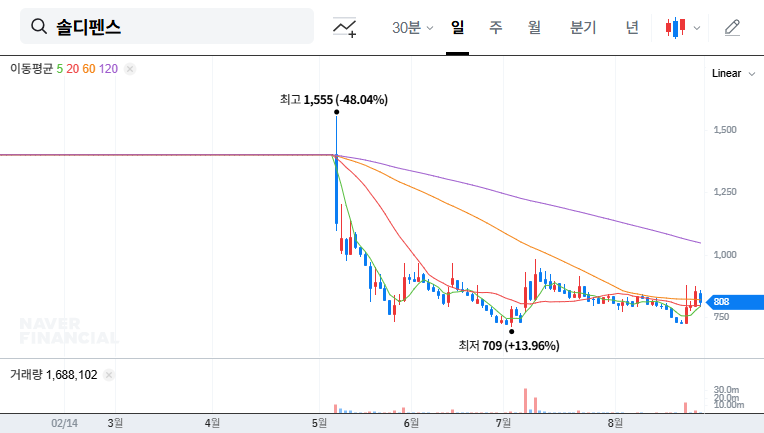
    The most significant risk factor is the persistent SolDefense trading halt, which has been in effect since January 2022. A prolonged halt freezes investor capital, creates immense information asymmetry, and makes rational company valuation nearly impossible. Without a clear timeline for the resumption of trading, any investment remains highly speculative and illiquid.

    2. A Pattern of Financial Decay (2022-2024)

    The company’s financial statements paint a grim picture of its operational performance:

    • Plummeting Revenue: After maintaining its top line through 2023, revenue saw a sharp decline to KRW 132.8 billion in 2024.
    • Evaporating Profits: Operating profit fell off a cliff, dropping from KRW 23.0 billion in 2022 to just KRW 6.5 billion in 2024. Consequently, the operating profit margin collapsed from a healthy 16.21% to a meager 4.87%.
    • High Leverage: The debt-to-equity ratio stood at a concerning 102.93% in 2024. A ratio this high indicates that the company relies heavily on debt to finance its assets, increasing financial risk. You can learn more about financial ratios on Investopedia.

    The combination of a multi-year trading halt, declining revenue, collapsing profitability, and high debt creates a perfect storm of investment risk. The recent insider sales only serve to confirm the severity of the situation.

    Strategic Action Plan for SolDefense Investors

    Given the multitude of red flags, a clear and disciplined approach is essential. Here is a recommended action plan for anyone with exposure to or interest in SolDefense Co., Ltd.

    Priority #1: Confirm Trading and Listing Status

    Before any other analysis matters, the core uncertainty must be resolved. The absolute top priority is to monitor for official announcements from the company and regulatory bodies regarding the potential resumption of trading. Without this, the stock has no market value.

    Priority #2: Demand a Credible Turnaround Plan

    Should trading resume, investors must meticulously scrutinize the company’s plans to address its financial crisis. Look for concrete, measurable steps for improving financial health, reducing debt, and restoring profitability. Vague promises are not enough. For more on this, see our guide on how to analyze high-risk turnaround stocks.

    Investment Outlook: Conservative Observation

    At present, initiating a new position in SolDefense Co., Ltd. is fraught with unacceptable risk. The confluence of deteriorating fundamentals and the prolonged trading halt makes this a highly speculative situation. We strongly advise a ‘Conservative Observation’ stance. It is prudent to remain on the sidelines until there is tangible, verifiable evidence of a fundamental business turnaround and a confirmed date for trading resumption.

    Frequently Asked Questions (FAQ)

    Q1: What is the core issue with SolDefense’s recent shareholder report?

    The report indicates a 1.37% decrease in ownership by a major shareholder and their affiliates. This is a negative signal, suggesting that insiders may lack confidence in the company’s ability to recover.

    Q2: Is SolDefense Co., Ltd. stock currently tradable?

    No. The stock has been under a trading halt since January 2022. This is the single most critical risk factor for investors.

    Q3: What does SolDefense’s financial health look like?

    The company’s corporate fundamentals are poor. Its 2024 performance showed sharp declines in revenue and profit, and its debt-to-equity ratio is over 100%, indicating high financial risk.

    Disclaimer: This report is based on publicly available information, and the ultimate responsibility for investment decisions rests with the individual investor.

    (215090) SolDefense Co., Ltd. Analysis (2025): Trading Halt & Financial Red Flags for Investors 관련 이미지
    (215090) SolDefense Co., Ltd. Analysis (2025): Trading Halt & Financial Red Flags for Investors 관련 이미지
  • (066790) CCS Voting Rights Lawsuit (066790): Analyzing Deep Management Risks & Investment Strategy

    (066790) CCS Voting Rights Lawsuit (066790): Analyzing Deep Management Risks & Investment Strategy

    The recent CCS voting rights lawsuit has sent shockwaves through the investor community, adding a new layer of critical uncertainty to KOREA CABLE T.V CHUNG-BUK SYSTEM CO., LTD. (CCS, 066790). Already navigating treacherous waters filled with financial instability, regulatory sanctions, and the looming threat of delisting, this legal battle over shareholder control could be the tipping point. For current and potential investors, understanding the full scope of this development is not just advisable—it’s essential for capital preservation. This analysis provides a comprehensive breakdown of the lawsuit, the company’s underlying weaknesses, and a prudent CCS investment strategy in light of the escalating CCS management risk.

    The Core of the Conflict: Unpacking the CCS Voting Rights Lawsuit

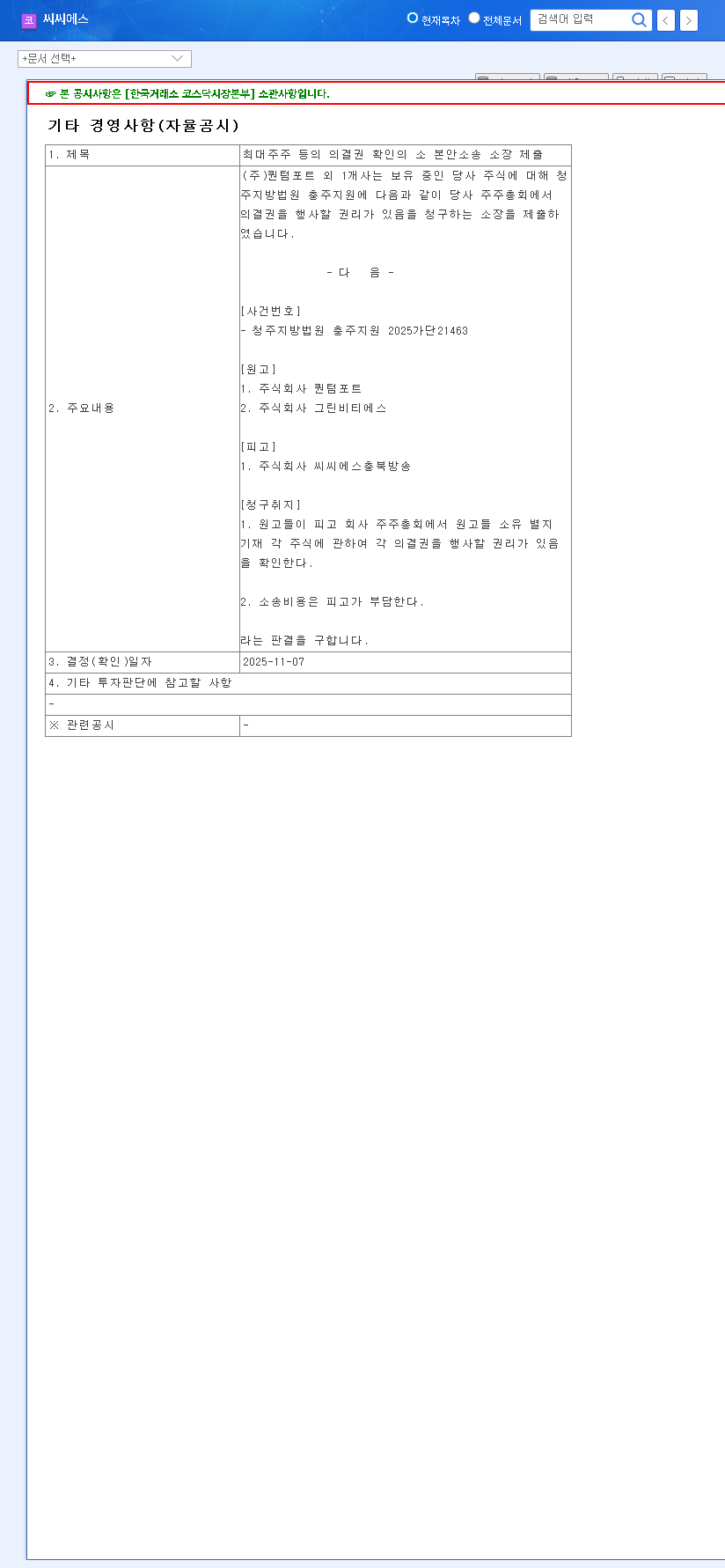
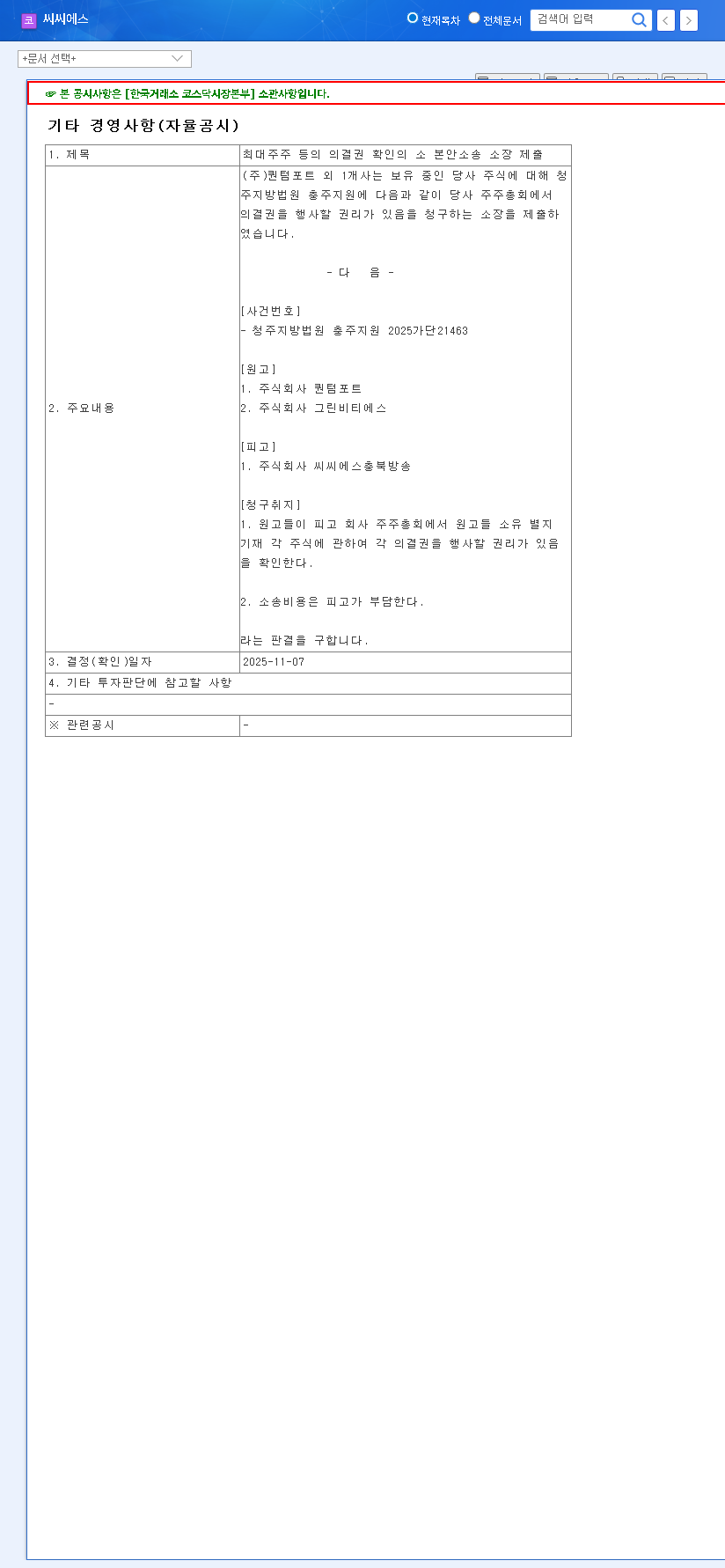
    On November 7, 2025, CCS formally disclosed the initiation of a significant legal challenge. As detailed in the Official Disclosure filed with DART (Case No. 2025 Gadad 21463, Cheongju District Court), plaintiffs Quantum Port Co., Ltd. and another party are seeking judicial confirmation of their right to exercise voting power at the company’s general shareholder meetings. This isn’t merely a procedural dispute; it’s a direct challenge to the current management structure and raises fundamental questions about who truly controls the company’s future. The outcome of this CCS voting rights lawsuit could drastically alter the company’s leadership and strategic direction, making it a pivotal event for all stakeholders.

    A Company on Shaky Ground: Pre-Existing Risks at CCS

    The lawsuit does not exist in a vacuum. It lands upon a company already burdened by a multitude of severe operational and financial challenges.

    Crippling Management Instability & Regulatory Woes

    KOREA CABLE T.V CHUNG-BUK SYSTEM has been plagued by management turmoil, including unapproved changes in major shareholders that led to corrective orders from the Ministry of Science and ICT. With appeals pending, a leadership vacuum and decision-making paralysis have taken hold, hindering any potential for a turnaround.

    An Outdated Business Model in a Digital Age

    The entire cable TV industry faces an existential threat from Over-The-Top (OTT) streaming giants. As detailed in industry reports from sources like Reuters, consumer preference has shifted decisively towards on-demand content. This has led to a consistent decline in CCS’s core broadcasting and advertising revenue streams, with first-half 2025 revenues falling by approximately 4.1% year-over-year.

    Alarming Financial Deterioration

    The financial statements paint a grim picture. While top-line sales show minor growth, profitability has collapsed. An operating loss of KRW 792 million in the first half of 2025 highlights this trend. More concerning is the massive net loss of KRW 18.1 billion in 2023 and a continuously climbing debt-to-equity ratio, which rose from 69.9% in 2022 to nearly 85% in 2024, signaling severe financial distress for CCS (066790).

    The Shadow of Delisting: Administrative Issue Status

    Following a trading suspension for dishonest disclosures, CCS was designated an ‘administrative issue’ stock. This is a formal warning from the exchange that the company has severe governance or financial problems, placing it at a very high risk of being delisted entirely. Investors can learn more by reading our Guide to Understanding Administrative Issue Stocks.

    For any publicly traded company, a lawsuit over shareholder voting rights is a significant red flag. For a company already designated as an administrative issue, it is a five-alarm fire. The confluence of risks facing CCS cannot be overstated.

    Ripple Effects: How This Lawsuit Amplifies CCS Management Risk

    This legal battle is set to dramatically worsen an already dire situation, creating both direct and indirect negative impacts.

    • Deepened Management Paralysis: The fight for control will likely stall all critical business decisions, from strategic investments to daily operations.
    • Heightened Stock Volatility: The lawsuit injects extreme uncertainty, which will almost certainly lead to downward pressure on the stock price of CCS (066790) and erratic trading patterns.
    • Eroded Credibility: The company’s image among creditors, partners, and customers will suffer further damage, making fundraising and business development increasingly difficult.
    • Distraction from Core Business: Management’s time and resources will be diverted to legal battles instead of addressing the fundamental weaknesses in its cable TV operations.

    A Prudent Investment Strategy for CCS

    Given the toxic combination of factors—a declining core business, severe financial distress, regulatory sanctions, delisting risk, and now a destabilizing CCS voting rights lawsuit—investing in this company carries an exceptionally high degree of risk.

    For Potential Investors: Initiating a new position in CCS under the current circumstances is strongly discouraged. The potential for further capital loss far outweighs any speculative upside. It is more prudent to remain on the sidelines until there is significant, demonstrable clarity on its legal, financial, and management situations.

    For Existing Investors: A thorough reassessment of your position is critical. Closely monitor all court proceedings, regulatory filings, and quarterly financial reports. Given the high probability of continued volatility and negative developments, implementing strict risk management protocols is paramount. The current situation demands caution above all else.

    (066790) CCS Voting Rights Lawsuit (066790): Analyzing Deep Management Risks & Investment Strategy 관련 이미지
  • (006380) CAPRO Delisting Review (006380): A Complete Investor Analysis & Outlook

    (006380) CAPRO Delisting Review (006380): A Complete Investor Analysis & Outlook

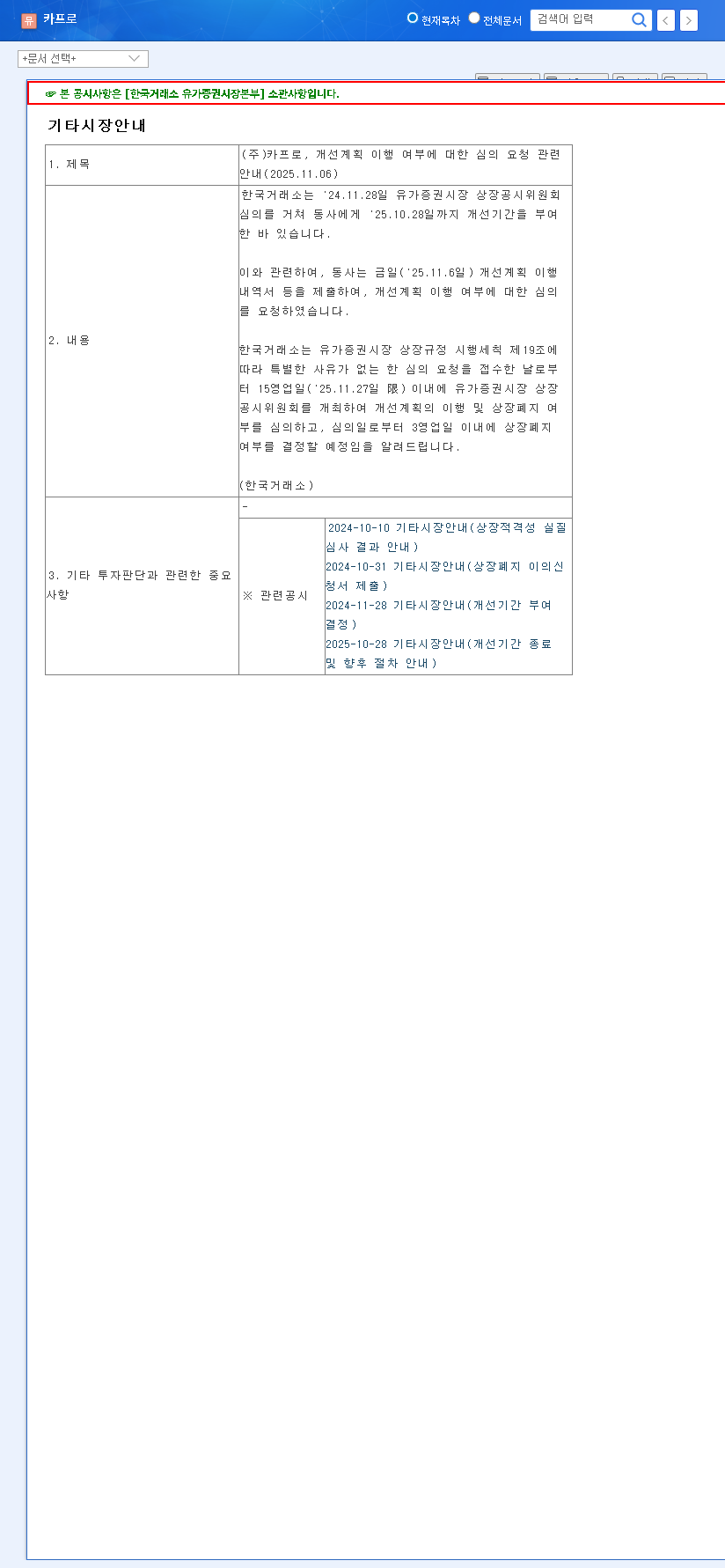
    The ongoing CAPRO delisting review has placed investors in CAPRO CORPORATION (006380) on high alert. With a final decision from the Korea Exchange expected by November 27, 2025, the company stands at a critical crossroads. This comprehensive analysis will dissect the factors leading to this review, evaluate the company’s dire financial state, and provide a clear outlook on the potential scenarios for shareholders. For anyone holding or considering an investment in CAPRO, understanding these details is not just important—it’s essential for capital preservation.

    With severe financial deterioration and the looming threat of delisting, CAPRO CORPORATION represents one of the highest-risk investments on the market today. Investors must exercise extreme caution.

    The Catalyst: Why a CAPRO Delisting Review Was Initiated

    The situation escalated on November 6, 2025, when CAPRO CORPORATION formally submitted its improvement plan performance report to the Korea Exchange. This action triggered the official review process to determine if the company has sufficiently addressed the issues that led to its probationary status, which was granted back on November 28, 2024. The exchange now has until November 27, 2025, to convene its Listing Disclosure Committee and render a final verdict. The outcome of this CAPRO delisting review will decide whether the company’s stock continues to trade or is removed from the market entirely. You can view the Official Disclosure on the DART system for primary source information.

    Financial Collapse: A Look at the Numbers

    The primary driver behind the delisting concern is CAPRO’s catastrophic financial performance. The numbers paint a grim picture of a company struggling for survival. A deep dive into its financial statements reveals multiple red flags that cannot be ignored.

    Plummeting Revenue and Deepening Losses

    The company’s top line has been in freefall. Revenue collapsed from KRW 1,147.7 billion in 2022 to just KRW 627.2 billion in 2024, with projections for 2025 showing a further slide to KRW 469.4 billion. More alarming is the shift from an operating profit of KRW 175.8 billion in 2022 to a projected operating loss of KRW -30.8 billion in 2025. This indicates a fundamental breakdown in the company’s core business profitability, a key metric for any sustainable enterprise. For more context on evaluating company health, you can learn about analyzing financial statements in our internal guide.

    Worsening Balance Sheet and Debt Burden

    CAPRO’s financial foundation is eroding. The debt-to-equity ratio, a critical measure of financial leverage, has surged from 92.27% in 2022 to a worrying 114.65% in 2024. This signals that the company is increasingly reliant on borrowing to stay afloat, a risky strategy in a high-interest-rate environment. The continuous decline in retained earnings further highlights a lack of internal financial capacity to weather this storm.

    A Desperate Pivot: Business Restructuring Efforts

    In a bid for survival, CAPRO is undertaking a radical business transformation. The company is shuttering its legacy core operations in caprolactam and ammonium sulfate fertilizer. It is attempting to pivot to new, potentially high-growth sectors:

    • Hydrogen: Tapping into the global push for clean energy.
    • Sulfuric Acid: A key industrial chemical with diverse applications.
    • Scrap Metal: A play on the circular economy and raw material markets.

    While ambitious, the success of these new ventures is highly uncertain and will require significant capital investment—something the company desperately lacks. Efforts to attract new investment and change the largest shareholder are underway, but the profitability and timeline for these new businesses remain speculative at best.

    Impact Analysis: Potential Outcomes for Investors

    Investors face two starkly different futures depending on the Korea Exchange’s decision. The uncertainty leading up to the announcement will fuel extreme volatility.

    Scenario 1: Listing is Maintained

    If CAPRO passes the review, a significant relief rally is possible. Investor focus would shift to the viability of its new hydrogen and sulfuric acid ventures. However, the path to recovery would be long and fraught with challenges. The company’s heavy debt load and ongoing losses would continue to weigh on the stock price. Sustainable recovery would depend entirely on the tangible, profitable success of its business pivot, not just on promises.

    Scenario 2: Company is Delisted

    A delisting decision would be catastrophic for current shareholders. Trading of stock 006380 would be immediately suspended, trapping investors and making it nearly impossible to liquidate their positions. Shareholder value would likely be wiped out, with investors facing the real possibility of a total loss of their investment capital. The company’s future would become uncertain, likely leading to restructuring or bankruptcy proceedings. For a broader understanding of market risks, authoritative sources like Bloomberg provide extensive financial analysis.

    Conclusion: A Strong ‘Highly Not Recommended’ Rating

    Given the overwhelming evidence of financial instability, the uncertainty of its business transition, and the existential threat posed by the CAPRO delisting review, investing in CAPRO CORPORATION at this moment involves an unacceptable level of risk. The potential for a complete loss of principal far outweighs any speculative upside.

    Our investment opinion is unequivocally Highly Not Recommended. We strongly advise existing shareholders to re-evaluate their positions and potential investors to avoid this stock until there is concrete, undeniable evidence of a sustainable turnaround. Prudent decision-making is paramount when facing such a high-stakes event.

    (006380) CAPRO Delisting Review (006380): A Complete Investor Analysis & Outlook 관련 이미지
  • (391710) Kornic Automation Stock Option Exercise: A Deep Dive into Dilution Risks & Growth Potential (2025 Analysis)

    (391710) Kornic Automation Stock Option Exercise: A Deep Dive into Dilution Risks & Growth Potential (2025 Analysis)

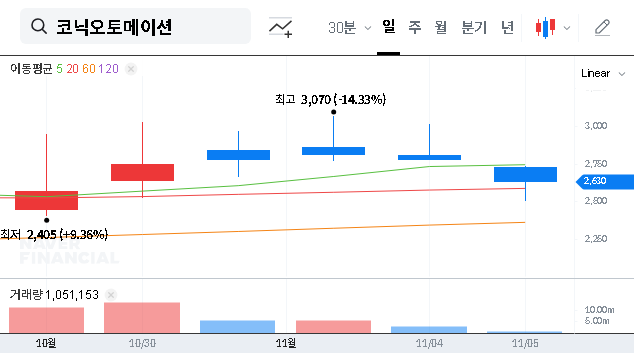
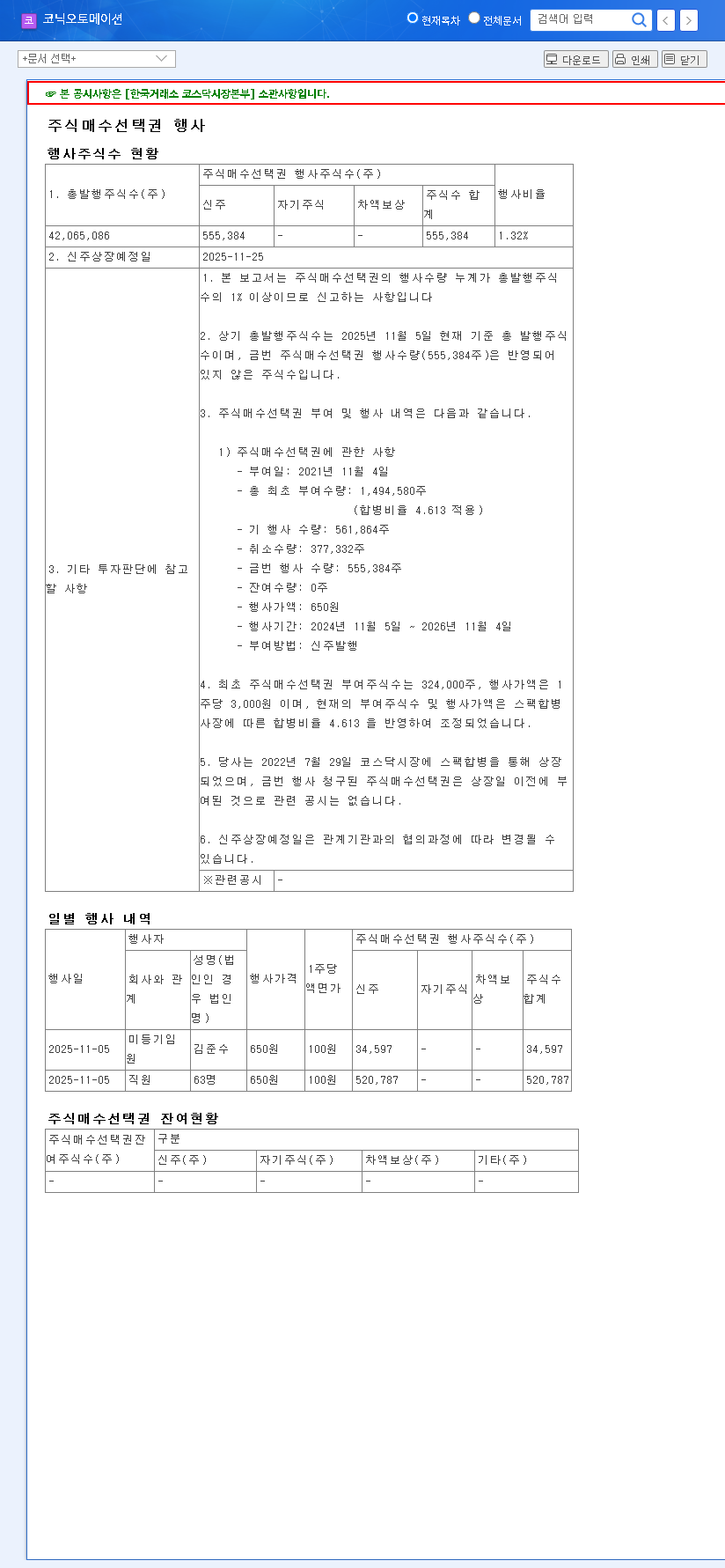
    The recent Kornic Automation stock option exercise has sent ripples through the investment community, raising critical questions about the company’s future. With the issuance of 560,000 new shares, investors are rightly concerned about potential stock dilution, especially against the backdrop of a significant revenue decline and deteriorating financial health reported in H1 2025. This comprehensive guide will dissect the implications of this corporate action, analyze the company’s fundamental strengths and weaknesses, and provide a clear investment strategy.

    Can Kornic Automation’s position in high-growth sectors like smart factories and robotics overcome its current financial headwinds? Or will the increased share count and debt burden confirm the market’s fears? Let’s delve into a detailed analysis to provide the clarity needed for informed decision-making.

    Understanding the Kornic Automation Stock Option Exercise

    On November 5, 2025, Kornic Automation Co.Ltd. officially announced the exercise of its stock options, a move detailed in their Official Disclosure. This event will introduce 560,000 new shares into the market, representing approximately 1.32% of the total outstanding shares. These new shares are scheduled for listing on November 25, 2025, at which point they will be tradable. This corporate action requires a careful look at its potential market impact.

    The Dual Impact: Dilution vs. Confidence

    A stock option exercise is a double-edged sword for investors. On one hand, it creates immediate concerns; on the other, it can be a sign of internal confidence.

    • Increased Supply and Dilution Risk: The primary concern is stock dilution, a concept where the value of existing shares is reduced by the issuance of new ones. An influx of 560,000 shares can create downward pressure on the stock price, particularly if the option exercise price is substantially lower than the market price, incentivizing immediate profit-taking by employees.
    • A Limited Signal of Confidence: Typically, employees exercising options can signal belief in a company’s long-term prospects. However, given Kornic Automation’s current financial struggles, this positive signal is heavily muted. The market is more likely to focus on the immediate financial implications rather than insider sentiment.

    A Deep Dive into Kornic Automation’s Financial Health

    To properly contextualize the Kornic Automation stock option exercise, a thorough review of the company’s fundamentals is essential. The picture is one of high potential overshadowed by alarming financial performance.

    Positive Factors: A Foothold in Future Industries

    Kornic Automation operates in several promising high-growth sectors:

    • Strategic Industry Presence: The company develops critical technology like ‘EasyCluster’ for semiconductor equipment and ‘K-LAS’ for secondary battery automation. These are not just buzzwords; they represent vital components in the global supply chain for AI, EVs, and consumer electronics.
    • Commitment to Innovation: Continued R&D investment in next-generation platforms like MetaFactory demonstrates a forward-looking strategy aimed at securing long-term growth.
    • Global Reach: Achieving the ‘5 Million Dollar Export Tower’ award is a tangible sign of progress in penetrating international markets.

    Negative Factors: Alarming Financial Red Flags

    Despite its promising technology, the recent financial reports paint a grim picture of the company’s health.

    The H1 2025 revenue of KRW 9.77 billion represents a staggering 68.1% decrease compared to the previous year. This is not a slight downturn; it is a collapse in sales that demands serious scrutiny.

    • Expanding Losses: As of H1 2025, operating losses widened to KRW 3.37 billion, signaling severe issues with operational efficiency and cost management.
    • Mounting Debt: The issuance of KRW 13 billion in convertible bonds introduces future dilution risk and increases the company’s debt burden. To learn more, see our guide on understanding convertible bonds and their impact.
    • Deteriorating Financial Stability: The net debt ratio surged from 7.47% to a concerning 48.30% in just six months. This rapid increase in leverage makes the company highly vulnerable to economic downturns and rising interest rates.

    Investment Strategy: A Cautious Path Forward

    Given the conflicting signals, a prudent investment strategy is paramount. The short-term outlook for Kornic Automation stock appears challenging, while the long-term view depends entirely on a fundamental turnaround.

    Actionable Steps for Investors

    Investment decisions regarding Kornic Automation should be approached with extreme caution. Consider the following actions:

    • Demand Proof of Recovery: Do not invest based on future promises. Wait for tangible evidence of revenue recovery and a clear path to profitability in upcoming quarterly reports.
    • Monitor for Insider Selling: Keep a close eye on trading activity following the November 25th listing of the new shares. Heavy selling would be a significant red flag.
    • Assess the Macro Environment: High interest rates and a global economic slowdown create a difficult operating environment. A conservative investment stance is wise until these macroeconomic headwinds subside.
    • Analyze Competitive Landscape: Re-evaluate Kornic’s market position. Are competitors faring better? Is the company losing market share?

    In conclusion, the Kornic Automation stock option exercise is more likely a short-term headwind than a long-term catalyst. The severe deterioration in the company’s financial health far outweighs the potential of its end markets. Until the company demonstrates a convincing and sustainable operational turnaround, investors are strongly advised to remain on the sidelines, meticulously monitoring financial reports and market conditions before committing capital.

    (391710) Kornic Automation Stock Option Exercise: A Deep Dive into Dilution Risks & Growth Potential (2025 Analysis) 관련 이미지