Tag: Equipment

  • AP Systems Secures OLED Equipment Supply Contract with China’s Govisionox: Investment Strategy Analysis

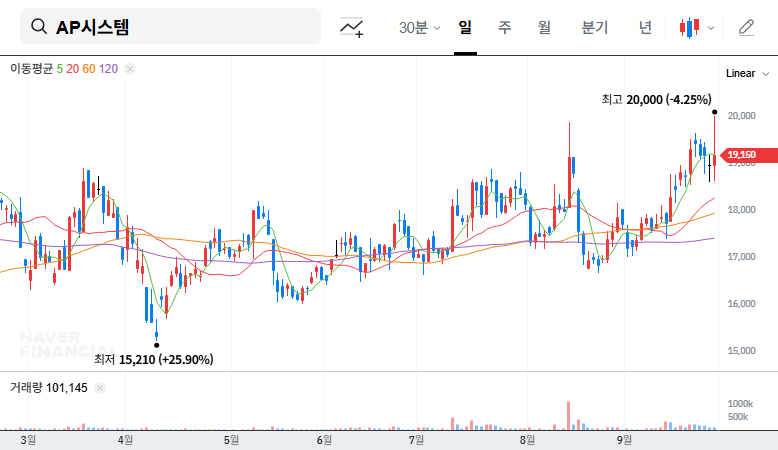
    AP Systems Secures OLED Equipment Supply Contract with China's Govisionox: Investment Strategy Analysis 대표 차트 이미지

    1. What Happened? AP Systems Signs OLED Equipment Supply Contract with Govisionox

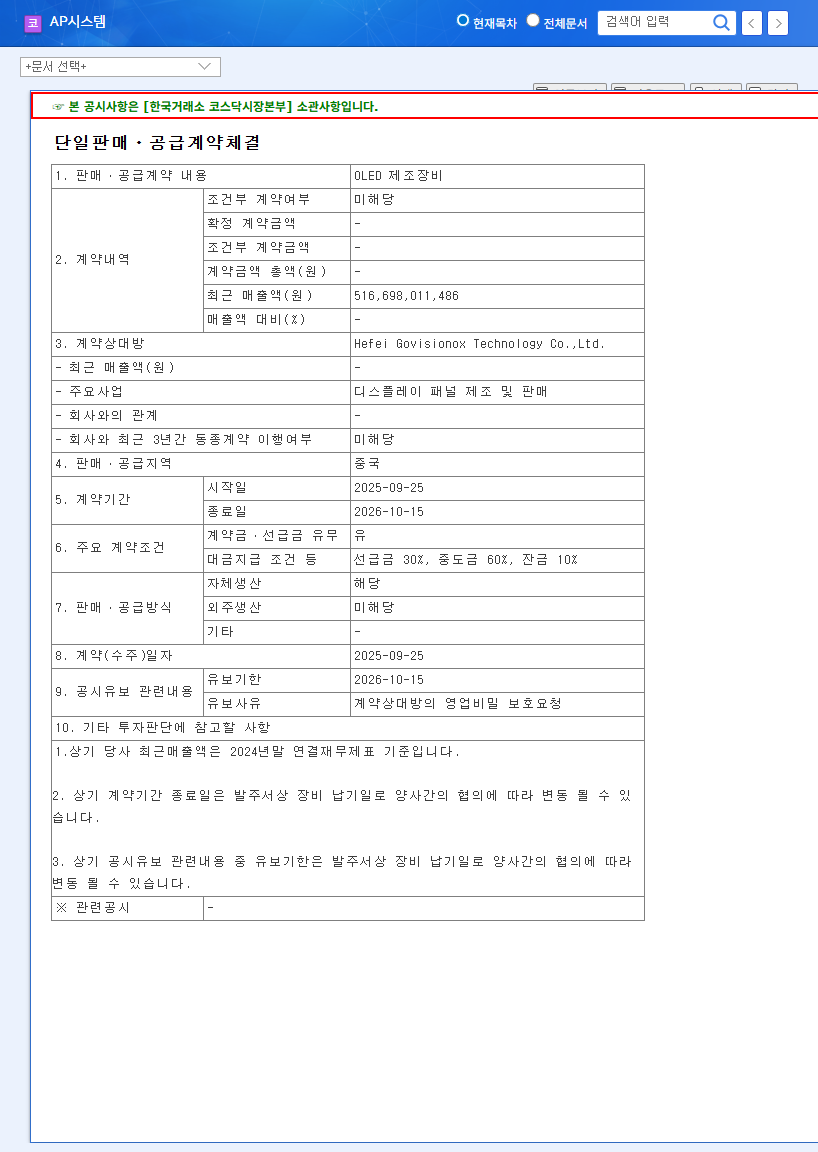
    AP Systems signed an OLED manufacturing equipment supply contract with China’s Hefei Govisionox Technology on September 25, 2025. The contract period is one year, from September 25, 2025, to October 15, 2026. This contract is part of AP Systems’ strategy to expand into the Chinese market and is expected to contribute to future sales growth.

    2. Why Is It Important? Expansion into Chinese Market and Growth Momentum for OLED Business

    This contract is expected to have several positive impacts on AP Systems. First, it secures a new customer in the Chinese market, expanding the company’s business scope and securing future growth drivers. Second, the consistent signing of contracts in the existing core business of OLED equipment demonstrates the company’s technological prowess and market competitiveness. Third, these positive factors are likely to be well-received by investors, potentially providing upward momentum for the stock price. In particular, as AP Systems focuses on securing future growth engines such as the development of HBM-related laser equipment, this contract can further accelerate its growth.

    3. So What? Coexistence of Positive Impacts and Potential Risk Factors

    However, there are also some uncertainties. The undisclosed contract amount makes it difficult to accurately predict the impact of this contract on AP Systems’ performance. Also, the impact of external factors such as geopolitical risks and US-China trade conflicts stemming from increased dependence on the Chinese market needs to be considered.

    4. What Should Investors Do? Short-term/Mid-to-long-term Investment Strategies

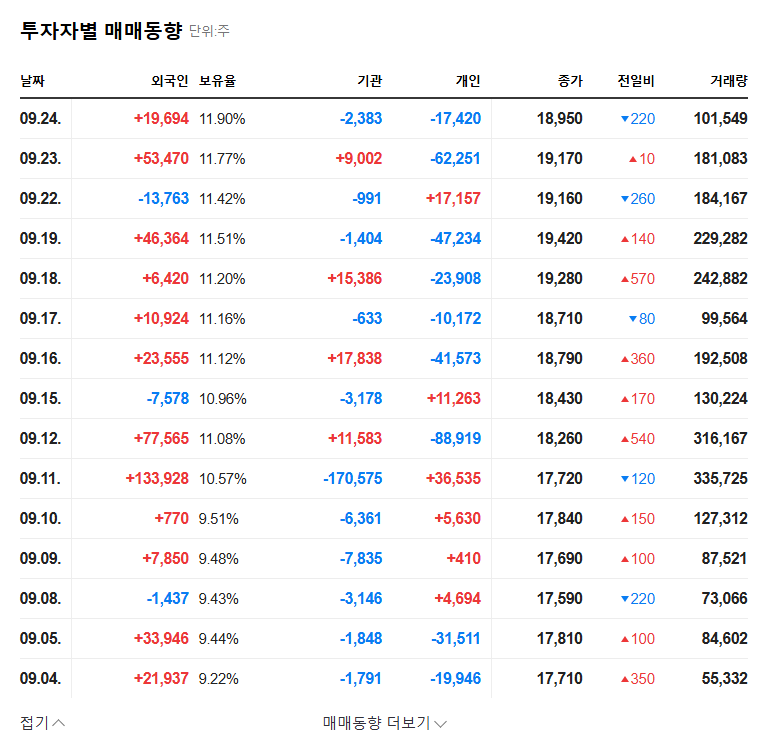
    In the short term, investors can expect upward momentum in the stock price due to the signing of the contract. However, it is important to make investment decisions after assessing the actual financial impact once the contract amount is disclosed.
    In the mid-to-long term, it is necessary to comprehensively consider AP Systems’ potential growth in HBM-related new businesses, the growth trend of the OLED market, and efforts to diversify order sources. Attention should also be paid to changes in the external environment, such as global macroeconomic variables and exchange rate volatility.

    What are AP Systems’ main businesses?

    AP Systems operates OLED, semiconductor, and secondary battery equipment businesses. It maintains stable sales, especially in the OLED equipment sector, and is also focusing investment in HBM-related semiconductor equipment and secondary battery equipment businesses.

    What kind of company is Hefei Govisionox Technology, the counterparty to this contract?

    Hefei Govisionox Technology is a display manufacturer in China.

    What is the impact of this contract on AP Systems’ stock price?

    While it may provide upward momentum for the stock price in the short term, there are also uncertainties such as the undisclosed contract amount. The mid-to-long-term impact needs to be considered comprehensively, taking into account AP Systems’ fundamentals, market conditions, and external factors.
    AP Systems Secures OLED Equipment Supply Contract with China's Govisionox: Investment Strategy Analysis 관련 이미지
    AP Systems Secures OLED Equipment Supply Contract with China's Govisionox: Investment Strategy Analysis 관련 이미지
  • Dawon Nexview Secures KRW 4.2 Billion Equipment Supply Contract: Investment Outlook


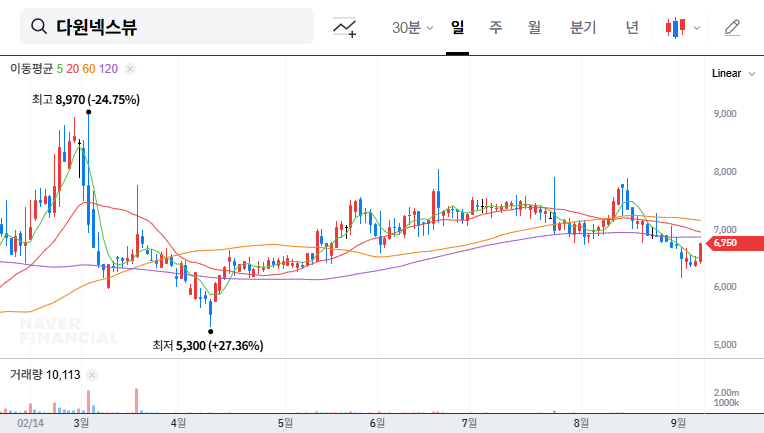
    Dawon Nexview Secures KRW 4.2 Billion Equipment Supply Contract: Investment Outlook 대표 차트 이미지


    Dawon Nexview’s KRW 4.2 Billion Equipment Supply Contract – What Happened?

    On September 4, 2025, Dawon Nexview announced a KRW 4.2 billion contract to supply pLSMB HSB equipment to a domestic Probe Card manufacturer. The contract period is three months, ending on December 31, 2025, and the supply region is South Korea.

    Why is this Contract Important? – Strengthening Core Business Competitiveness and Expected Earnings Improvement

    This contract serves as a significant testament to Dawon Nexview’s technological competitiveness in semiconductor test equipment, its core business. pLSMB, in particular, is a key technology expected to benefit from the growth of the HBM and next-generation packaging market, and this contract is expected to further strengthen its market position. The KRW 4.2 billion contract is expected to directly impact revenue growth in the second half of 2025, and the supply of high-value-added equipment is also expected to contribute to improved profitability.

    So What Happens Now? – Enhanced Financial Stability and Securing Growth Momentum

    The KRW 4.2 billion secured through this contract will strengthen the company’s cash flow and enhance its financial stability. Furthermore, establishing a cooperative relationship with a major domestic Probe Card manufacturer is expected to be an important stepping stone for increasing the likelihood of additional orders in the future.

    What Actions Should Investors Take? – Positive Investment Outlook, Continuous Monitoring Required

    In the short term, this contract is likely to act as a positive momentum for Dawon Nexview’s stock price. However, investors should continuously monitor the successful execution of the contract and whether additional orders are secured. It is also important to manage investment risks by analyzing the overall trend of the semiconductor industry and competitor trends.


    Frequently Asked Questions

    What is Dawon Nexview’s main business?

    Dawon Nexview’s main business is the manufacturing and sales of semiconductor test equipment. In particular, the pLSMB HSB equipment in this supply contract is a key technology expected to benefit from the growth of the next-generation packaging market.

    What is the size and duration of this contract?

    The contract is worth KRW 4.2 billion and runs for three months, from September 4, 2025, to December 31, 2025.

    Will this contract have a positive impact on Dawon Nexview?

    Yes, this contract is expected to positively impact Dawon Nexview’s revenue growth, profitability improvement, financial stability enhancement, and market credibility.


    Dawon Nexview Secures KRW 4.2 Billion Equipment Supply Contract: Investment Outlook 관련 이미지
    Dawon Nexview Secures KRW 4.2 Billion Equipment Supply Contract: Investment Outlook 관련 이미지


  • VM Signs ₩9 Billion Semiconductor Equipment Deal with SK Hynix: What’s Next?

    VM and SK Hynix Ink ₩9 Billion Semiconductor Equipment Deal

    VM announced on August 25, 2025, that it has secured a ₩9 billion contract to supply semiconductor manufacturing equipment to SK Hynix. The contract period runs from August 22, 2025, to October 31, 2025, spanning approximately two months.

    Implications of the Deal: Short-Term Gains and Long-Term Growth

    This contract is projected to significantly contribute to VM’s short-term revenue and profitability. The deal, equivalent to 12.81% of annual revenue, is expected to bolster the company’s financial stability. Furthermore, collaborating with a leading domestic semiconductor company like SK Hynix validates VM’s technological capabilities and credibility. This positive momentum is anticipated to generate further orders and enhance market competitiveness. Considering the growth trajectory of the semiconductor market and SK Hynix’s investment expansion, VM’s medium to long-term growth potential appears promising.

    Investment Considerations: Potential Risks Amidst Positive Outlook

    While this contract provides positive momentum for VM, investors should also be mindful of potential risk factors. The semiconductor industry is susceptible to economic fluctuations and faces intense competition. Moreover, given VM’s past financial challenges, sustained profitability and financial soundness remain crucial objectives. Investors should carefully consider these factors before making investment decisions.

    • Key Investment Points:
    • Expected short-term performance improvement due to the large-scale contract with SK Hynix
    • Medium to long-term growth potential driven by the expanding semiconductor equipment market
    • Volatility of the semiconductor industry and VM’s financial recovery trajectory

    Frequently Asked Questions

    How will this contract impact VM’s stock price?

    This contract is likely to have a positive short-term impact on the stock price. However, the stock price can fluctuate depending on various factors, including market conditions and the company’s performance.

    What is VM’s primary business?

    VM develops and manufactures semiconductor manufacturing equipment. Its main products include semiconductor etching equipment.

    What is the outlook for VM?

    Considering the growth of the semiconductor market and the strengthened partnership with SK Hynix, the medium to long-term growth outlook for VM is positive. However, it is essential to continuously monitor the volatility of the semiconductor industry and VM’s financial recovery.

  • Jusung Engineering IR Analysis: Riding the AI Wave in Semiconductor Growth? (August 2025)

    1. Jusung Engineering’s IR: What was discussed?

    On August 25, 2025, Jusung Engineering presented its 2025 first-half results and future business strategies to investors. As a semiconductor equipment company, they shared key information including opportunities arising from AI market growth and profitability changes due to increased R&D investment.

    2. Why should investors pay attention?

    Jusung Engineering possesses core technological capabilities in the semiconductor equipment sector and is expected to directly benefit from the AI market’s growth. They are also actively investing in next-generation technology development, securing future growth engines. This IR serves as an important opportunity to understand the company’s future direction and explore investment opportunities.

    3. Key IR Insights

    • 3.1 Solid sales growth, increased R&D investment

      First-half 2025 sales increased by 29.7% year-on-year, but operating profit and net profit decreased due to increased R&D investment. It’s crucial to recognize this as a strategic investment for future growth.

    • 3.2 Core Business: Semiconductor Equipment

      The core semiconductor equipment business (98.8% of sales) is expected to maintain solid growth based on its core technological competitiveness in SDP System, High-K Layer ALD, etc. Entry into the non-memory sector, driven by increased AI demand, is a notable growth point.

    • 3.3 Future Growth Drivers: Next-Generation Technology

      The competitive edge in developing next-generation semiconductor equipment, including compound semiconductors, high-k/ferroelectric materials, and Noble Metal technology, paints a bright future for Jusung Engineering. Expansion into the next-generation solar cell market using semiconductor-OLED convergence technology is also anticipated.

    • 3.4 Financial Stability

      Debt ratio and current ratio are sound, with no liquidity issues. Long-term borrowings of KRW 45 billion exist.

    4. Investor Action Plan

    To assess Jusung Engineering’s future growth potential, the following key indicators should be continuously monitored:

    • Visibility of R&D investment outcomes
    • Securing market competitiveness in next-generation technologies
    • Strategies for navigating macroeconomic and exchange rate fluctuations

    Carefully analyze IR materials and future disclosures to inform your investment strategy.

    Frequently Asked Questions

    What is Jusung Engineering’s main business?

    Jusung Engineering’s main business is manufacturing equipment for semiconductors, displays, and solar cells, with semiconductor equipment accounting for the majority of its revenue.

    What are Jusung Engineering’s future growth drivers?

    Key growth drivers include competitiveness in next-generation semiconductor equipment development (compound semiconductors, high-k/ferroelectric materials, Noble Metal technology) and expansion into the next-generation solar cell market using semiconductor-OLED convergence technology.

    What were the key takeaways from the recent IR?

    The key takeaways included the announcement of first-half 2025 results, business opportunities stemming from AI market growth, changes in profitability due to increased R&D investment, and next-generation technology development strategies.

  • Genisem Returns to Profit in H1 2025, But Sales Decline Continues: Investment Strategies?

    1. What Happened? : Genisem’s H1 2025 Financial Performance

    Genisem recorded sales of KRW 18.5 billion, operating profit of KRW 2.6 billion, and net income of KRW 1.4 billion in the first half of 2025. While the company successfully turned to profit in Q2 after a loss in Q1, sales, operating profit, and net income all decreased compared to the same period last year.

    2. Why Did This Happen? : Analysis of Performance Fluctuations

    The main reason for the decline in sales is the slowdown in the semiconductor industry, which has led to reduced investment by customer companies. On the other hand, the return to profitability is thanks to efforts to reduce fixed costs and increased sales in Q2. However, the still high inventory levels could weigh on future earnings.

    3. So, What’s Next? : Future Outlook and Investment Strategies

    Genisem is actively investing in R&D to secure future growth engines such as HBM and AI semiconductors, and is also focusing on expanding overseas markets such as Vietnam and China. However, uncertainties remain, such as the recovery of the semiconductor industry, exchange rate fluctuations, and interest rate hikes.

    • Short-term Investment Strategy: A conservative approach is necessary, closely monitoring signals of recovery in the semiconductor industry and announcements of orders/delivery plans.
    • Mid-to-Long-term Investment Strategy: Focus on the potential benefits from the growth of the HBM and AI semiconductor markets and the success of overseas market expansion strategies.

    4. What Should Investors Do? : Key Checkpoints

    Investors should continuously monitor Genisem’s future earnings improvement and the performance of its growth engine securing strategy. In particular, it is important to make investment decisions using key indicators such as semiconductor industry recovery, new equipment orders, and overseas market entry performance.

    Frequently Asked Questions

    What is Genisem’s main business?

    Genisem designs, manufactures, and sells semiconductor back-end automation equipment (Pick & Place, Inspection, Test Handler, etc.). The company has a high-value-added product lineup, including HBM Automation and EMI Shield Solutions, and focuses on customized production.

    What were Genisem’s financial results for H1 2025?

    Genisem recorded sales of KRW 18.5 billion, operating profit of KRW 2.6 billion, and net income of KRW 1.4 billion in the first half of 2025. While the company returned to profit in Q2 after a loss in Q1, sales, operating profit, and net income all decreased compared to the same period last year.

    What should investors be aware of when investing in Genisem?

    Investors should be aware of macroeconomic factors such as semiconductor industry volatility, exchange rate fluctuations, and rising interest rates, as well as changes in the competitive landscape. It is also important to continuously monitor the performance of R&D investments and overseas market expansion strategies.

  • Roche Systems’ Q2 2025 Earnings: A Deep Dive and Investment Outlook

    1. About Roche Systems

    Roche Systems specializes in manufacturing equipment for the display and semiconductor industries, gaining recognition for innovative technologies like the Laser Glass Cutting Machine (GCM).

    2. Q2 2025 Earnings Highlights

    Roche Systems reported consolidated revenue of KRW 66.5 billion (up 2.2% YoY), operating profit of KRW 10 billion (up 31.8% YoY), and net income of KRW 8.4 billion (up 71.4% YoY) for Q2 2025. Growth in the display and semiconductor segments, efficient cost management, and effective response to exchange rate fluctuations were key drivers of improved profitability.

    3. Sustained Growth: The Key Factors

    Roche Systems’ growth is fueled by continuous R&D investment and technological competitiveness. Approximately 40% of its workforce is dedicated to research, and the company is actively expanding into new businesses, including secondary batteries. A robust order backlog (KRW 101.2 billion at the end of Q2 2025) provides a stable revenue base.

    4. Investment Considerations

    Global economic volatility, exchange rate fluctuations, and increased competition are key risk factors to consider. However, given its strong fundamentals and future growth potential, Roche Systems appears to be an attractive long-term investment.

    5. Action Plan for Investors

    Investors considering Roche Systems should compare the current stock price with future growth potential and continuously monitor changes in the macroeconomic environment and competitive landscape. Diversification is crucial for managing risk.

    What is Roche Systems’ main business?

    Roche Systems develops and manufactures equipment for the display and semiconductor manufacturing industries. They are known for innovative technologies like the Laser Glass Cutting Machine (GCM).

    What were Roche Systems’ Q2 2025 financial results?

    Roche Systems reported consolidated revenue of KRW 66.5 billion, operating profit of KRW 10 billion, and net income of KRW 8.4 billion for Q2 2025. This represents a YoY increase of 2.2%, 31.8%, and 71.4% respectively.

    What are the key investment considerations for Roche Systems?

    Global economic volatility, exchange rate fluctuations, and increased competition are key risk factors to consider before investing in Roche Systems. Thorough due diligence and careful consideration are recommended.

  • STI(039440) Q2 Earnings Shock: What Investors Should Know

    1. What Happened?

    STI’s Q2 2025 earnings report revealed revenue of ₩87.1 billion, operating profit of ₩5.3 billion, and net income of ₩2.4 billion. These figures fell short of market consensus by 20%, 58%, and 73%, respectively, leading to an ‘earnings shock’.

    2. Why Did This Happen?

    While the preliminary earnings release didn’t disclose specific reasons, industry analysts speculate a combination of factors, including delays in client investments, increased competition, and rising costs. This contrasts with the company’s overall H1 2025 performance, which saw a 25.4% YoY increase in revenue and a 61.3% YoY increase in operating profit.

    3. What’s Next?

    Short-term downward pressure on the stock price is likely. However, the long-term outlook may be more positive, considering the growth trajectory of the semiconductor market and STI’s technological competitiveness. Future earnings recovery and new order wins will be crucial for the stock’s performance.

    4. What Should Investors Do?

    • Short-term investors should remain cautious and observe market trends.
    • Long-term investors should analyze whether the Q2 underperformance is a temporary setback or a structural issue and assess the potential for future earnings recovery.
    • Continuous monitoring of STI’s order backlog, new order wins, and client diversification strategy is essential.
    Q: Why did STI’s Q2 2025 earnings disappoint?

    A: The preliminary earnings release didn’t specify the reasons, but potential factors include delays in client investments, increased competition, and rising costs.

    Q: Should I invest in STI?

    A: Short-term volatility is expected, so careful consideration is advised. Long-term investment decisions should be based on the semiconductor market outlook and the company’s technological strengths.

    Q: What is the outlook for STI?

    A: Future earnings recovery, securing new orders, and client diversification will be key factors influencing STI’s future performance.