Tag: EdTech

  • (461300) i-Scream Media Stock Analysis: Self-Stock Disposal & Long-Term Growth

    (461300) i-Scream Media Stock Analysis: Self-Stock Disposal & Long-Term Growth

    A recent move by i-Scream Media CO., LTD. has sent ripples through the investment community, prompting a critical question: is the company’s latest financial maneuver a red flag or a green light for growth? The announcement of a significant i-Scream Media self-stock disposal worth 12 billion KRW has created short-term uncertainty. However, a deeper analysis reveals this could be a strategic play to fuel its long-term ambitions in the competitive EdTech landscape.

    This comprehensive i-Scream Media analysis unpacks the details of this decision, evaluates the company’s robust underlying fundamentals, and provides a clear roadmap for investors navigating the potential volatility to identify long-term opportunity.

    The Core Event: Understanding the Self-Stock Disposal

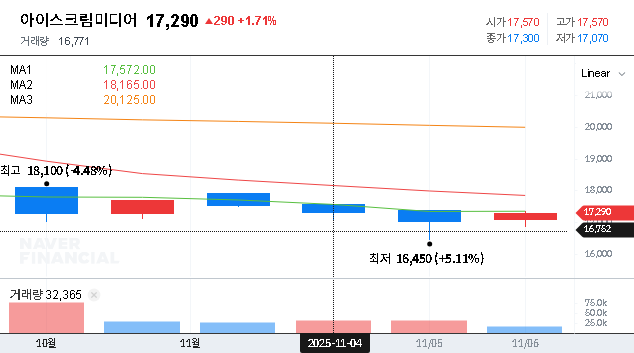
    On November 6, 2025, i-Scream Media disclosed its plan to dispose of 598,969 of its own shares, valued at approximately 12 billion KRW. This isn’t a simple stock sale. The company is using these treasury shares as the underlying asset to issue private placement Exchangeable Bonds (EB). In essence, they are raising capital by offering bonds that can be exchanged for company stock at a later date. To learn more about the mechanics of these financial instruments, you can refer to authoritative sources like Investopedia’s guide on Exchangeable Bonds. This strategic fundraising is poised to heavily influence the company’s investment capacity and future operational direction.

    While the market often reacts nervously to potential share dilution, the true test is how the raised capital is deployed. For a financially sound, debt-free company like i-Scream Media, this is likely a calculated move to accelerate growth, not a measure of desperation.

    Beyond the Headlines: A Look at i-Scream Media’s Rock-Solid Fundamentals

    Despite the market’s short-term focus on the stock disposal, the company’s core business remains exceptionally strong. An analysis of its operations reveals a multi-faceted leader in the booming EdTech investment space.

    Market Dominance Across Key Sectors

    • Education Publishing: With the 2022 revised curriculum driving textbook sales, the highly popular ‘i-Scream S’ platform ensures a high adoption rate among teachers, creating a cycle of stable, long-term revenue.
    • Commerce (i-Scream Mall): Holding a staggering 90% market share, the focus is now on improving profitability by expanding its private label products and enhancing its B2G services for educators.
    • Teacher Training: As the undisputed leader with a 36.5% market share, this segment provides stable income and is set to benefit from government policies expanding early childhood education.

    Investing in Future Growth Engines

    i-Scream Media is not resting on its laurels. The company is actively investing in next-generation technology to cement its leadership. This includes a major push into the AI Digital Textbook market, leveraging AI for personalized learning experiences. Furthermore, continuous R&D into LLMs, generative AI, and multimodal technologies—supported by collaborations with top universities like KAIST—ensures a strong competitive edge in the future of EdTech.

    An Impeccable Financial Structure

    Perhaps the most compelling fundamental is the company’s financial health. With current assets of 113.6 billion KRW and zero total borrowings, i-Scream Media boasts an incredibly low debt ratio and excellent soundness. This strong financial position means the 12 billion KRW fundraising isn’t a necessity for survival but rather an offensive move to capture more market share and innovate faster.

    Investor Playbook: Navigating the i-Scream Media Stock

    The i-Scream Media self-stock disposal introduces clear short-term risks, primarily the downward price pressure from an increased supply of shares and the potential for future share dilution when the bonds are exchanged. However, for the discerning investor, this volatility could present a buying opportunity.

    Actionable Recommendations for Investors

    • Do Your Due Diligence: The first step is to review the primary source. The company’s filing provides critical details. You can view the Official Disclosure (DART report) here.
    • Focus on Fund Utilization: The key question is how the 12 billion KRW will be used. Watch for announcements regarding investments in AI development, new business acquisitions, or platform enhancements. Effective use of capital will be a powerful long-term catalyst.
    • Adopt a Long-Term Perspective: While short-term traders may react to price fluctuations, long-term investors should focus on the fundamentals. The company’s market leadership and debt-free status provide a significant margin of safety.
    • Monitor Market Consensus: Keep an eye on reports from securities firms and financial analysts. As more information about the fund’s deployment becomes available, the market sentiment may shift.

    In conclusion, while the self-stock disposal creates near-term headwinds for the i-Scream Media stock price, it should be viewed through the lens of strategic investment. For a company with such a powerful market position and pristine balance sheet, this move is far more likely to be a stepping stone to its next phase of growth than a sign of trouble. Cautious, informed investors may find the current climate to be an attractive entry point.

    (461300) i-Scream Media Stock Analysis: Self-Stock Disposal & Long-Term Growth 관련 이미지
  • Alux Secures Investment from Timefolio: Will Drone & AI EdTech Take Off?


    Alux Secures Investment from Timefolio: Will Drone & AI EdTech Take Off? 대표 차트 이미지


    Why Did Timefolio Invest in Alux?

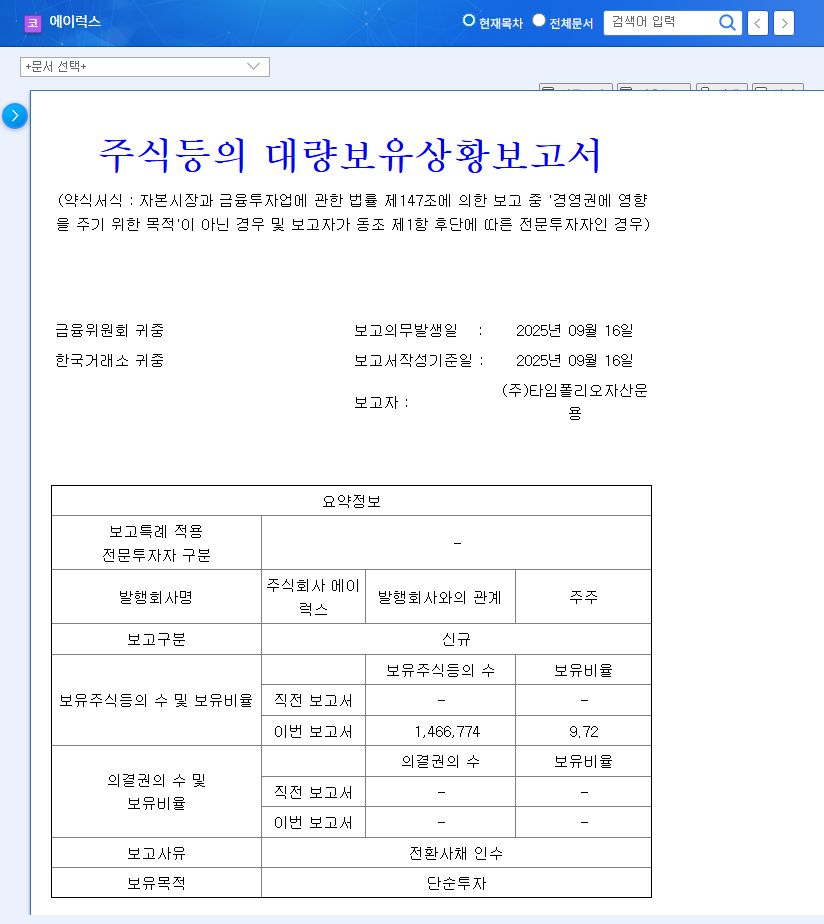
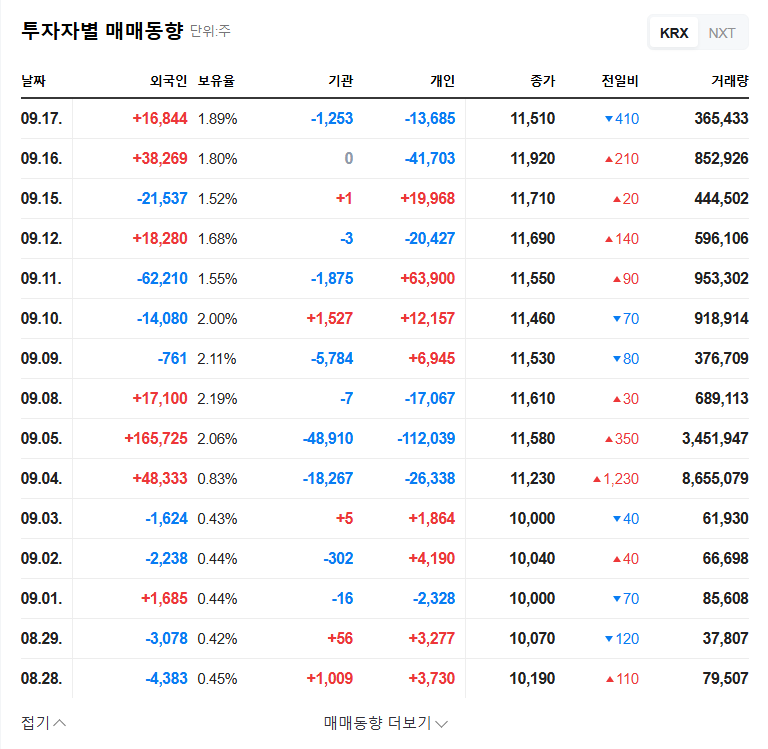
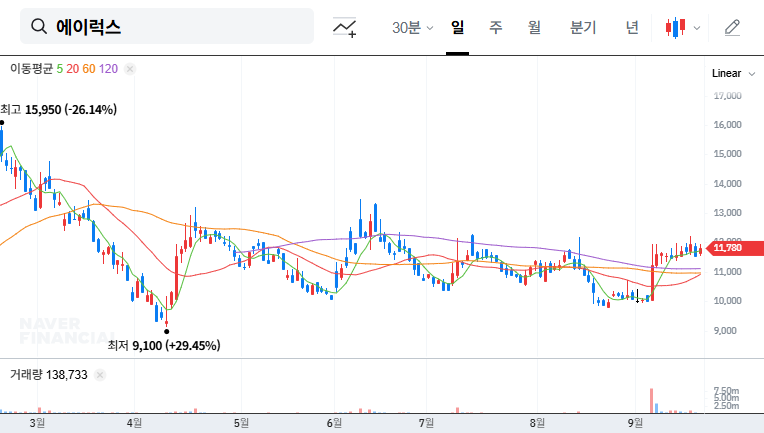
    Timefolio Asset Management announced on September 18th that it has acquired a 9.72% stake in Alux. This was achieved through the acquisition of convertible bonds, which could lead to a higher stake in the future if converted into shares. Timefolio is believed to have highly valued Alux’s growth in the drone sector and the potential of the AI edtech market. In particular, the change in the competitive landscape of the global nano-drone market due to the discontinuation of DJI Tello sales could present an opportunity for Alux. Furthermore, Timefolio seems to view Alux’s growth strategy, including its investment in Mobility One and transformation into a platform company, positively.

    What Impact Will This Investment Have on Alux?

    • Positive Impacts:
      • Increased attention from institutional investors and secured investment funds
      • Potential upward momentum in stock price
      • Enhanced credibility of growth strategy
    • Negative Impacts:
      • Potential stock dilution from convertible bonds
      • Increased short-term stock price volatility
      • Uncertainty about profitability improvement

    This investment provides Alux with an opportunity for short-term funding and strengthening growth momentum. However, investors should consider the risks associated with issuing convertible bonds, such as the possibility of stock dilution and the current operating loss.

    What Should Investors Focus On?

    • CB conversion conditions (conversion price, conversion period, etc.)
    • Alux’s earnings improvement trend
    • Competitive landscape of the drone and AI edtech market
    • Macroeconomic and overall market volatility

    Investors should make investment decisions considering the above factors comprehensively. In particular, close attention should be paid to Alux’s future earnings improvement and market conditions.


    FAQ

    Why is Timefolio’s investment in Alux significant?

    Investment from a reputable institutional investor like Timefolio is a strong signal of market confidence in Alux’s growth potential. It can not only secure short-term funding but also contribute to increasing the company’s value.

    What are the advantages of investing in convertible bonds (CBs)?

    From the company’s perspective, it allows for immediate fundraising. For investors, it provides an option to profit from stock price increases.

    What are the disadvantages of investing in convertible bonds (CBs)?

    If the convertible bonds are converted into shares, the value of existing shareholders’ equity can be diluted. Also, until conversion, it’s difficult to expect additional returns beyond the bond interest rate.

    What are the key considerations when investing in Alux?

    It is crucial to consider the CB conversion conditions, Alux’s performance, the drone and AI edtech market conditions, and macroeconomic volatility comprehensively.


    Alux Secures Investment from Timefolio: Will Drone & AI EdTech Take Off? 관련 이미지
    Alux Secures Investment from Timefolio: Will Drone & AI EdTech Take Off? 관련 이미지


  • Woongjin Thinkbig’s H1 2025 Earnings Shock: A Deep Dive and Investor Implications

    1. What Happened at Woongjin Thinkbig?

    Woongjin Thinkbig reported revenue of KRW 402.9 billion and an operating loss of KRW 7.1 billion for the first half of 2025. This represents a 53.5% year-over-year decline in revenue and a shift to an operating loss. The Q2 results, in particular, significantly missed market expectations, triggering an “earnings shock.”

    2. Why the Decline?

    The decline can be attributed to both external and internal factors. Externally, the intensifying competition in the education market and the declining student population played a significant role. Internally, revenue declines across all business segments, reduced R&D investment, and a high debt-to-equity ratio contributed to the poor performance. While investments in new businesses like AI and ARpedia are positive, short-term profitability remains uncertain.

    3. What’s Next for Woongjin Thinkbig?

    Woongjin Thinkbig is investing in new technologies like AI and AR and expanding its platform business to capitalize on the growing edtech market. However, given its current financial situation and competitive landscape, a turnaround will likely require substantial time and effort. Macroeconomic uncertainties could also negatively impact the company’s future.

    4. What Should Investors Do?

    Investors should exercise extreme caution with Woongjin Thinkbig. New investments should be put on hold, and existing investors should closely monitor the company’s turnaround plan and execution. Careful consideration of risk factors like intensifying competition, technological change, and increasing financial burden is crucial for making informed investment decisions.

    Q: How did Woongjin Thinkbig perform in H1 2025?

    A: Woongjin Thinkbig reported revenue of KRW 402.9 billion and an operating loss of KRW 7.1 billion, a significant decline compared to the same period last year.

    Q: What are the main reasons for the decline?

    A: A combination of external factors like increased competition and a declining student population, along with internal factors such as revenue declines across all business segments, reduced R&D investment, and a high debt-to-equity ratio.

    Q: What is the outlook for Woongjin Thinkbig?

    A: While investments in edtech and platform expansion are positive, the company faces significant challenges. A turnaround will require substantial time and effort, and macroeconomic uncertainties could further impact its future.

    Q: What should investors do?

    A: Investors should be extremely cautious. New investments should be postponed, and existing investors should closely monitor the company’s turnaround efforts and risk factors.

  • Visang Education Q2 Earnings Shock: What Investors Need to Know

    1. What Happened? Analyzing the Q2 Earnings Shock

    Visang Education reported Q2 2025 revenue of ₩43.9 billion, an operating loss of ₩9.5 billion, and a net loss of ₩9.1 billion, marking a significant decline in revenue and a shift from profit to loss compared to Q1. This deviates significantly from the positive trend observed in the first-half report and market expectations.

    2. Why the Downturn? Exploring the Reasons for Underperformance

    • Seasonality: Q2 is typically an off-season for the education industry, which could have contributed to the decline in revenue.
    • One-off Costs: Potential one-time expenses related to large-scale investments, such as the development of AI digital textbooks, should be considered.
    • Increased Competition: External factors, including intensified competition in the education market, policy changes, and fluctuations in consumer demand, may have also played a role.

    3. What’s Next? Investor Action Plan

    Investors should be cautious of increased stock volatility in the short term. The Q2 underperformance could put downward pressure on the stock price. From a mid-to-long-term perspective, closely monitor the following:

    • The company’s official explanation for the Q2 underperformance and its future response strategies.
    • Whether earnings will improve in the second half of the year.
    • The success of the EdTech transition strategy and the continued growth of the publishing business.

    4. Key Investment Takeaways

    Visang Education’s long-term growth hinges on its EdTech transition, the growth of its publishing business, and the improvement in profitability of its learning and teaching businesses. If the reasons for the Q2 underperformance are clarified and the second-half earnings rebound, a positive market response can be expected.

    FAQ

    Q: Why did Visang Education’s Q2 earnings disappoint?

    A: A combination of seasonality, potential one-off costs (e.g., AI digital textbook development), and increased competition likely contributed. We await the company’s official explanation.

    Q: Should I invest in Visang Education?

    A: Investors should exercise caution in the short term due to potential stock volatility. Mid-to-long-term investment decisions should be made carefully, considering the company’s fundamentals, growth strategy, and market environment.

    Q: What is the outlook for Visang Education?

    A: A positive market response is possible if the reasons for the Q2 underperformance are clarified and earnings rebound in the second half. The success of its EdTech transition strategy is a key factor.

  • Woongjin: High-Risk, High-Return? 2025 Semi-Annual Report Analysis & Investment Strategy

    1. What’s Happening with Woongjin?

    Woongjin has made aggressive moves, acquiring Woongjin Pre-Paid Life, Hyundai Medical Service, and Freed Capital, diversifying its business portfolio. The acquisition of Woongjin Pre-Paid Life, the number one company in the pre-paid funeral service market, is attracting attention as a key growth driver. Steady growth is also being seen in the IT sector (cloud, ERP, solutions) and EdTech. The company is also actively pursuing overseas market expansion.

    2. What are the Positives and Negatives?

    • Positives: Acquisition of Woongjin Pre-Paid Life, IT sector growth, EdTech competitiveness, new investments and overseas expansion.
    • Negatives: High debt-to-equity ratio of 1,335%, sluggish performance of some subsidiaries (e.g., Woongjin Playdoci), financial burden of new investments, and uncertainties in the macroeconomic environment.

    3. So, Should You Invest?

    Woongjin is a company with both growth potential and financial risks. The key to investment decisions lies in whether the growth of Woongjin Pre-Paid Life and the IT sector can offset the high debt-to-equity ratio. Careful monitoring of efforts to improve financial soundness, new business performance, and synergy creation is crucial.

    4. Action Plan for Investors

    • Evaluate Woongjin’s growth potential and financial risks in a balanced manner.
    • Continuously monitor its financial soundness improvement plans and performance.
    • Pay attention to competitor analysis and changes in market conditions.
    Q: What is the biggest investment risk with Woongjin?

    A: The extremely high debt-to-equity ratio of 1,335%. This could become a significant burden in the event of interest rate hikes or an economic slowdown.

    Q: What are Woongjin’s main growth drivers?

    A: The acquisition of Woongjin Pre-Paid Life, the leading company in the pre-paid funeral service market, and the steadily growing IT sector.

    Q: What should investors be cautious of when investing in Woongjin?

    A: Investors should continuously monitor the company’s efforts to improve its financial health, the performance of its new businesses, and the performance of its subsidiaries.

  • I-Scream Media’s H1 2025 Earnings Soar: A Leader in EdTech?

    1. About I-Scream Media

    Founded in 2002, I-Scream Media is a leading EdTech company in South Korea, dominating the elementary education market with its ‘I-Scream S’ platform. The company has built a stable growth foundation through a diversified portfolio encompassing textbook publishing, e-commerce (I-Scream Mall), and online teacher training.

    2. H1 2025 Performance Analysis: Growth Takes Center Stage

    I-Scream Media achieved outstanding results in H1 2025, reporting KRW 64.6 billion in revenue, KRW 24 billion in operating profit, and KRW 19 billion in net profit. This impressive growth is primarily attributed to increased textbook sales due to the 2022 revised curriculum and the expansion of the ‘High Store’ platform. The consistent growth in revenue and profit underscores the company’s robust fundamentals.

    3. Decoding the Success: Diversification and Innovation

    I-Scream Media’s success stems from its diversified business model and continuous innovation. The textbook publishing division secured a stable revenue base thanks to the 2022 curriculum revision. The e-commerce division (I-Scream Mall) improved profitability through expanding its private brand products. Furthermore, the online teacher training division maintains its leading position in the private teacher training market, showing consistent growth. The company’s investment in AI technology R&D also positions it well for future growth.

    4. Investor Action Plan: Focus on Future Value

    I-Scream Media possesses solid fundamentals and promising growth potential. Considering the growth of the EdTech market and the company’s innovative strategies, a positive long-term outlook is expected. However, investors should also monitor potential risks such as the declining birth rate and uncertainties surrounding the introduction of AI digital textbooks.

    What was I-Scream Media’s revenue for H1 2025?

    I-Scream Media’s revenue for H1 2025 was KRW 64.6 billion.

    What are I-Scream Media’s main business areas?

    I-Scream Media operates in textbook publishing, e-commerce (I-Scream Mall), and online teacher training.

    What is the outlook for I-Scream Media?

    I-Scream Media is expected to continue its strong growth trajectory based on its market dominance, stable revenue structure, and focus on future growth drivers.

  • JeongSang JLS Q2 Earnings Miss Estimates: Can EdTech Drive Future Growth?

    1. What Happened? Q2 Earnings Analysis

    JeongSang JLS reported Q2 2025 revenue of ₩25.2B (YoY -2%), operating profit of ₩2.3B (YoY -21%), and net income of ₩1.8B. These figures missed market estimates, suggesting potential downward pressure on the stock price.

    2. Why These Results? Analyzing the Underperformance

    The underperformance is attributed to structural challenges like the declining student population and intensifying competition in the EdTech market. Increased sales and administrative expenses also contributed to the decline in profitability.

    3. What’s Next? Investment Strategies

    Investors should be cautious of short-term stock volatility. A long-term perspective requires monitoring the company’s revenue recovery, cost efficiency, new investment outcomes, and competitiveness in the EdTech market.

    4. Investor Action Plan

    • Short-term investors: Beware of increased stock volatility; maintain a wait-and-see approach.
    • Long-term investors: Continuously monitor the growth potential of the EdTech market and the company’s ability to strengthen its competitive edge.

    Frequently Asked Questions

    What were JeongSang JLS’s Q2 results?

    The company reported revenue of ₩25.2B (YoY -2%), operating profit of ₩2.3B (YoY -21%), and net income of ₩1.8B, missing market estimates.

    What are the reasons for the underperformance?

    Key factors include the declining student population, intensifying EdTech market competition, and increased sales and administrative expenses.

    What investment strategies should be considered?

    Short-term investors should be cautious of volatility. Long-term investors should monitor revenue recovery, cost efficiency, and new investment outcomes.

  • Digital Daesung IR Analysis: Q1 Earnings Slump, What’s the Future Growth Strategy?

    1. What Happened?: Digital Daesung Faces Challenges After Weak Q1 Results

    Digital Daesung’s Q1 2025 earnings revealed a significant decline in revenue, impacted by a shrinking student population and intensifying competition in the digital education market. While operating profit saw a slight increase due to cost optimization efforts, a rise in debt ratio raised concerns about the company’s financial health.

    2. Why?: Understanding the Slump and the Importance of the IR Meeting

    As competition heats up in the digital education market, Digital Daesung faces challenges in maintaining the competitiveness of its existing business model. This IR meeting is crucial for explaining the reasons behind the weak performance and presenting key strategies for future growth.

    3. So What?: Key Takeaways from the Digital Daesung IR Meeting and Future Outlook

    • Recovery Strategy for the Elementary and Middle School Division: The company is expected to announce new business models to address the declining student population and plans to expand into the reading and 논술 education market.
    • Strengthening Competitiveness in the High School Division: Strategies to cope with intensifying online lecture price competition and plans to enhance e-learning services like Daesung Pass will be presented. Maintaining the competitiveness of the offline boarding school business is also a key topic.
    • Financial Health Improvement Plan: The company is expected to announce plans for fundraising and liquidity securing to reduce the debt ratio, along with countermeasures against rising interest expenses due to interest rate hikes.
    • Mid- to Long-Term Growth Strategy: Plans for entering new education businesses, investments in educational technology, and proactive strategies to adapt to changes in the education market may be presented.

    4. Investor Action Plan: What’s Next for Digital Daesung’s Stock Price?

    The concreteness and feasibility of the growth strategies presented in the IR meeting will significantly impact the future stock price. Investors should carefully analyze the IR content, evaluate the company’s mid- to long-term growth potential, and establish their investment strategies accordingly. Pay close attention to the financial health improvement plan and new growth engine securing strategies.

    Digital Daesung IR FAQ

    Why did Digital Daesung’s Q1 2025 earnings disappoint?

    The main reasons for the weak performance are the declining student population, intensifying competition in the digital education market, and increased price competition in online lectures.

    What was discussed in the IR meeting?

    The meeting addressed the Q1 earnings slump and presented strategies for recovery in the elementary and middle school division, strengthening competitiveness in the high school division, improving financial health, and achieving mid- to long-term growth.

    What is the outlook for Digital Daesung’s stock price after the IR meeting?

    The stock price could react positively or negatively depending on the content and persuasiveness of the growth strategies presented. The financial health improvement plan and new growth engine securing strategies are expected to have a significant impact.