Tag: DY Power

  • (210540) DY Power Stock (210540) Analysis: Decoding the NPS Stake Reduction & Future Outlook

    (210540) DY Power Stock (210540) Analysis: Decoding the NPS Stake Reduction & Future Outlook

    The recent news about the National Pension Service (NPS) reducing its stake in DY Power (210540) has sent ripples through the investment community. When a major institutional player adjusts its position, investors rightly question the motive: Is it a simple portfolio rebalancing, or a sign of underlying concerns about the DY Power stock‘s future? This comprehensive DY Power analysis goes beyond the headlines to provide clarity.

    We will dissect the NPS stake reduction, evaluate DY Power’s current financial health and business environment, and offer a strategic stock investment guide to help you make an informed decision. Let’s explore whether this event signals short-term turbulence or a hidden long-term opportunity.

    The Event: Unpacking the NPS Stake Change

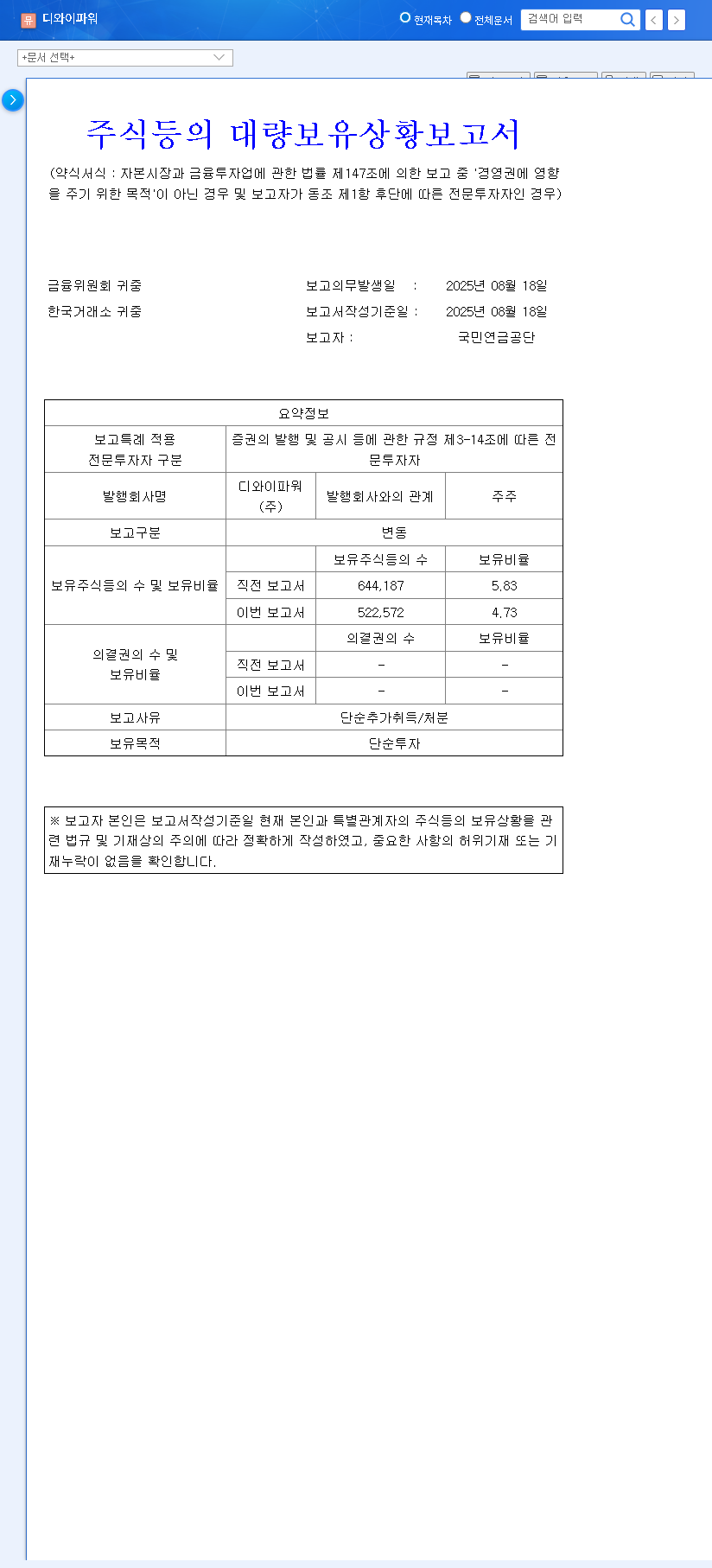
    On October 1, 2025, the National Pension Service (NPS), one of South Korea’s most influential institutional investors, filed a disclosure regarding its shareholding in DY Power (210540). The report revealed that the NPS’s ownership stake decreased by 1.1 percentage points, falling from 5.83% to 4.73%. This change means the NPS holding has now dropped below the 5% threshold, which typically reduces mandatory reporting requirements. You can view the Official Disclosure on the DART system for verification.

    Crucially, the NPS cited the purpose of this change as a ‘simple investment’ decision. This phrasing is key, as it often suggests the move is not based on a negative assessment of the company’s core fundamentals but rather on broader portfolio management strategies.

    Deep Dive into DY Power’s Fundamentals

    A single institutional trade rarely tells the whole story. A thorough DY Power analysis requires a closer look at its operational health, financial stability, and market position.

    Performance in a Challenging Market

    DY Power has faced headwinds, reporting an operating and net loss in 2024. This trend continued into the first half of 2025, with revenue of KRW 206.6 billion marking a decrease from the prior year. These results are largely attributed to a global slowdown in the construction and industrial machinery markets, which has led major clients to reduce investments and adjust inventories. This cyclical pressure is a significant factor affecting the entire hydraulic equipment industry.

    Export Strategy and R&D Commitment

    Despite market challenges, DY Power’s global focus remains a core strength. With an impressive export ratio of 80.4%, the company has strong ties with major construction equipment manufacturers in North America, Europe, and Japan. This diversification helps mitigate reliance on any single market. Furthermore, the company continues to invest in its future, maintaining R&D spending at 1.39% of sales and planning a KRW 6.58 billion facility investment in 2025 to enhance production capacity and quality.

    Rock-Solid Financial Structure

    One of the most compelling aspects of DY Power stock is the company’s robust financial health. With a debt-to-equity ratio of just 23.1%, the company maintains very low leverage. This financial prudence provides significant resilience, allowing it to weather economic downturns more effectively than highly indebted competitors. However, a negative shift in operating cash flow in H1 2025 is a point of concern that warrants close monitoring. For more on this, investors can learn about how to analyze a company’s cash flow statement for deeper insights.

    Investor Action Guide & Strategic Outlook

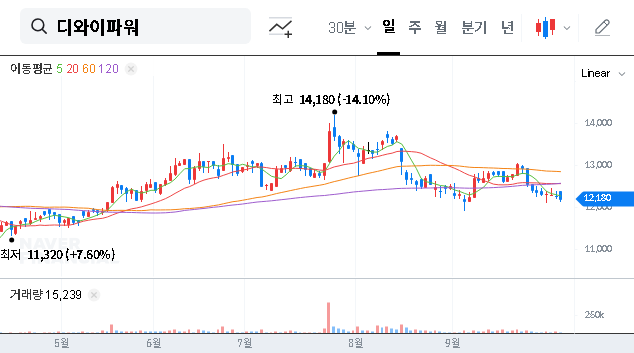
    The NPS stake reduction is likely to cause short-term price volatility for DY Power stock as the market digests the news. However, savvy investors should look beyond this single data point and focus on the fundamental drivers of value.

    Key Monitoring Points for DY Power

    Instead of overreacting to the NPS sale, concentrate on these critical business indicators:

    • Global Economic Recovery: The company’s performance is tied to the health of the global construction and industrial sectors. Track leading economic indicators and reports on global infrastructure spending.
    • New Order & Export Performance: Monitor quarterly earnings reports for signs of new order growth and success in key overseas markets.
    • Profitability Metrics: Keep an eye on raw material costs and currency exchange rates (especially EUR/KRW and USD/KRW), as they directly impact margins.
    • Cash Flow Improvement: Watch for a return to positive operating cash flow as a sign of stabilizing operations and effective liquidity management.

    Conclusion: A Long-Term Perspective is Essential

    While the NPS stake reduction may create short-term selling pressure, the ‘simple investment’ rationale suggests it is not an indictment of DY Power’s long-term viability. The company faces cyclical industry challenges, but its strong financial foundation, global customer base, and ongoing R&D efforts are significant positive factors. Investors should adopt a patient, long-term perspective, focusing on the company’s intrinsic value and its ability to capitalize on the eventual recovery of its end markets rather than being swayed by short-term market noise.
    (210540) DY Power Stock (210540) Analysis: Decoding the NPS Stake Reduction & Future Outlook 관련 이미지
  • DY Corp (013570) Q2 2025 Earnings Analysis: Navigating the Uncertain Automotive Landscape

    1. DY Corp’s Q2 Earnings: A Mix of Growth and Decline

    DY Corp reported revenue of KRW 318.3 billion, operating profit of KRW 14.4 billion, and net profit of KRW 3.6 billion in Q2 2025. While revenue slightly increased year-over-year, both operating and net profits decreased, raising concerns for investors despite decent sales growth.

    2. Core Business Segment Analysis: Automotive vs. Others

    DY Corp’s primary business segments are Auto Parts (DY Auto), Hydraulic Equipment (DY Power), and Industrial Machinery (DY Innovate). DY Auto, contributing approximately 79% of total revenue, maintains steady growth, but its high debt ratio poses a risk. DY Power and DY Innovate face challenges due to market slowdowns and intensified competition.

    • DY Auto: Despite robust sales growth, challenges remain in managing the financial burden of transitioning to electric vehicle components and improving the profitability of overseas subsidiaries.
    • DY Power: Declining sales persist due to the construction market downturn.
    • DY Innovate: Efforts are focused on securing growth momentum by expanding into North American and European markets.

    3. External Factors: Finding Opportunities Amidst Challenges

    External factors such as the global economic slowdown, exchange rate fluctuations, and rising raw material prices are putting pressure on DY Corp. However, the automotive industry’s shift towards electric vehicles presents new opportunities.

    4. Investment Strategies: Short-Term vs. Long-Term

    Short-term strategies should focus on managing exchange rate volatility and improving profitability through cost efficiency. Long-term strategies should prioritize the transition of the auto parts business to electric vehicles, overseas expansion, and the development of new growth engines.

    Frequently Asked Questions

    Why is DY Auto’s debt ratio so high?

    DY Auto’s debt ratio has increased due to investments in expanding overseas production facilities and the transition to electric vehicle components. However, the consolidated debt ratio has recently improved.

    What is the outlook for DY Corp’s future growth?

    The automotive industry’s shift towards electric vehicles presents both opportunities and threats for DY Corp. The success of its investments in this transition will determine its future growth.

    What should investors be aware of when considering investing in DY Corp?

    Investors should closely monitor exchange rate fluctuations, raw material prices, the global economic situation, and the company’s strategic responses.

  • DY Power (210540) H1 2025 Earnings Analysis: Exceeding Expectations, But Hidden Risks Remain?

    1. DY Power’s H1 2025 Performance: What Happened?

    DY Power recorded sales of KRW 206.6 billion, operating profit of KRW 17.6 billion, and net income of KRW 13.3 billion in H1 2025. While Q2 preliminary results significantly exceeded expectations (KRW 0), sales, operating profit, and net income all decreased compared to the same period last year.

    2. Analyzing the Drivers of Change: Why These Results?

    The global economic slowdown and volatility in construction equipment demand are analyzed as the main causes of the decline. With a high export ratio (80.4%), DY Power is particularly sensitive to fluctuations in overseas markets. Furthermore, the operating rate of 112.1%, while efficient, can become a burden if sustained.

    3. Positive and Negative Factors: Opportunities and Threats?

    • Positive Factors: Stable customer base (HD Hyundai Infracore, HD Hyundai Construction Equipment, Doosan Bobcat, etc.), global production bases, continuous R&D investment, healthy debt ratio (23.1%).
    • Negative Factors: Deterioration of operating cash flow (KRW -586.1 billion), exposure to exchange rate fluctuations due to high export ratio, increasing borrowing costs due to global interest rate hikes, uncertainty surrounding US tariffs.

    4. Action Plan for Investors: What Should You Do?

    Investors considering DY Power should pay close attention to the following: the timing and strength of the global construction market recovery, improvement in operating cash flow, development of new markets and products, and strengthening technological competitiveness. Careful monitoring of these factors is crucial before making investment decisions. Currently, a ‘neutral’ stance is maintained, and it is necessary to monitor future business environment changes and the company’s response strategies.

    Frequently Asked Questions

    What is DY Power’s main business?

    DY Power manufactures hydraulic cylinders for construction equipment.

    What were DY Power’s H1 2025 earnings?

    DY Power recorded sales of KRW 206.6 billion, operating profit of KRW 17.6 billion, and net income of KRW 13.3 billion. While these figures represent a year-on-year decrease, Q2 preliminary results exceeded expectations.

    What should investors be aware of when considering DY Power?

    Investors should consider risk factors such as the global economic slowdown, deteriorating operating cash flow, and exchange rate volatility. It’s also crucial to monitor the timing of the construction market recovery, working capital management efficiency, and new business development.

  • DY Power Stock Forecast: VIP Asset Management’s Stake Change – Opportunity or Risk?

    What Happened? VIP Asset Management Announces DY Power Stake Change

    VIP Asset Management recently disclosed a change of more than 1% in their DY Power stock holdings. While citing ‘simple investment’ as the reason, the market is watching closely.

    Strong Q1 Earnings, Yet a Stake Change… Why?

    DY Power reported solid Q1 2025 earnings, with increased operating and net income despite a slight dip in revenue. This makes VIP Asset Management’s stake change puzzling. While portfolio adjustments are a possibility, further selling cannot be ruled out.

    What’s Next? Impact on DY Power Stock Price

    • Positive Aspect: Strong Q1 earnings could act as a buffer against price drops.
    • Negative Aspect: The stake sale could be interpreted as a negative market signal, increasing selling pressure.

    The future stock price will likely depend on further stake changes by VIP Asset Management and overall market reaction.

    Investor Action Plan: What Should You Do?

    The current investment recommendation is ‘Neutral’ due to the conflicting signals of positive fundamentals and a potentially negative event. Investors should consider the following:

    • Monitor VIP Asset Management for further stake change reports.
    • Analyze the impact of macroeconomic indicators on DY Power’s performance and business environment.
    • Track future new orders and overseas market performance.

    Frequently Asked Questions (FAQ)

    Why did VIP Asset Management change their stake in DY Power?

    Officially, the reason given was ‘simple investment,’ but the exact reason remains unclear. Possibilities include portfolio adjustments.

    What is the outlook for DY Power’s stock price?

    The outlook is currently uncertain and depends on several factors, including further stake changes by VIP Asset Management, macroeconomic conditions, and the company’s future earnings.

    What should investors pay attention to?

    Investors should closely monitor further stake change reports from VIP Asset Management, changes in macroeconomic indicators, and DY Power’s future earnings performance.