Tag: Dentium

  • (145720) DENTIUM Q3 2025 Earnings Miss: Investment Strategy & Stock Outlook

    (145720) DENTIUM Q3 2025 Earnings Miss: Investment Strategy & Stock Outlook

    The latest DENTIUM Q3 2025 earnings report has sent ripples through the investment community, signaling a significant ‘earnings shock.’ The dental implant specialist’s preliminary results for the third quarter of 2025 fell drastically below market consensus, raising critical questions for current and prospective shareholders. Is this a temporary setback, or does it point to a fundamental shift in DENTIUM’s growth story? This comprehensive analysis will dissect the financial data, explore the underlying causes, and provide a clear DENTIUM investment strategy to navigate the path forward.

    Investors are now faced with a crucial decision: how to react to disappointing performance without letting short-term market volatility dictate long-term financial goals. We’re here to provide the clarity you need.

    Breaking Down the DENTIUM Q3 2025 Earnings Report

    The numbers from the preliminary DENTIUM earnings report for Q3 2025 were stark. The company posted revenues of 78.2 billion KRW, an operating profit of 12.5 billion KRW, and a net income of 4.0 billion KRW. These figures represent a significant miss compared to market expectations, which were pegged at 91.2B KRW, 19.4B KRW, and 12.5B KRW, respectively. This translates to performance being 14% below revenue forecasts, 36% below operating profit forecasts, and a staggering 68% below net income expectations.

    When compared to the same period last year (Q3 2024), the decline in both revenue and operating profit is even more concerning for investors, indicating a potential reversal of its strong growth trajectory. The sharp contraction in both operating and net profit margins further exacerbates these worries. For investors looking for the official numbers, the filing can be found directly from the source. Official Disclosure: Click to view DART report.

    Why the Underperformance? A Fundamental Analysis

    To formulate an effective DENTIUM investment strategy, we must understand the root causes of this slump. The issues appear to be multi-faceted, stemming from both internal operational challenges and external market pressures.

    Key Challenges and Headwinds

    • Decreased Production Efficiency: A critical red flag is the declining utilization rate of the Gwanggyo plant. It has fallen from a healthy 87.1% in 2023 to just 54.9% in the first half of 2025. This suggests significant operational issues, leading to higher fixed costs per unit and a potential inventory buildup.
    • Uncertainty in New Ventures: The strategic pivot into the Solid Oxide Fuel Cell (SOFC) business is a long-term play, but it introduces short-term uncertainty. The path to commercialization and profitability is long and subject to regulatory and economic variables, which may be weighing on investor confidence.
    • Currency Fluctuations: With over 80% of its sales coming from overseas, DENTIUM is highly exposed to exchange rate volatility. While a strong USD can be beneficial, sudden shifts in the Won, Euro, or Chinese Yuan can directly impact profitability.

    Core Strengths and Long-Term Drivers

    Despite the concerning quarter, a holistic DENTIUM stock analysis reveals that the company’s foundational strengths remain intact.

    • Dominant Core Business: The dental implant segment, which constitutes 88% of revenue, continues to benefit from global trends like aging populations and increasing dental health awareness. Its expansive network across 70 countries, particularly its strong foothold in the high-growth Chinese market, provides a stable base.
    • Digital Dentistry Expansion: DENTIUM’s focus on digital dentistry, including CBCT scanners and CAD/CAM solutions, positions it well to capture future market share. This high-tech segment offers higher margins and creates a sticky ecosystem for its customers. For more on this trend, see our analysis of the digital dentistry market.
    • Shareholder-Friendly Policies: The company’s plan to cancel a significant portion of its treasury shares over three years is a clear positive for shareholder value, aiming to increase earnings per share and support the stock price over the long term.

    A Prudent DENTIUM Investment Strategy for 2025

    Given the conflicting signals, a balanced and cautious approach is warranted. The market’s short-term reaction is likely to be negative, with increased selling pressure and a potential stock price correction. However, long-term investors should look beyond the immediate noise. For further reading on investment principles, Investopedia offers excellent resources on fundamental analysis.

    Short-Term Outlook: Caution is Key

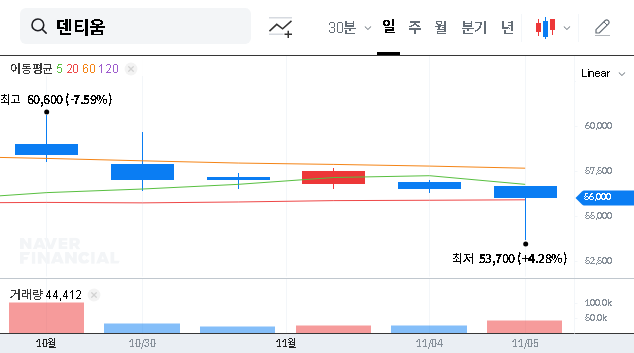
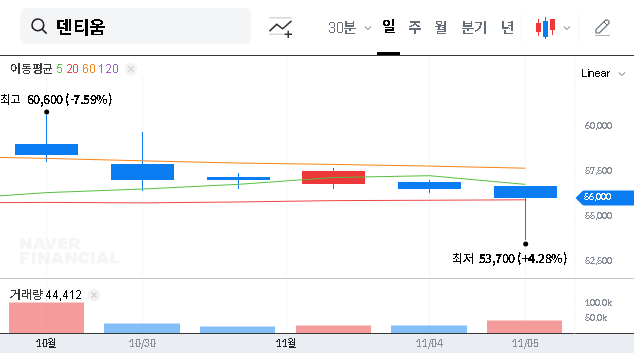
    In the immediate aftermath of the DENTIUM Q3 2025 earnings release, a defensive stance is advisable. While a sharp drop might present a ‘buy the dip’ opportunity, it’s prudent to wait for signs of stabilization and a clear explanation from management regarding the operational issues before committing new capital.

    Mid-to-Long-Term Outlook: Watchful Optimism

    The long-term investment thesis hinges on management’s ability to address the production inefficiencies and provide a clear roadmap for future growth. The core business remains strong, but investors will need reassurance. Key points to monitor in upcoming quarters include:

    • Recovery of the Gwanggyo plant’s utilization rate.
    • Performance trends in key overseas markets, especially China.
    • Tangible progress and clear financial projections for the new SOFC energy business.

    In conclusion, while the Q3 earnings shock is a significant concern that warrants immediate caution, it doesn’t necessarily invalidate DENTIUM’s long-term potential. A ‘Neutral’ rating is appropriate for now. The coming months will be crucial in determining whether this quarter was an anomaly or the beginning of a more challenging chapter for the company.
    (145720) DENTIUM Q3 2025 Earnings Miss: Investment Strategy & Stock Outlook 관련 이미지
  • (145720) DENTIUM Q3 2025 IR: A Deep Dive Investment Analysis for Investors

    (145720) DENTIUM Q3 2025 IR: A Deep Dive Investment Analysis for Investors

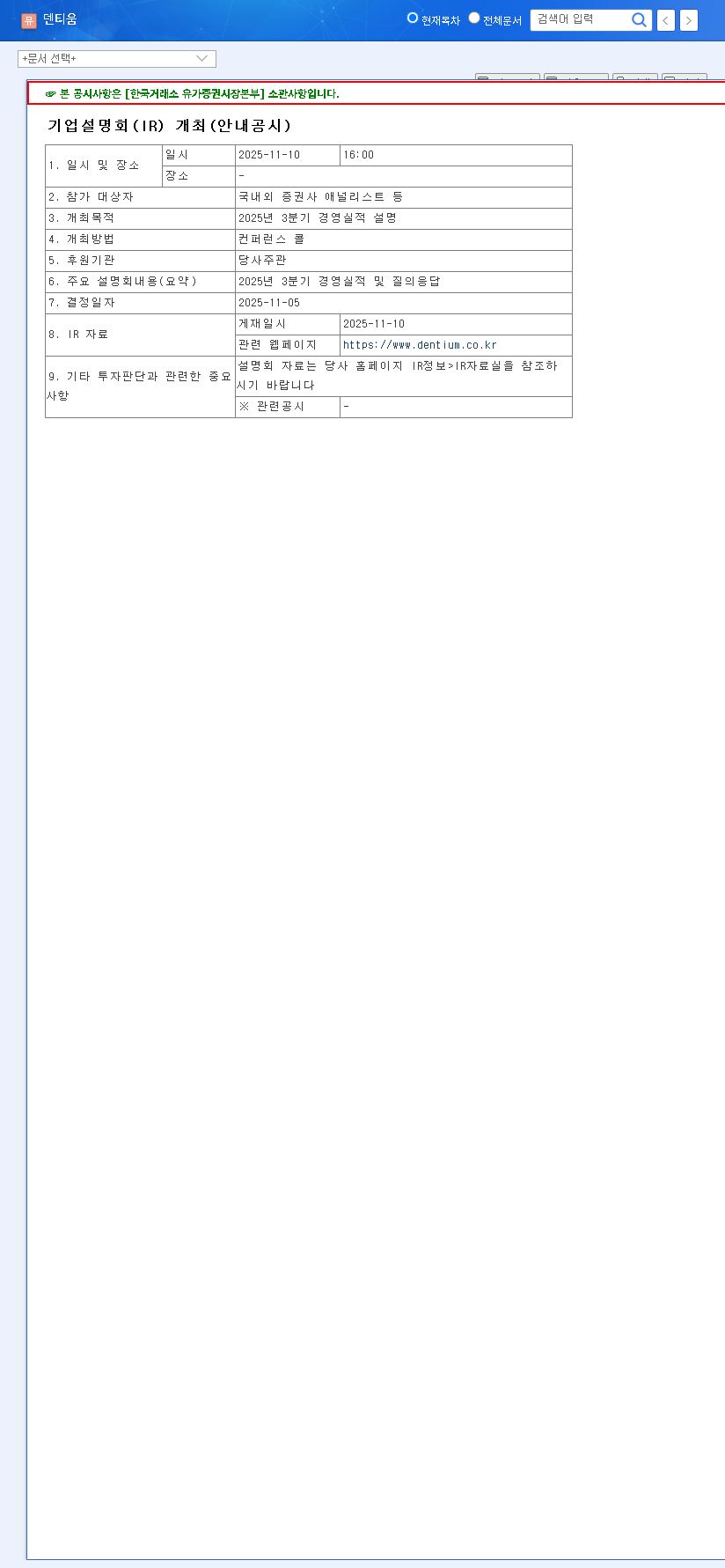
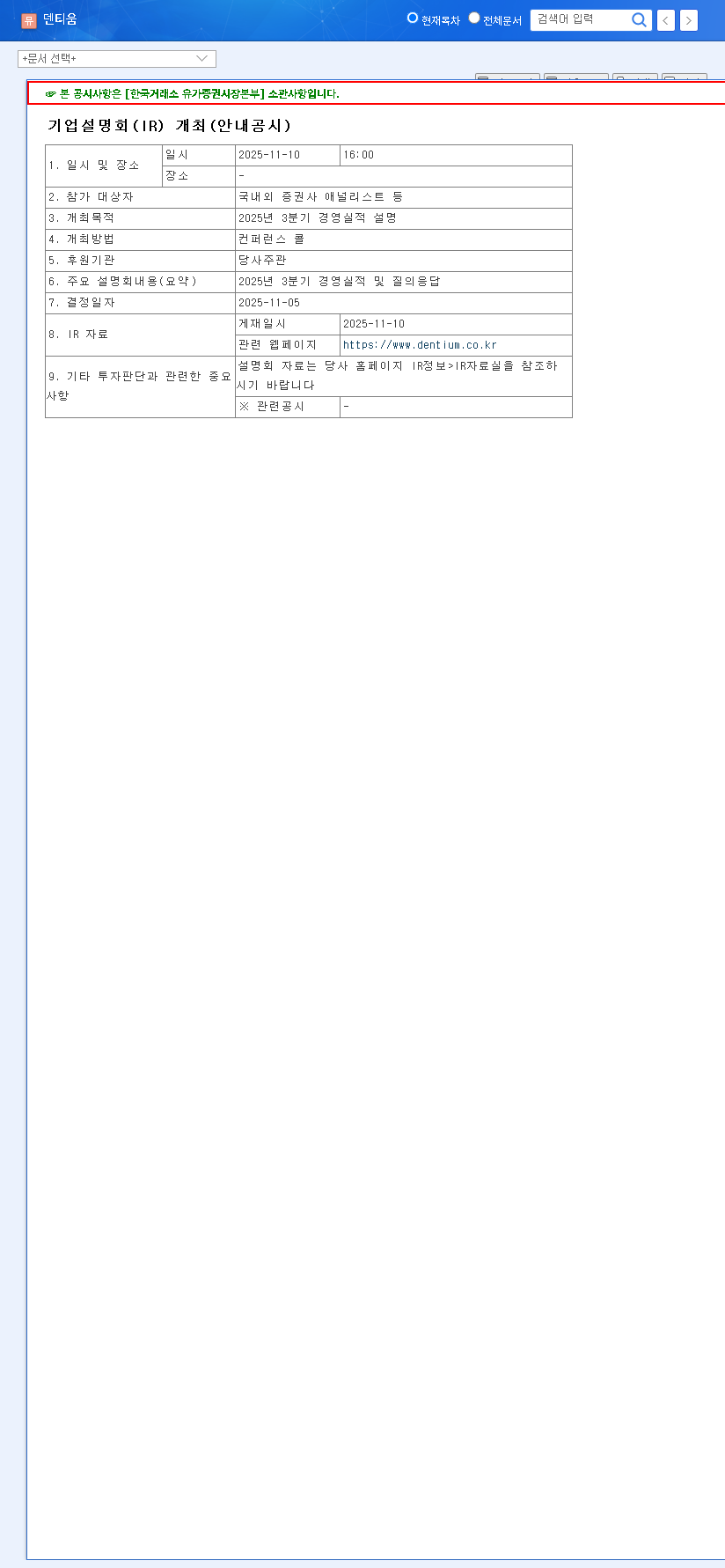
    The upcoming DENTIUM Q3 2025 IR, scheduled for November 10, 2025, is more than just a financial update; it’s a critical inflection point for the company and its investors. As a leading force in the global dental implant market, DENTIUM is navigating a complex landscape of declining profitability, significant debt, and currency fluctuations. This event will be the leadership’s chance to restore confidence and outline a clear path forward. This comprehensive DENTIUM investment analysis will break down the company’s fundamentals, the key challenges, potential growth catalysts, and the essential questions investors should be asking. This crucial information is based on the company’s official filings. (Official Disclosure)

    A Look Under the Hood: DENTIUM’s Core Fundamentals

    To understand the significance of the upcoming IR, we must first assess DENTIUM’s foundational strengths and weaknesses as of the first half of 2025.

    Market Position and Global Reach

    With a market capitalization of 619.9 billion KRW, DENTIUM is a heavyweight in the dental industry. Its business is built on several key pillars:

    • Core Business Focus: Dental implants are the lifeblood of the company, accounting for 88% of total revenue. This focus is augmented by sales of digital equipment like CBCT scanners (2%) and biomaterials (10%), positioning DENTIUM as a comprehensive ‘Total Solution’ provider.
    • Export-Driven Growth: While holding a strong #2 position in its domestic Korean market (approx. 20% share), the company’s future is global. A staggering 80% of its revenue originates from overseas sales across a network spanning over 70 countries.
    • Chinese Market Powerhouse: DENTIUM has a particularly strong foothold in the Chinese market, a region projected for 20% average annual growth. Its established local network there is a significant competitive advantage. More details can be found in our analysis of trends in the Asian dental market.

    Financial Health Snapshot (H1 2025)

    The DENTIUM financials paint a mixed picture that sets the stage for the Q3 IR:

    • Revenue vs. Profit: Revenue saw modest growth to 159.087 billion KRW, but operating profit fell to 25.124 billion KRW, signaling a troubling decline in profitability.
    • Debt Burden: While the debt-to-equity ratio is a manageable 60.39%, the absolute value of borrowings is high at 265.153 billion KRW. This poses a significant risk of increased financial costs in a rising interest rate environment.
    • Currency Exposure: With significant transactions in USD, EUR, and CNH, DENTIUM is highly exposed to foreign exchange volatility. A mere 10% change in exchange rates could swing profits or losses by over 16 billion KRW.

    Navigating Headwinds: Key Challenges for DENTIUM Stock

    The DENTIUM Q3 2025 IR must directly address the structural issues that have been weighing on investor sentiment and the DENTIUM stock price.

    The core challenge for DENTIUM isn’t its top-line growth, but its ability to convert that revenue into sustainable profit while managing significant financial and currency risks. The Q3 IR is a referendum on management’s strategy to solve this puzzle.

    If the sluggish performance seen in Q2 was due to temporary factors, the market may react positively. However, if the IR reveals deeper, structural problems—such as persistently high raw material costs or increased SG&A expenses from new ventures—the negative impact could be prolonged. The uncertainty around the new Solid Oxide Fuel Cell (SOFC) business, which requires heavy initial investment, further complicates the profitability outlook.

    Charting the Future: DENTIUM’s Growth Engines

    Despite the challenges, DENTIUM has powerful growth levers. The global dental implant market is expanding, driven by aging populations and the rise of digital dentistry. As a major player, DENTIUM is well-positioned to capitalize on this trend. According to market analysis from sources like Bloomberg, this sector shows robust long-term potential.

    Key Points to Watch in the IR Presentation

    • Q3 Performance Metrics: Is there a demonstrable recovery from Q2? The key metric will be sales volume and margin recovery in the Chinese market.
    • Profitability Strategy: Investors need a clear, credible plan to combat declining operating margins. This could include cost-cutting measures, price adjustments, or a shift toward higher-value products.
    • SOFC Business Roadmap: Vague promises are not enough. The company must provide specific timelines, investment details, and realistic profit generation forecasts for this new venture.
    • FX Risk Management: A transparent explanation of the company’s hedging strategies and other measures to mitigate currency risk is non-negotiable.

    Conclusion & Investment Strategy

    The DENTIUM Q3 2025 IR is a pivotal event that will likely dictate the stock’s direction for the coming months. The investment decision hinges on the clarity and credibility of the information presented.

    Positive Scenario (Bull Case): If DENTIUM reports strong Q3 results, particularly from overseas markets, and provides a convincing strategy for margin improvement and risk management, the stock could see significant upward momentum.

    Negative Scenario (Bear Case): If Q3 performance remains weak and management fails to offer clear solutions to the pressing challenges, investor confidence will likely erode, putting downward pressure on the stock price.

    Ultimately, a cautious approach is warranted. Investors should scrutinize the IR announcements, focusing on management’s ability to control costs, navigate global markets, and execute on the promise of its new ventures.

    Frequently Asked Questions (FAQ)

    Q1: What are the main risks for DENTIUM investors?

    The key risks are declining profitability, a high debt load that could become more expensive if interest rates rise, and significant exposure to foreign exchange rate volatility due to its large percentage of overseas sales.

    Q2: What is DENTIUM’s position in the dental implant market?

    DENTIUM is a major global player, holding the #2 market share in South Korea and generating 80% of its revenue from international sales. It is particularly strong in the high-growth Chinese market.

    Q3: What is the SOFC business and why is it important?

    The SOFC (Solid Oxide Fuel Cell) business is DENTIUM’s venture into a new high-tech energy sector to secure future growth. However, it requires significant upfront investment and its path to profitability is a key point of uncertainty that investors will be watching closely during the Q3 2025 IR.

    (145720) DENTIUM Q3 2025 IR: A Deep Dive Investment Analysis for Investors 관련 이미지
  • Dentium Announces 22% Share Buyback: What’s Next for Investors?

    1. Dentium’s Share Buyback: What’s Happening?

    Dentium will buy back all of its treasury shares (22.09%) over three years, starting in 2026. This reduces the number of outstanding shares, increasing the value per share and directly benefiting shareholders.

    2. Why the Buyback?

    The primary goal is to enhance shareholder value. Share buybacks increase earnings per share (EPS) and book value per share (BPS), potentially driving up the stock price. It can also signal confidence in the company’s growth prospects.

    3. Impact on Dentium’s Stock Price?

    • Positive Impacts:
      • Increased EPS and BPS → Potential stock price appreciation
      • Improved investor sentiment and positive perception of shareholder return policy
    • Negative/Risk Factors:
      • Decrease in total equity
      • Time lag until completion and potential market shifts

    While buybacks are generally positive, consider Dentium’s fundamentals, market conditions, and competitive landscape.

    4. What Should Investors Do?

    Look beyond short-term price fluctuations. Analyze Dentium’s fundamentals (financials, earnings, new business performance) and the overall market environment. Monitor the buyback progress, earnings trends, and advancements in new businesses (like hydrogen fuel cells).

    Frequently Asked Questions

    When will the share buyback take place?

    It will be carried out gradually over three years, from 2026 to 2028.

    Is Dentium’s stock price guaranteed to rise because of the buyback?

    While a buyback is a positive sign, stock prices are influenced by various factors like market conditions and company performance, so a price increase isn’t guaranteed.

    What other businesses is Dentium involved in?

    Besides implants, Dentium is pursuing digital dentistry solutions and hydrogen fuel cell technology.

  • Dentium’s H1 2025 Earnings Disappoint: What’s Next for Investors?

    1. What Happened? Dentium’s H1 2025 Performance Review

    While Dentium achieved a total revenue of ₩159 billion in H1 2025, Q2 results significantly missed market projections. Revenue, operating profit, and net profit all fell short, with net profit particularly concerning at only 31% of the expected figure.

    2. Why the Underperformance? Key Factors to Consider

    • Missed Expectations: Q2’s weak performance significantly dampened market sentiment.
    • Currency Volatility: With substantial international revenue, Dentium is highly susceptible to exchange rate fluctuations.
    • Rising Interest Rates and Debt: High interest rates increase Dentium’s debt burden, impacting profitability.
    • New Business Investment Strain: Investments in the SOFC business are creating short-term financial pressure.
    • Increased Inventory: Rising inventory levels suggest potential sales slowdowns or overstocking, highlighting the need for improved inventory management.

    3. What’s Next? Outlook and Investment Strategy

    Short-term headwinds include the earnings miss and macroeconomic uncertainties. However, the continued growth of the dental business and the potential of the new SOFC business offer long-term growth drivers. Investors should focus on:

    • Careful analysis of the reasons behind the underperformance
    • Dentium’s strategy for mitigating currency and interest rate risks
    • Monitoring progress on the new SOFC business
    • Assessing inventory management efficiency

    4. Investor Action Plan

    Investors should avoid overreacting to short-term market fluctuations and focus on Dentium’s fundamentals and long-term growth potential. Continuous monitoring of company announcements and disclosures, along with seeking expert advice, is crucial.

    Frequently Asked Questions (FAQ)

    What is Dentium’s core business?

    Dentium is a global dental company that develops, manufactures, and sells dental implants and related products.

    What was the primary reason for the recent earnings disappointment?

    A combination of factors contributed, including Q2 results missing market expectations, currency volatility, rising interest rates, new business investment burdens, and increased inventory levels.

    What is the outlook for Dentium?

    While short-term uncertainty exists, Dentium’s growing dental business and the potential of its new SOFC business suggest positive long-term growth prospects.

    What should investors pay attention to?

    Investors should carefully consider the reasons behind the underperformance, Dentium’s strategy for managing currency and interest rate risks, the progress of its new SOFC business, and its inventory management efficiency.