Tag: Delisting Risk

  • (377460) Winia Aid Delisting Averted? Analyzing the 10-Month Improvement Period for Stock (377460)

    (377460) Winia Aid Delisting Averted? Analyzing the 10-Month Improvement Period for Stock (377460)

    The ongoing saga of Winia Aid (377460) and its potential delisting from the stock market has taken a significant turn. For investors watching the suspended stock, a recent decision has provided a glimmer of hope. The Korea Exchange’s Corporate Review Committee has granted the company a 10-month improvement period, temporarily halting the immediate Winia Aid delisting threat. This decision raises a critical question: is this a genuine lifeline for a corporate turnaround, or merely a delay of the inevitable? This comprehensive analysis will explore the implications of this new development, the company’s deep-seated financial issues, and what investors should monitor over the coming months.

    A Decisive Moment: The 10-Month Improvement Period

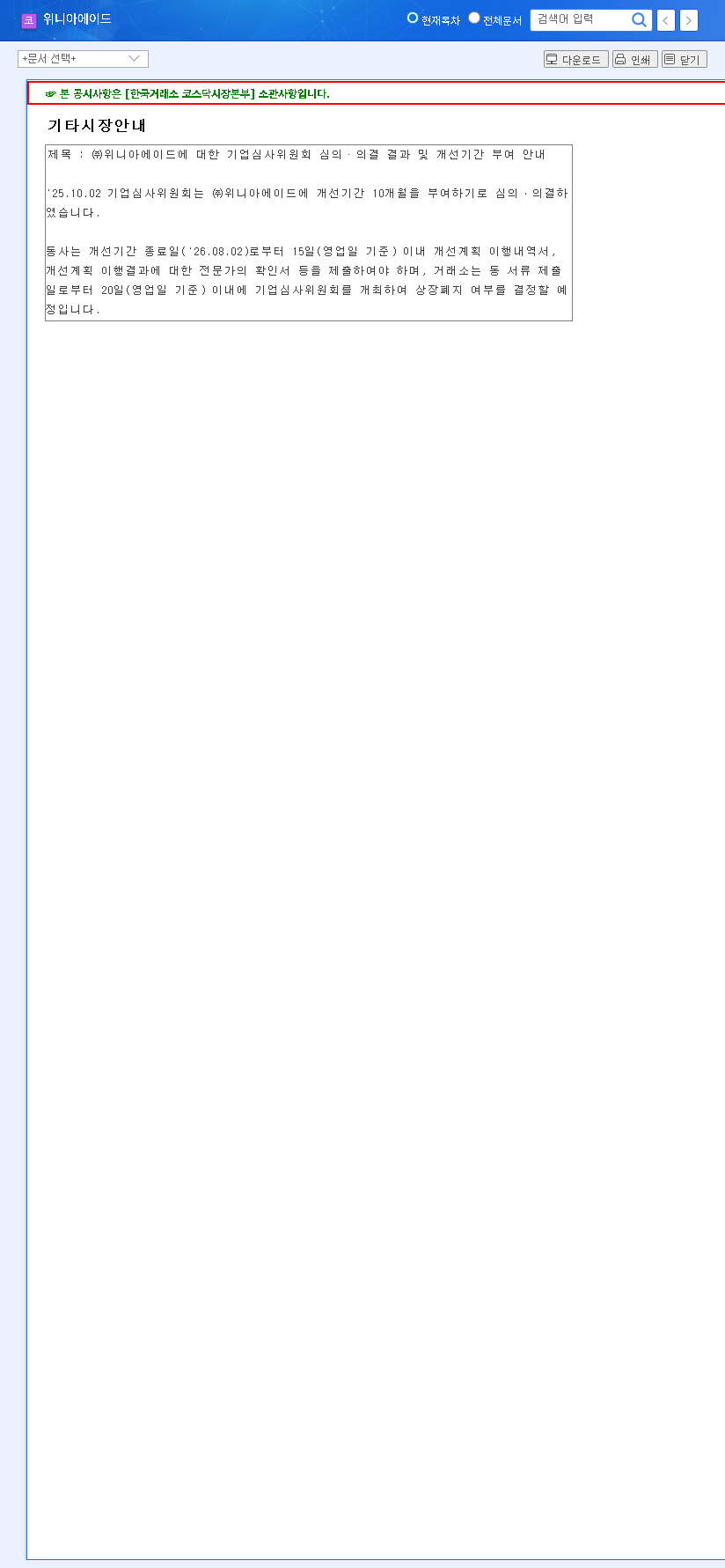
    On October 2, 2025, the Korea Exchange made its long-awaited resolution. As detailed in the Official Disclosure (DART), Winia Aid was granted a crucial Winia Aid improvement period lasting 10 months. This means the company has until August 2, 2026, to implement a comprehensive recovery plan. Following this period, Winia Aid must submit a detailed report on its progress, which will be the basis for the Exchange’s final verdict on its listing status. This provides a structured path forward but keeps the stakes incredibly high.

    The Core of the Crisis: Financial Deterioration and Past Failures

    Understanding the Winia Aid Delisting Risk

    Winia Aid’s troubles are not new. The company’s stock trading has long been suspended due to severe issues, most notably the submission of an audit report with a ‘disclaimer of opinion’. In the world of finance, this is a major red flag, indicating that auditors could not obtain sufficient evidence to form an opinion on the company’s financial statements. This, combined with persistent operational losses, pushed the Winia Aid stock to the brink of delisting.

    The December 2024 business report painted a grim picture: a staggering debt-to-equity ratio of 909.2% and a fragile current ratio of just 26.1%. Sales had plummeted by 57.6% year-over-year, and the company posted a significant operating loss. These figures highlight a company in deep financial distress, making the path to recovery a monumental challenge.

    Rehabilitation and a New Beginning?

    In response to the crisis, Winia Aid initiated rehabilitation proceedings in late 2023. A pivotal step came in August 2025 with the confirmation of its acquisition by the UAMCO-Hyundai Rental Care consortium. This M&A process introduced new leadership and the potential for a capital injection, signaling a fundamental shift in the company’s structure. The success of this corporate rehabilitation now hinges entirely on the new management’s ability to execute a viable turnaround strategy.

    The 10-month improvement period is not a guarantee of success, but rather a final opportunity. The new management’s execution over this period will be the sole determinant of Winia Aid’s future.

    Investment Implications: A High-Risk, High-Stakes Scenario

    For current and potential investors, the situation remains precarious. While the Winia Aid improvement period is a positive development that removes immediate delisting risk, the underlying fundamentals are still weak. The path to maintaining its listing requires tangible proof of recovery. For more information on general delisting procedures, investors can consult authoritative resources like the Korea Exchange (KRX) official guidelines.

    Key Factors to Monitor

    Navigating this period requires careful observation. Investors should focus on the following critical areas:

    • The Improvement Plan’s Viability: The company must present a clear, actionable plan. Vague promises won’t suffice; it needs detailed strategies for improving financial health, boosting profitability, and strengthening its core business.
    • New Management’s Performance: The UAMCO-Hyundai Rental Care consortium’s expertise will be under a microscope. Their ability to steer the company away from past failures and build a sustainable model is paramount.
    • Tangible Financial Turnaround: Monitor quarterly reports for concrete signs of improvement. Look for reduced debt, positive cash flow, and revenue growth. These metrics will be the ultimate proof of recovery.
    • Communication and Transparency: How the company communicates its progress to the market will be crucial for rebuilding trust. Regular, transparent updates are a must.

    In conclusion, while the threat of an immediate Winia Aid delisting has been paused, the journey ahead is arduous. This is a chance to restart, not a guaranteed revival. For a deeper dive into the mechanics of such situations, you can read our guide on understanding corporate rehabilitation processes.

    Frequently Asked Questions (FAQ)

    Q1: What does the 10-month improvement period mean for Winia Aid (377460)?

    It is a grace period granted by the Korea Exchange for Winia Aid to rectify the issues that led to its delisting risk. The company must execute a recovery plan to improve its financial and operational health. At the end of the period, the Exchange will review its progress to make a final decision on its listing status.

    Q2: When can trading of Winia Aid stock resume?

    There is no set date for trading resumption. It can only occur if Winia Aid successfully completes its improvement plan within the 10 months and the Corporate Review Committee decides to maintain its listing. Significant uncertainty remains until that final decision is made after August 2, 2026.

    Q3: Is investing in Winia Aid a good idea now?

    Investing in Winia Aid currently carries extremely high risk. The stock remains suspended and the possibility of delisting still exists if the turnaround fails. The improvement period is an opportunity, not a guarantee. Any investment decision should be made with extreme caution and a thorough understanding of the risks involved.
    (377460) Winia Aid Delisting Averted? Analyzing the 10-Month Improvement Period for Stock (377460) 관련 이미지
  • (057880) Pureunsunamu (057880) Delisting Crisis: Rehabilitation Halted – A Critical Investor Warning

    (057880) Pureunsunamu (057880) Delisting Crisis: Rehabilitation Halted – A Critical Investor Warning

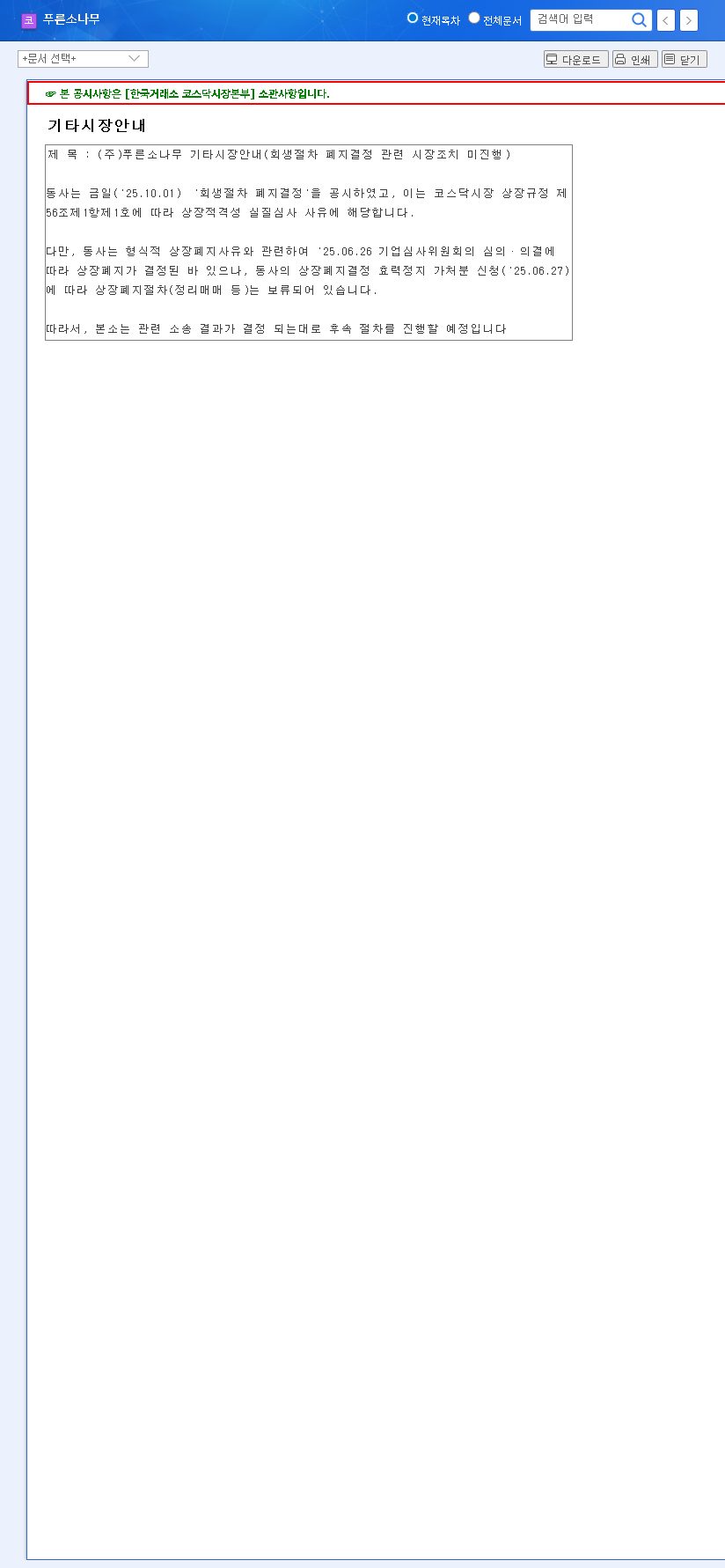
    The looming threat of a Pureunsunamu delisting has become a stark reality for investors. Following the company’s recent, alarming disclosure, the path forward for Pureunsunamu (057880) is fraught with peril. This analysis breaks down the critical news of its ‘Rehabilitation Process Discontinuation,’ explains the severe underlying financial weaknesses, and provides a clear, actionable plan for shareholders navigating this crisis. In a situation where every decision counts, this guide offers the essential insights needed to protect your capital from irreversible loss.

    The Decisive Blow: Rehabilitation Process Discontinued

    On October 1, 2025, a critical announcement sent shockwaves through the market: KOSDAQ-listed Pureunsunamu (057880) officially disclosed the ‘Discontinuation of Rehabilitation Proceedings.’ This event is not a minor setback; it’s a formal trigger for a substantive eligibility review for delisting under KOSDAQ Market Listing Regulations. The official disclosure, available on DART, confirms the gravity of the situation (Official Disclosure). This effectively extinguishes the company’s last hope for a structured recovery, dramatically increasing the likelihood of a permanent KOSDAQ delisting.

    While an existing injunction has temporarily paused the delisting procedures that were initiated on June 26, 2025, this new development serves as a fatal blow to the company’s case. The courts and the Korea Exchange will now weigh this failure heavily in their final decisions, making a positive outcome for shareholders highly improbable.

    Anatomy of a Collapse: Why Pureunsunamu Is Failing

    The discontinuation of the company rehabilitation process was not a sudden event but the culmination of deep-seated, structural problems that have plagued Pureunsunamu for years.

    1. The Financial Abyss

    The company’s financial health is in critical condition. The semi-annual report for 2025 paints a grim picture of a business on the edge of insolvency:

    • Capital Impairment: A staggering debt-to-equity ratio of -565% indicates that liabilities far exceed assets, a classic sign of bankruptcy.
    • Massive Losses: An operating loss of 875 million KRW and a net loss of 5,016 million KRW show a complete inability to generate profit from its operations.
    • History of Red Flags: A disclaimer of audit opinion for the 2023 fiscal year had already triggered a delisting event, highlighting persistent and unresolved accounting and operational issues. For more information on such risks, investors can consult authoritative sources like global market regulators.

    2. Flawed Business Strategy and Risky Ventures

    Pureunsunamu’s core business in senior care has consistently failed to be profitable. In a desperate attempt to find a growth engine, the company has pivoted to high-risk ventures like proximity radiation therapy software and overseas anti-cancer technology. While ambitious, these projects require significant capital and a stable operational foundation—two things Pureunsunamu critically lacks. Given the ongoing Pureunsunamu delisting crisis, the probability of these ventures securing funding and reaching successful commercialization is virtually zero.

    Any financial forecasts projecting a turnaround for Pureunsunamu in late 2025 should be viewed with extreme skepticism. The H1 2025 report directly contradicts these optimistic claims, revealing a company in deeper distress than some analysts suggest.

    The Inevitable Aftermath: What Delisting Means for You

    With the collapse of the rehabilitation plan, the future for Pureunsunamu (057880) shareholders is bleak. The short-term and long-term consequences will be severe.

    Short-Term: Liquidation Trading and Extreme Volatility

    Once the injunction is lifted and the delisting process resumes, the stock will likely enter a phase of ‘liquidation trading.’ During this period, the stock price is expected to plummet uncontrollably as investors rush to exit a failing asset. The recovery of any significant portion of one’s investment becomes nearly impossible at this stage.

    Long-Term: Total Loss of Investment

    Should the delisting be finalized, shares of Pureunsunamu will become essentially worthless. Minority shareholders will be left with an un-tradable asset, leading to a complete and irrecoverable loss of their investment. The company, cut off from public funding, will face an insurmountable challenge in continuing its operations, likely leading to its eventual dissolution.

    Investor Action Plan: An Urgent Investor Warning

    Given the overwhelming evidence, the investment outlook for Pureunsunamu (057880) is unequivocally negative. Here are the recommended actions:

    • For Existing Investors: The most prudent course of action is to sell your holdings immediately. Attempting to wait for a miraculous recovery is a high-risk gamble against overwhelming odds. Exiting now is the best strategy to mitigate further losses.
    • For Potential Investors: Do not initiate any new positions. The company’s survival is in serious doubt, and any new capital invested faces an extremely high probability of being lost entirely.
    • Stay Informed: Continue to monitor official news regarding the final delisting decision, but do so for risk management, not to look for a buying opportunity. To learn more about navigating such situations, you can read our guide on handling delisted stocks in your portfolio.

    (057880) Pureunsunamu (057880) Delisting Crisis: Rehabilitation Halted – A Critical Investor Warning 관련 이미지
  • (066790) CCS Management Dispute Deepens: In-Depth Stock Analysis & Future Outlook

    (066790) CCS Management Dispute Deepens: In-Depth Stock Analysis & Future Outlook

    The ongoing CCS management dispute has reached a critical boiling point, placing the company and its investors at a precarious crossroads. A recent application by shareholders to convene an extraordinary general meeting has intensified the conflict, raising serious questions about the company’s future leadership and financial viability. This comprehensive CCS stock analysis examines the root causes of the turmoil, the potential short-term and long-term impacts on the stock price, and provides a strategic outlook for investors navigating this high-stakes situation.

    With severe financial distress, unresolved regulatory hurdles, and an intensifying battle for control, CCS (066790) stock currently represents a high-risk investment. A conservative, observational approach is strongly recommended until a clear path to stability emerges.

    The Catalyst: A Push for an Extraordinary General Meeting

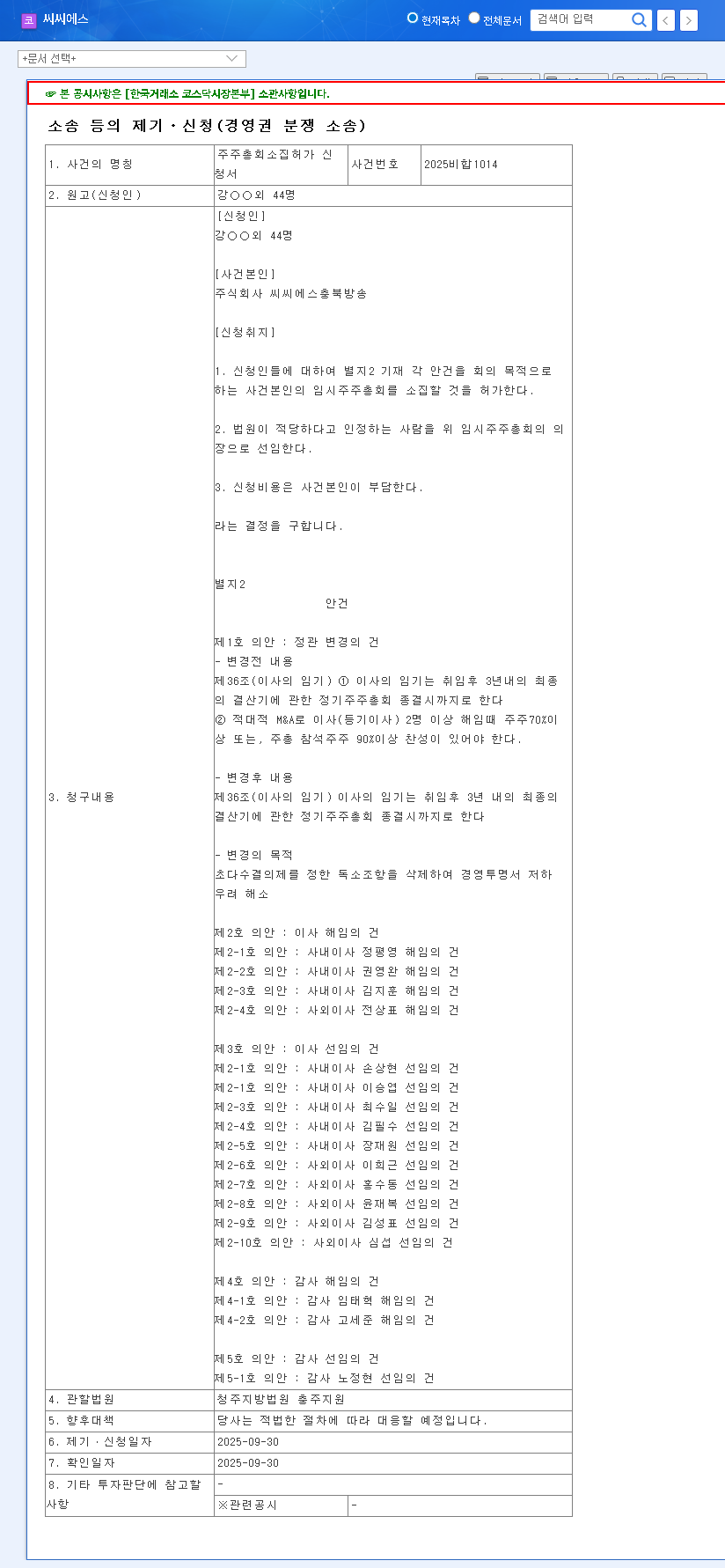
    On September 30, 2025, a significant event unfolded. As confirmed in an Official Disclosure, a group of 44 shareholders formally applied to the court for permission to convene an extraordinary general meeting. This is not a routine corporate event; it is a clear signal of shareholder dissatisfaction and a direct challenge to the current management. This move is a classic example of shareholder activism, where investors seek to force significant change.

    Key Agenda Items at the Heart of the Conflict

    The proposed agenda items reveal the shareholders’ primary concerns and their strategy for wresting back control:

    • Amending the Articles of Association: The primary target is the ‘supermajority clause.’ This clause requires an unusually high percentage of shareholder votes (often two-thirds or more) to pass certain resolutions, effectively giving current management a powerful defensive tool. Removing it would democratize decision-making and make it easier to hold leadership accountable.
    • Overhauling Leadership: The agenda calls for the dismissal of current directors and auditors and the appointment of new ones. This is the most direct move in the CCS management dispute and, if successful, would fundamentally alter the company’s strategic direction.

    Underlying Causes: A Foundation of Instability

    This shareholder revolt did not happen in a vacuum. It is the culmination of years of deteriorating fundamentals and a cascade of unresolved management risks.

    1. Alarming Financial Deterioration

    Based on the H1 2025 report, the company’s financial health is in critical condition. Its core cable broadcasting business is hemorrhaging revenue amid fierce competition from OTT giants. Key financial red flags include:

    • Plummeting Revenue: A steep decline from 19.36 billion KRW in 2022 to just 8.7 billion KRW in the first half of 2025.
    • Expanding Losses: The company is not just unprofitable; its operating losses are growing, reaching -1.55 billion KRW in H1 2025.
    • Capital Impairment Risk: A shrinking equity base and a growing accumulated deficit signal severe balance sheet distress, raising concerns about the company’s long-term solvency.

    2. Compounding Management & Regulatory Risks

    The financial woes are compounded by a series of governance failures. The most critical is the failure to obtain approval from the Korea Communications Commission for a major shareholder change that occurred in late 2023. This regulatory breach has resulted in penalties and legal battles, casting a shadow over the company’s legitimacy and ability to operate.

    Furthermore, CCS has been designated as an ‘administrative issue’ stock (관리종목) on the exchange. This designation is a serious warning to investors, indicating a high risk of trading suspension or even delisting. This status, combined with legacy legal issues and uncertainty around new business ventures, has created a perfect storm of risk that is fueling the CCS management dispute and eroding investor confidence.

    Impact Analysis & Investor Strategy

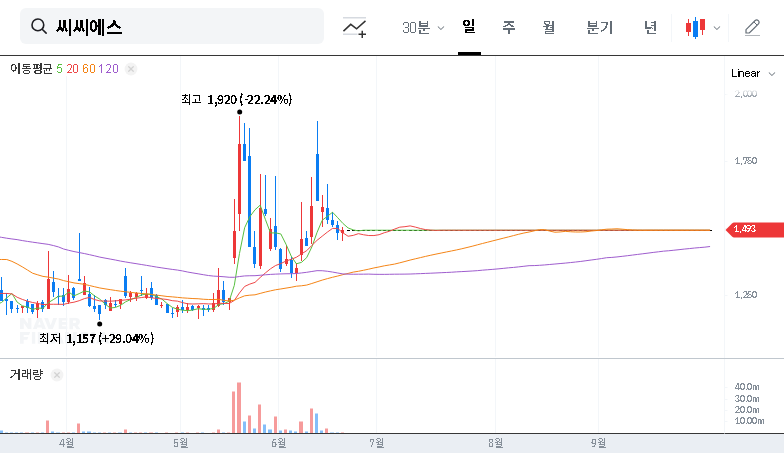
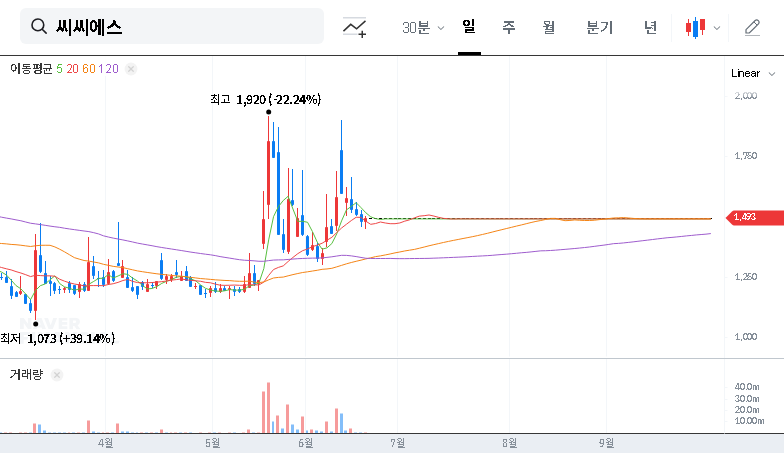
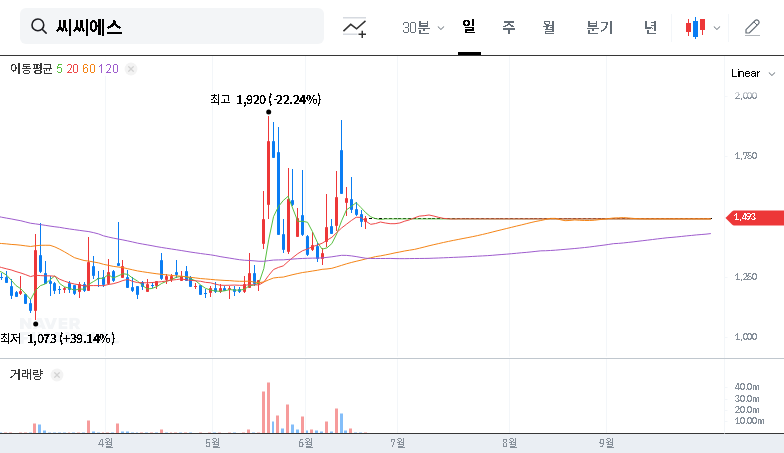
    Investors should brace for heightened volatility. In the short term, the news of the shareholder meeting will likely cause wild swings in the CCS (066790) stock price as speculators bet on the outcome. Trading volume may spike, but this activity will be driven by news and rumor rather than fundamentals.

    The mid-to-long-term outlook depends entirely on the resolution of these core issues. A successful change in management could be a positive catalyst, but only if the new leadership can swiftly address the regulatory approval crisis, stabilize finances, and present a credible turnaround plan. Without these fundamental changes, any short-term rally will be unsustainable. Understanding the risks is key, a topic explored in our guide to evaluating turnaround stocks.

    Investment Recommendation: Maintain Caution

    Given the extreme uncertainty and profound financial weakness, investing in CCS at this juncture is highly speculative and carries substantial risk. The core issues—regulatory non-compliance, operational losses, and the ongoing management battle—pose an existential threat to the company.

    The recommended strategy is one of conservative observation from the sidelines. Before considering an investment, investors should wait for clear, positive, and irreversible developments, such as:

    • Full resolution of the Broadcasting Act approval for the major shareholder.
    • A clear and decisive outcome to the management dispute and shareholder meeting.
    • Tangible evidence of a financial turnaround, such as a return to profitability or positive operating cash flow for multiple quarters.
    • Removal of the ‘administrative issue’ stock designation.

    Until these milestones are met, the risk of capital loss in CCS (066790) stock remains exceptionally high.

    (066790) CCS Management Dispute Deepens: In-Depth Stock Analysis & Future Outlook 관련 이미지
  • (066790) CCS Management Dispute: EGM Analysis, Delisting Risk & Investment Strategy

    (066790) CCS Management Dispute: EGM Analysis, Delisting Risk & Investment Strategy 대표 차트 이미지

    The ongoing CCS management dispute has reached a critical boiling point, thrusting the cable TV operator (stock code: 066790) into a precarious position. A recent application for an Extraordinary General Meeting (EGM) by a faction of shareholders has escalated the corporate power struggle, compounding the severe risks of administrative action and potential stock delisting. For investors, this situation represents a high-stakes crossroads that will determine not only the company’s leadership but its very survival on the market.

    This comprehensive analysis will dissect the core issues driving the conflict, evaluate the short- and long-term consequences of the EGM, and outline a clear investment strategy for those monitoring the unfolding events at CCS. Can the company navigate this turmoil, or is delisting an inevitability? Let’s explore the facts.

    The Catalyst: EGM Application Shakes CCS to its Core

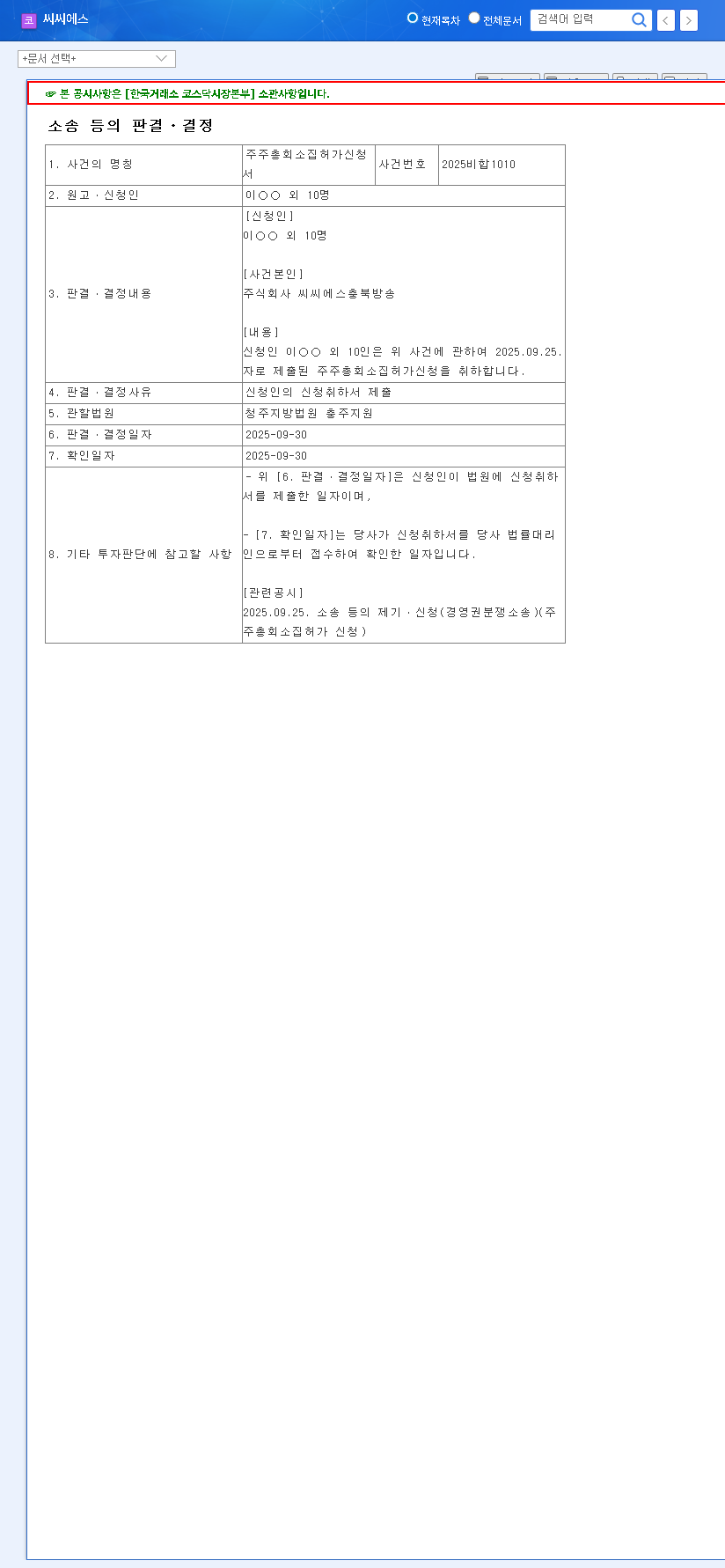
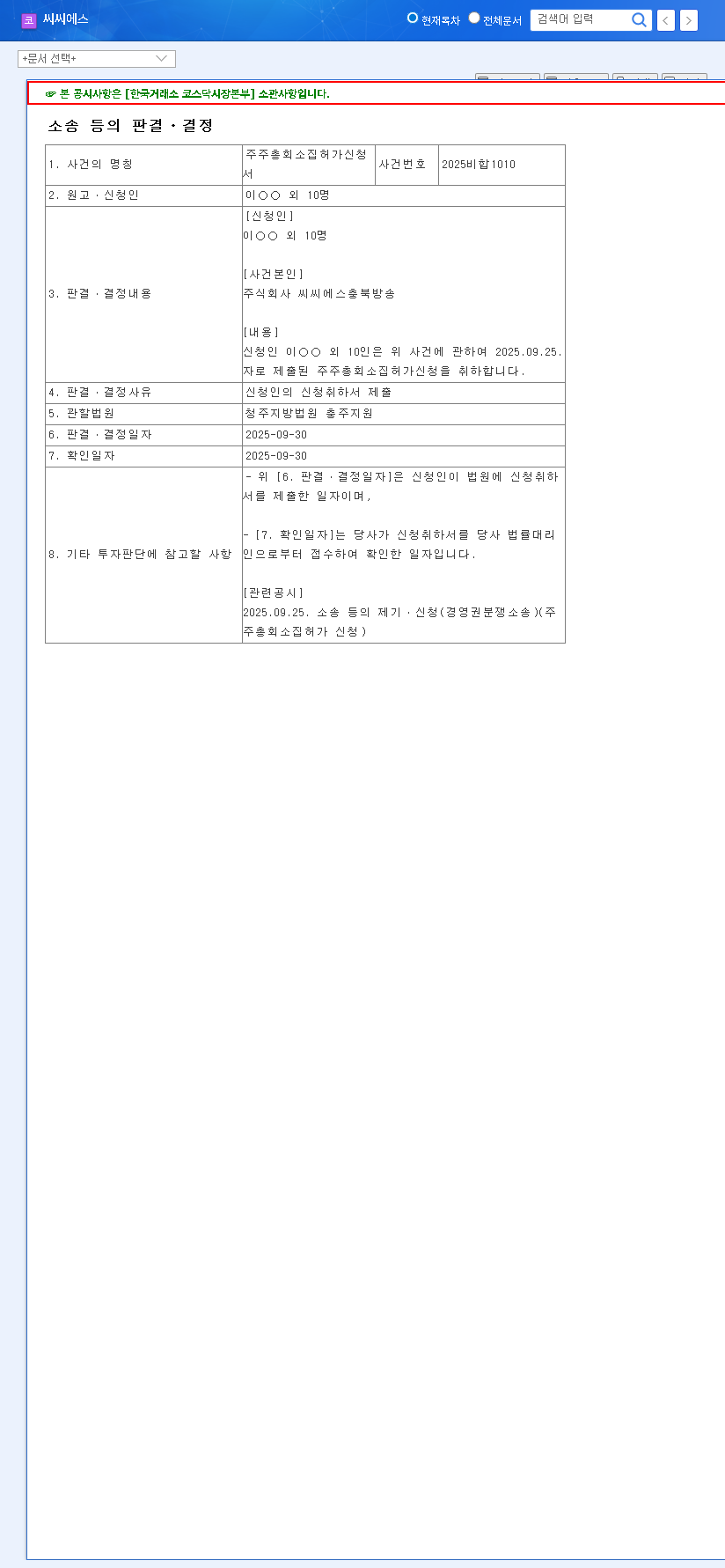
    On September 29, 2025, a pivotal move was made when a group of shareholders, led by Lee OOO and 11 others, filed an application with the Cheongju District Court. Their goal is to force an EGM to address several urgent matters. This action is not merely a suggestion but a formal legal challenge to the current leadership’s authority and strategy.

    Key Demands from the Shareholder Group

    • A no-confidence vote against the current chairman and the appointment of an interim replacement.
    • Dismissal of the current board of directors and auditors.
    • Appointment of a new slate of directors and auditors to resolve the CCS delisting risk.
    • Amendment of the company’s articles of incorporation, specifically to remove hostile M&A defense clauses.

    Root Causes: A Company on Unstable Ground

    This shareholder activism did not arise in a vacuum. It is the culmination of deteriorating fundamentals, regulatory breaches, and a profound loss of market trust that has plagued CCS for some time. Understanding these underlying issues is crucial for any CCS investment strategy.

    1. Financial Decline and Strategic Stagnation

    In the first half of 2025, CCS reported a 4.3% year-on-year decrease in sales to KRW 8.702 billion, while its operating loss alarmingly widened by 175% to KRW 1.55 billion. This signals an inability to compete effectively in the modern media landscape. While liquidity ratios appear healthy on the surface, continuous losses erode long-term financial stability, a concept further explored in comprehensive guides on financial health analysis. Furthermore, announced ventures into new sectors like secondary batteries and superconductivity have shown no tangible progress, failing to inspire confidence in a viable growth engine.

    2. Severe Regulatory Breaches & The Delisting Threat

    The most severe threat comes from a critical violation of the Broadcasting Act. The company failed to obtain required approval for a change in its largest shareholder, prompting corrective orders from the Ministry of Science and ICT. This isn’t a minor infraction; it challenges the legal foundation of CCS’s core business license. The official filing can be viewed in the Official Disclosure (Source: DART). Compounding this, the company’s designation as an unfaithful disclosure corporation has already placed it on the path toward potential delisting.

    Investment in CCS at this juncture carries exceptionally high risk. The outcome of the CCS management dispute and the EGM will be a watershed moment, potentially leading to either a path toward recovery or a complete delisting and loss of shareholder value.

    Investment Strategy: Navigating the Uncertainty

    Given the extreme volatility and existential risks, a highly cautious and informed approach is non-negotiable. The strategy differs significantly for new and existing shareholders.

    For Potential New Investors

    Entering a new position in CCS is not recommended for most investors. Only those with a very high tolerance for risk, who have conducted deep due diligence and can absorb a total loss (in the event of delisting), should even consider it. Any speculative investment must be predicated on a clear, positive outcome in the court’s EGM decision and a viable plan from new management to resolve the Broadcasting Act violations. This approach is similar to strategies used when analyzing other high-risk, turnaround stocks.

    For Existing Shareholders

    Existing shareholders are in a difficult position. The key is to monitor events closely and prepare for significant price swings. It is vital to avoid emotional decision-making. Instead, focus on the following key monitoring points to formulate a response strategy:

    • Court Ruling on the EGM: The court’s decision on whether to permit the EGM will be the next major catalyst.
    • Regulatory Actions: The final administrative disposition from the Ministry of Science and ICT regarding the Broadcasting Act violation is critical.
    • New Management’s Vision: If an EGM occurs, scrutinize the detailed business normalization and compliance plans proposed by the new candidates.

    In conclusion, the CCS management dispute has pushed the company to the brink. While a successful leadership change could present a slim opportunity for normalization, the path is fraught with legal, regulatory, and financial hurdles. Extreme caution is paramount.

    (066790) CCS Management Dispute: EGM Analysis, Delisting Risk & Investment Strategy 관련 이미지
  • (066790) CCS (058470) Management Dispute: Full Analysis of Delisting Risk & Investor Alert

    (066790) CCS (058470) Management Dispute: Full Analysis of Delisting Risk & Investor Alert 대표 차트 이미지

    The situation for investors in CCS (058470) has escalated from concerning to critical, with the latest developments in the ongoing CCS management dispute signaling a potential point of no return. A recent court filing to appoint an external auditor has laid bare the deep fractures within the company’s leadership. This event isn’t an isolated incident; it’s the explosive culmination of a prolonged CCS financial crisis, regulatory penalties, and the looming specter of a CCS delisting risk. This analysis provides a comprehensive breakdown of the crisis and a clear-eyed action plan for investors.

    This article unpacks the complex web of issues facing CCS, from shareholder turmoil to severe operational decay, to help you understand why this is a top-tier CCS investment alert.

    The Core of the Crisis: Understanding the CCS Management Dispute

    The latest flashpoint is an application filed with the Cheongju District Court on September 29, 2025, to appoint an independent auditor. This move, stemming directly from the CCS management dispute, is a formal request to investigate specific corporate actions tied to an extraordinary shareholders’ meeting. The official filing can be reviewed in the Official Disclosure on DART. While seemingly a procedural step, it signifies a total loss of trust among stakeholders and forces the company to bear the costs (a reported 9.9 million KRW), further straining its already depleted resources.

    A Company on the Brink: Unpacking the Multifaceted Crisis

    The leadership battle is merely the most visible symptom of a deep-seated corporate illness. The CCS financial crisis is multifaceted, with several critical failures converging to threaten the company’s very existence.

    1. Unstable Leadership and Regulatory Gridlock

    CCS has been plagued by a revolving door of major shareholders without securing the necessary approval for these changes under the Broadcasting Act. This regulatory failure creates immense uncertainty, as the company’s very right to operate under its current ownership is in question. The ongoing lawsuits to nullify administrative orders only add fuel to the fire, making long-term strategic planning nearly impossible.

    2. Alarming Revenue Collapse and Deepening Losses

    The financial reports for CCS 058470 paint a grim picture. Revenue plummeted from over 19 billion KRW to just 8.7 billion KRW in the first half of 2025. This isn’t just a slump; it’s a structural collapse. The company recorded an operating loss of 792 million KRW, continuing a dangerous deficit trend. This financial bleed suffocates any potential for reinvestment or innovation, creating a vicious cycle of decline.

    3. The Existential Threat: Administrative Issues and Delisting Risk

    The most severe red flag is the company’s regulatory status. After being designated a dishonest disclosure corporation, CCS was placed under substantive eligibility review, culminating in its designation as an ‘administrative issue’ on August 4, 2025. This is the capital market’s equivalent of a final warning. The CCS delisting risk is no longer a distant possibility; it is an immediate and tangible threat to any capital invested in the company.

    4. Eroding Market Position and Profitability

    In its core business of cable broadcasting, CCS is being squeezed by intense competition from IPTV providers and global OTT giants, a trend well-documented by industry analysts at sites like Reuters. Its market share is negligible, and its profitability metrics have fallen off a cliff. The net profit margin has swung from a healthy 16.69% to a negative -7.74%, a clear indicator that the company is losing money on its core operations. Understanding these metrics is a key part of analyzing high-risk equities.

    Investor Action Plan: A Time for Extreme Caution

    Given the confluence of these catastrophic factors, the investment outlook is Strongly Negative. The appointment of an auditor in the CCS management dispute will only heighten uncertainty and legal costs.

    • For New Investors: Avoid this stock entirely. The risk of total capital loss due to delisting is unacceptably high. There are no clear catalysts for a positive turnaround.
    • For Existing Shareholders: This is a critical time to prioritize capital preservation. A stop-loss or a significant reduction in your position should be strongly considered. Waiting for a recovery is a high-risk gamble against overwhelming odds.
    • Monitor Key Events: While the outlook is bleak, outcomes of shareholder change approvals and ongoing lawsuits are key data points. However, a positive outcome in one area is unlikely to resolve the company’s fundamental insolvency and operational decay.

    In summary, CCS (058470) is engulfed in a perfect storm. The intensifying CCS management dispute is not just internal politics; it’s a critical destabilizer for a company already failing on financial, operational, and regulatory fronts. The path to recovery is fraught with uncertainty, making any investment at this stage an exercise in extreme speculation. A prudent, risk-averse strategy is paramount.

    (066790) CCS (058470) Management Dispute: Full Analysis of Delisting Risk & Investor Alert 관련 이미지