Tag: Aviation

  • Hanwha Aerospace After-Hours Block Deal: Opportunity or Risk?

    1. What Happened? Decoding the After-Hours Block Deal

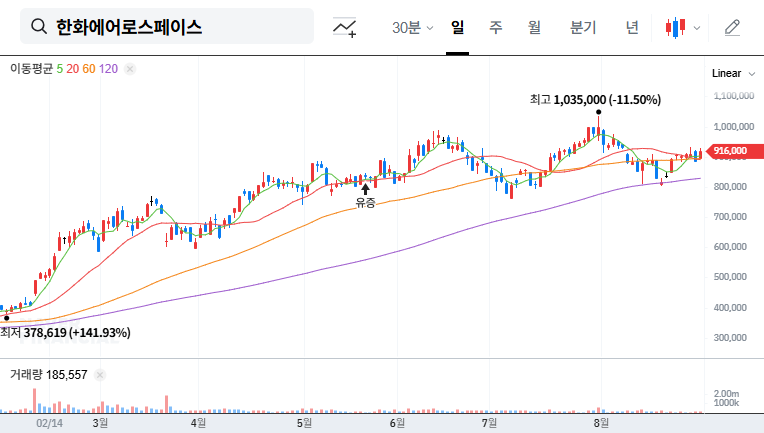
    On September 5, 2025, 12,272 shares of Hanwha Aerospace were traded for ₩11.3 billion in an after-hours block deal. The active participation of foreign investors in both buying and selling is notable, potentially impacting short-term stock price volatility.

    2. Why? Fundamental Analysis and Outlook

    Hanwha Aerospace has achieved substantial growth through the integration of its marine business (Hanwha Ocean) and maintains a strong performance in the defense sector. However, initial investment burdens in the aviation business and foreign exchange risks should be considered.

    • Positive Factors: Strong performance in marine/defense sectors, continuous R&D investment
    • Negative Factors: Initial investment burden in the aviation sector, exchange rate volatility

    While the block deal doesn’t directly impact fundamentals, foreign investor trends can be a crucial indicator of future stock price movements.

    3. What’s the Strategy? Investment Approach

    In the short term, monitor foreign investor trends and manage volatility. A long-term approach requires careful consideration of core business growth, new business performance, and overall market conditions.

    • Short-Term Strategy: Monitor foreign investor trends, manage volatility.
    • Long-Term Strategy: Analyze core business performance and new business development.

    4. Key Monitoring Points for Investors

    • Marine sector orders and profitability
    • Defense sector exports and new contracts
    • New business performance and market response
    • Financial soundness indicators
    • Macroeconomic factors such as exchange rates and oil prices
    How does an after-hours block deal affect stock prices?

    After-hours block deals can increase short-term stock price volatility, but they rarely directly impact a company’s fundamental value.

    What are Hanwha Aerospace’s main businesses?

    Hanwha Aerospace focuses on marine, defense, and aviation businesses, recently strengthening its marine business through the acquisition of Hanwha Ocean.

    What should investors consider when investing in Hanwha Aerospace?

    Investors should consider the initial investment costs of the aviation business, exchange rate volatility, and intensifying competition. It’s crucial to monitor the growth of core businesses and the progress of new businesses from a long-term perspective.
  • Hanwha Aerospace Investment Analysis: Should You Invest in This Defense Stock Now? (2023 H1 Report)

    Hanwha Aerospace Investment Analysis: Should You Invest in This Defense Stock Now? (2023 H1 Report) 대표 차트 이미지

    1. What’s happening with Hanwha Aerospace?

    Hanwha Aerospace delivered solid results in the first half of 2023, driven by strong performance in the marine and defense sectors. The marine sector saw significant growth thanks to increasing demand for eco-friendly vessels, while the defense sector benefited from strong exports of K9 self-propelled howitzers.

    2. What are the positives and negatives?

    Positives:

    • • Robust growth in marine and defense sectors
    • • R&D investments for future growth drivers
    • • Efforts to strengthen financial health through capital increase

    Negatives:

    • • High debt-to-equity ratio (278%)
    • • Short-term investment burden in the aviation sector
    • • Potential risks related to legal disputes and sanctions
    • • Cash outflow due to subsidiary’s rights offering

    3. So, is it a good time to invest?

    The current investment opinion is ‘Neutral’. While the growth potential is evident, factors such as high debt ratio, external uncertainties, and legal risks require careful consideration.

    4. Investor Action Plan

    Before making an investment decision, carefully consider the following:

    • • Sustainability of growth in marine and defense sectors
    • • Investment performance and profitability improvement in the aviation sector
    • • Financial risk management strategies
    • • Resolution of legal disputes and performance of new businesses

    A long-term investment perspective and continuous monitoring of risk factors are crucial.

    Frequently Asked Questions

    What are Hanwha Aerospace’s main businesses?

    Hanwha Aerospace focuses on marine, defense, and aviation sectors. As of H1 2023, the revenue breakdown is: marine 61.91%, defense 31.55%, and aviation 9.82%.

    Is it a good time to invest now?

    The investment opinion is ‘Neutral’. While there’s growth potential, financial risks and external uncertainties need to be considered. Thorough analysis is crucial before investing.

    What are the key investment risks?

    Key risks include high debt ratio, investment burden in the aviation sector, legal disputes, and macroeconomic fluctuations. The cash outflow and potential financial structure changes due to the subsidiary’s rights offering should also be monitored.

    Hanwha Aerospace Investment Analysis: Should You Invest in This Defense Stock Now? (2023 H1 Report) 관련 이미지
  • Hanwha Aerospace H1 2025 Earnings Analysis: Marine Expansion, Defense Strength, and Investment Strategy

    1. What Happened at Hanwha Aerospace?

    Hanwha Aerospace experienced significant growth in its marine sector and continued strength in its defense sector in H1 2025. The acquisition of Hanwha Ocean substantially boosted marine revenue, while strong exports of the K9 self-propelled howitzer and Chunmoo multiple rocket launcher propelled the defense sector. Although aviation sector profitability dipped due to engine development investments, these investments are considered strategically important for long-term growth. The successful launch of the SpaceEye-T satellite opens exciting possibilities for the aerospace division.

    2. Analyzing the Positives and Negatives

    Positive Factors

    • • Significant expansion and diversification of the marine business
    • • Consistent and robust performance of the defense sector
    • • Strategic investments in aviation and aerospace for future growth
    • • Improved financial structure and increased investment capacity through capital increase

    Negative Factors and Considerations

    • • Short-term decline in aviation profitability
    • • High dependence on debt financing
    • • Sensitivity to exchange rate fluctuations
    • • Unreported information from the August 29th disclosure

    3. Investment Strategy: Maintaining a Neutral to Positive Outlook

    Hanwha Aerospace’s diversified portfolio and forward-looking investments suggest a strong foundation for continued growth. Based on current performance and market conditions, the investment outlook remains Neutral to Positive. However, investors should closely monitor the August 29th disclosure, manage exchange rate risks, assess the effectiveness of aviation investments, and monitor debt levels.

    4. Action Plan for Investors

    Investors should carefully analyze Hanwha Aerospace’s performance across all sectors, consider the potential risks, and incorporate the information from the August 29th disclosure into their investment decisions. Furthermore, developing investment strategies that account for sensitivity to macroeconomic indicators is crucial.

    Frequently Asked Questions

    What are Hanwha Aerospace’s main business segments?

    Hanwha Aerospace operates in the marine, defense, aviation, and aerospace sectors. As of H1 2025, the marine sector contributes the largest portion of revenue, followed by a strong and growing defense business.

    What are the key takeaways from the H1 2025 earnings report?

    The inclusion of Hanwha Ocean resulted in significant growth in the marine sector, while the defense sector showed a strong performance driven by exports. The aviation sector’s profitability decreased due to investments for future growth.

    What should investors be aware of?

    Key considerations include high debt levels, exchange rate sensitivity, the effectiveness of aviation investments, and the pending information from the August 29th disclosure.

  • HysAir Takes Flight: Management Control Strengthened Amid Turnaround

    HysAir Takes Flight: Management Control Strengthened Amid Turnaround 대표 차트 이미지

    1. What Happened?

    On August 27, 2025, HysAir’s CEO, Sangheon Ha, along with other related parties, increased their stake for management control purposes from 43.32% to 43.35%. Purchases by Byeongbu Kim and Jonghwan Ha were the primary drivers.

    2. Why Does It Matter?

    This stake change signifies more than just an increase in ownership. It comes amidst a positive fundamental improvement trend, with HysAir returning to profitability in the first half of 2025. This enhanced management stability combined with improved financials creates potential for synergistic growth. The active acquisition of shares by management demonstrates a strong commitment to the turnaround, which can instill confidence in investors and potentially lead to increased corporate value.

    3. What’s Next?

    Strengthened management control is expected to positively impact HysAir’s long-term growth strategy. However, risk factors such as a high debt-to-equity ratio of 175.1%, dependence on key customers like Boeing, and exchange rate volatility still exist. Therefore, the possibility of short-term stock price fluctuations should also be considered.

    4. What Should Investors Do?

    Investors considering HysAir should closely monitor future earnings announcements, order trends, and efforts to improve the financial structure. It’s also crucial to pay attention to macroeconomic factors such as global aviation industry trends and policy changes. Successful investment hinges on confirming that management’s efforts for sustained growth translate into tangible results.

    How was HysAir’s performance in the first half of 2025?

    HysAir successfully returned to profitability in H1 2025, with both operating income and net income turning positive.

    What was the main reason for the recent change in stake ownership?

    Open market purchases by Byeongbu Kim and Jonghwan Ha increased the stake held by related parties, including the reporting person.

    What are the key considerations for investing in HysAir?

    Investors should consider the high debt-to-equity ratio, dependence on major customers, and exchange rate volatility. Continuous monitoring of future performance and financial improvements is essential.

    HysAir Takes Flight: Management Control Strengthened Amid Turnaround 관련 이미지
    HysAir Takes Flight: Management Control Strengthened Amid Turnaround 관련 이미지
  • Korea Airport (005430) H1 2025 Earnings Analysis: Balancing Growth and Profitability

    1. What Happened? H1 2025 Earnings Overview

    Korea Airport reported revenue of KRW 160.2 billion (up 5.7% YoY), operating profit of KRW 11.4 billion (down 11.0% YoY), and net profit of KRW 9.4 billion (down 14.3% YoY) for the first half of 2025. While revenue growth is encouraging, the decline in profitability raises concerns.

    2. Why These Results? Fundamental and Market Analysis

    • Positive Factors: International passenger recovery, stable business base, diversification efforts, strengthened ESG management, improved financial health.
    • Negative Factors: Volatility in oil prices and exchange rates, increased competition, litigation risks, fluctuating raw material prices.

    External factors impacting performance include exchange rate volatility, potential interest rate changes, and fluctuating oil prices.

    3. What’s Next? Investment Outlook

    In the short term, declining profitability could put pressure on the stock price. However, long-term growth potential remains, driven by the recovery in international passenger demand and diversification efforts. Therefore, the investment outlook is currently neutral.

    4. Investor Action Plan: Key Factors to Watch

    • H2 2025 earnings performance
    • Cost management and profitability improvement initiatives
    • Performance of new business ventures
    • Competitive landscape changes
    • Outcome of ongoing litigation
    • Fluctuations in exchange rates and interest rates

    Frequently Asked Questions

    What was Korea Airport’s revenue for H1 2025?

    KRW 160.2 Billion.

    What are Korea Airport’s main business operations?

    Ground handling services for domestic and international airlines, rental platform operation, and livestock farming.

    What is the investment outlook for Korea Airport?

    The current investment outlook is neutral. While revenue growth is positive, improving profitability is key.

  • Orbit Tech (046120) Q2 2025 Earnings Analysis: All Three Business Segments in the Red

    1. Orbit Tech Q2 2025 Performance: A Shift into the Red

    Orbit Tech reported KRW 14.8 billion in revenue, KRW -3.8 billion in operating income, and KRW -0.8 billion in net income for Q2 2025. While revenue saw a slight decrease year-over-year, operating income plummeted into significant losses. The fact that all three business segments are operating at a loss is a major red flag.

    2. Segment-Specific Deep Dive: Unpacking the Profitability Decline

    • Nuclear Power: Despite the positive momentum in the domestic nuclear power plant construction market, the segment recorded an operating loss of KRW 1.3 billion.
    • ISI (Industrial Safety Inspection): Despite consistent demand, the ISI segment reported an operating loss of KRW 1.7 billion, highlighting the urgent need for improved profitability.
    • Aviation: Despite the post-pandemic recovery in the aviation industry, this segment experienced the most significant loss, at KRW 2.7 billion. The cost of sales ratio exceeding 120% is particularly alarming.

    3. Why the Losses?: Macroeconomic Factors and Internal Issues

    Amidst ongoing macroeconomic uncertainties like rising interest rates and fluctuating exchange rates, Orbit Tech faces the dual challenge of increasing costs of sales and declining profitability across all segments. The aviation segment’s struggles are attributed to a combination of internal factors, including decreased post-pandemic productivity and ineffective cost management.

    4. Investor Action Plan: HOLD and Observe

    Currently, Orbit Tech hasn’t presented a clear strategy for a turnaround. Therefore, the investment recommendation is HOLD (neutral). Potential investors should closely monitor the company’s plans for profitability improvement in each segment, strategies for strengthening financial health, and the progress of new business ventures.

    Frequently Asked Questions

    What are Orbit Tech’s main business segments?

    Orbit Tech operates in three main business segments: Nuclear Power, ISI (Industrial Safety Inspection), and Aviation.

    Why did Orbit Tech’s Q2 2025 earnings disappoint?

    All three business segments reported operating losses, with the Aviation segment experiencing a particularly sharp decline in profitability. This is due to a combination of macroeconomic headwinds and internal operational challenges.

    What should investors do now?

    The current investment recommendation is to HOLD. Investors should carefully monitor the company’s plans for improving profitability, strengthening its financial position, and developing new business opportunities.

  • Woorim PTS Large Shareholding Report: Fundamental Analysis and Investment Strategy

    1. What Happened?

    A large shareholding report (general) was published for CEO Hyunseok Han and related parties. With the cancellation of Woojin Han’s stock acquisition and Hyunseok Han’s gift, there is no change in the number of shares held, and the major shareholder and related parties still maintain a 55.60% stake.

    2. Why is it Important?

    While seemingly insignificant, this suggests a potential change in internal asset transfer or inheritance plans. This could influence future management succession and governance, warranting close attention.

    3. What is Woorim PTS?

    Woorim PTS manufactures gearboxes for steel mill facilities, industrial equipment, construction machinery, defense, aviation, and robotics. While facing recent challenges with declining sales and sustained losses, the company is focusing on expanding into high-value-added sectors like defense, aviation, and robotics to secure future growth engines.

    4. What Should Investors Do?

    This event is not expected to significantly impact stock prices in the short term. However, it is essential to monitor the performance of new businesses from a mid-to-long-term perspective. Successful diversification can lead to increased corporate value, but there are also risks if it fails. Therefore, continuous monitoring of new business sales growth, R&D achievements, sales recovery, and the timing of returning to profitability is crucial. A thorough analysis of the impact of macroeconomic variables is also necessary.

    Frequently Asked Questions

    What is the impact of this report on the stock price?

    While the short-term impact is expected to be minimal, the mid-to-long-term impact depends on the performance of new businesses.

    What are Woorim PTS’s main businesses?

    They manufacture gearboxes for steel mill facilities, industrial equipment, construction machinery, defense, aviation, and robotics.

    What are the key considerations for investment?

    A comprehensive consideration of new business performance, financial status, and macroeconomic variables is necessary.

  • Hanwha Aerospace Earnings Surprise: Stock Forecast and Investment Strategies

    1. What Happened? Hanwha Aerospace Delivers Earnings Surprise

    On July 31, 2025, Hanwha Aerospace announced an operating profit of KRW 864.4 billion, significantly surpassing market expectations. This figure represents a remarkable 19.4% increase over the analyst consensus of KRW 724.1 billion, marking a substantial earnings surprise.

    2. Why Did This Happen? Unpacking the Earnings Surprise

    The robust performance of the defense and marine businesses, along with a better-than-expected showing in the aviation sector, are the primary drivers of this earnings surprise.

    • Strong Defense Business: Successful exports of the K9 self-propelled howitzer and Chunmoo multiple rocket launcher, coupled with increased domestic and international defense budgets, fueled the strong performance.
    • Marine Business Growth: With a high export ratio, the business benefited from favorable exchange rate movements. A solid order backlog also translated quickly into revenue.
    • Aviation Sector Resilience: Despite initial investments for engine business enhancements, the sector delivered better-than-expected results, further boosted by expanding After Market (AM) sales.
    • Stable Raw Material Prices and Efficient Management: The impact of rising raw material prices was lower than anticipated, or efficient cost management measures contributed to improved operating profit.

    3. What’s Next? Stock Forecast and Investment Strategies

    A short-term stock price increase and improved investor sentiment are anticipated. The long-term outlook points towards high growth potential in the defense, marine, and aerospace sectors. However, developing an investment strategy that considers risk factors such as exchange rates, raw material prices, and the global economic slowdown is crucial. Given the marine business’s high export ratio, continuous monitoring of exchange rate fluctuations is particularly important.

    4. What Should Investors Do? Key Investment Points

    Investors should closely monitor future quarterly earnings announcements and market developments. Paying attention to the following factors is particularly important:

    • Earnings Sustainability: Look beyond the short-term strong results and assess the company’s ability to maintain sustainable growth.
    • Risk Management: Evaluate the company’s strategies to address external factors such as exchange rate fluctuations, raw material prices, and the global economic climate.
    • Competitor Analysis: Compare Hanwha Aerospace’s performance and growth strategies with those of its competitors to inform investment decisions.

    Frequently Asked Questions

    What are the main drivers behind this earnings surprise?

    The robust performance of the defense and marine businesses, a better-than-expected showing in the aviation sector, and stable raw material prices coupled with efficient management are identified as the primary drivers.

    What is the outlook for Hanwha Aerospace’s stock price?

    A positive trend is expected in the short term, but the long-term outlook depends on various factors, including exchange rates, raw material prices, and the global economic climate.

    What are the key considerations for investors?

    It is crucial for investors to make informed decisions by considering factors such as earnings sustainability, risk management, and competitor analysis.